Halichoeres melanurus
A small, quick-moving wrasse logged across Visayas and Sabah reefs, comfortable in 25-29C water and present year-round.
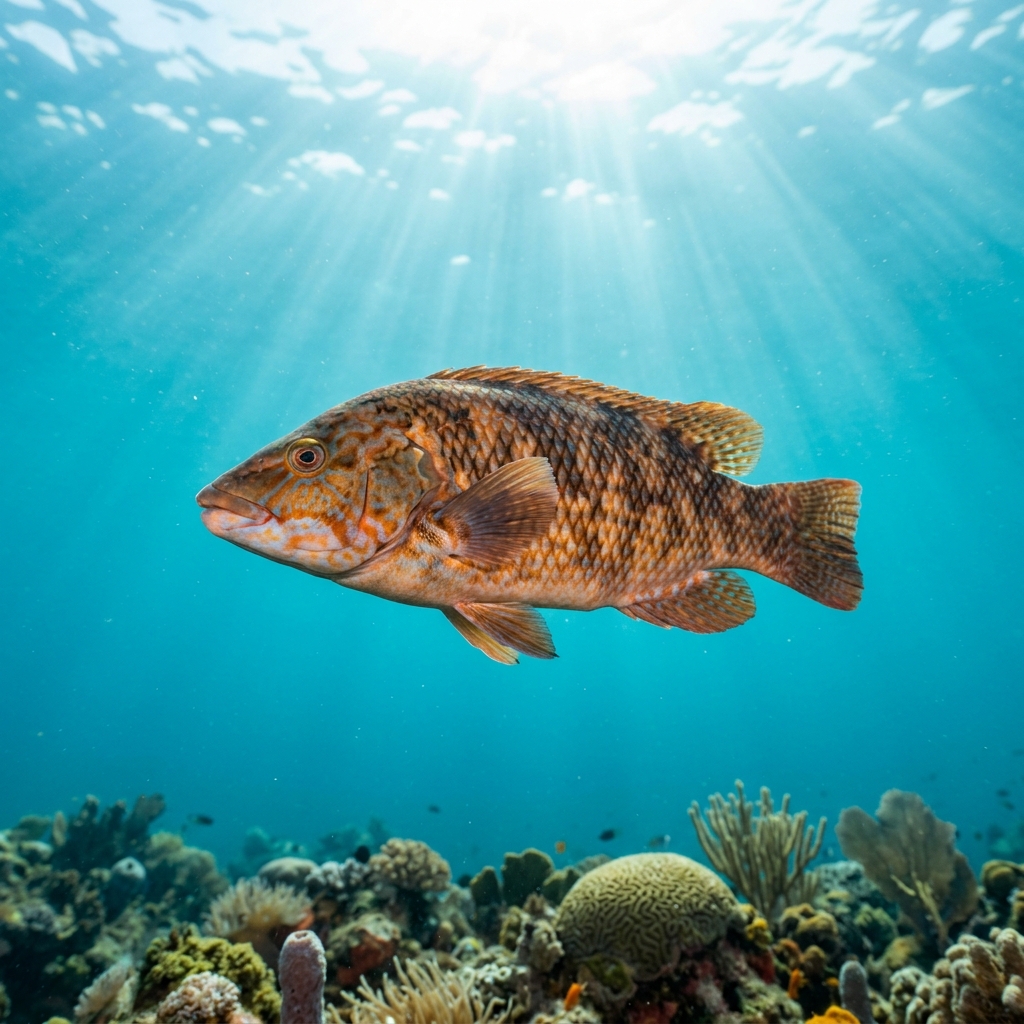
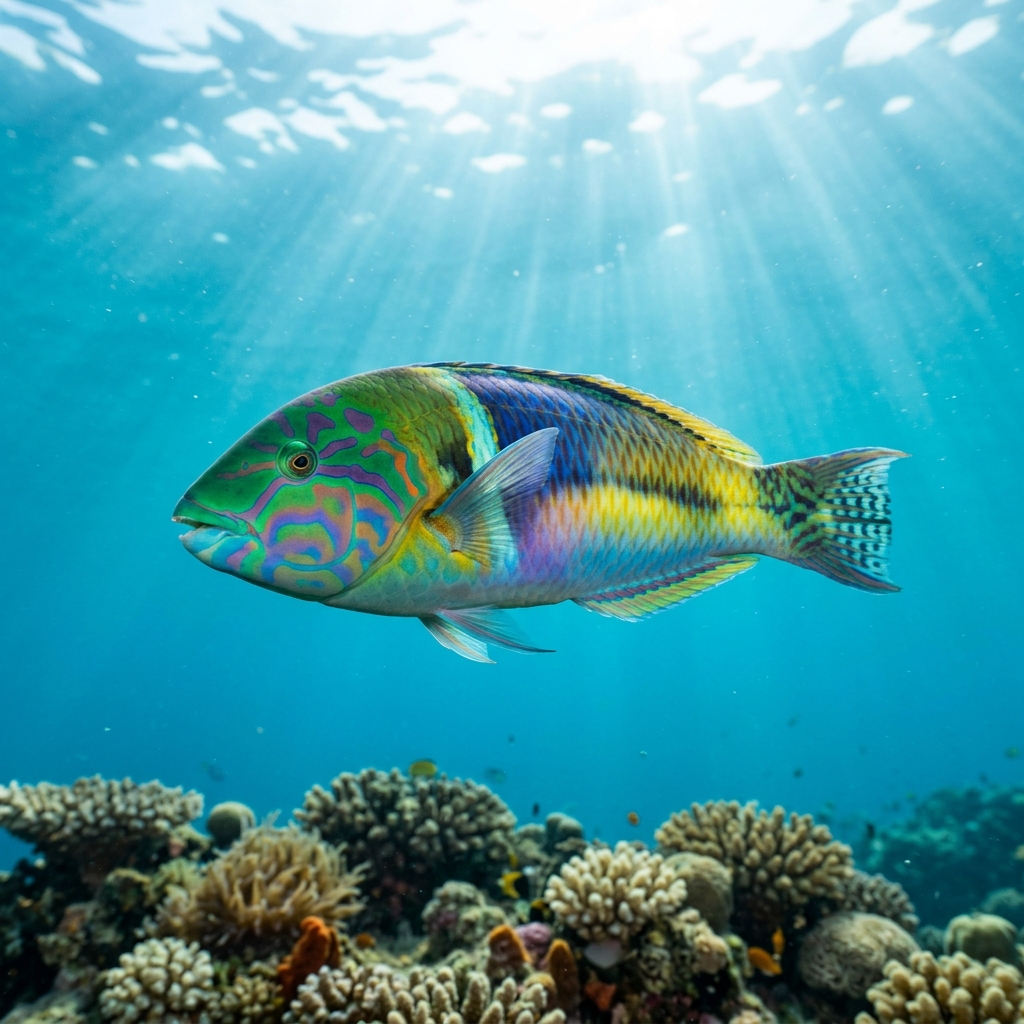
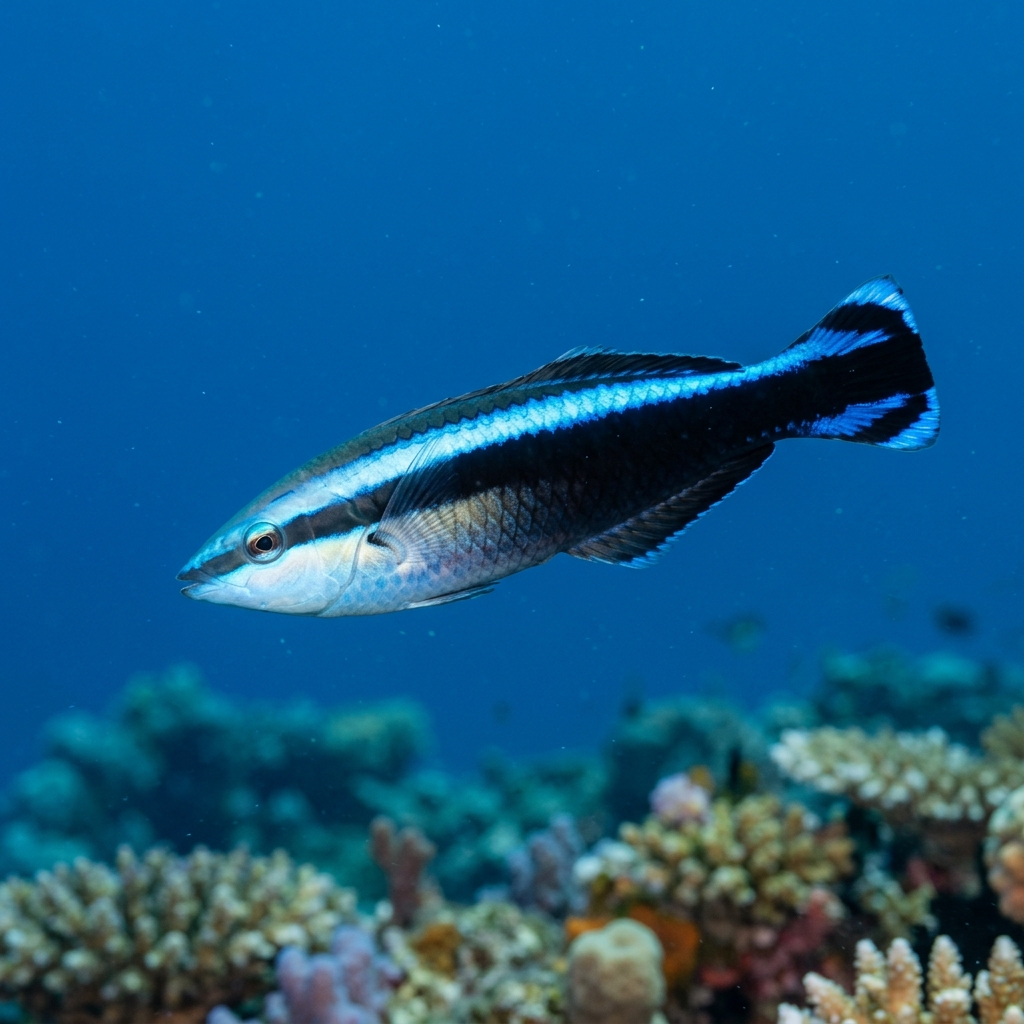
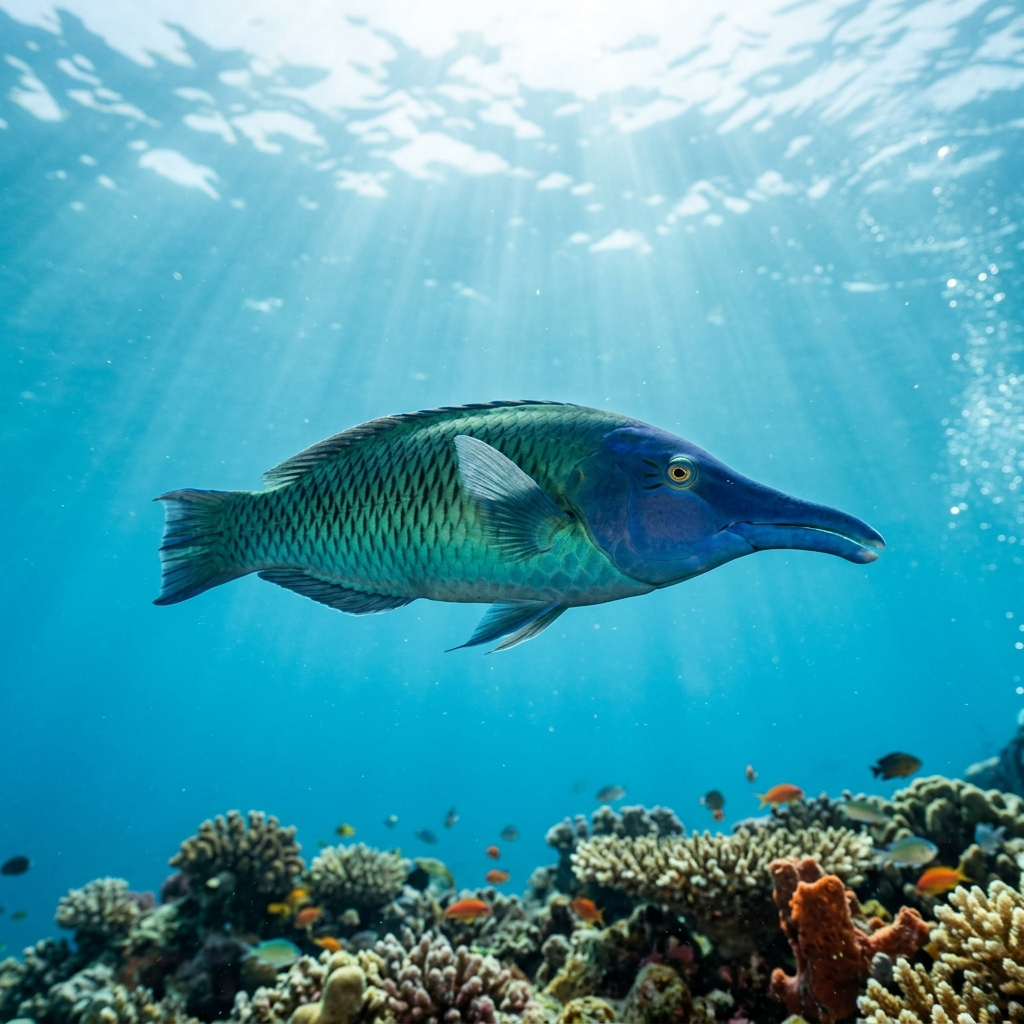
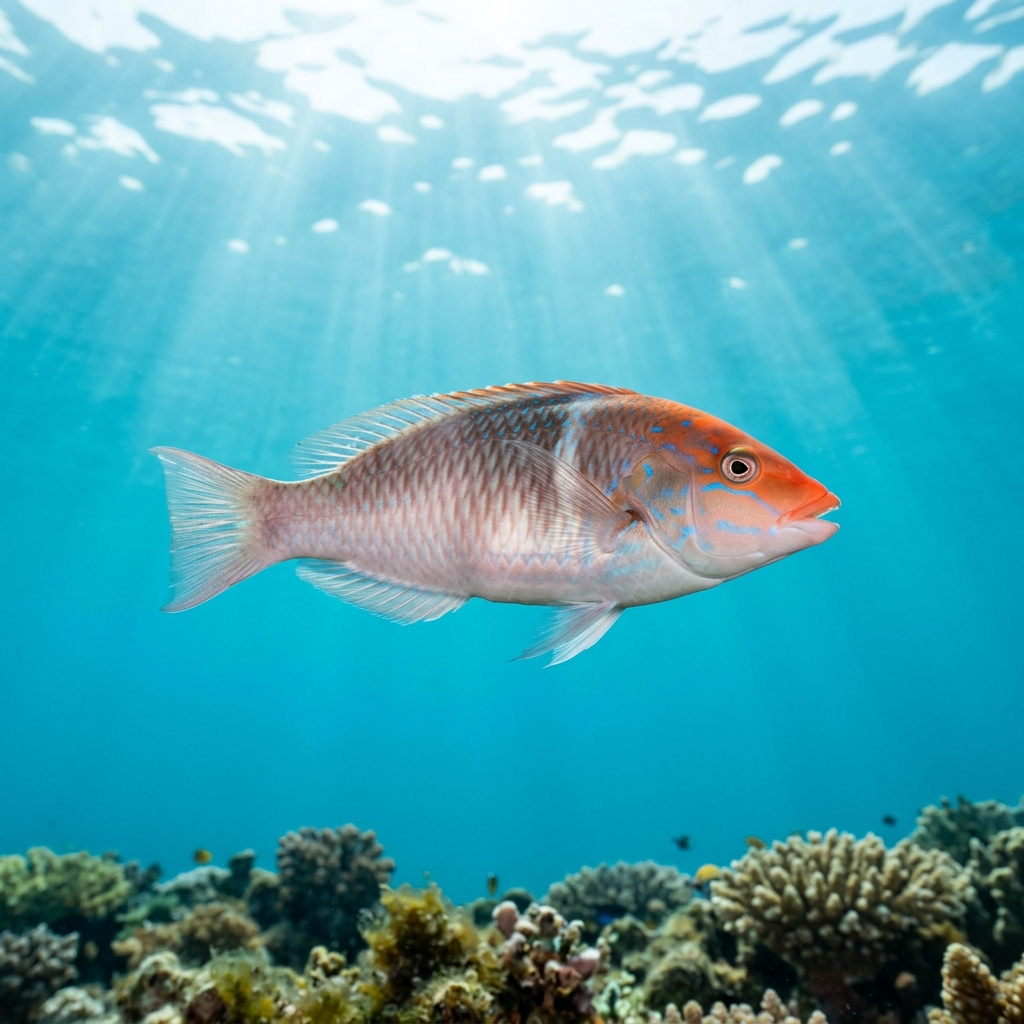
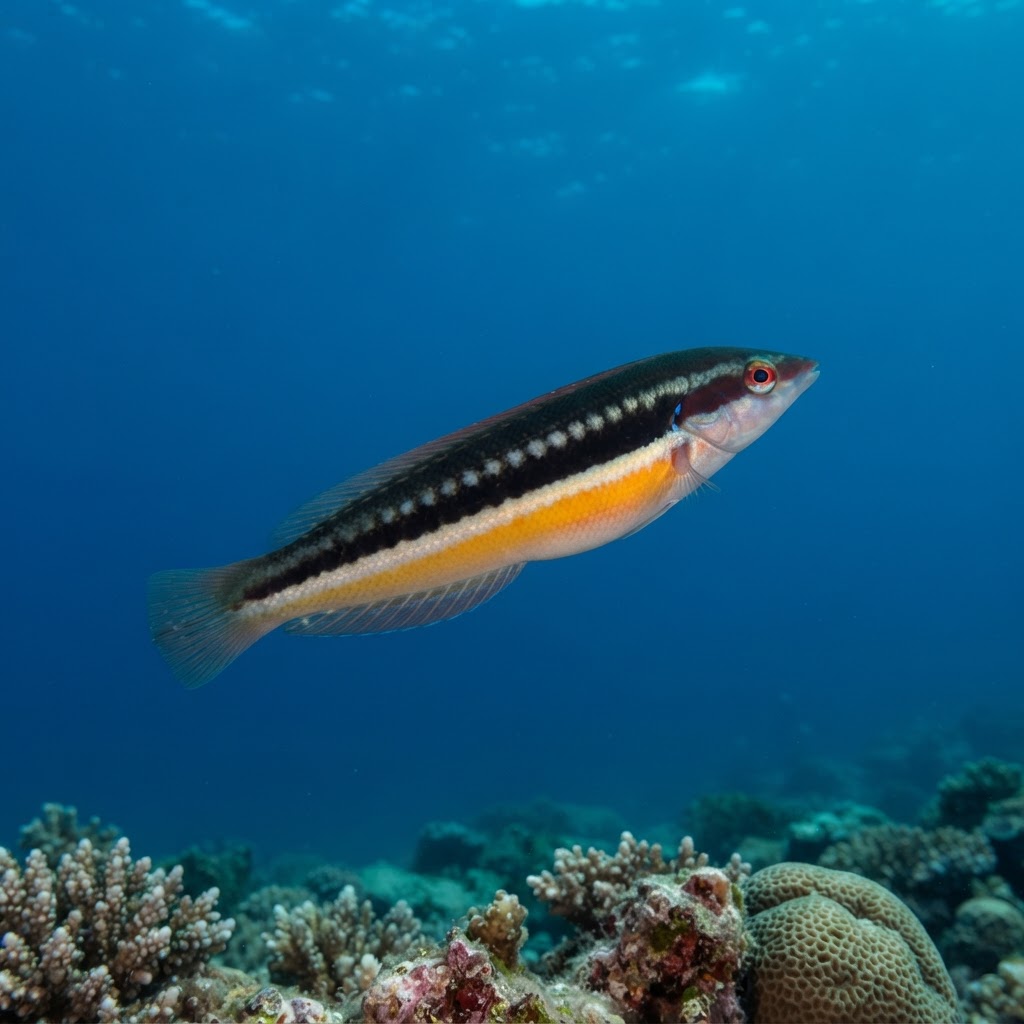
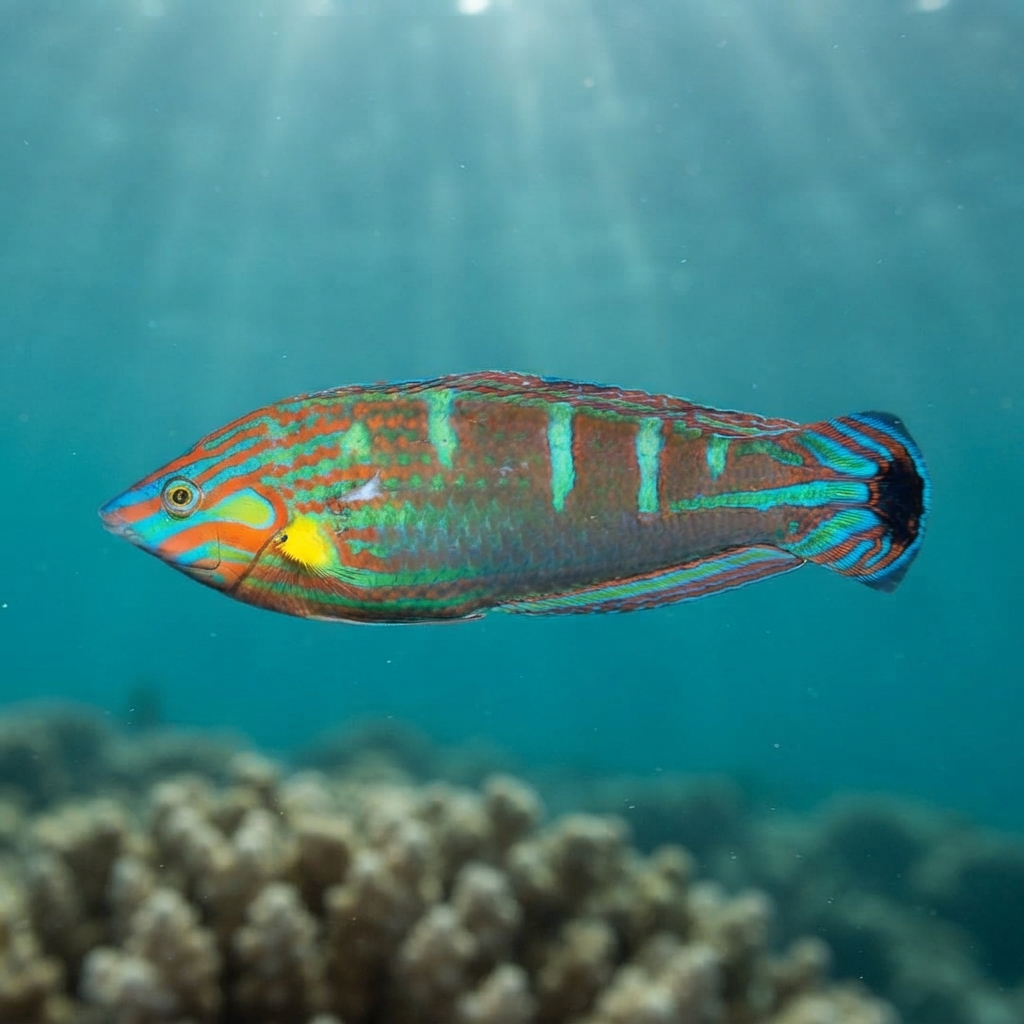
A small, slender wrasse that tops out around 9cm, usually spotted darting low over rubble and coral patches. Look for a greenish body crossed with pink or orange stripes and, most usefully, a dark blotch sitting right at the base of the tail. It swims in the jerky, stop-start pattern typical of small wrasses rather than gliding, which helps separate it from bigger, slower-moving reef fish nearby.
Expect quick, darting movement low over rubble patches and coral rather than open-water swimming, as it picks through the substrate hunting small invertebrates. It is not shy exactly, but it rarely pauses for a photo, ducking in and out of cover as divers pass. Most sightings come from shallow reef flats and slopes down to about 15 metres, where it works the bottom independently rather than in groups.
Like many Halichoeres wrasses, it buries itself in sand at night and when startled, a defence trick that also means a fast dash for the substrate is often the last you see of it on a dive.
No clear seasonal pattern shows up in the sightings data, and its comfort range of 25 to 29.3C matches warm tropical reefs year-round, so any month works at these sites.
Most consistently logged in the Philippines, especially Visayas and Palawan, and a reliable find across Sabah in Malaysia. Queensland in Australia and Raja Ampat in Indonesia also turn up regular sightings, with smaller numbers reported from Okinawa and the Ryukyu Islands in Japan.
Mapping where Pinstriped Wrasse is logged…
The strongest sightings come from the Philippines, particularly Visayas and Palawan, and from Sabah in Malaysia. It also turns up regularly on reefs in Queensland, Australia and Raja Ampat, Indonesia.
There is no strong seasonal pattern in the data, and it favours warm water between roughly 25 and 29C, so it is present on these reefs throughout the year rather than at a specific time.
Look for a small, slender wrasse under 10cm with a greenish body, pink or orange stripes, and a distinct dark spot at the base of the tail. It moves in quick darting bursts low over rubble and coral rather than swimming in the open.
They are a small reef wrasse, typically reaching around 9cm in length, which keeps them easy to overlook against busier reef backgrounds.
No. They pose no threat to divers and simply dart away or bury themselves in sand if approached too closely.
Yes, this is typical behaviour for Halichoeres wrasses. They dive into loose sand or rubble at night and when threatened, using it as instant cover rather than fleeing across open reef.
Site and sighting data is aggregated from diver logs, iNaturalist and GBIF. For taxonomy and conservation status:
Bird Wrasses
3,632 sites