Coris caudimacula
A small reef wrasse logged across KwaZulu-Natal, Diani and Marsa Alam, usually spotted one at a time on warm Indo-Pacific reefs.
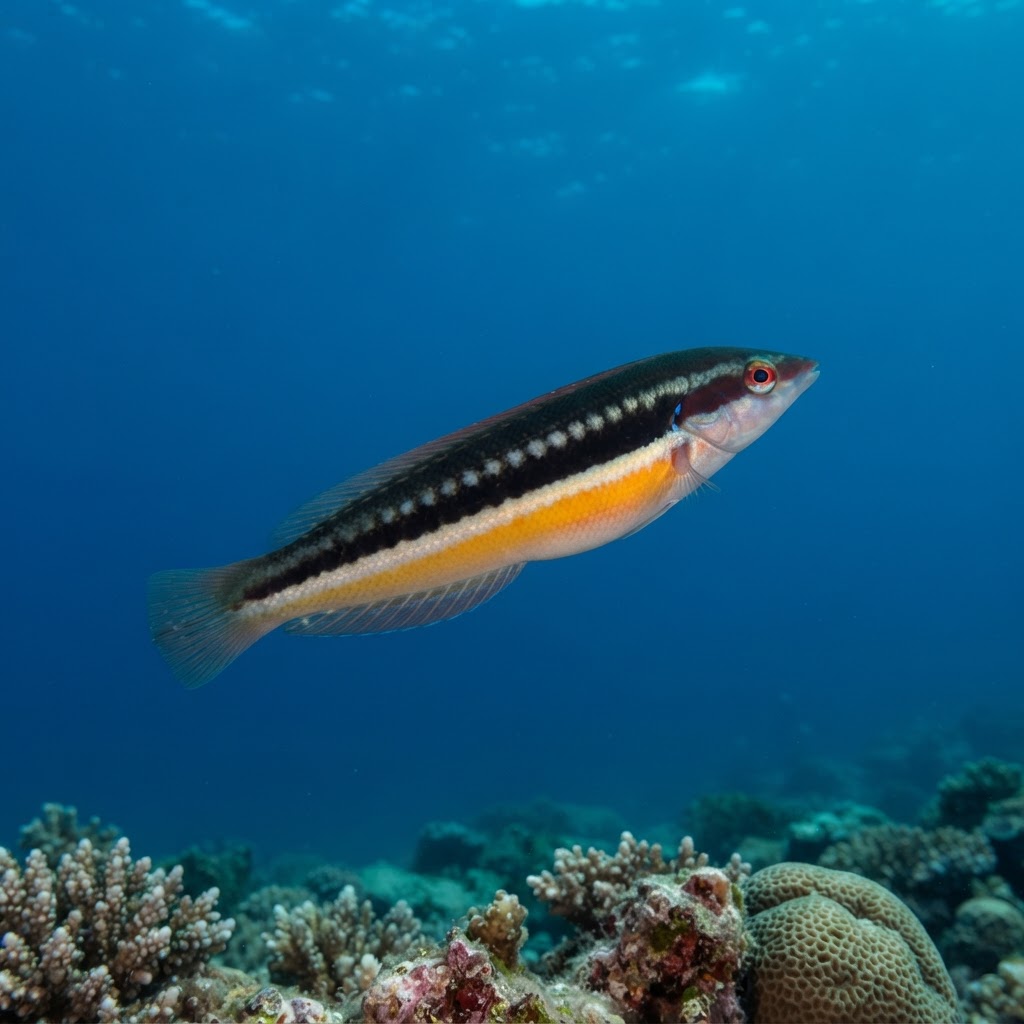
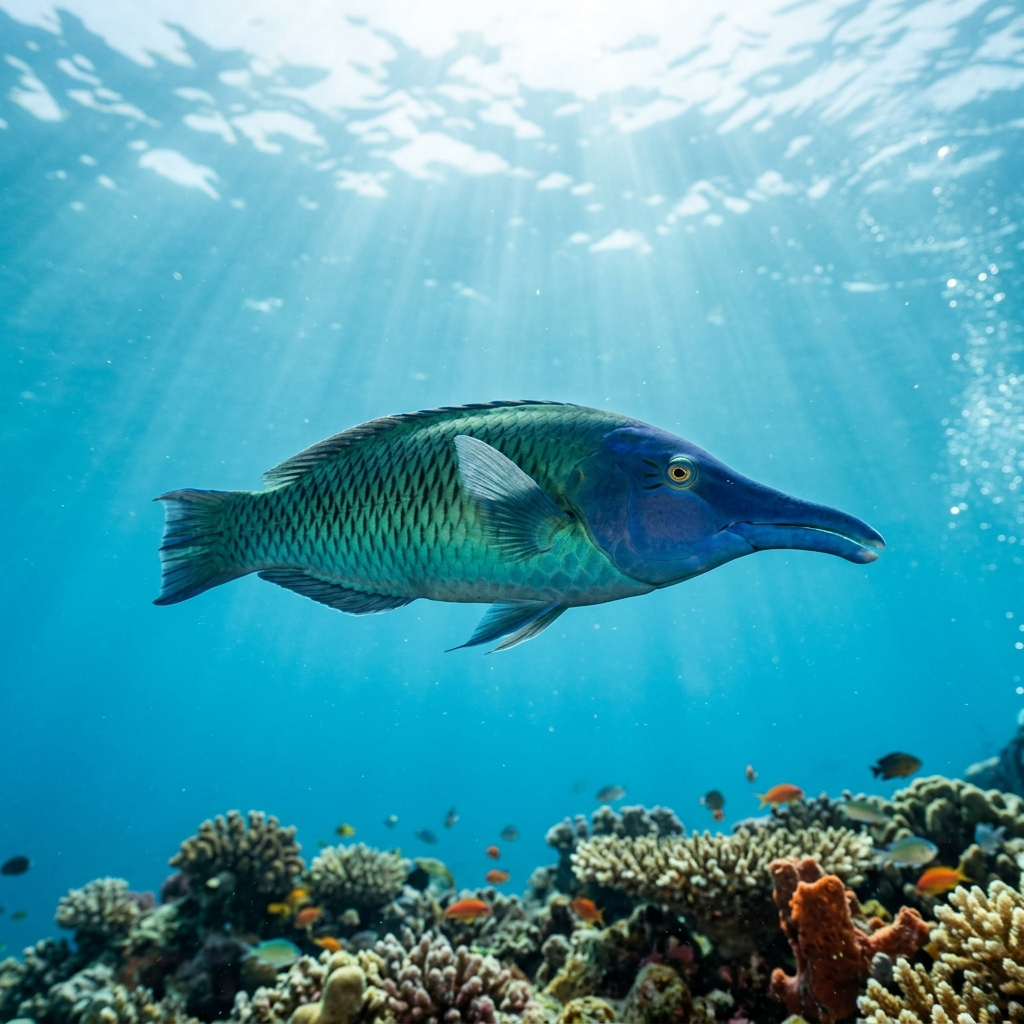
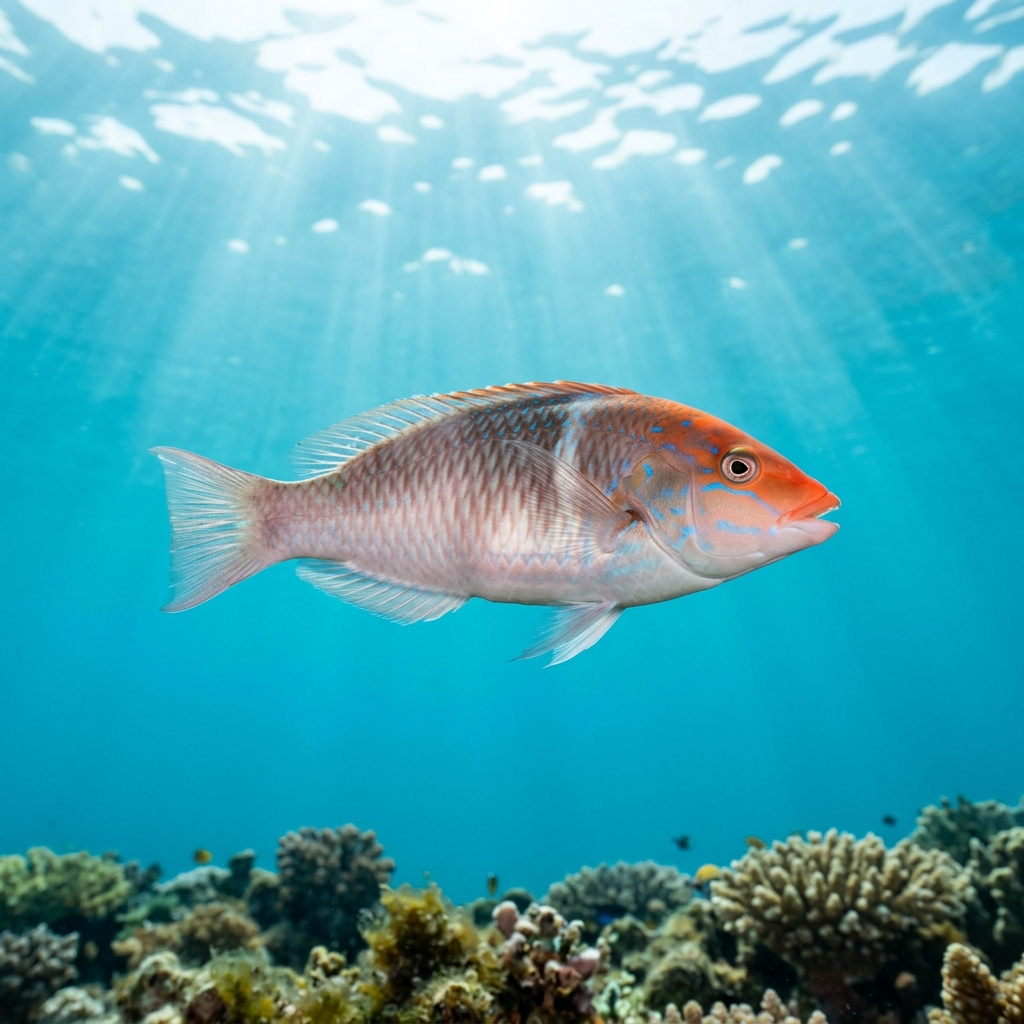
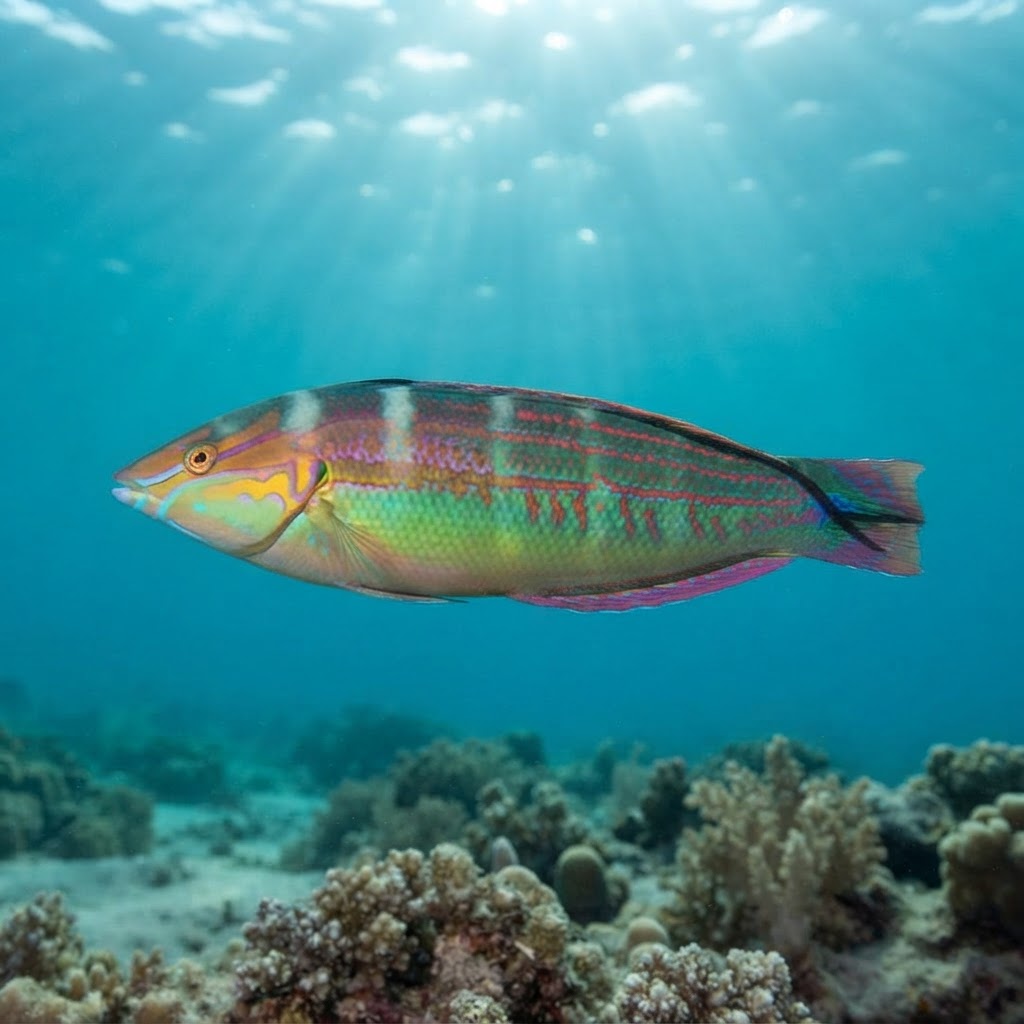
A small, slender wrasse that tops out around 14 cm, so it is easy to miss among bigger reef fish. Look for a pale to pinkish body marked with faint stripes and, most usefully, a dark blotch sitting near the base of the tail, which gives the species its name. It swims low over the reef with the quick, darting strokes typical of small wrasses rather than gliding in open water.
Divers typically find it working low over rubble, sand patches and reef edges, picking at small invertebrates as it goes rather than schooling or holding station in open water. It tends to be wary and quick to duck into cover when approached closely, which is likely why it is logged as uncommon at most sites rather than easily photographed. Most sightings are single fish rather than pairs or groups.
Like many wrasses in the family Labridae, it is a bottom-hunting forager that picks small crustaceans and other invertebrates off the sand and reef structure rather than feeding in the water column.
Sightings show no clear seasonal pattern, and with a comfortable range of roughly 23.5 to 29.1 C it turns up on these reefs year-round rather than in a specific window.
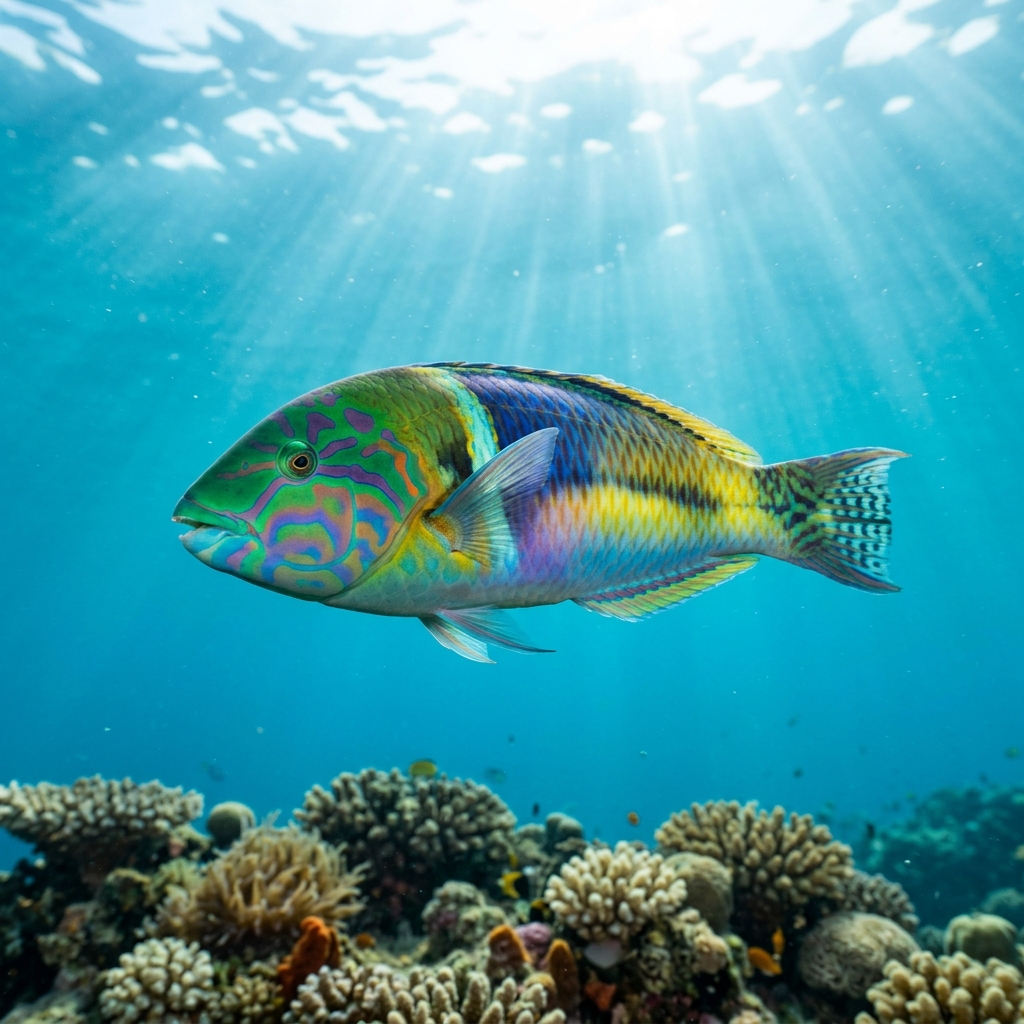
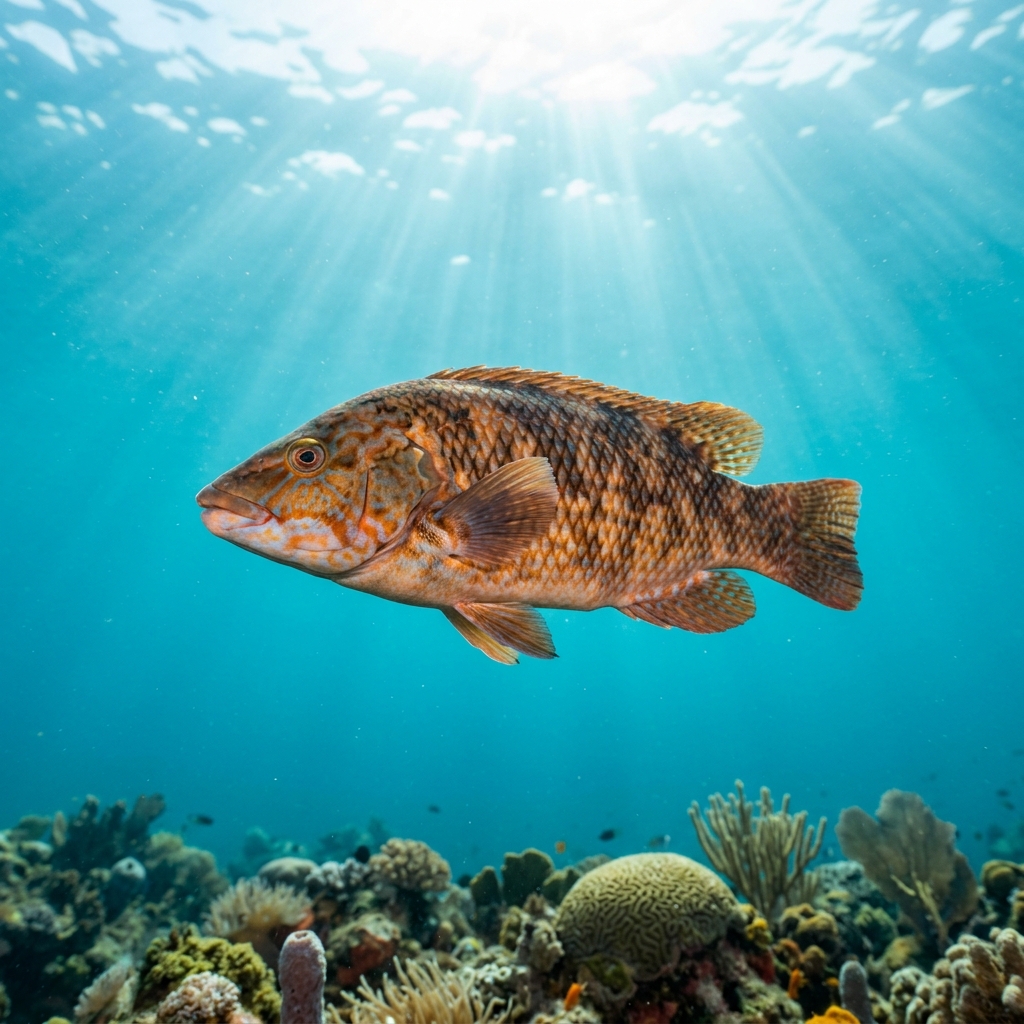
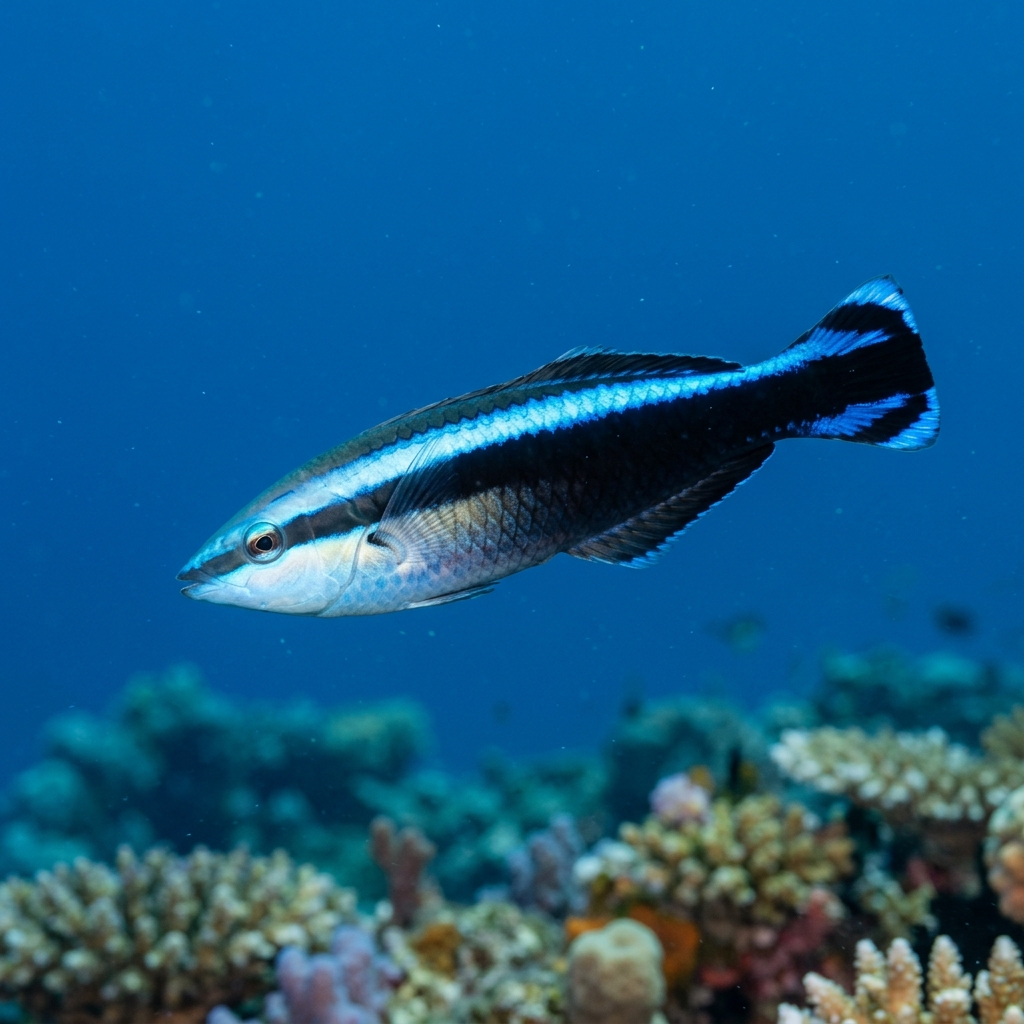
Reef neighbours a diver could mistake it for. Use the identification notes above to tell them apart.
Most reliably logged along South Africa's KwaZulu-Natal coast, with strong numbers also around Diani in Kenya and Marsa Alam and the Deep South in Egypt. Smaller but consistent sightings come from Eilat in Israel and Inhambane in Mozambique, with an outlying record from Western Australia.
Mapping where Tailspot Wrasse is logged…
KwaZulu-Natal in South Africa has the most logged sightings, followed by Diani in Kenya and Marsa Alam and the Deep South in Egypt. Smaller numbers turn up around Eilat in Israel and Inhambane in Mozambique.
There is no strong seasonal pattern in the sightings, and its comfortable temperature range of roughly 23.5 to 29.1 C means it is present on these reefs throughout the year.
Look for a small, slender wrasse around 14 cm with a pale to pinkish body and a distinct dark spot near the base of the tail. It moves in short darting bursts low over sand and reef rubble rather than swimming in open water.
They stay small, typically reaching around 14 cm in length, making them one of the more modest-sized wrasses divers encounter on the reef.
No. They pose no threat to divers and simply forage over the reef, darting away if approached too closely.
Site and sighting data is aggregated from diver logs, iNaturalist and GBIF. For taxonomy and conservation status:
Bird Wrasse
3,632 sites