Synchiropus stellatus
Rare and richly patterned, the Starry Dragonet is most reliably logged around Durban and the KwaZulu-Natal coast between February and June.
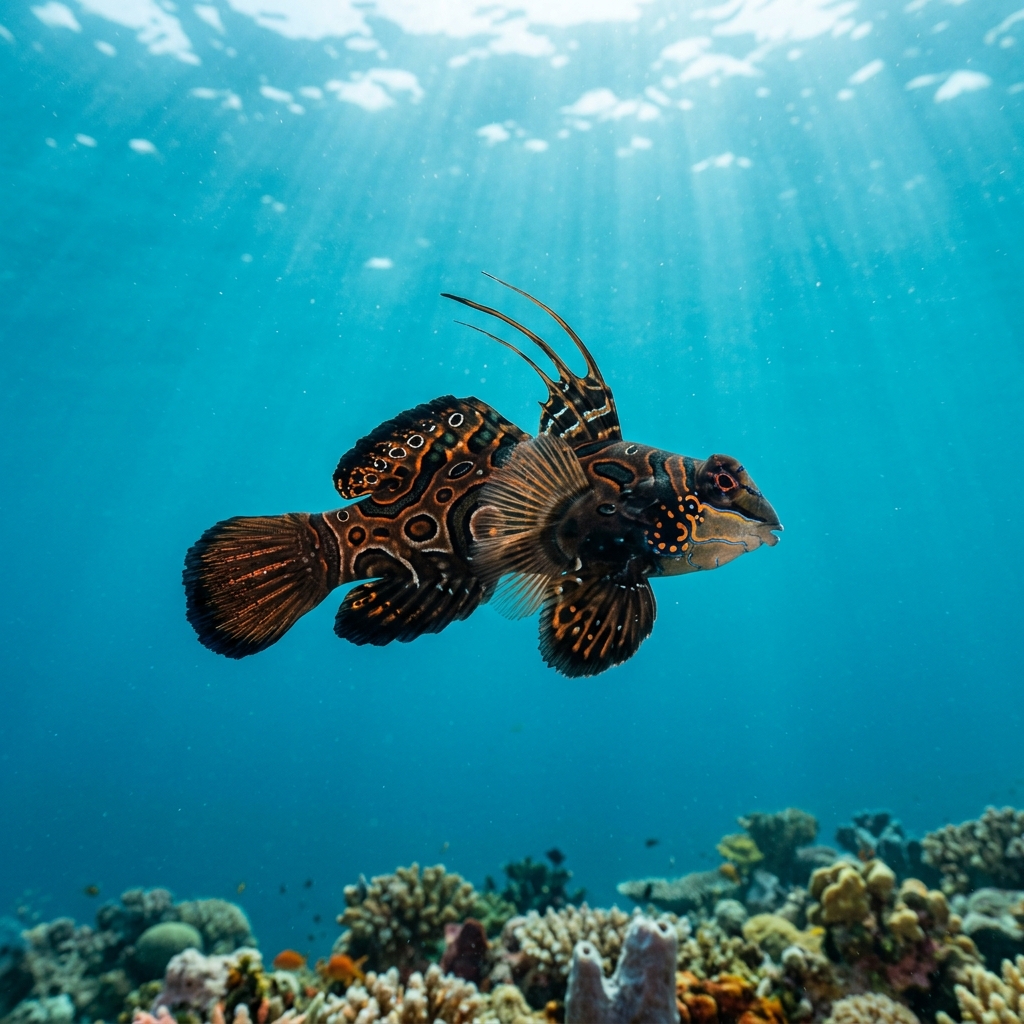
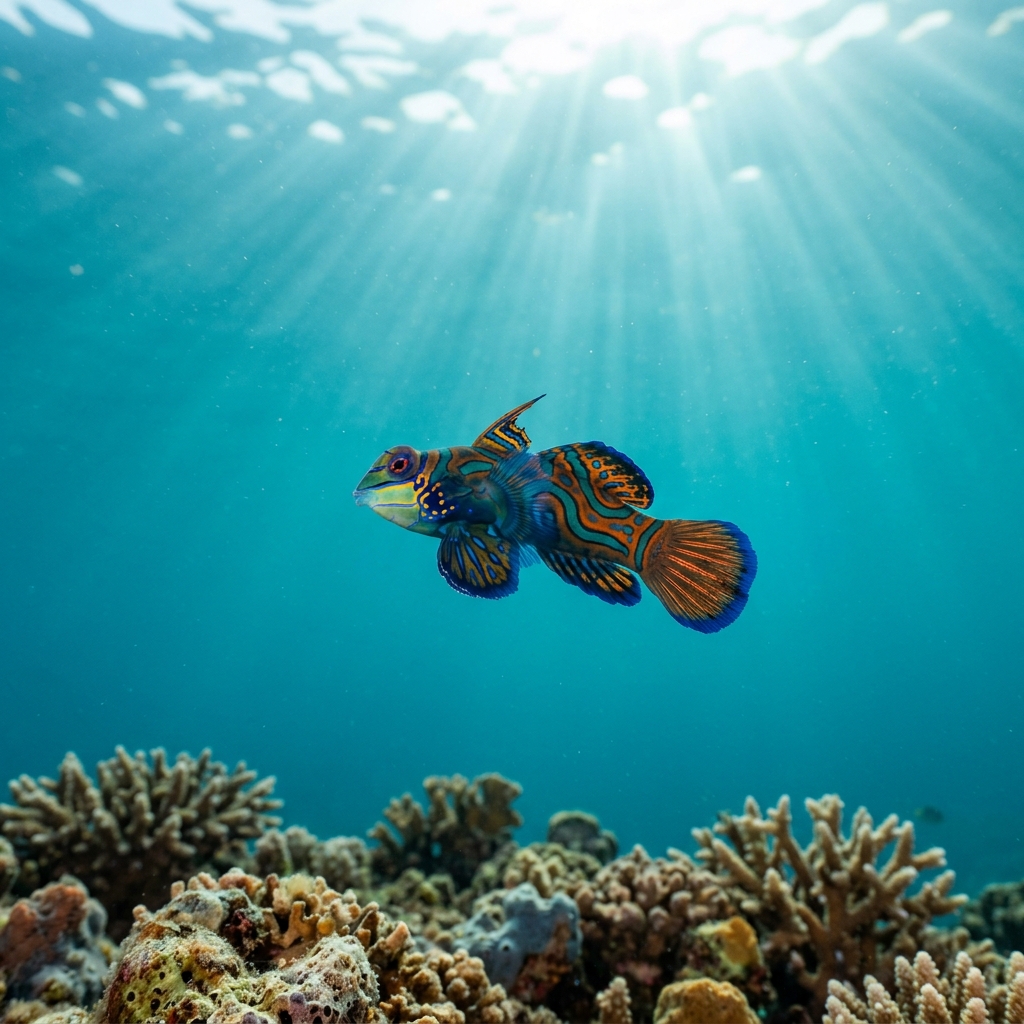
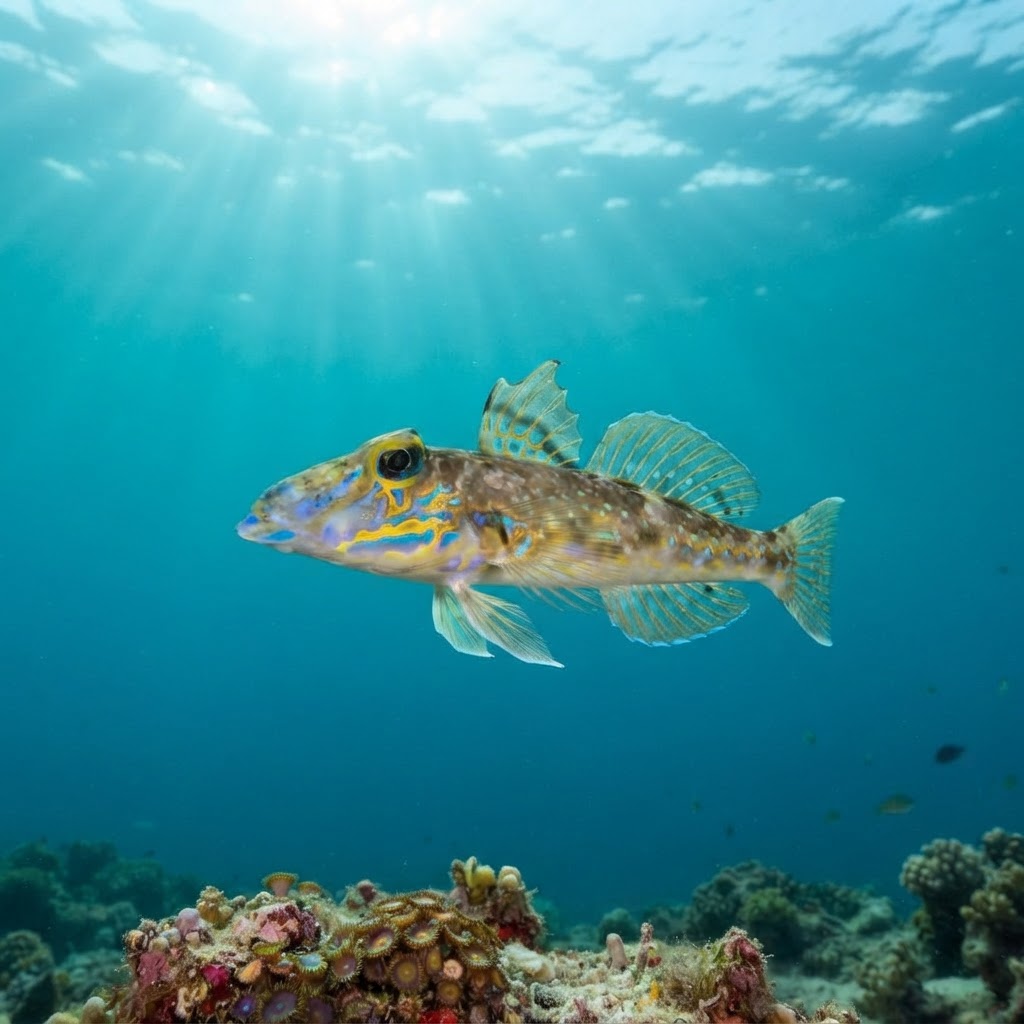
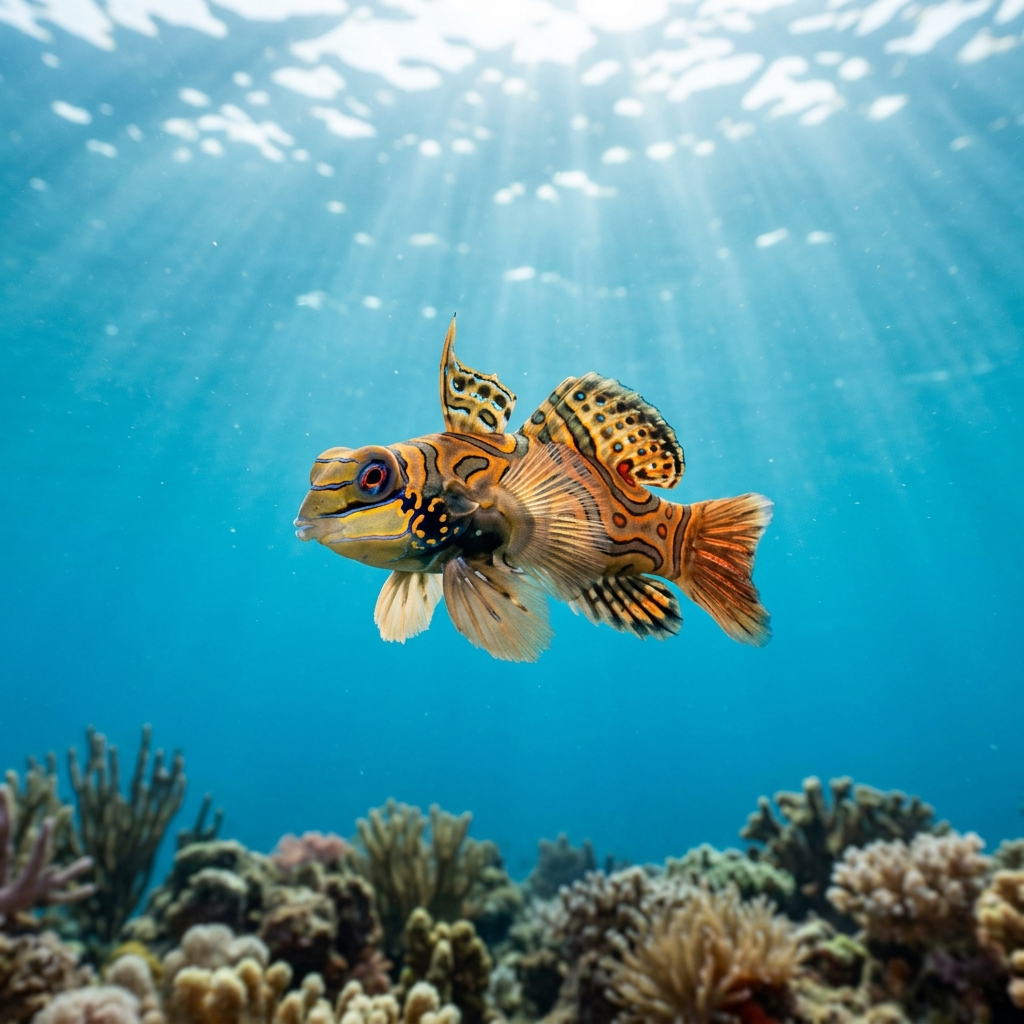
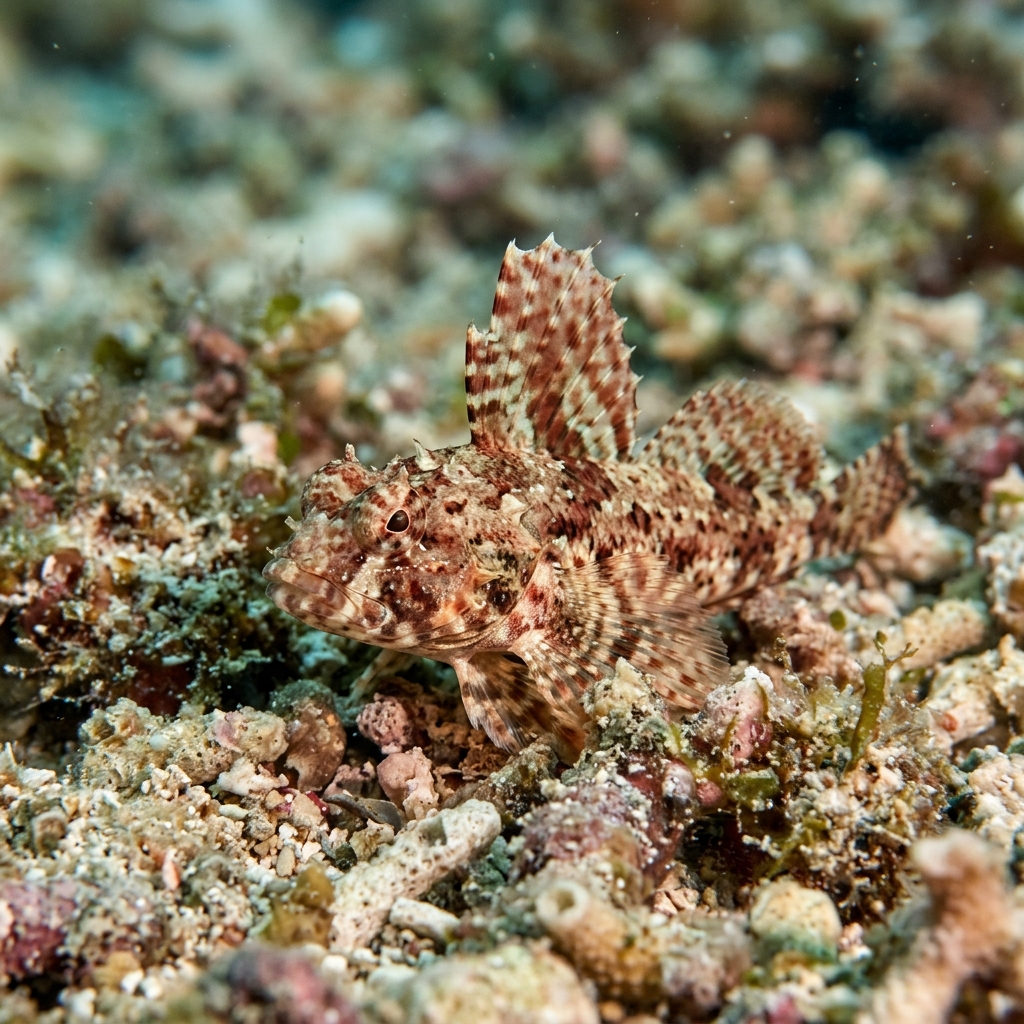
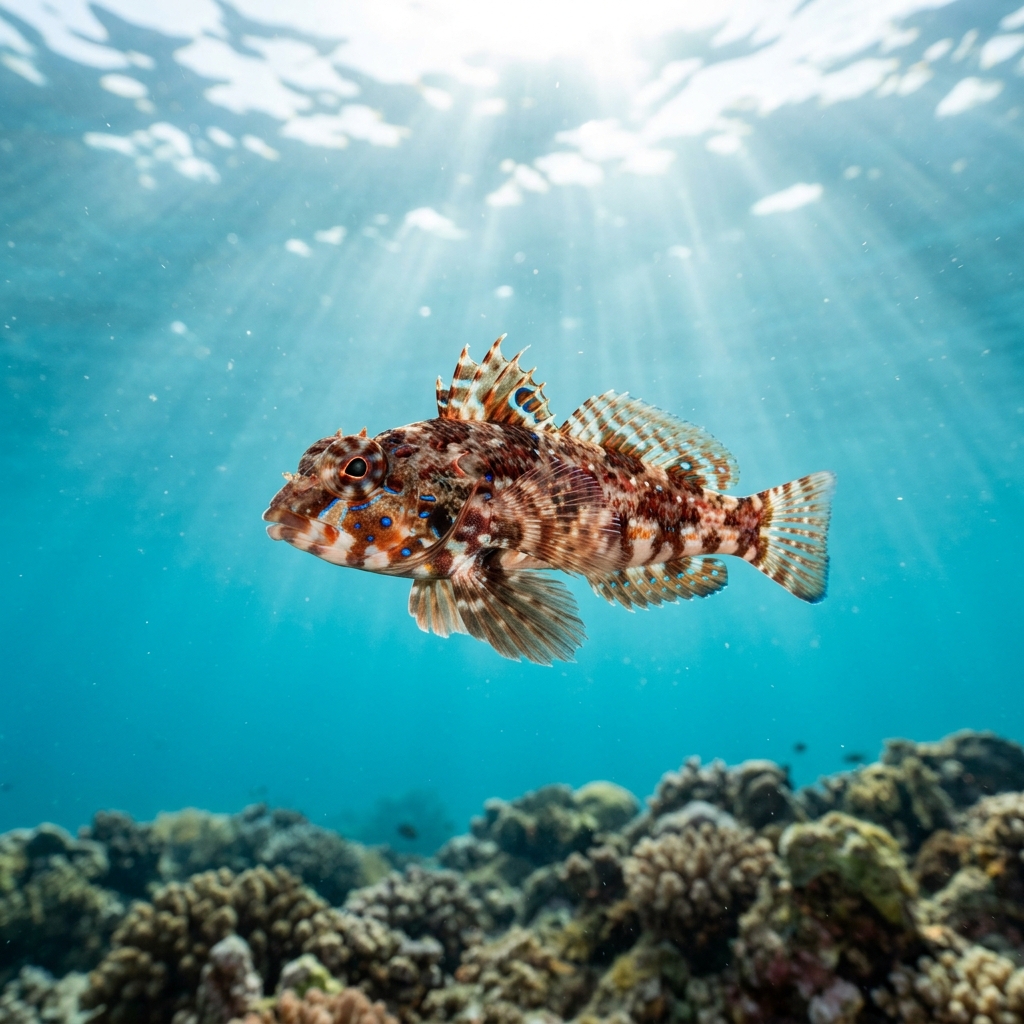
Small and cryptic, the starry dragonet lies flat on sand or rubble rather than swimming in open water, giving it the look of a tiny painted tile dropped on the seafloor. Its body is covered in a complex mosaic of spots, blotches, and wavy lines in reds, oranges, blues, and greens that break up its outline against the substrate. The large, splayed pectoral fins and flattened head with high-set eyes are the key shapes to lock onto. Males typically display a taller, more elaborate first dorsal fin than females.
Starry dragonets spend most of their time resting motionless on sand, rubble, or low-profile reef, relying on their elaborate camouflage rather than fleeing. When approached slowly they tend to hold position or shuffle a short distance before freezing again, making patient, unhurried observation the best tactic. Look close to the bottom and scan rubble patches rather than the reef wall.
Like other callionymids, dragonets lack scales; their skin is instead covered in a mucus coating that, in some family members, contains bitter or toxic compounds that deter predators.
In the Southern Hemisphere, sightings concentrate between February and June, so late summer through early autumn is the window to target along the South African coast.
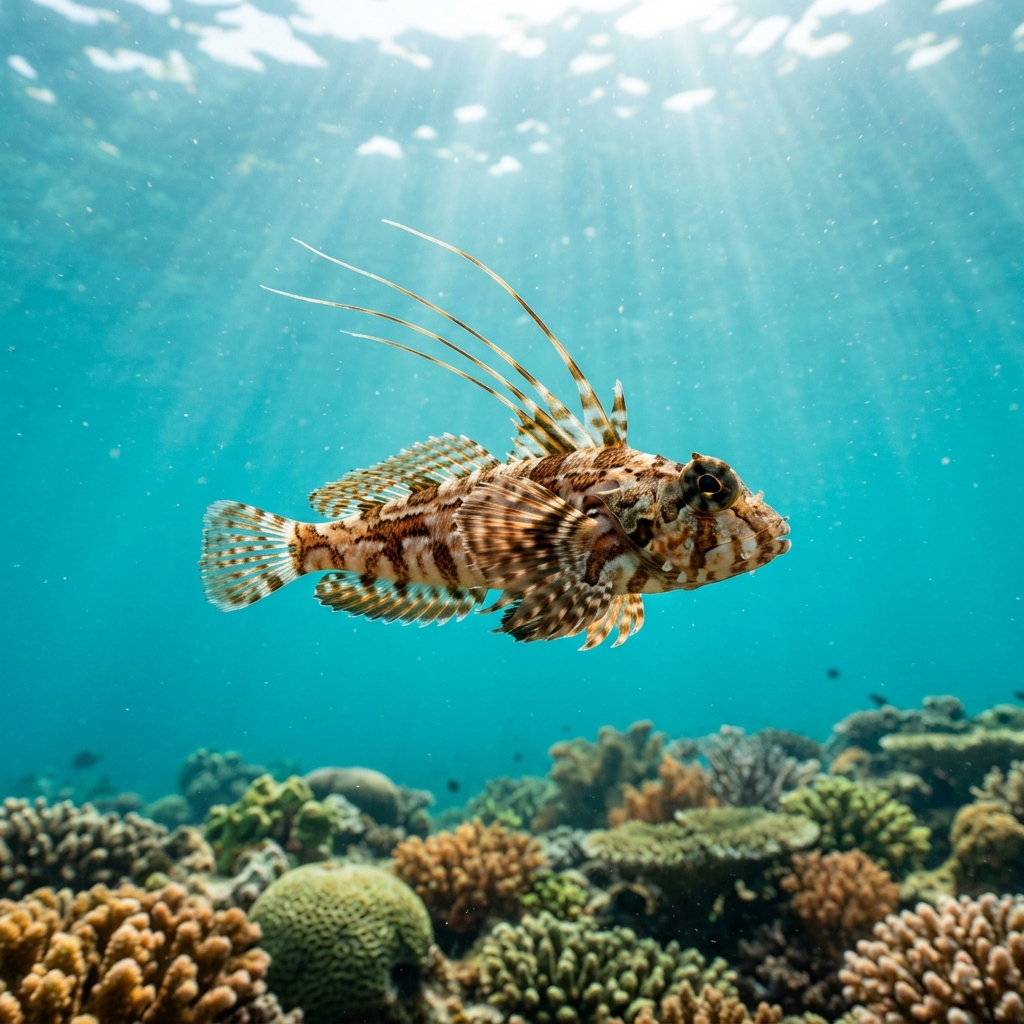
Reef neighbours a diver could mistake it for. Use the identification notes above to tell them apart.
The vast majority of logged sightings come from South Africa, with the Durban and North Coast region accounting for by far the most records. The KwaZulu-Natal South Coast adds further depth to that South African spread, and there is a single confirmed site in South Mayotte. If you want the best odds, plan a dive trip along the KwaZulu-Natal coast.
Mapping where Starry Dragonet is logged…
The starry dragonet is most reliably logged along the South African KwaZulu-Natal coast, particularly around Durban and the North Coast. There is also a recorded site in South Mayotte. KwaZulu-Natal is by far your best bet for a sighting.
Along the South African coast, sightings cluster from February through June. That late-summer to early-autumn window lines up with water temperatures in the 22 to 27 °C range that the species favours.
Look for a small, flattened fish resting motionless on sand or rubble with a vivid mosaic of spots, wavy lines, and blotches in red, orange, blue, and green. The high-set eyes, broad pectoral fins, and habit of staying pinned to the substrate are the key features to look for.
Yes, they are typically logged as rare at most sites where they are recorded, and uncommon at best elsewhere. Slow, methodical bottom-searching on sand and rubble patches gives you the best chance of spotting one.
Site and sighting data is aggregated from diver logs, iNaturalist and GBIF. For taxonomy and conservation status:
Fingered Dragonet
64 sites