Synchiropus papilio
Spot the Butterfly Dragonet along New South Wales and Victoria's cool-water reefs. Tips on ID, look-alikes, and where it's most commonly logged in Australia.
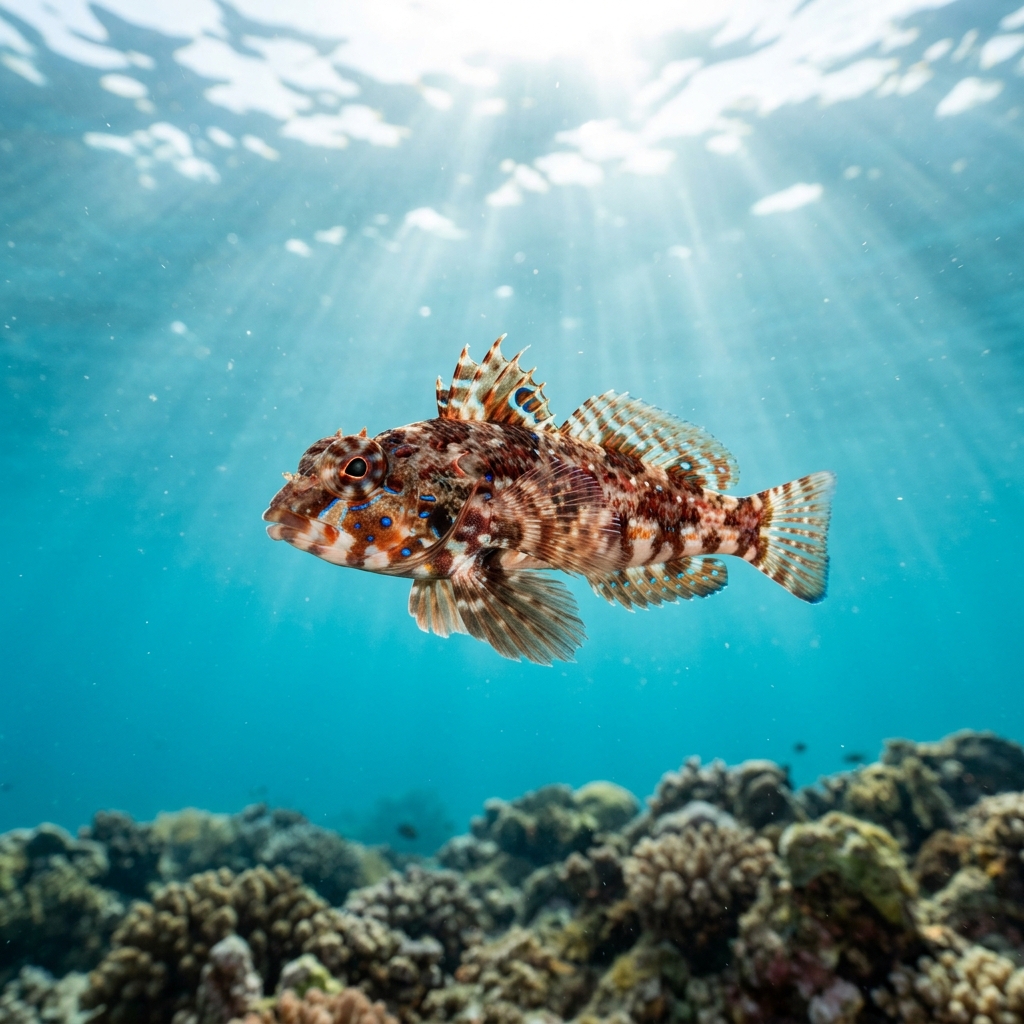
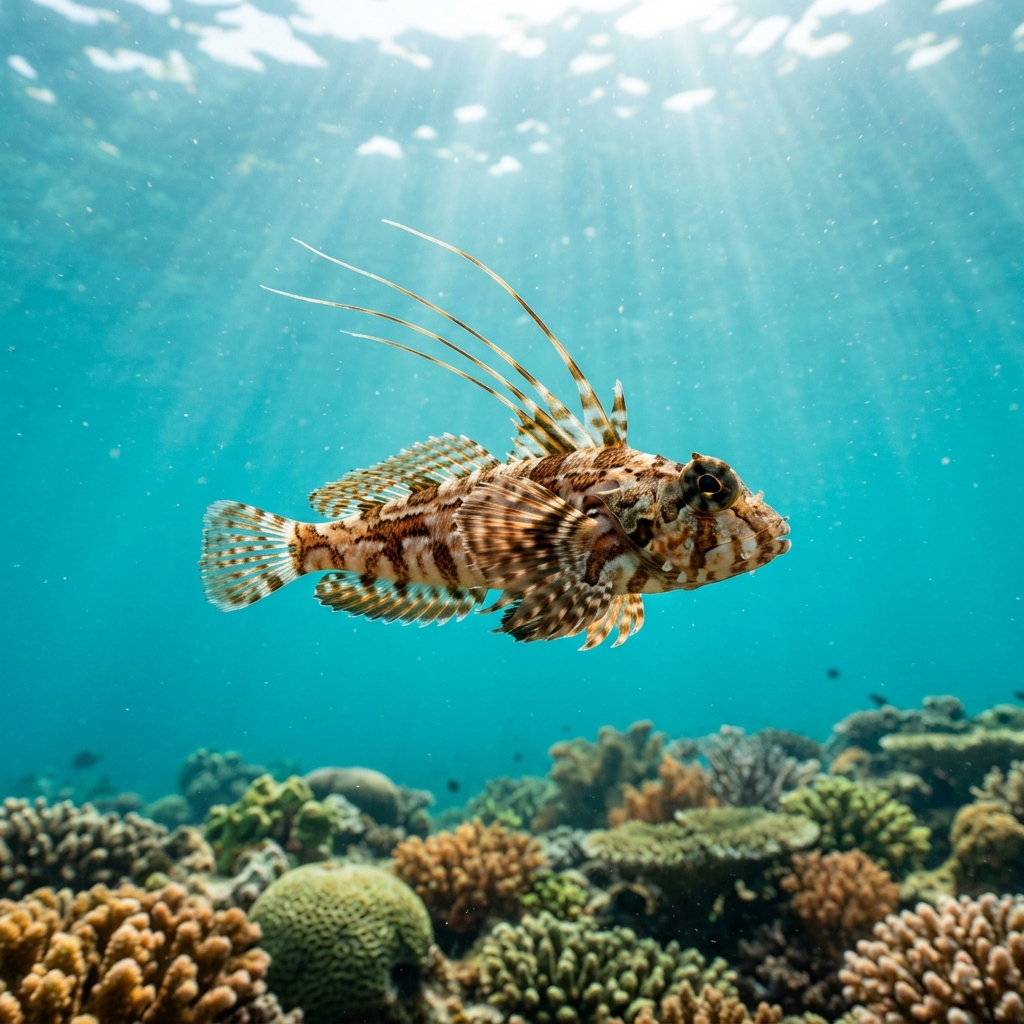
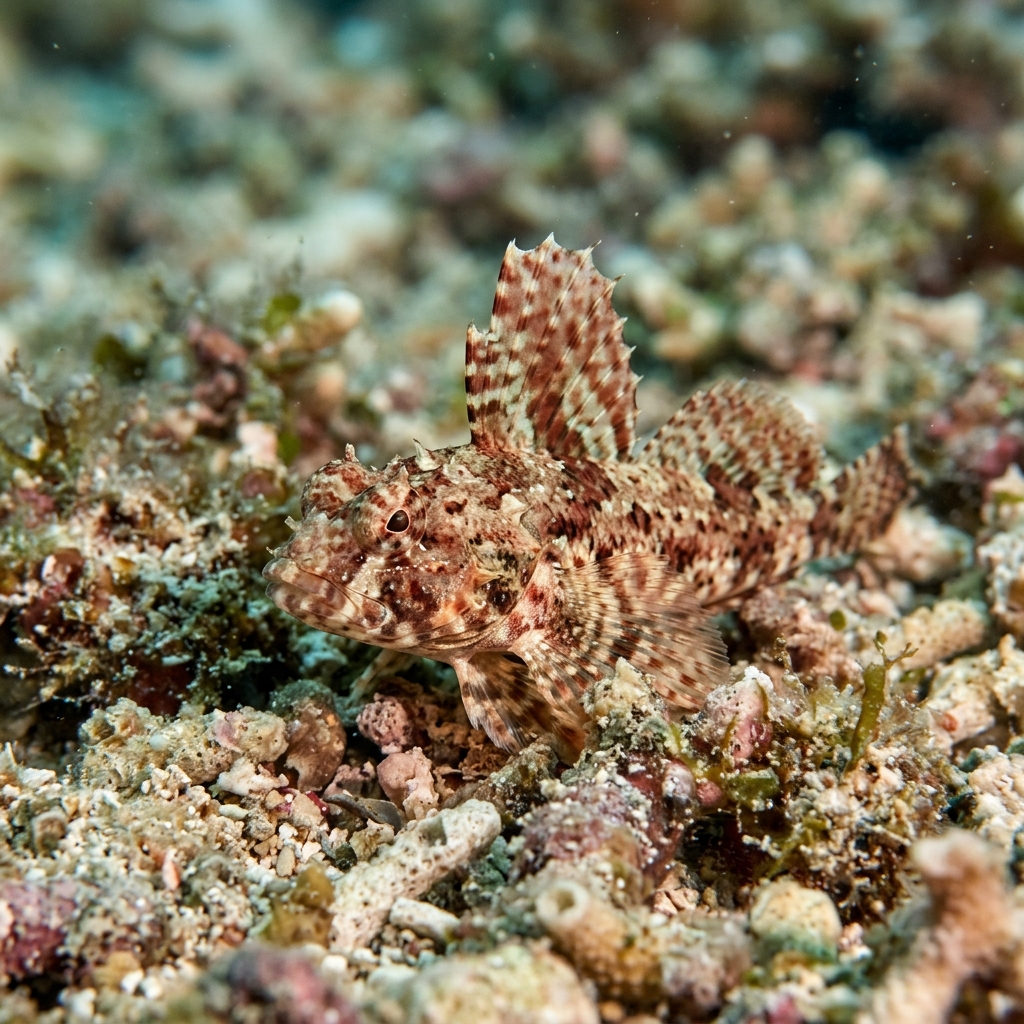
A small, flattened dragonet with a broad, rounded head and ornate, sail-like dorsal fins that fan out when the fish is at rest or displaying. The body is richly patterned with swirling spots and blotches in earthy reds, oranges, and browns, providing strong camouflage against rocky reef and algae-covered substrate. Look for the characteristic wide-set eyes sitting high on the head and the belly-crawling posture as it moves along the bottom using its pelvic fins like legs.
Butterfly Dragonets spend most of their time close to the substrate, picking slowly across rocky reef, rubble, and weed-covered bottom in search of tiny invertebrates. They move with a distinctive shuffling crawl, using stiffened pelvic fins as props rather than swimming freely. When approached, they tend to freeze or creep slowly away rather than bolt, which makes patient, slow-moving divers far more likely to get a good look.
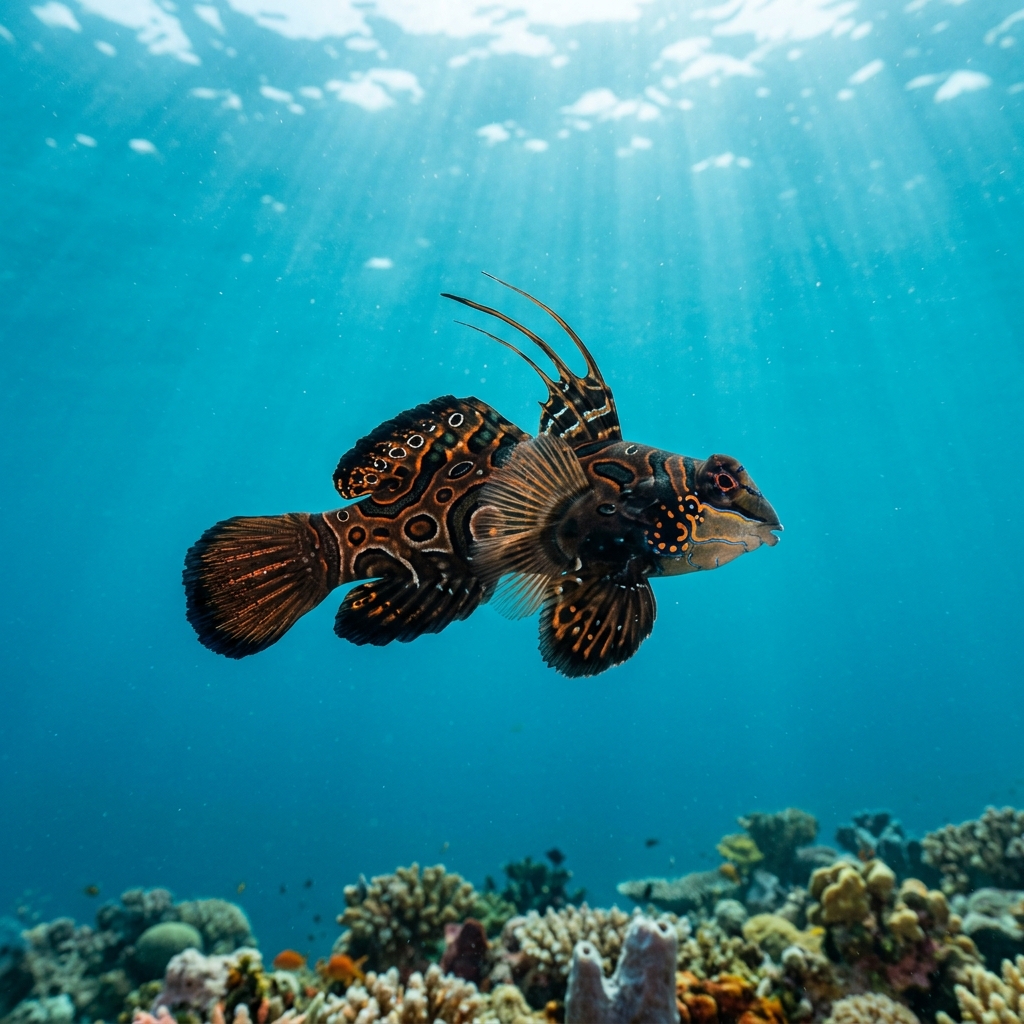
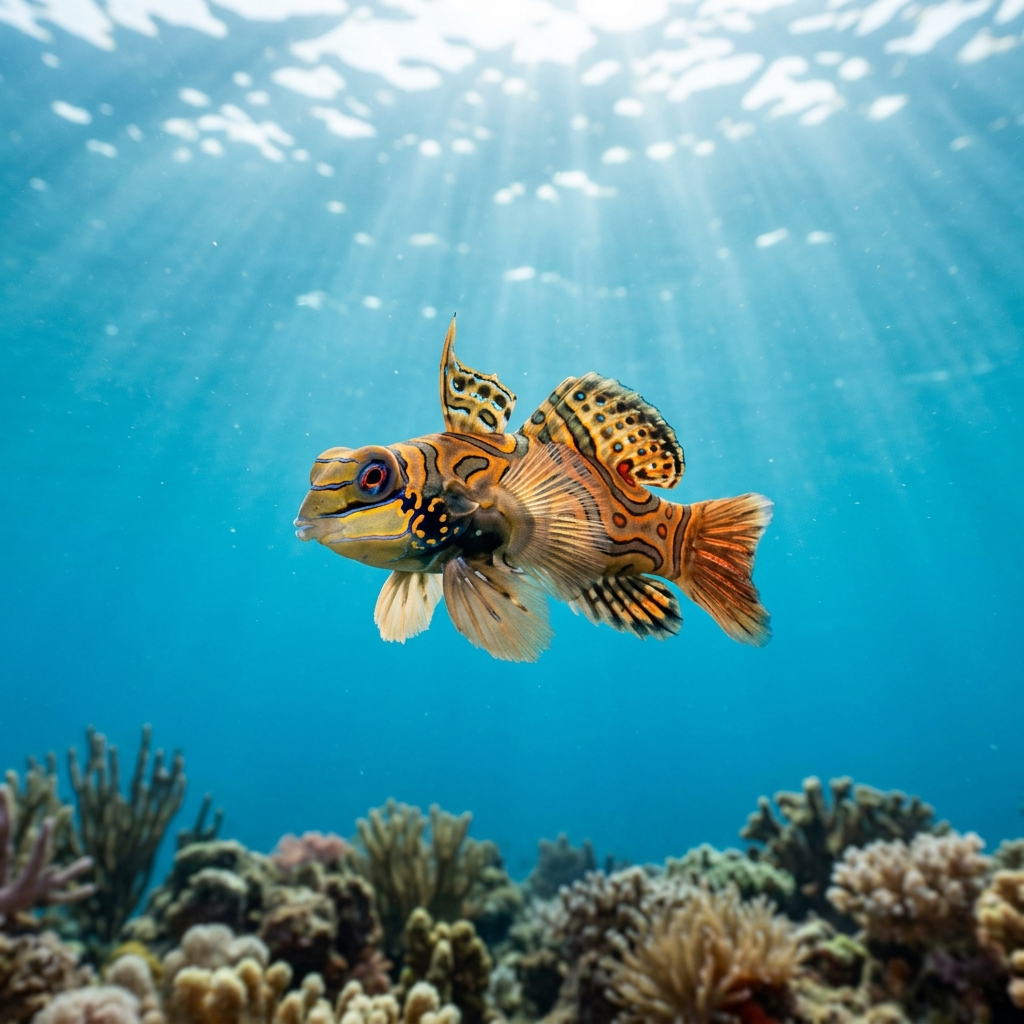
Like other callionymids, males can raise their elaborate dorsal fin into a tall, flag-like display during courtship or when rival males are nearby. Catching this brief fan-out is one of the best ways to confirm an ID in the field.
There is not enough monthly sighting data to point to a clear season, so treat it as a year-round resident where it occurs. Observed water temperatures range from about 18 to 23 °C, consistent with the cool temperate conditions of southeastern Australia throughout the year.
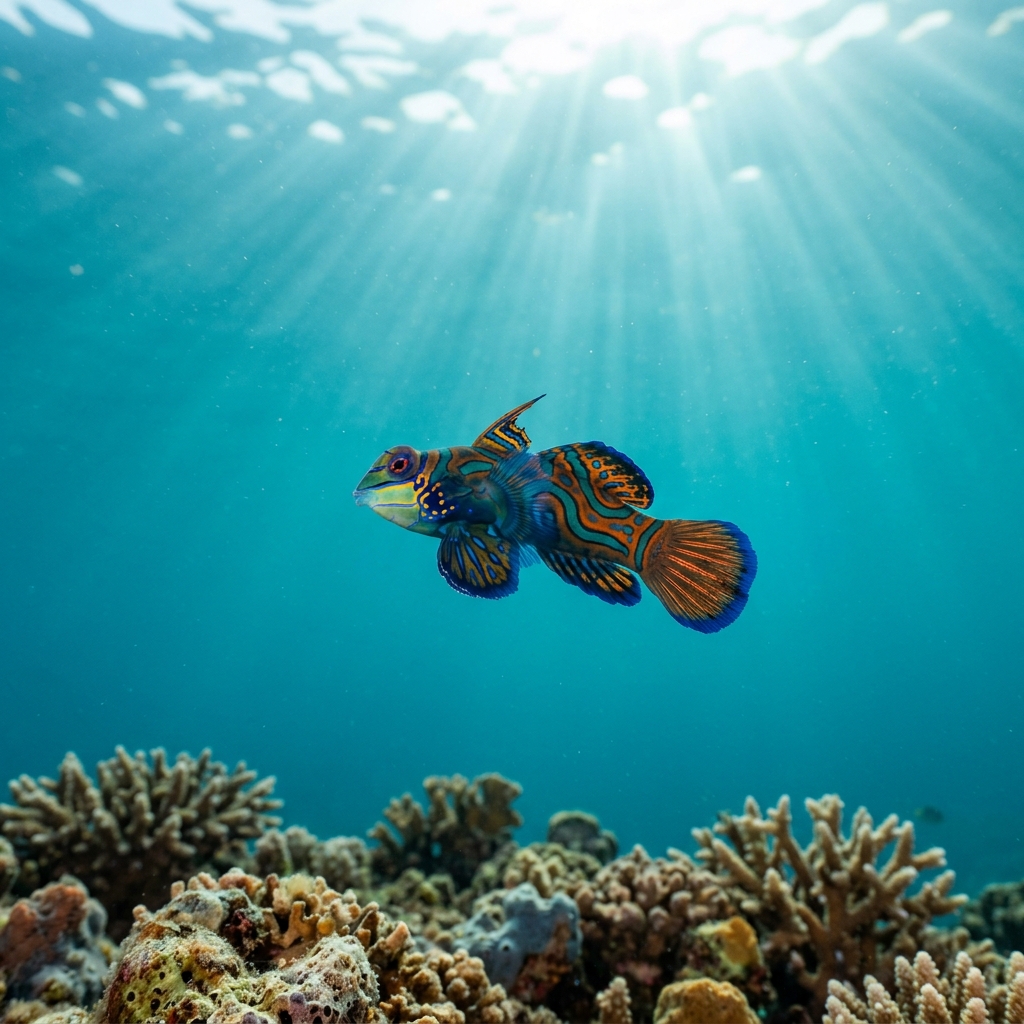
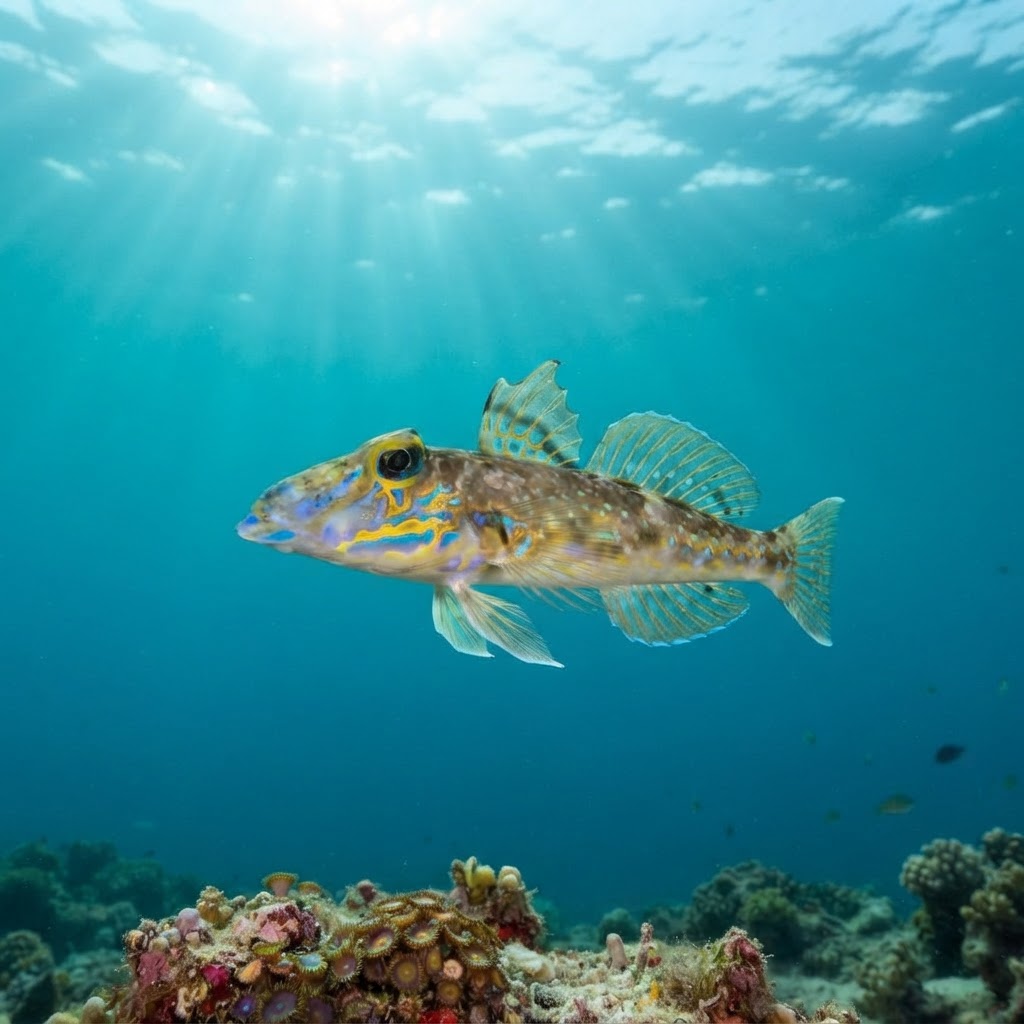
Reef neighbours a diver could mistake it for. Use the identification notes above to tell them apart.
Almost all logged sightings come from Australia, making it one of the more distinctly Australian dragonet species. New South Wales accounts for the greatest number of sites, followed by Victoria, so temperate southeastern Australian reefs are your best bet. South Australia also has a handful of records worth targeting if you're diving that coastline.
Mapping where Butterfly Dragonet is logged…
Sightings are almost entirely from southeastern Australia. New South Wales has the most logged sites, with Victoria close behind. South Australia also has a small number of records. Temperate rocky reefs and rubble slopes in these regions are the habitat to focus on.
There is no clear seasonal peak in the available data, so it appears to be present year-round in its range. It favours cool water between roughly 18 and 23 °C, which matches southeastern Australia's conditions across all seasons.
Look for a small, flattened fish hugging the bottom on rocky or weedy reef, with a broad head, high-set eyes, and richly patterned brownish-orange markings. The ornate dorsal fins and its distinctive crawling movement on stiffened pelvic fins are the clearest field marks. Males may briefly raise a tall first dorsal fin, which makes identification even easier.
Yes, sighting records consistently rate them as rare to uncommon even at sites where they are known to occur. Their cryptic colouration and bottom-hugging habit mean they are easy to overlook. Slow, careful finning and scanning rocky reef and rubble closely gives you the best chance.
No, they pose no risk to divers. They are small, shy fish that move away from disturbance rather than towards it. No special precautions are needed beyond the normal advice to avoid touching or harassing any marine animal.
Site and sighting data is aggregated from diver logs, iNaturalist and GBIF. For taxonomy and conservation status:
Starry Dragonet
66 sites