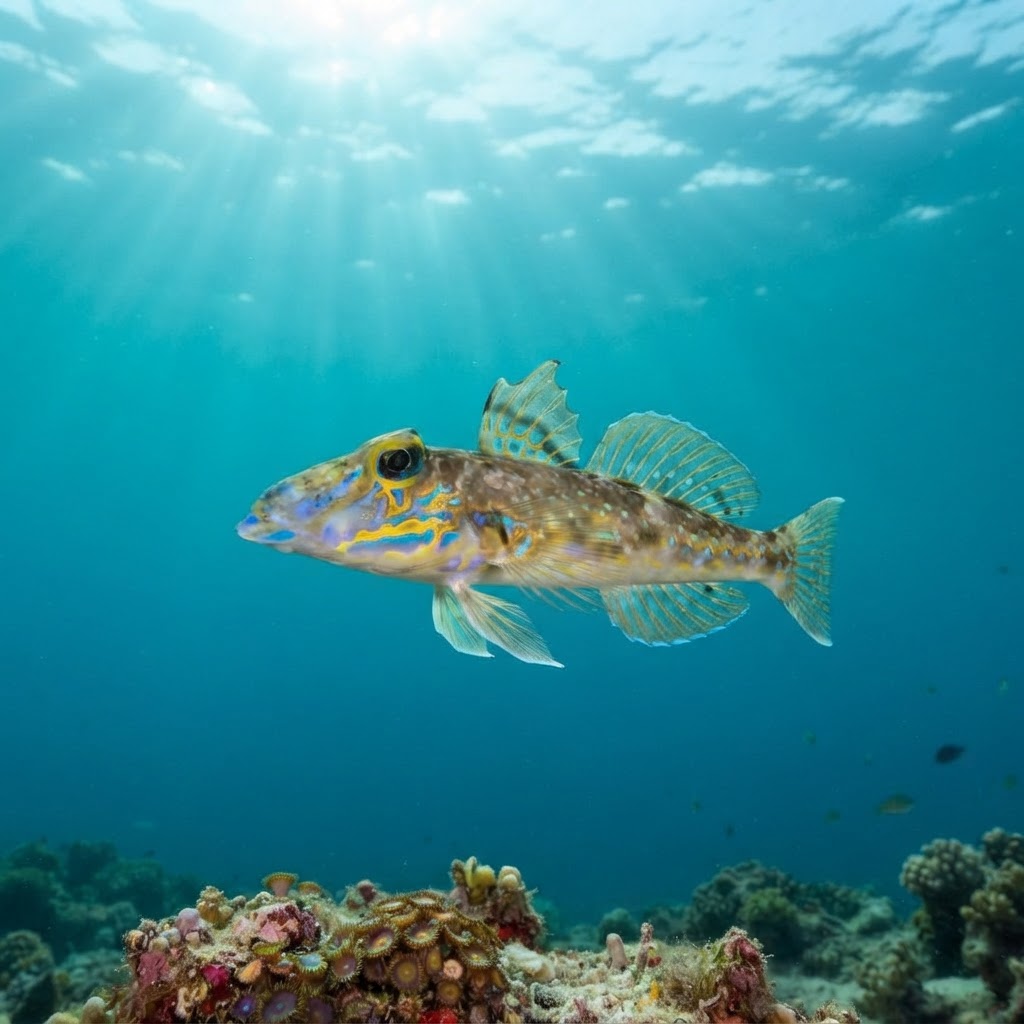
Callionymus lyra
Mottled and low-slung on the sand in Brittany and Bohuslän, the Common Dragonet rewards divers who slow down and scan the bottom.
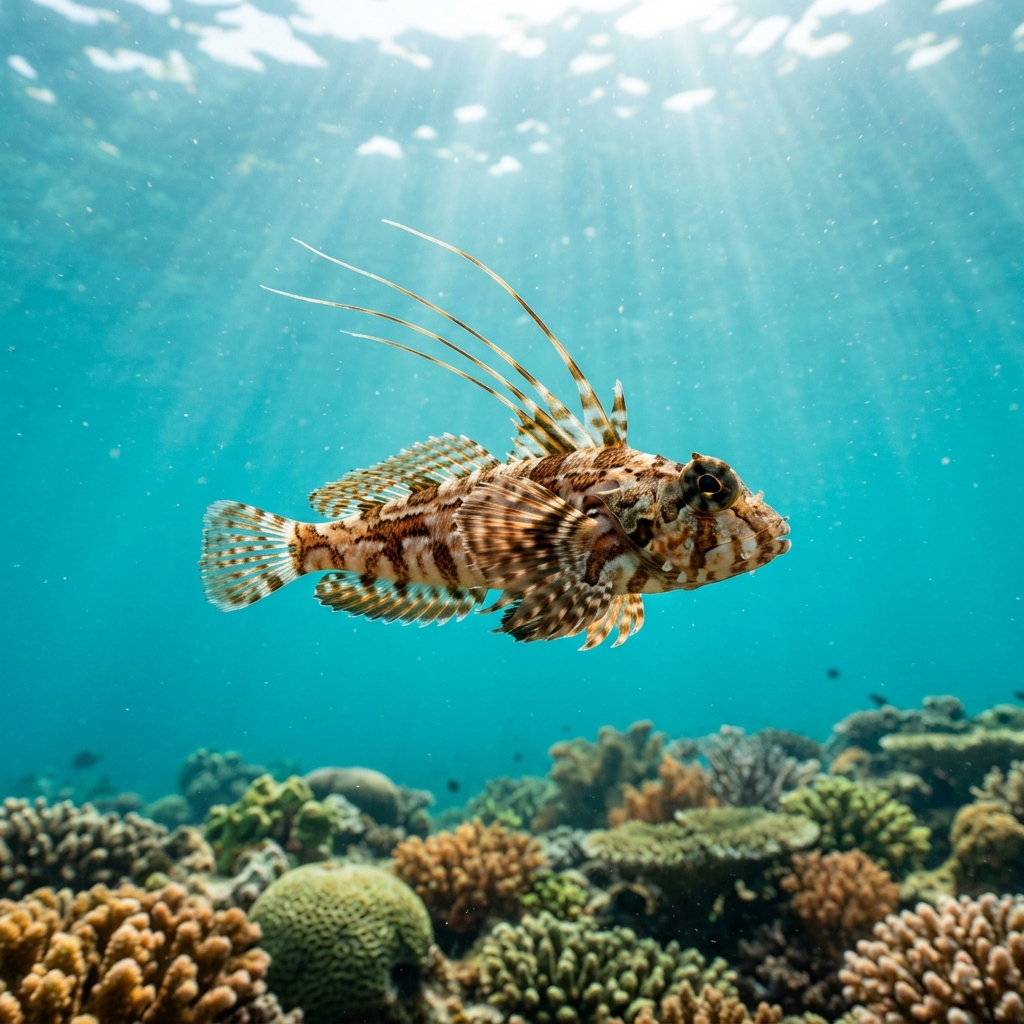
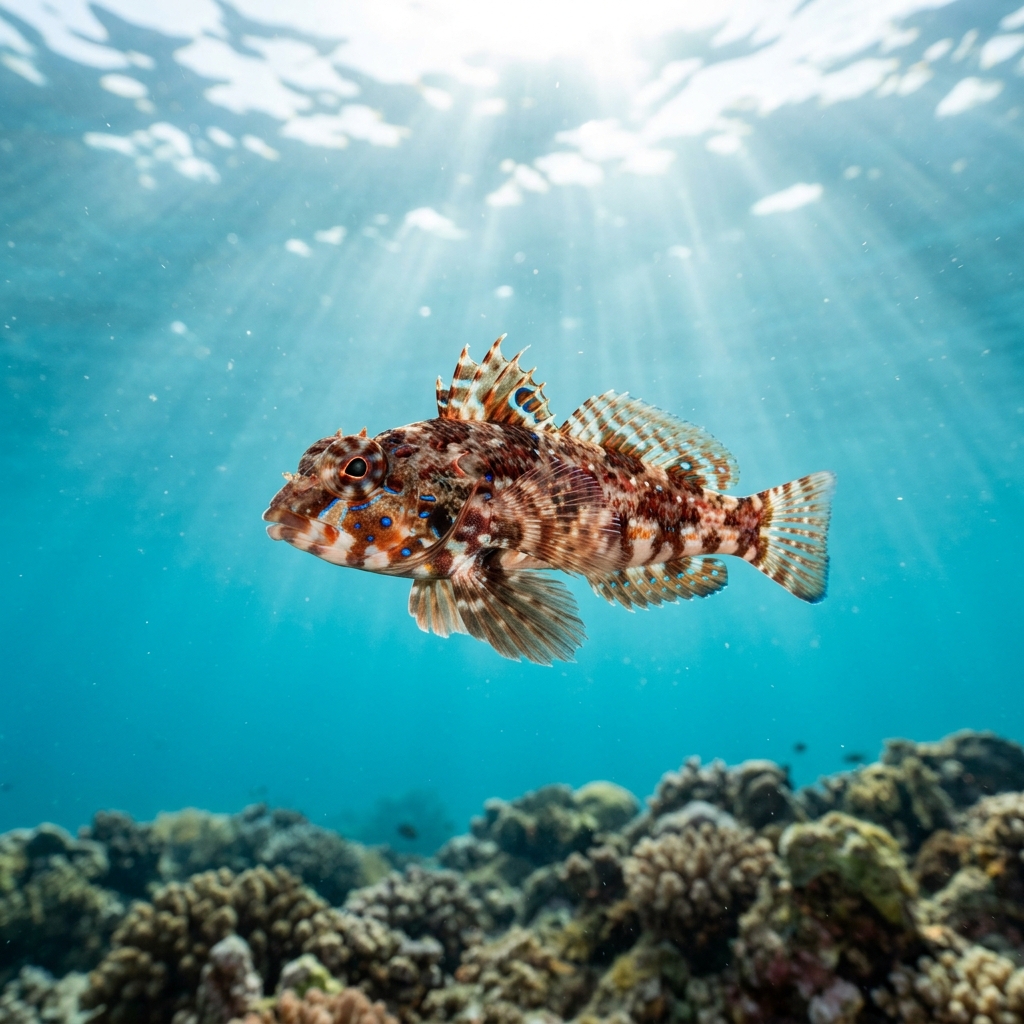
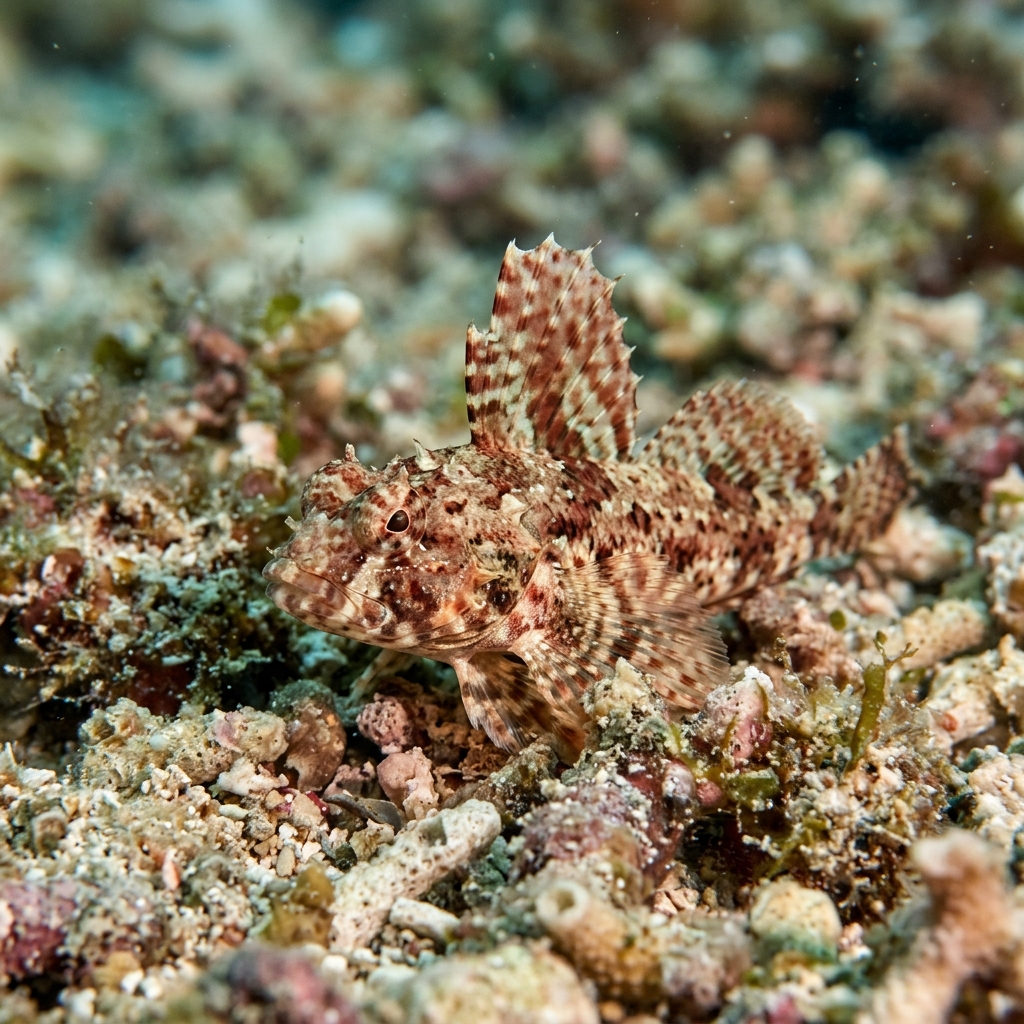
Look down, not out: this fish lies flat on sand or fine gravel with its body pressed to the bottom, rarely more than 21 cm long. It has a broad, flattened head with upward-facing eyes, a mottled brown, blue-flecked or olive body that breaks up its outline against the seabed, and a slim tapering tail. Males carry a noticeably taller, more elaborate first dorsal fin than females, which is the quickest way to tell the sexes apart at a glance.
Expect to find it motionless on sand, gravel or mixed seabed, often only noticeable once it shifts position or you spot the eyes poking up. It is not a fast swimmer and tends to sit still or make short low hops across the bottom rather than bolt when a diver approaches, so a slow, careful look at sandy patches near reef edges is the best way to pick one out. Most logged sightings are on the seabed rather than up in the water column, reflecting its bottom-dwelling habits.
Males display to rivals and to females by raising that tall first dorsal fin, a signal used instead of colour change or aggressive contact, so a fish with an unusually large fin held upright is very likely showing off rather than under threat.
Sightings show no strong seasonal pattern, so treat this as a year-round find within its comfort range of roughly 11.7 to 19.5C. In practice that means cooler-water diving conditions across northern Europe rather than a specific month to target.
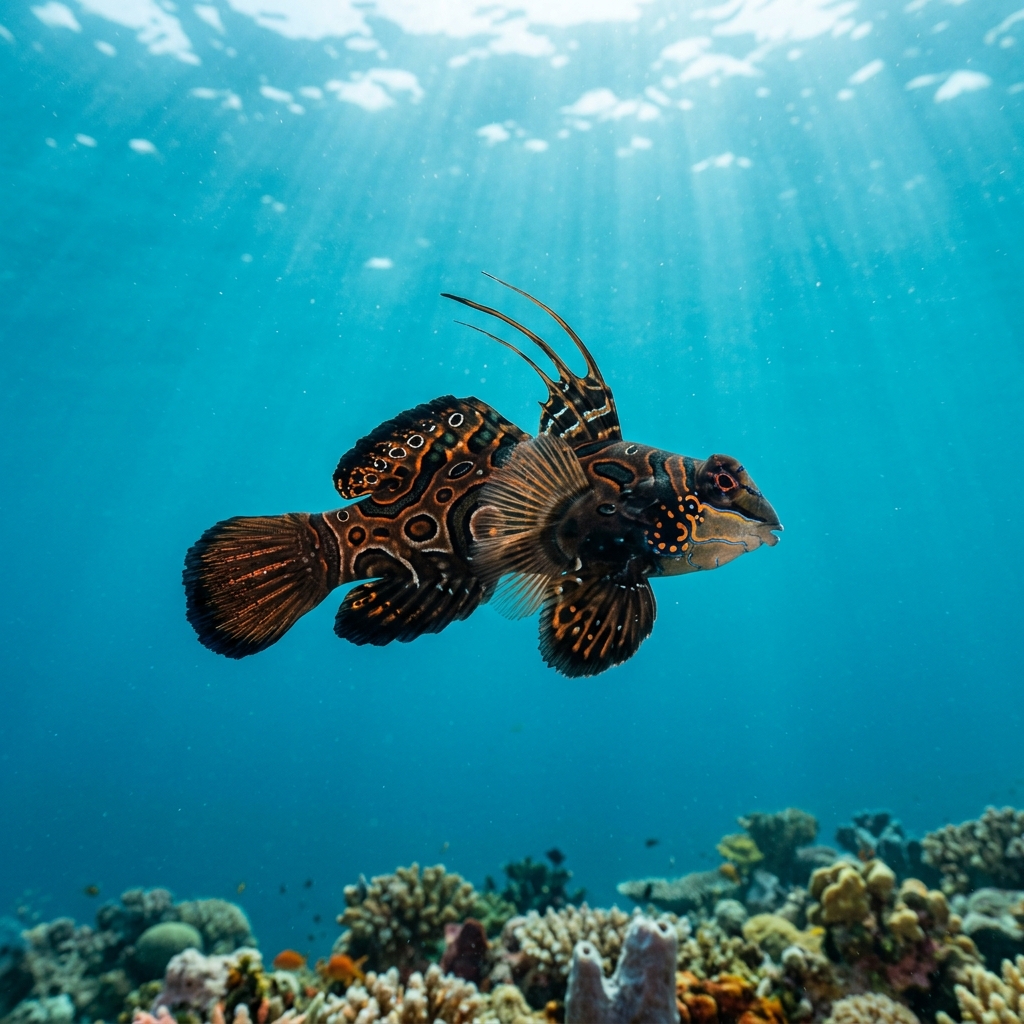
Reef neighbours a diver could mistake it for. Use the identification notes above to tell them apart.
Brittany is the standout region for this species, with a reliable spread of sightings there and further along France's Bay of Biscay coast. It also turns up consistently in Bohuslän in Sweden and across Scotland, with smaller but steady numbers in Schleswig-Holstein in Germany, the Lisbon Coast in Portugal and Sørlandet in Norway.
Mapping where Common Dragonet is logged…
Brittany and the Bay of Biscay in France are the strongest areas for this species, with further reliable sightings in Bohuslän, Sweden and around Scotland. Smaller but consistent numbers also come from Schleswig-Holstein in Germany and the Lisbon Coast in Portugal.
There is no clear peak season in the sighting data, so it is treated as a year-round find. It is logged in water from about 11.7 to 19.5C, which covers most of the diving season across its northern European range.
Look for a small, flat-bodied fish lying still on sand or gravel, with a broad head, upward-facing eyes and a mottled brown or olive pattern that camouflages it against the seabed. Males have a much taller first dorsal fin than females, useful for telling the sexes apart underwater.
They typically reach around 21 cm in length, making them a small, easy-to-overlook bottom-dweller rather than a fish that stands out from a distance.
No, they pose no danger to divers. They are small, slow-moving bottom fish with no aggressive behaviour towards people.
Site and sighting data is aggregated from diver logs, iNaturalist and GBIF. For taxonomy and conservation status:
Fingered Dragonet
64 sites