Cyprinocirrhites polyactis
Uncommon reef find perched on soft coral in KwaZulu-Natal and New South Wales, active in 20-28C water year-round.
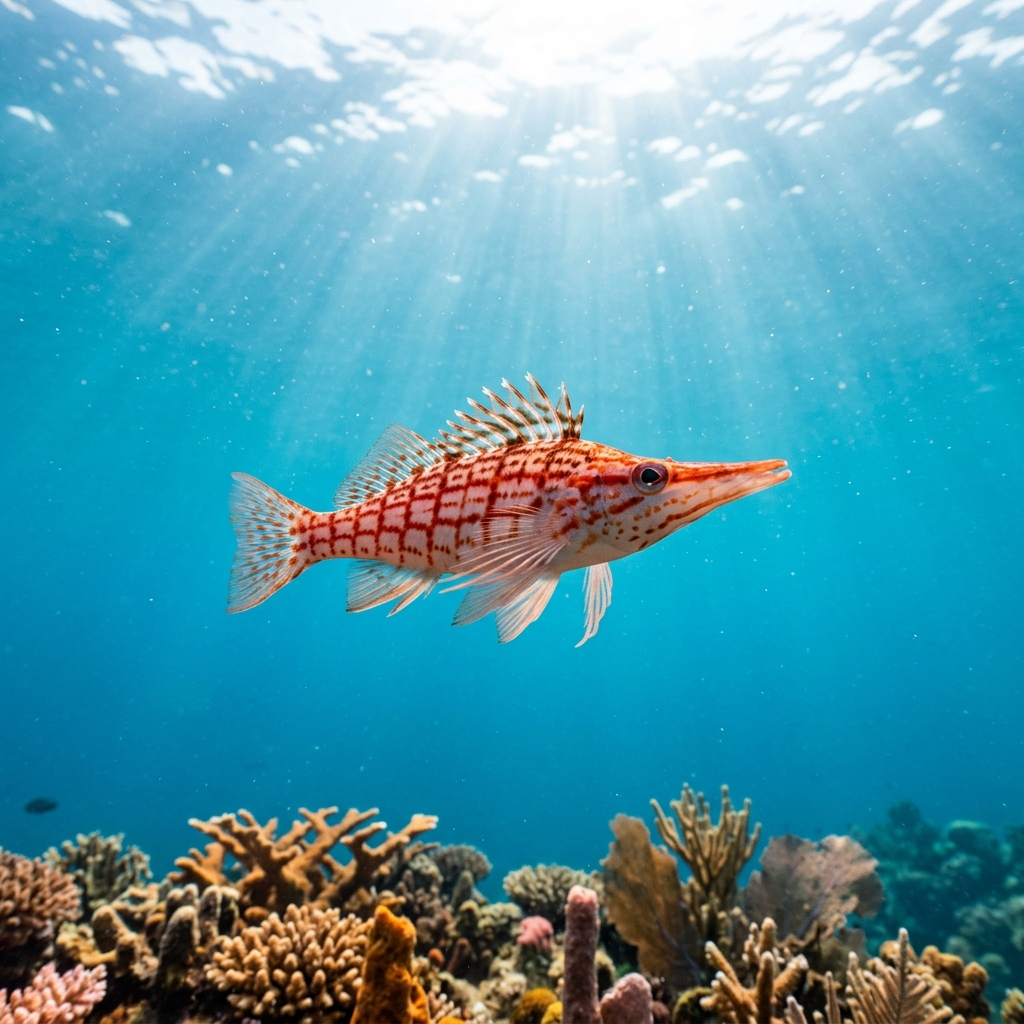
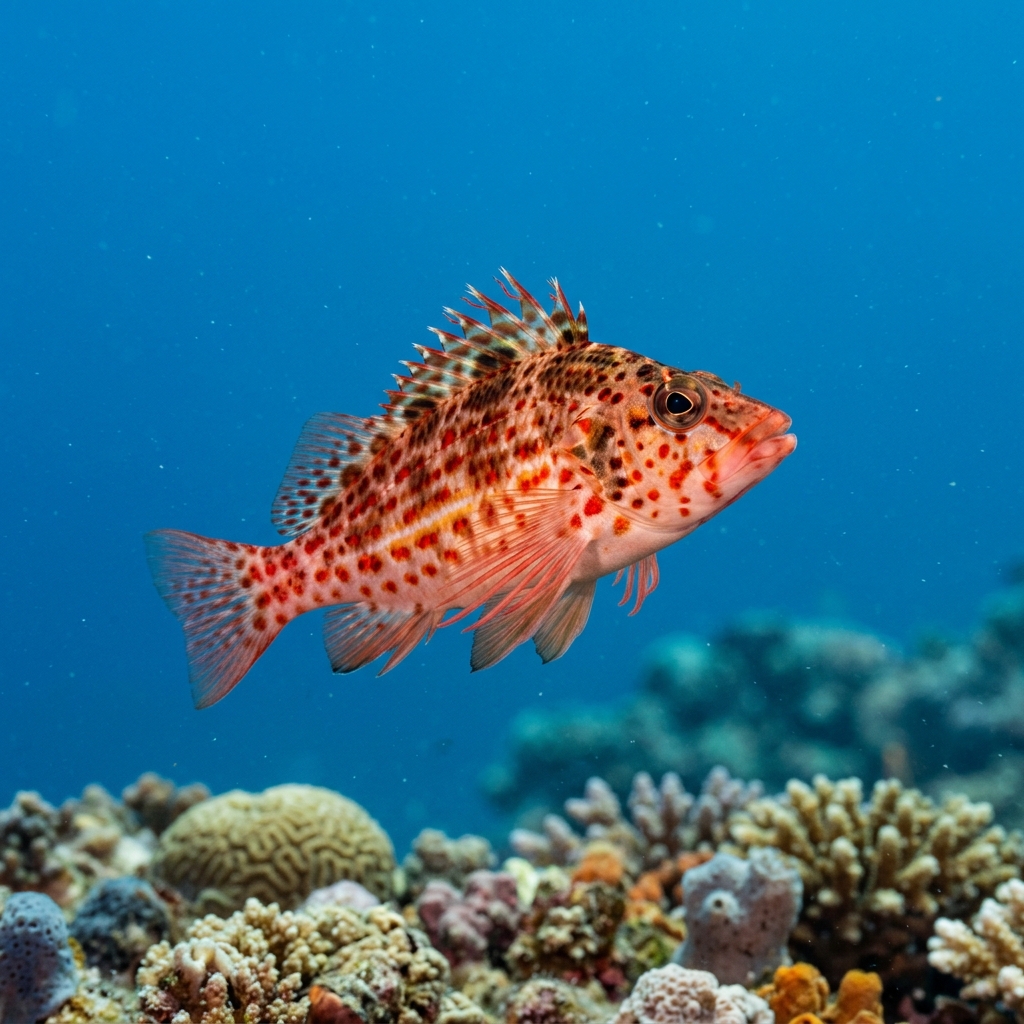
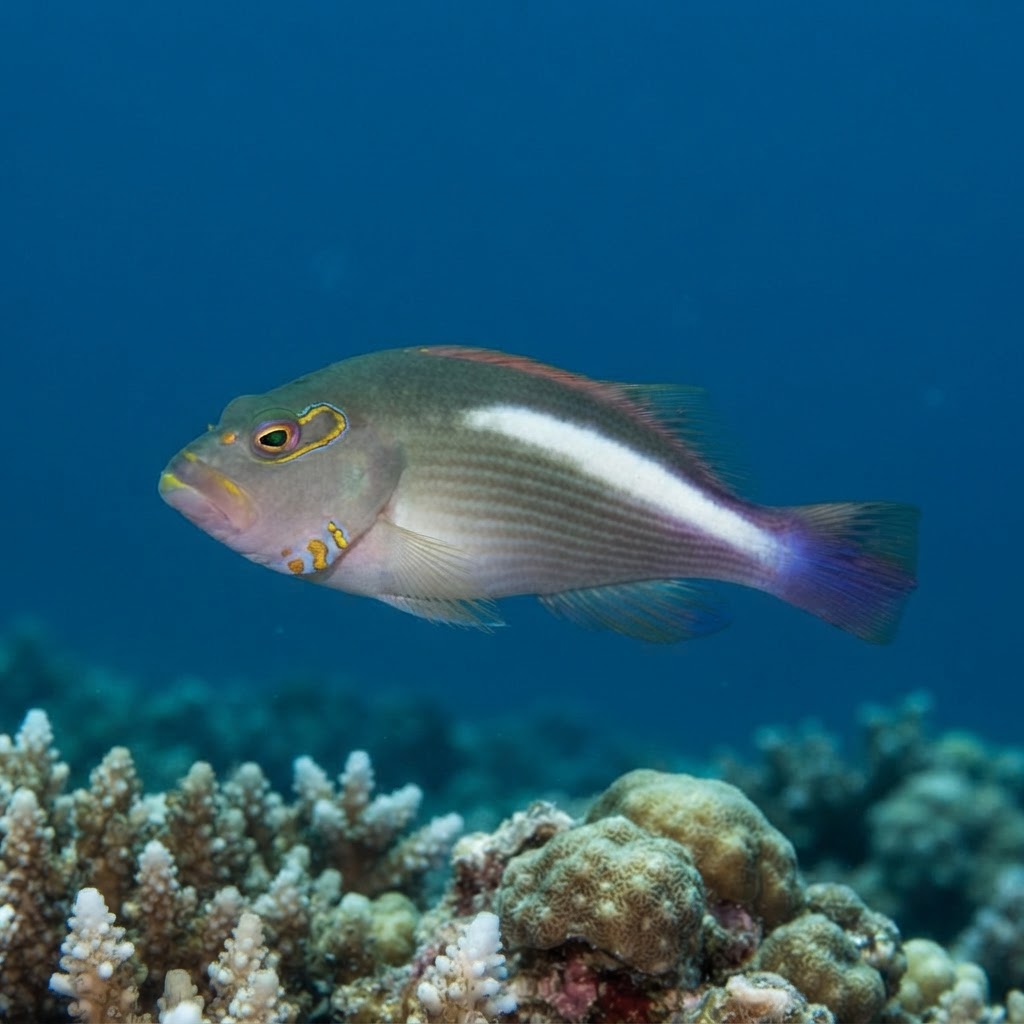
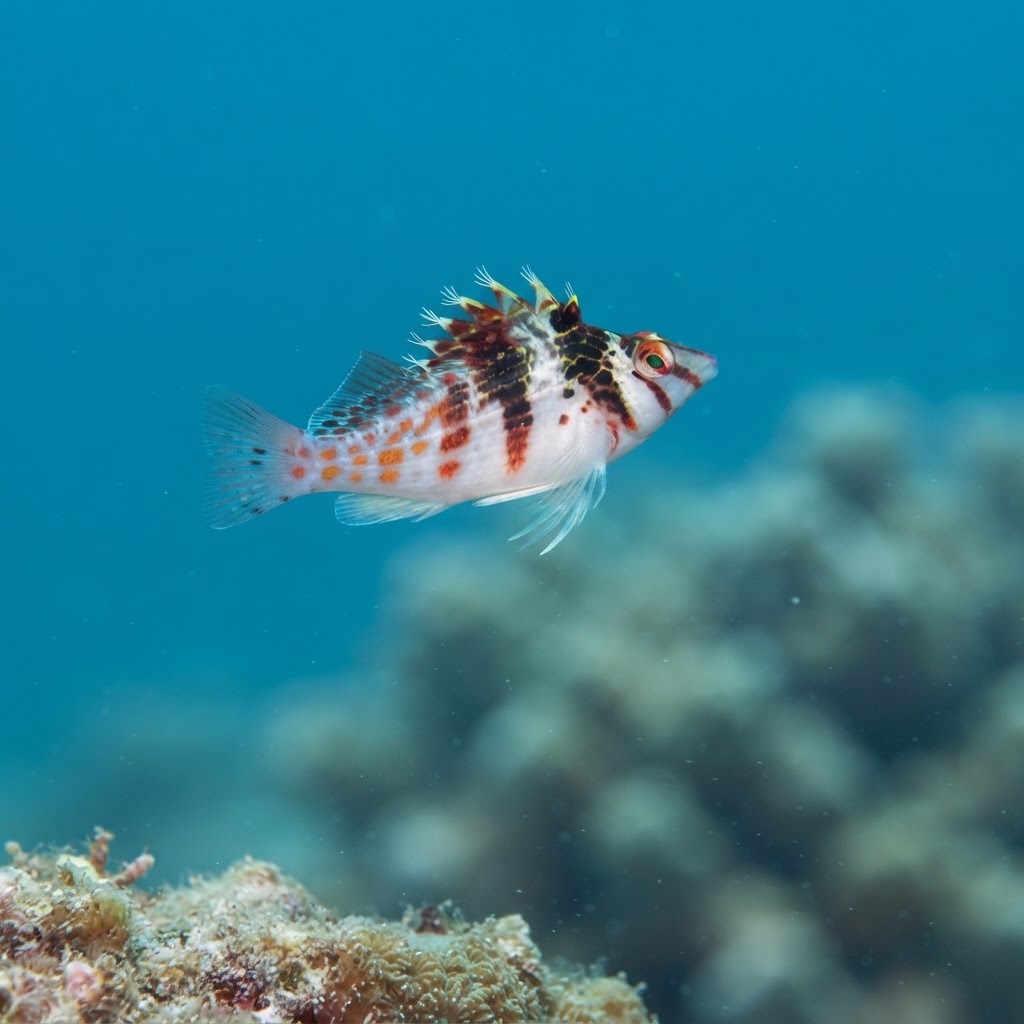
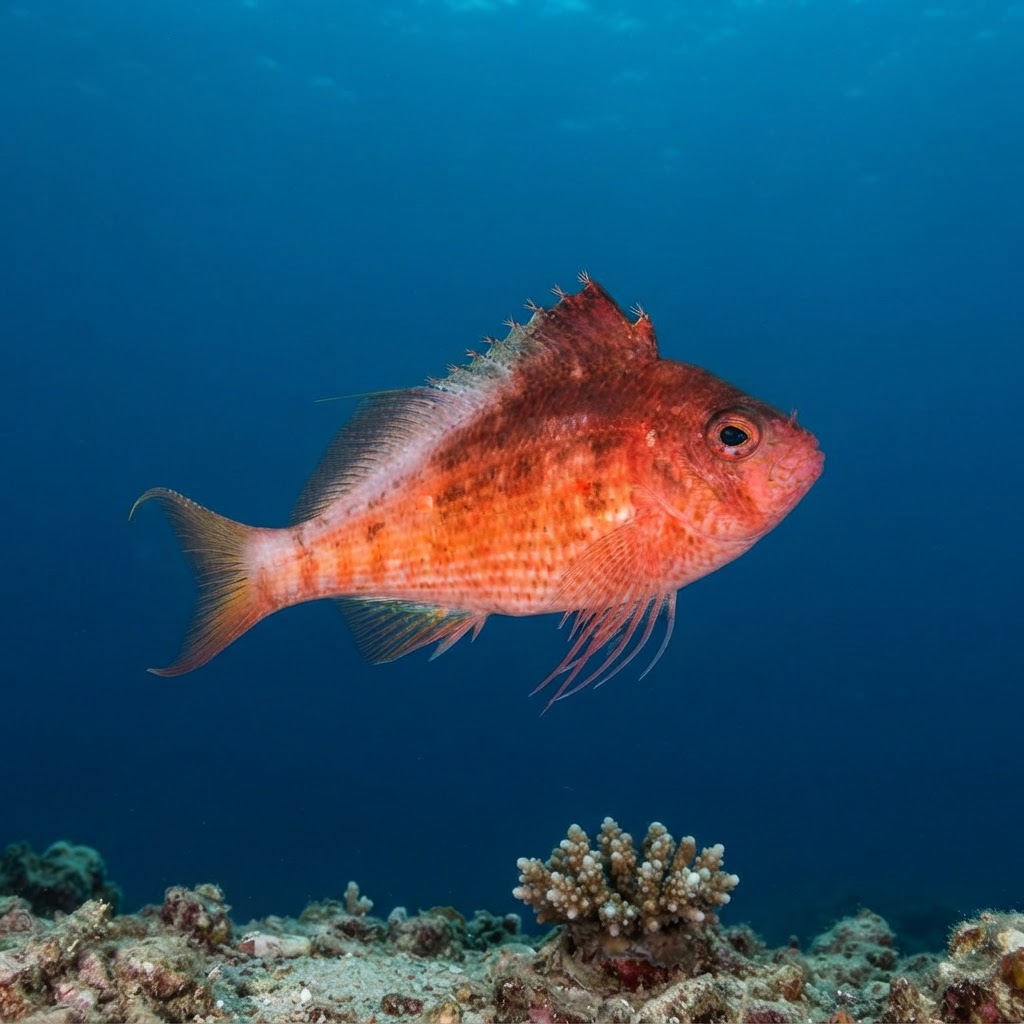
Small, slender hawkfish around 10cm with a reddish-pink mottled body that fades to translucent toward the fins, and a distinctly forked tail that sets it apart from the blunt or rounded tails of most other hawkfish. It typically rests propped on pectoral fins with tufted rays (a hawkfish trademark) among gorgonian or soft coral branches rather than sitting flush on hard reef. The forked tail is the single quickest tell if you get a clean look.
Divers find it perched motionless on soft coral or gorgonian branches, using its stiffened lower pectoral rays like little tripod legs rather than swimming freely in open water. It tends to sit tucked into branch forks at depth, ambushing small crustaceans and zooplankton that drift past, and generally holds its position rather than bolting when a diver approaches slowly. Look for it on deeper drop-offs and current-swept walls where soft coral growth is thick.
Like other hawkfish it lacks a swim bladder, which is exactly why it perches on coral instead of hovering, relying on its modified pectoral fin rays to anchor itself against current.
Sighting data doesn't show a clear seasonal spike, and its comfort range of 20 to 28.3C spans both temperate South African sites and tropical Pacific reefs, so it's worth looking for year-round wherever it's known to occur.
Reef neighbours a diver could mistake it for. Use the identification notes above to tell them apart.
Most reliably logged along KwaZulu-Natal in South Africa and New South Wales in Australia, with additional sightings in Lomaiviti, Fiji and Bali, Indonesia. It sits in the uncommon category everywhere it turns up, so treat any sighting as a bonus rather than a given on these reefs.
Mapping where Swallowtail Hawkfish is logged…
KwaZulu-Natal in South Africa and New South Wales in Australia have the strongest records, with scattered sightings also logged in Fiji's Lomaiviti region and Bali, Indonesia.
There's no strong seasonal pattern in the sighting data, and its wide temperature tolerance of 20 to 28.3C means it can turn up on these reefs at any time of year.
Look for a small pinkish-red mottled fish around 10cm, perched still on soft coral or gorgonians rather than swimming, with a noticeably forked tail that most other hawkfish lack.
They stay small, reaching around 10cm in length, making them an easy fish to overlook against a busy soft coral background.
They have no swim bladder, so instead of hovering in open water they use stiffened lower pectoral fin rays to prop themselves on coral branches and ambush passing prey.
Site and sighting data is aggregated from diver logs, iNaturalist and GBIF. For taxonomy and conservation status:
Pixy Hawkfish
762 sites