Thalassoma purpureum
Common in the Seychelles' Inner Islands and Hawaii, this shallow-reef wrasse thrives in 25-29C water year-round.
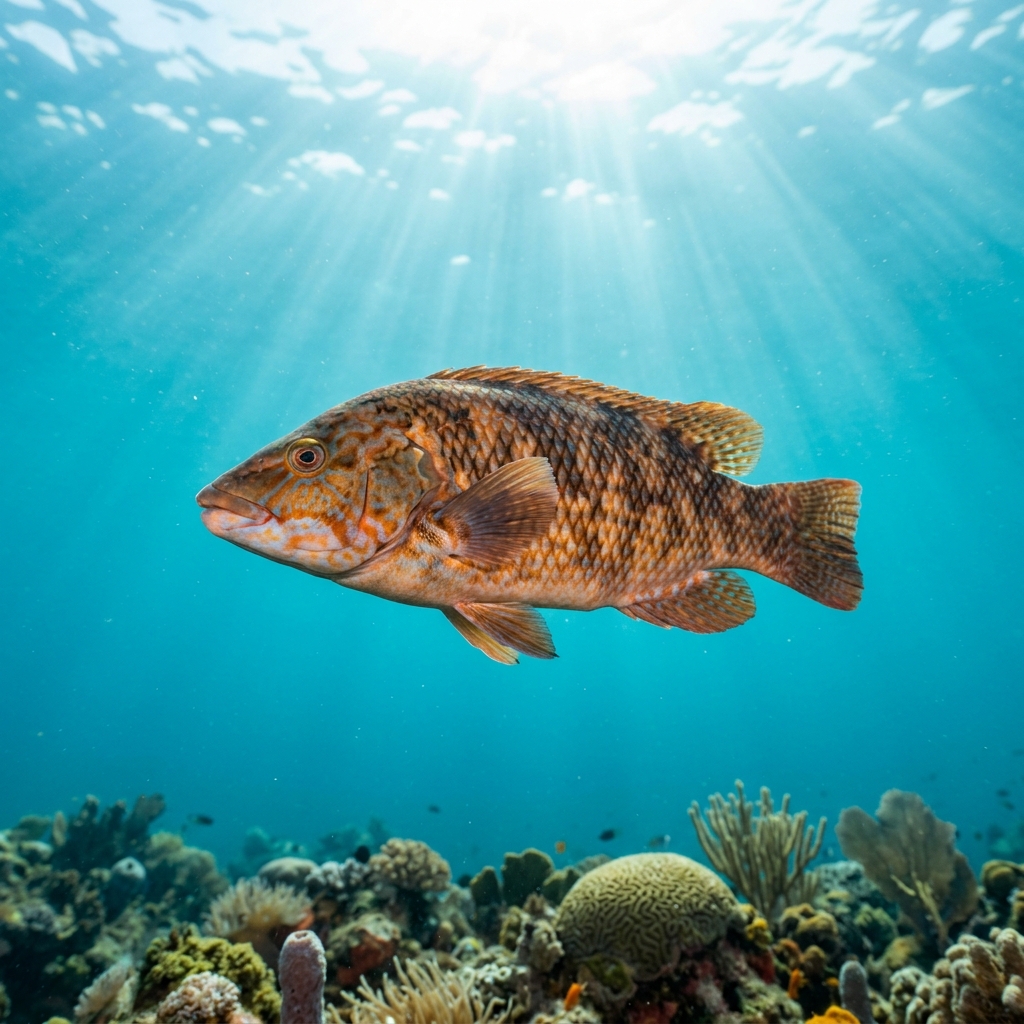
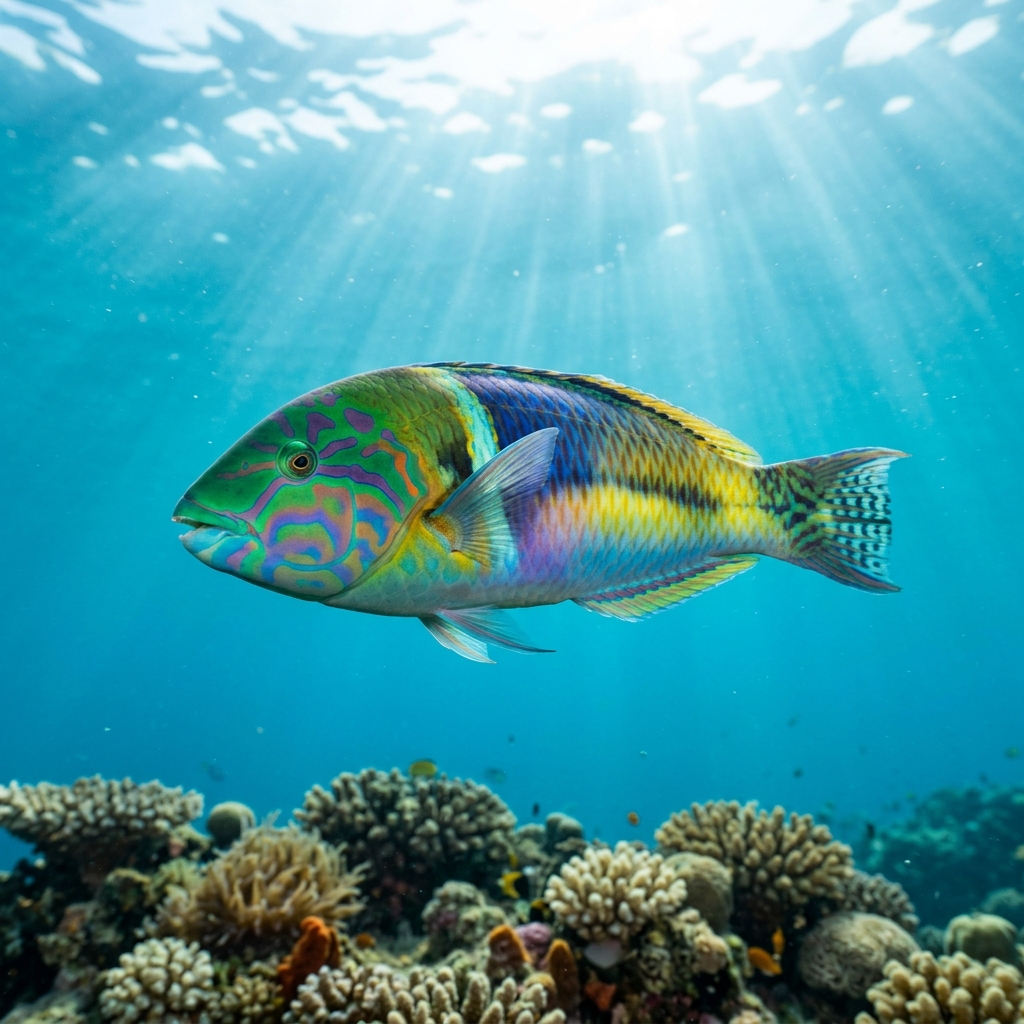
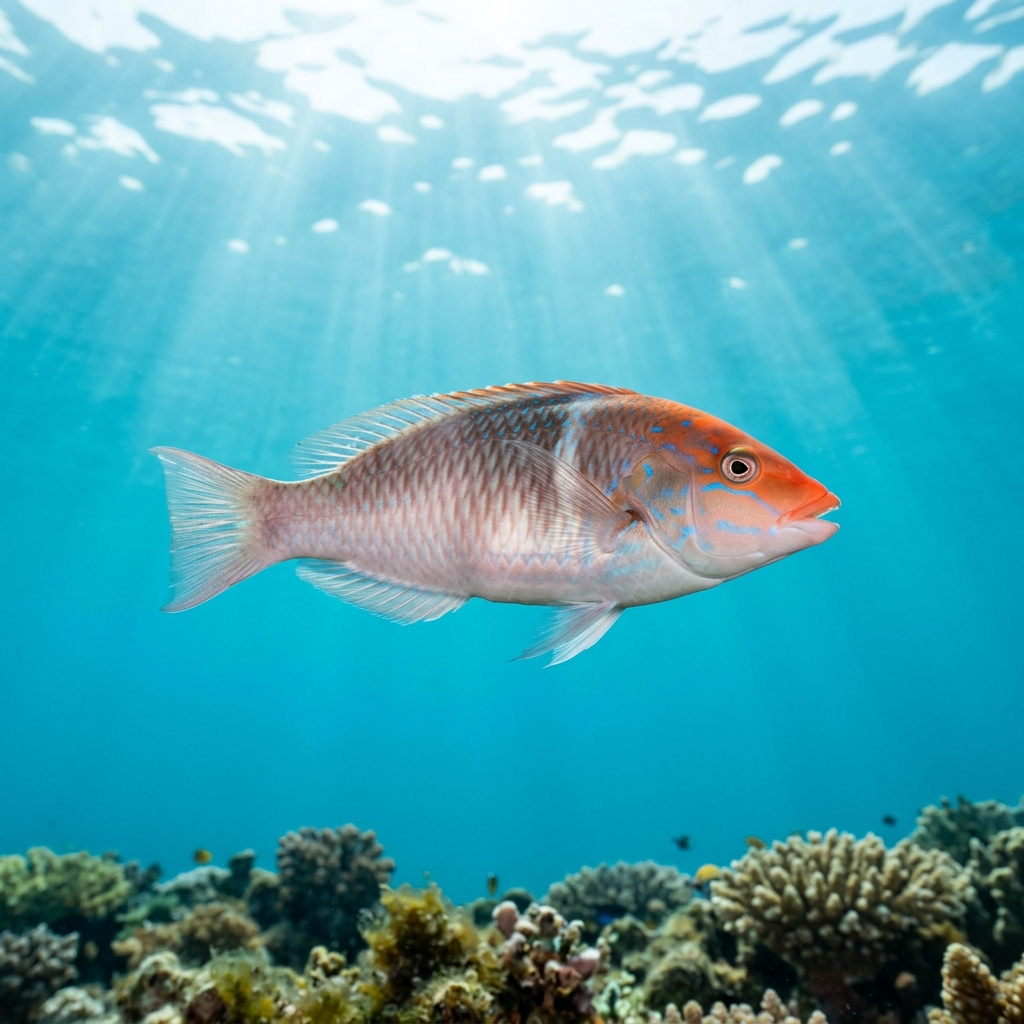
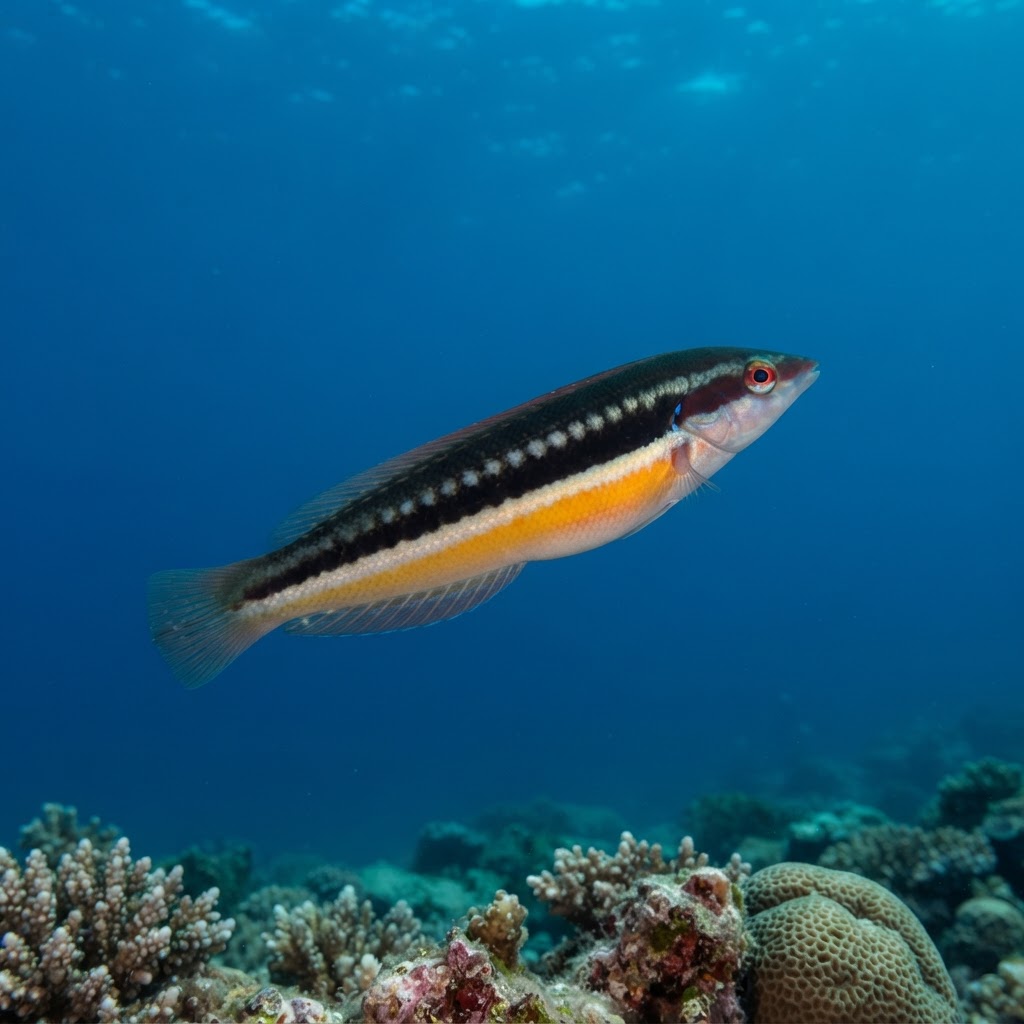
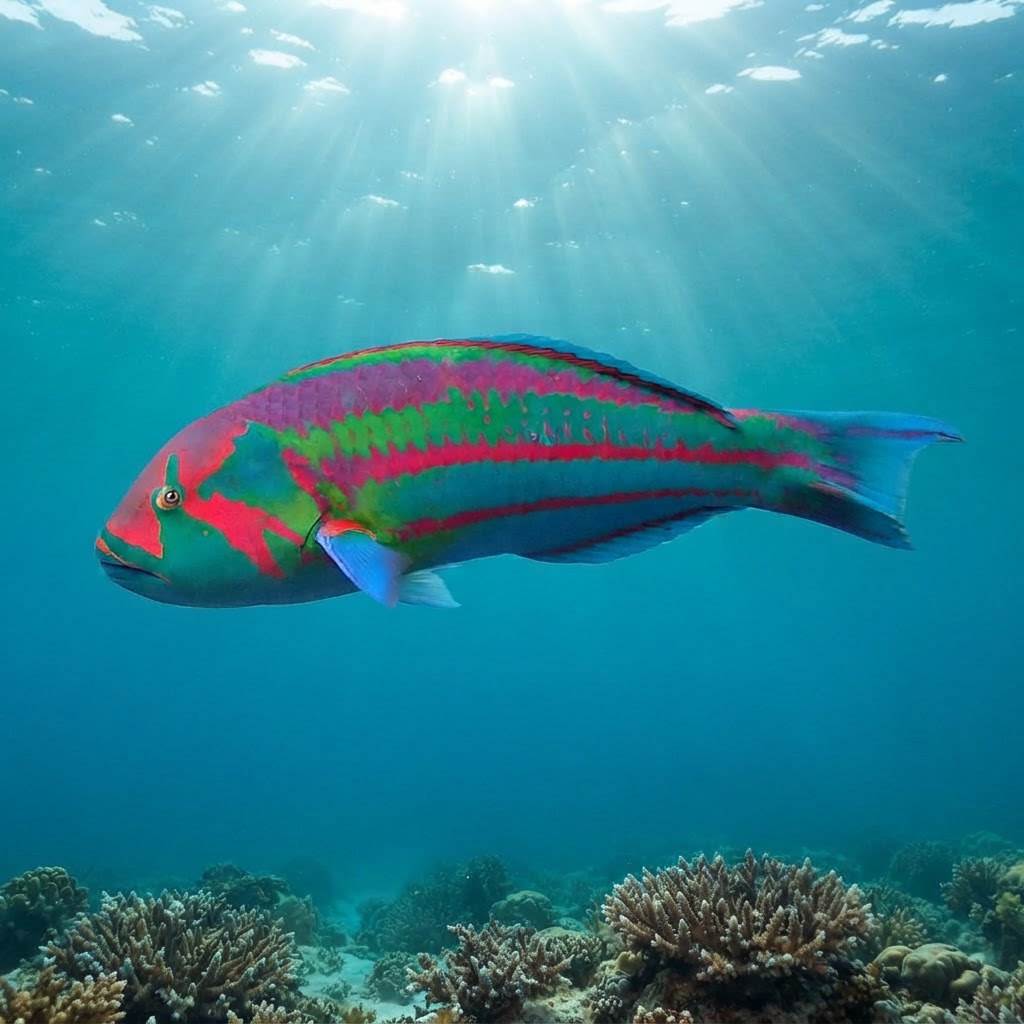
A chunky, torpedo-shaped wrasse growing to about 32 cm, usually spotted cruising just above the reef in the wash zone of shallow water. Adults show a green body with bold diagonal pink or salmon stripes radiating across the face and a pale, almost white saddle behind the head that breaks up the green. The overall pattern looks bold and geometric rather than blotchy, which separates it from most reef wrasses sharing the same shallow water.
Look for it patrolling the shallow reef flat and surge zone, often right where waves break over the reef crest, feeding on small invertebrates picked off rock and coral. It tends to keep a respectful distance from divers rather than approaching, darting between cover as the surge pushes it around, and is most often seen alone or loosely associating with other wrasses rather than in tight schools.
It's built for the turbulence of its name: strong, muscular and comfortable feeding in the surge zone where waves crash over shallow reef flats, a habitat many other reef fish avoid.
No clear seasonal pattern shows up in the sightings data, and with a comfortable range of roughly 24.6 to 29.3C it is present on these reefs year-round. Plan around calm shallow-water conditions rather than a particular month.
Most reliably logged in the Seychelles, especially the Inner Islands, and a strong presence around Hawaii and Western Australia. It also turns up consistently in French Polynesia's Society Islands and around Rarotonga in the Cook Islands, with smaller but real populations noted in Chile's Easter Island, Mauritius and Egypt.
Mapping where Surge Wrasse is logged…
The Seychelles, particularly the Inner Islands, is the most reliable spot, with strong sightings also logged in Hawaii, Western Australia, French Polynesia's Society Islands and Rarotonga in the Cook Islands.
There's no strong seasonal pattern in the sightings, and it tolerates a wide temperature range of about 25 to 29C, so it's seen on shallow tropical reefs throughout the year.
Look for a stocky green wrasse around 30 cm with bold pink diagonal stripes across the face and a pale saddle behind the head, usually cruising the shallow surge zone right where waves break over the reef.
They typically reach around 32 cm in length, making them one of the larger wrasses you'll see cruising shallow reef flats.
Unlike most reef fish that avoid rough water, it thrives right in the turbulent surge zone where waves crash over shallow reef crests, feeding on invertebrates stirred up by the wash.
Site and sighting data is aggregated from diver logs, iNaturalist and GBIF. For taxonomy and conservation status:
Bird Wrasses
3,632 sites