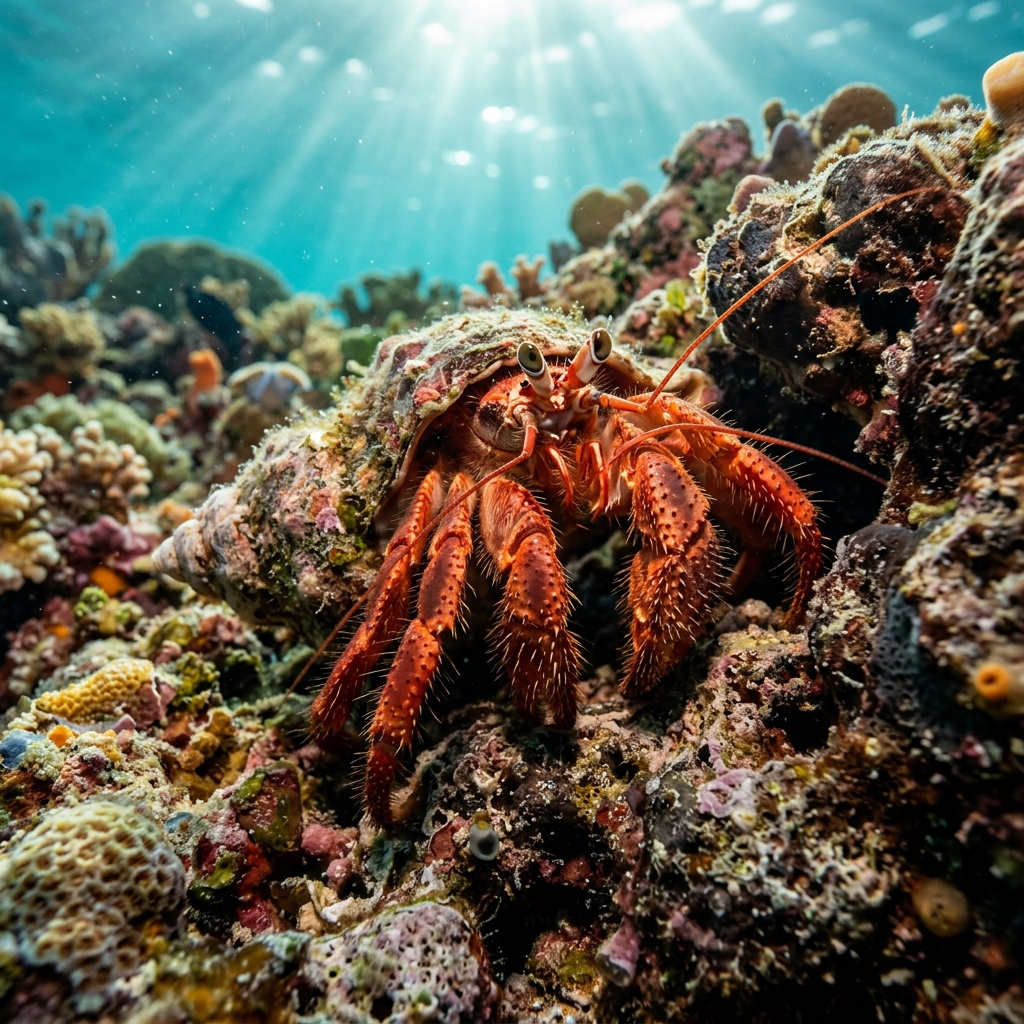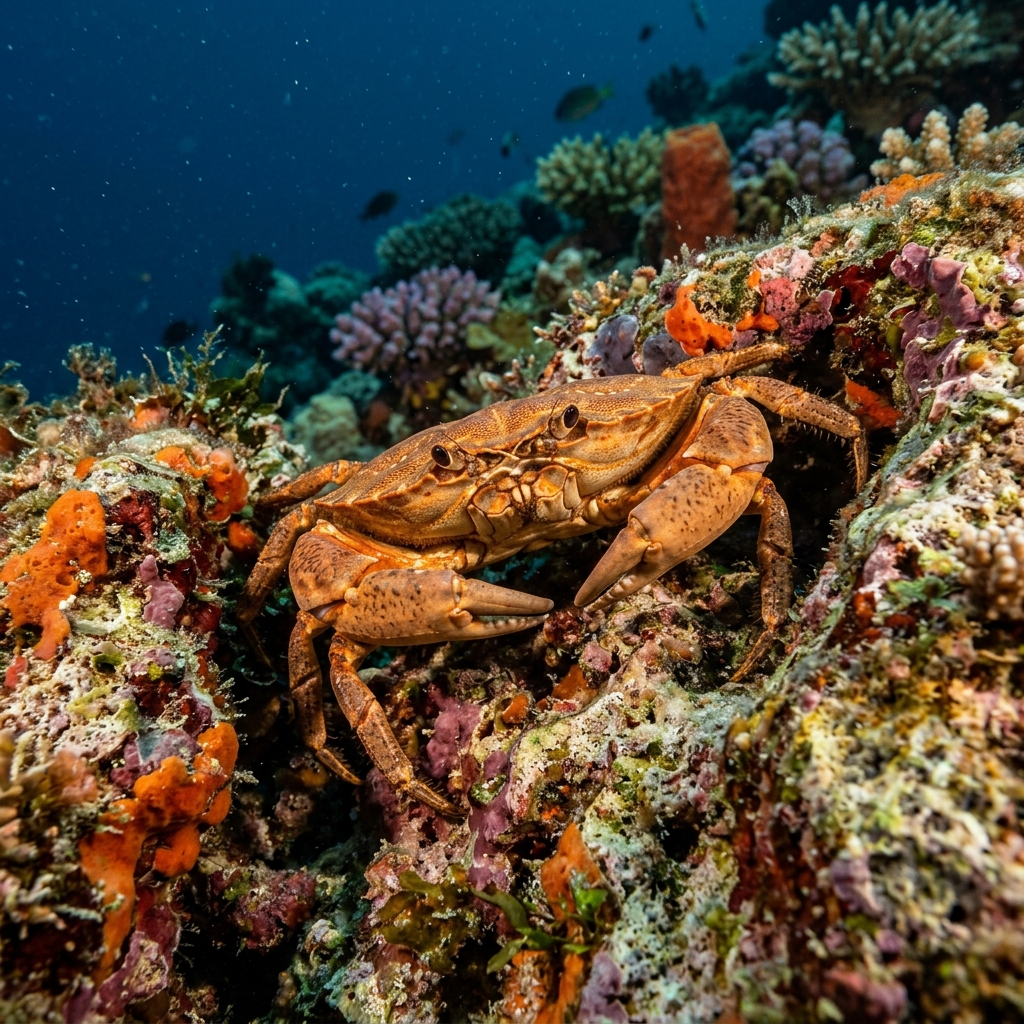
Pachygrapsus crassipes
Spot the striped shore crab on the US Pacific Coast and Japan's Izu Peninsula. Active Feb, Sep in cool 11-23 °C waters. Here's where and when to look.
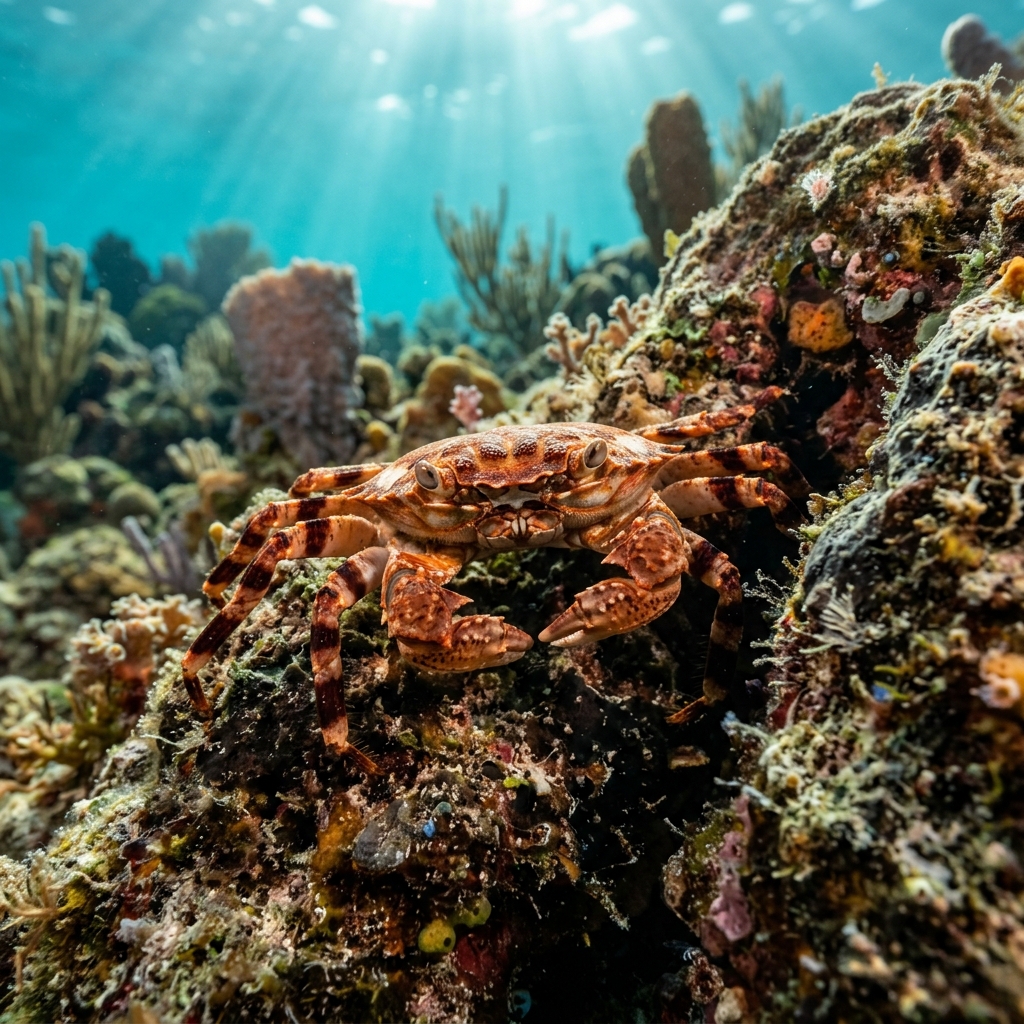
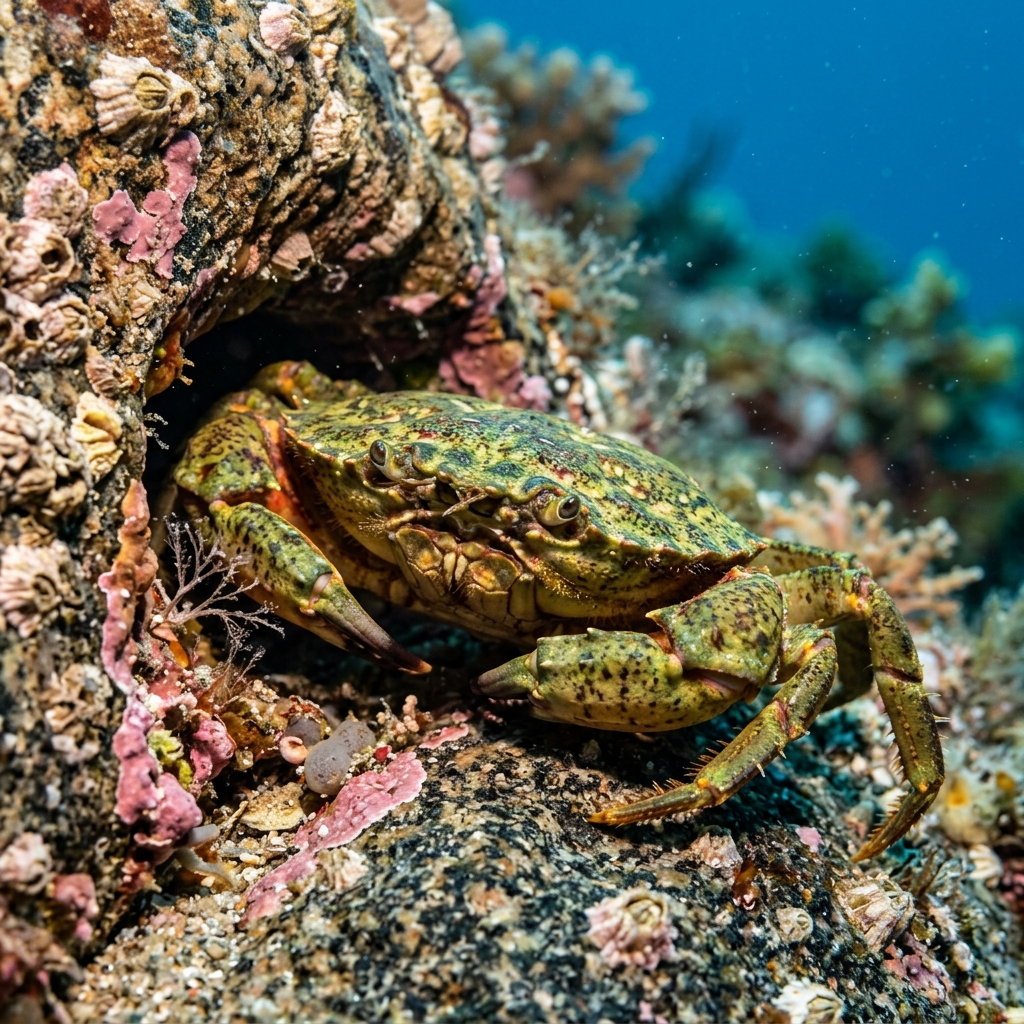
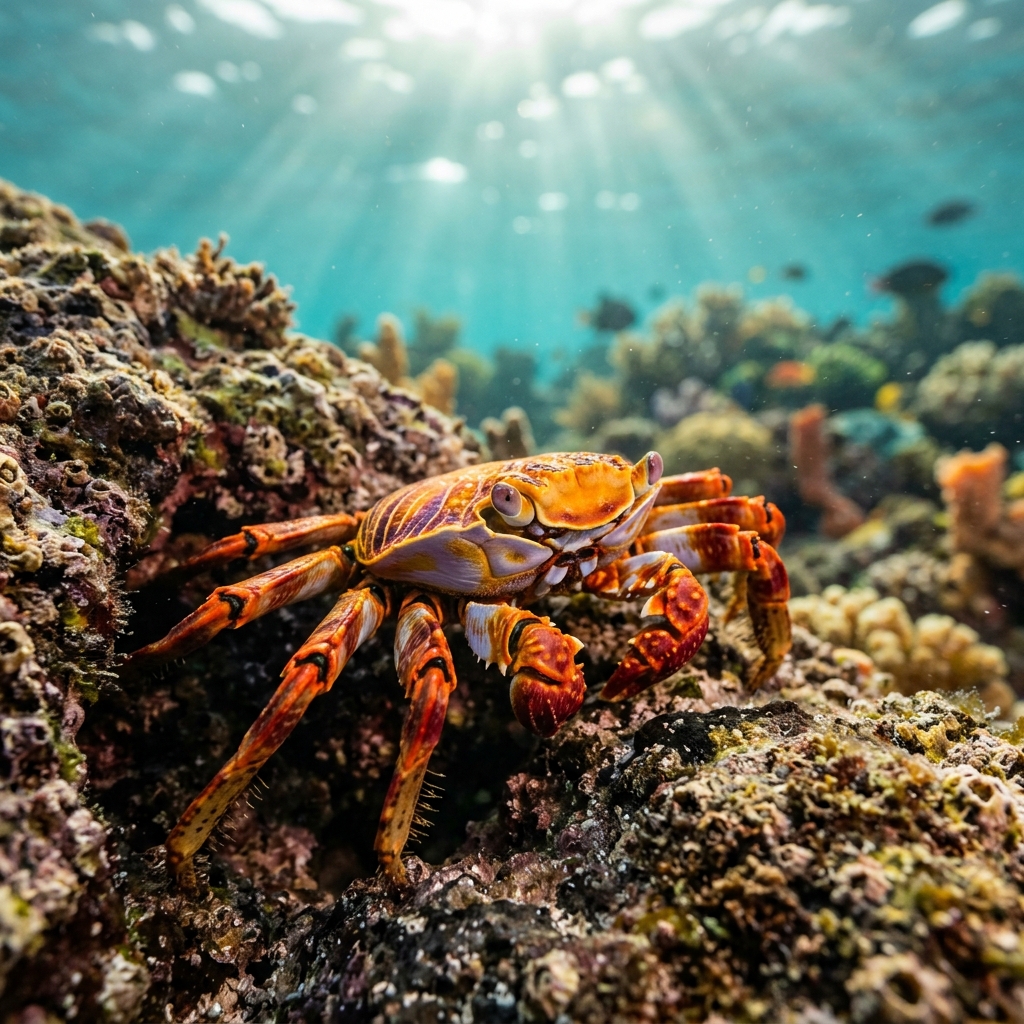
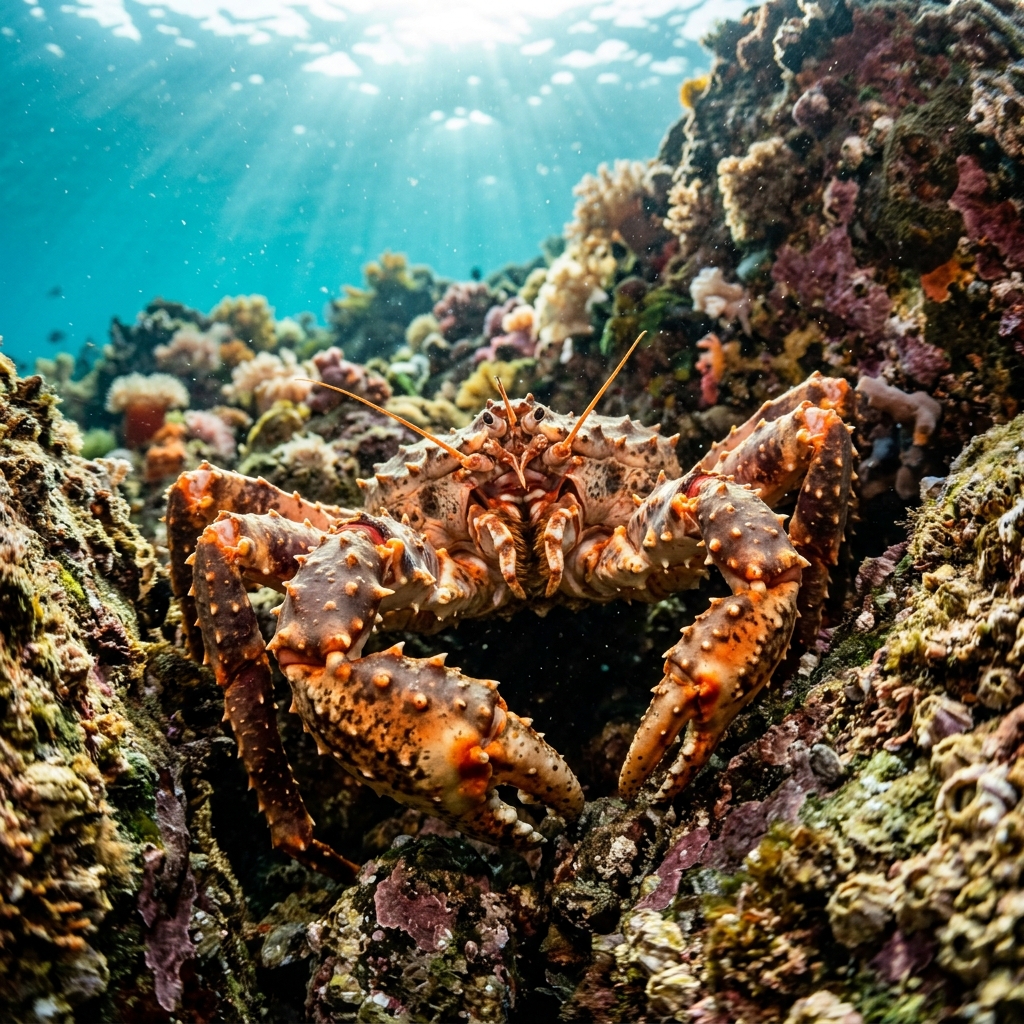
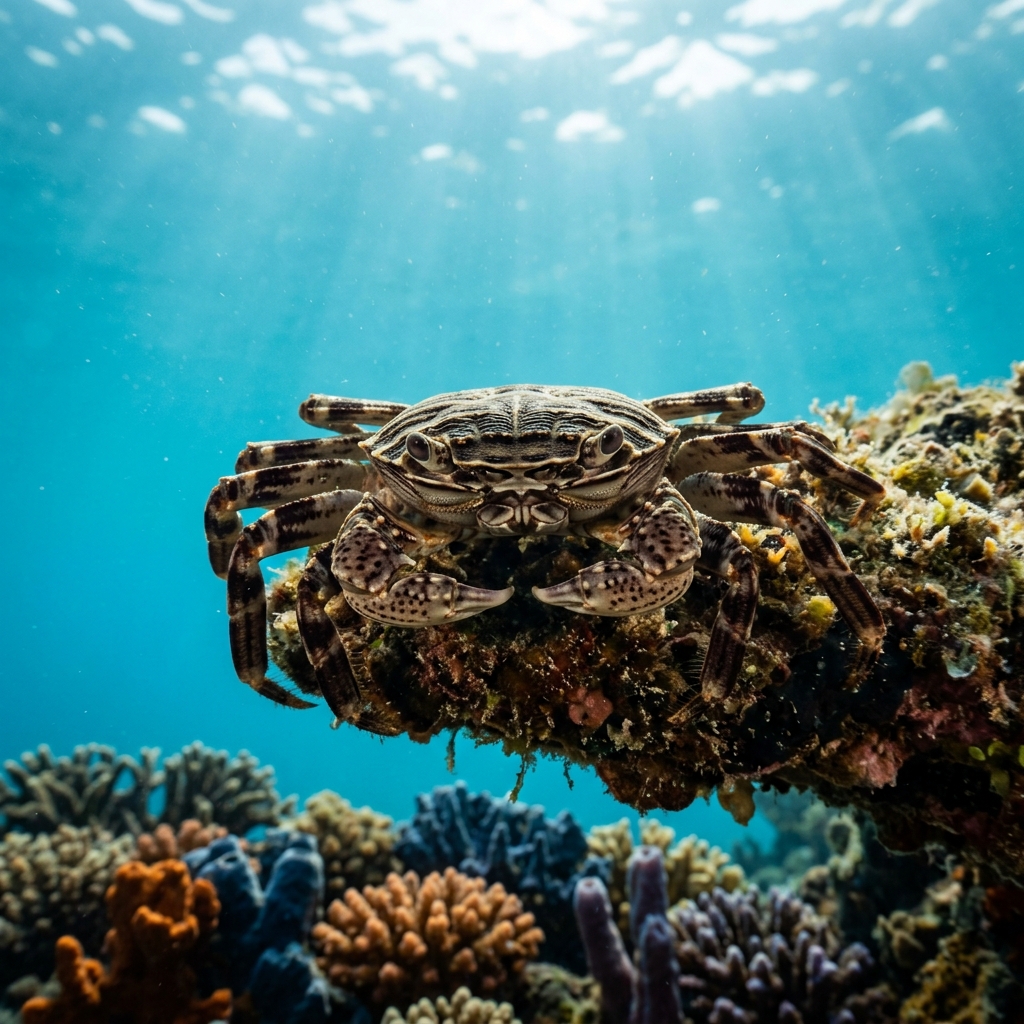
Look for a flattened, roughly square carapace (the fused shell covering the body) in dark olive-green to brownish-purple, crossed by pale, slightly iridescent stripes that run widthways across the shell. The legs are banded in similar tones and the claws are noticeably robust. It sits low against rock surfaces and rarely exceeds a few centimetres across, so you'll spot the striped pattern before you clock the animal's shape. When lit by a torch the stripes can catch the light and make identification easier.
Striped shore crabs are quick to retreat under rocks or into crevices the moment they sense a diver's shadow, so slow, deliberate approaches work better than swimming straight at them. When undisturbed they forage openly across rocky surfaces during daylight, using their claws to scrape algae and grab small invertebrates. Watching one work a rock face methodically, claws busy, is far more engaging than it sounds given how fast they move.
Despite being labelled reef-associated, this crab thrives right at the splash zone and intertidal edge, meaning snorkellers in very shallow water often encounter it just as often as divers do.
In the Northern Hemisphere, sightings concentrate between February and September, so late winter through to early autumn is the prime window. The species tolerates cool water down to around 11 °C, so it remains active during the cooler months within that window rather than retreating as temperatures drop.
The striped shore crab is most reliably logged along the US Pacific Coast, which accounts for the vast majority of recorded sites, particularly from California southwards. Japan is the next strongest area, with solid sighting records around the Izu Peninsula and Hachijojima as well as the Shikoku and Chugoku coastlines. Smaller but consistent populations are noted along Baja California in Mexico, the East Coast of South Korea, and British Columbia in Canada.
Mapping where Striped Shore Crab is logged…
The US Pacific Coast is by far the most productive area, with strong populations in California and southward. Japan's Izu Peninsula and the Shikoku and Chugoku coasts are reliable second choices. Baja California in Mexico, South Korea's East Coast, and British Columbia in Canada also have confirmed sightings.
Northern Hemisphere sightings peak from February through September. The crab handles cool water well, so the season starts while temperatures are still low. Outside those months, sightings drop off noticeably at most sites.
Key on the pale transverse stripes crossing a dark olive-green to brownish-purple square carapace. The banded legs and chunky claws help confirm the ID. It sits flat against rock, often in very shallow water, and moves extremely fast when disturbed.
Typical adults reach around 3 to 5 cm across the carapace, making them a small to medium-sized crab. They can feel bigger when they scuttle away quickly, but up close they are compact animals.
No. Striped shore crabs pose no risk to divers. Their instinct is to flee into a crevice rather than stand their ground. The claws are functional for feeding but are not a threat at human scale.
They are omnivorous carnivores that graze algae from rock surfaces while also seizing small invertebrates and organic debris. Watching them scrape a rock face with their claws gives a clear picture of how efficiently they clean and patrol their small patch of reef.
Site and sighting data is aggregated from diver logs, iNaturalist and GBIF. For taxonomy and conservation status:
European Green Crab
2,469 sites