Pseudocheilinus evanidus
A 6cm reef dweller easy to miss on Taveuni or Queensland reefs; here's how to spot it and when to look.
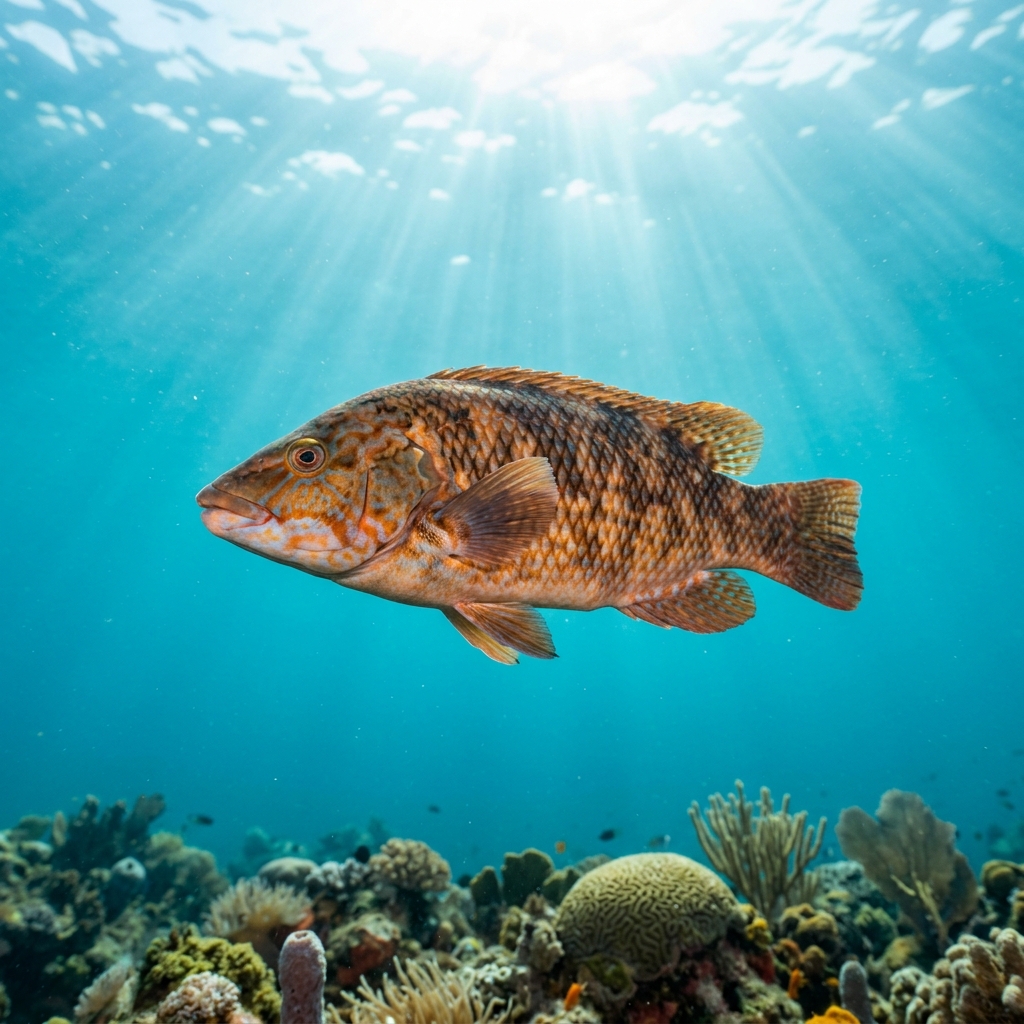
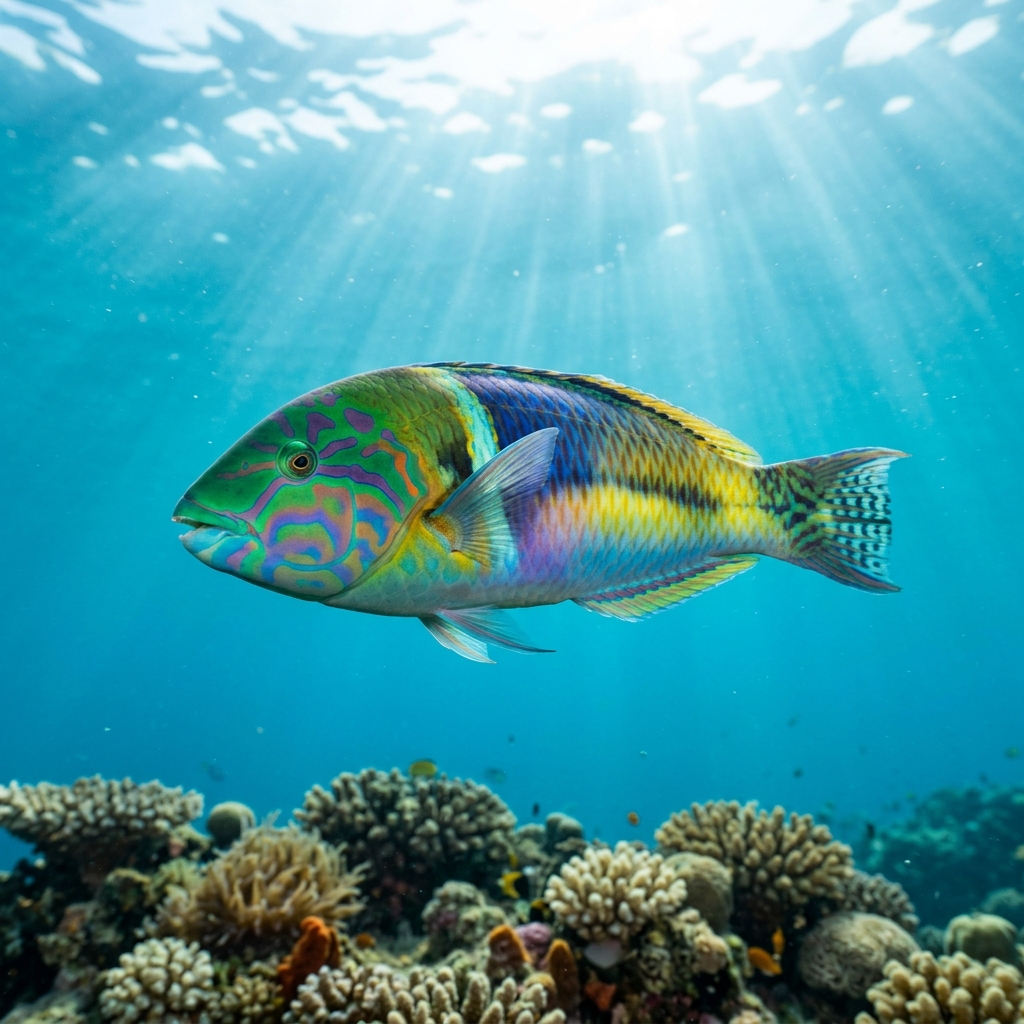
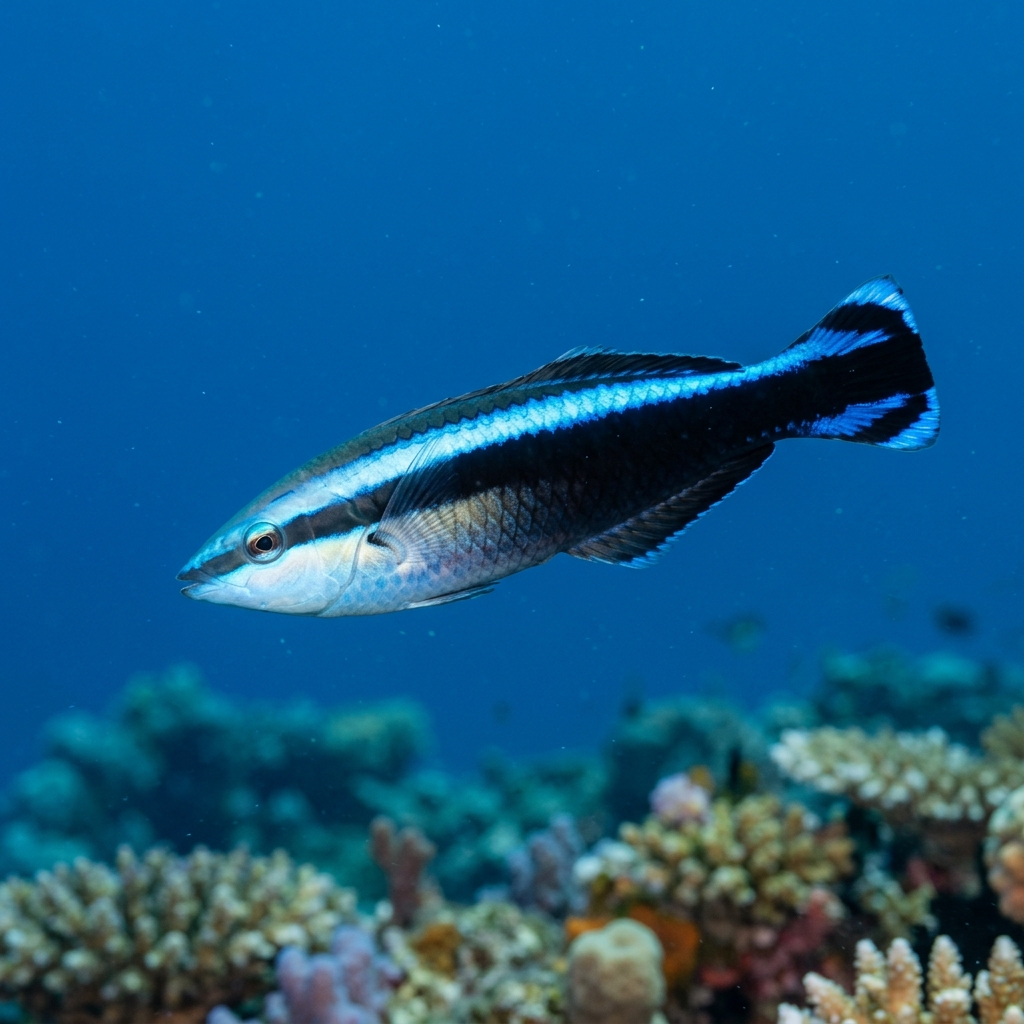
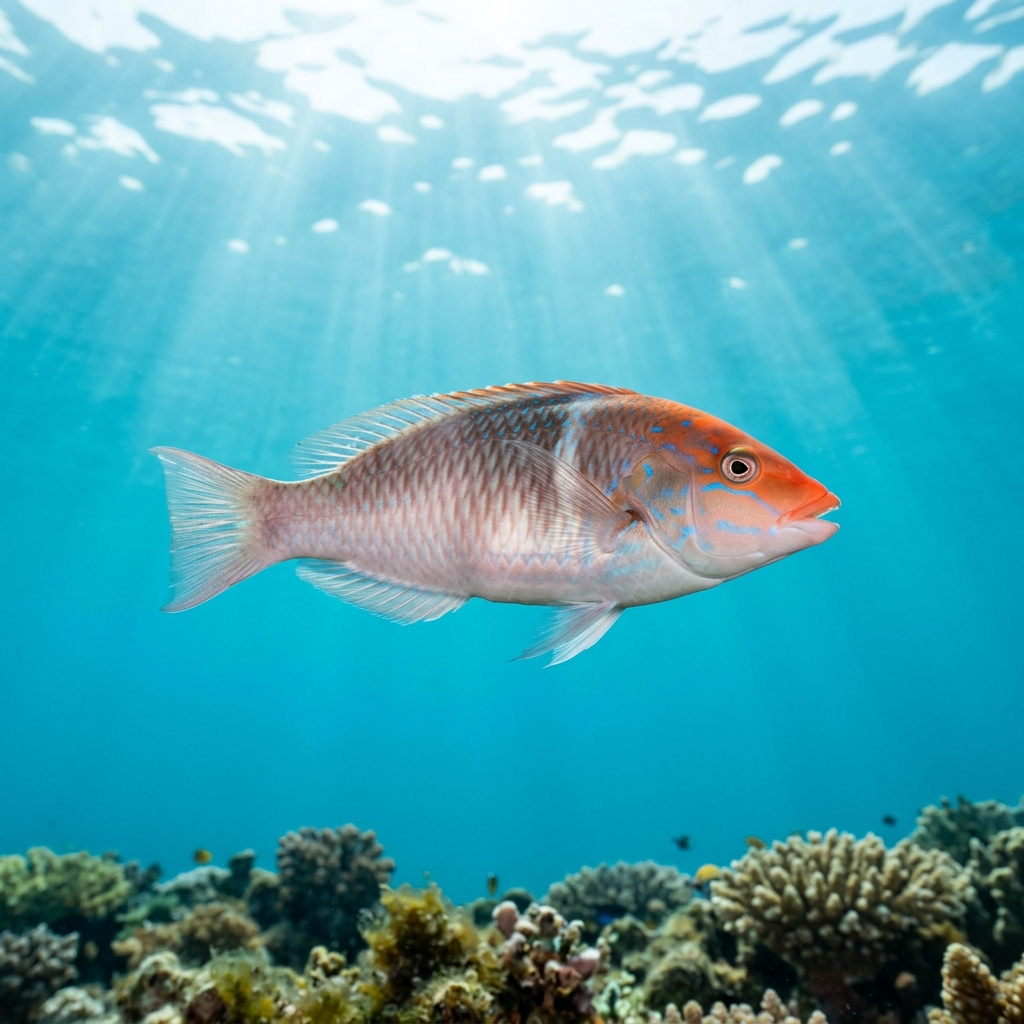
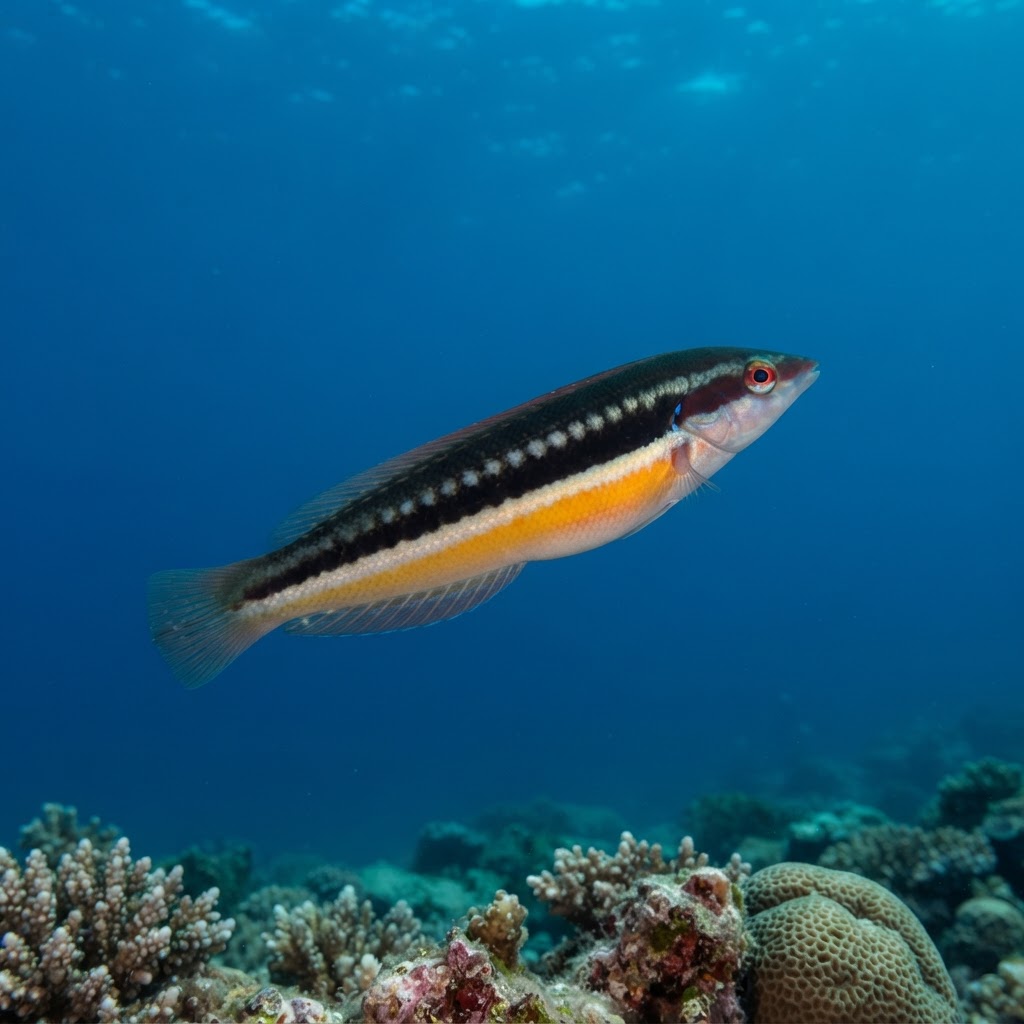
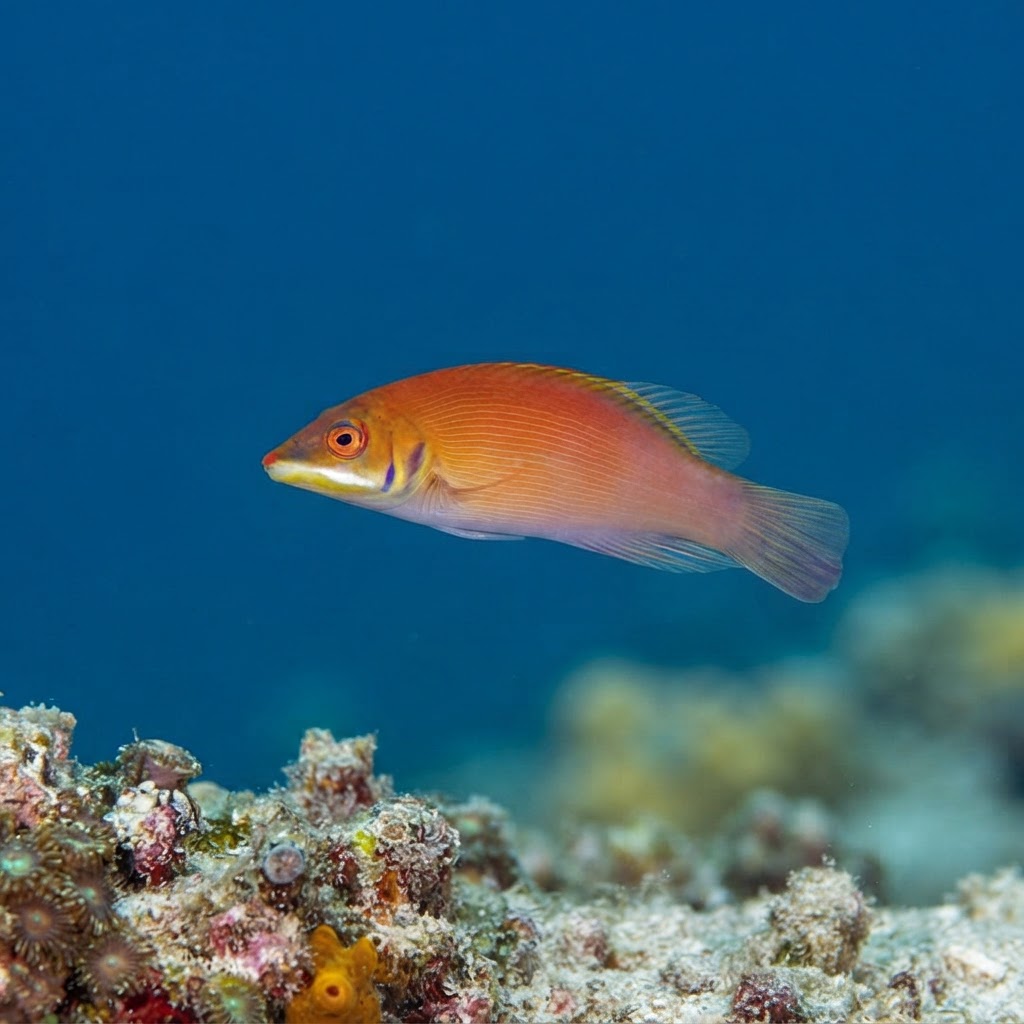
Barely bigger than a finger at around 6cm, with a slender, cigar-shaped body typical of small wrasses. Look for fine reddish-brown to maroon stripes running lengthwise along a pale to yellowish body, often with a dark spot near the base of the tail. It moves in quick, darting bursts rather than a steady cruise, which is often the first clue you've spotted one rather than a similar-looking reef fish.
Spends most of its time low on the reef, weaving through coral rubble, crevices and dead coral heads where it hunts small invertebrates. It tends to dart from gap to gap rather than hover in the open, so divers usually get brief glimpses rather than sustained looks. Being small and shy around movement, it rarely reacts to divers beyond retreating deeper into cover.
Its habit of squeezing through rubble and coral crevices rather than swimming in open water is exactly why it's logged as uncommon even at sites where it's present: it's easy to overlook rather than rare.
No clear seasonal pattern shows up in the sighting data, and its comfort range of roughly 25 to 29C matches warm reef water year-round, so any month is a fair bet at the sites above. Treat it as a consistent, if uncommon, year-round find rather than a seasonal target.
Most reliably logged on reefs around Taveuni in Fiji, with strong showings across Queensland in Australia and Hawaii in the United States. Egypt's Marsa Alam and the Deep South region also turns up sightings, so it's worth checking crevices and rubble patches on Red Sea reefs too.
Mapping where Striated Wrasse is logged…
Taveuni in Fiji has the strongest track record, followed by Queensland in Australia and Hawaii in the United States. Egypt's Marsa Alam and Deep South region is another spot where divers regularly log it.
There's no detected season in the sighting data, and it favours warm reef water between about 25 and 29C year-round, so it can turn up on any dive at the right sites.
Look for a small, slender fish around 6cm long with fine reddish-brown stripes running along its body and a dark mark near the tail base. It moves in quick darting bursts low over rubble and coral crevices rather than cruising in open water.
They stay small, typically reaching around 6cm in length, making them one of the more easily overlooked wrasses on a reef.
No, they pose no danger to divers. They are small, shy carnivores that feed on tiny invertebrates and retreat into reef cover rather than interact with divers.
Site and sighting data is aggregated from diver logs, iNaturalist and GBIF. For taxonomy and conservation status:
Bird Wrasses
3,632 sites