Muraena robusta
A heavy-bodied moray most reliably found around Sal and Boa Vista in Cape Verde, in warm water from 20 to 28 C, year-round.
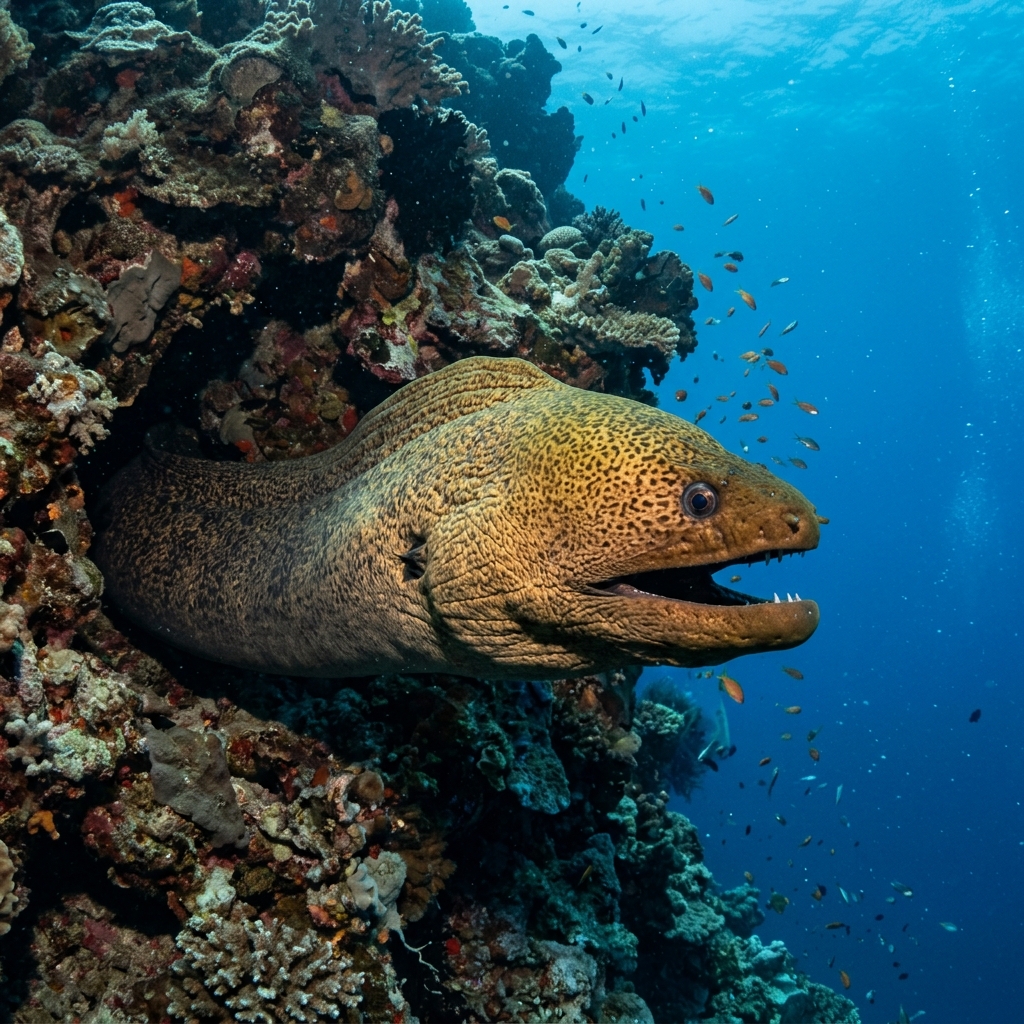
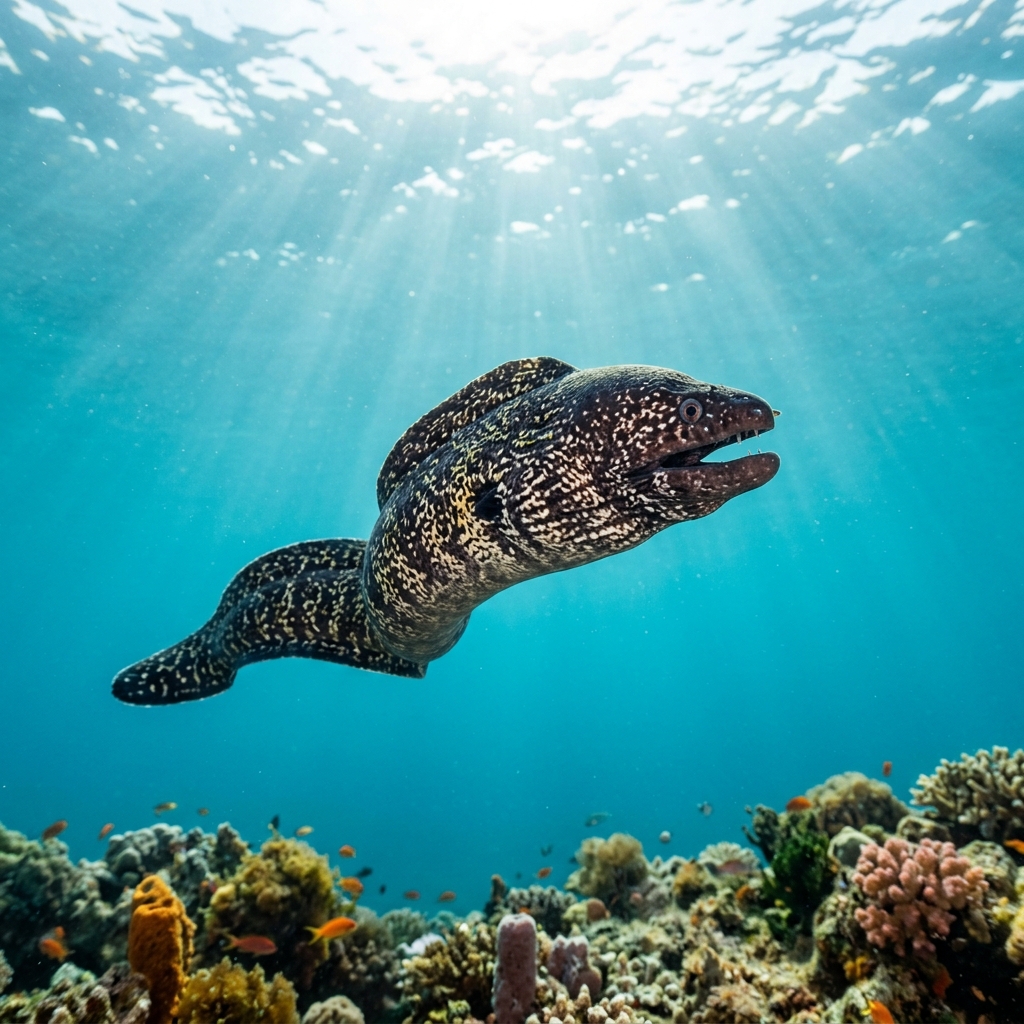
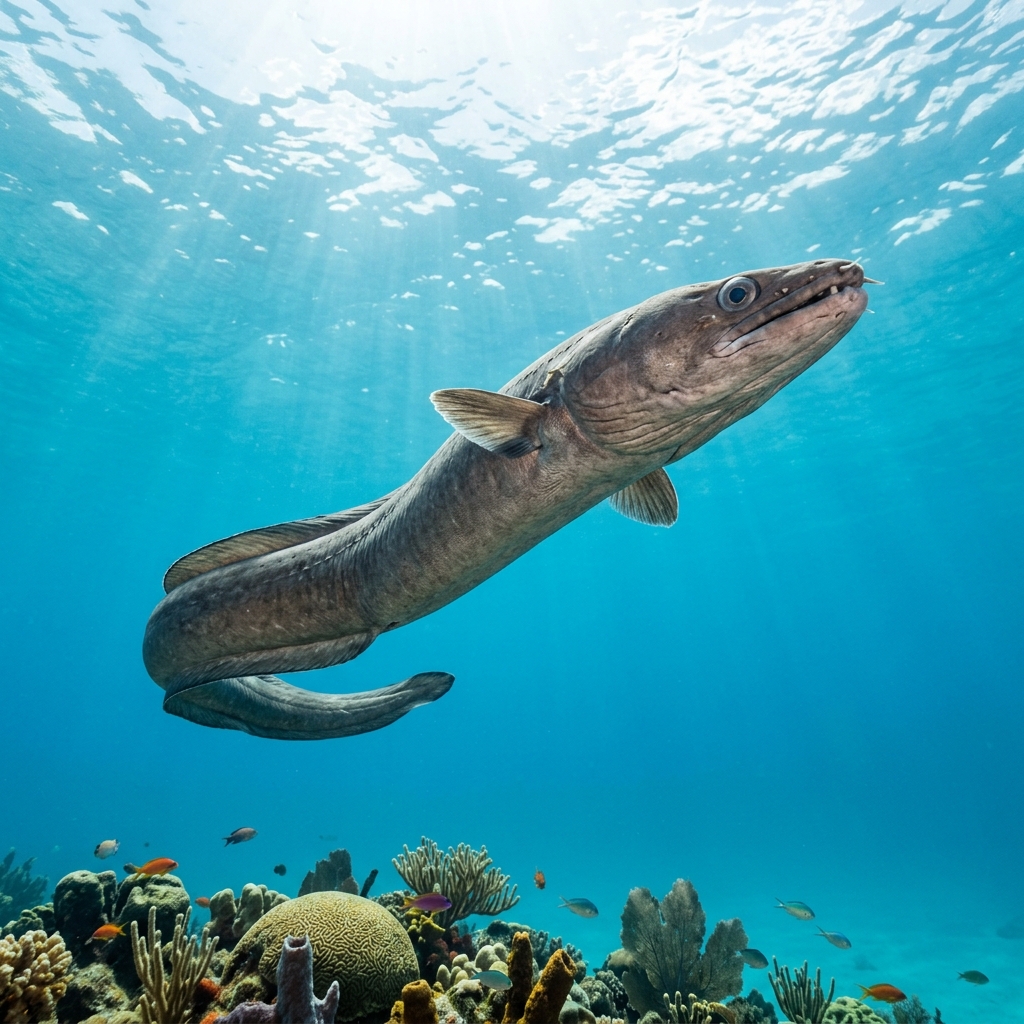
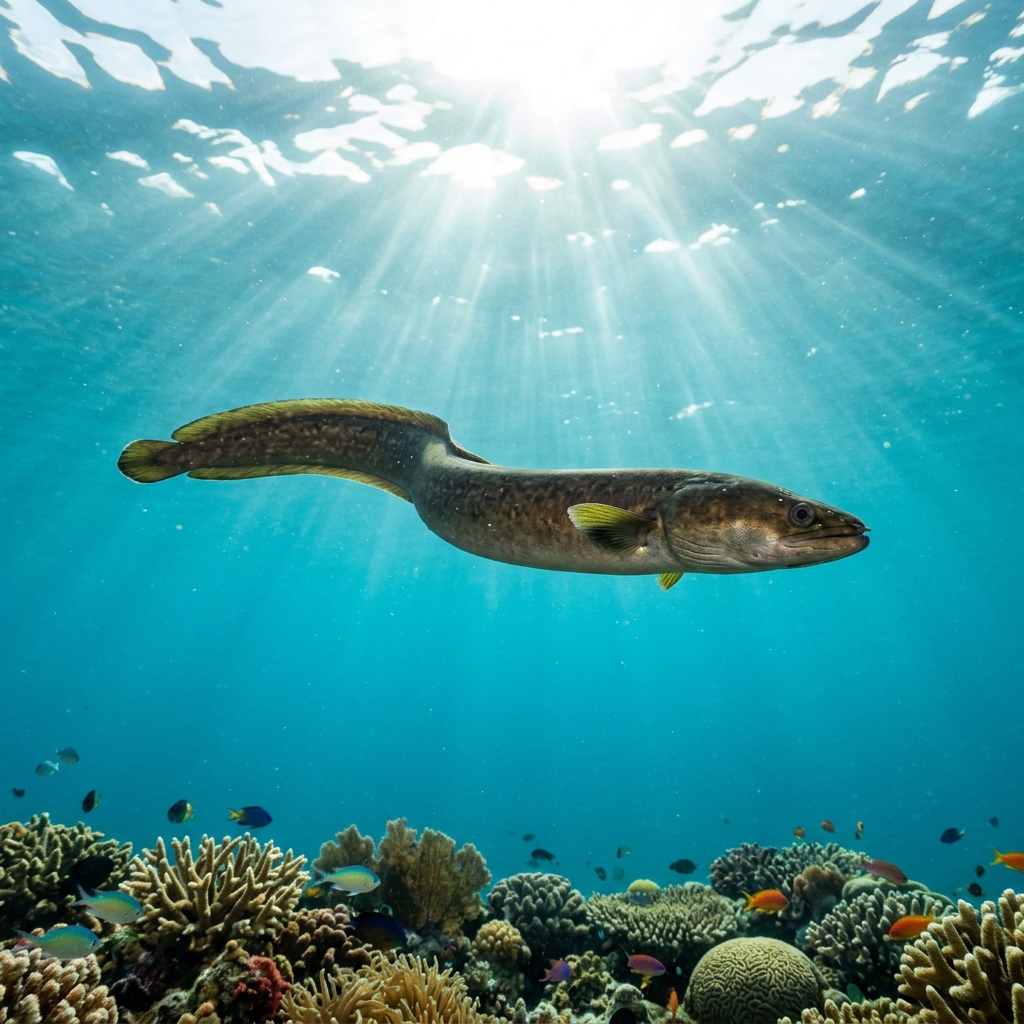
A thick, muscular eel reaching a bit over a metre, with a heavy-set head and a mottled brown to grey-brown body that lacks the bold patterning of many reef morays. The body is noticeably stout rather than ribbon-thin, which is where the common name comes from, and the small eyes and blunt snout give it a slightly dull, workmanlike look compared to flashier moray species. Usually seen with just the head and forebody out of a crevice, jaws slowly opening and closing as it breathes.
Typically found tucked into rocky crevices and reef holes during the day, with just the head visible and jaws working steadily as it ventilates its gills. It is logged as uncommon even at the sites where divers find it, so encounters tend to be a matter of checking likely-looking holes rather than expecting one on every dive. Like most morays it is a nocturnal hunter, relying on smell to track down fish and invertebrates once light fades.
Morays including this species rely heavily on a keen sense of smell rather than eyesight to find prey, which is why they often sit motionless in a crevice by day and only become active hunters after dark.
No clear season shows up in the data, and with a comfortable range of roughly 20 to 28 C it can be found year-round wherever it occurs. Cape Verde's warm Atlantic waters keep conditions suitable across the calendar, so timing your trip around this species specifically isn't necessary.
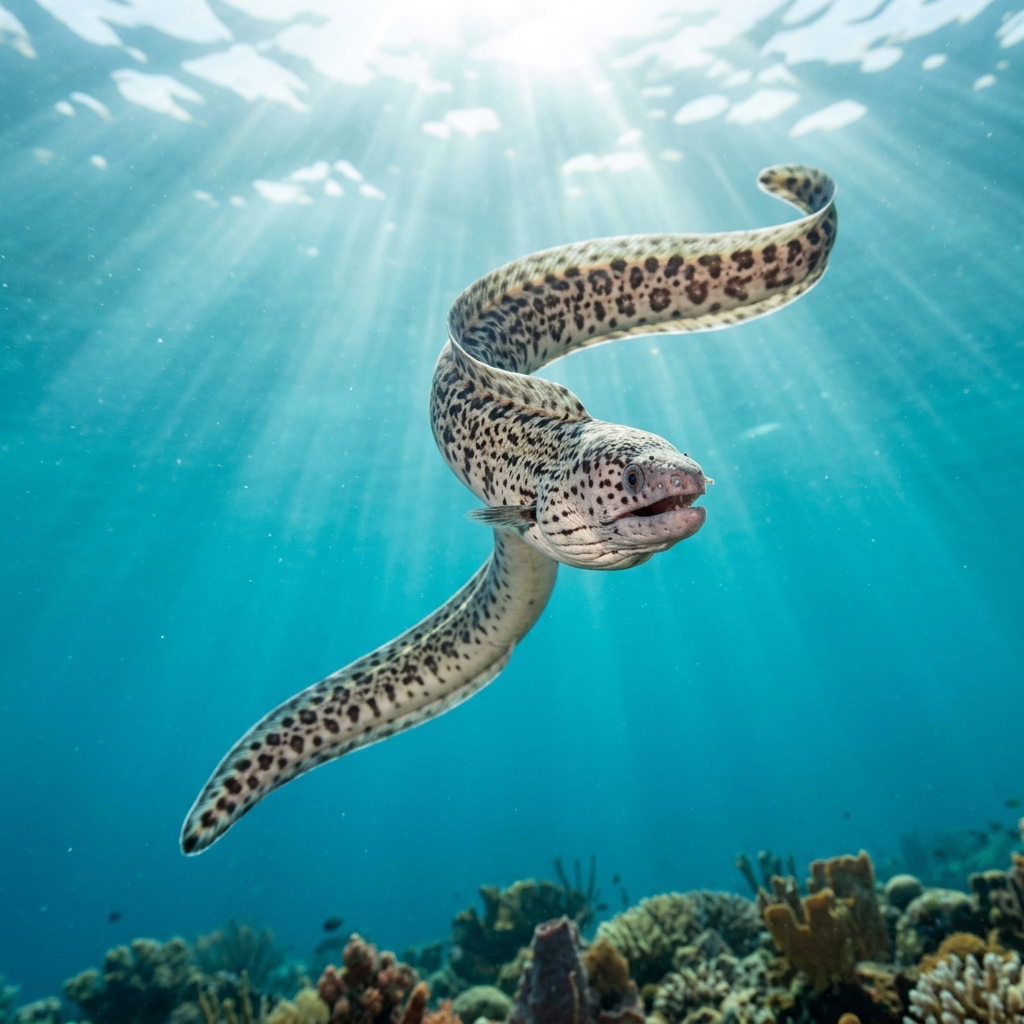
Reef neighbours a diver could mistake it for. Use the identification notes above to tell them apart.
Cape Verde is by far the strongest area for this species, with sightings concentrated around Sal, Boa Vista, Santo Antão and Santiago. Outside West Africa it turns up as a scarcer find in the United States, Cuba, Angola, Sierra Leone, Belize, Sao Tome and Principe and South Africa.
Mapping where Stout Moray is logged…
Cape Verde is the standout location, especially around Sal, Boa Vista, Santo Antão and Santiago. It also shows up occasionally at sites in the United States, Cuba, Angola, Sierra Leone and Belize.
There's no strong seasonal pattern in the sightings data, and it tolerates a wide warm-water range of about 20 to 28 C, so it's realistic to look for one on any trip to its range rather than planning around a specific month.
Look for a thick-bodied eel over a metre long with a plain mottled brown-grey colour rather than bold spots or bars, usually with just its head poking from a rocky crevice. Its heavy build sets it apart from slimmer, more patterned moray species on the same reefs.
They typically reach around 105 cm, which is a solid mid-size for a moray, with a noticeably thick, muscular build rather than a slender ribbon-like shape.
They're not considered dangerous to divers. Like any moray, give it space and avoid putting hands into crevices where one might be resting.
Site and sighting data is aggregated from diver logs, iNaturalist and GBIF. For taxonomy and conservation status:
Garden Eel
2,448 sites