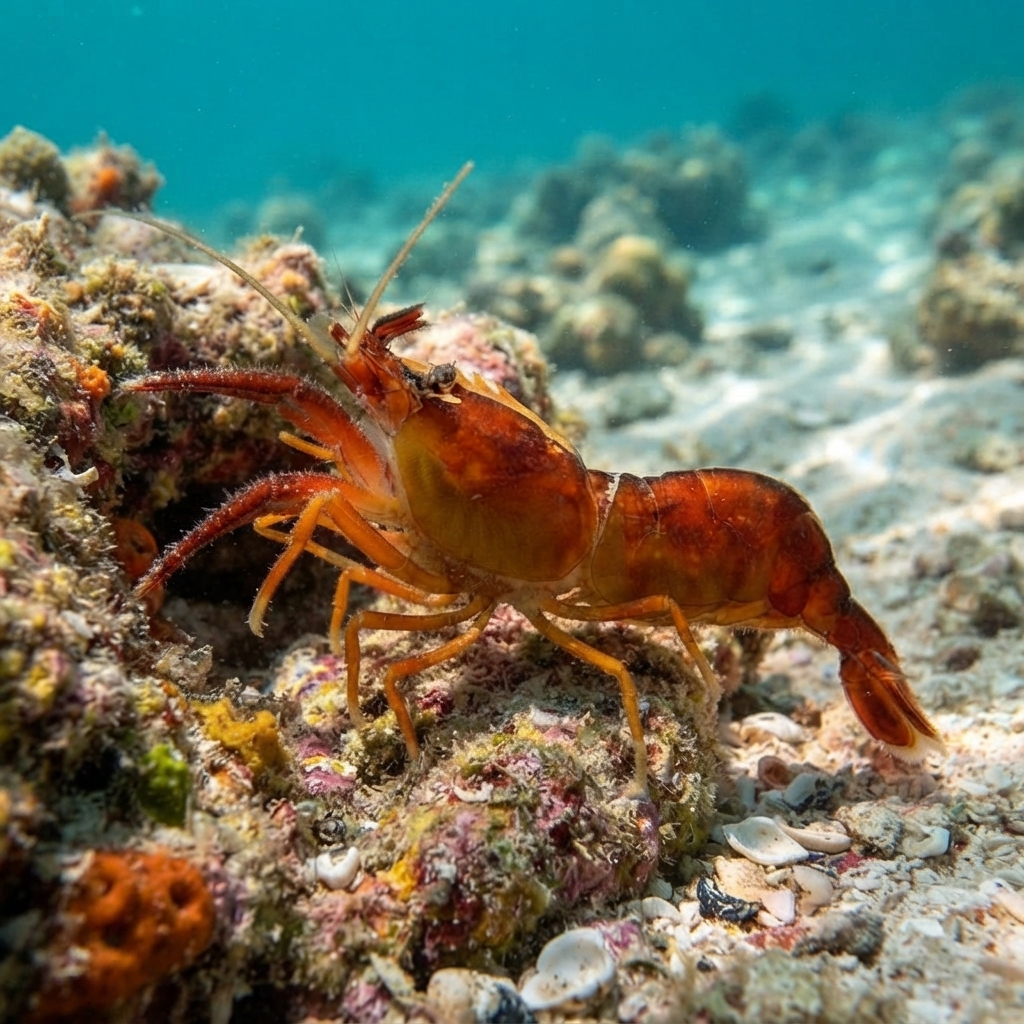
Heptacarpus brevirostris
A cold-water shrimp seen in British Columbia and the Pacific Northwest in 8.5-14.5C water, usually one or two per dive, year-round.
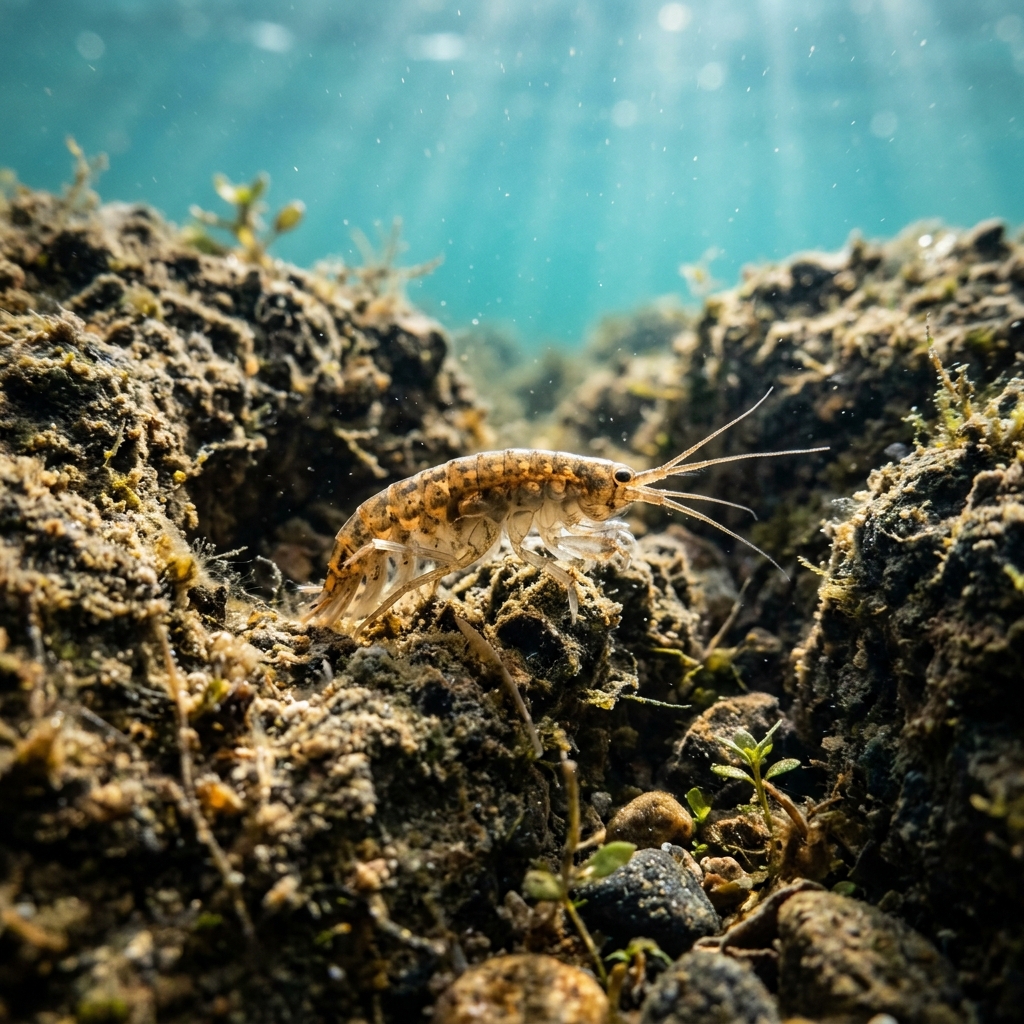
A small, mottled shrimp with a translucent to brownish body that lets it blend into rocky substrate and algae. The rostrum (the pointed spike between the eyes) is notably short and stout for its genus, which is where the common name comes from. Look closely along cobble, kelp holdfasts, and eelgrass rather than out in open water, since it relies on camouflage rather than bright colour to avoid notice.
Divers typically spot it sitting still or moving slowly over rock, cobble, and algae-covered surfaces rather than swimming in open water. It is logged as rare to uncommon at most sites, so finding one usually means a slow, close look at the bottom rather than a passing glance. It shows no strong reaction to divers beyond typical shrimp wariness, tending to hold position or retreat slightly into cover when a light or hand gets close.
Its short, blunt rostrum is an unusually practical ID clue for a genus where most species carry a long, thin spike between the eyes, making this one of the easier Heptacarpus shrimp to separate out with a careful look.
Sightings show no detectable seasonal pattern, so treat it as a year-round find in its cold-water range. Its observed temperature niche of 8.5 to 14.5C matches typical Pacific Northwest and British Columbia dive conditions across most of the year.
This is a cold-water Pacific species, most reliably logged in the Pacific Northwest of the United States and in British Columbia, Canada, with a smaller number of sightings further north in Alaska. Divers in Washington and Oregon waters and around Vancouver Island have the best documented track record for finding it.
Mapping where Stout Coastal Shrimp is logged…
It is most commonly logged in the Pacific Northwest of the United States and British Columbia, Canada, with additional records from Alaska. These cold-water sites, rather than tropical reefs, are where this species turns up.
There is no detectable seasonal pattern in sightings, so it can be found year-round within its cold-water range. It is consistently observed in water between 8.5 and 14.5C.
Look for a small, mottled brown to translucent shrimp resting on rock, cobble, or algae rather than swimming freely. Its rostrum is short and stout compared with other shrimp in its genus, which is a useful close-up ID feature.
Most dive sites where it has been recorded describe sightings as rare, with some as uncommon and only a few as common. Spotting one usually takes a slow, deliberate search of the substrate rather than a casual pass.
No, it poses no danger to divers. It is a small, non-aggressive shrimp that relies on camouflage rather than any defensive behaviour toward people.
Site and sighting data is aggregated from diver logs, iNaturalist and GBIF. For taxonomy and conservation status:
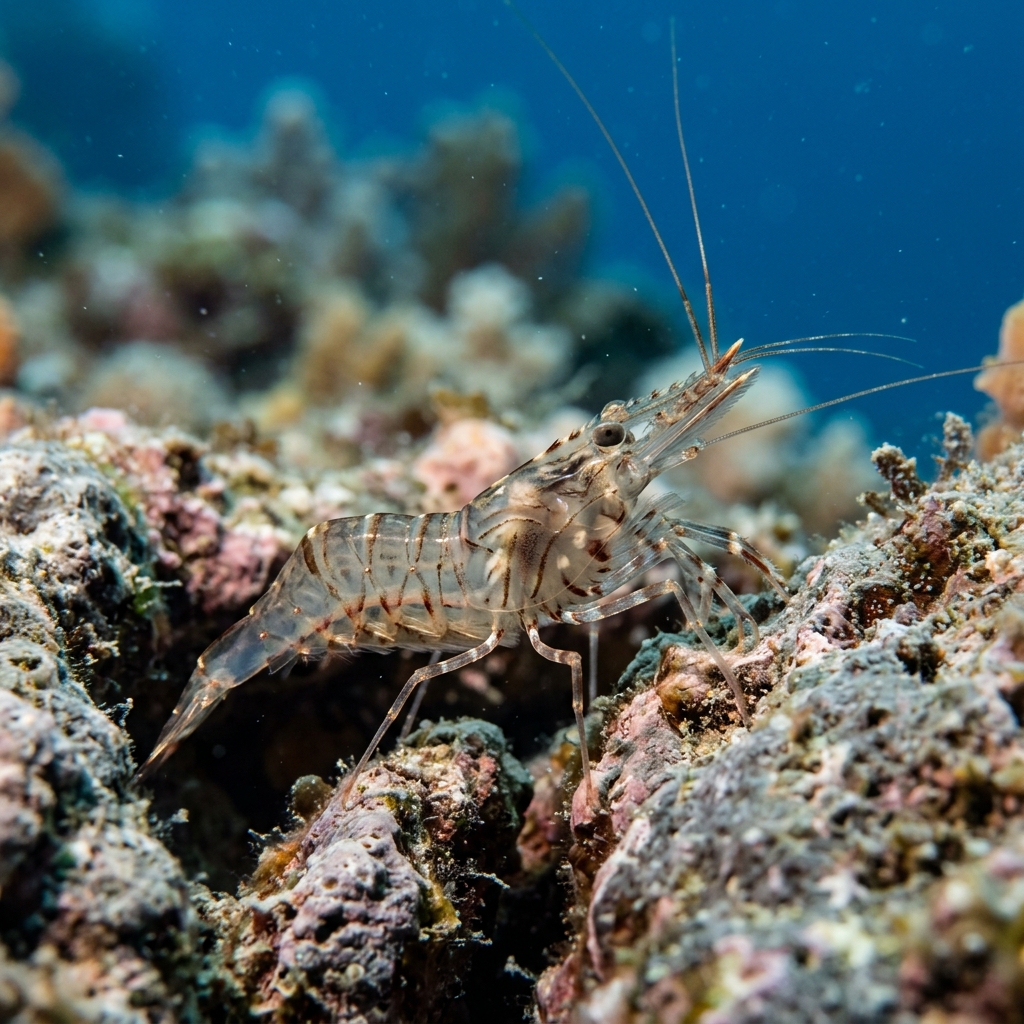
Rockpool Prawn
2,179 sites