Pseudobalistes naufragium
A big grey-brown triggerfish of the eastern Pacific, most reliably found off Panama's Pacific Coast and Baja California in 21-27C water.
Safety warning
Give it space, especially if you see one guarding a nest pit dug into sand or rubble near the reef; triggerfish defend these territories aggressively and can charge or bite a diver that strays too close. If one starts circling or angling its body sideways at you, that's a warning to back away rather than push closer for a photo.
If you're bitten
Territorial biteGeneral first-aid guidance, not a substitute for professional medical care. In an emergency, call your local emergency number.
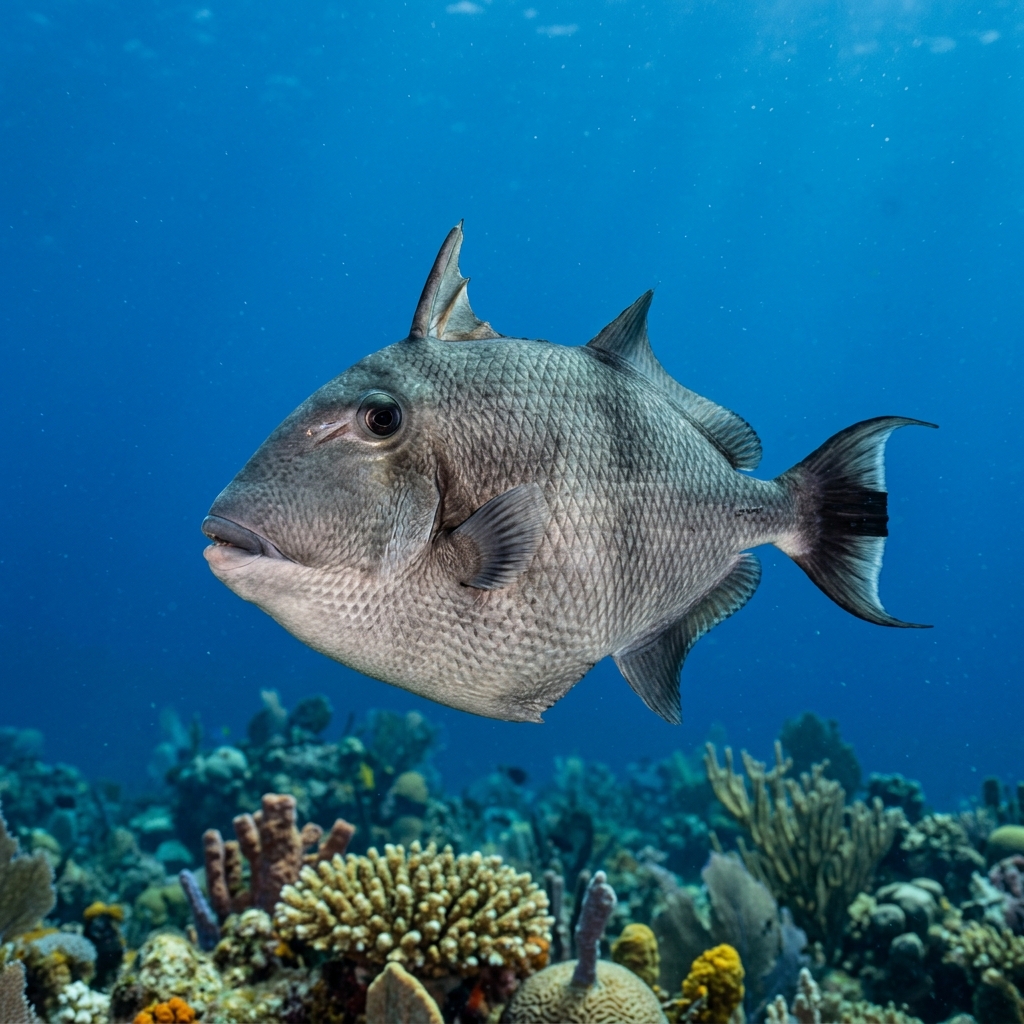
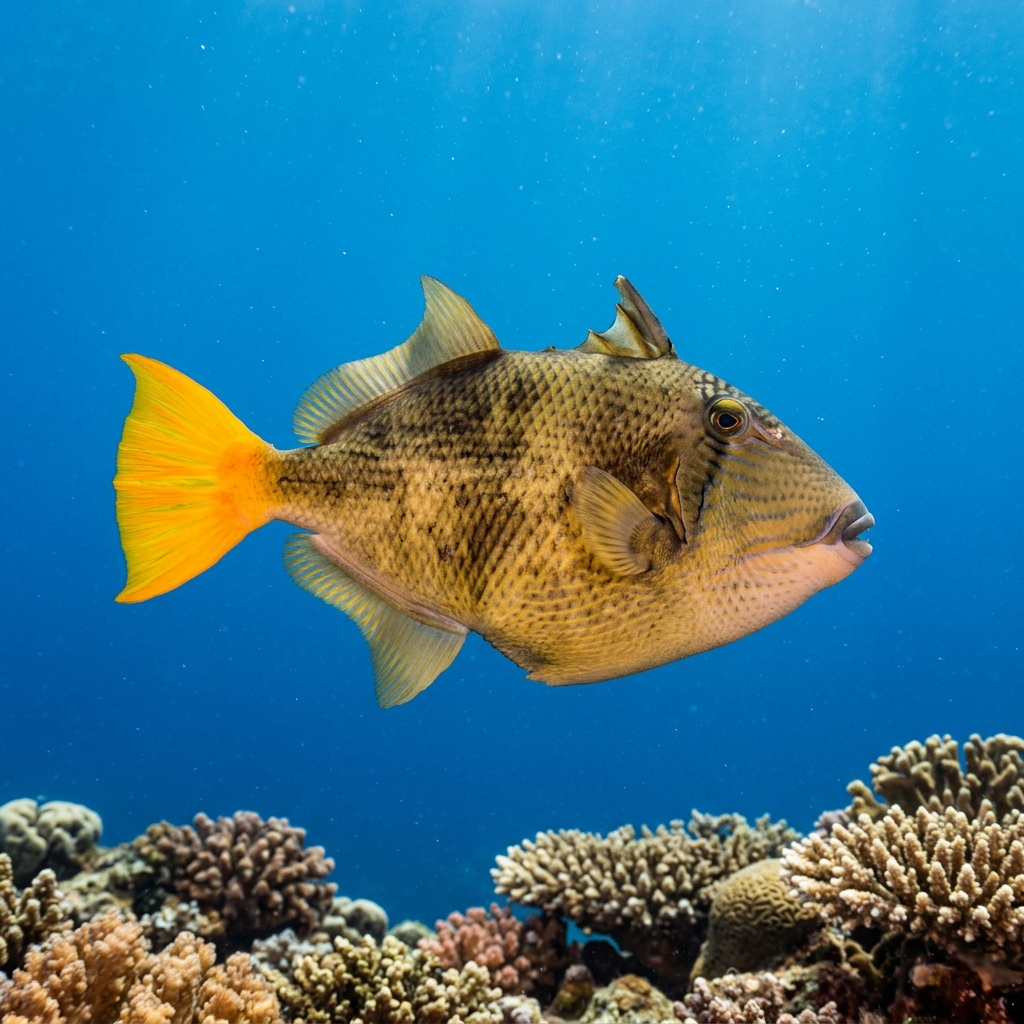
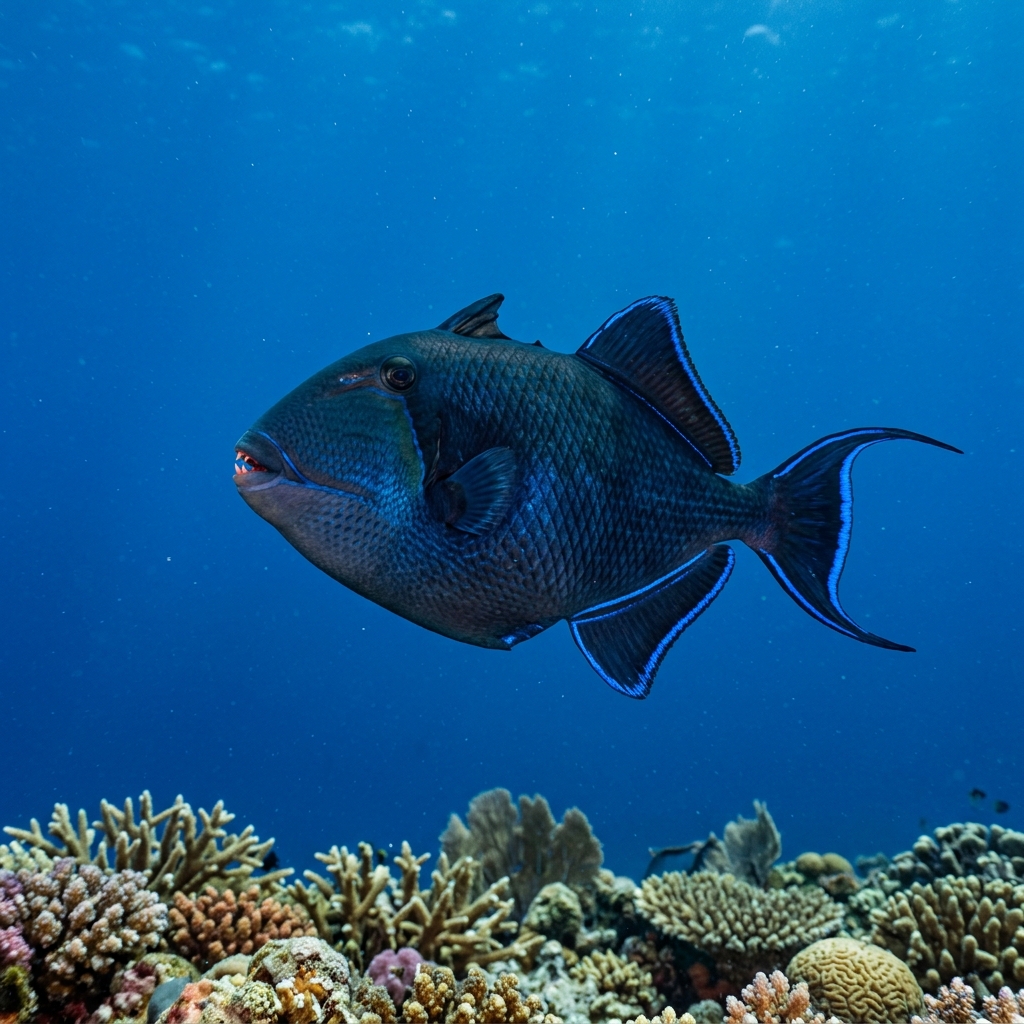
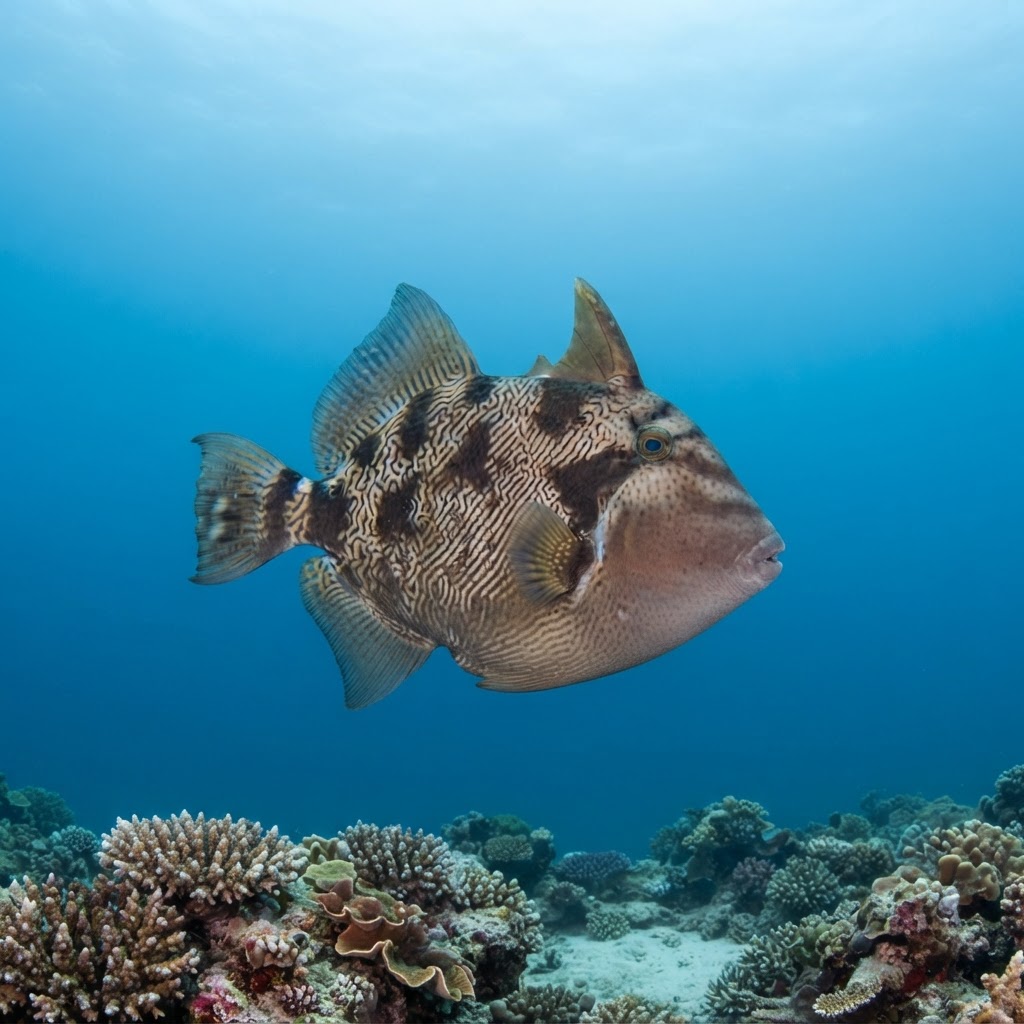
A heavy-bodied triggerfish reaching around 70 cm, noticeably larger and bulkier than most reef triggerfish you'll have seen elsewhere. Colouring is a muted grey-brown to olive over the whole body, without the bold stripes or patches that mark other triggerfish, though a pale patch behind the eye and faint mottling can show under torchlight. The blunt head, small eye set high, and thick leathery-looking skin give it a rugged, almost rock-like profile, which is where the common name comes from.
Usually seen cruising slowly over rock and reef structure alone, picking at the bottom or hovering near crevices rather than schooling. It tends to hold its ground rather than bolt when divers approach, giving you a decent look before it eventually moves off. Most sightings are logged as uncommon rather than common, so a sighting feels like a proper find rather than a given on any one dive.
Like other triggerfish, it can crunch through hard-shelled prey such as sea urchins and molluscs with a set of powerful, fused teeth, a bite strong enough to explain why divers are told to keep some distance.
No clear seasonal pattern shows up in the sightings, so treat it as a year-round encounter on eastern Pacific reefs. It's logged across a 20.8 to 26.9C range, comfortable enough that timing your trip around water temperature isn't necessary.
Most reliably logged along the Pacific Coast of Panama and Costa Rica's Central and South Pacific, with strong numbers too around Baja California and mainland Mexico's Pacific Coast. Ecuador's Pacific Coast and the Galápagos Islands, plus Colombia's Gorgona, round out the range, making this very much an eastern Pacific rock-and-reef species rather than a Caribbean one.
Mapping where Stone Triggerfish is logged…
Best chances are along the Pacific Coast of Panama and Costa Rica, plus Baja California and mainland Mexico's Pacific Coast. It also turns up off Ecuador's Pacific Coast, the Galápagos Islands, and Gorgona in Colombia.
There's no strong season in the sightings data, so it's a year-round encounter on eastern Pacific reefs where water sits between roughly 21 and 27C.
They can be. Like other triggerfish they defend nest sites aggressively and have a strong bite, so divers should keep distance and back off if one starts circling or angling towards them.
Look for a large, heavy-bodied triggerfish around 70 cm, coloured plain grey-brown to olive without bold stripes or spots. The blunt head and thick, rock-textured skin are the main giveaways.
They reach around 70 cm, making them one of the larger triggerfish a diver is likely to encounter on eastern Pacific reefs.
They're carnivores that use powerful fused teeth to crack open hard-shelled prey like urchins and molluscs picked off the reef and seabed.
Site and sighting data is aggregated from diver logs, iNaturalist and GBIF. For taxonomy and conservation status:
Lagoon Triggerfish
2,435 sites