Menippe mercenaria
Blocky claws and a mottled shell hiding in Florida ledges, most reliably logged around Florida's reefs year-round in 22.5-28.5C water.
Safety warning
The crushing claw can deliver a painful pinch if you try to handle it or reach into its crevice, so admire it from a short distance and leave the hole alone. It is not aggressive toward divers and only reacts if it feels cornered or grabbed.
If you're pinched
Strong pinchGeneral first-aid guidance, not a substitute for professional medical care. In an emergency, call your local emergency number.
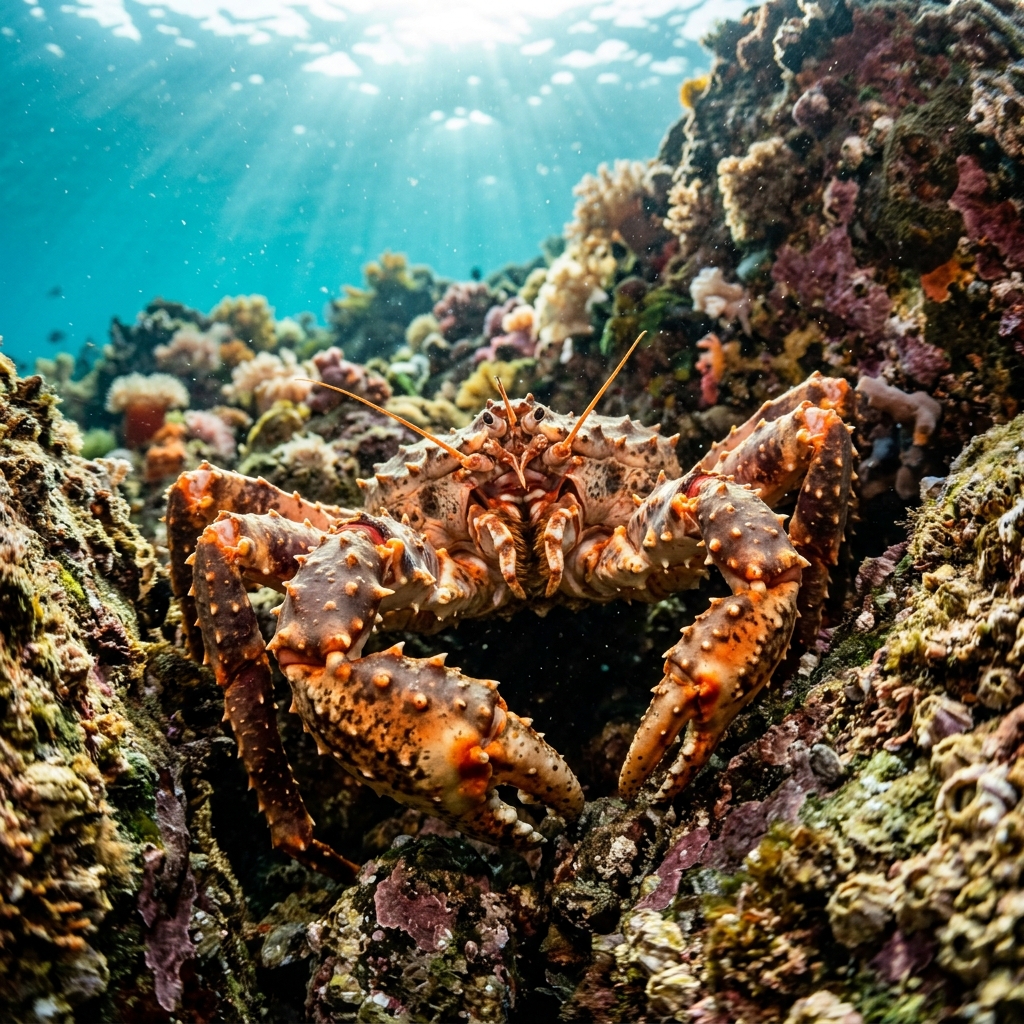
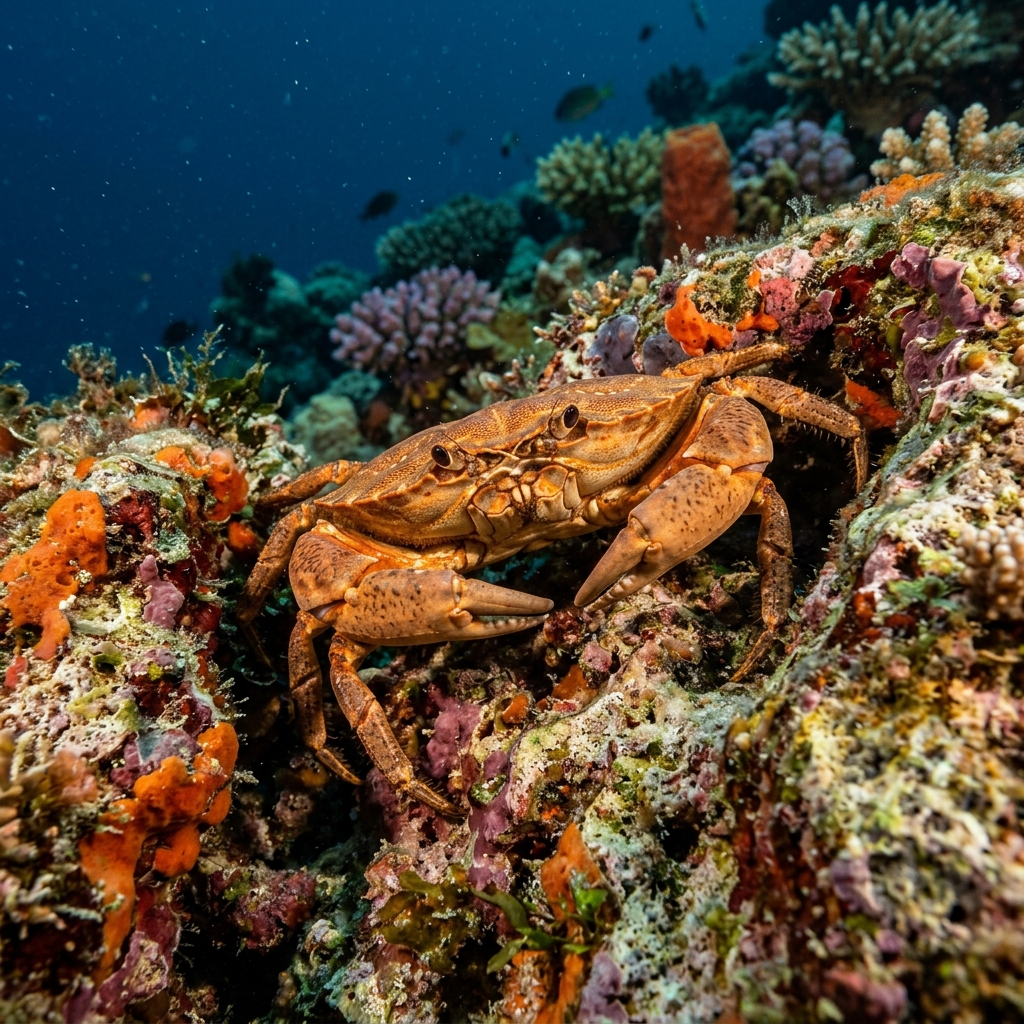
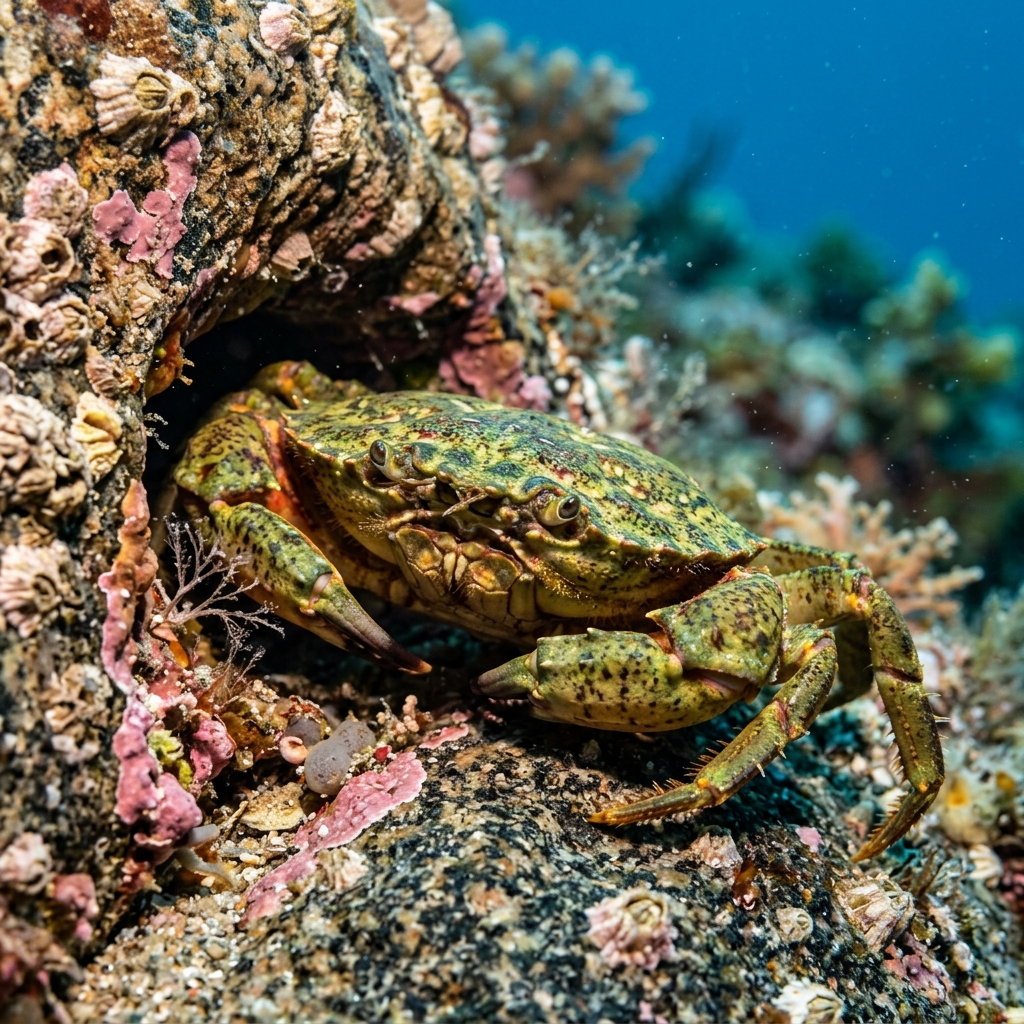
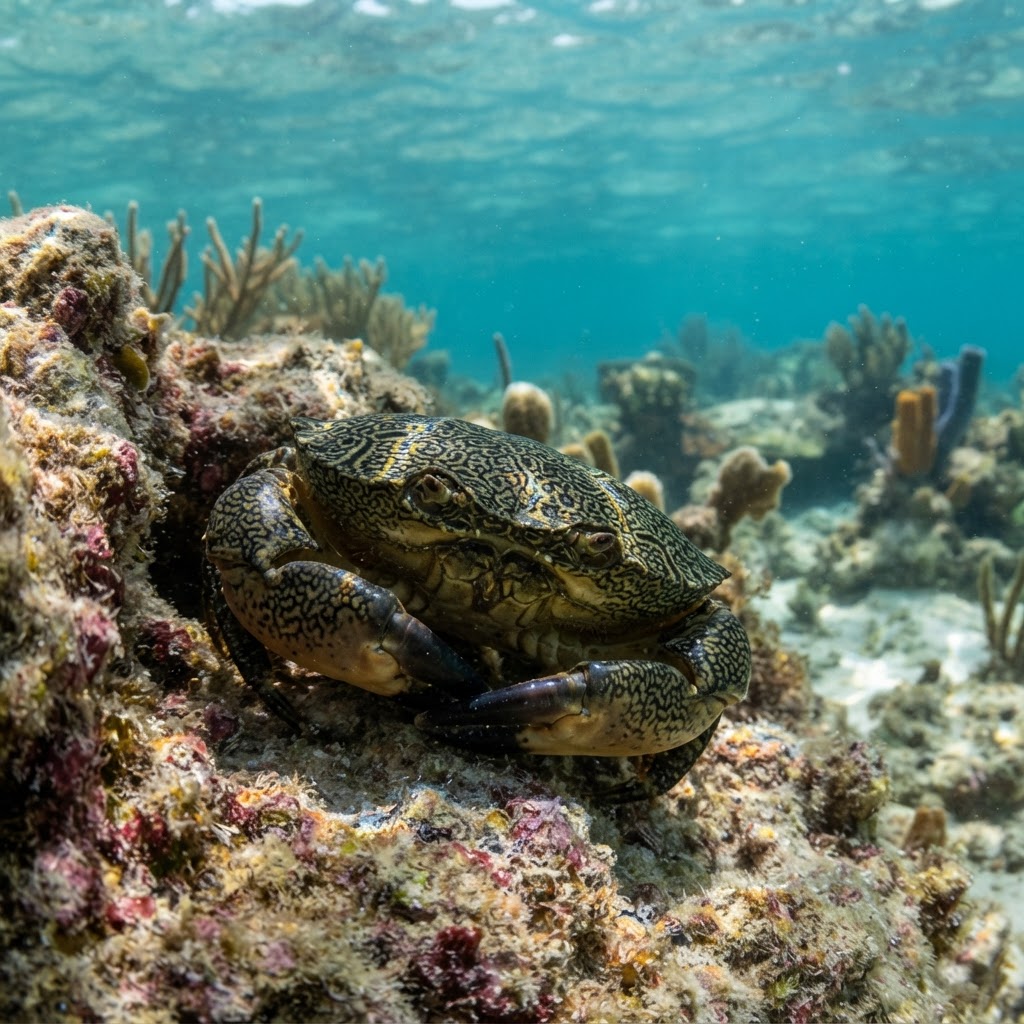
Look for a stocky, oval body around the size of a dinner plate at most, with one noticeably oversized, dark-tipped claw that dwarfs the other. Shell colour runs mottled brownish-red to grey, which blends it into rubble and ledges. It usually sits tucked back into a crevice with just the claws and eyestalks visible rather than out in the open.
Divers most often find it wedged into a ledge, hole or under rubble with just its claws poking out, rather than crossing open sand. It tends to hold its ground when approached, relying on its crevice and that oversized claw rather than fleeing. Most sightings are opportunistic, spotted while working a wall or ledge slowly rather than out cruising the reef.
That oversized claw is a dedicated crusher built for cracking open hard-shelled prey like molluscs, and if lost in a fight it can regrow over successive moults.
No clear seasonal pattern shows up in the data, and its comfort range of 22.5 to 28.5C covers Florida's water temperature most of the year, so sightings are logged year-round.
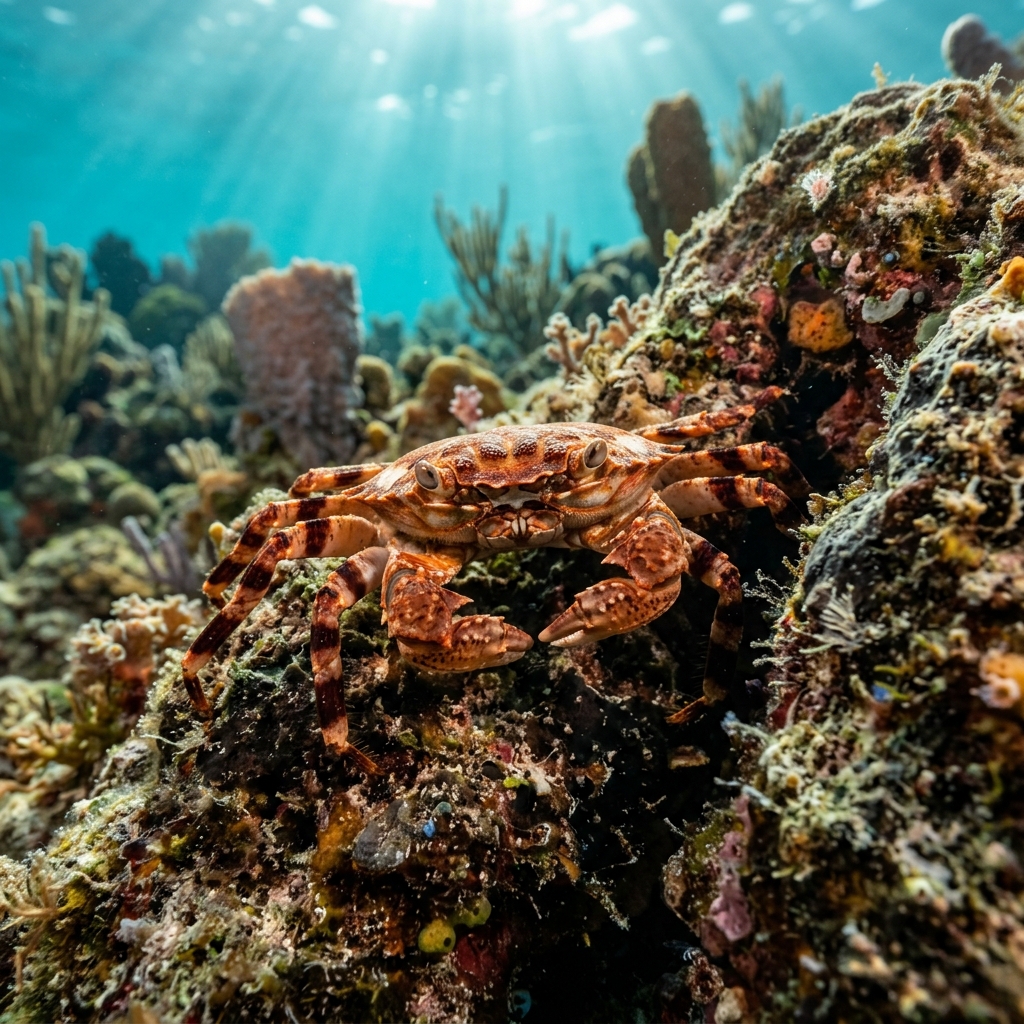
Reef neighbours a diver could mistake it for. Use the identification notes above to tell them apart.
Nearly all logged sightings come from the United States, with Florida the clear stronghold and a scattering of records further north in the Carolinas. Within Florida it turns up on reef ledges and rubble patches rather than any single famous site, so it is more a case of checking likely holes on any Florida dive than seeking out one location.
Mapping where Stone Crab is logged…
Almost every logged sighting is in the United States, overwhelmingly in Florida, with a few records further north in the Carolinas. Look for it tucked into ledges and rubble on Florida reef dives rather than at one specific famous site.
There is no strong season in the sighting data, and Florida's water sits within its comfort range of 22.5 to 28.5C most of the year, so it is a reasonable year-round find.
They are marked as a risk mainly because of their oversized crushing claw, which can pinch hard if handled. Left alone in its crevice it poses no threat, so just avoid reaching into holes or grabbing it.
Look for a stocky, mottled brownish-grey shell and one notably larger, dark-tipped claw compared to the other. It is usually seen peeking from a ledge or crevice rather than fully out in the open.
Exact size data is not confirmed for this entry, but divers typically describe it as a fist-to-dinner-plate sized crab, noticeably bulkier than slender reef crabs thanks to that heavy claw.
Its oversized crusher claw is strong enough to break open hard-shelled prey like molluscs, and remarkably it can regrow that claw over several moults if it is lost in a fight.
Site and sighting data is aggregated from diver logs, iNaturalist and GBIF. For taxonomy and conservation status:
European Green Crab
2,469 sites