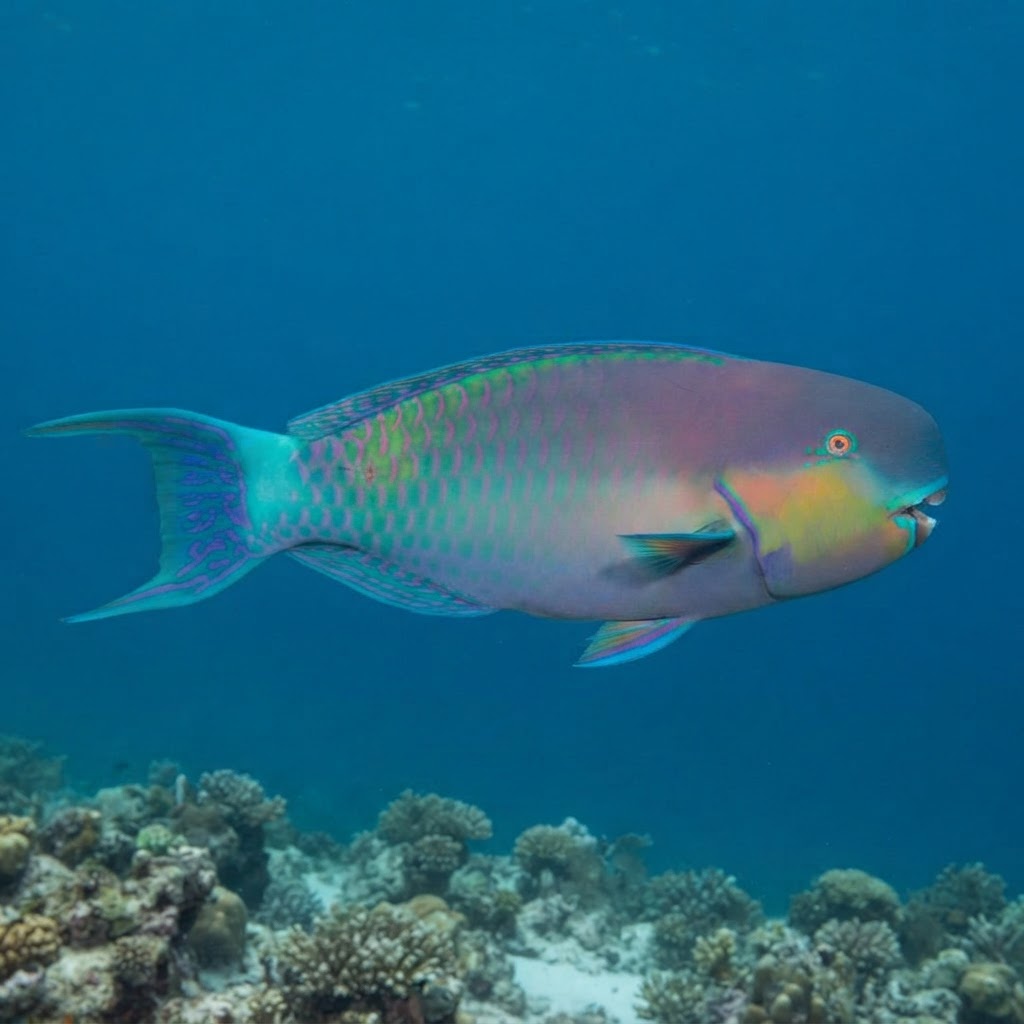
Chlorurus strongylocephalus
A steep-browed reef grazer common across the Maldives' Central Atolls, found year-round in warm 25.5-29.3C waters.
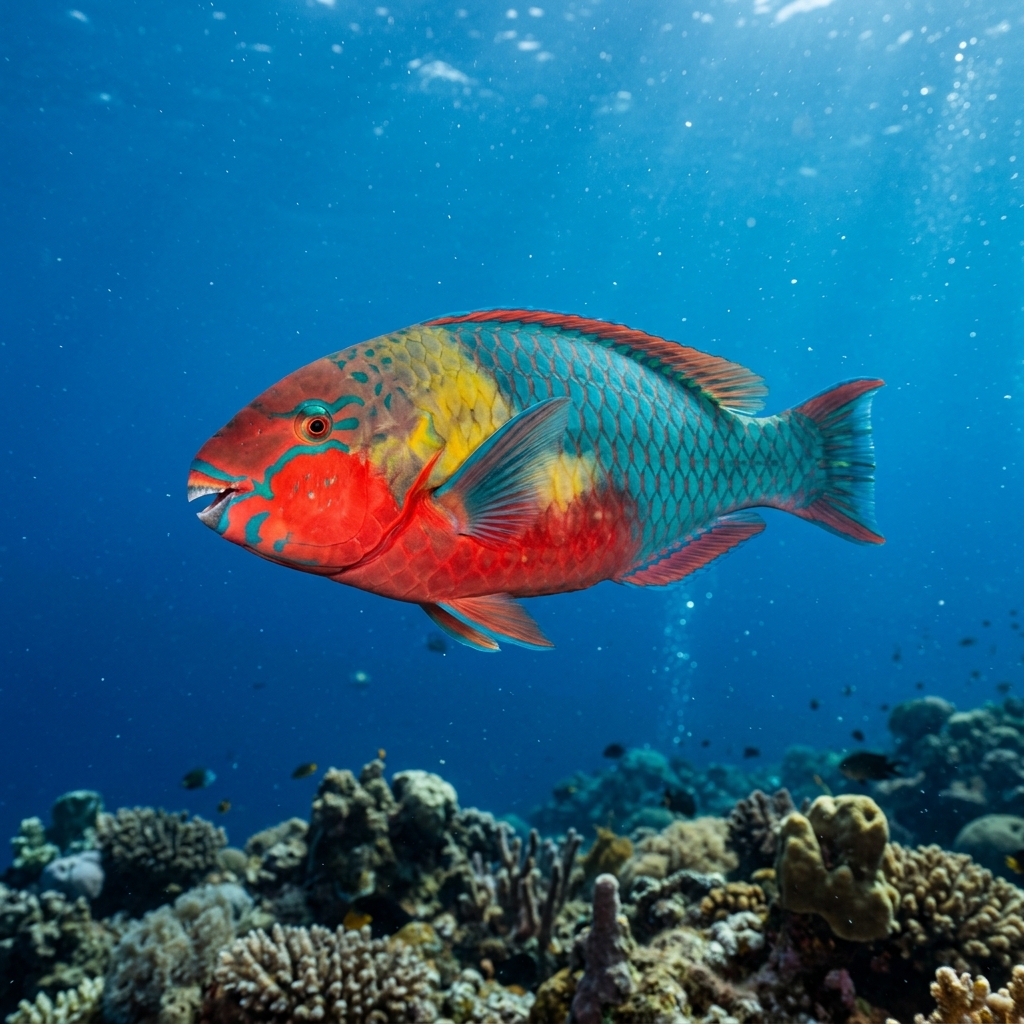
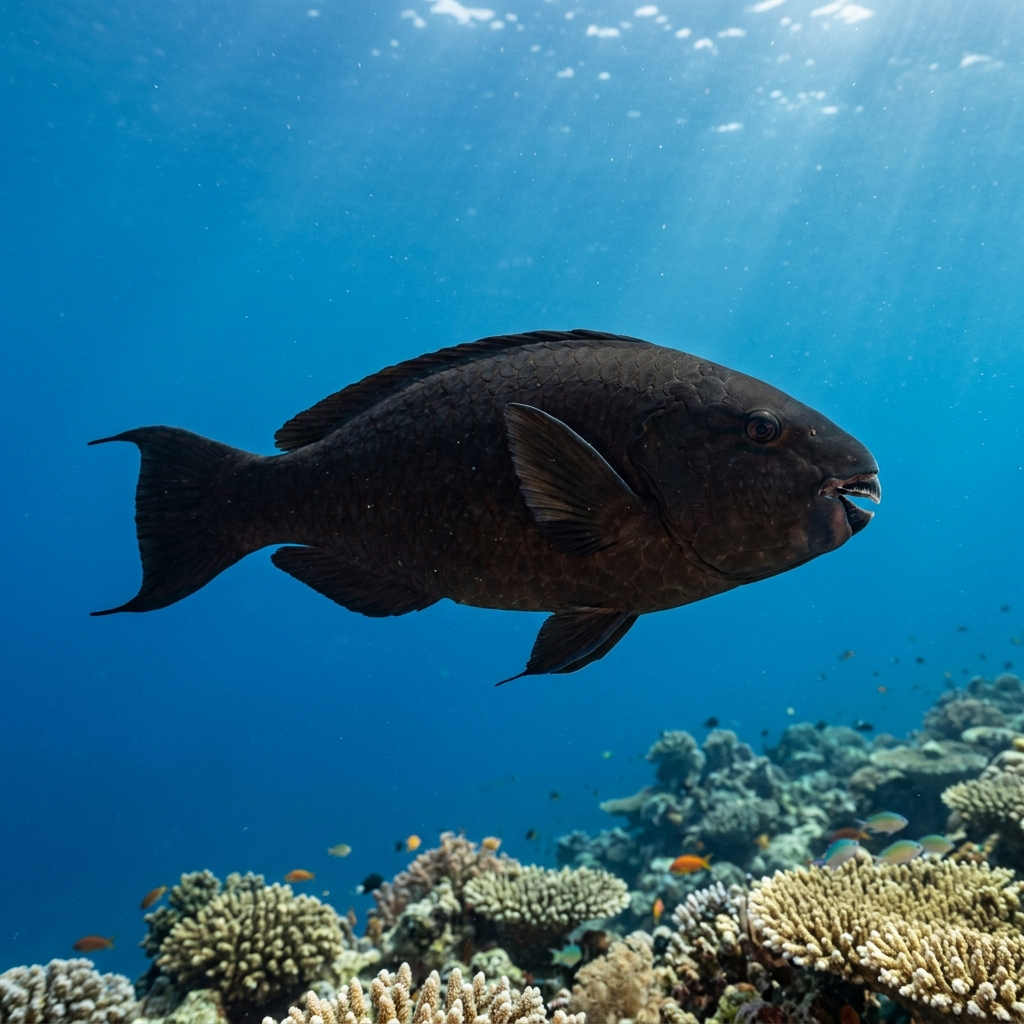
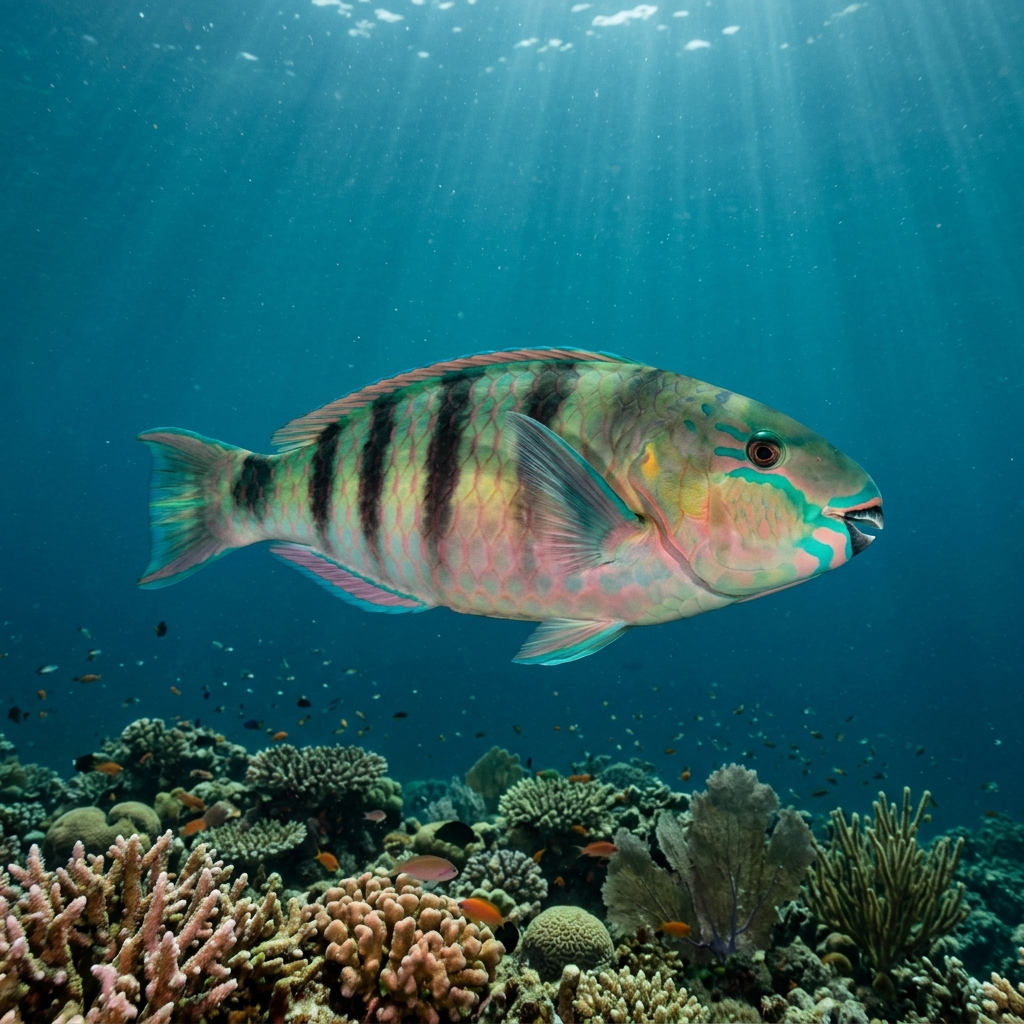
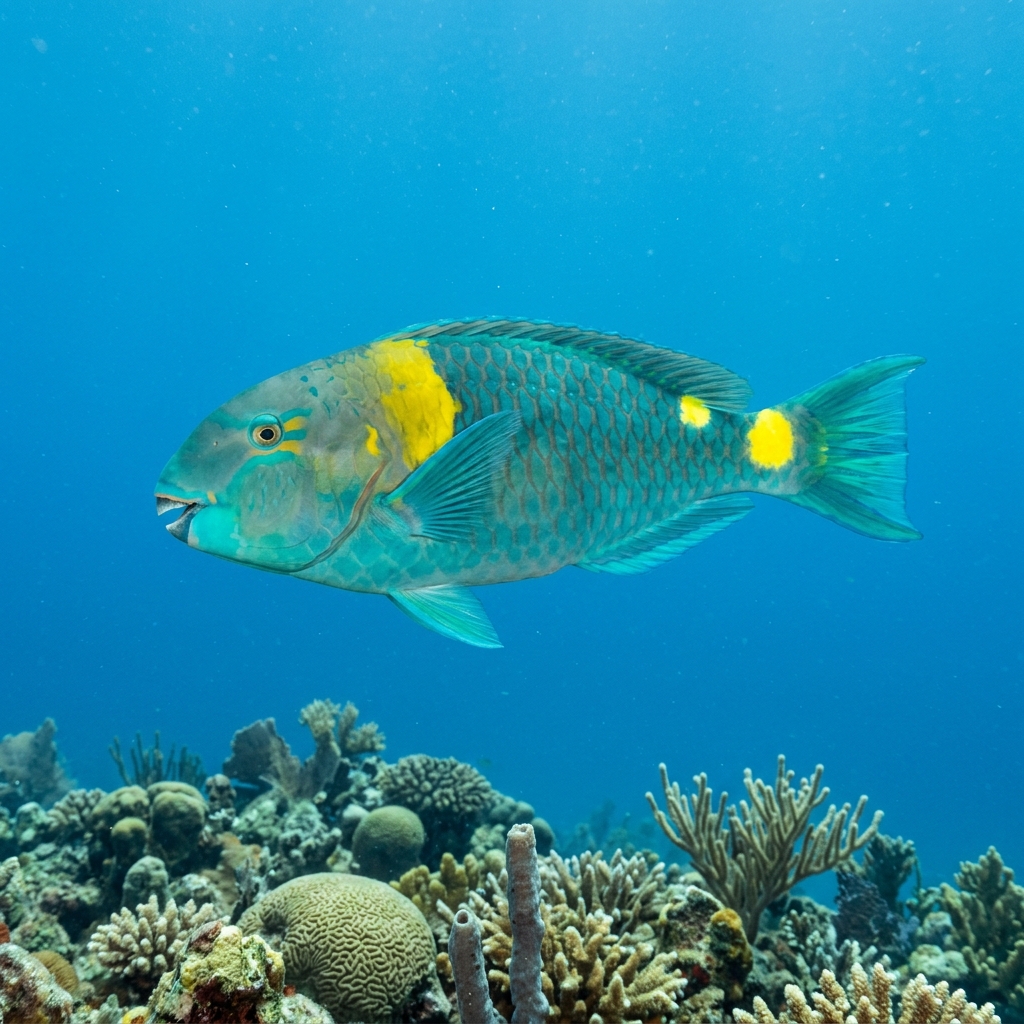
Look for a large parrotfish, up to about 49 cm, with a noticeably steep, almost vertical forehead that gives the species its name. Adults show a blue-green body with pink or peach highlights around the face and a fused beak-like mouth used for scraping algae off the reef. The steep head profile is the single best field mark that separates it from flatter-headed parrotfish species sharing the same reef.
Divers usually find it cruising over reef flats and slopes, working the surface of coral and rock with steady bites as it grazes algae. It tends to be unhurried around divers, more interested in feeding than in fleeing, though it will drift off if approached too directly. Most sightings come from mid-depth reef areas rather than deep walls, matching its 2 to 35 m depth range.
Like other large parrotfish, its grazing helps keep algae in check on the reef, and the sand it produces after digesting reef rock is a real, measurable contribution to tropical beach sand formation.
No clear seasonal pattern shows up in the sighting data, and with a comfortable range of 25.5 to 29.3C, reefs across its range stay within its preferred temperature window all year, so it is a year-round sighting rather than a seasonal one.
Most reliably logged in the Maldives, especially across the Central Atolls, with further sightings in the Northern and Southern Atolls. Outside the Maldives it turns up with fair consistency in Thailand's Khao Lak region and the Inner Islands of the Seychelles, plus smaller but real populations around Grand Baie in Mauritius and Nosy Be in Madagascar.
Mapping where Roundhead Parrotfish is logged…
The Central Atolls of the Maldives are the most consistent place to find them, with further sightings across the Northern and Southern Atolls. Thailand's Khao Lak region and the Inner Islands of the Seychelles are also solid options.
There is no strong seasonal pattern in sightings, and the species sits comfortably in water between 25.5 and 29.3C year-round, so any month on a tropical reef trip works.
Check the forehead first: it rises almost vertically, unlike the sloped profile of many other parrotfish. Pair that with a blue-green body, pink face tones, and a fused beak, and you have a solid ID.
They reach around 49 cm, making them one of the larger reef parrotfish a diver is likely to encounter on a typical dive.
No. They are herbivores that spend their time grazing algae off the reef and pose no threat to divers.
Their grazing bites scrape algae and some reef rock, which they digest and excrete as fine sand, a process that contributes to the sand on nearby beaches over time.
Site and sighting data is aggregated from diver logs, iNaturalist and GBIF. For taxonomy and conservation status:
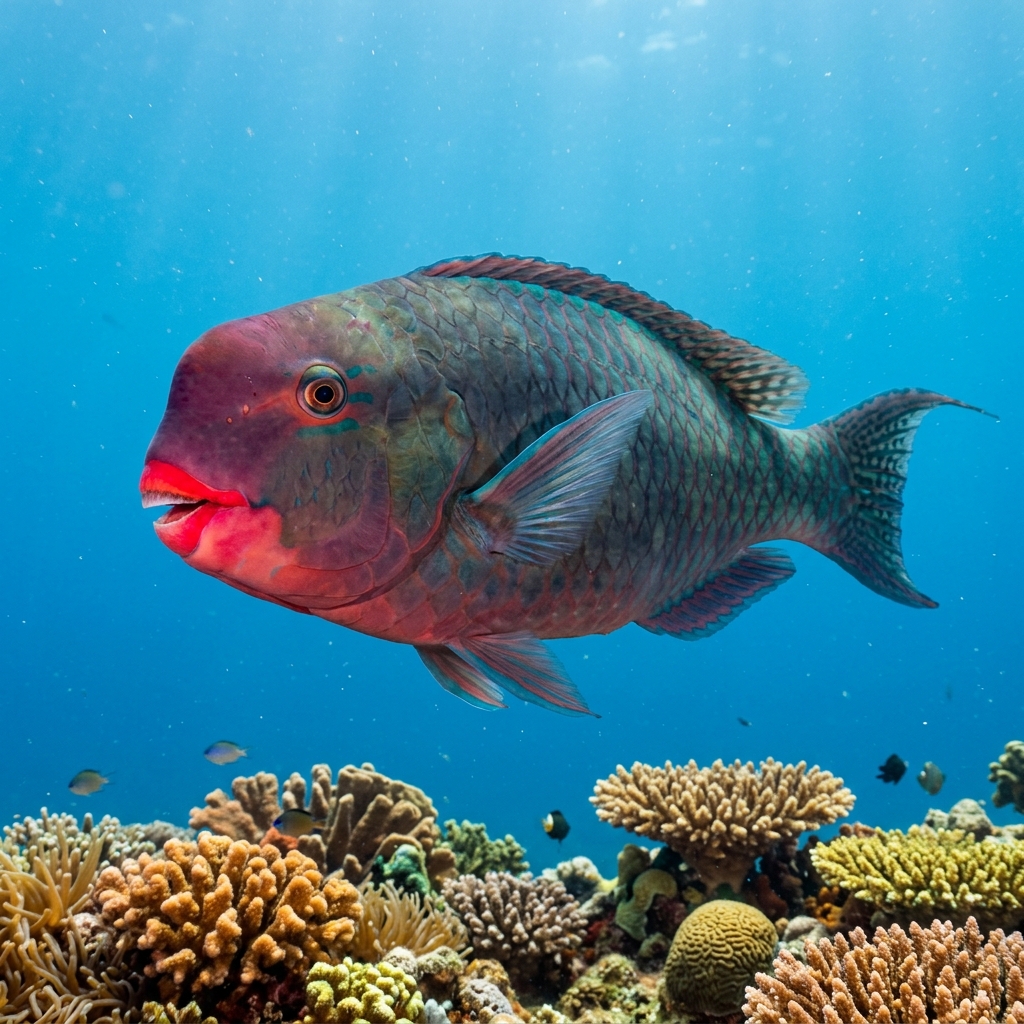
Redlip Parrotfish
2,789 sites