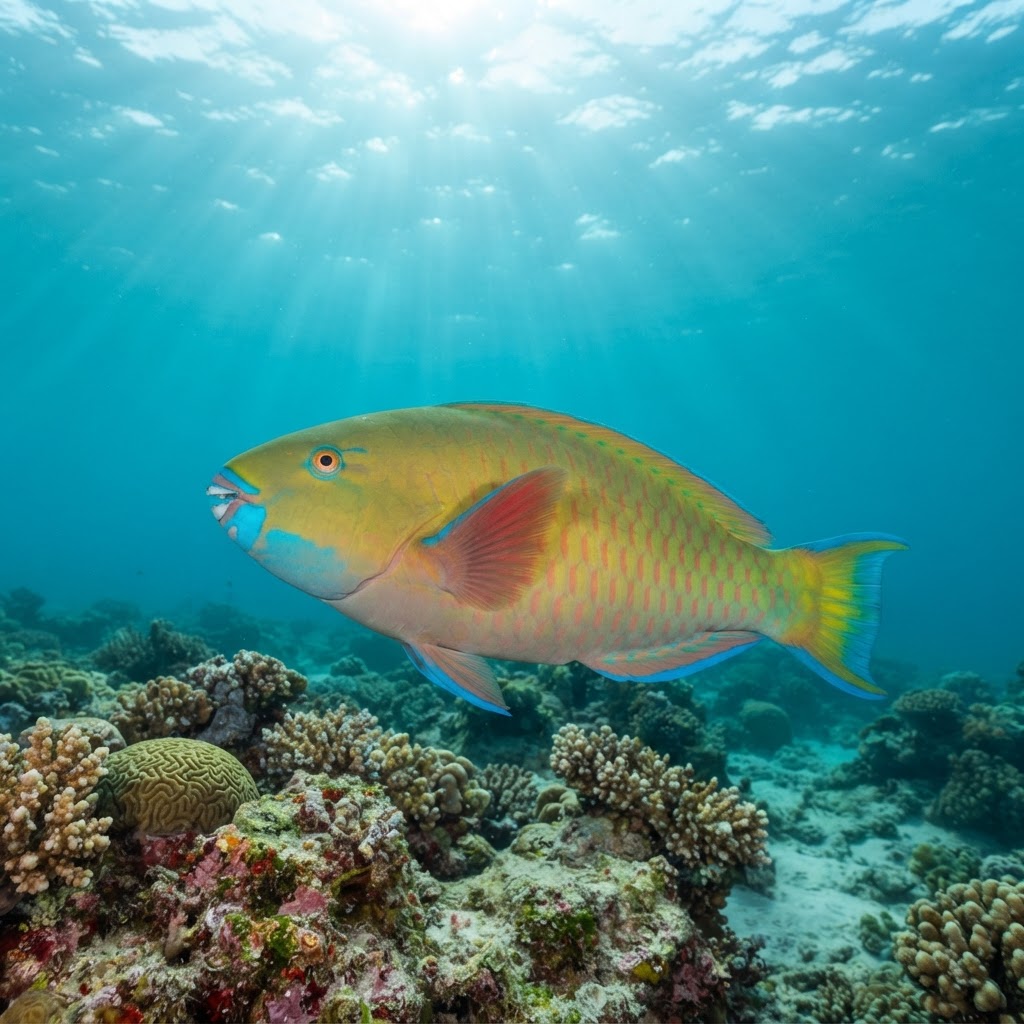
Chlorurus gibbus
A reliable sight on South Sinai reefs, this bulky parrotfish grazes coral year-round in 24.6-29C Red Sea water.
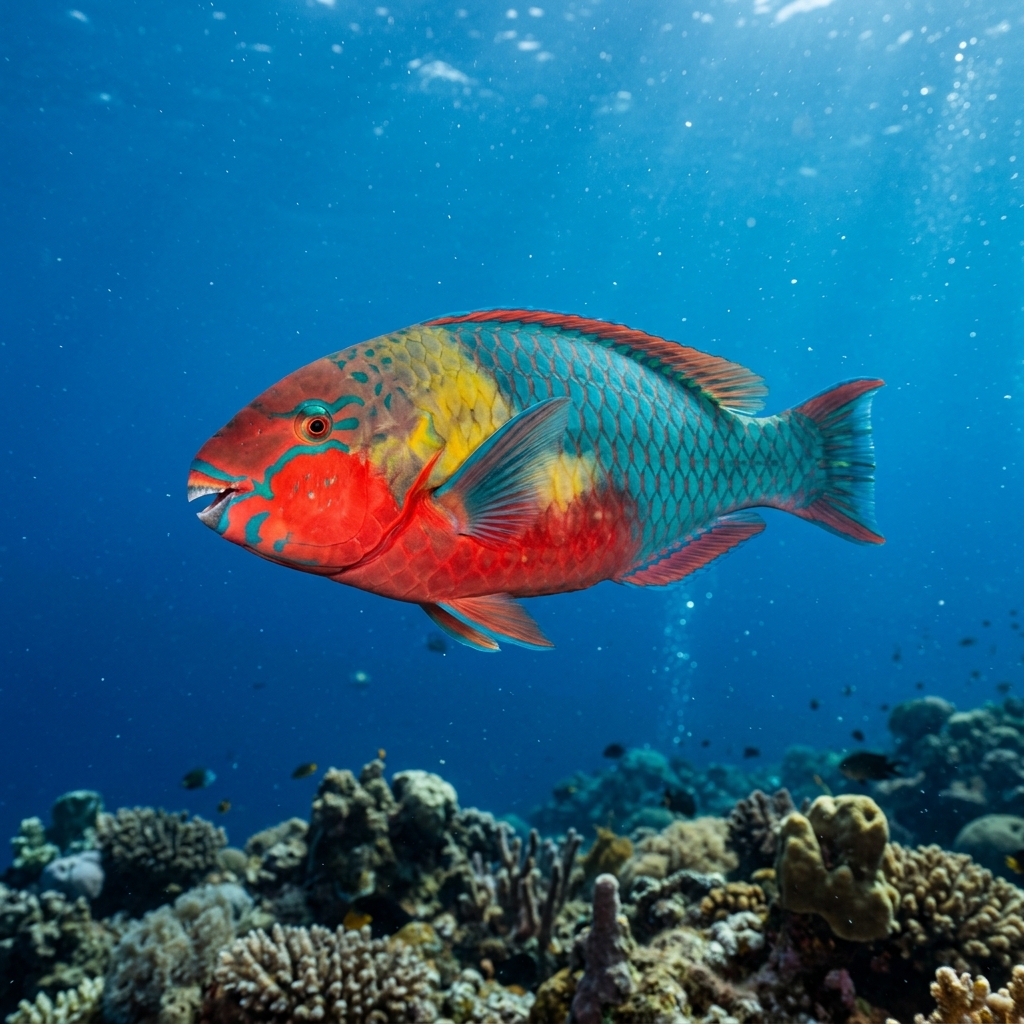
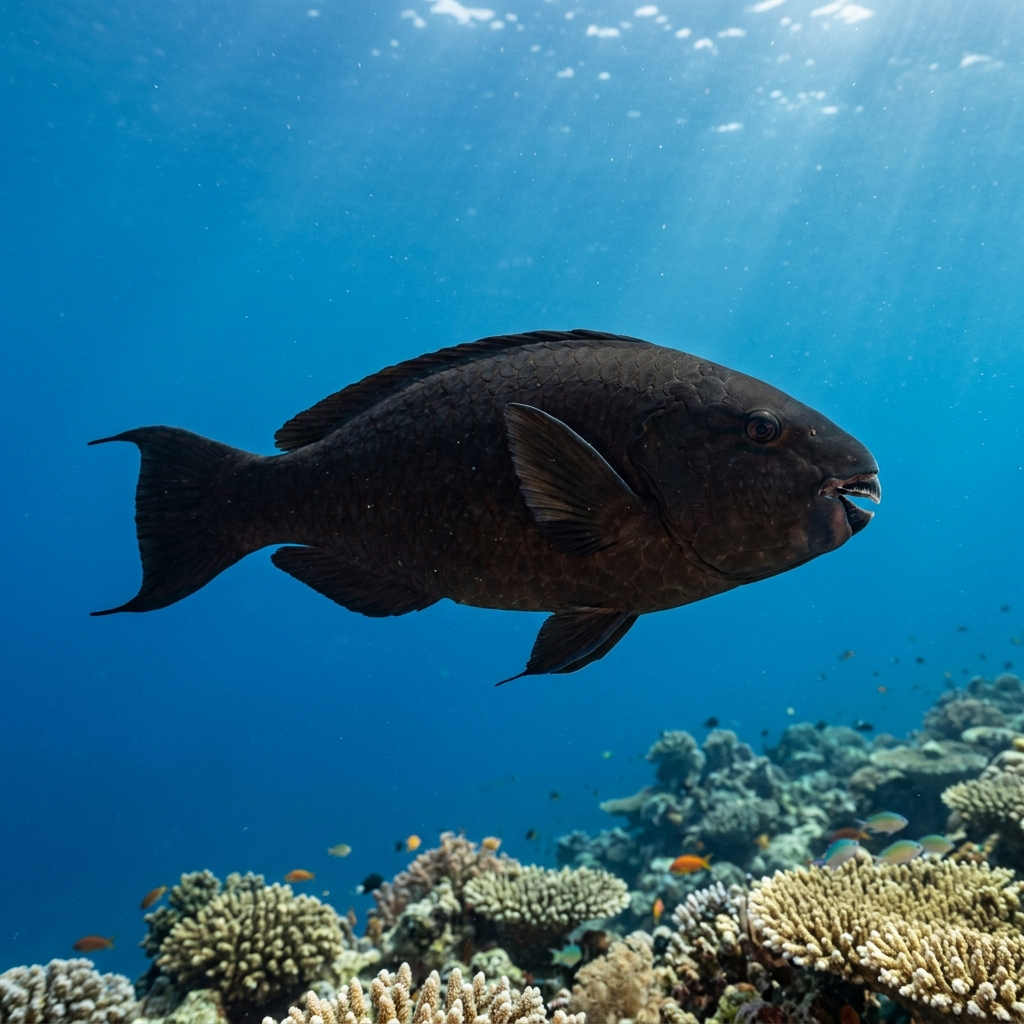
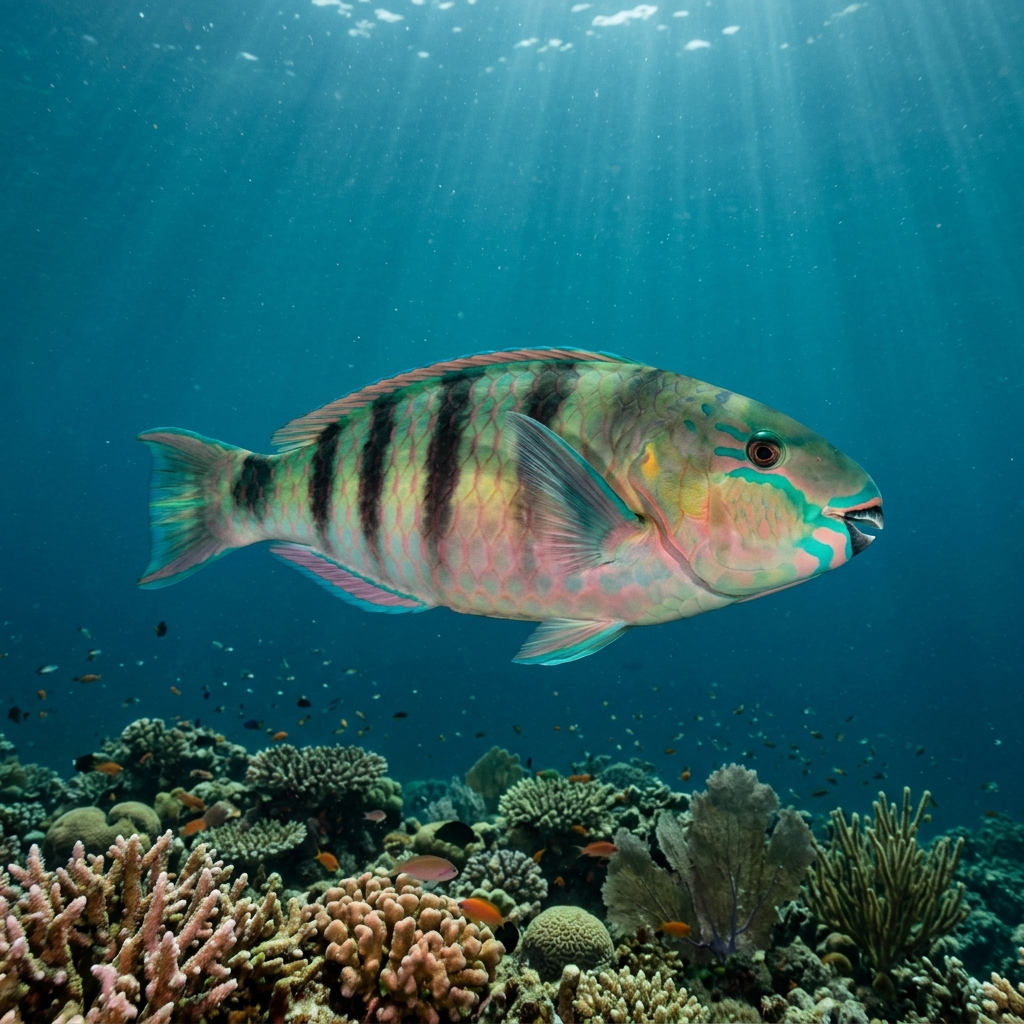
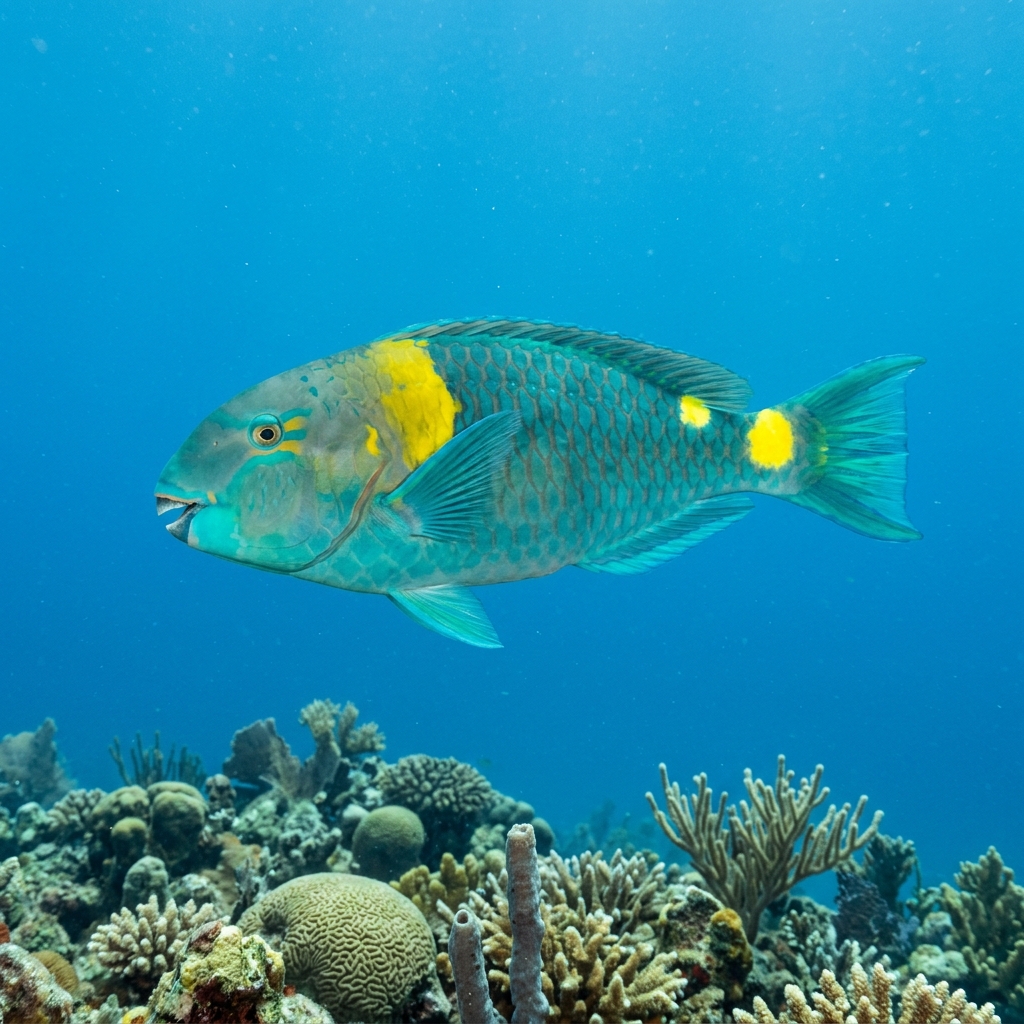
A heavy-bodied parrotfish reaching around 49cm, with a distinctive steep, almost vertical forehead that gives it its name. Body colour runs blue-green with pinkish or peach shading around the face and fused beak-like teeth used for scraping algae off reef rock. Its bulky profile and steep head slope separate it from slimmer wrasses on the same reef.
Usually seen cruising over reef flats and slopes, rasping at coral rock and rubble with its fused beak to get at the algae underneath. It tends to move in a steady, unhurried way and mostly ignores divers unless approached too directly, so a slow drift alongside it usually gets you a good look. Most logs describe it as an uncommon to common find rather than something schooling in numbers, so spotting one feels like a small win on a reef dive.
Like other large parrotfish, it plays a real role in reef upkeep: the coral rock it scrapes and grinds while feeding gets excreted as fine sediment, meaning individual fish contribute directly to the sand on nearby beaches.
No clear seasonal pattern shows up in the sighting data, and with a comfortable range of 24.6 to 29C it is present on these Red Sea reefs all year round.
Most reliably logged in Egypt, especially South Sinai, Marsa Alam and the Deep South, and the Red Sea Riviera, which together account for the vast majority of sightings. Also a steady find in Aqaba (Jordan) and Eilat (Israel), with smaller but confirmed populations on the Red Sea Coast of Saudi Arabia and around Sudan's Central Reefs.
Mapping where Red Sea Steephead Parrotfish is logged…
Egypt's Red Sea coast is the strongest area, particularly South Sinai, Marsa Alam and the Deep South, and the Red Sea Riviera. It is also logged regularly in Aqaba (Jordan), Eilat (Israel), and in smaller numbers along Saudi Arabia's Red Sea Coast and Sudan's Central Reefs.
There is no strong seasonal pattern in the sightings, and warm Red Sea water between roughly 24.6 and 29C year-round means it can turn up on any dive, any month.
Look for a bulky, blue-green parrotfish around 49cm long with a noticeably steep, high forehead and a fused beak-like mouth. It is usually seen alone or loosely associating with the reef, grazing on coral rock rather than schooling.
They typically reach about 49cm in length, making them one of the larger parrotfish a diver is likely to encounter on Red Sea reefs.
Its fused, beak-like teeth let it scrape algae directly off coral rock, and the crushed coral it swallows in the process gets ground down and excreted as fine sand, contributing to the sediment on nearby reefs and beaches.
No, they are not considered dangerous to divers. They are herbivores focused on grazing coral rock and generally keep their distance from divers rather than approaching.
Site and sighting data is aggregated from diver logs, iNaturalist and GBIF. For taxonomy and conservation status:
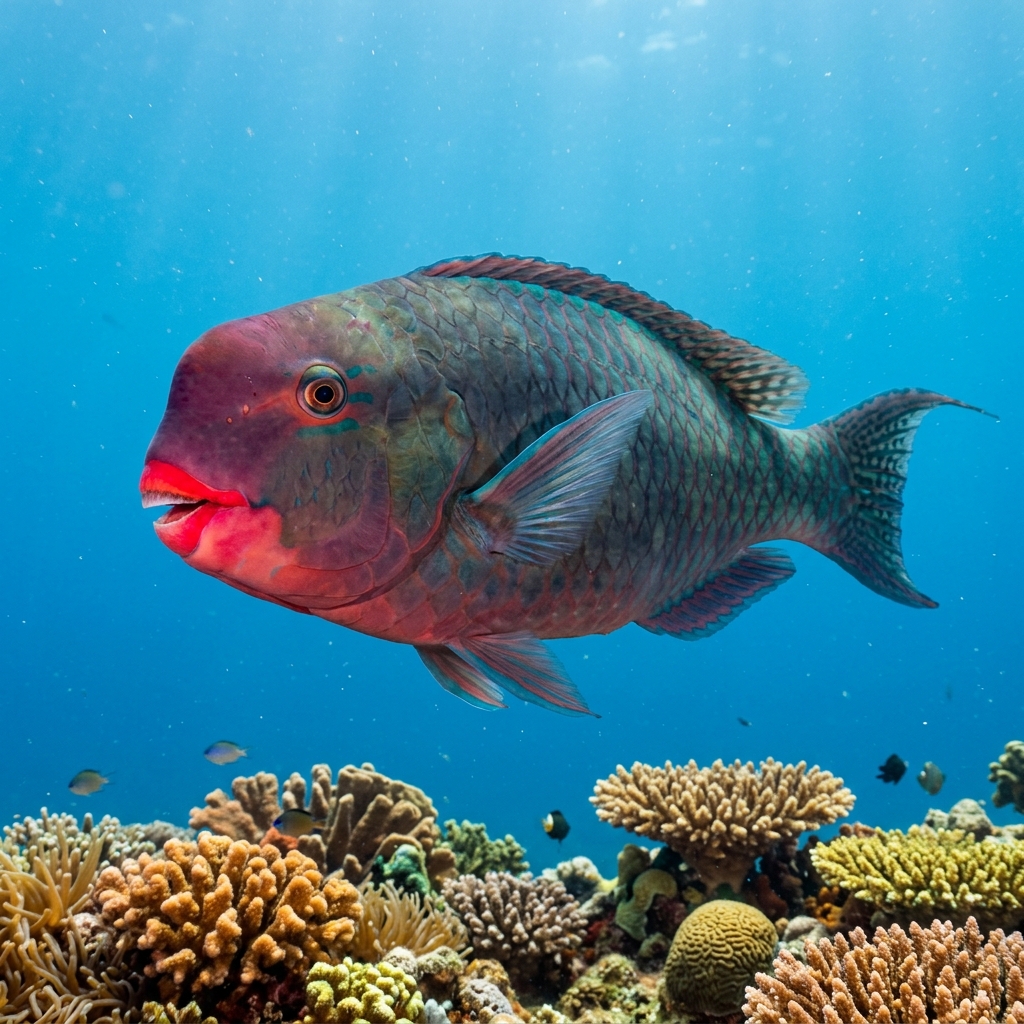
Redlip Parrotfish
2,789 sites