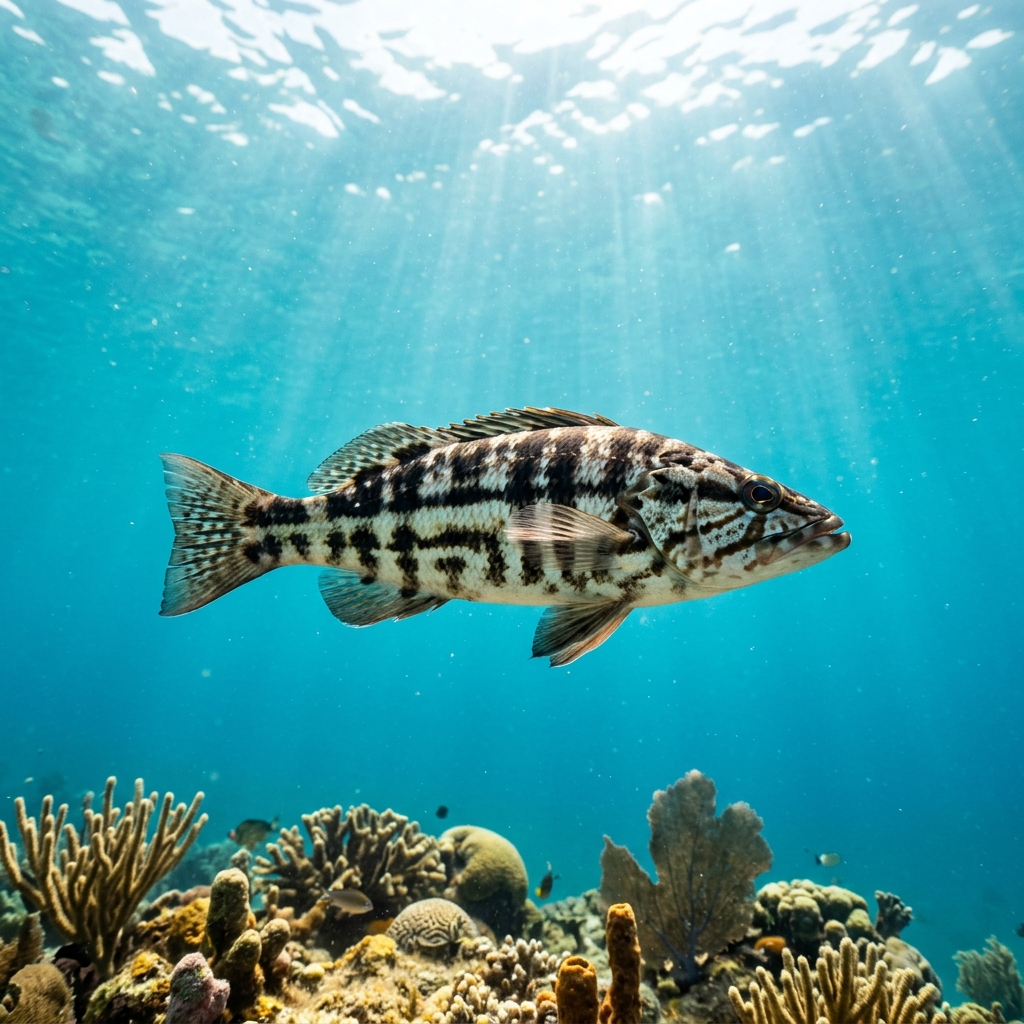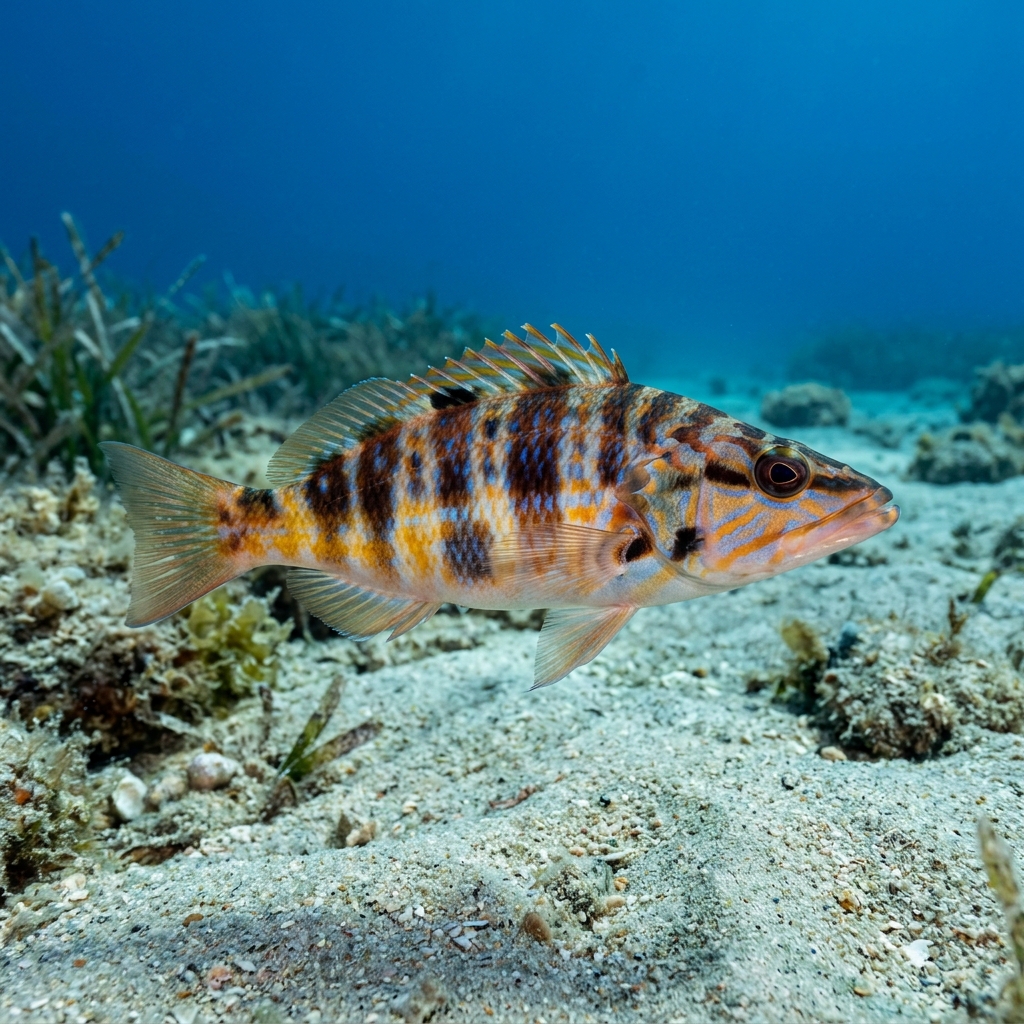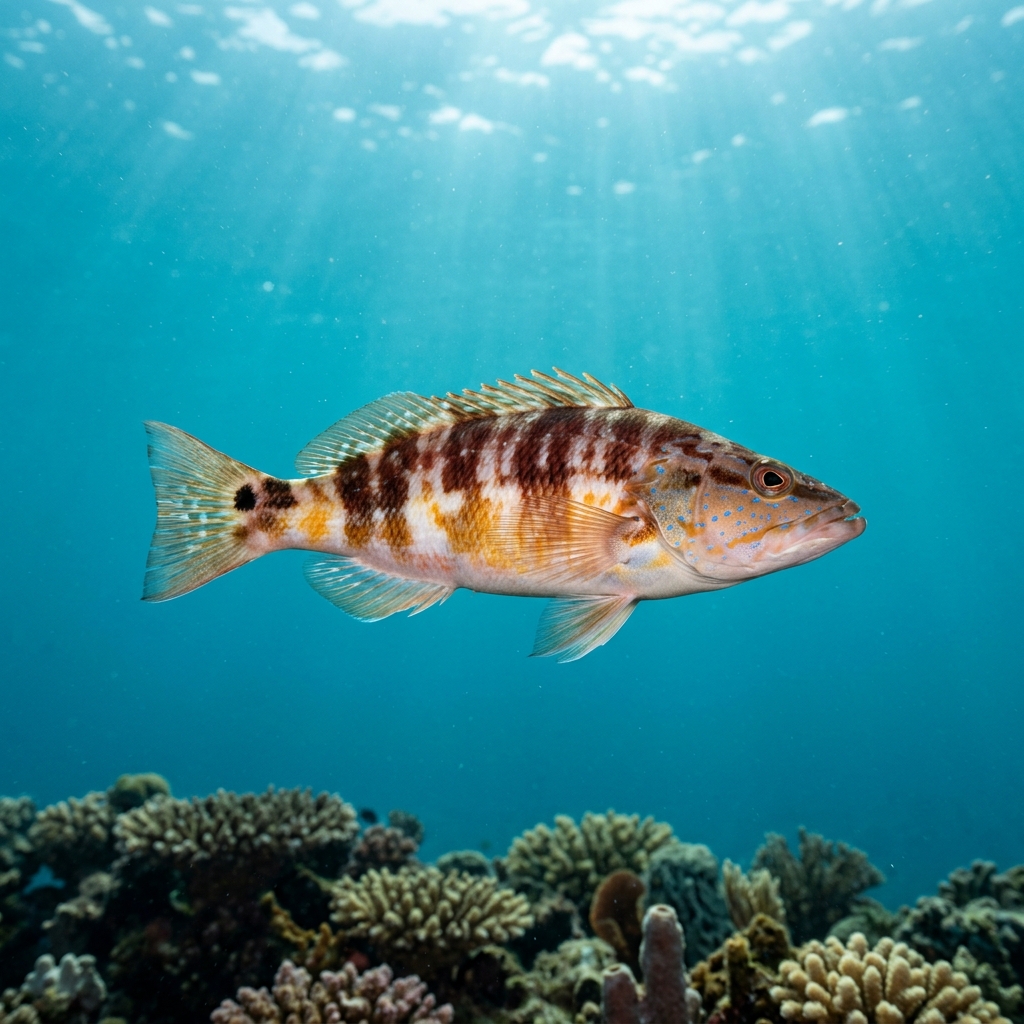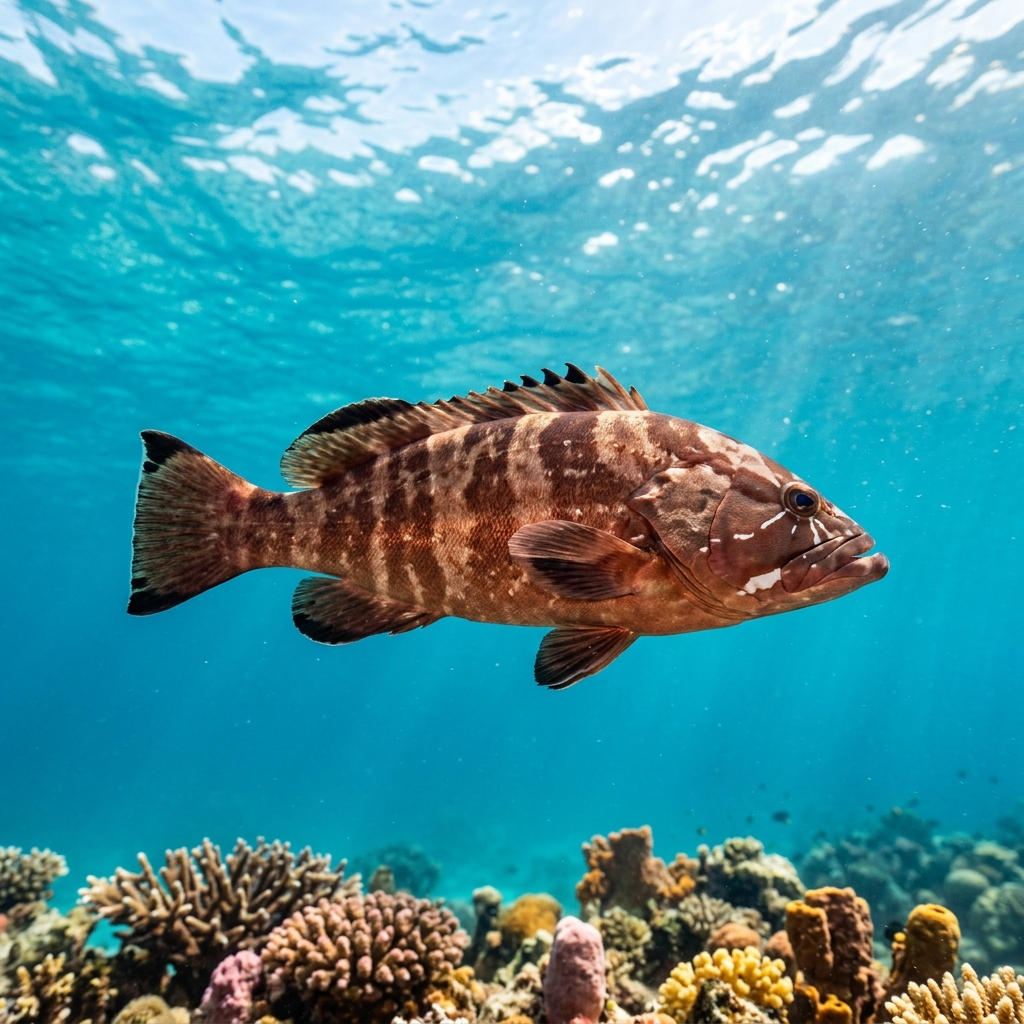
Cephalopholis polyspila
A common little reef grouper around Koh Lipe, Thailand, in warm 26.5 to 32.5C water, seen year-round on almost every dive.
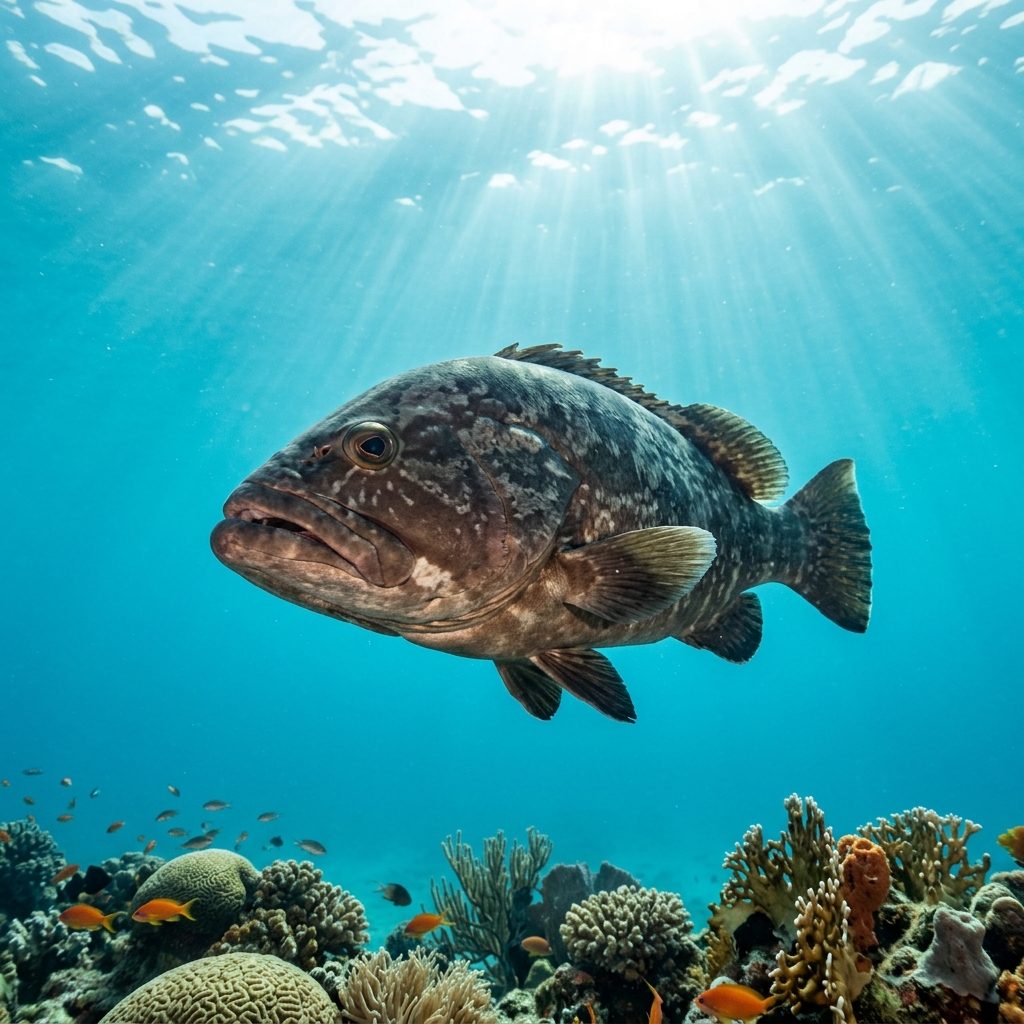
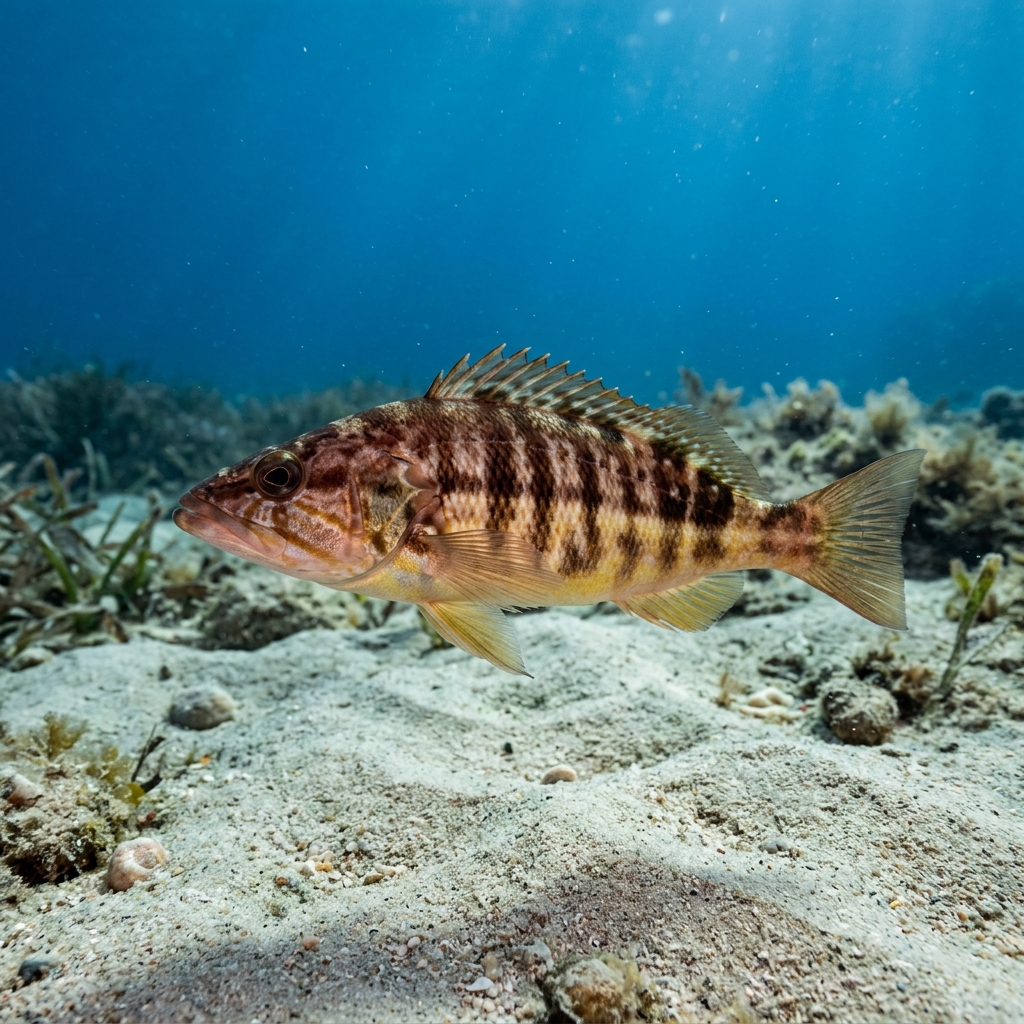
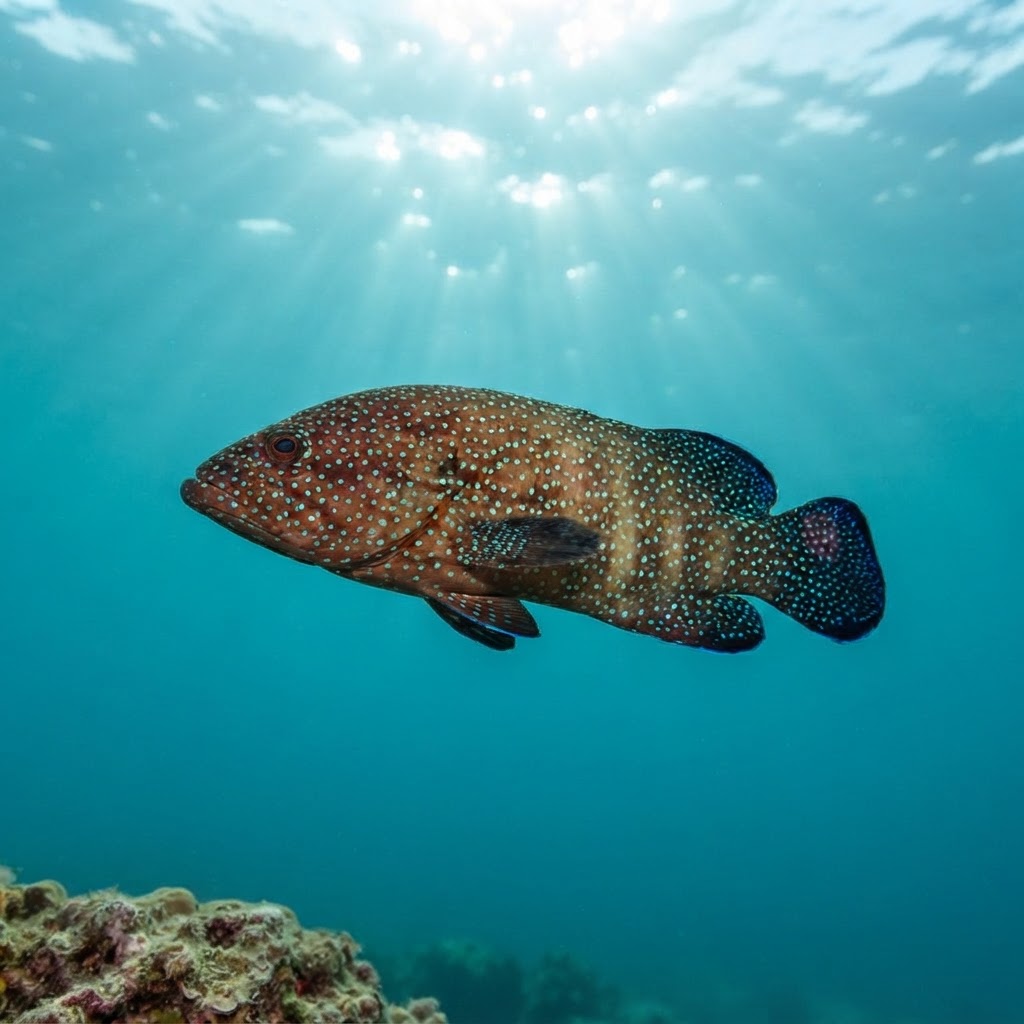
A small, stocky grouper at only around 13cm, easy to overlook against coral rubble or a reef ledge. Look for a pale to reddish-brown body covered in small dark spots that give it the starry pattern its name refers to, with a rounded tail and the thick-lipped, big-eyed face typical of the genus. It tends to sit still on the substrate or hover just above it rather than swim in the open, so scan ledges and coral heads rather than mid-water.
Typically found perched motionless on a ledge or wedged into a coral crevice, watching the reef rather than actively cruising it. It is not shy in the way larger groupers can be, often holding its position as divers pass rather than bolting for cover. Most sightings are on the reef structure itself during daylight dives, making it a good subject for close, unhurried photography.
Like other Cephalopholis groupers, it is a sit-and-wait predator, relying on its mottled camouflage to ambush small fish and crustaceans rather than chasing prey across open reef.
No clear seasonal pattern shows up in the sightings, and its comfort range of 26.5 to 32.5C matches Koh Lipe's water year-round, so it is a fair bet on any visit regardless of month.
Logged almost exclusively around Koh Lipe, Thailand, where it turns up as a common find across most surveyed sites in the area. If you are diving that corner of the Andaman Sea, this is a species you can reasonably expect to tick off rather than search hard for.
Mapping where Starry Grouper is logged…
The strongest and almost only records come from Koh Lipe, Thailand, where it is a common sighting across a wide spread of dive sites in the area.
There is no detected season for this species: it sits comfortably in 26.5 to 32.5C water, matching Koh Lipe's reefs all year, so any month works.
Look for a small, spotted grouper around 13cm long, pale to brownish with fine dark speckling, usually sitting still on a ledge or coral head rather than swimming in open water.
They stay small for a grouper, typically reaching only around 13cm, so they are easy to mistake for a juvenile of a larger species at first glance.
No, it poses no threat to divers. It is a small, reef-bound predator that hunts fish and crustaceans and has no interest in anything diver-sized.
It hunts as an ambush predator, staying still against the reef and relying on camouflage to strike at small fish and crustaceans that pass too close.
Site and sighting data is aggregated from diver logs, iNaturalist and GBIF. For taxonomy and conservation status:
Blacktip Grouper
2,726 sites