Abalistes stellatus
Speckled and shy, this triggerfish relative turns up as an uncommon find on Sabah's reefs year-round in warm 23-28C water.
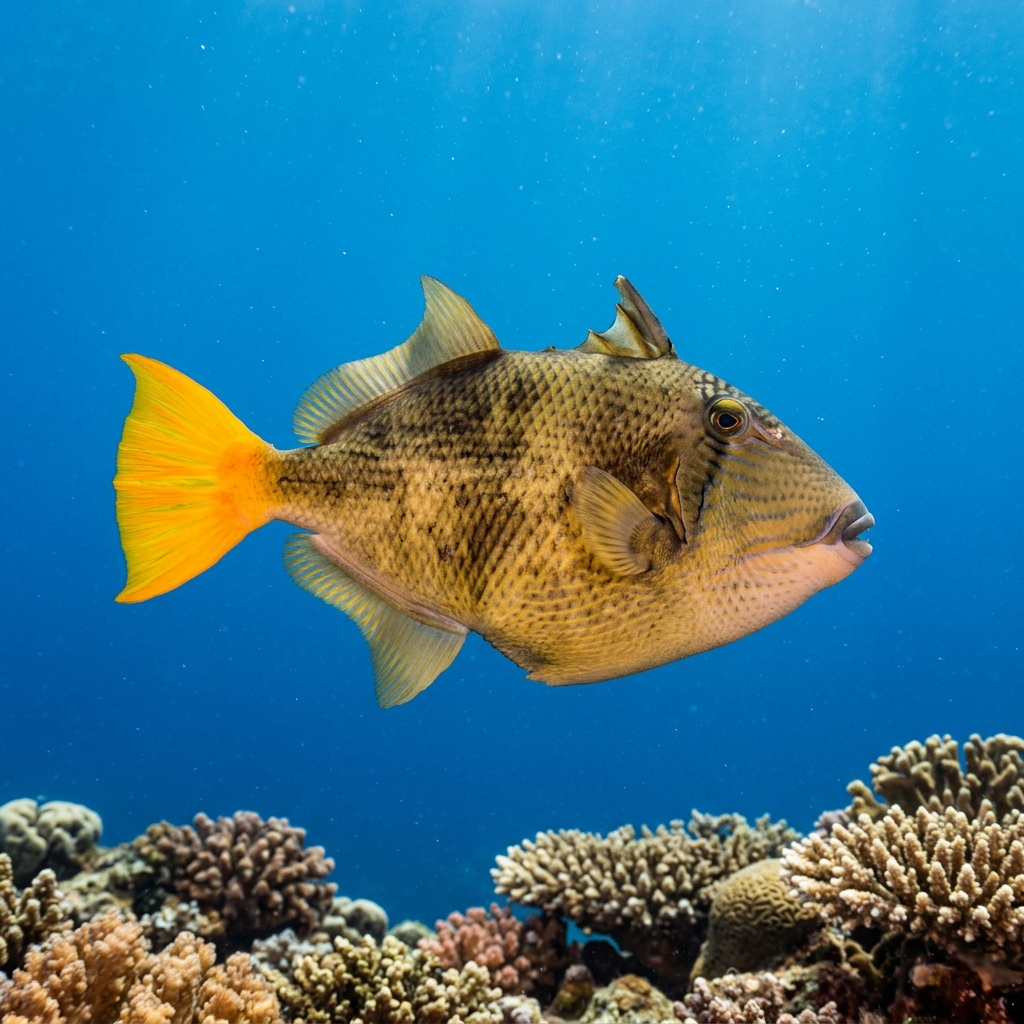
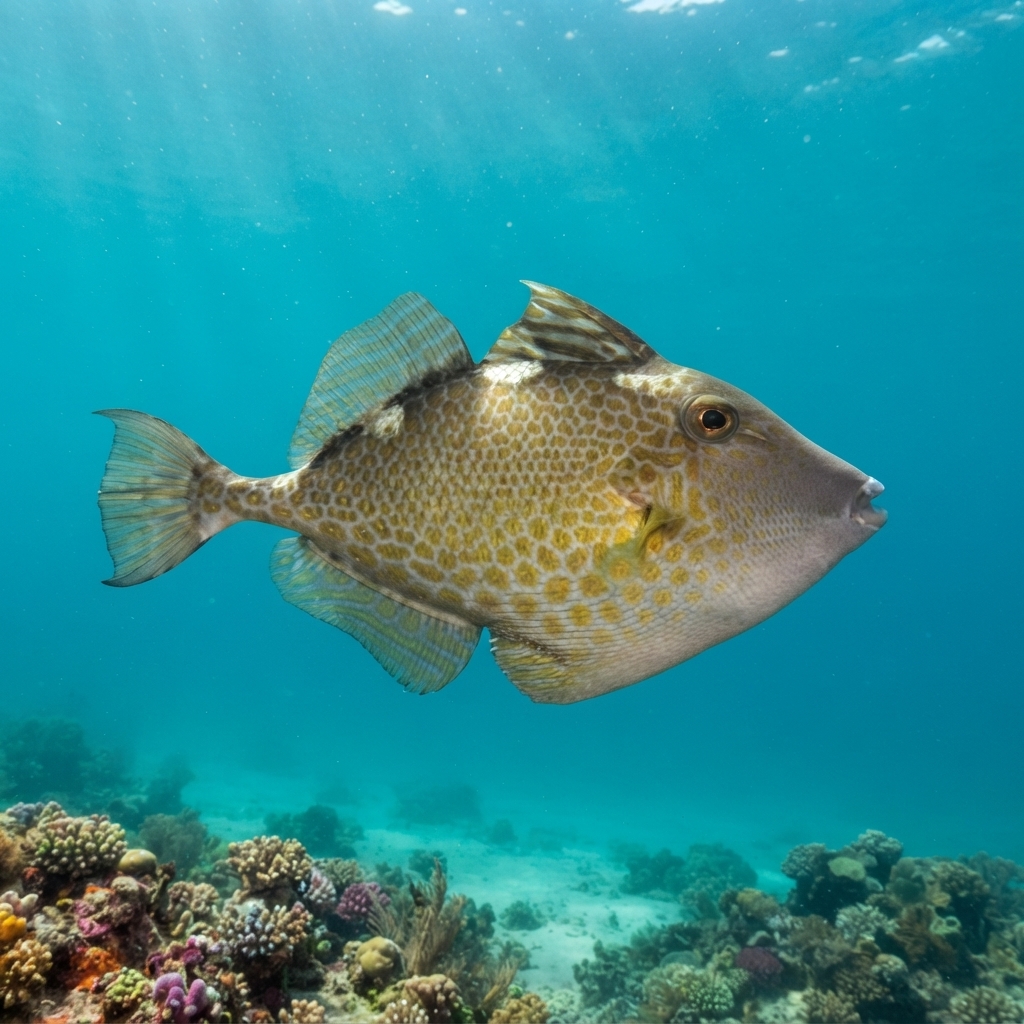
Look for an elongated, slightly flattened body running around 42 cm, covered in small dark speckles over a pale grey to sandy background, which is what gives this fish its name. The snout is long and pointed, tapering toward a small mouth, and the first dorsal spine sits well back from the head like a low sail. It tends to hang at an angle over sand or rubble rather than swimming flat, which is often the first thing that catches your eye.
Divers usually find it hovering low over sand, rubble or seagrass patches rather than around hard coral, often tilted nose-down as it inspects the bottom for food. It is not a fish that schools or displays, and it tends to hold a cautious distance, drifting off slowly rather than bolting if a diver gets too close. Expect single individuals rather than groups, and treat any sighting as a bit of luck given how uncommon it is logged even at the sites where it does occur.
Like other filefish it can flare a locking dorsal spine to wedge itself into reef crevices when threatened, making it hard for a predator to pull out.
Water temperatures where it has been logged range from about 23 to 28°C, consistent with year-round tropical conditions rather than a tight seasonal window. There is no clear seasonal pattern in the sighting data, so any month of diving in Sabah gives a reasonable shot at finding one.
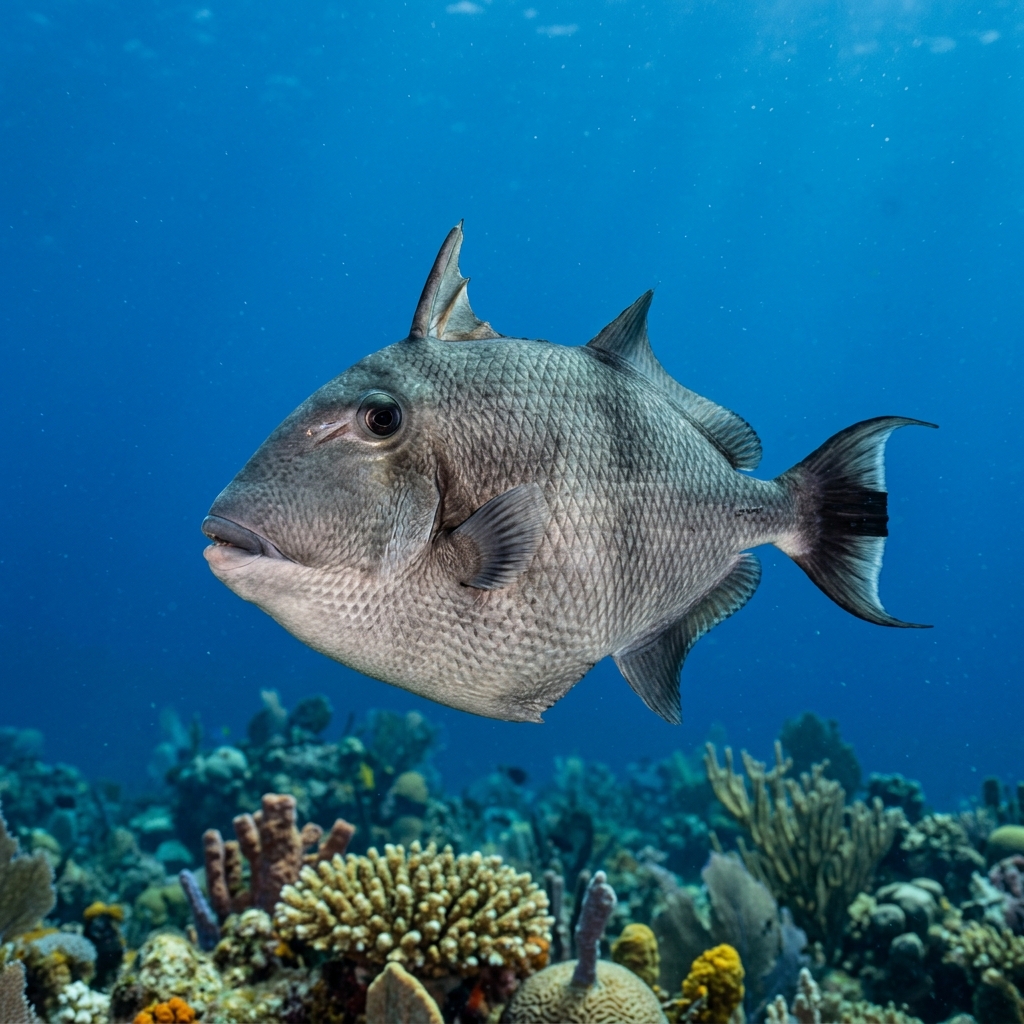
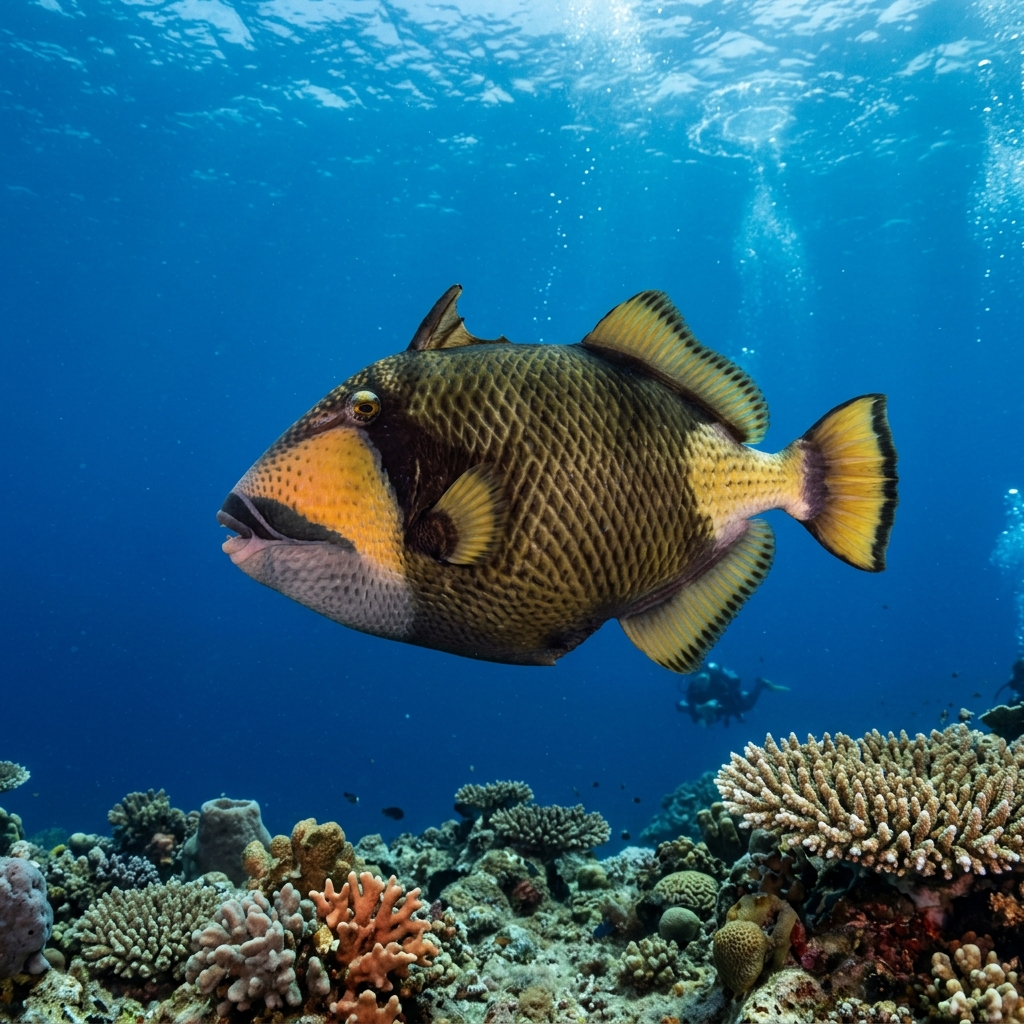
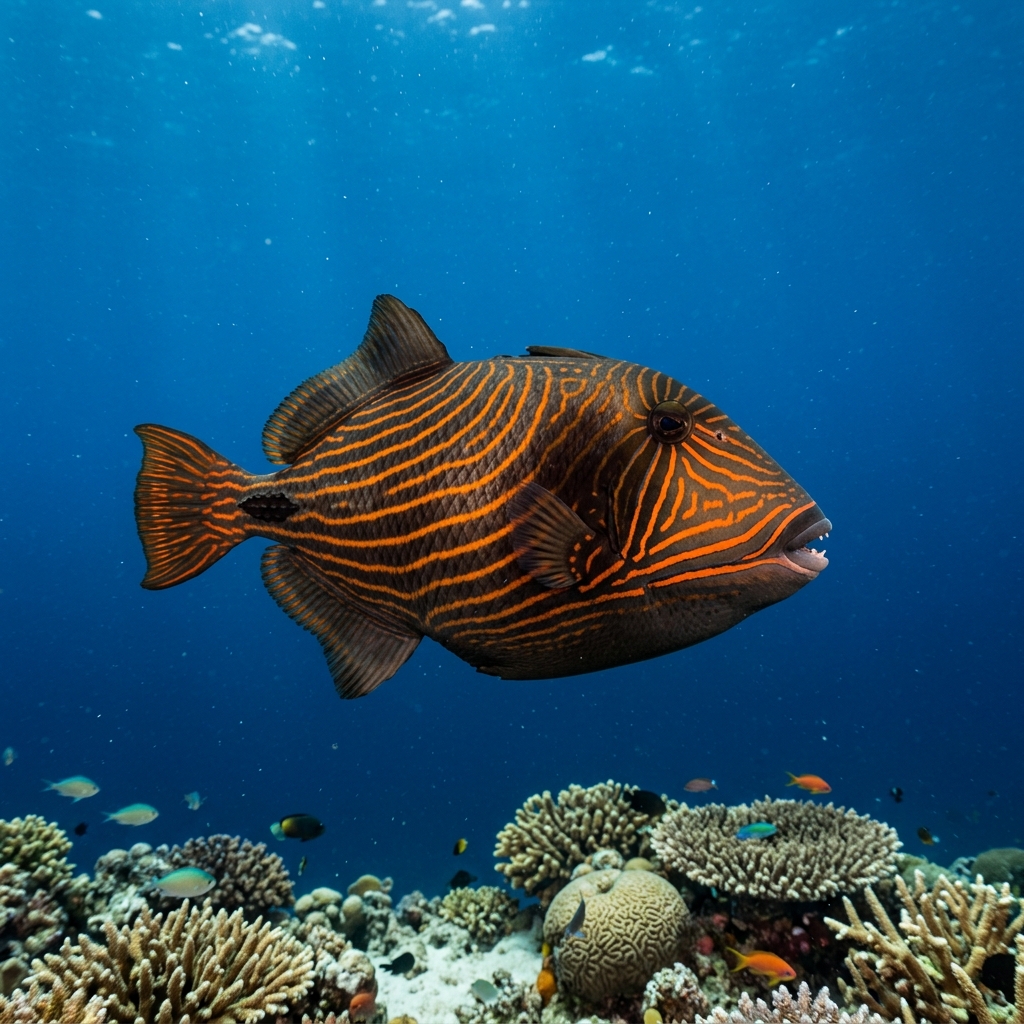
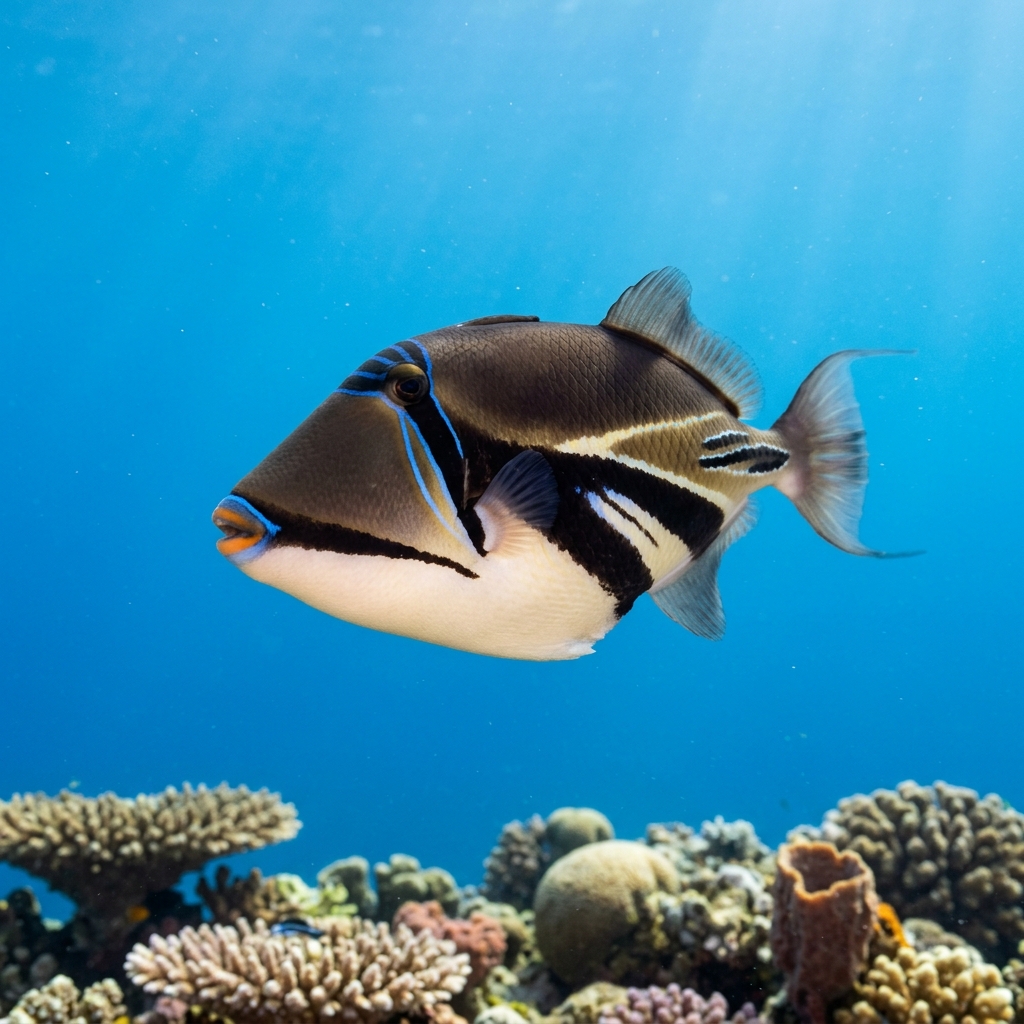
Reef neighbours a diver could mistake it for. Use the identification notes above to tell them apart.
Sightings so far come almost entirely from Sabah, Malaysia, where it turns up across a spread of sites rather than concentrating on one famous reef. There is not yet enough data from elsewhere to point divers to a second reliable region, so Sabah is currently the place to plan around if you want to look for it.
Mapping where Starry File Fish is logged…
The strongest logged records come from Sabah, Malaysia, spread across a number of dive sites there. It has not yet been reliably reported from other regions in diver sighting data, so Sabah is currently the best-documented place to look.
There is no strong seasonal pattern in the sightings, and it has been recorded in water from about 23 to 28°C, so it is realistic to look for one on any dive trip to Sabah rather than planning around a particular month.
Check for a slim, elongated body around 42 cm covered in fine dark speckles on a pale grey background, a long pointed snout, and a habit of hanging at a tilted angle over sand or rubble. The speckled pattern is the main giveaway compared with plainer grey triggerfish.
They typically reach around 42 cm in length, making them a mid-sized reef fish rather than a small or particularly large one.
No, they are not considered dangerous to divers. They tend to keep their distance and drift away rather than approach or act defensively toward people.
Like other filefish, it can lock an erect dorsal spine into place to jam itself into a crevice when threatened, making it very difficult for a predator to dislodge.
Site and sighting data is aggregated from diver logs, iNaturalist and GBIF. For taxonomy and conservation status:
Lagoon Triggerfish
2,435 sites