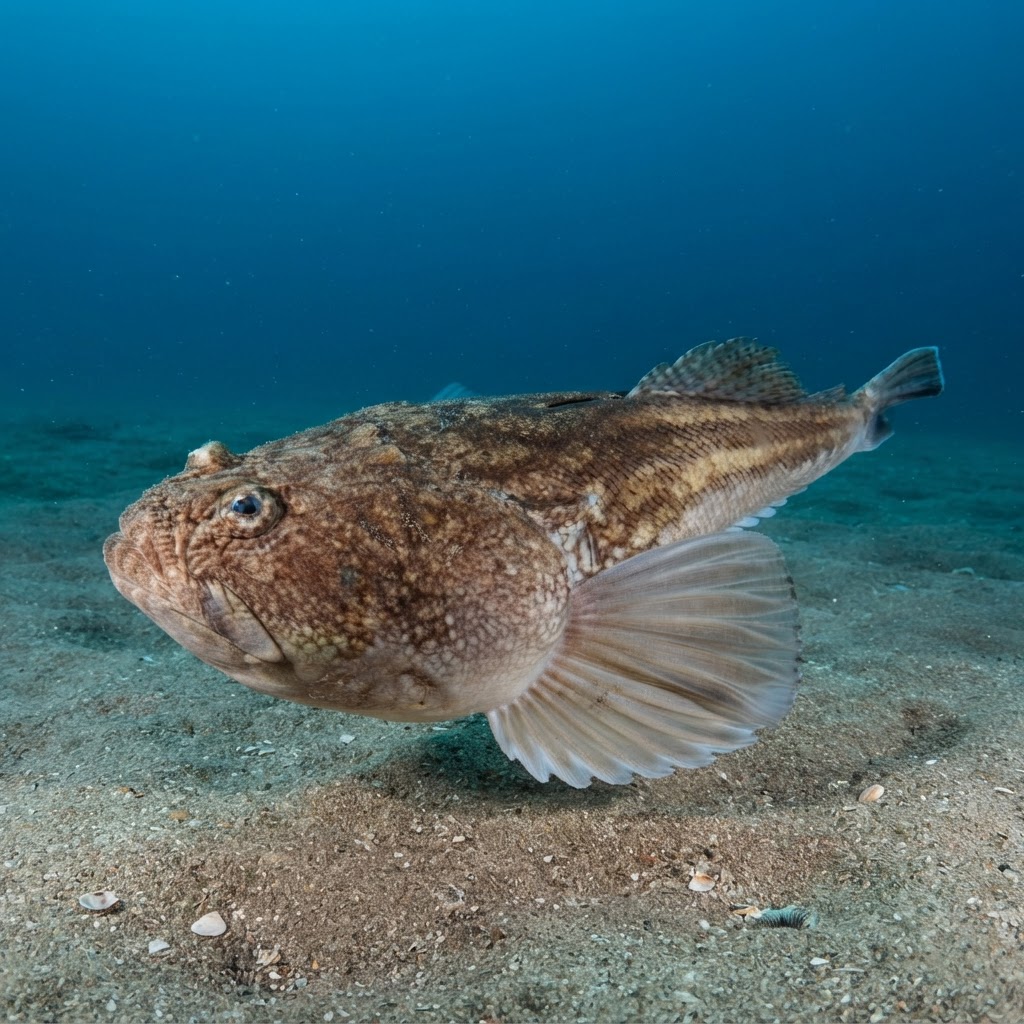
Uranoscopus scaber
Buried in sand off Lanzarote and Murcia, only its eyes and mouth showing: here's how and when to find a stargazer.
Safety warning
It carries venomous spines above the pectoral fins and near the gill covers, and a sting can cause serious pain and swelling. It will not chase or attack, but because it is buried and nearly invisible, the real risk is an unwary hand or fin placed on the sand where one is resting, so keep hands off the bottom in areas where it is logged.
If you're stung
Venomous spinesGeneral first-aid guidance, not a substitute for professional medical care. In an emergency, call your local emergency number.
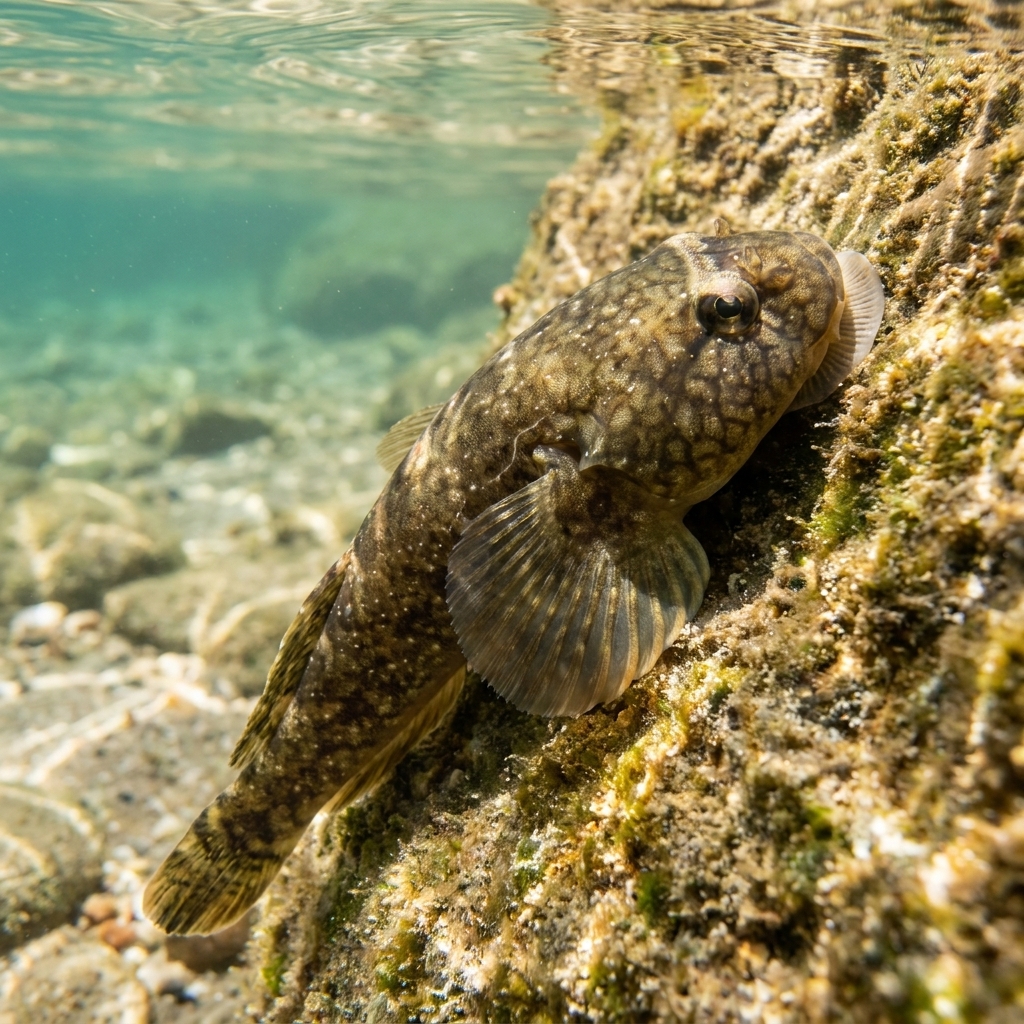
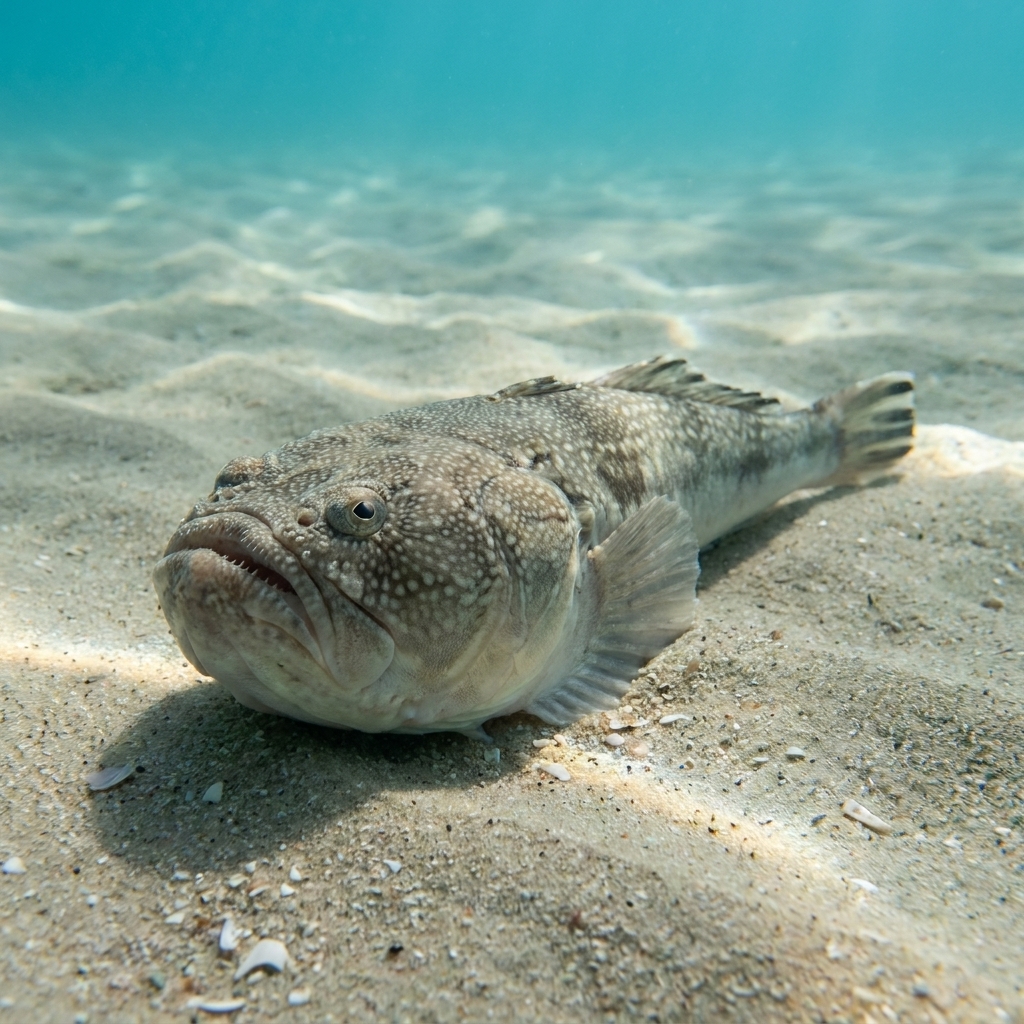
Look for a thickset, mottled brown body buried flat in sand with just the flattened top of the head, upward-facing eyes and a wide downturned mouth showing above the surface. The body tapers to a fairly ordinary fish shape once uncovered, reaching around 39 cm, but on a dive you will rarely see more than the face. Fine dark speckling over a sandy-brown base gives strong camouflage against the seabed it rests on.
Expect it lying almost completely buried in sand or fine sediment, often on flat, featureless bottoms away from reef structure, ambushing small fish and invertebrates that pass overhead. It stays motionless when divers approach, relying on camouflage rather than fleeing, so most sightings come from divers scanning the sand carefully rather than spotting movement. Most logs describe it as rare to uncommon at any given site, so finding one usually takes a slow, deliberate look at open sand patches.
It ambushes prey from below by opening its large mouth to create a sudden suction that pulls small fish in, a technique that needs almost no movement and keeps it hidden the whole time.
Sightings are logged year-round with no strong seasonal pattern, matching a species that sits in cooler water from about 11 to 17°C and simply stays put on the seabed regardless of month.
Most reliably logged in Spain and the Canary Islands, with strong numbers in Lanzarote and Tenerife, plus Murcia and Andalusia on the mainland coast. Italy is the other stronghold, particularly Lazio and Liguria, with further sightings around Corsica and the Balearic Islands in France and Spain.
Mapping where Atlantic Stargazer is logged…
Spain and the Canary Islands are the most consistent locations, especially Lanzarote, Tenerife and Murcia, with further sightings in Italy's Lazio and Liguria regions and around Corsica and the Balearic Islands.
There's no clear seasonal pattern in the data, and it's found in cool water year-round, so any month is a fair chance if you search sandy bottoms carefully.
Yes, it has venomous spines near the gills and pectoral fins that can cause a painful sting. It won't come after you, but avoid putting hands or fins down on sand where one might be buried.
Look for a mottled brown patch of sand with two small upward-facing eyes and a wide mouth breaking the surface. The rest of the body is usually fully buried, so the face is often the only visible clue.
They typically reach around 39 cm in length, though most of that length stays hidden under sand while diving.
It ambushes prey by staying almost completely still and buried, then using a fast suction strike with its large mouth to pull in fish or invertebrates that swim too close overhead.
Site and sighting data is aggregated from diver logs, iNaturalist and GBIF. For taxonomy and conservation status:
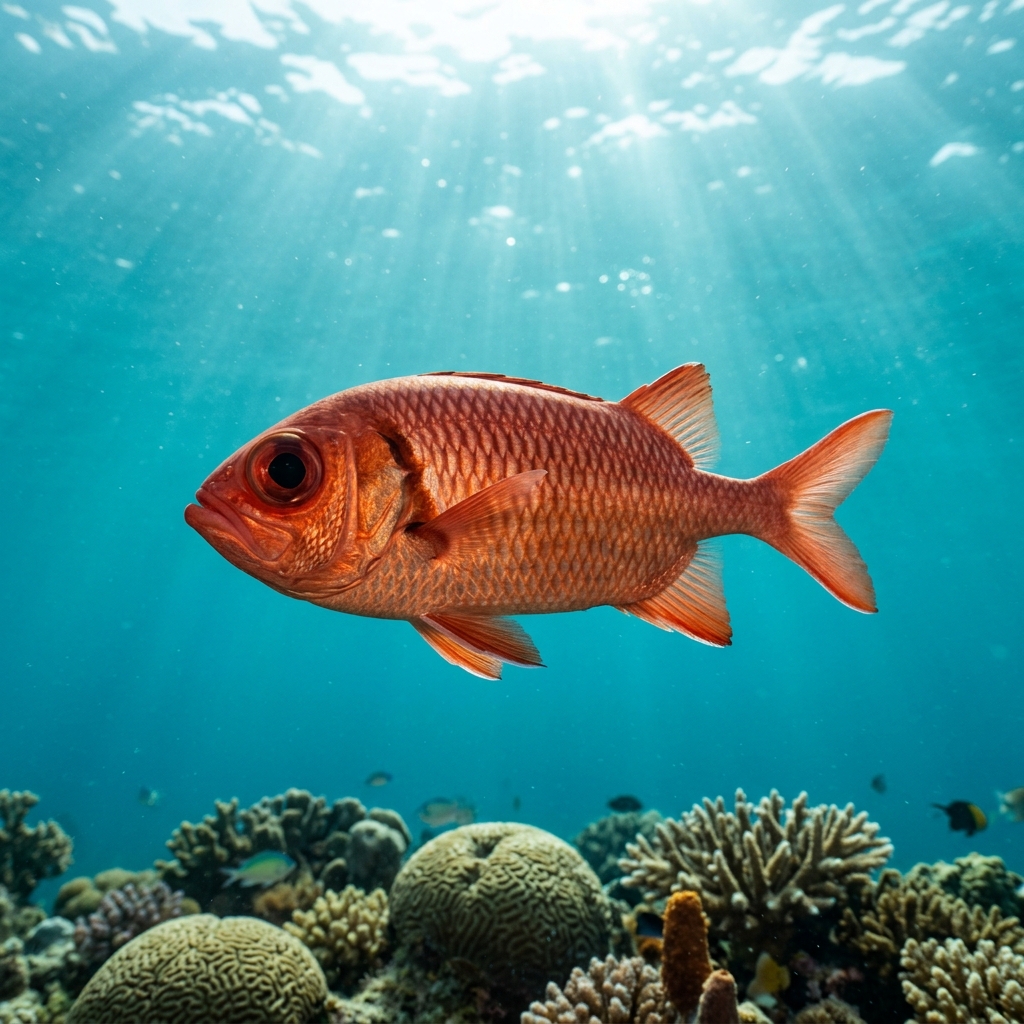
Soldierfish
3,612 sites