Holocentrus adscensionis
Big-eyed and reddish, squirrelfish tuck into reef crevices by day. Common across Florida, the US Virgin Islands and Fernando de Noronha year-round.
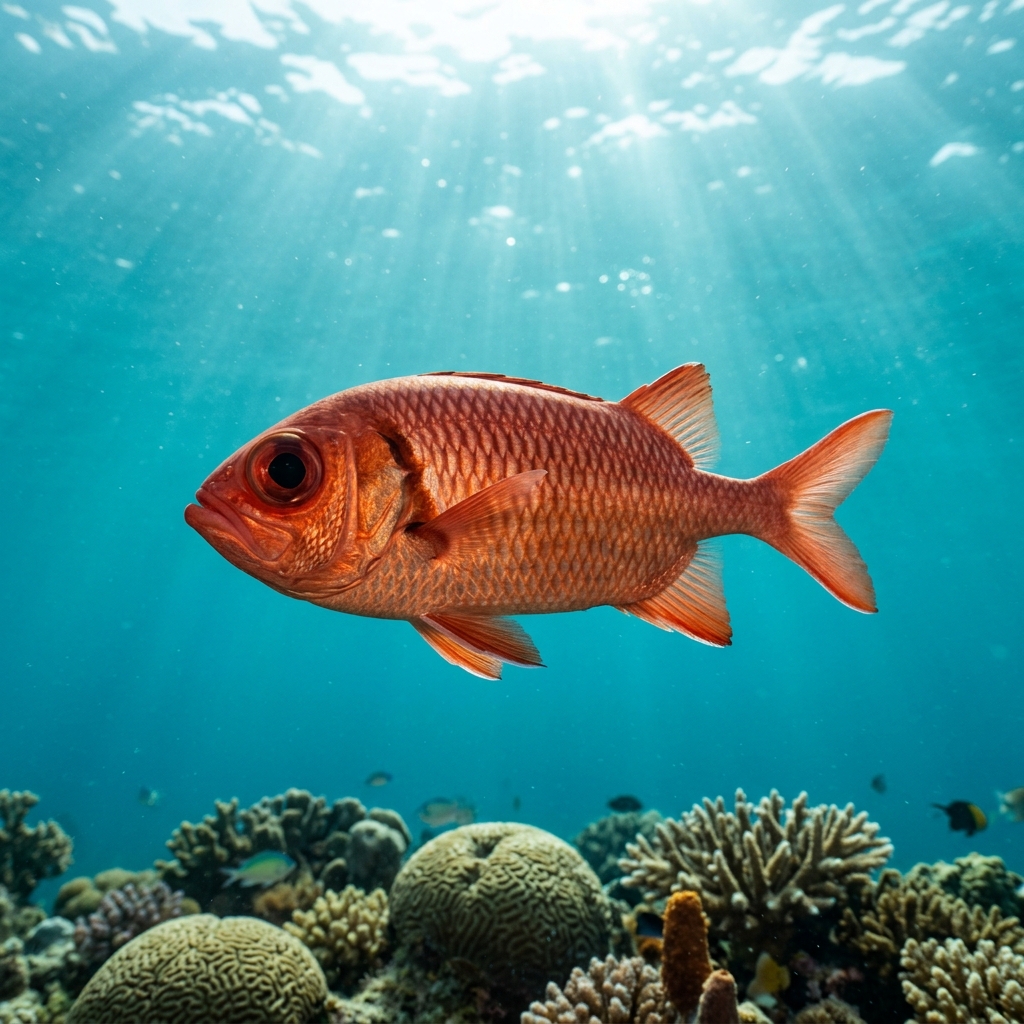
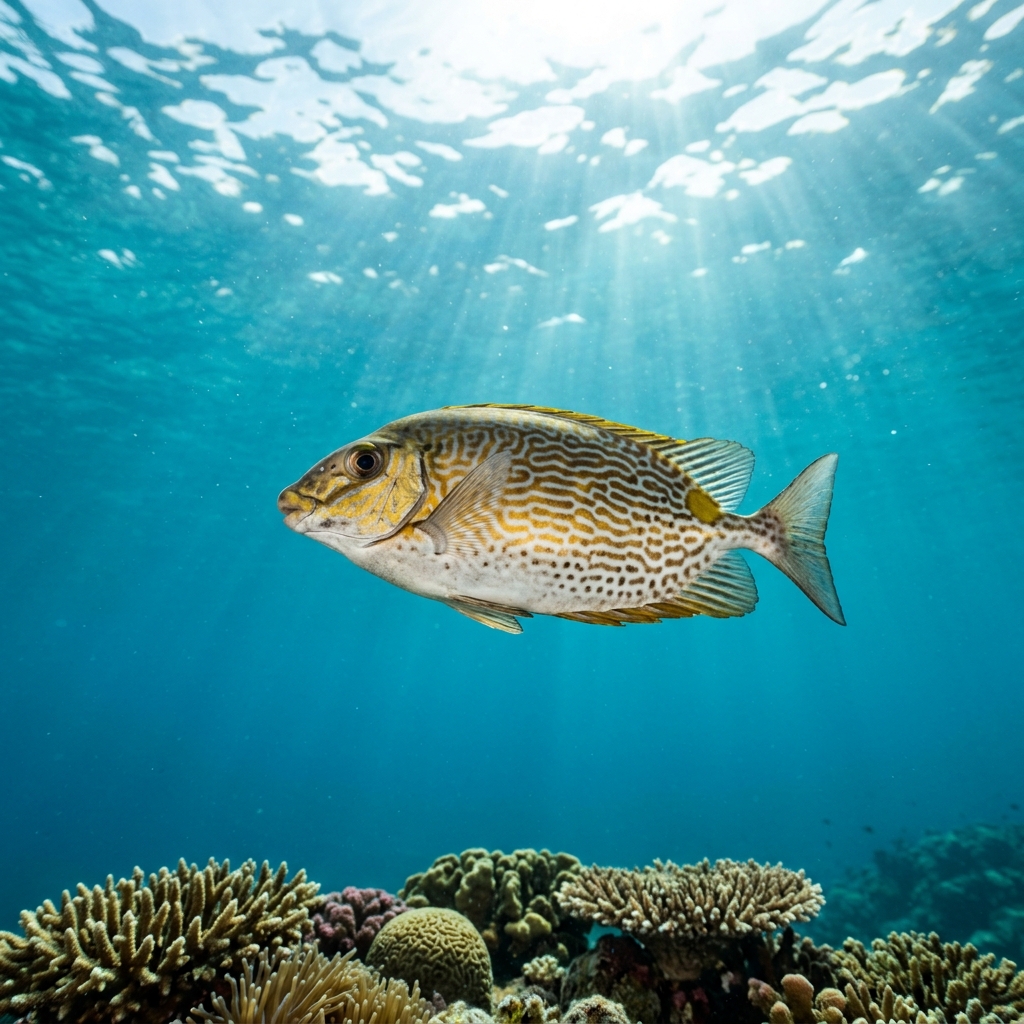
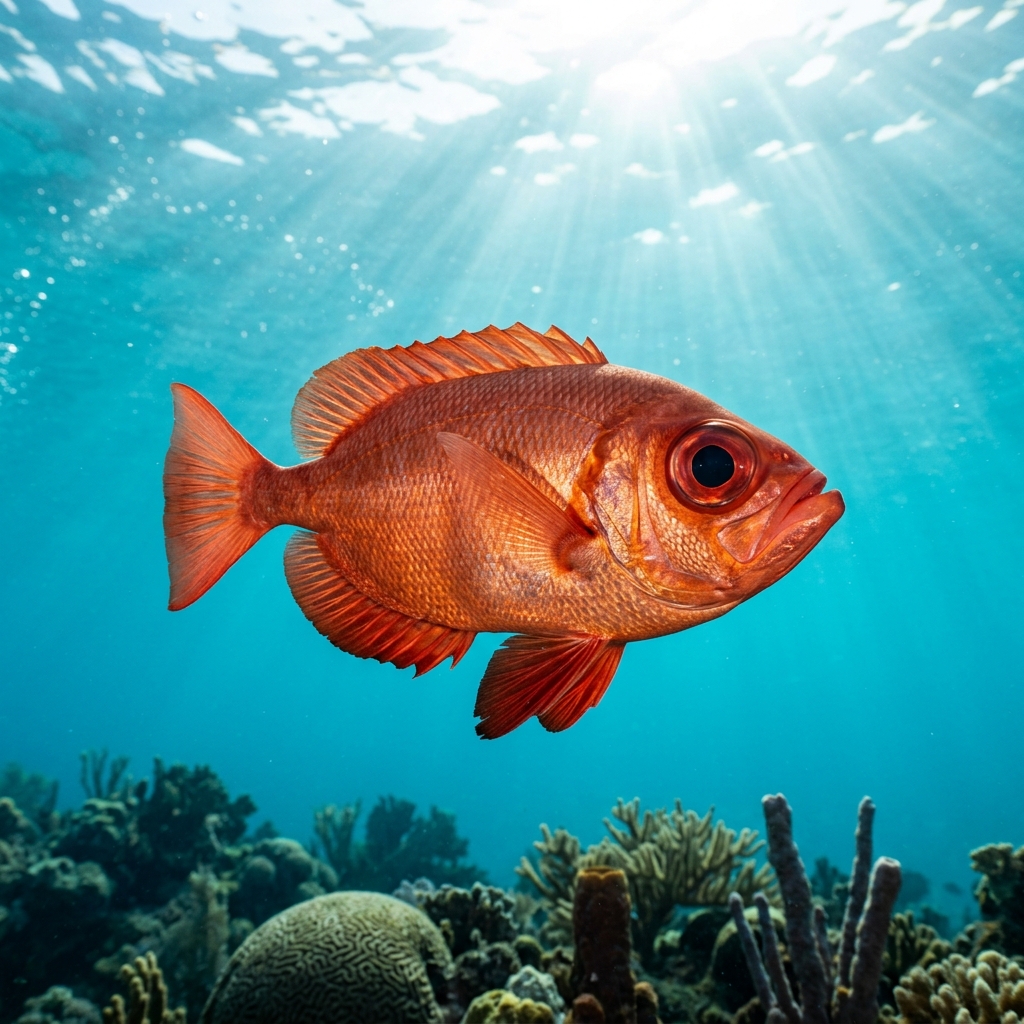
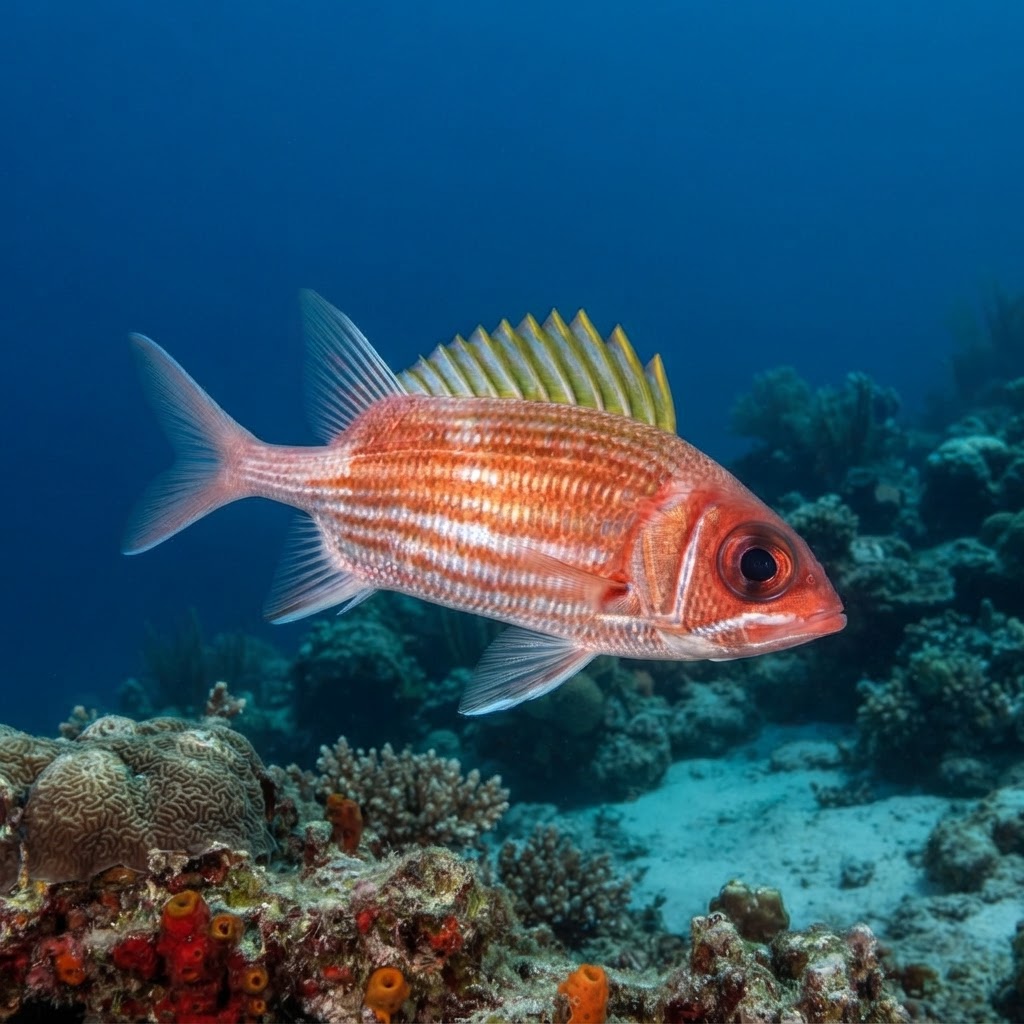
Reddish-brown body with faint pale stripes running along its length, growing to around 42cm, with a noticeably large, dark eye that gives it away even in torchlight. Look for the slightly spiny dorsal fin and a forked tail, and for the way it hovers nose-in near a crevice or overhang rather than swimming openly over the reef. That oversized eye is the single best clue: it is built for low light, which is why you find these fish tucked into shadow during the day.
Expect to find it wedged into a ledge, crevice or under coral overhangs during the day, often with just its eyes and snout visible, since it is most active at dusk and after dark when it moves out to hunt small invertebrates. Divers usually log it as an uncommon sighting rather than something schooling in the open, so a slow look into reef holes and under overhangs pays off. It generally holds its ground rather than bolting, letting you get a reasonably close look with a light or without disturbing it.
Those large eyes are a nocturnal adaptation, and squirrelfish are among the reef fish that get active only after the sun goes down, making night dives a far better way to see one hunting in the open than a daytime reef swim.
No clear season shows up in the sighting data, and with a comfortable range of 23.4 to 28C on tropical reefs, it is a year-round find rather than a seasonal one.
Most reliably logged in Brazil, especially around Fernando de Noronha and Santa Catarina, and across the Caribbean in the US Virgin Islands (Saint John and Saint Croix), the Bahamas, St Martin/Sint Maarten, Martinique, Aruba and Puerto Rico. In the United States, Florida is the strongest single region for sightings.
Mapping where Squirrelfish is logged…
Brazil has strong numbers around Fernando de Noronha and Santa Catarina, and the Caribbean is reliable too, particularly the US Virgin Islands, the Bahamas, St Martin/Sint Maarten, Martinique and Aruba. Florida is the top US region for sightings.
There is no strong seasonal pattern in the sighting data, and the species sits comfortably in water from about 23 to 28C, so it is present on tropical reefs throughout the year.
Look for a reddish-brown body with faint pale stripes, a forked tail, spiny dorsal fin and unusually large dark eyes. It is usually seen tucked into a crevice or under an overhang rather than swimming in the open.
They typically reach around 42cm in length, making them a mid-sized reef fish, noticeably bigger than the small basslets and gobies often sharing the same crevices.
Their oversized eyes are adapted for low light, since squirrelfish are mostly nocturnal, hiding in reef crevices by day and becoming active hunters of small invertebrates after dark.
No, they pose no threat to divers. They are a carnivorous but small-prey feeder that simply retreats into reef crevices if approached.
Site and sighting data is aggregated from diver logs, iNaturalist and GBIF. For taxonomy and conservation status:
Soldierfish
3,612 sites