Trachinus araneus
Half-buried in the sand off Murcia, this venomous weever is uncommon but real - here's how to spot it and avoid a sting.
Safety warning
The sting comes from direct contact with the raised dorsal spines, usually when a diver's hand or knee brushes a buried fish they didn't see. Keep good buoyancy over sandy bottoms, avoid resting on the seabed with bare hands, and if stung, get out of the water and seek medical attention promptly as the venom causes intense localised pain.
If you're stung
Venomous spinesGeneral first-aid guidance, not a substitute for professional medical care. In an emergency, call your local emergency number.
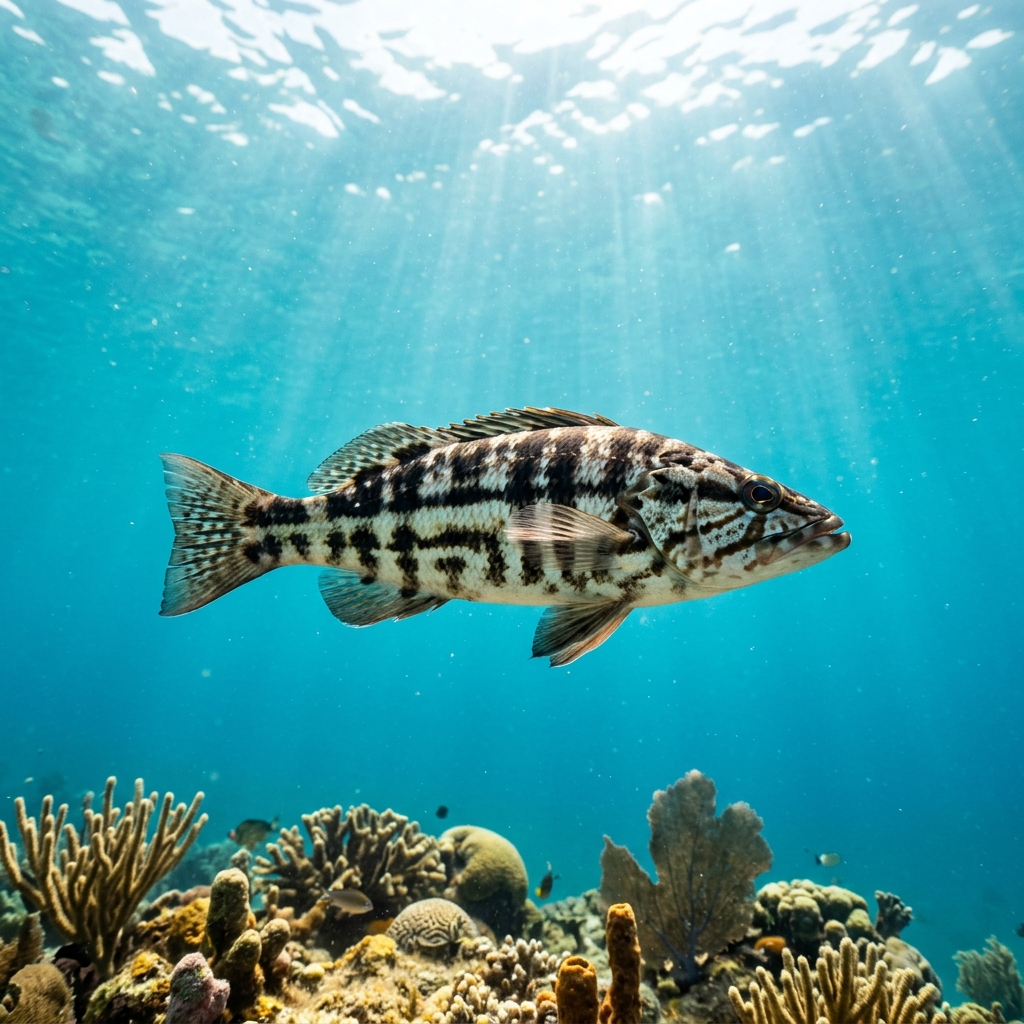
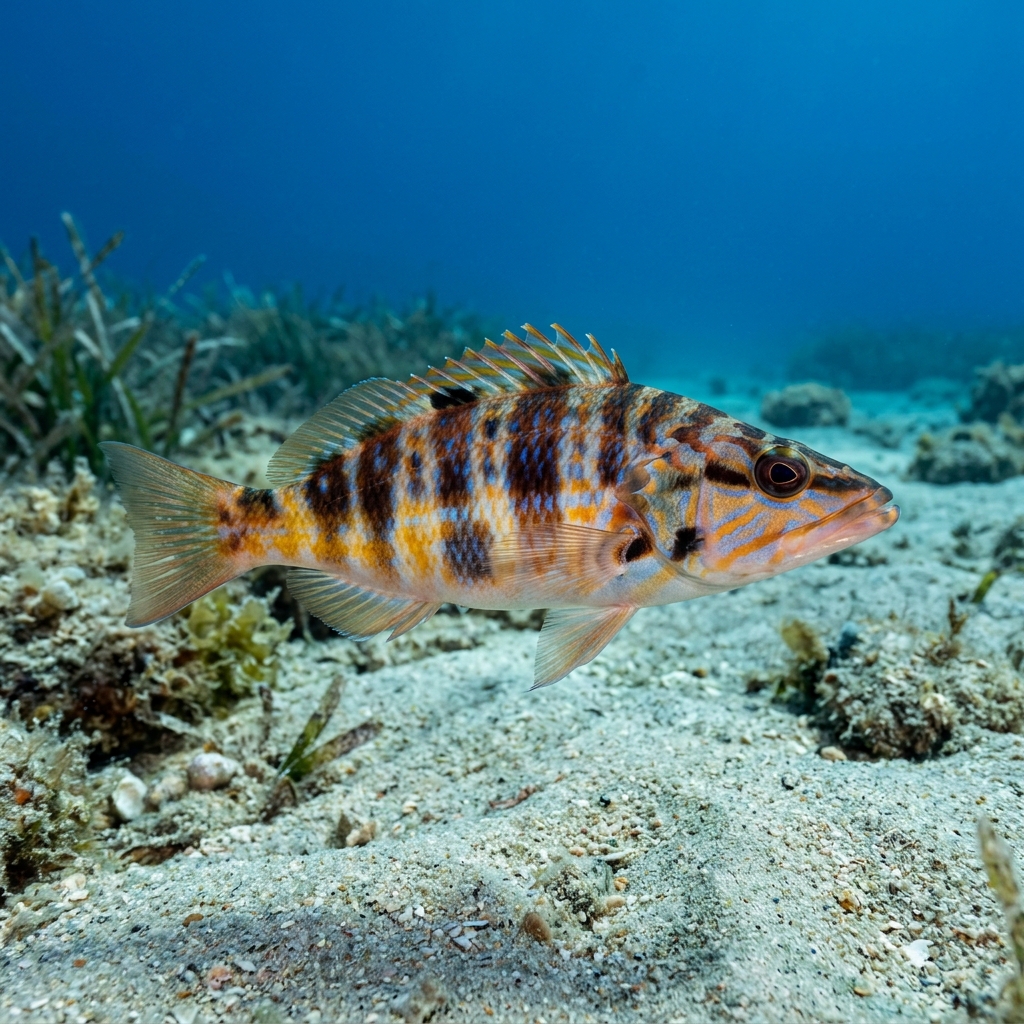
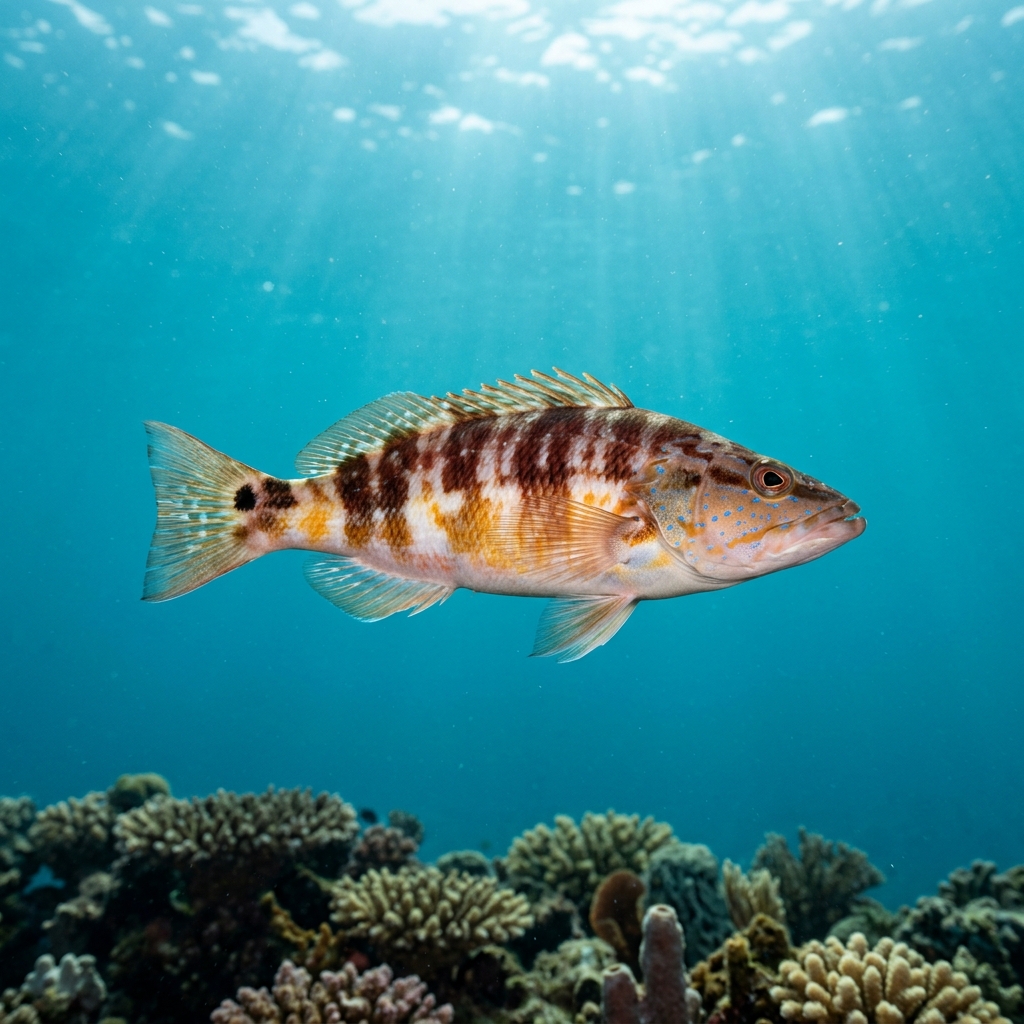
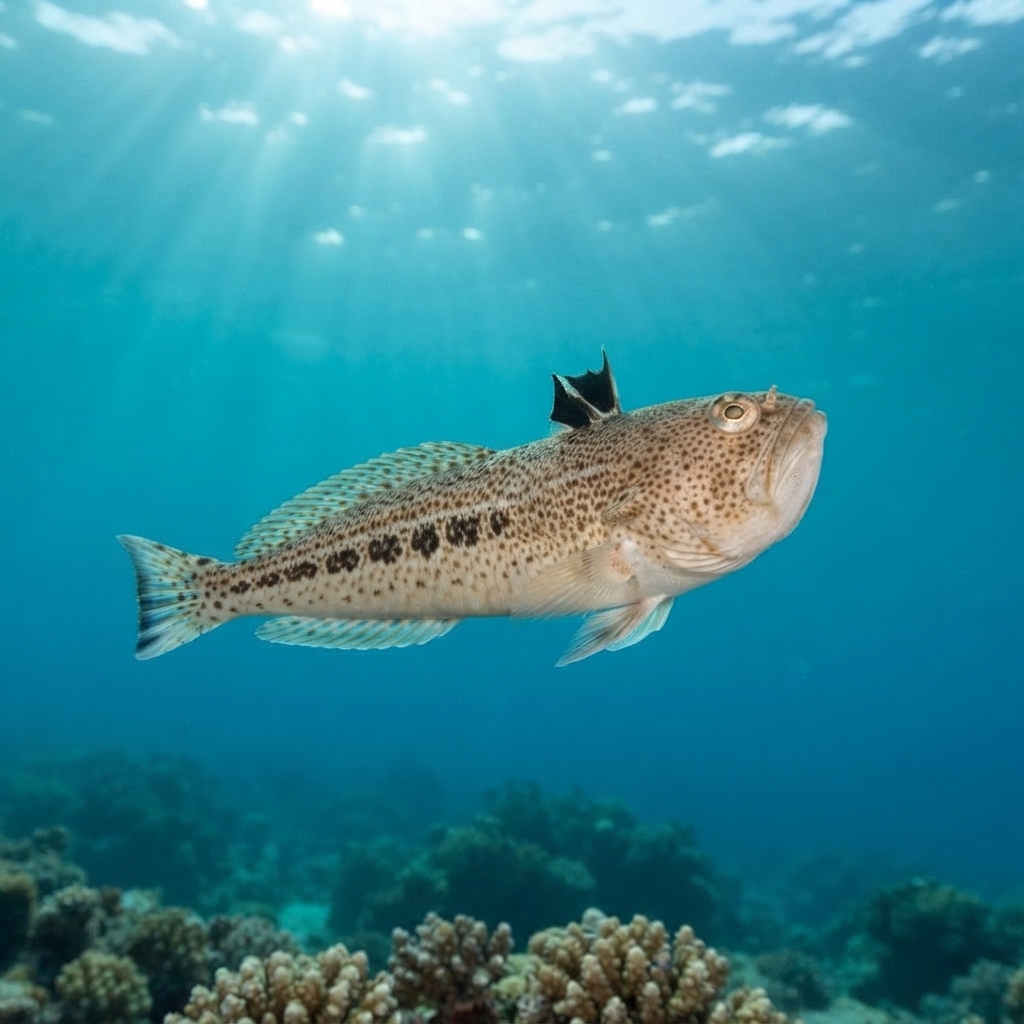
Look for a slender, torpedo-shaped body around 30cm long, sandy brown to grey with rows of dark spots along the flanks that give it its name. It spends most of its time buried in sand with only its upturned eyes and mouth showing, and a tall black-and-white first dorsal fin that flicks up if disturbed. That raised dorsal fin, bristling with venomous spines, is the single detail that separates it from any other sand-dwelling fish on the site.
Expect to find it lying still, half-buried in sand or fine sediment, often on flat open ground away from rock or reef structure. It relies on staying hidden rather than fleeing, so divers frequently swim right past without noticing it until the dorsal spines twitch up in warning. It's not an active swimmer during typical daytime dives, more an ambush predator waiting on smaller fish and invertebrates to pass close by.
Those dorsal spines aren't just for show: they're linked to venom glands that make this one of the few fish in Mediterranean waters capable of delivering a painful sting through direct contact.
Sightings show no clear seasonal pattern, and the observed water temperature range of 14.7 to 21.5 C spans a good part of the Mediterranean diving calendar, so it's logged across the year rather than in one tight window.
Murcia in Spain is by far the strongest area for this species, with the Ionian Islands and Northern Greece offering a scattering of sightings and a further site or two logged in Corsica and the French Riviera. Across all these spots it turns up as an uncommon find on sandy patches rather than reef, so it rewards divers who scan the seabed rather than the water column.
Mapping where Spotted Weever is logged…
Murcia in Spain is the standout region, with additional sightings in the Ionian Islands and Northern Greece, plus occasional records in Corsica and the French Riviera.
There's no strong season in the sightings data, so it's logged year-round within a water temperature range of roughly 14.7 to 21.5 C.
Yes. Its dorsal spines carry venom and can deliver a painful sting if touched, usually when a diver doesn't notice it buried in sand. Watch where you place your hands and knees on sandy bottoms.
Look for a sandy-coloured, spotted body around 30cm long lying half-buried in sand, with only the eyes, mouth, and a tall black-and-white dorsal fin visible above the seabed.
They typically reach around 31cm in length, making them a slender, easily overlooked fish on sandy dive sites.
Its venomous dorsal spines are a defence mechanism, not an attack tool, meaning stings almost always happen when a diver accidentally makes contact with a hidden fish rather than the fish approaching a diver.
Site and sighting data is aggregated from diver logs, iNaturalist and GBIF. For taxonomy and conservation status:
Blacktip Grouper
2,734 sites