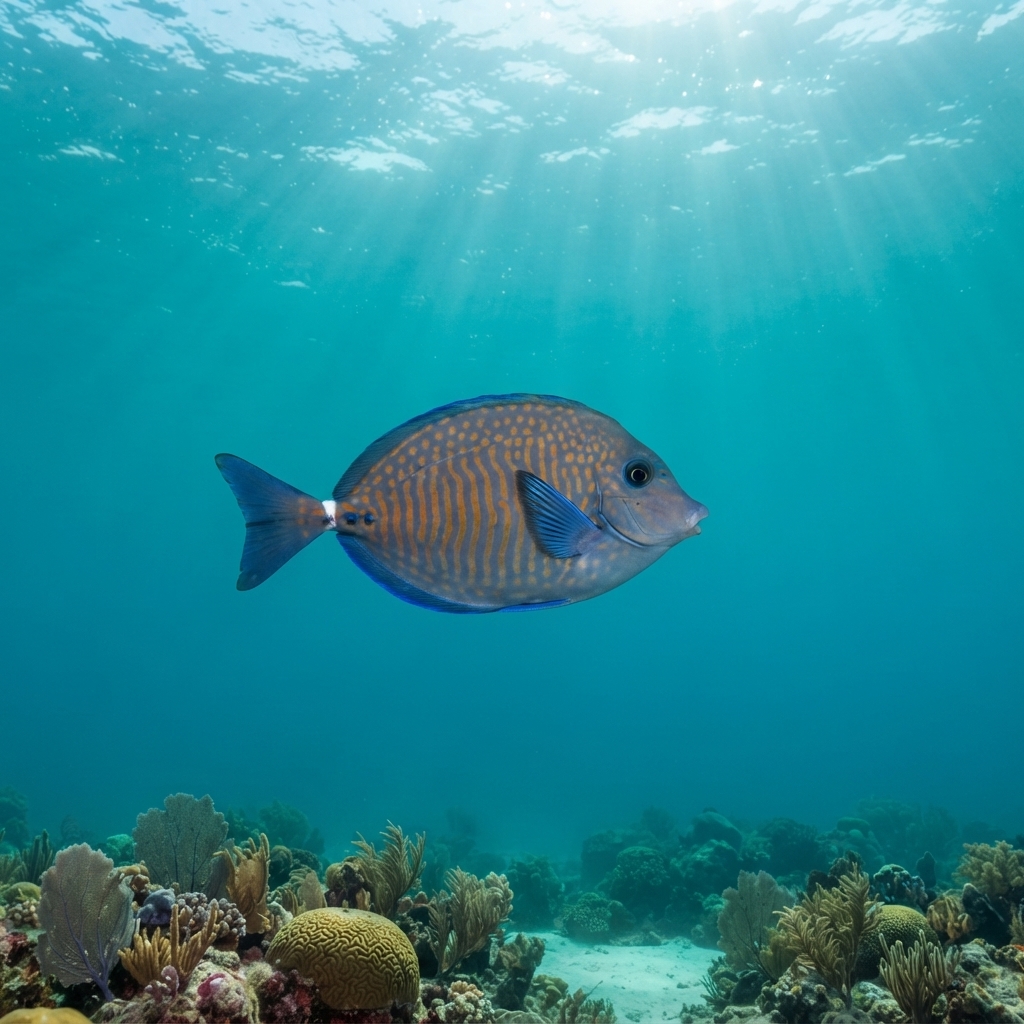
Prionurus maculatus
A rarely-logged surgeonfish spotted mostly around New South Wales, in 20 to 25 C water, year-round if you're patient.
Grey to brownish body flecked with pale spots, growing to around 31 cm, with the deep-bodied, slightly flattened profile typical of surgeonfish. Look for the small blade-like spine near the base of the tail (the 'sawtail' feature that gives the species its name) and a squared-off tail fin. It usually swims alone or in small loose groups rather than tight schools.
Divers mostly find it cruising solo or in small numbers along rocky and reef terrain, grazing on algae rather than reacting to divers nearby. It tends to keep a bit of distance and isn't the type to approach or follow you around, so a slow, patient approach gives you the best look.
That small fixed spine near the tail base is a defensive tool shared by surgeonfish generally, used as a last-resort weapon against predators rather than anything a diver needs to worry about.
Sightings don't show a clear seasonal pattern, and the observed temperature range of 20.3 to 25.2 C spans NSW's cooler and warmer reef conditions, so it's a year-round possibility rather than a seasonal target.
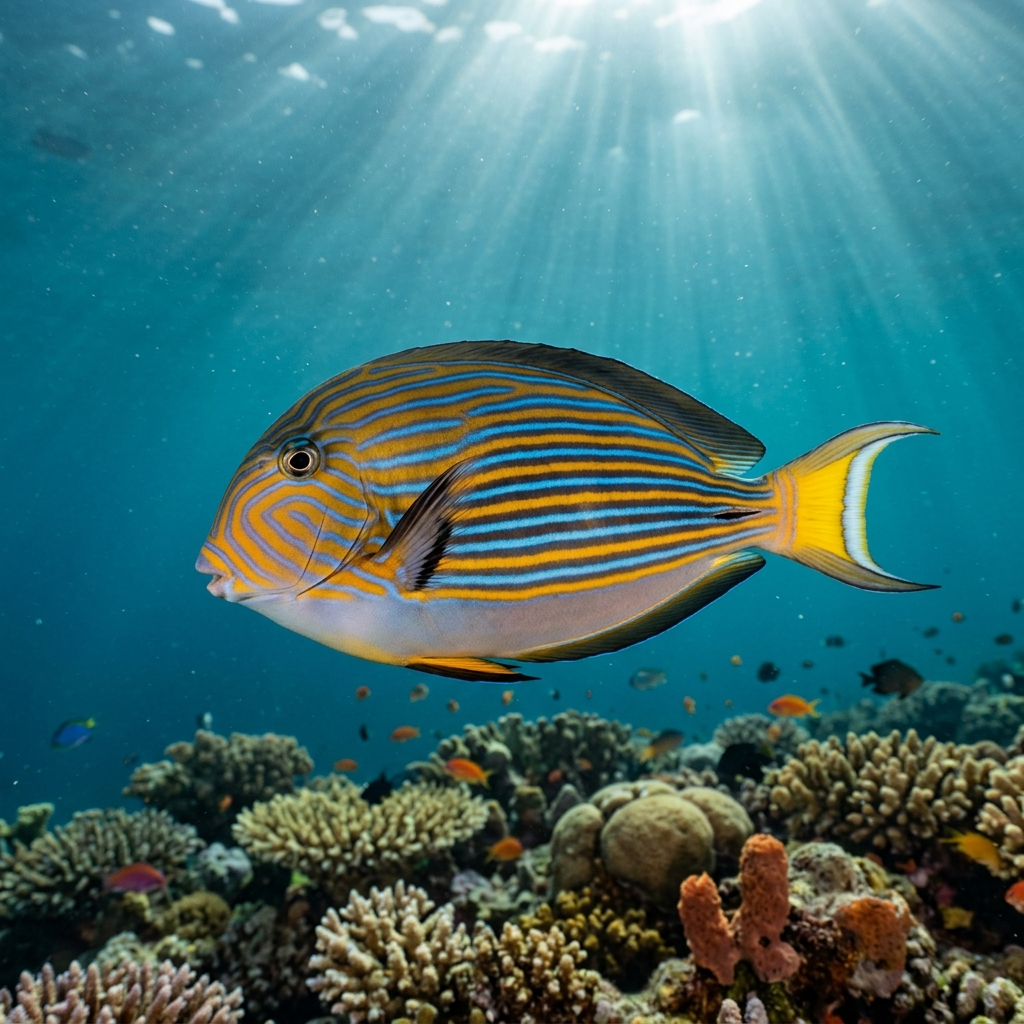
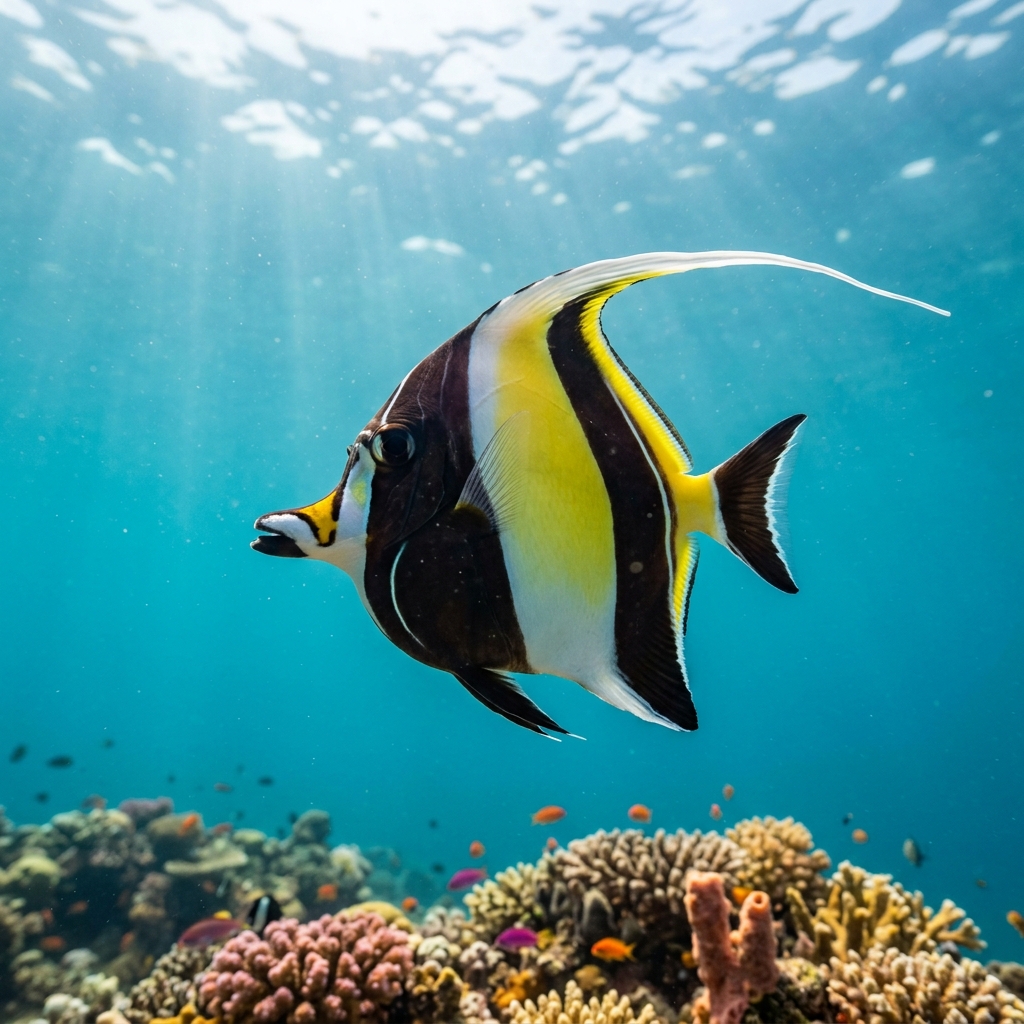
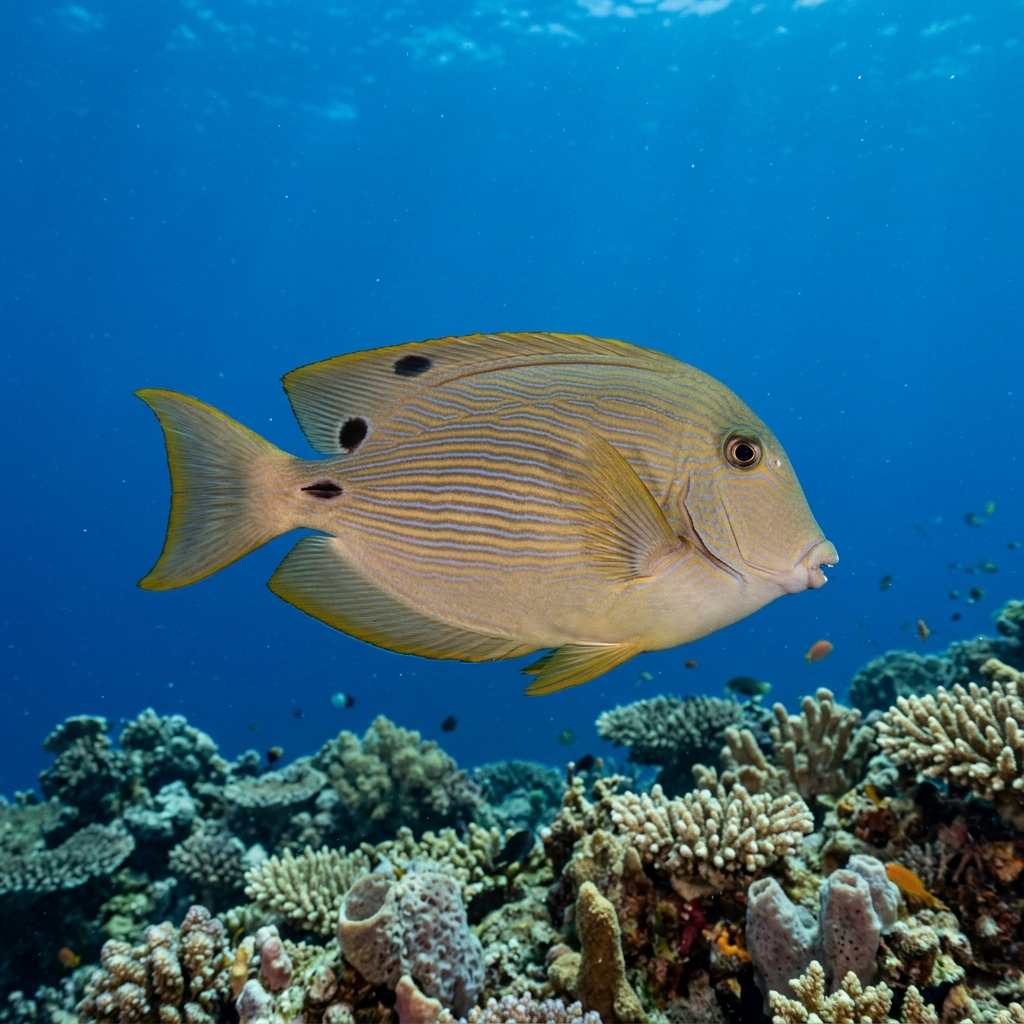
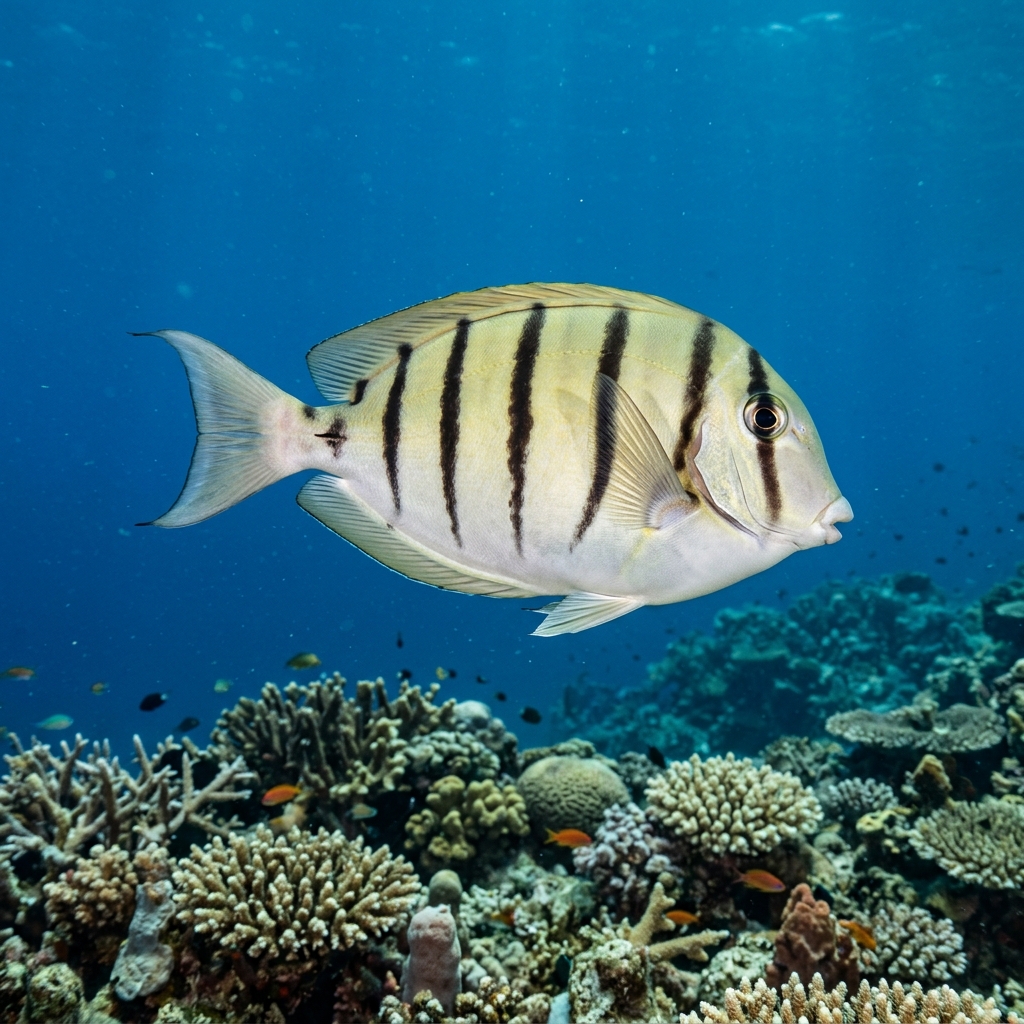
Reef neighbours a diver could mistake it for. Use the identification notes above to tell them apart.
Almost every logged sighting comes from New South Wales in Australia, making it the region to target if you want a real shot at this one. A single record from Norfolk Island suggests it turns up further out into the Tasman Sea too, but Australia's NSW coast is where divers actually find it.
Mapping where Spotted Sawtail is logged…
New South Wales in Australia is by far the most reliable region, with almost all logged sightings coming from there. A lone record from Norfolk Island hints it ranges further into the Tasman Sea as well.
There's no strong seasonal pattern in the sighting data, so it's considered a year-round species in its NSW range, turning up in water between about 20 and 25 C.
Look for a grey-brown body with pale speckling, a deep surgeonfish-shaped body, and a small blade-like spine near the tail base. It's usually seen alone or in small loose groups rather than large schools.
They typically reach around 31 cm, a modest mid-sized surgeonfish rather than a standout giant of the reef.
Yes, most dive sites that log this species report it as rare or uncommon, with only one site recording it as common. It's a species worth being patient for rather than expecting on every dive.
Site and sighting data is aggregated from diver logs, iNaturalist and GBIF. For taxonomy and conservation status:
Striped Surgeonfish
3,289 sites