Trichonotus setiger
Look for the eel-like snake shape hovering over sand in the Visayas, Philippines, in warm 25-29C water year-round.
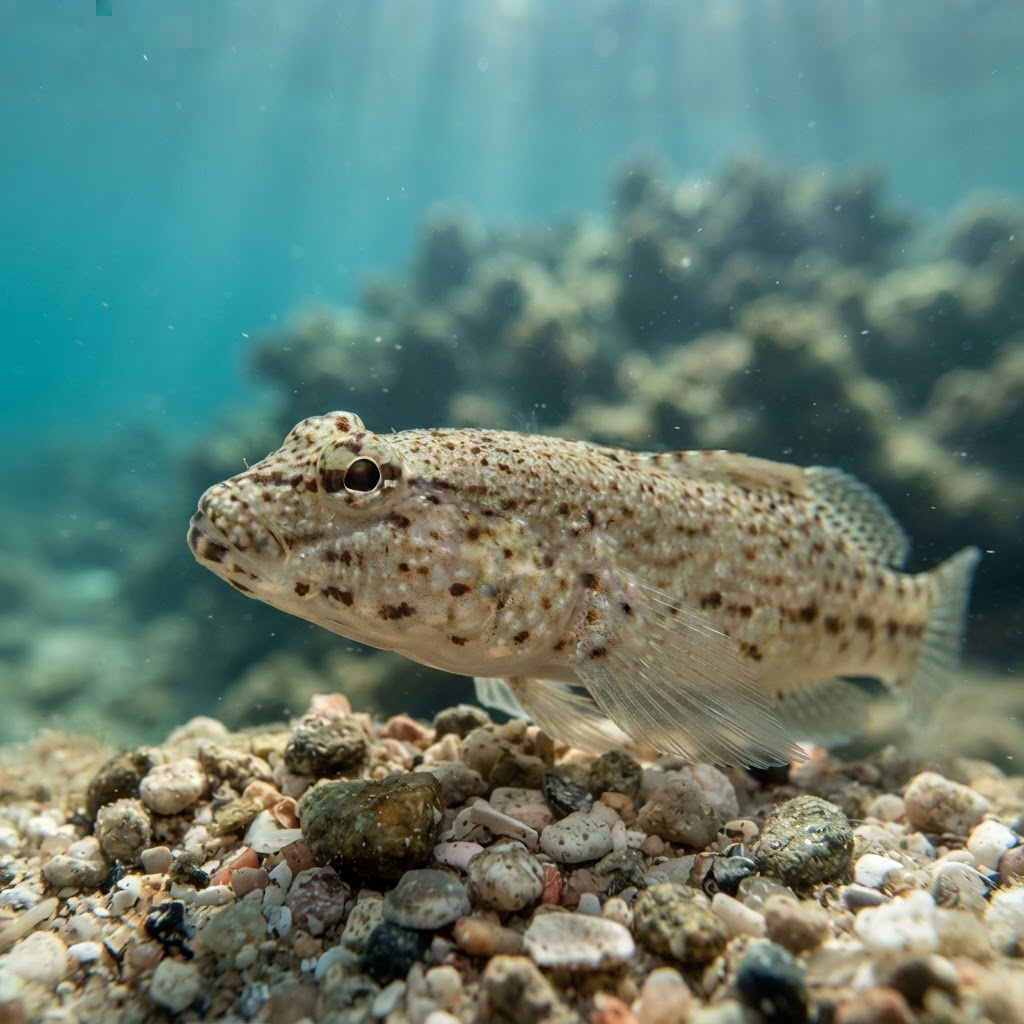
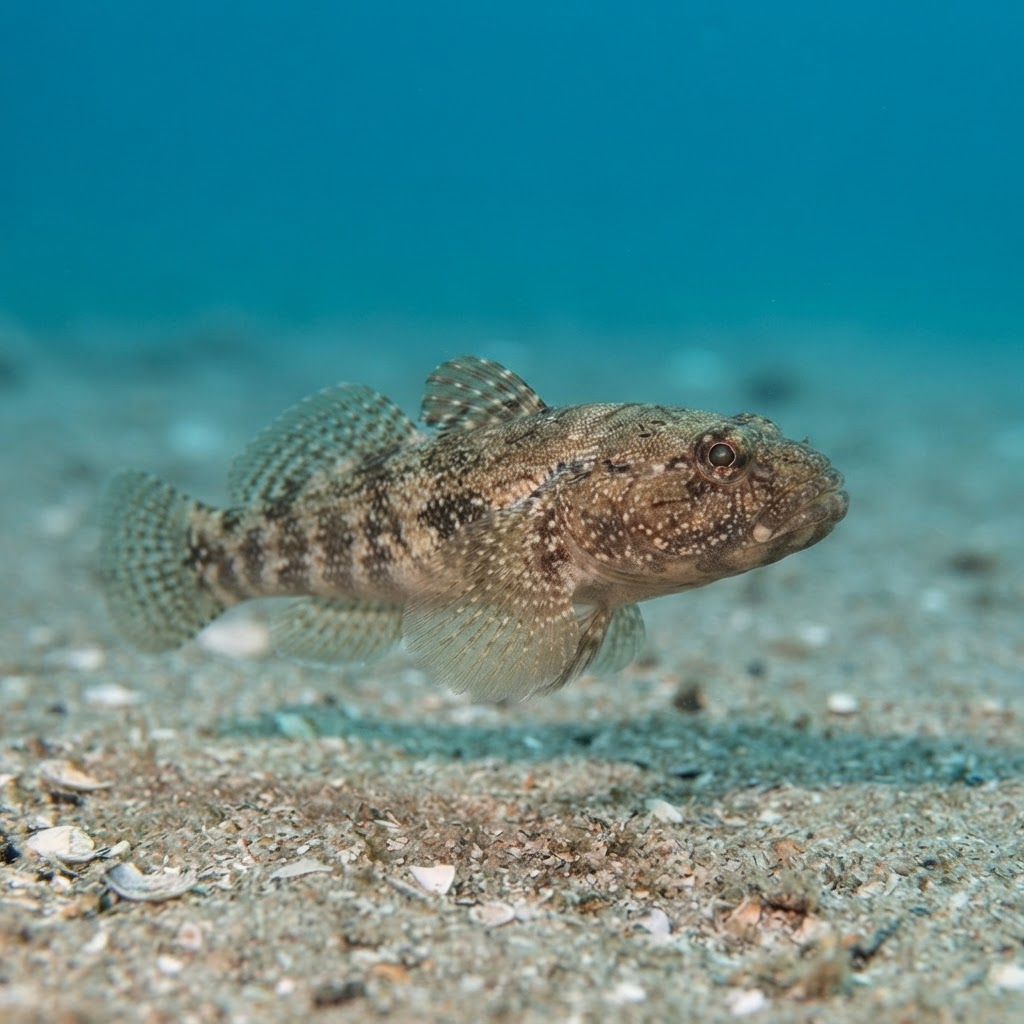
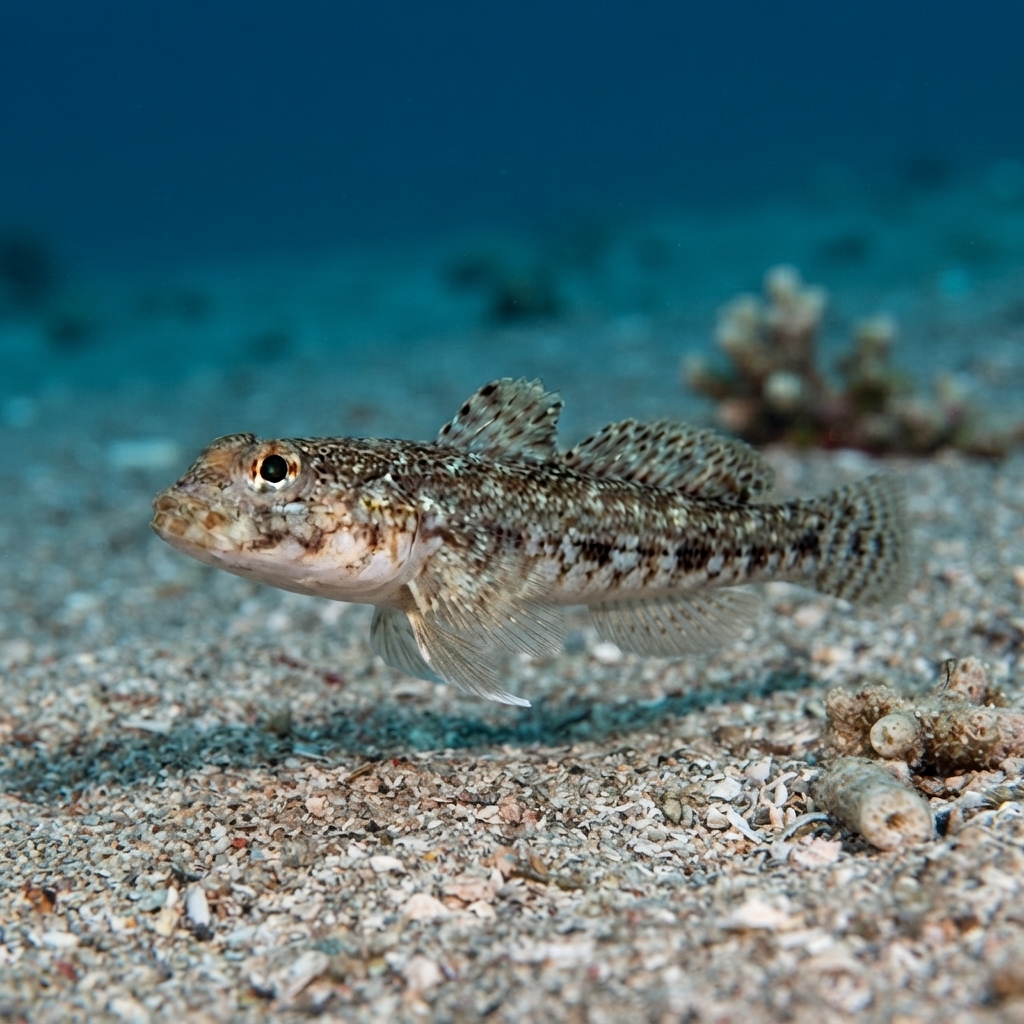
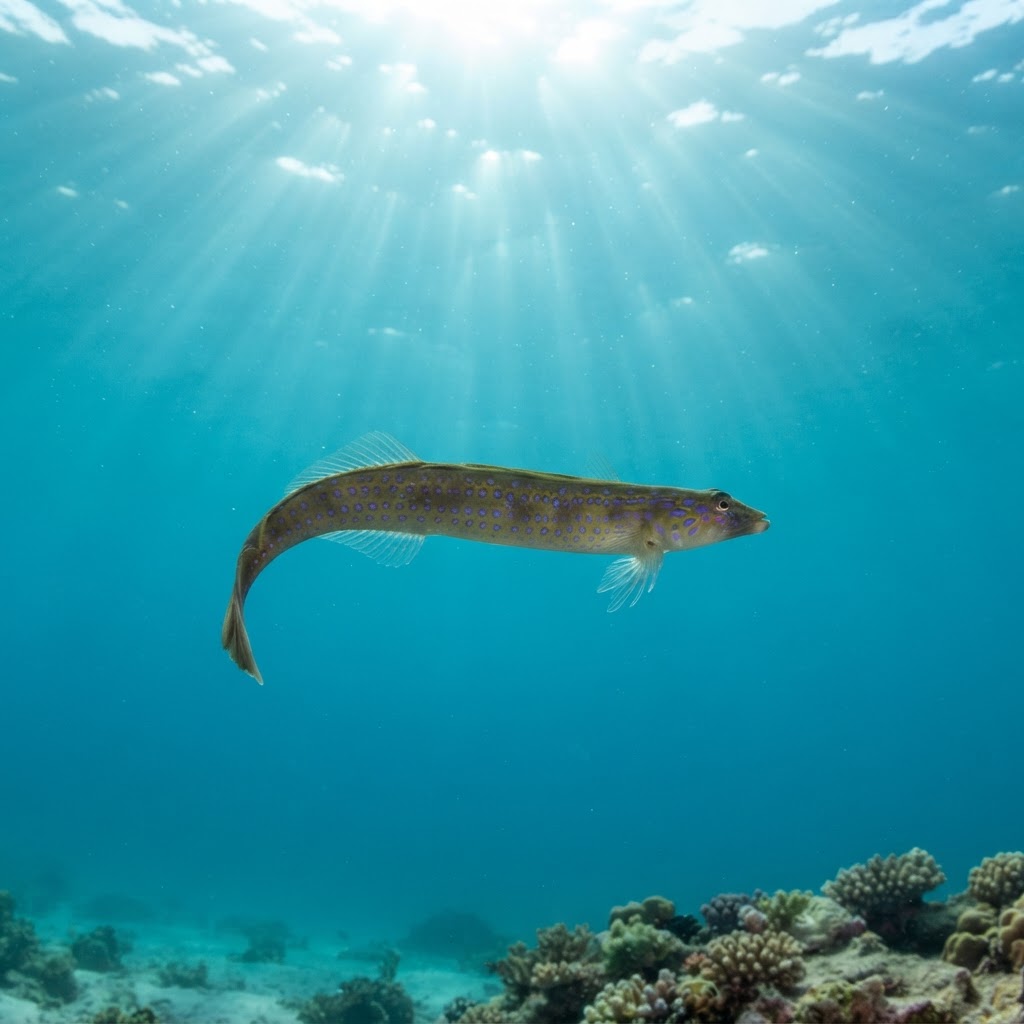
Slender, eel-like body reaching about 15cm, usually seen hovering just above open sand rather than resting on it. Sandy brown to pale grey colouring with rows of small dark spots along the back and an elongated dorsal fin that can flare up like a sail. Males typically show a more extended, showier dorsal fin than females, which is the main visual cue for telling the sexes apart in the water. The tapered head and slightly upturned mouth give it a subtle snake-like profile against open substrate.
Divers typically find it hovering a few centimetres above open sand or rubble, often in small loose groups, feeding on drifting plankton in the water column. It is quick to dart down and bury itself tail-first into the sand at the first sign of a diver getting close, so a slow approach and some patience pays off. Sightings tend to cluster on flat, open sand patches rather than reef structure, and it is logged as an uncommon find even at sites where it occurs.
When startled, it does not swim away over distance like most fish, it dives straight down and disappears into the sand, which is exactly how it earned the name sand-diver.
No clear seasonal pattern shows up in the sightings, and its comfort range of roughly 24.6 to 29C matches Philippine reefs year-round, so any month is fair game. Plan around good visibility over sand flats rather than a particular season.
Every logged sighting in the data comes from the Philippines, with the Visayas region standing out as the strongest area for this species. If you are diving sandy patches and rubble flats around the central Philippines, this is where to keep an eye on the substrate.
Mapping where Spotted Sand-diver is logged…
Sightings are concentrated in the Philippines, particularly the Visayas region, where divers find them hovering over open sand and rubble flats. Look on flat sandy stretches between reef structures rather than on the reef itself.
There is no strong seasonal pattern in the sightings, and its preferred water temperature of roughly 24.6 to 29C is present year-round on Philippine reefs. You can reasonably look for it on any dive trip to the region.
Look for a slender, eel-like fish about 15cm long hovering just above sand rather than lying on it, with a spotted back and a tall, sail-like dorsal fin. Males show a more exaggerated dorsal fin than females, which is the easiest way to tell them apart underwater.
They reach around 15cm in length, making them a small, easy-to-miss fish best spotted by scanning open sand patches slowly rather than swimming past quickly.
When approached too quickly, it dives headfirst into soft sand and vanishes almost instantly, a defence behaviour that gives the species its common name. Slow, low movements from divers give a much better chance of watching it hover naturally before it bolts.
No, they pose no threat to divers and simply retreat into the sand if disturbed rather than showing any defensive or aggressive behaviour.
Site and sighting data is aggregated from diver logs, iNaturalist and GBIF. For taxonomy and conservation status:
Slender Goby
803 sites