Paralabrax maculatofasciatus
Spot the Spotted Sand Bass in Baja California and Southern California waters from Aug, Oct. Here's where divers log it and how to recognise it.
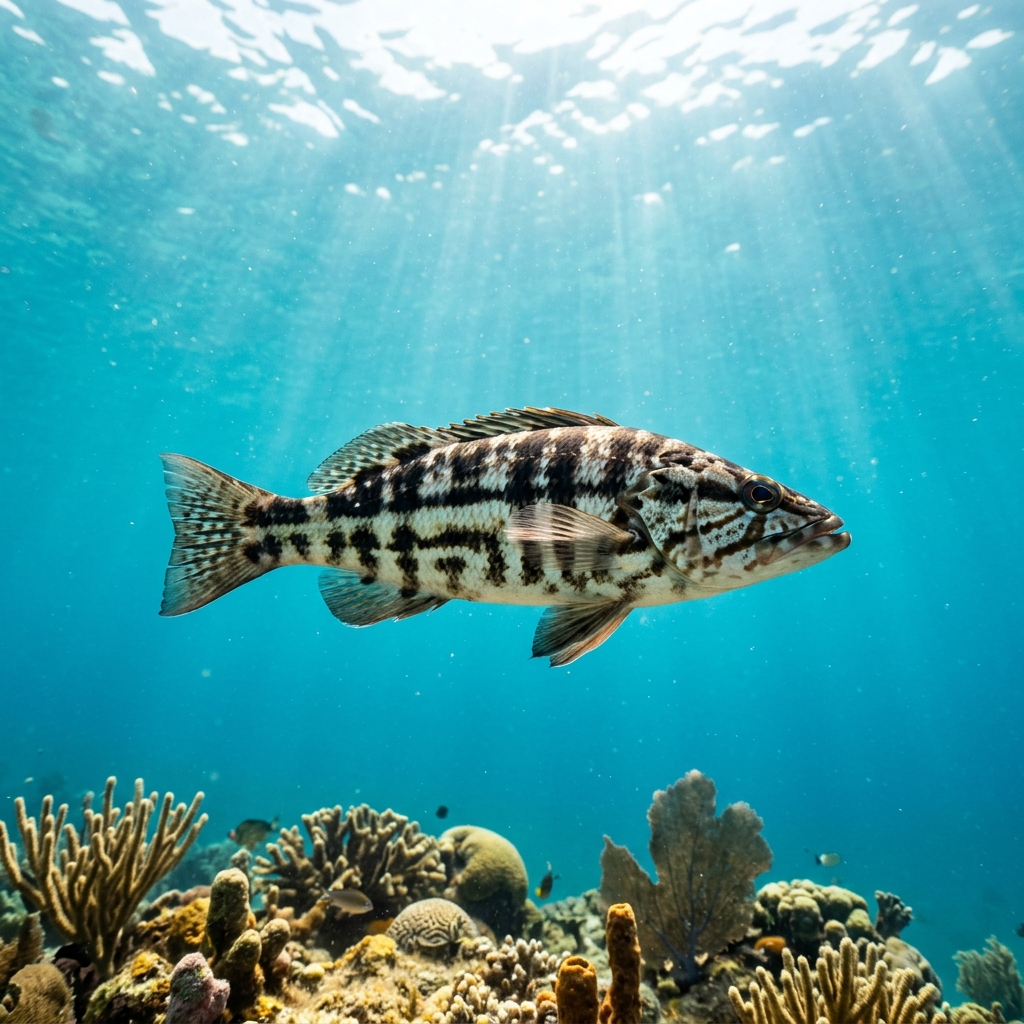
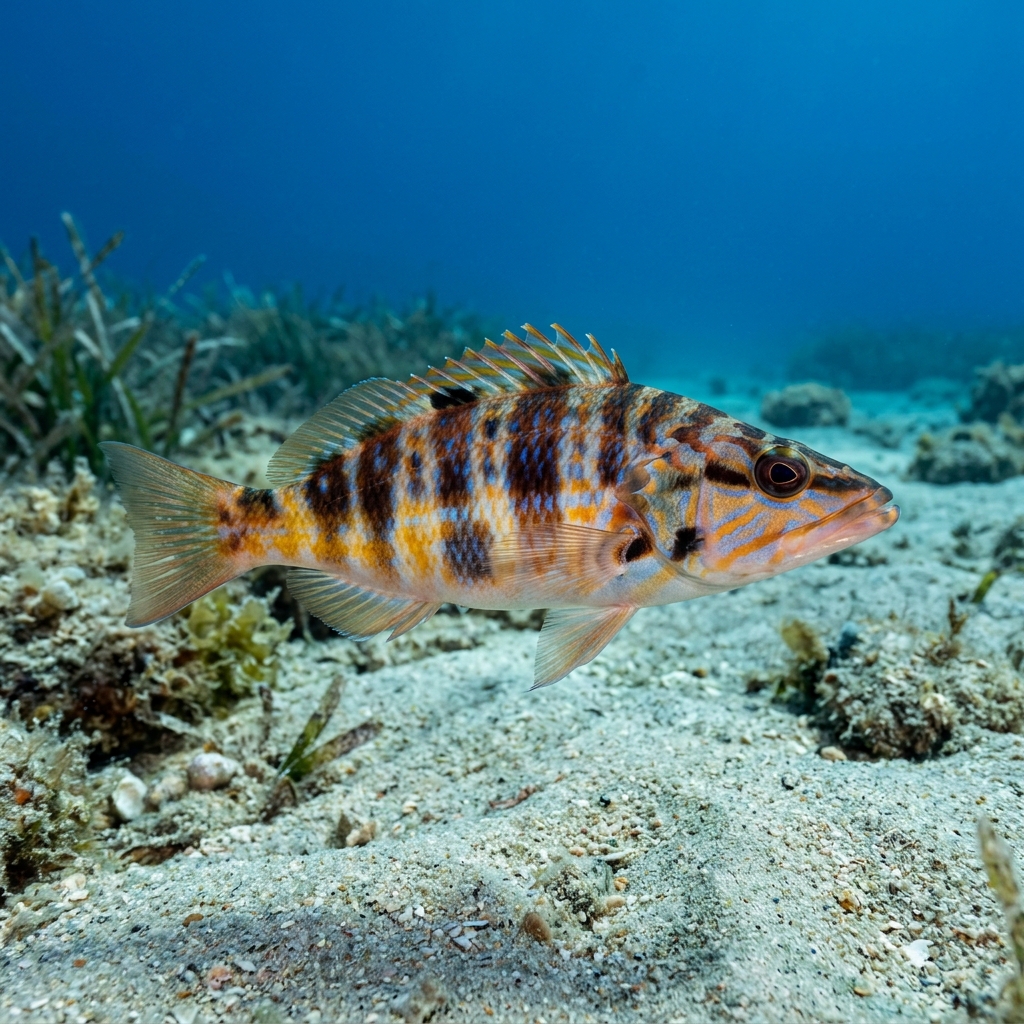
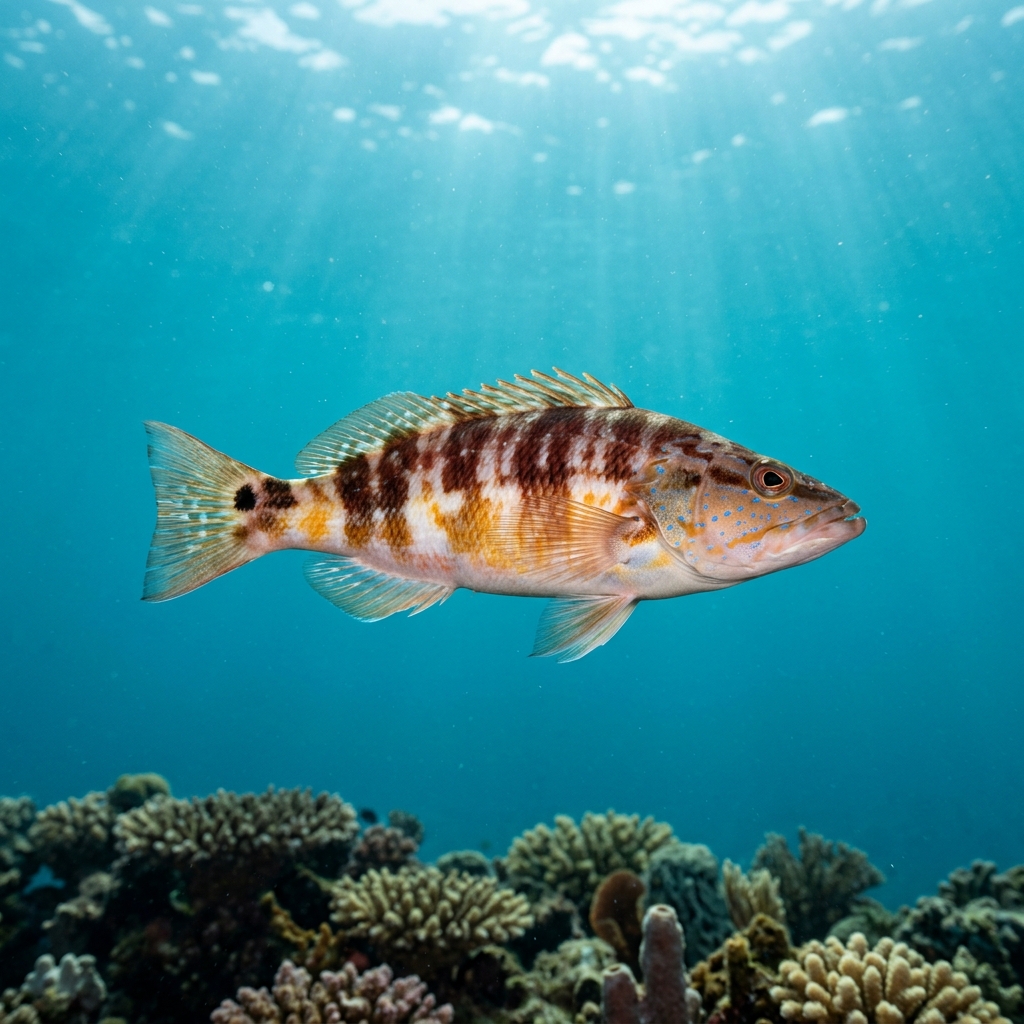
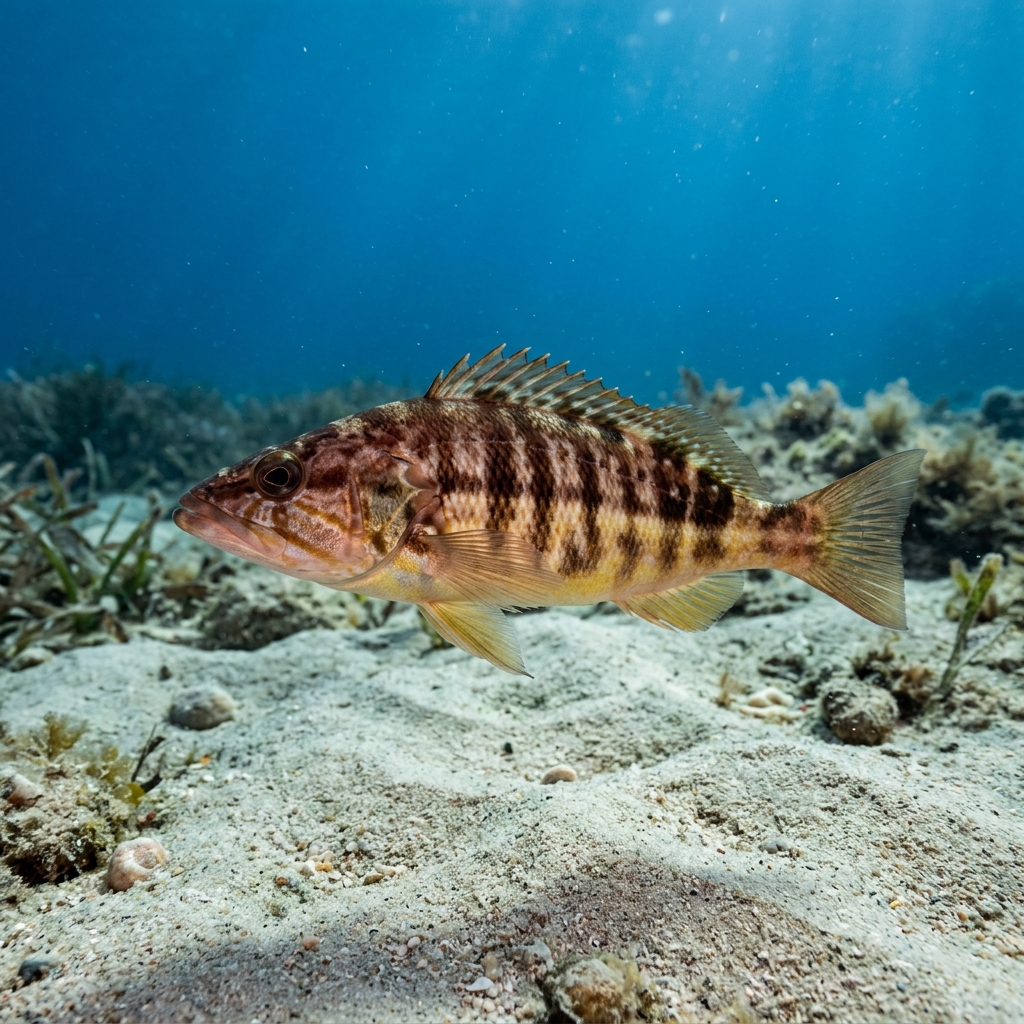
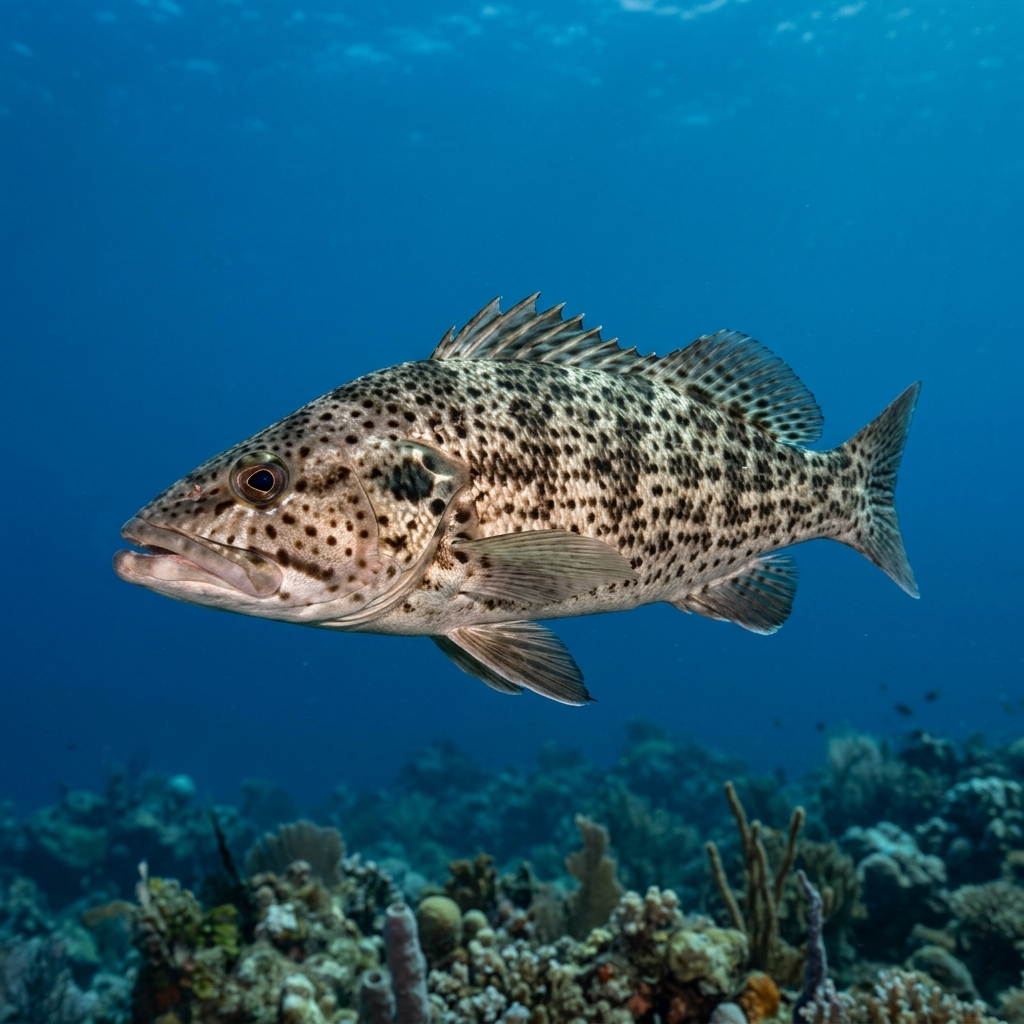
A stocky, medium-sized bass reaching around 42 cm, with a brownish-olive body covered in distinct dark spots that give it its name. Look for the combination of spots over a paler belly and faint vertical barring along the flanks, a pattern that blends well against rocky, algae-covered reef. The large mouth and squared-off tail help distinguish it from slimmer wrasse or smaller reef fish at similar depths. In clear, shallow water the spotting pattern is the single most reliable field mark.
Spotted Sand Bass are active hunters during the day, working slowly over rocky substrate and algae beds in search of prey. They tend to be curious and will often hold their position when a diver approaches calmly, making patient observation rewarding. If you move in too quickly, they slide into a crevice, give them a moment and they usually re-emerge.
Like several serranids, spotted sand bass are protogynous hermaphrodites (animals that begin life as one sex and change to the other), with females capable of transitioning to males as they mature and grow larger.
In the Northern Hemisphere, sightings concentrate between August and October, aligning with warmer water conditions (the species is observed between roughly 18 and 27 °C). Outside this window, encounters drop off noticeably.
Most sightings come from Baja California, Mexico, which accounts for the great majority of logged sites, followed by the Pacific Coast of the United States, particularly Southern California. Mexico overall has a strong lead over the US in logged locations, though both countries offer real encounters. If you are targeting this species, Baja California is where to focus your trip planning.
Mapping where Spotted Sand Bass is logged…
Spotted Sand Bass are most reliably logged in Baja California, Mexico, with additional sightings along the Pacific Coast of the United States, including Southern California. Baja California is by far the strongest region for encounters. They are a reef-associated species found from shallow water down to around 60 metres.
August through October is when diver sightings peak in the Northern Hemisphere. This coincides with warmer seasonal water temperatures in Baja California and Southern California. Outside this window, encounters are less frequently reported.
Look for a chunky, medium-sized bass around 40 cm long covered in dark spots over a brownish-olive base, with faint vertical barring on the flanks. The large mouth and squared tail are supporting clues. The spotting pattern is the key feature that separates it from other bass-shaped fish on the rocky reefs of Baja California and Southern California.
They typically reach around 42 cm in length. In the water they appear as a solidly built, mid-sized reef fish, bigger than most wrasse but smaller than true groupers on the same reefs.
No. Spotted Sand Bass pose no threat to divers. They may retreat if approached too fast, but they do not display aggressive behaviour towards people. A calm, slow approach is all that is needed to observe them at close range.
Yes. They are protogynous hermaphrodites, meaning individuals typically start out as females and can transition to males as they grow larger and older. This reproductive strategy is shared with a number of other members of the grouper family.
Site and sighting data is aggregated from diver logs, iNaturalist and GBIF. For taxonomy and conservation status:
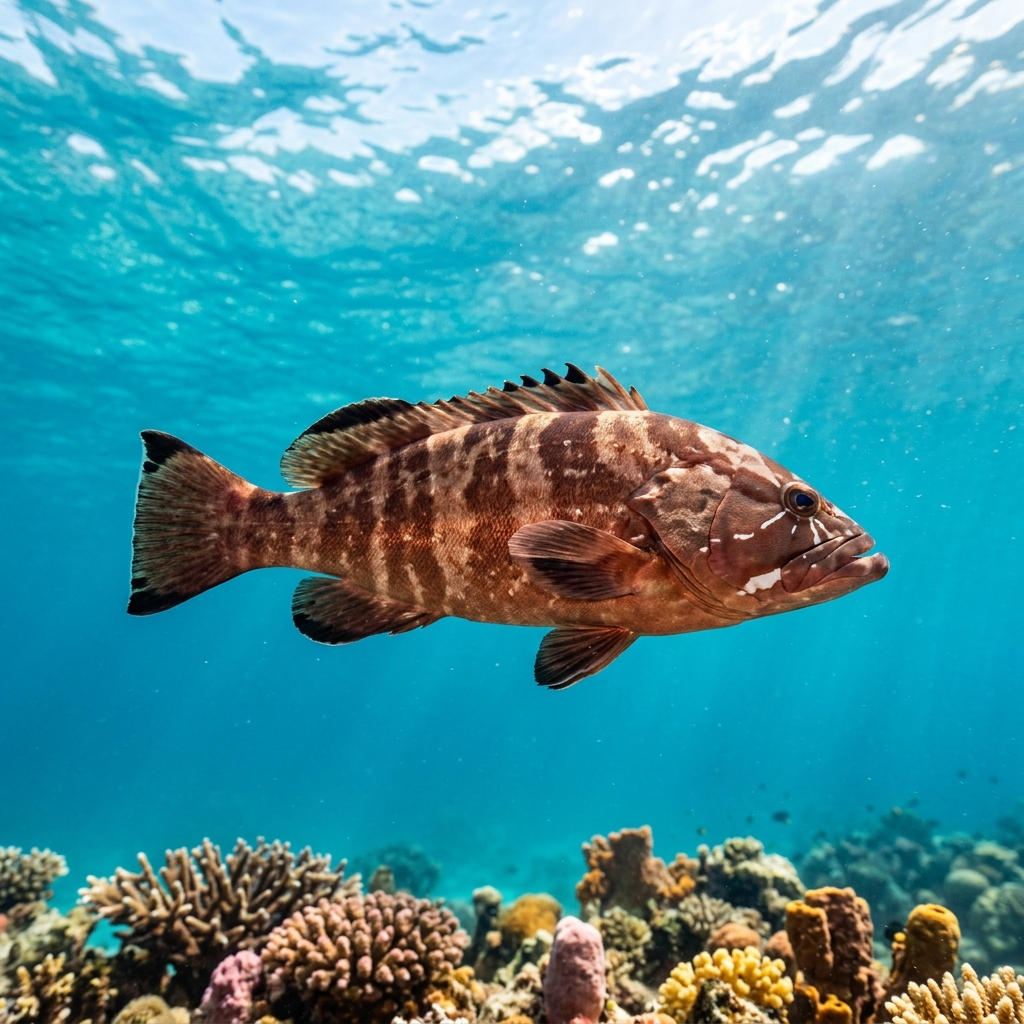
Blacktip Grouper
2,726 sites