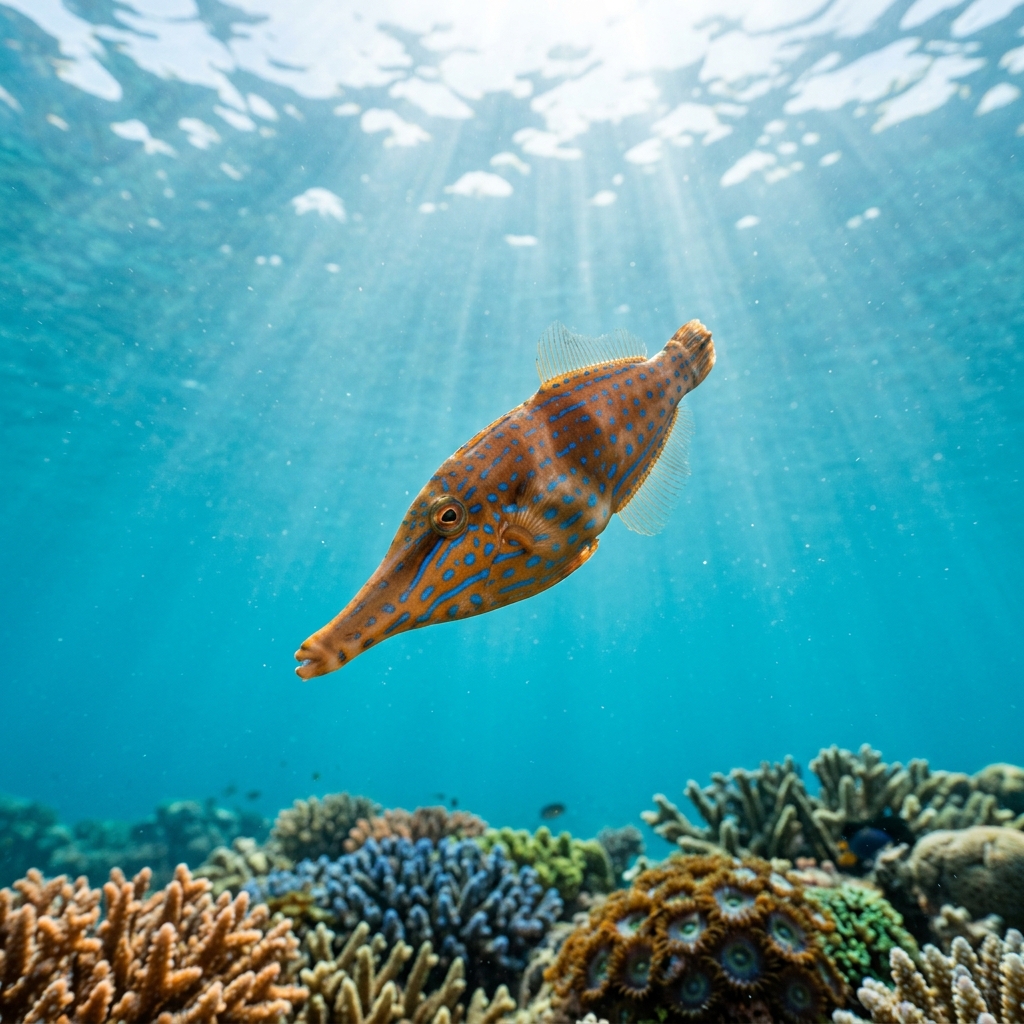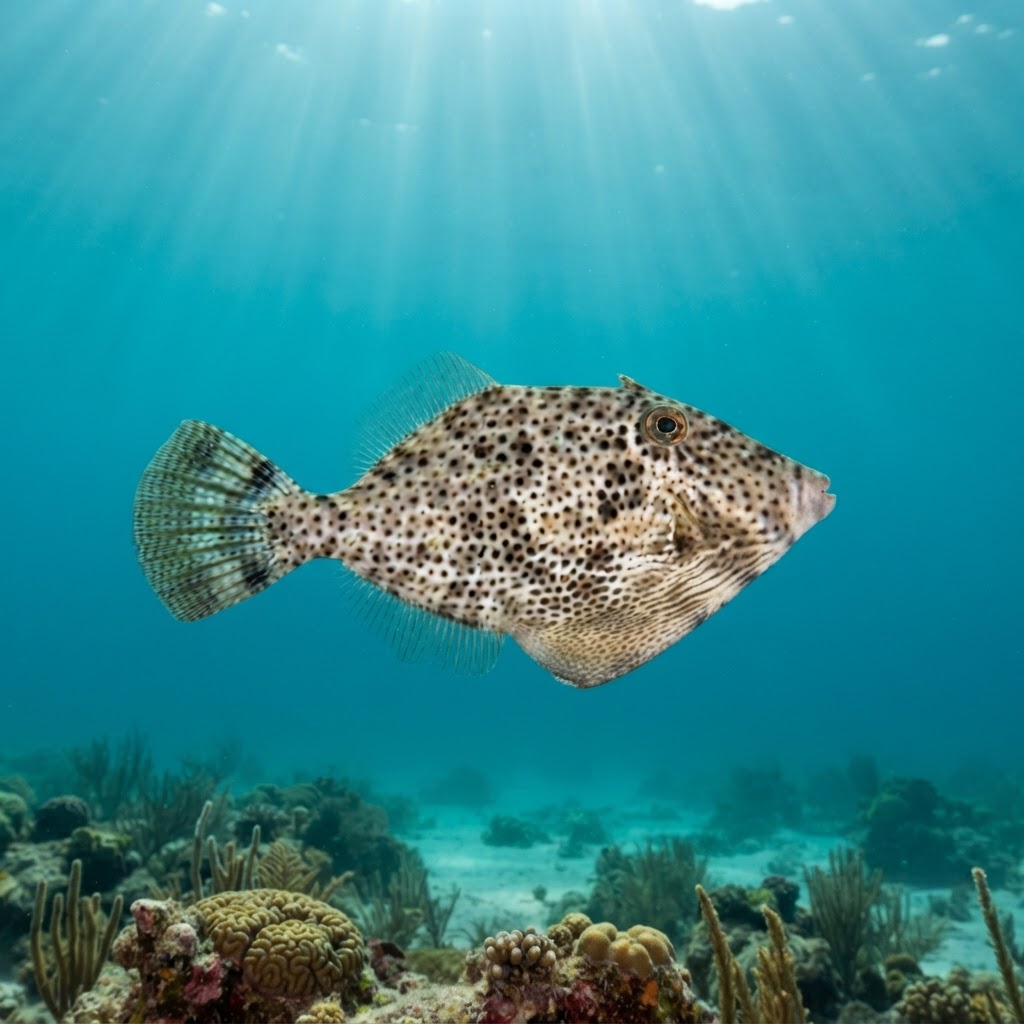
Pseudomonacanthus macrurus
Small, mottled and easy to miss on reefs in Sulawesi and the Visayas, this filefish rewards divers who slow down and look close.
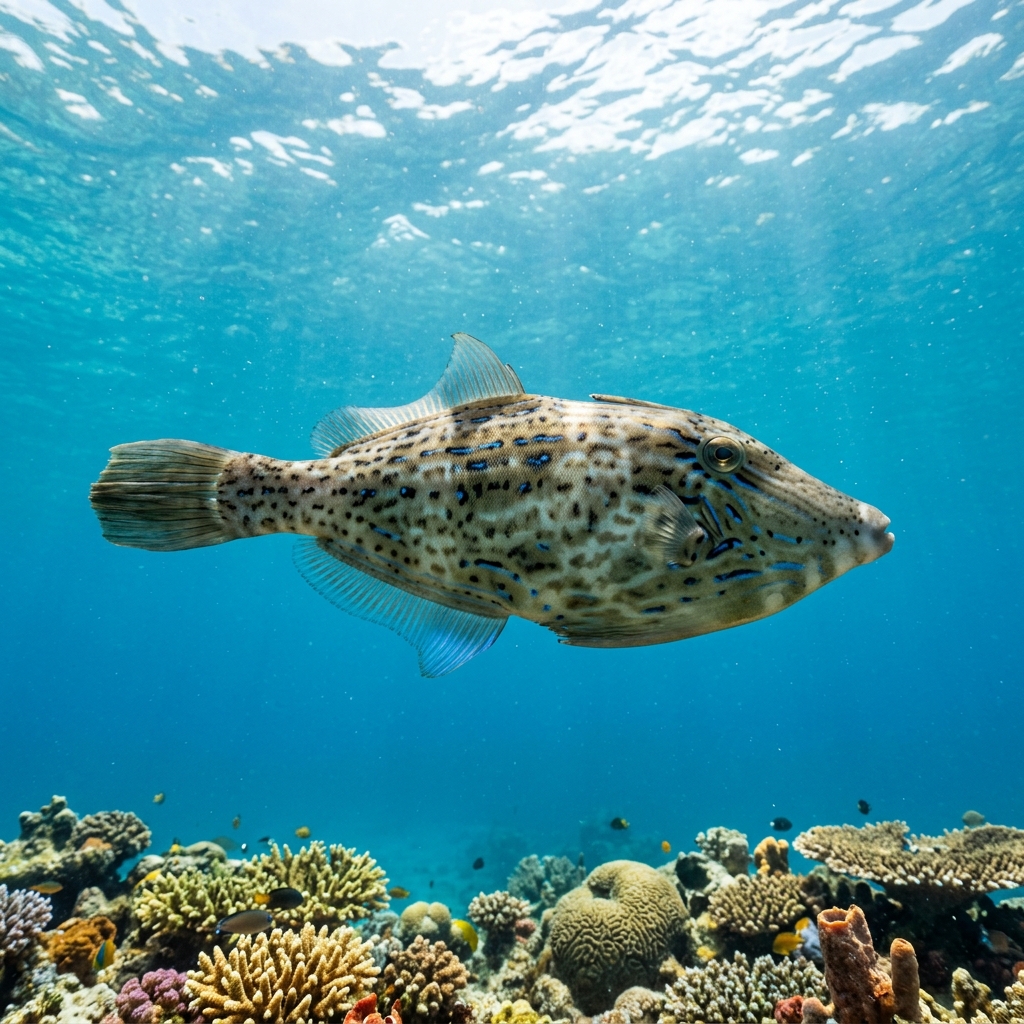
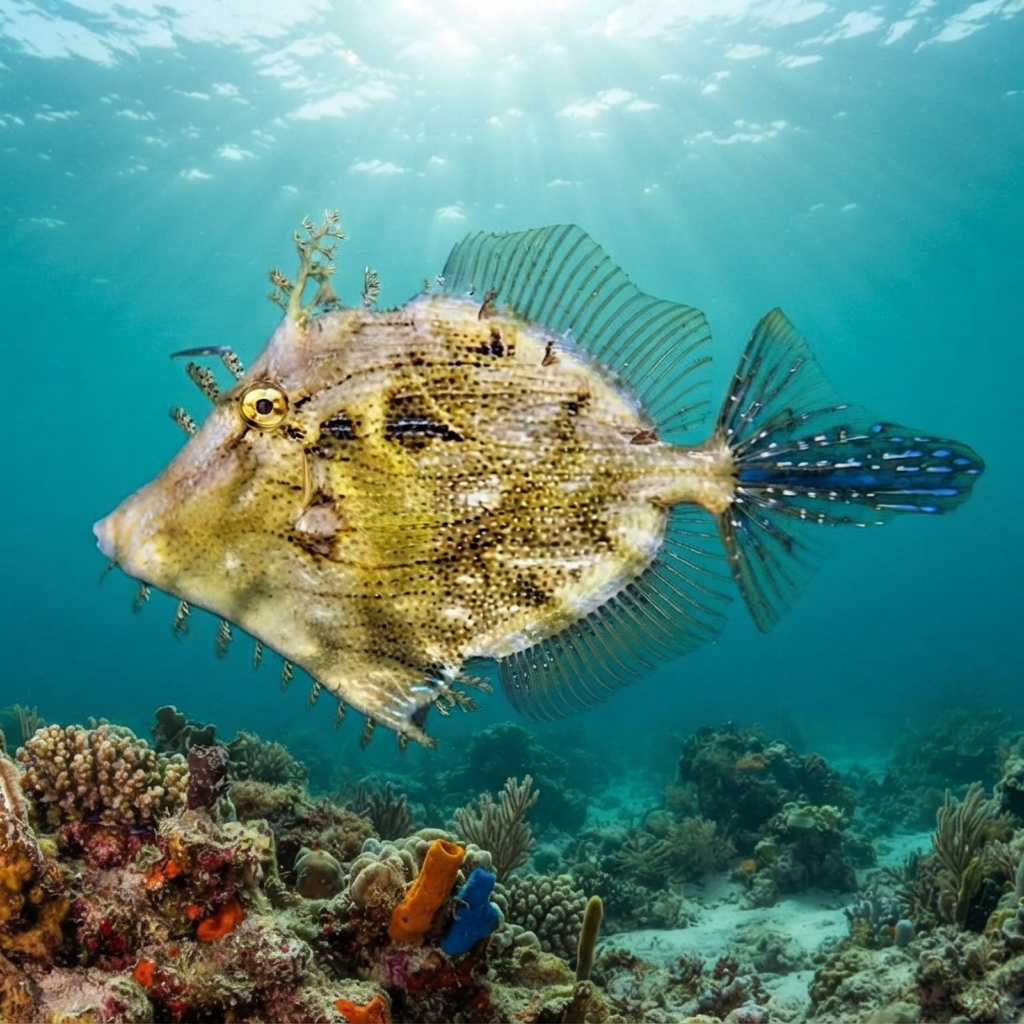
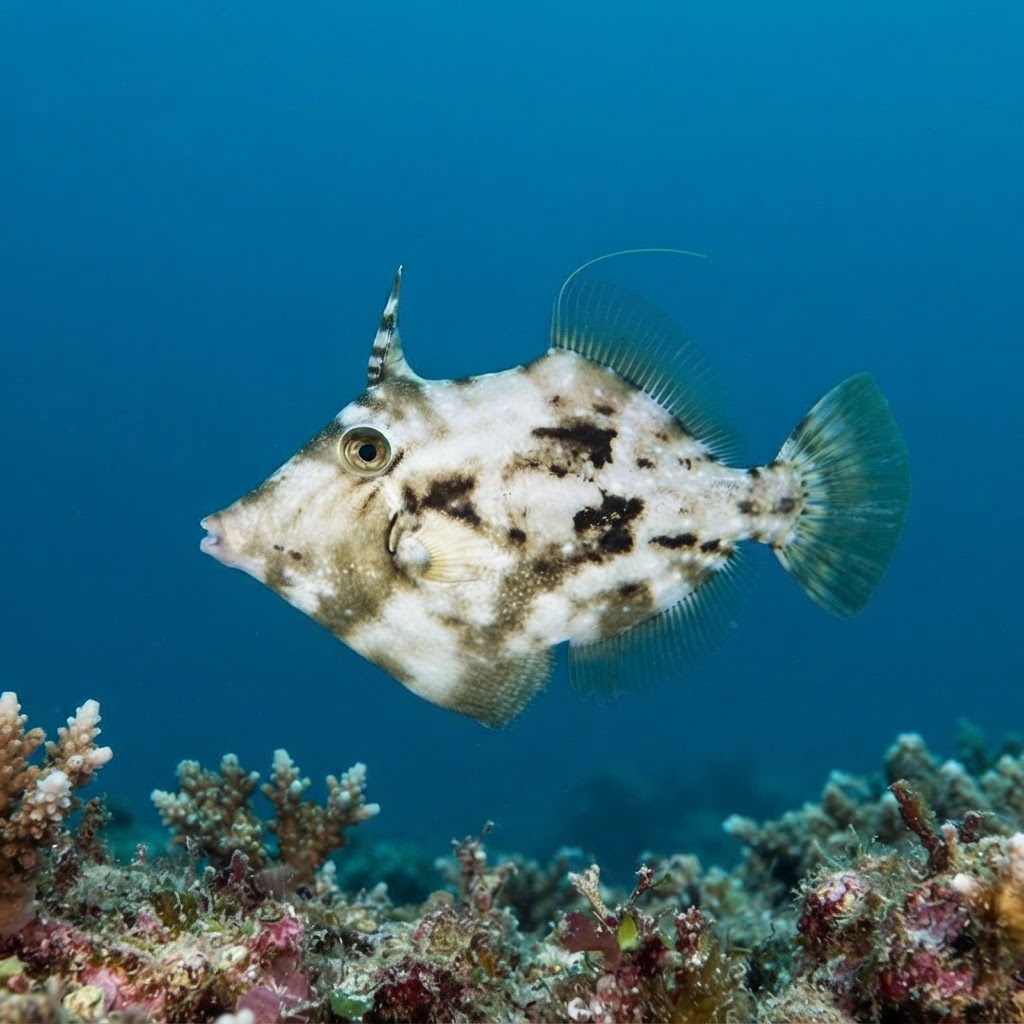
Small, deep-bodied fish around 17 cm, with a compressed, almost leaf-shaped profile and a long, tapering snout. Skin is mottled brown, grey and cream with fine dark speckling that breaks up its outline against rubble and weedy reef. A single slender dorsal spine sits just behind the eyes, the classic filefish giveaway, and the tail is long and rounded, trailing behind the body like a paddle.
Usually spotted hovering low and slow over rubble, weedy patches or sponge-covered reef, using its flattened body to blend into the clutter rather than bolt. It is not a fast swimmer and tends to hold its ground or drift sideways away from divers rather than dart off, which makes it an easy subject once you have picked it out from the background. Most sightings are on shallow reef flats and slopes down to about 10 metres, often solo or loosely paired.
Like other filefish, it can lock that dorsal spine upright and wedge itself into a crevice, making it awkward for a predator to pull out, a defence that has nothing to do with speed and everything to do with getting stuck on purpose.
No clear seasonal pattern shows up in the data, and with a comfortable range of 27.4 to 29.3 C it sits happily on tropical reefs all year. Plan around the site, not the calendar.
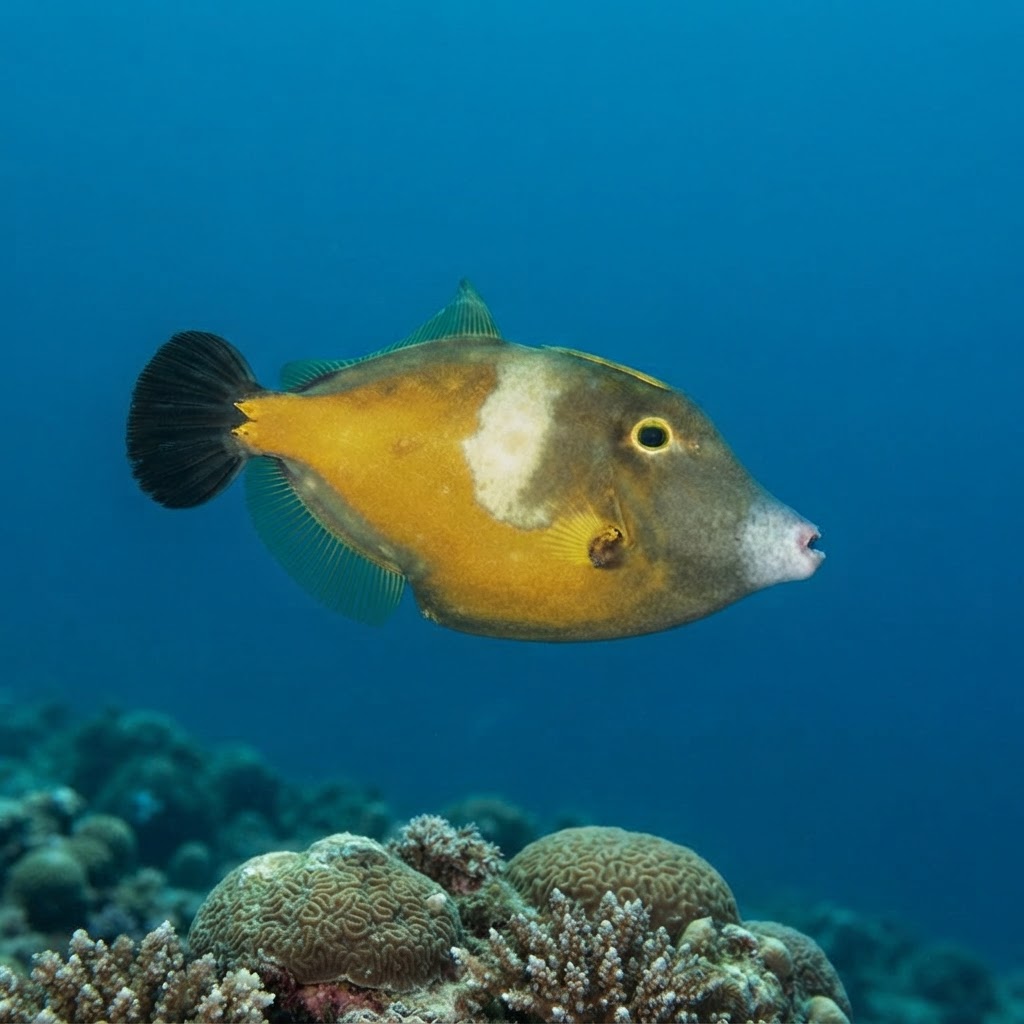
Reef neighbours a diver could mistake it for. Use the identification notes above to tell them apart.
Most reliably logged in Indonesia and the Philippines, with strong numbers out of Sulawesi and the Visayas in particular. Bali adds a smaller but steady set of sightings, and it also turns up around Singapore's Southern Islands, making it a rewarding find across a fairly wide stretch of the Coral Triangle and beyond.
Mapping where Spotted Filefish is logged…
Best chances are in Indonesia and the Philippines, especially around Sulawesi and the Visayas, with Bali and Singapore's Southern Islands as additional spots. It is logged as uncommon at most of these sites, so expect to search rather than stumble on it.
There is no strong seasonal signal in the sightings, and warm reef temperatures around 27 to 29 C hold steady year-round in its range, so any month is a reasonable bet.
Look for a small, flattened, leaf-shaped fish about 17 cm long with mottled brown and cream speckling and a slender spine behind the eyes. It tends to hover low over rubble or weedy reef rather than swim openly in the water column.
They top out around 17 cm, making them one of the smaller, easier-to-overlook filefish on the reef.
Filefish, including this species, can raise and lock a single dorsal spine to jam themselves into crevices when threatened, a defence that relies on getting wedged in rather than outrunning a predator.
Site and sighting data is aggregated from diver logs, iNaturalist and GBIF. For taxonomy and conservation status:
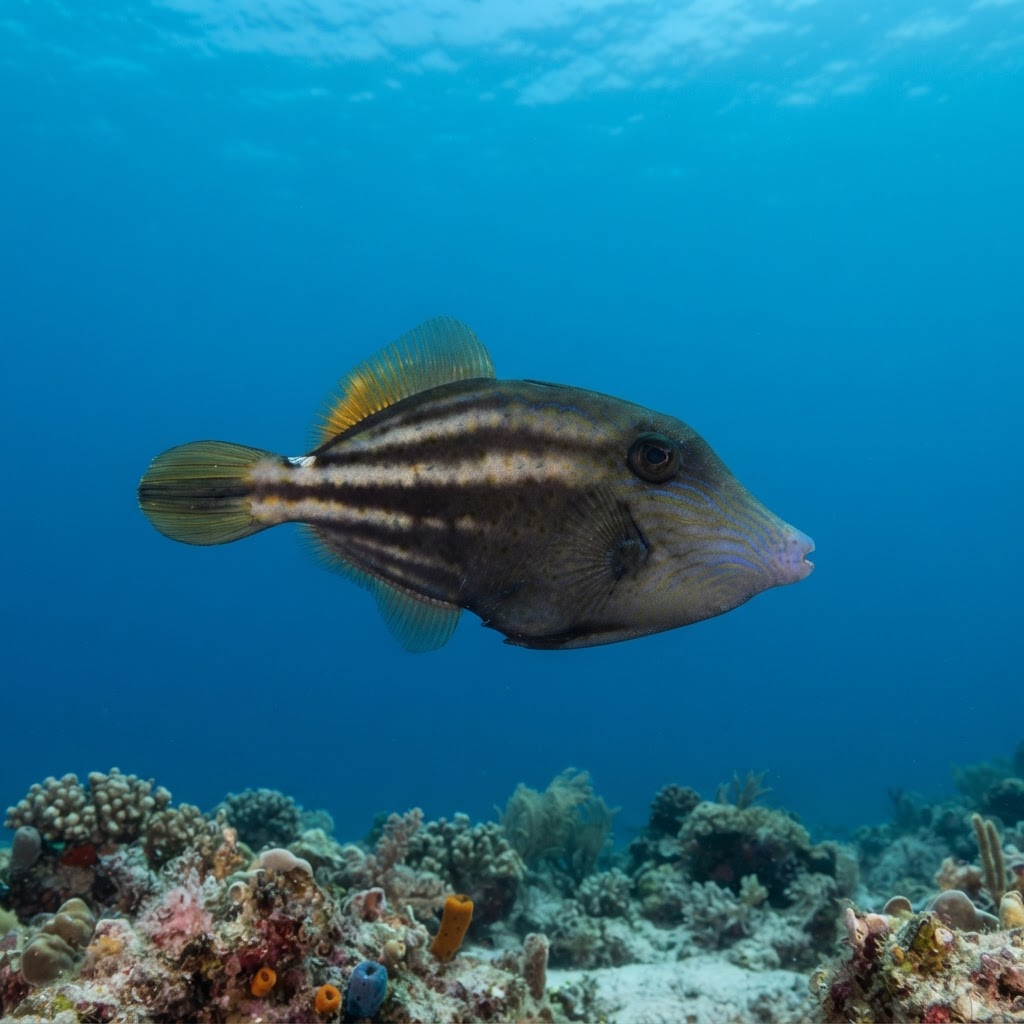
Orangespotted Filefish
836 sites