Repomucenus calcaratus
A small, mottled bottom-dweller found in cooler waters from 14 to 24 C, easy to miss unless you know where to look on the seabed.
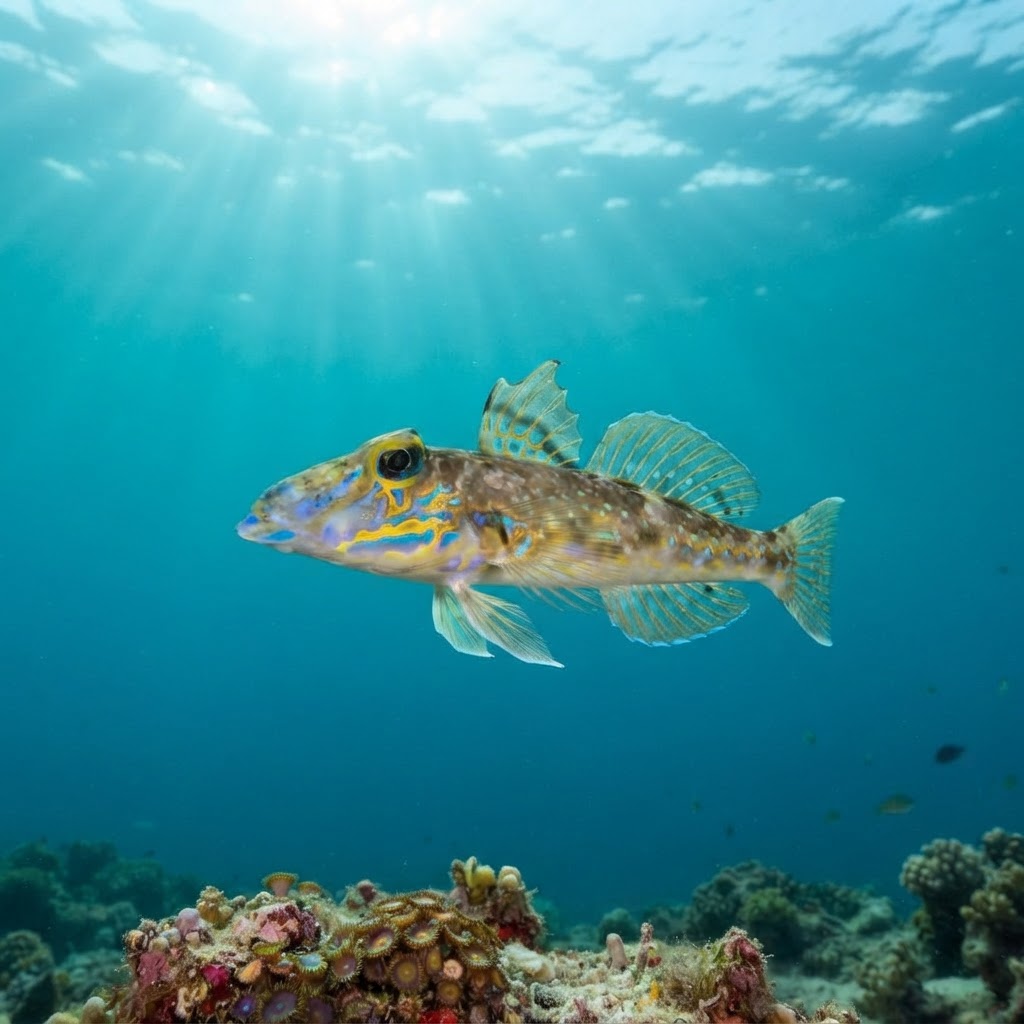
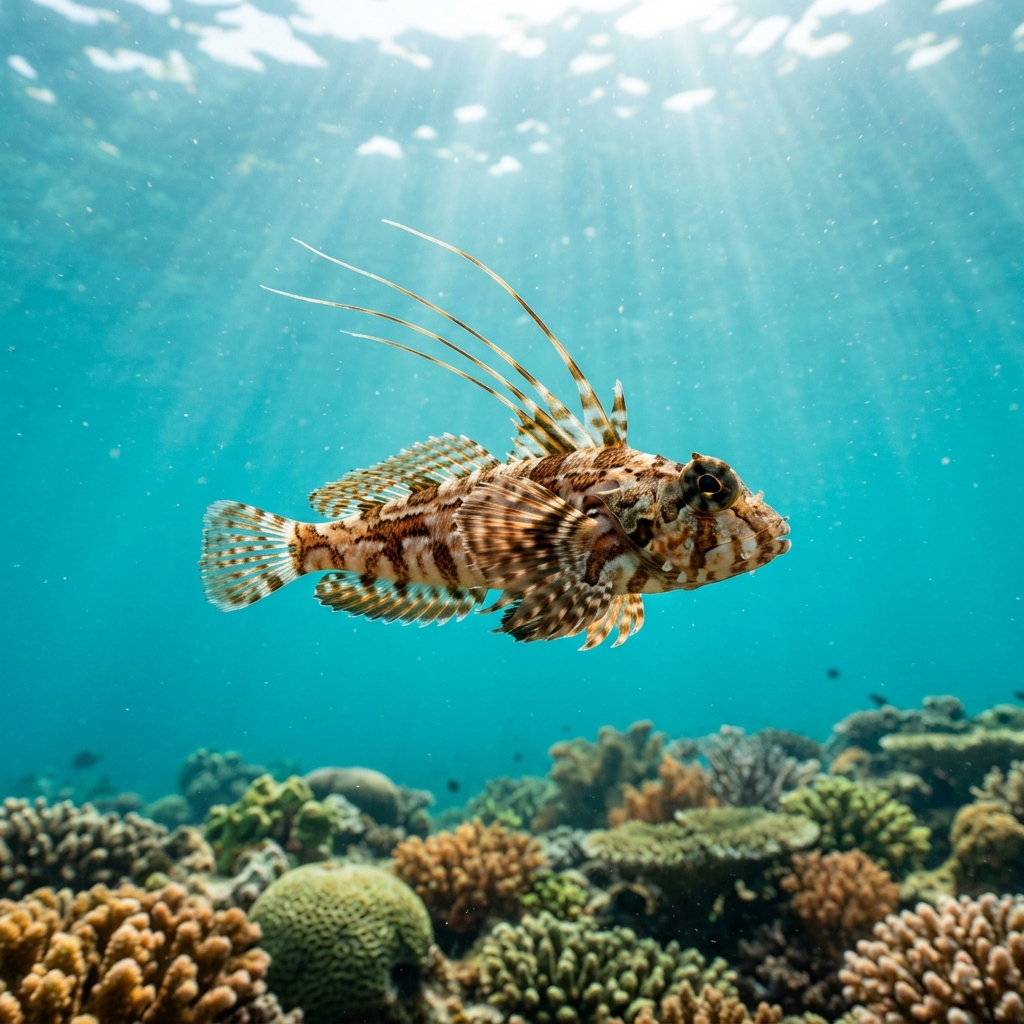
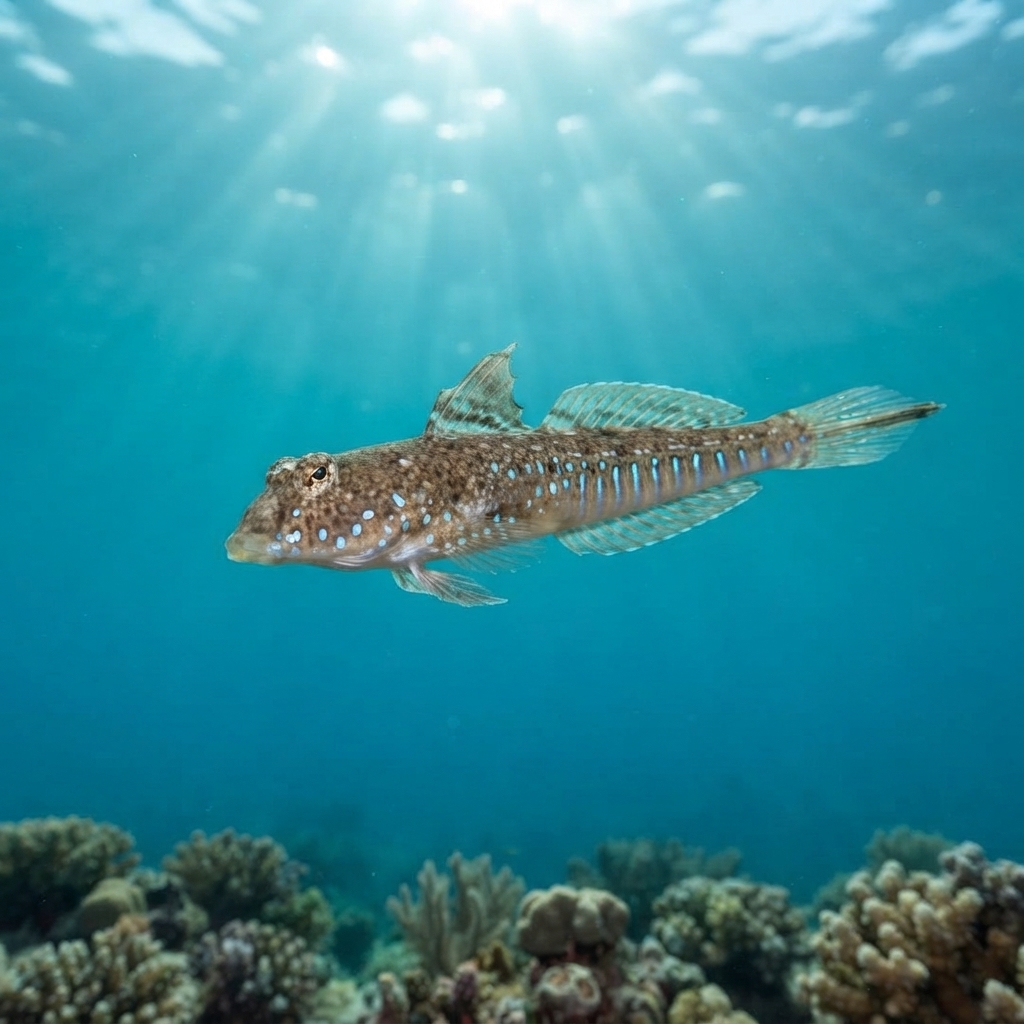
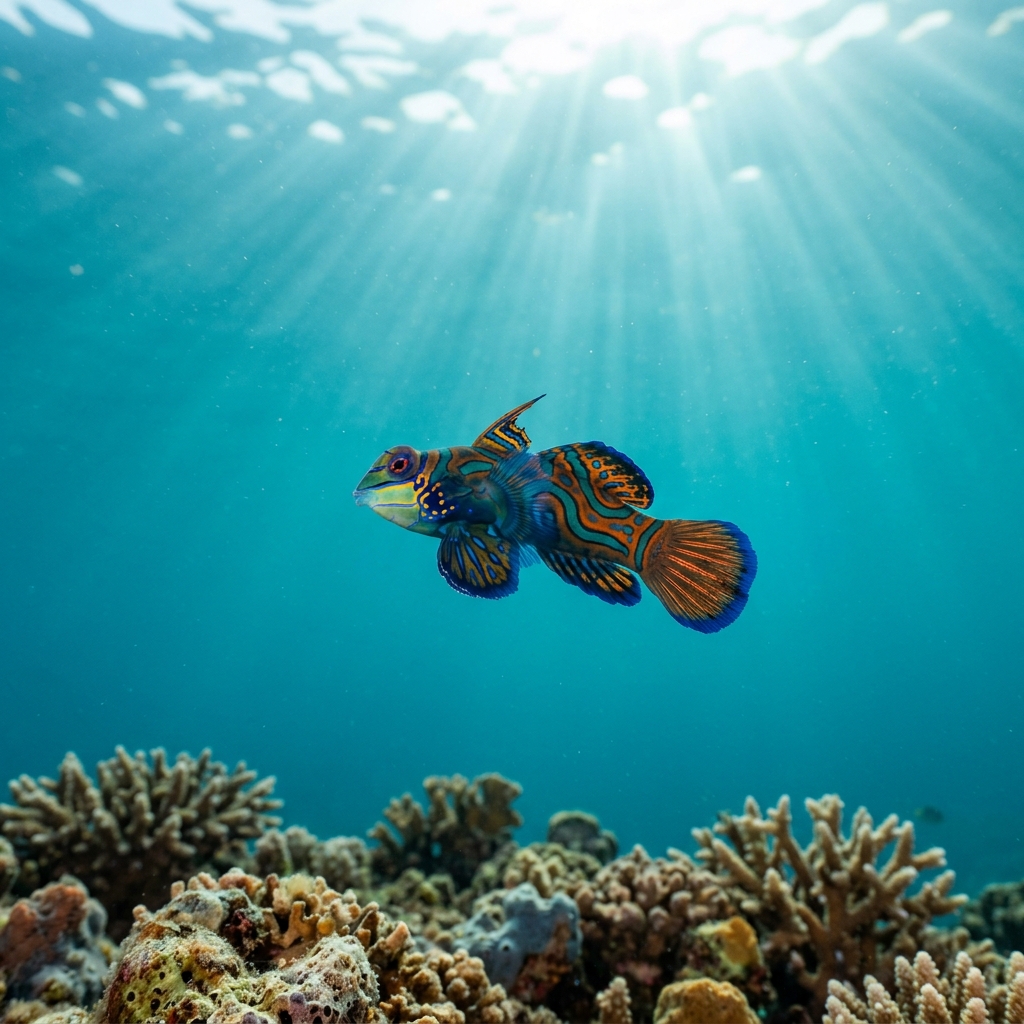
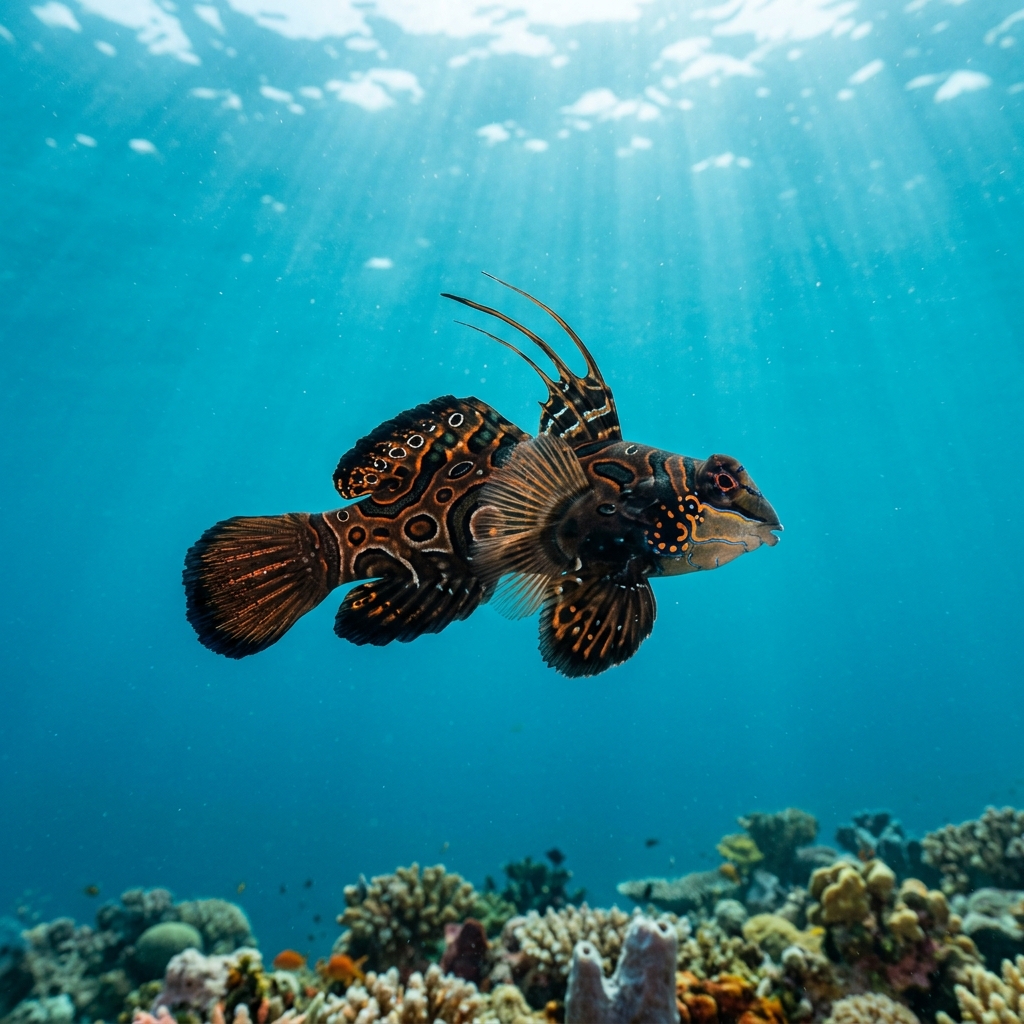
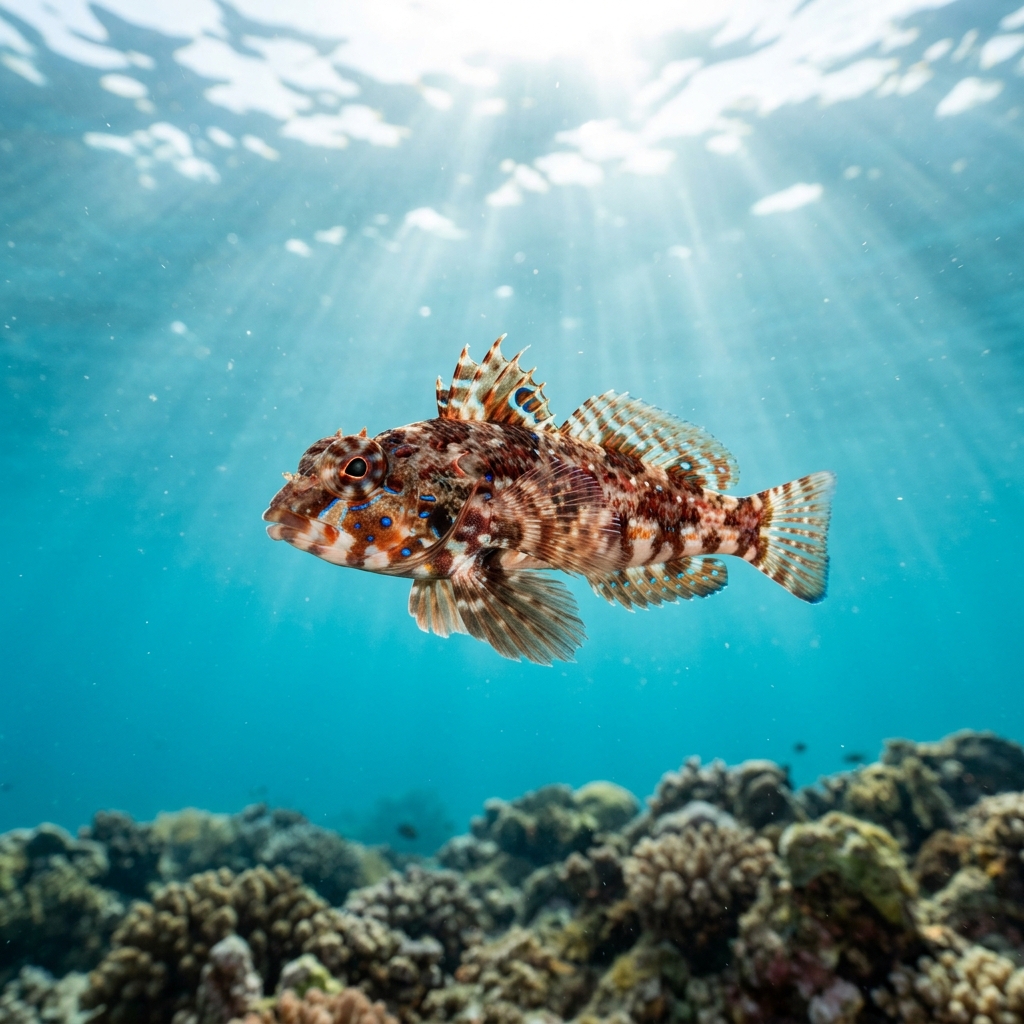
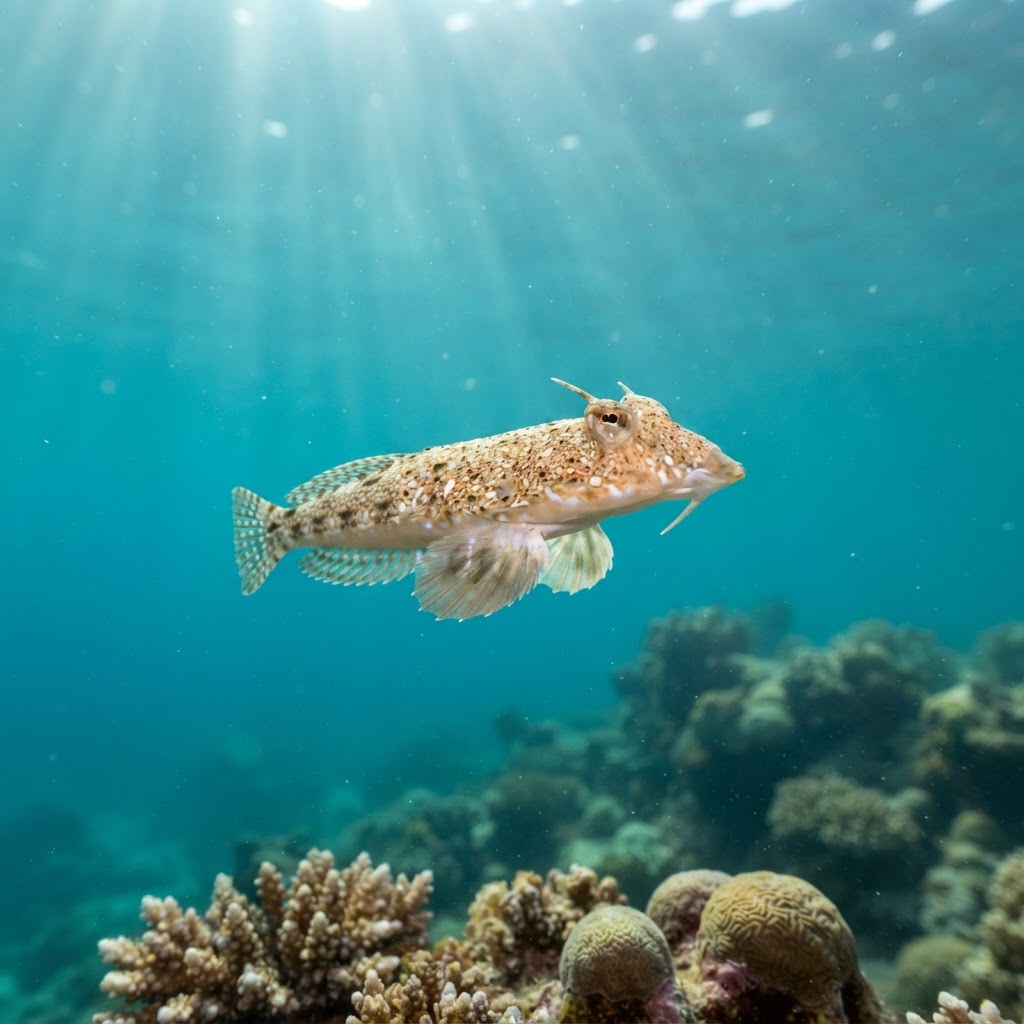
Small, elongated fish around 15 cm, usually seen resting or creeping over sand and rubble rather than swimming in open water. Body is mottled brown, tan and pale with fine spots and blotches that break up its outline against the seabed. Head is broad and slightly flattened, eyes set high, and the first dorsal fin can flick up into a small sail-like flag when the fish is disturbed or displaying. Coloration blends closely with sediment, so it often only stands out once it moves.
Spends most of its time sitting still or creeping slowly across sand and rubble, using its pelvic fins almost like small legs rather than swimming freely. Tends to freeze or flatten against the substrate when a diver approaches, relying on its mottled pattern to disappear rather than fleeing. Best spotted by slowing down and scanning open sand patches close to the bottom instead of looking at the reef structure itself.
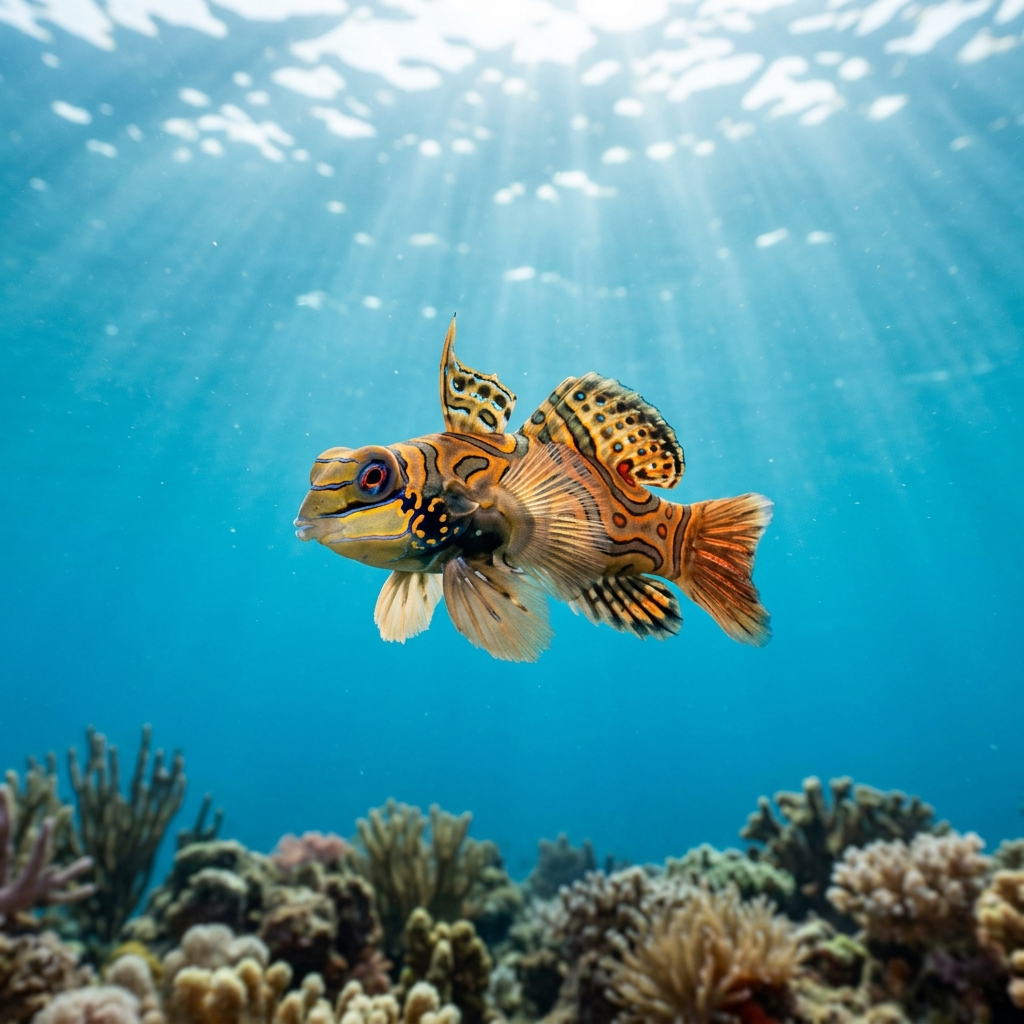
Dragonets in this genus communicate and display using their dorsal fin, raising it like a small flag during encounters with rivals or potential mates, a detail worth watching for if you find one holding still.
No clear seasonal pattern has emerged from current sightings, and its recorded temperature range of 14.3 to 23.7 C spans cooler and mild conditions rather than a narrow warm-water window, so treat it as a year-round possibility where it occurs.
Reef neighbours a diver could mistake it for. Use the identification notes above to tell them apart.
Sighting data for this species is currently thin, with no confirmed dive sites logged yet. Divers most likely to encounter it are those working sand, rubble and mixed seabed habitats in its known temperate to subtropical range rather than classic coral reef terrain.
Mapping where Spotted Dragonet is logged…
Look for a small, flattened fish around 15 cm long, mottled brown and pale with fine spotting, resting or creeping over sand and rubble rather than swimming. Its raised first dorsal fin, when flicked up, is a useful confirming detail.
Confirmed dive-site records are limited so far. It is a bottom-dwelling species associated with sand and rubble habitat in temperate to subtropical waters, so look there rather than on coral reef structure.
There is no strong seasonal signal in current sightings, and its temperature range spans cooler to mild conditions, so it is best treated as a year-round find rather than a seasonal target.
They reach around 15 cm in length, making them one of the smaller bottom-dwelling fish you might spot on a sand or rubble patch.
No, they pose no danger to divers. They are small, non-aggressive bottom-dwellers that rely on stillness and camouflage rather than any defensive threat.
Site and sighting data is aggregated from diver logs, iNaturalist and GBIF. For taxonomy and conservation status:
Starry Dragonet
66 sites