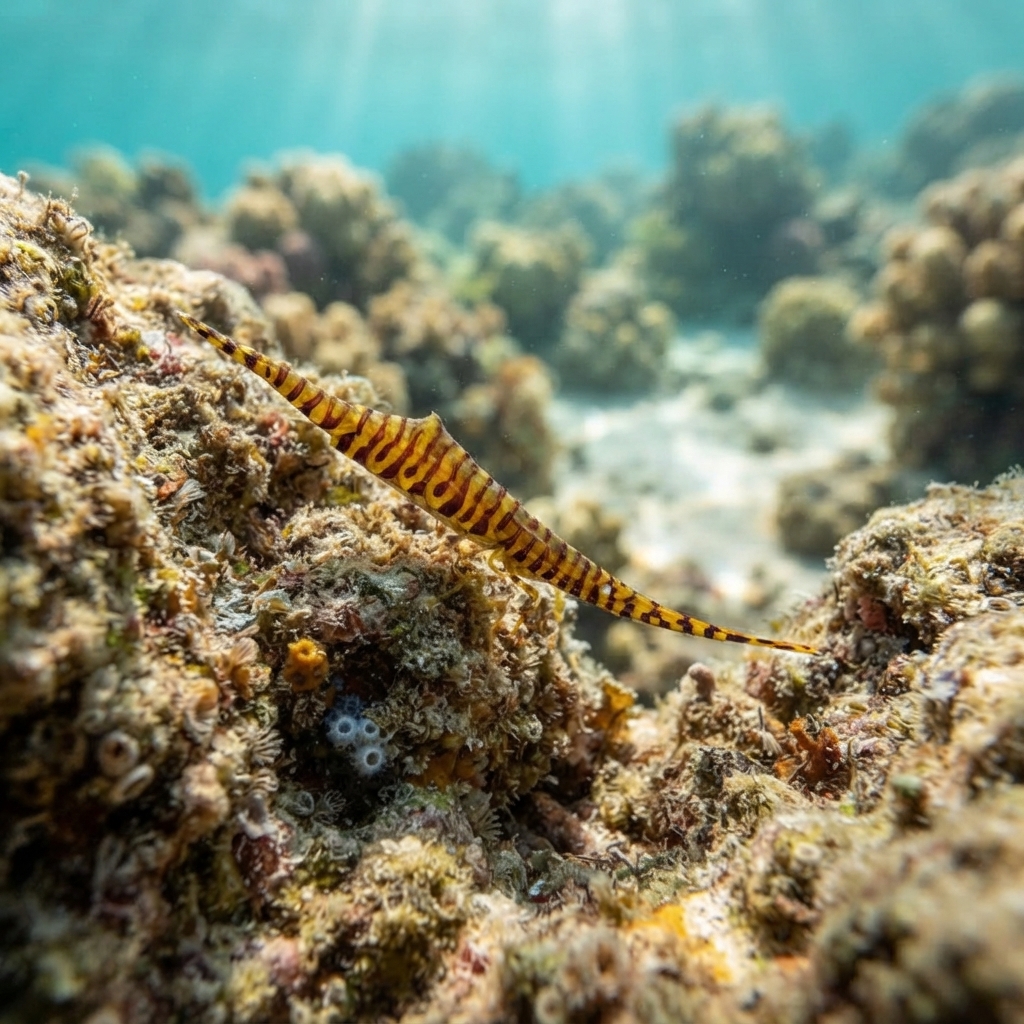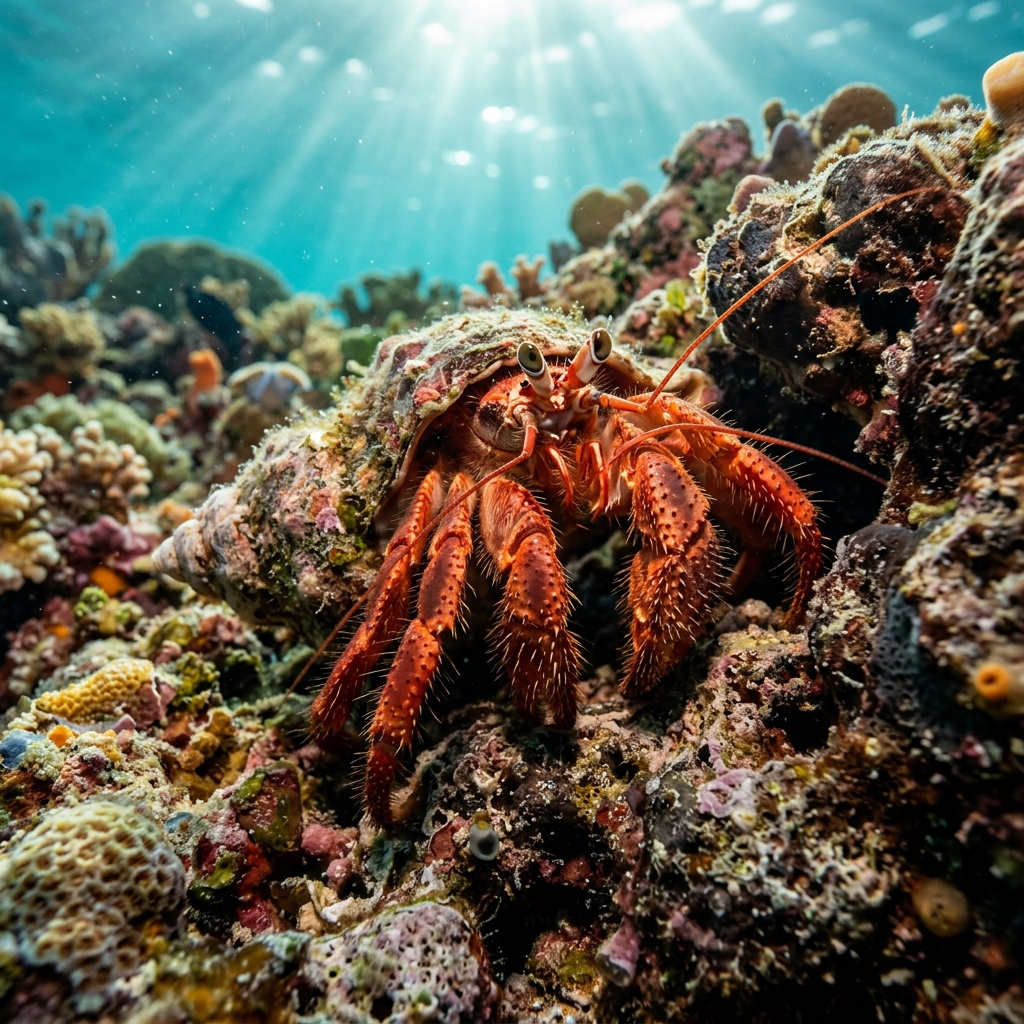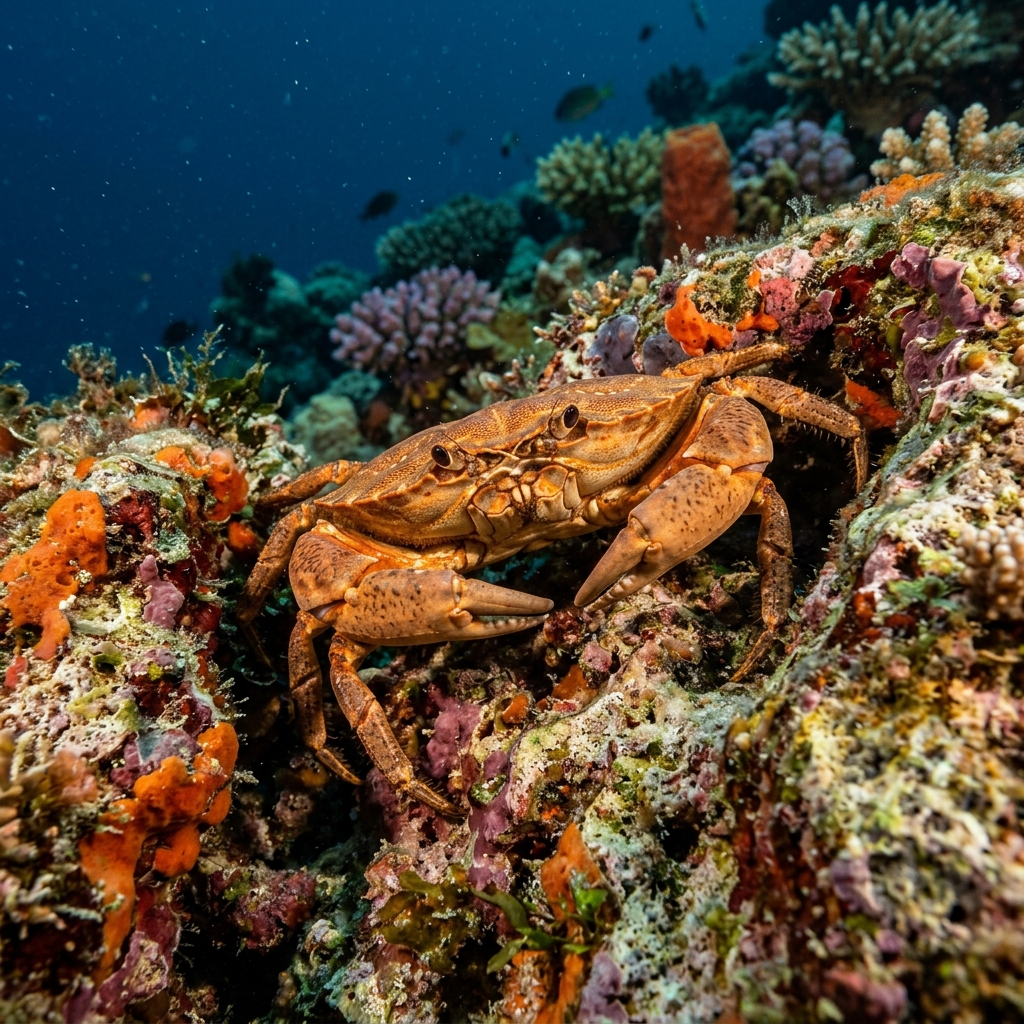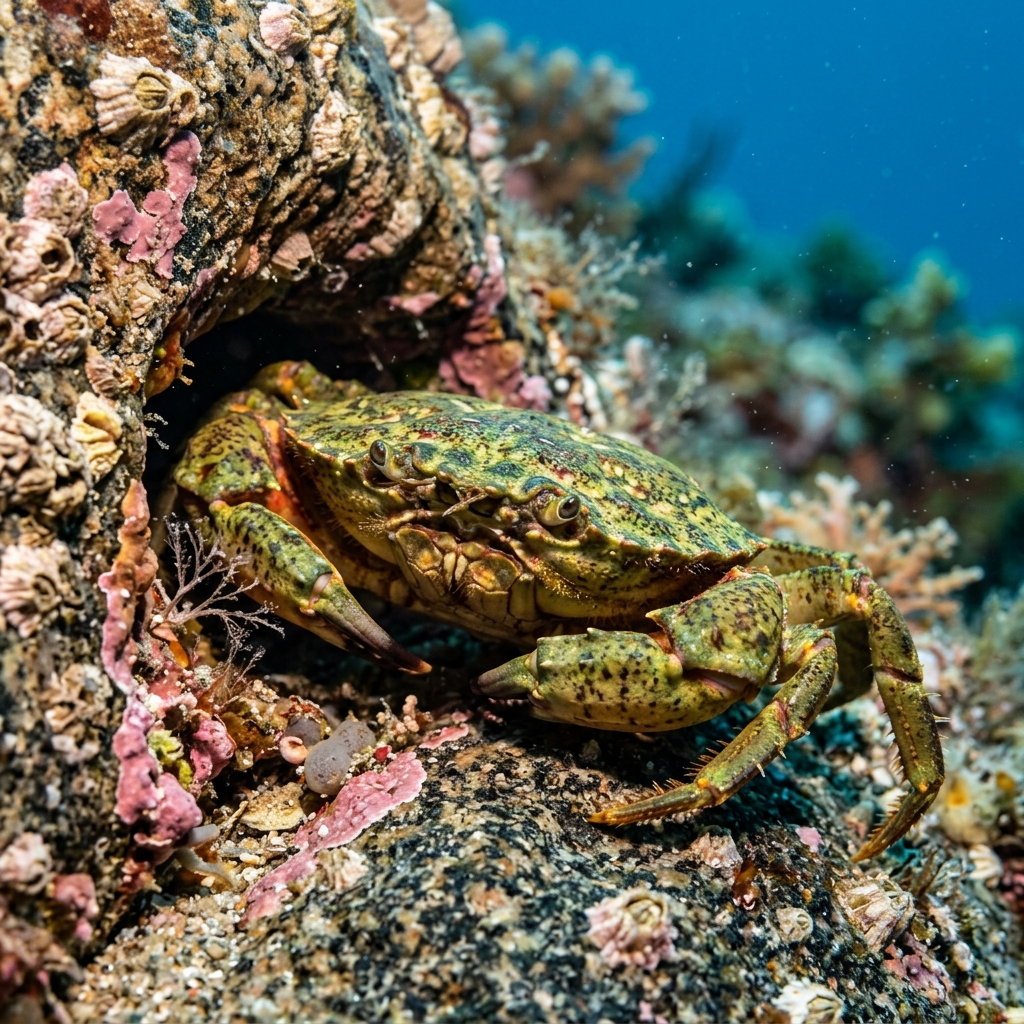
Pandalus platyceros
Spot shrimp turn up in cold water from 9 to 19C, most reliably logged around British Columbia's rocky reefs year-round.
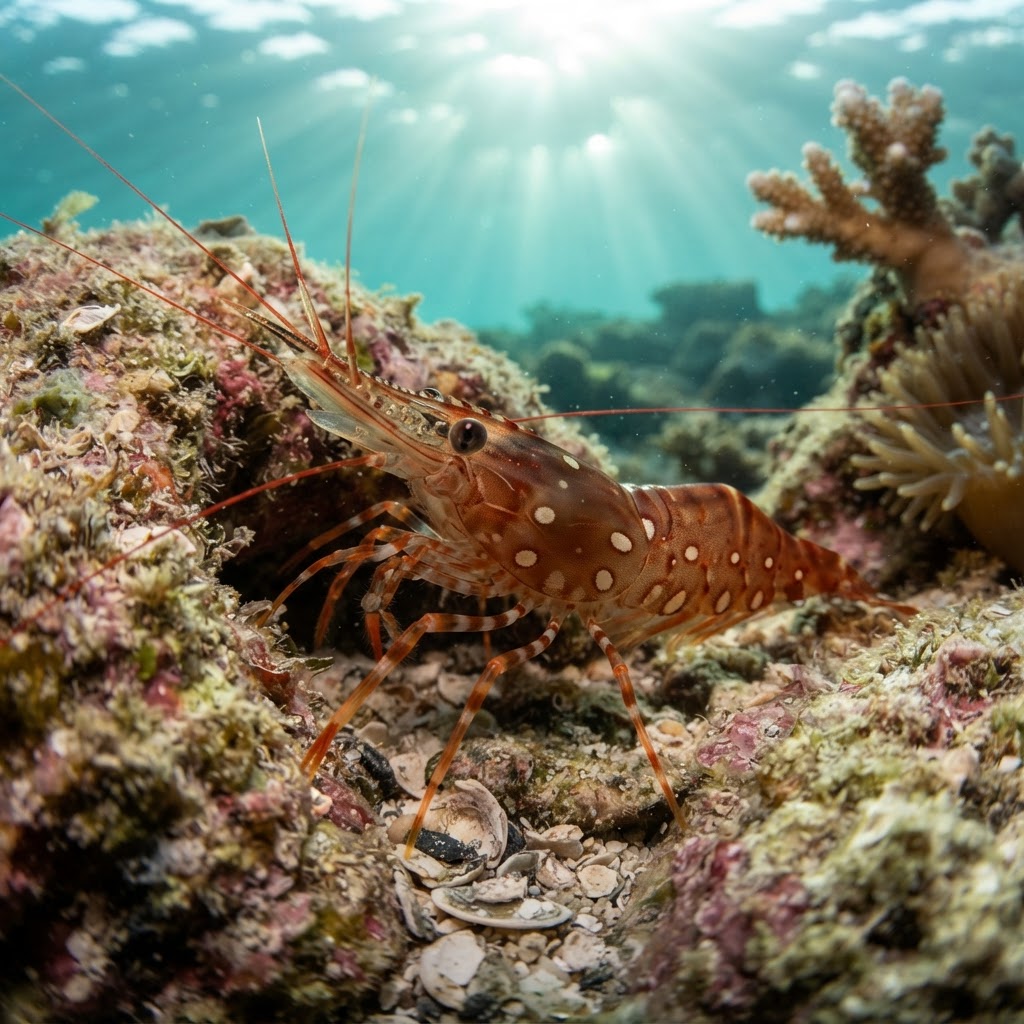
Reddish-orange body up to about 21 cm long with distinctive white horizontal stripes across the body and white spots at the joints of the abdomen. Long, thin white antennae often extend well past the body length, usually the first thing a diver notices in torchlight. Found perched on rock or resting in crevices rather than swimming openly, with a humpbacked posture typical of pandalid shrimp.
Usually seen tucked against rock walls or under ledges during the day, often solitary or in loose company with other shrimp species, antennae waving out from the shadows well before the body comes into view. Divers report it as uncommon rather than a guaranteed sighting, so slow, careful scanning of crevices and rock faces pays off more than mid-water searching. It doesn't flee readily from a light beam, giving a decent window for a photo before it backs deeper into cover.
Spot shrimp are protandric hermaphrodites, starting life as males and later transitioning to females, a reproductive strategy shared by several pandalid shrimp.
No clear seasonal pattern shows up in sightings, and the 9.2 to 18.9C temperature range it tolerates spans most of the diving calendar in the Pacific Northwest, so it's a reasonable year-round find.
Reef neighbours a diver could mistake it for. Use the identification notes above to tell them apart.
Most commonly logged in British Columbia, Canada, which accounts for the majority of sightings, with a smaller but steady presence across the Pacific Northwest region of the United States. Divers doing cold-water sites along BC's coast have the best odds of a spot.
Mapping where Spot Shrimp is logged…
British Columbia, Canada is the strongest region for spot shrimp sightings, with additional records from the Pacific Northwest coast of the United States. Look for them tucked into rocky crevices on cold-water reefs.
There's no strong seasonal pattern in sightings, and they're found across a wide temperature range from about 9 to 19C, so they're a reasonable year-round target in the Pacific Northwest.
Look for a reddish-orange body with white horizontal stripes and white spots at the abdominal joints, plus long white antennae that often stick out from rocky crevices before the shrimp itself is visible.
They reach around 21 cm in length, making them one of the larger shrimp species divers encounter on Pacific Northwest reefs.
Spot shrimp are protandric hermaphrodites, meaning each individual starts life as a male and later changes to female as it matures, a trait shared with several related pandalid shrimp.
No, spot shrimp pose no danger to divers. They're small, non-aggressive crustaceans that retreat into crevices rather than confront anything approaching.
Site and sighting data is aggregated from diver logs, iNaturalist and GBIF. For taxonomy and conservation status:
Sally Lightfoot Crab
2,422 sites