Pseudojuloides splendens
A tiny, slender wrasse logged uncommonly on reefs in Lomaiviti, Fiji, in water around 20 to 27C, year-round.
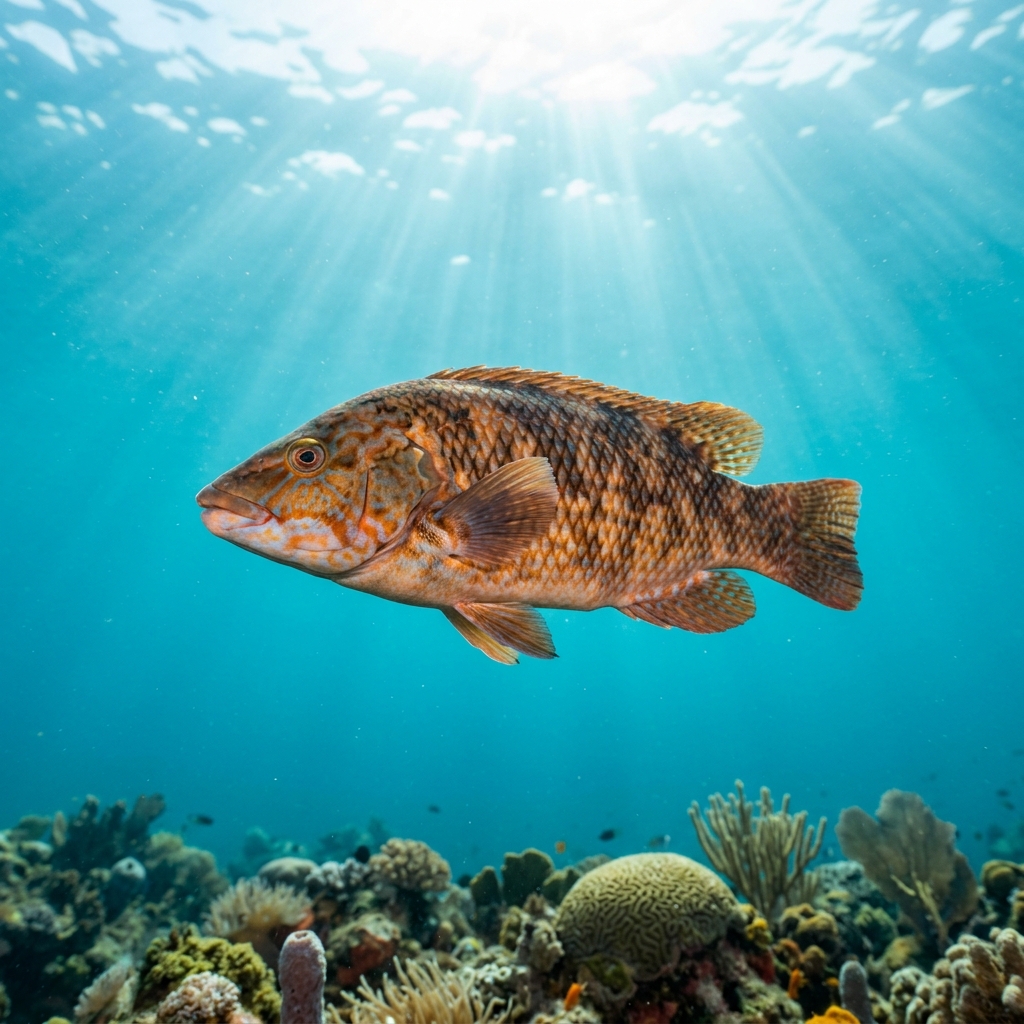
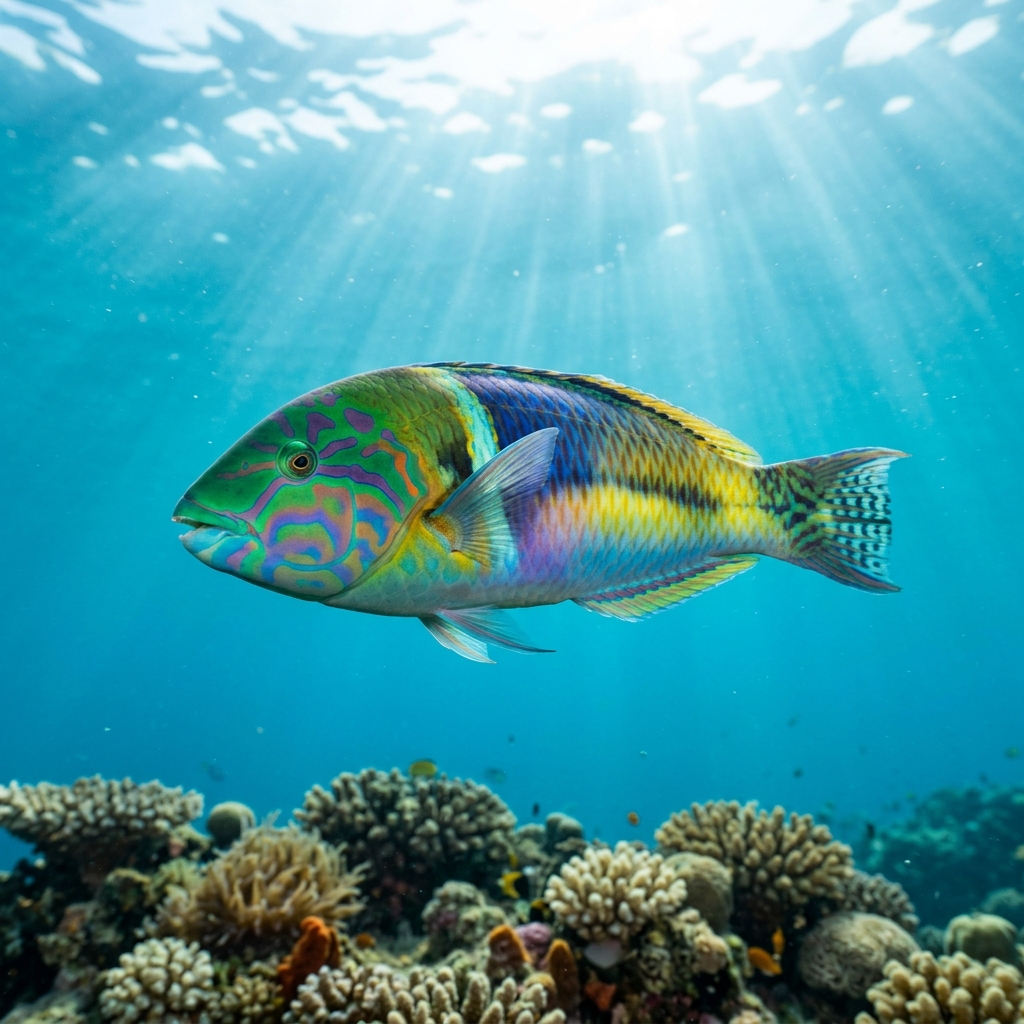
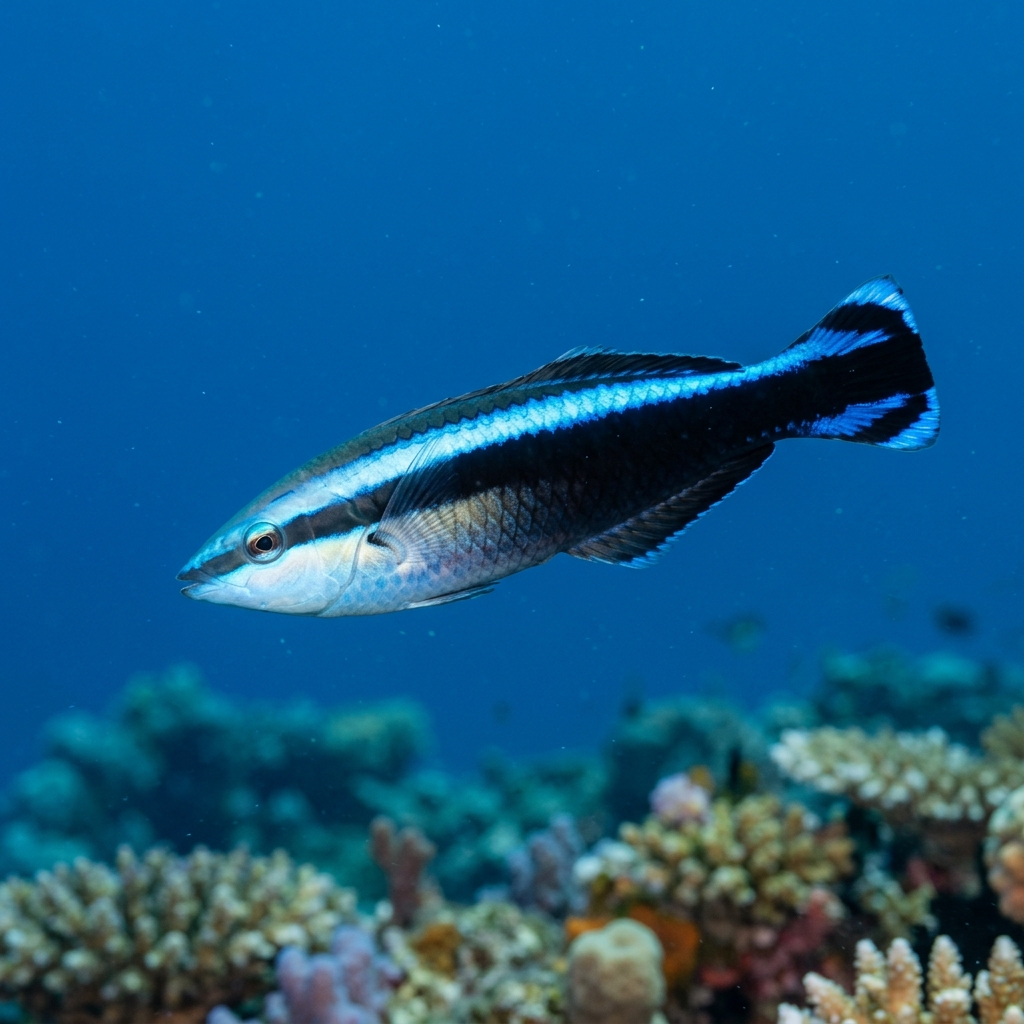
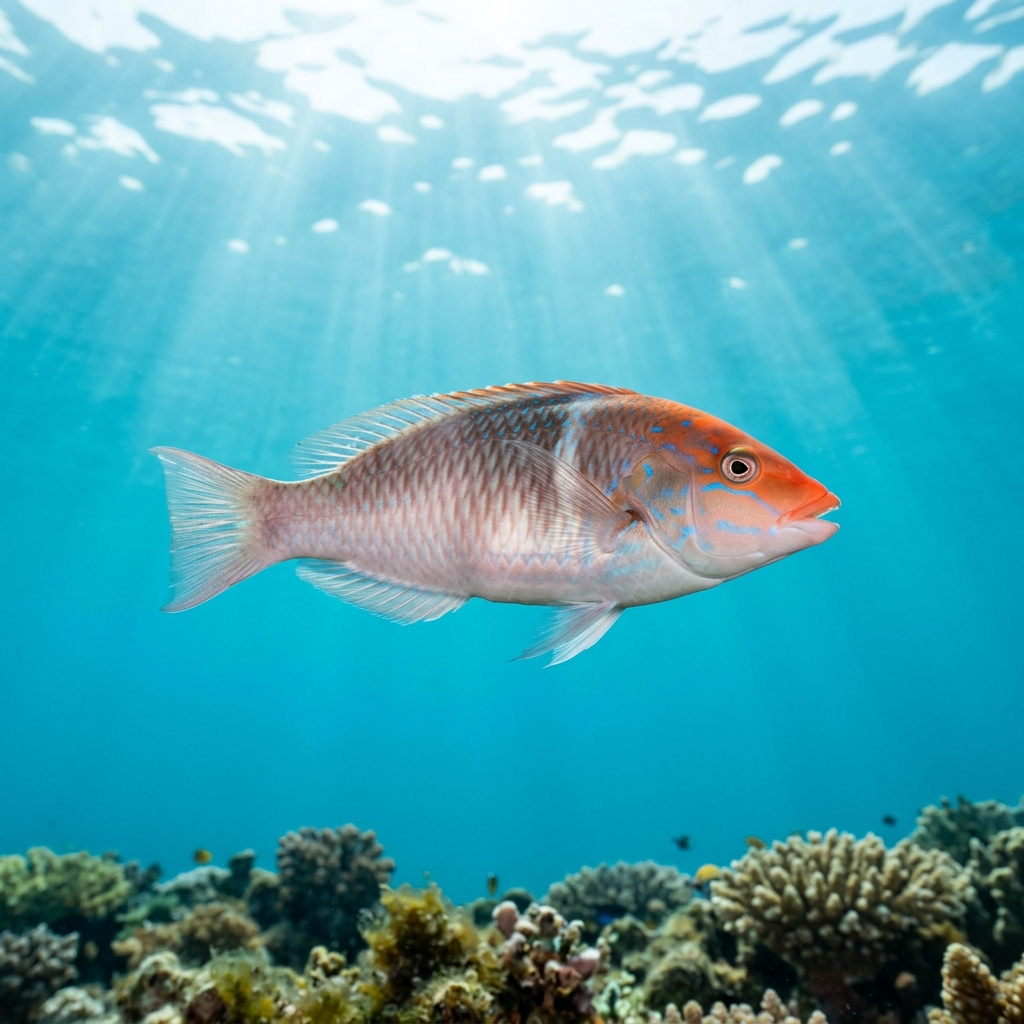
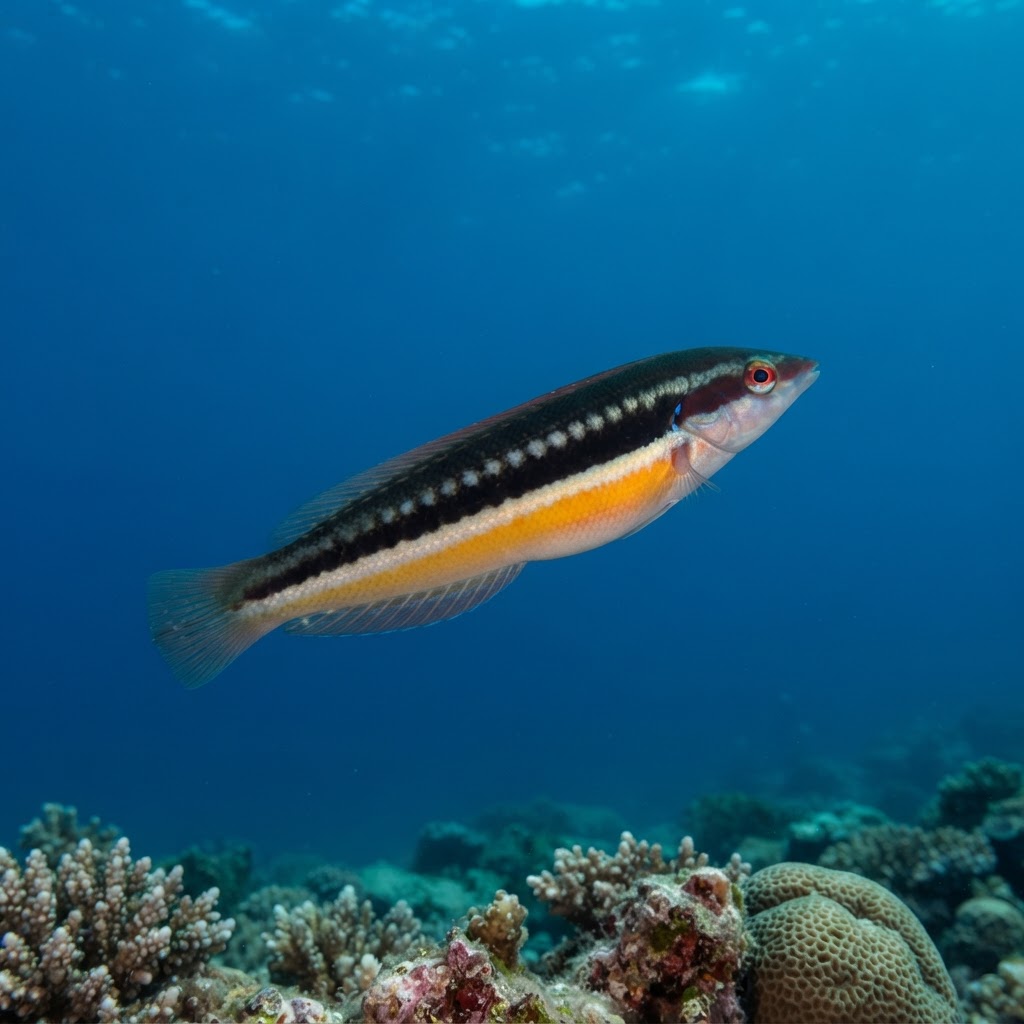
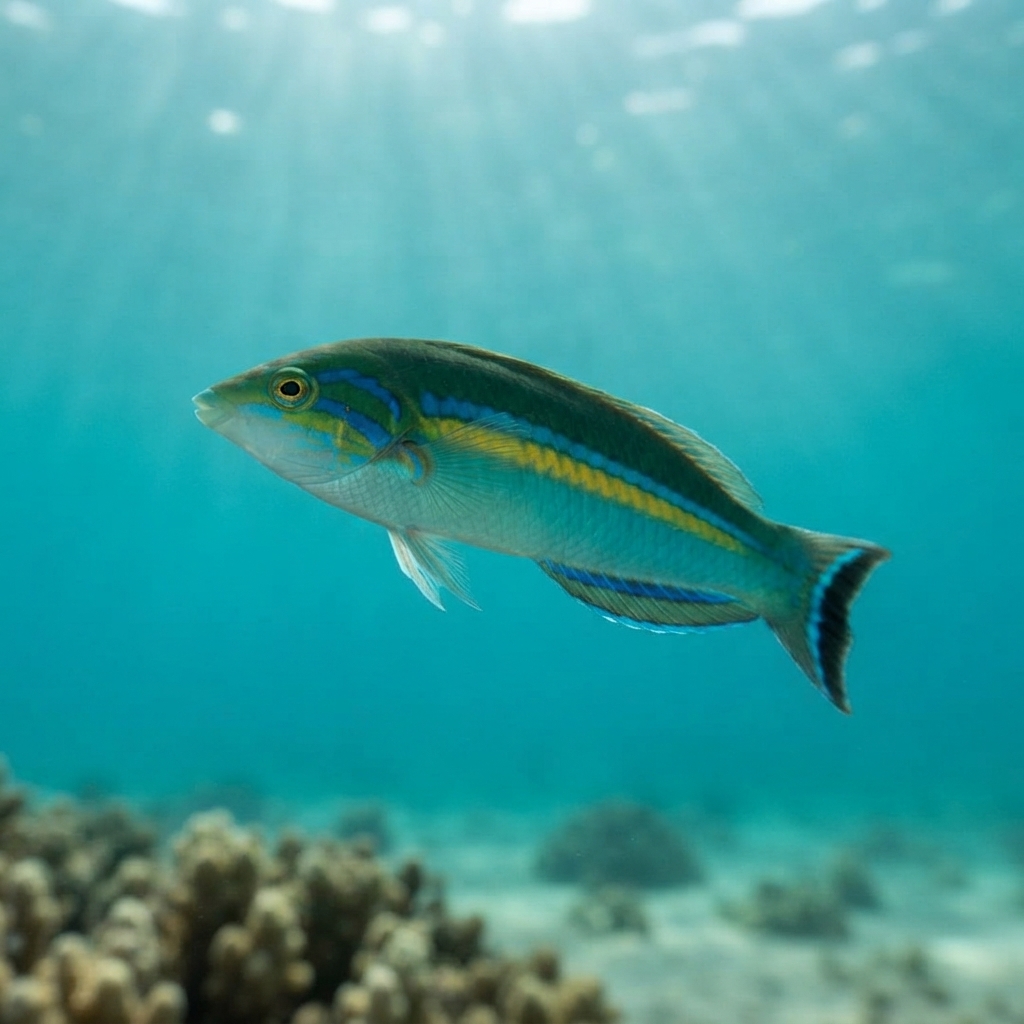
Look for a slim, pencil-shaped body only about 6 cm long, built for slipping between coral branches rather than cruising open water. Adults show a mix of blue-green tones with pink to orange markings along the flanks, a colour pattern typical of the pencil wrasse group. Its small size and narrow profile are the main giveaways, since it lacks the bulk or bold patterning of most other reef wrasses.
Expect brief glimpses rather than long observations, this is a small, quick-moving fish that darts low over rubble and coral patches while picking at tiny invertebrates. It tends to stay close to cover and does not linger for divers, so slow, careful approaches and a bit of patience improve your odds of a proper look.
Like other pencil wrasses, it likely changes sex and colour pattern as it matures, a trait common across the wrasse family where a dominant female can transform into a male.
No clear seasonal pattern shows up in the sightings, and with a comfortable range of 20 to 26.8C it appears to be present on Fijian reefs year-round.
Currently logged only in Fiji, with sightings concentrated in the Lomaiviti region. It is an uncommon find even at the sites where it does turn up, so treat any sighting there as a bonus rather than a guarantee.
Mapping where Splendid Pencil Wrasse is logged…
The only confirmed sightings so far come from Fiji, specifically the Lomaiviti region. It is not a species with a wide known range of dive sites yet, so encounters are limited to this area.
There is no strong seasonal pattern in the sightings, and its comfortable water temperature range of 20 to 26.8C suggests it can be found year-round on Fijian reefs.
Look for a small, slender fish around 6 cm long with a blue-green body and pink to orange markings, moving low and quickly over coral rubble. Its slim, pencil-like shape sets it apart from bulkier reef wrasses.
They stay small, typically reaching only about 6 cm in length, making them one of the more easily overlooked wrasses on the reef.
Yes, they are logged as uncommon even at the handful of sites where divers have recorded them, so spotting one takes a bit of luck and a careful eye.
Site and sighting data is aggregated from diver logs, iNaturalist and GBIF. For taxonomy and conservation status:
Bird Wrasse
3,632 sites