Sabellastarte magnifica
Spot Giant Feather-duster Worms across Caribbean reefs from Grenada to Roatán. A practical ID guide with seasonality, temperature, and top dive regions.
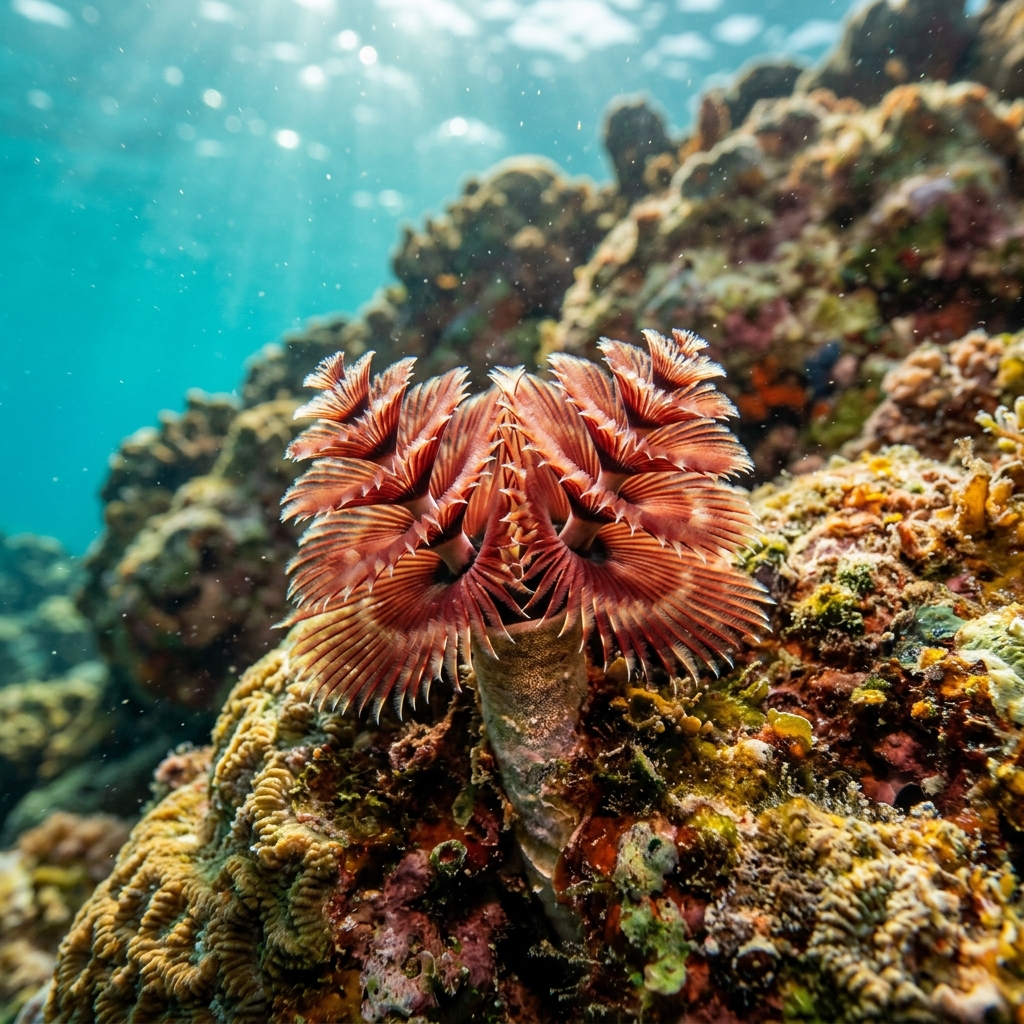
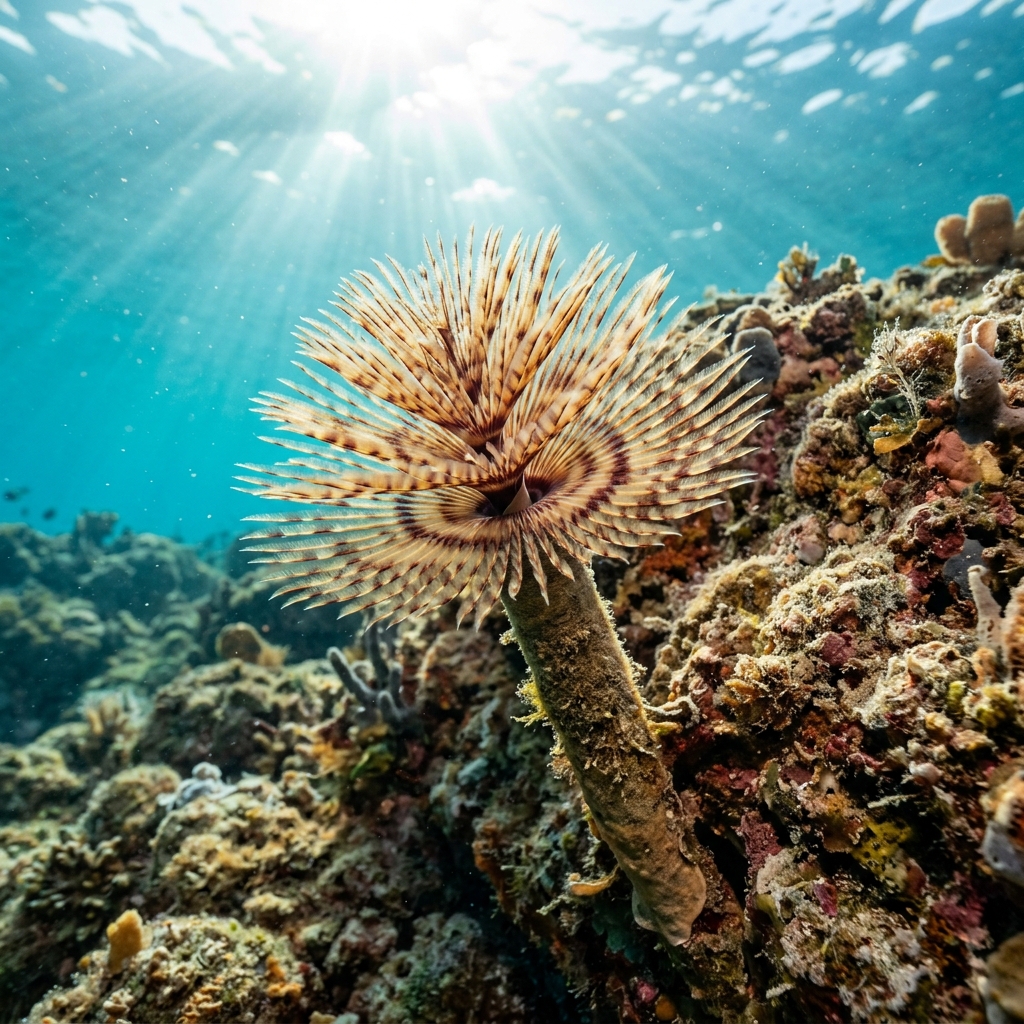
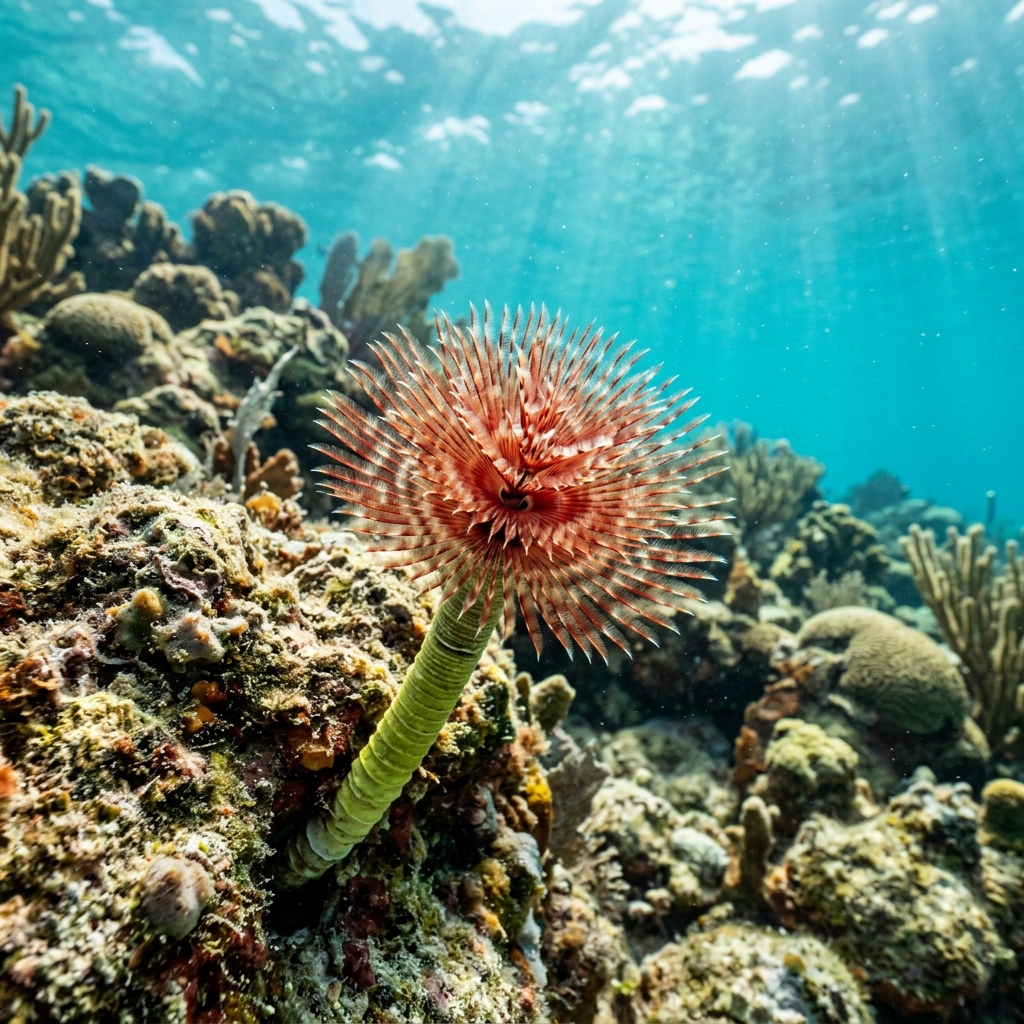
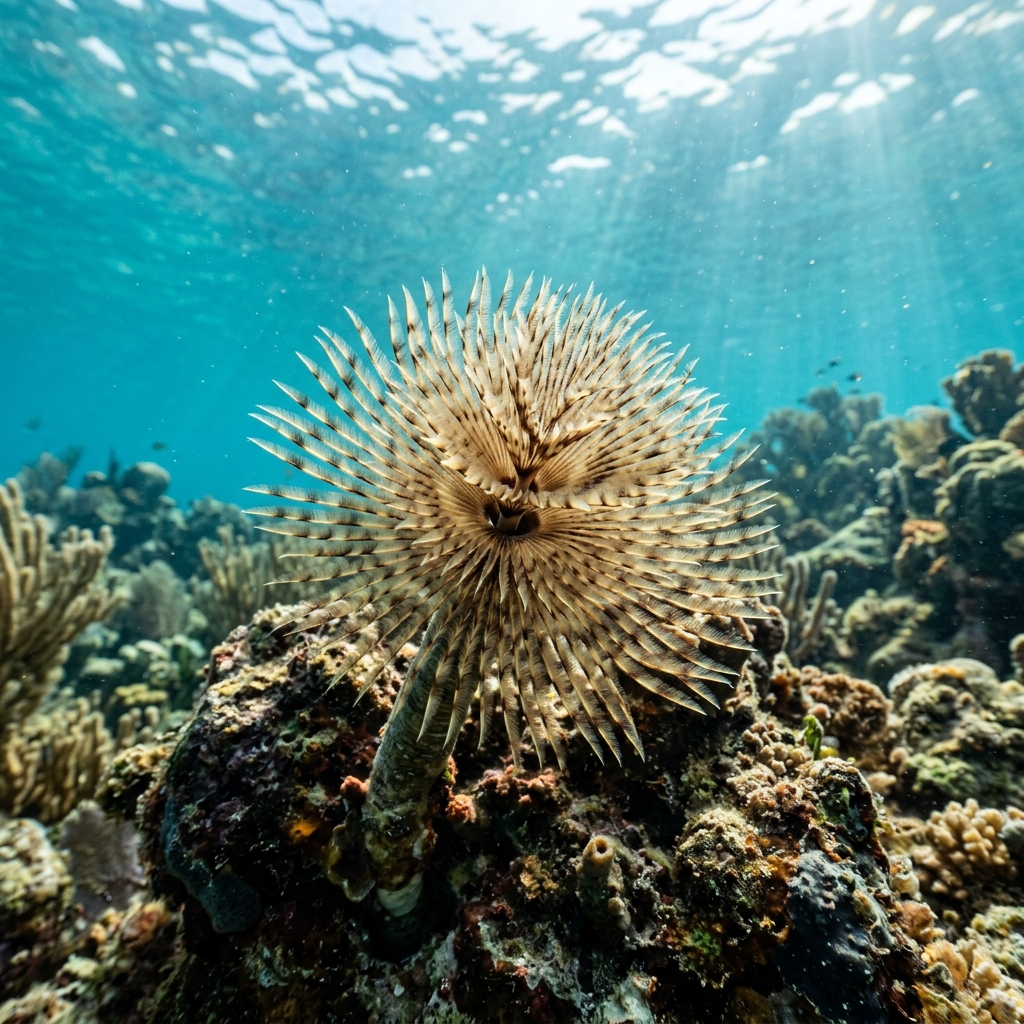
A large crown of feathery radioles (the fan-like feeding tentacles) is the feature you key on, fanning outward in a wide, even disc that can reach 15 cm or more across. Colouring is typically banded brown and white, though some individuals show cream, tan, or purplish tones. The tube itself is tough and parchment-like, often encrusted with sediment and debris, anchored to the reef or sandy rubble. If your shadow crosses it, the entire crown snaps shut in an instant.
You will almost always find it anchored in the same spot dive after dive, crown fully extended and slowly filtering plankton from the water column. It is extremely sensitive to movement and shadow; approach slowly and it may stay open long enough for a decent look, but any sudden motion sends the crown retracting into its tube in a fraction of a second. Look for it on the reef slope and in rubble patches, often in areas with mild current that delivers a steady food supply.
The crown is not just for feeding. It also functions as the worm's gill, exchanging oxygen directly with the surrounding water, so when the crown withdraws, the animal is temporarily cutting off both food intake and gas exchange at once.
In the Northern Hemisphere, sightings concentrate from December through August, covering the Caribbean's cooler and transitional seasons as well as peak dive tourism. The species is comfortable across a wide temperature range (roughly 19 to 29°C), so it persists on suitable reefs year-round rather than disappearing in any particular month.
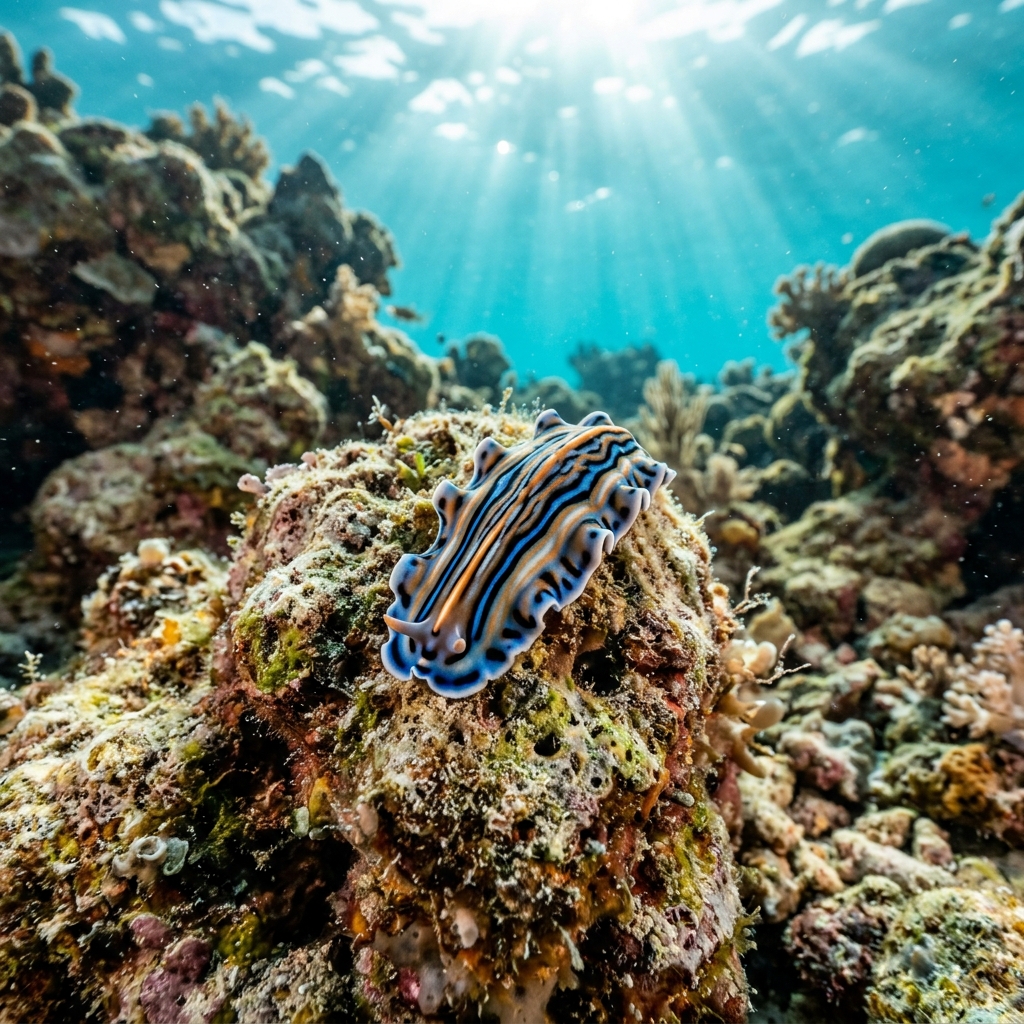
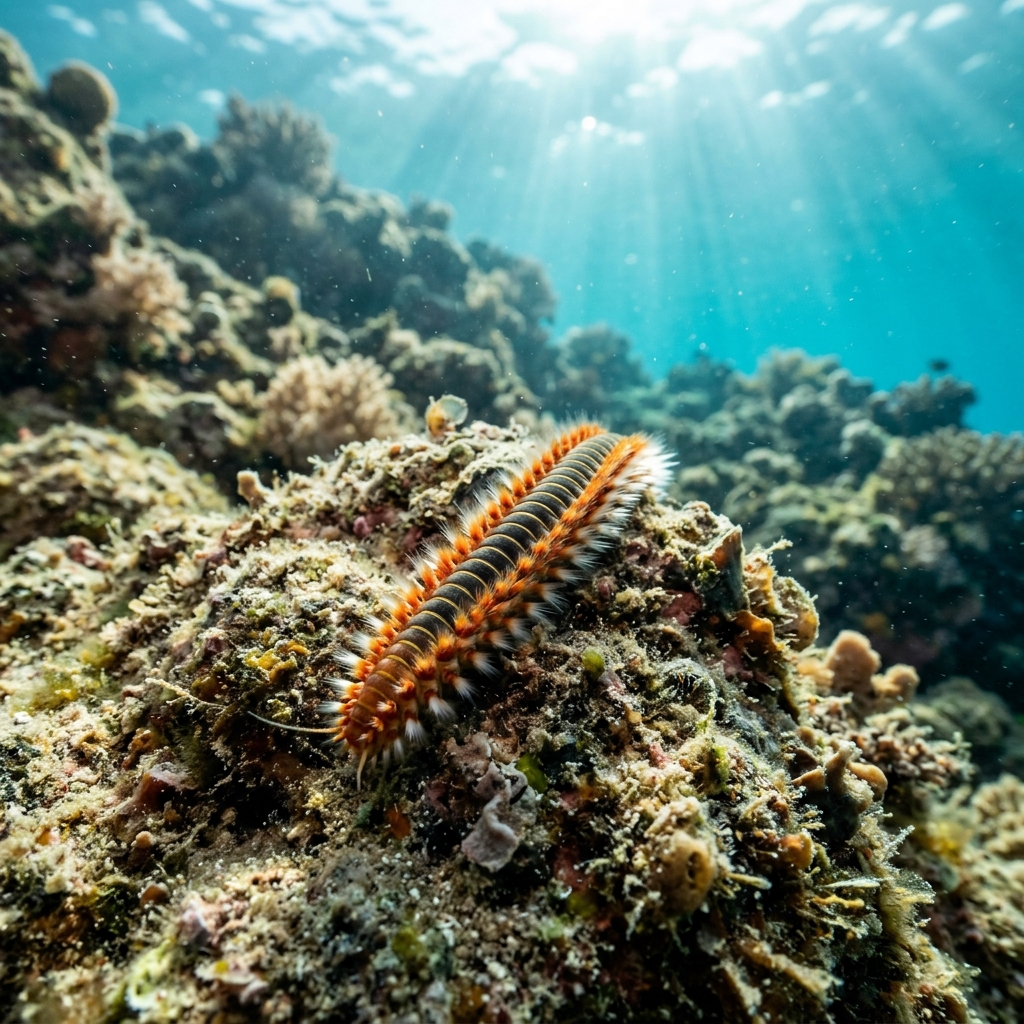
Reef neighbours a diver could mistake it for. Use the identification notes above to tell them apart.
Most logged across the Caribbean, with Grenada, the US Virgin Islands, Curaçao, and the British Virgin Islands topping the records. Strong populations are also reported along Colombia's Caribbean coast and around Roatán, Honduras. Outside the Atlantic, divers have recorded it in New South Wales, Australia, showing a broader Indo-Pacific presence worth noting.
Mapping where Giant Feather-duster Worm is logged…
The Caribbean is your best bet, with Grenada, the US Virgin Islands, Curaçao, the British Virgin Islands, and Roatán in Honduras all offering reliable sightings. Guadeloupe and Colombia's Caribbean coast are also well-represented. Divers in New South Wales, Australia have logged it too, so it turns up well beyond the Atlantic.
Northern Hemisphere sightings are most frequent from December through August, which covers peak Caribbean dive season. The species tolerates a wide temperature range, so it does not disappear outside those months, but that window is when divers log it most consistently.
Look for a large, circular fan of banded brown and white radioles extending from a rough, sediment-coated tube. The crown can span well over 10 cm. If anything startles it, the whole crown vanishes into the tube instantly, which is a giveaway in itself.
The radiole crown can extend to around 15 cm or more in diameter, making it one of the largest feather-duster worms on Caribbean reefs. The worm's body inside the tube is longer still, though you rarely see it.
The retraction reflex is one of the fastest in the invertebrate world, driven by rapid muscle contractions triggered by changes in light or water pressure. It is purely defensive, pulling the vulnerable feeding crown out of reach of any passing predator in a fraction of a second.
Site and sighting data is aggregated from diver logs, iNaturalist and GBIF. For taxonomy and conservation status:
Spirograph
2,752 sites