Sabella pavonina
Fan-shaped tentacle crowns in muddy harbours and estuaries, common across England, Scotland and Zeeland in cool 6-16C water.
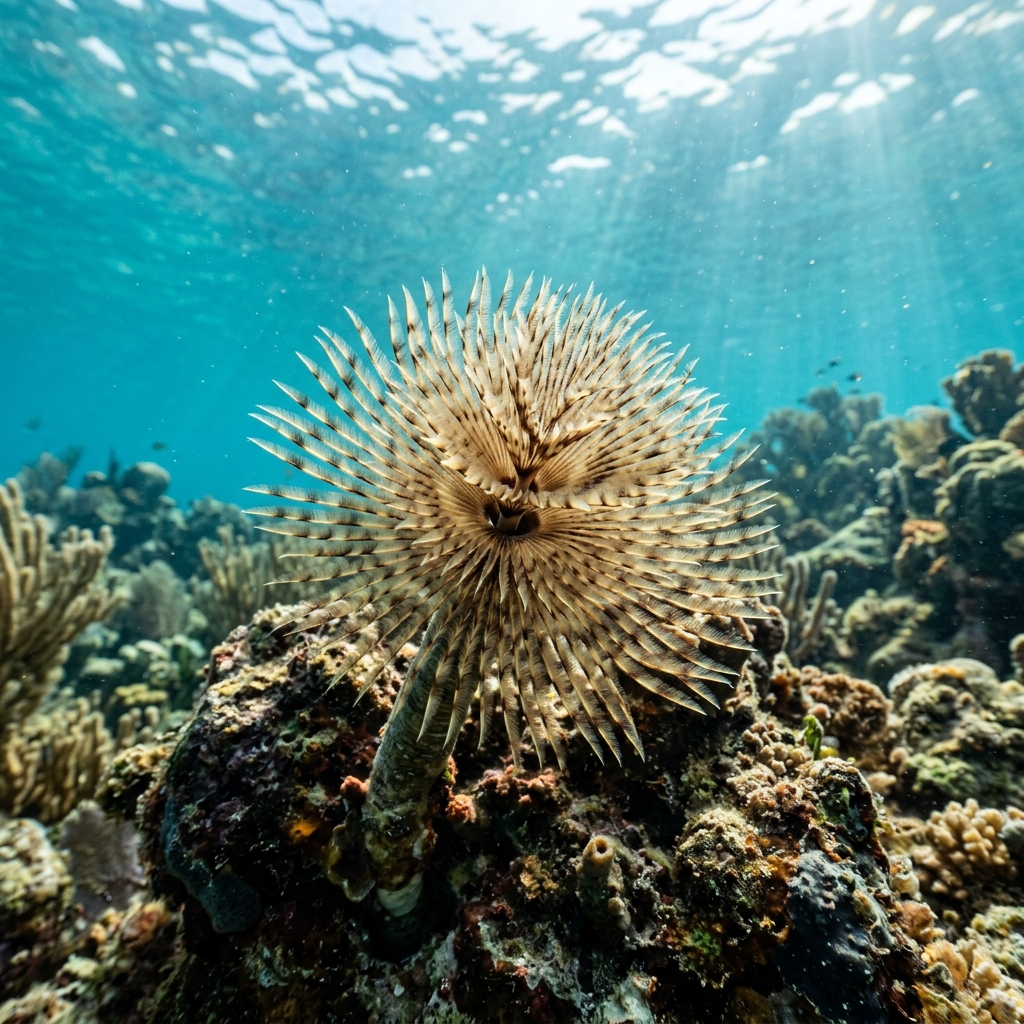
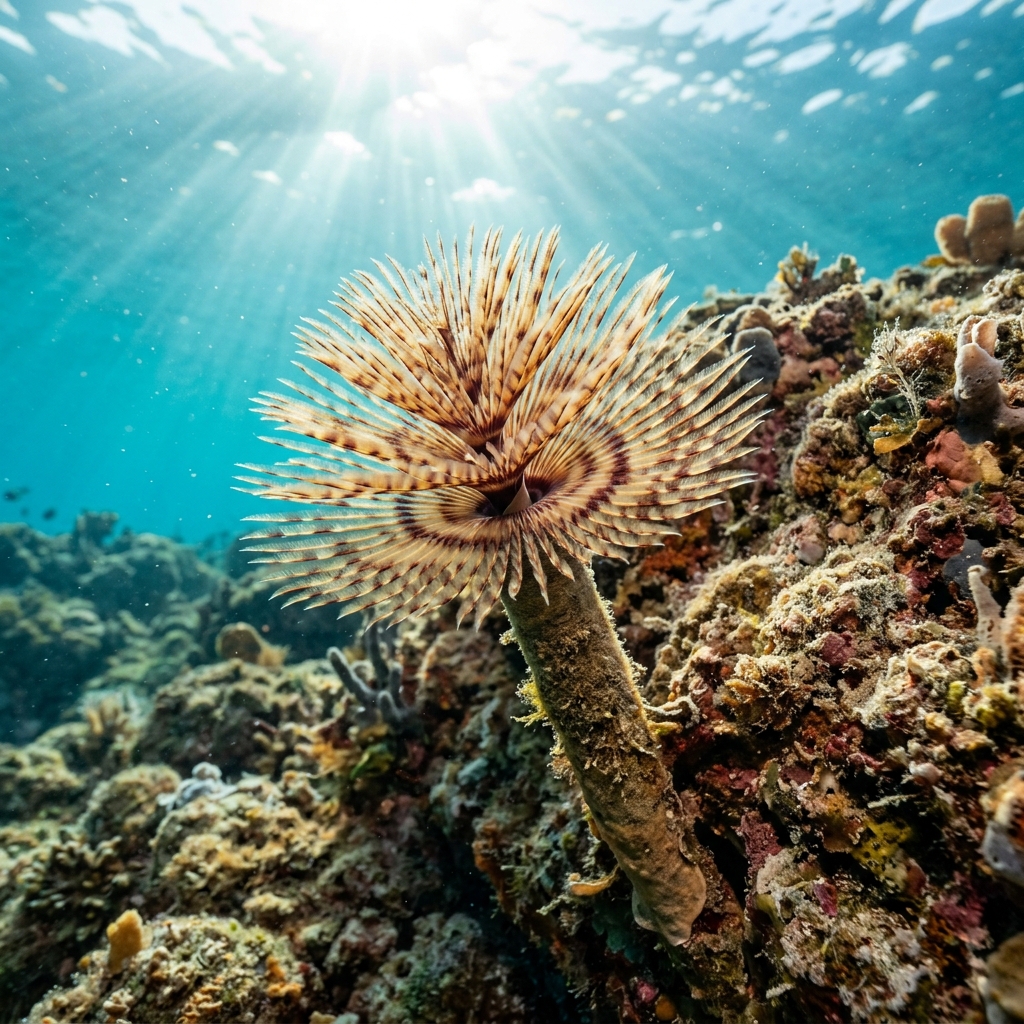
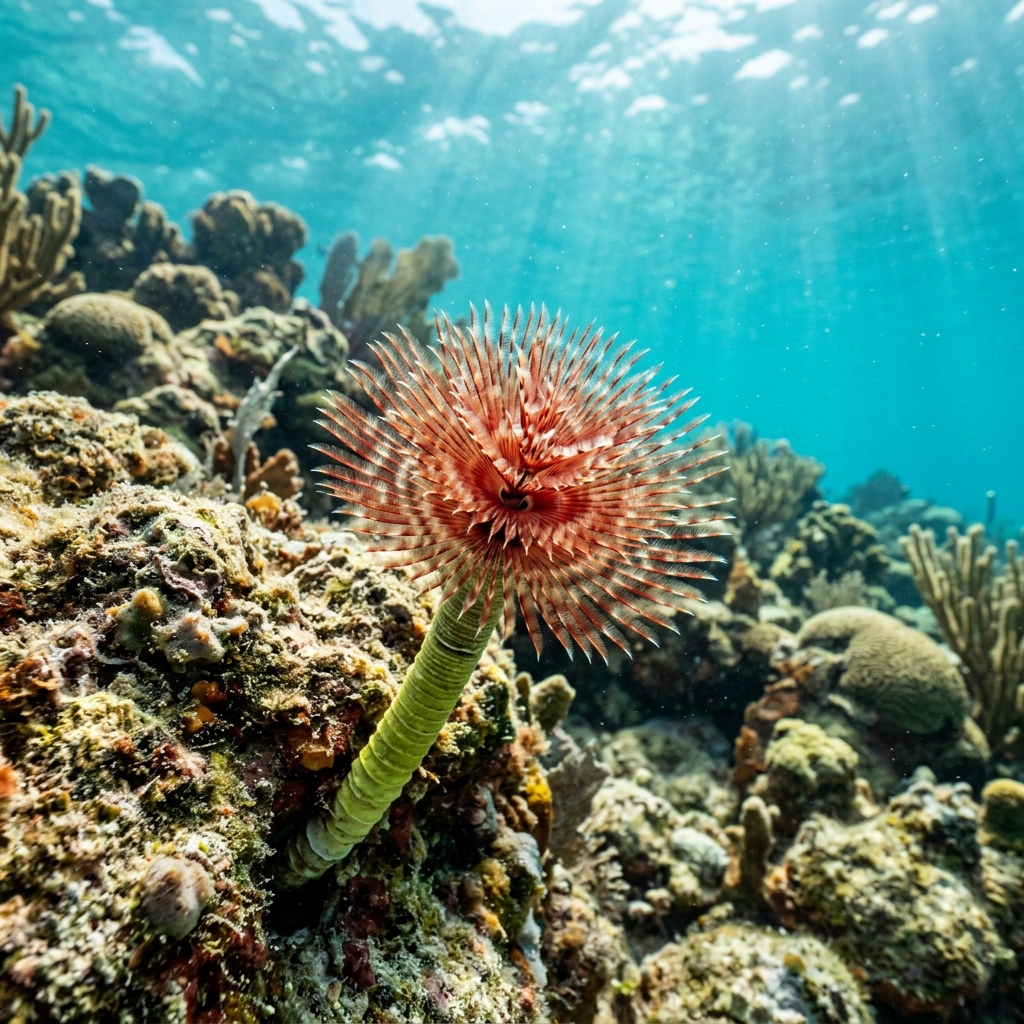
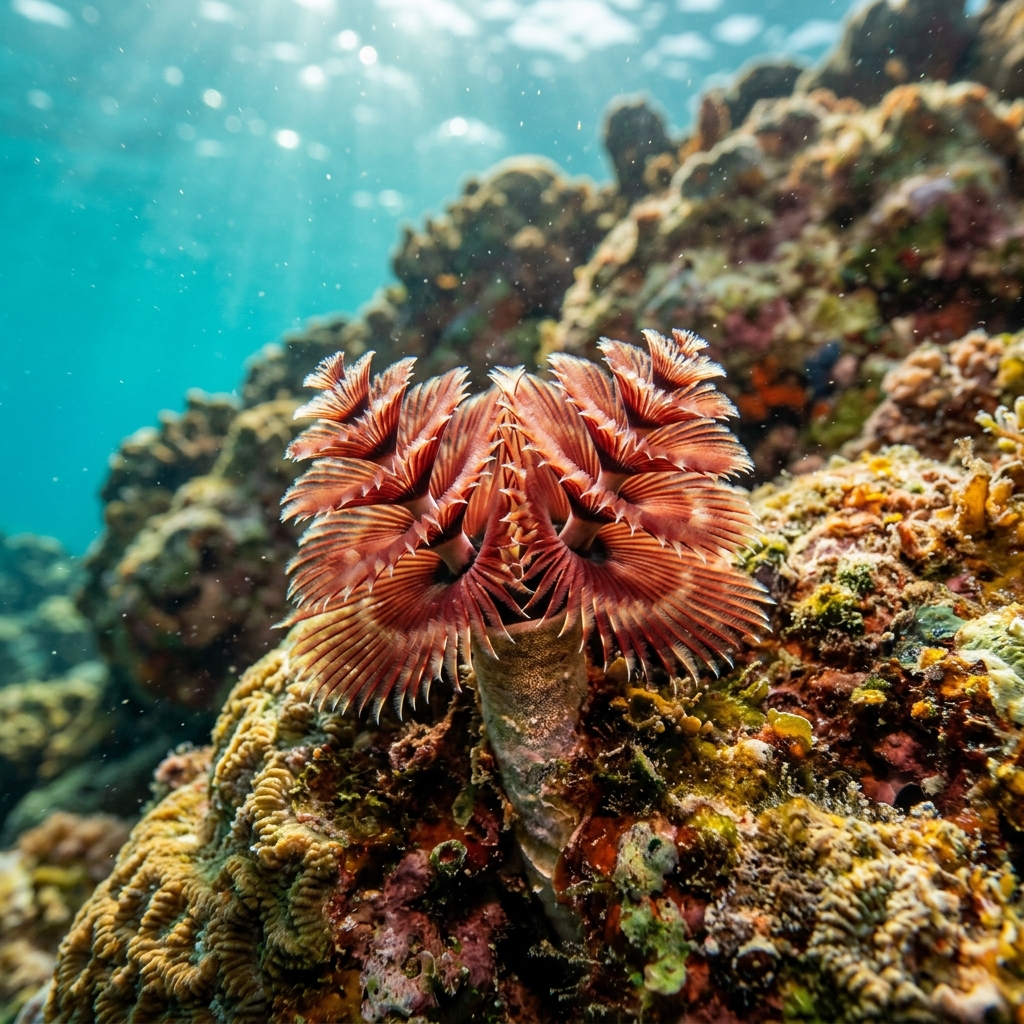
Look for a soft, feathery crown of tentacles fanned into a spiral, usually banded in maroon, purple or cream, sitting atop a thin tube that pokes up from mud or sand. The crown itself can span several centimetres across and is the only part you ever actually see; the worm's body stays hidden inside its tube. At the first hint of a shadow or fin wash the whole crown snaps shut and vanishes into the tube almost instantly.
Divers typically find them clustered in small groups on muddy or silty seabeds, harbour walls and estuary margins, crowns fully open and gently sieving the water for food. They are shy rather than defensive: get too close, kick up silt, or let a torch beam sweep over one, and the crown retracts into the tube in a fraction of a second. Give them a moment and undisturbed water and the fan will usually reopen, making them a good slow-approach subject for macro photography.
That feathery crown is doing double duty as gills and a feeding net, filtering tiny particles of plankton and detritus straight out of the water column rather than hunting or grazing.
Sightings show no clear seasonal pattern, and with a water-temperature niche running from about 6 to 16C it seems to sit tight through cool water conditions across the year, so any month is fair game on a UK or northern European dive.
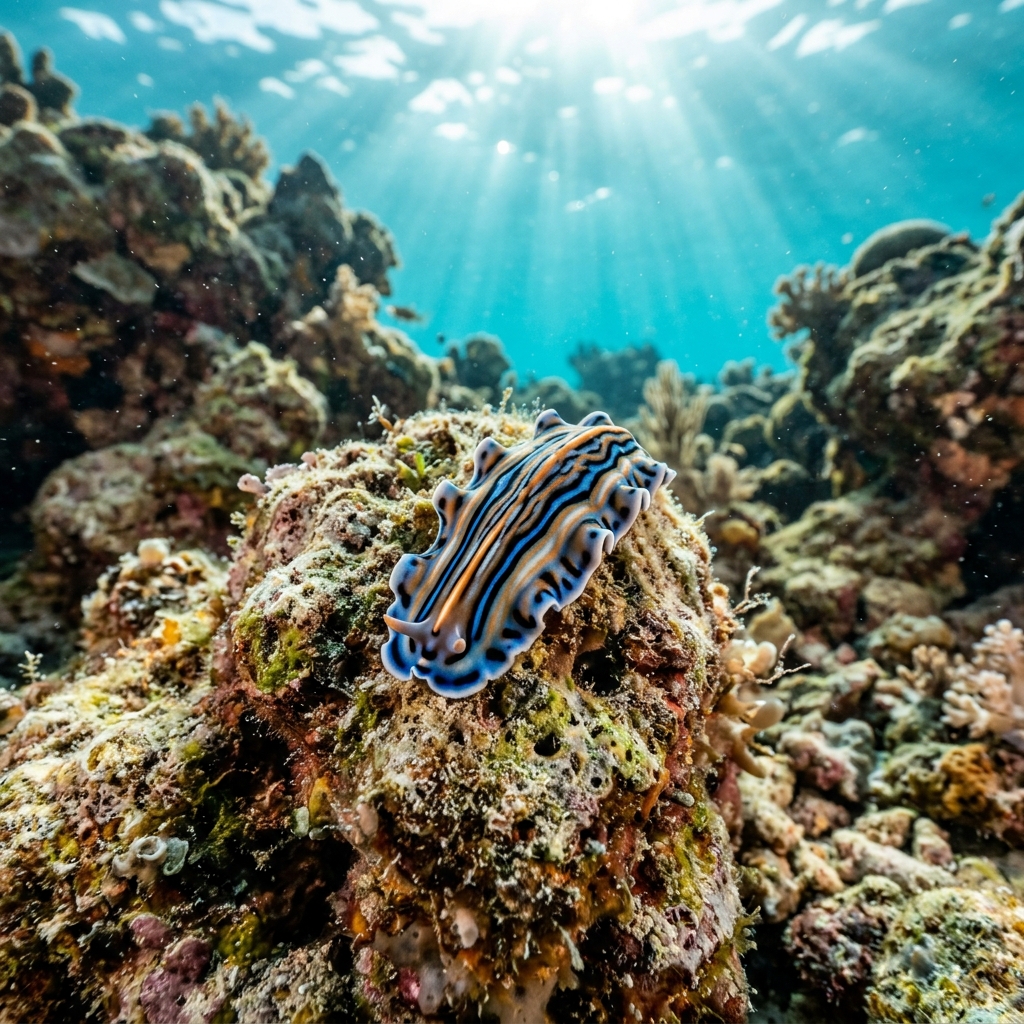
Reef neighbours a diver could mistake it for. Use the identification notes above to tell them apart.
Most reliably logged around the United Kingdom, particularly England and Scotland, with strong numbers also reported from Zeeland in the Netherlands, Brittany in France, and Schleswig-Holstein in Germany. It also turns up along the Bay of Biscay and around Zealand in Denmark and the Stockholm Archipelago in Sweden, wherever sheltered, silty or muddy ground gives it somewhere to anchor its tube.
Mapping where Peacock Worm is logged…
Best known from the United Kingdom, especially England and Scotland, with good numbers also in Zeeland in the Netherlands and Brittany in France. Look on sheltered muddy or silty seabeds rather than open reef.
There is no strong seasonal pattern in the sightings, and it tolerates cool water from around 6 to 16C, so it can be found year-round on UK and northern European dives.
Look for a spiral fan of feathery tentacles, often banded maroon or purple and cream, rising from a slim tube in mud or sand. The crown closes almost instantly if disturbed, leaving just the tube visible.
No, they pose no threat to divers. They are completely sessile, have no sting or bite, and simply retract into their tube if you get too close.
Its tentacle crown is not just for show, it acts as both gills and a feeding net, straining plankton and organic particles from passing water while also handling gas exchange.
Site and sighting data is aggregated from diver logs, iNaturalist and GBIF. For taxonomy and conservation status:
Spirograph
2,752 sites