Blepharipoda occidentalis
Uncommon but real: spiny mole crabs turn up on California dive sites in 12.9 to 18.9C water, year-round, no clear season.
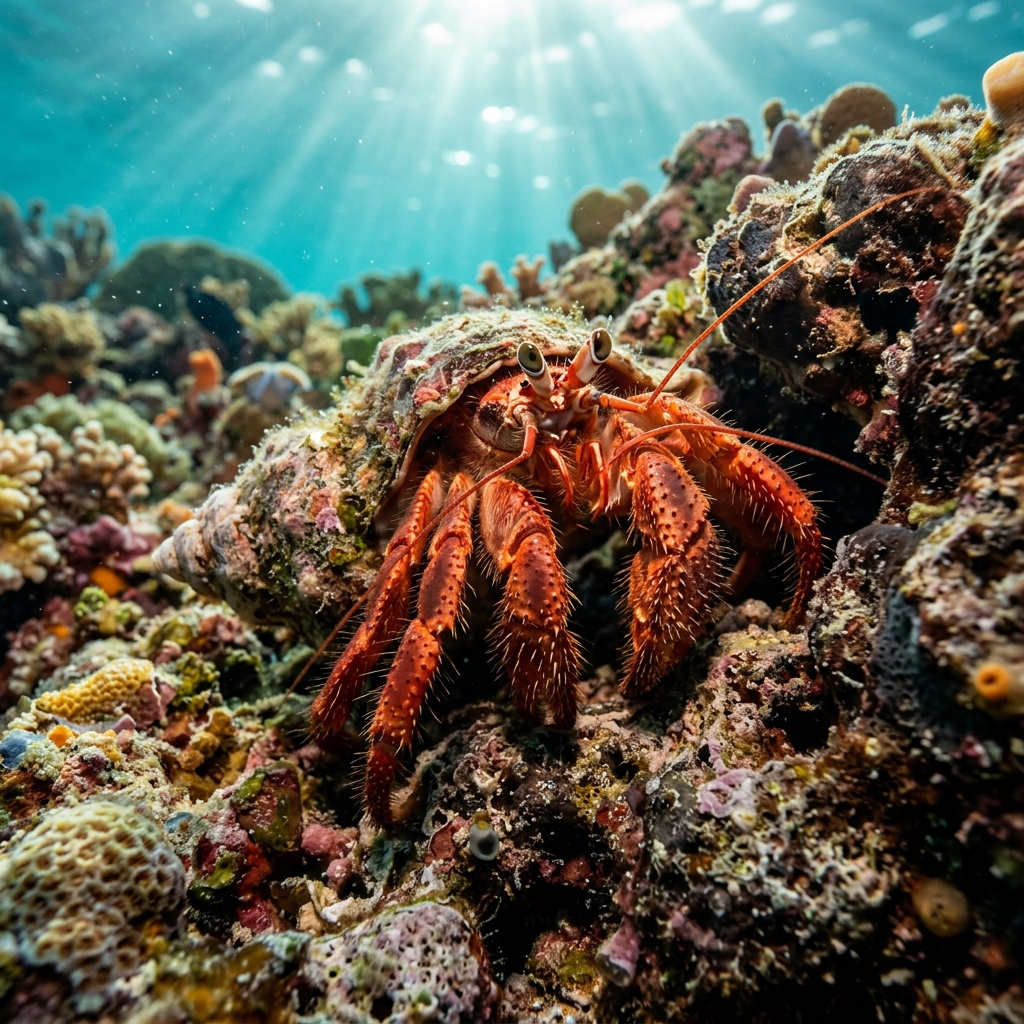
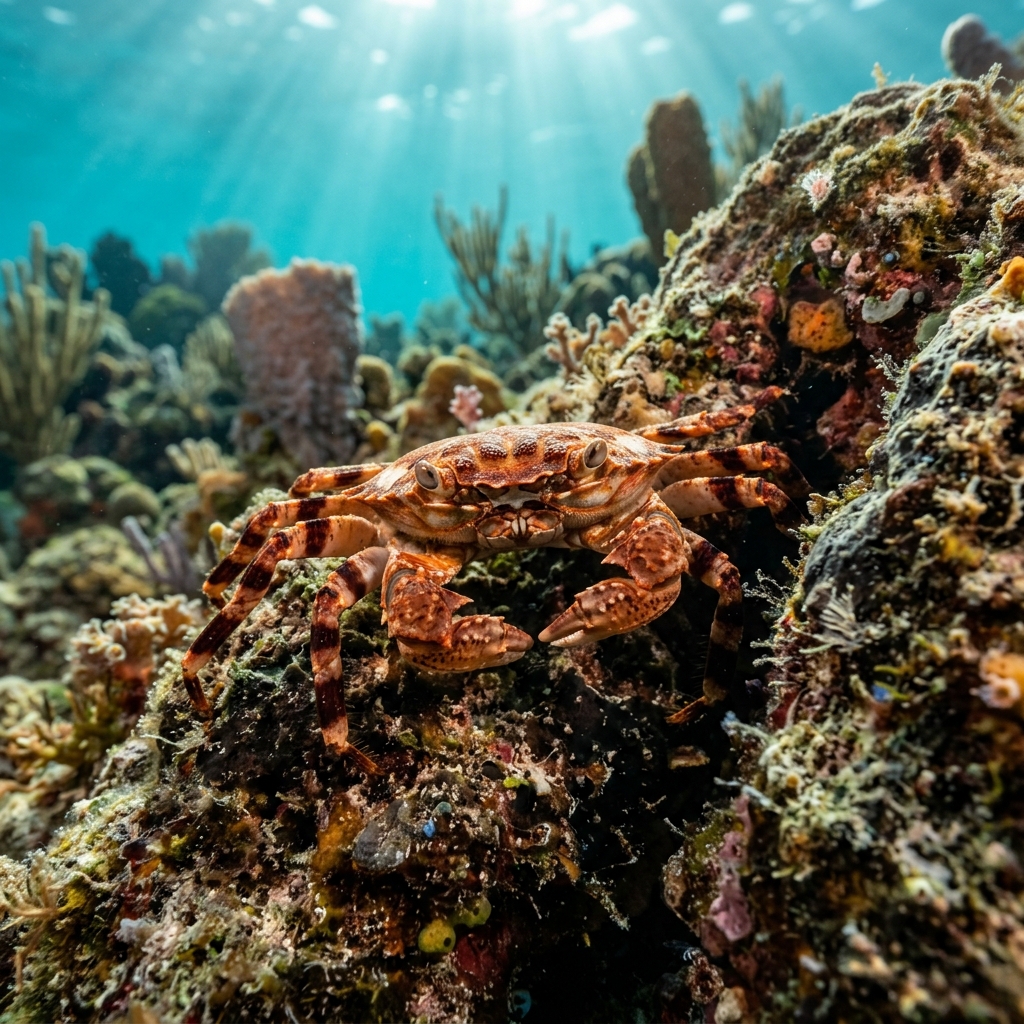
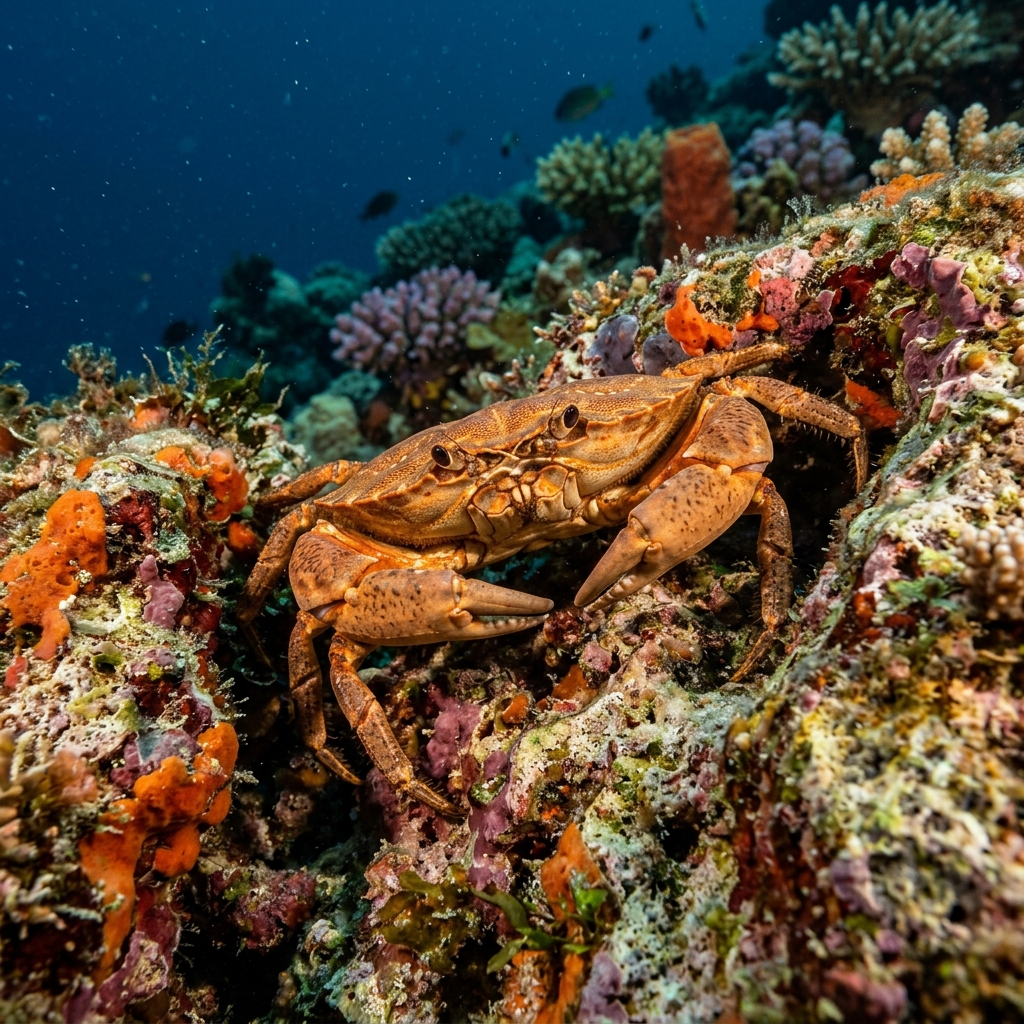
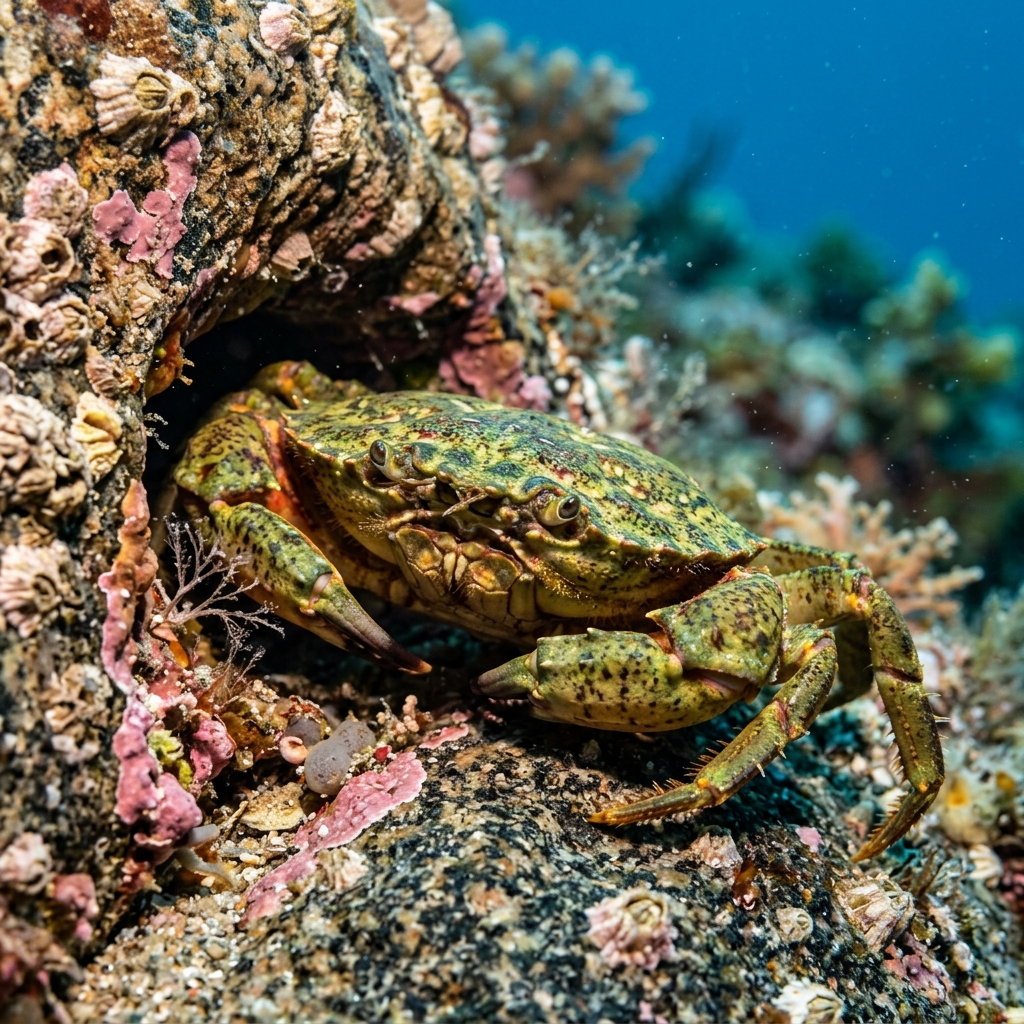
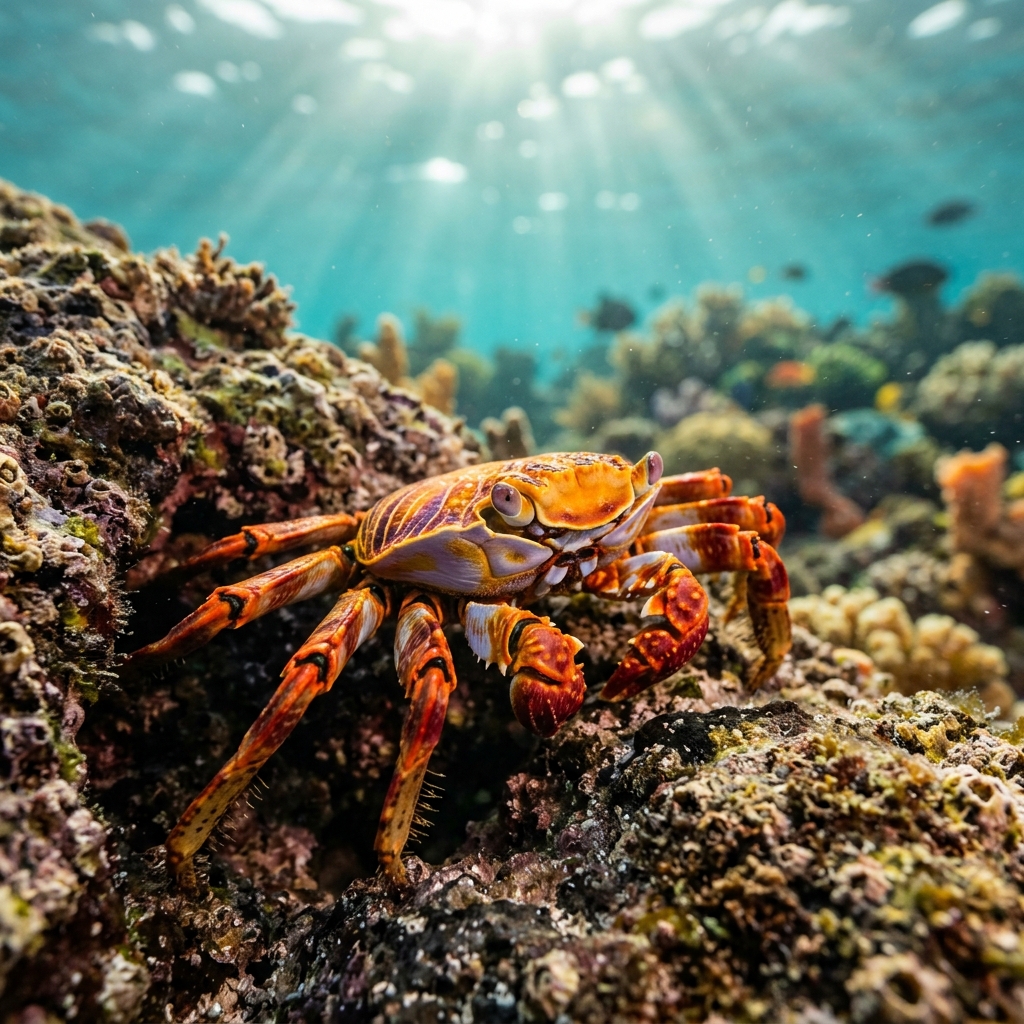
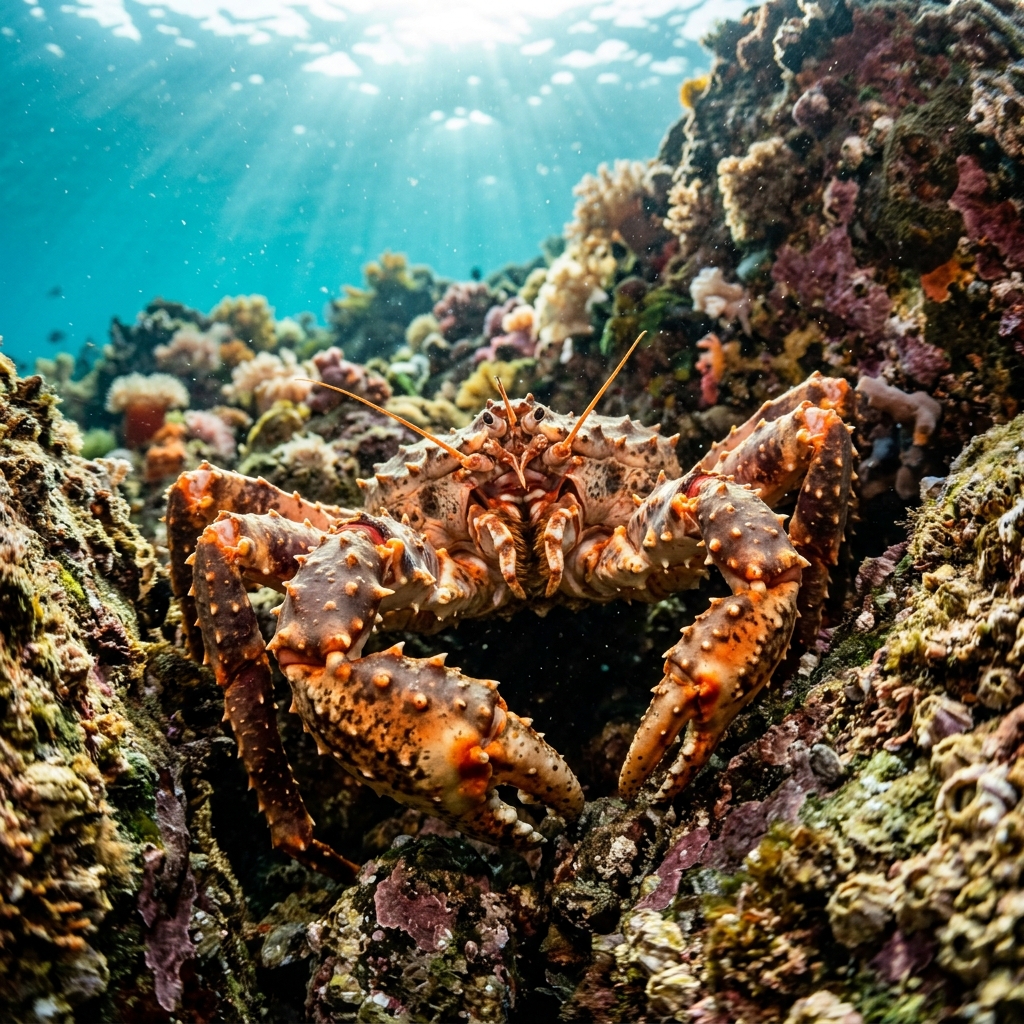
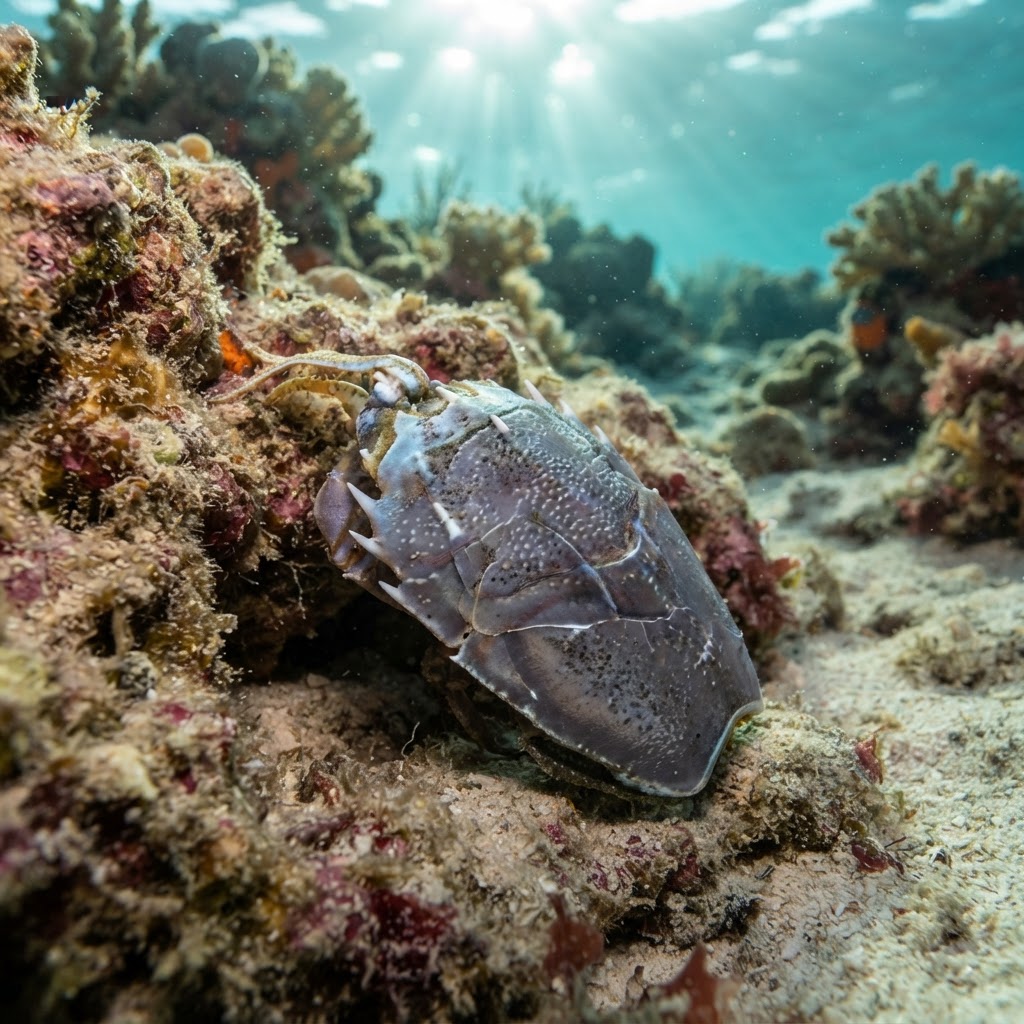
Look for a pale, sandy-tan carapace (shell) covered in short spines, broader and more armoured-looking than a typical hermit or swimming crab. It sits low, often partially dug into sand or gravel with only the spiny back and eyestalks showing. Legs are adapted for burrowing rather than swimming, so you will not see it paddling through open water like a swimming crab.
Divers mostly find it partly buried in sand or fine gravel, staying still and relying on its spiny, sand-toned shell to blend in rather than fleeing. It is not a swimmer in the water column, so encounters happen close to the substrate, usually while scanning sandy patches between reef or rock structure. It shows little reaction to divers beyond staying put or working itself deeper into the sediment.
Its spiny, robust shell and burrowing habit are built for holding position in shifting sand and surge, rather than for defence against divers or predators through speed.
Sightings do not show a clear seasonal pattern, so treat it as a year-round possibility on Californian dive sites. Its recorded temperature range of 12.9 to 18.9C matches typical California coastal conditions across most of the year.
Every logged sighting in the data comes from California, USA, making it the place to look if you want a shot at this one. Sites there report it as uncommon at most locations and rare at a few, so treat it as a bonus find rather than a target species.
Mapping where Spiny Mole Crab is logged…
All confirmed sightings come from California, USA, where it turns up as an uncommon to rare find on sandy sections of dive sites rather than a guaranteed encounter.
There is no strong seasonal pattern in the sighting data, so it is best treated as a year-round possibility in California waters within its typical 12.9 to 18.9C range.
Look for a pale, spine-covered shell sitting low and half-buried in sand, with little of the body visible above the substrate. It lacks the paddle-like swimming legs of true swimming crabs and stays put rather than darting away.
No, they pose no danger to divers. They are small, sediment-dwelling crabs that rely on staying hidden rather than any defensive behaviour.
Its body and legs are shaped for burrowing into sand rather than crawling or swimming, which is why most sightings are of a mostly buried animal rather than one out in the open.
Site and sighting data is aggregated from diver logs, iNaturalist and GBIF. For taxonomy and conservation status:
European Green Crab
2,469 sites