Acanthochromis polyacanthus
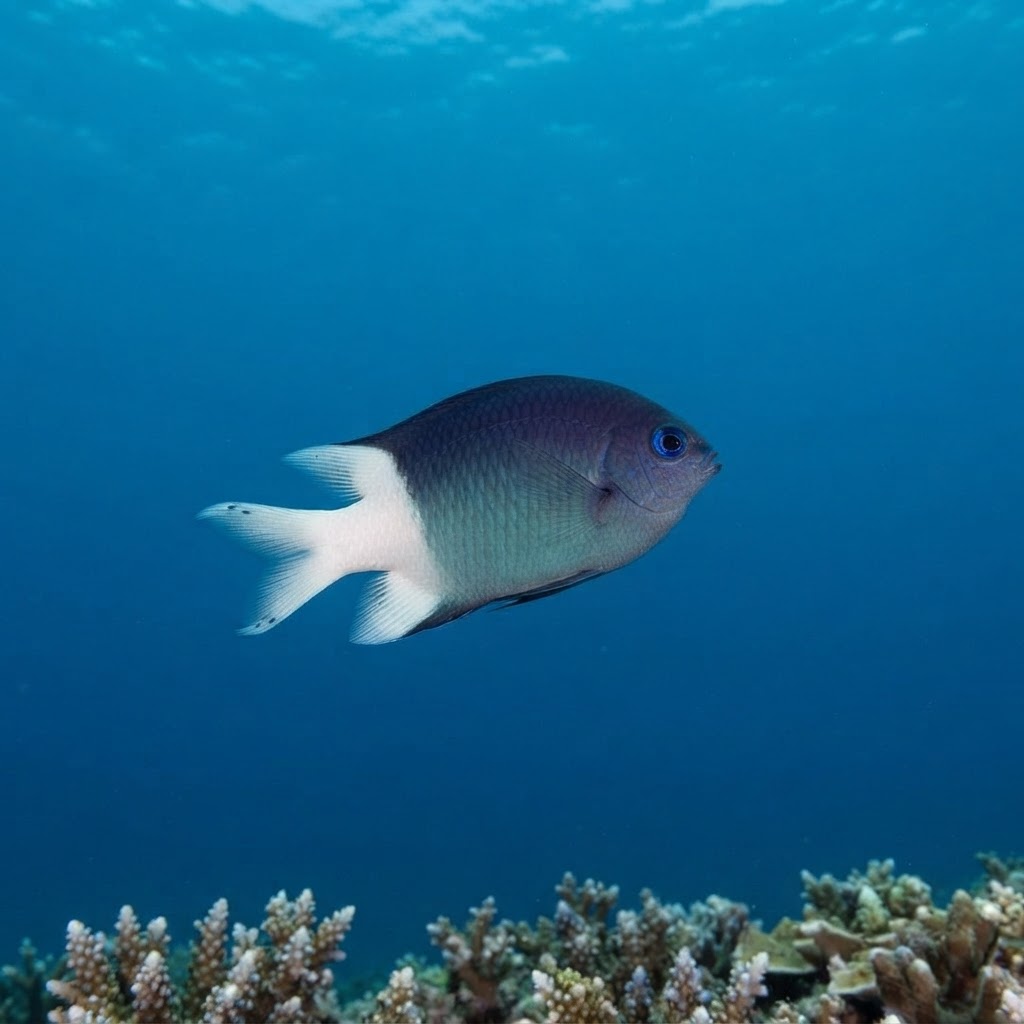
A dusky reef damselfish with a pale saddle, common on reefs in Queensland and Sulawesi in 25-29 C water year-round.
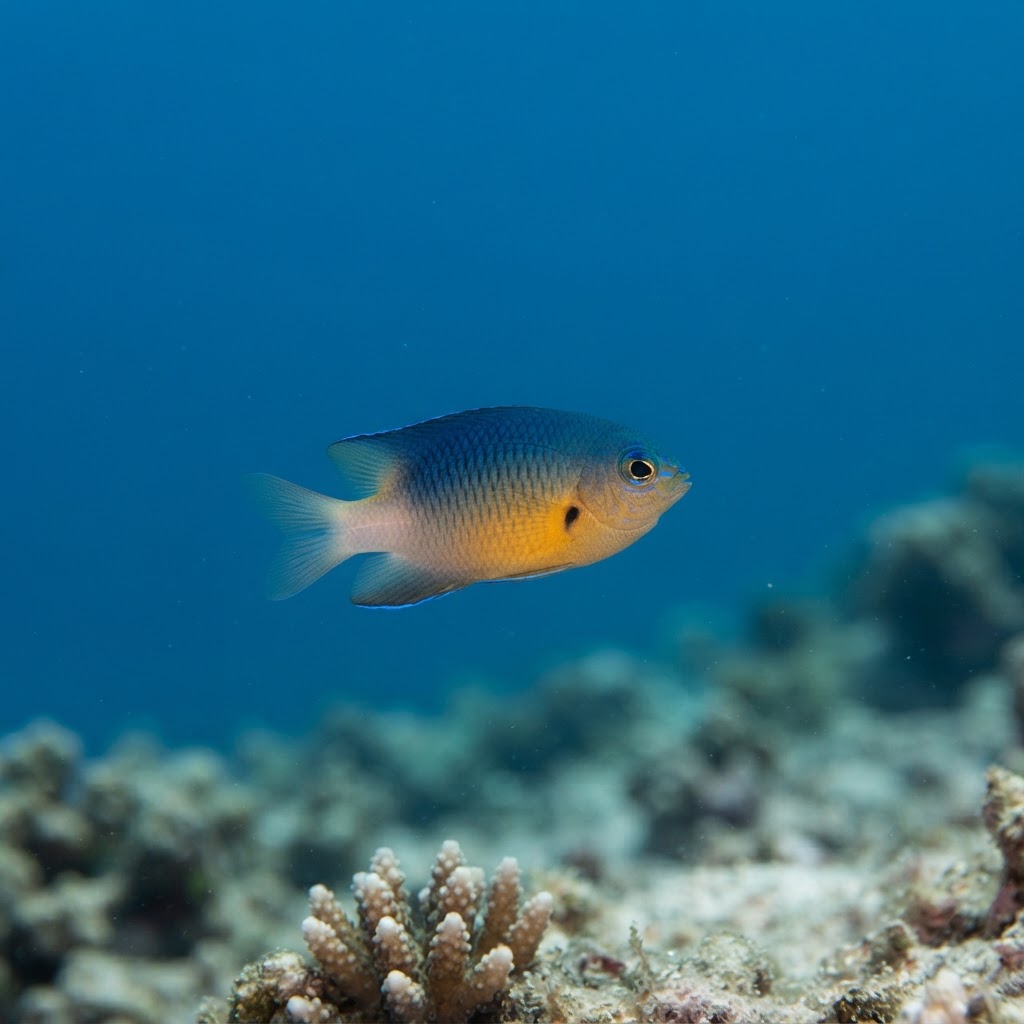
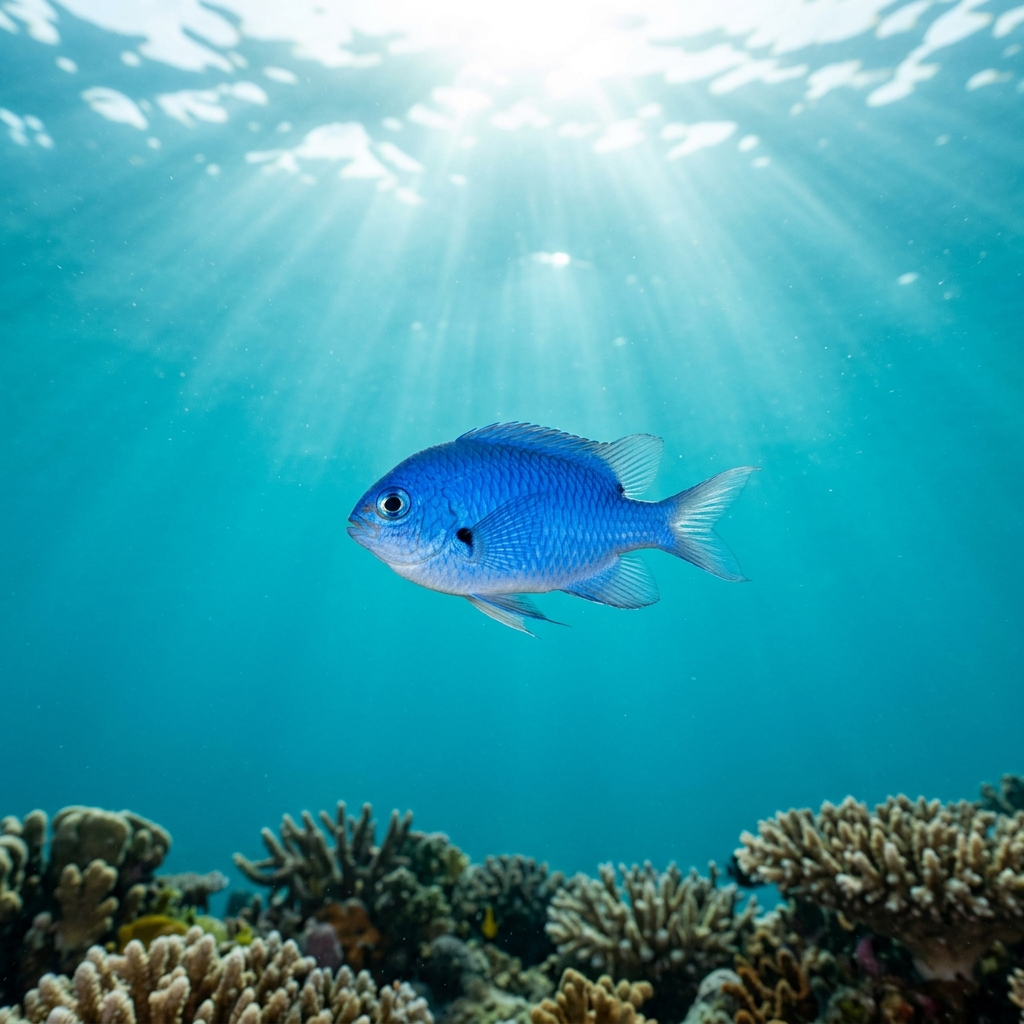
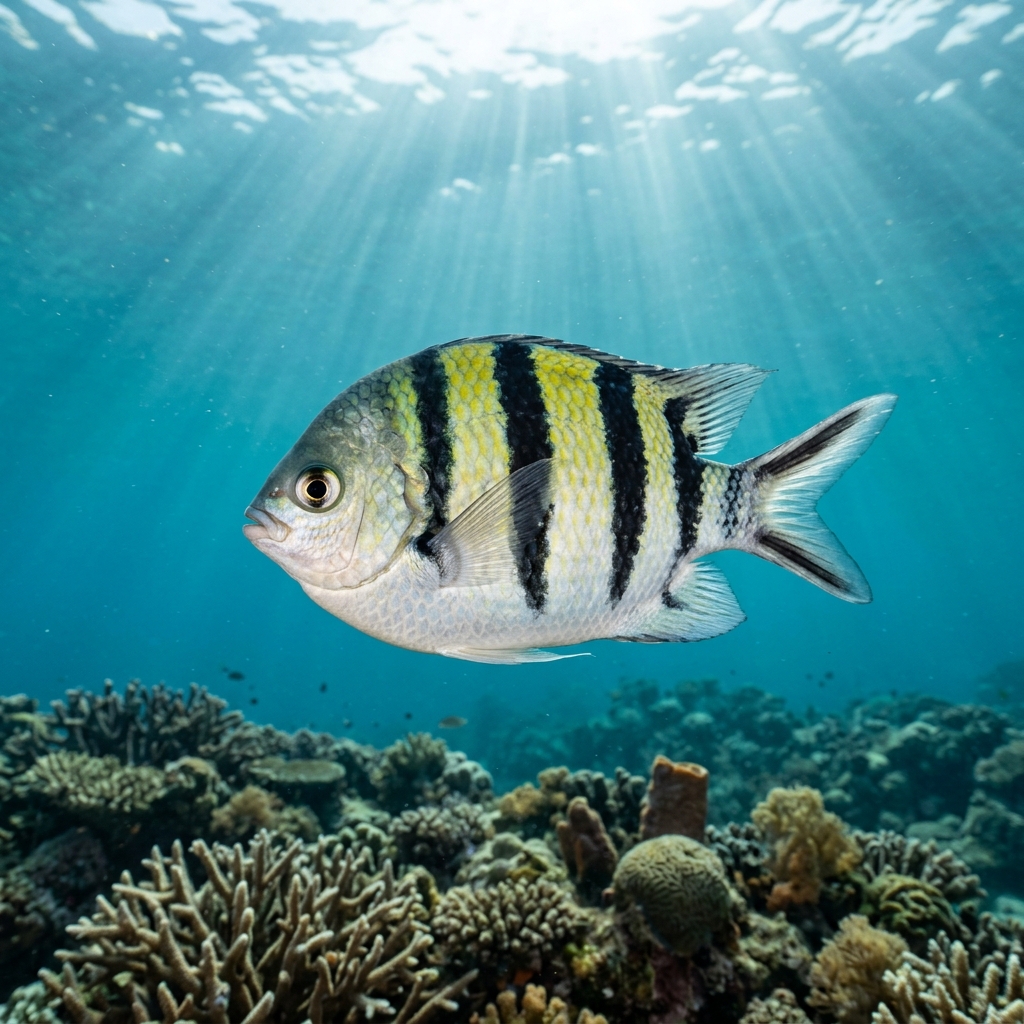
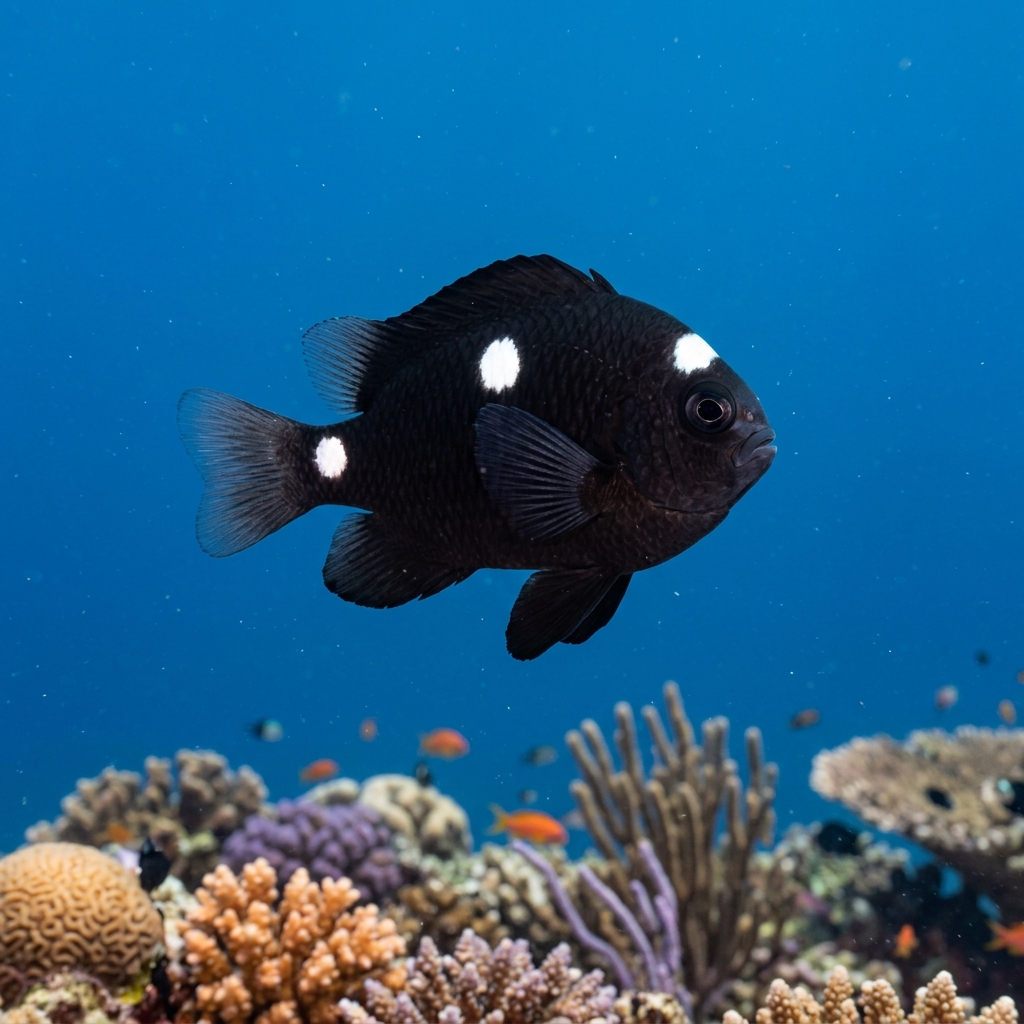
A small, deep-bodied damselfish around 11 cm, usually dark grey to brownish-black overall with a paler, sometimes whitish, saddle patch just behind the head. The body is oval and slightly flattened side-to-side, with a blunt head and continuous dorsal fin typical of damselfish. Juveniles often show a more contrasting pale band than adults, and colouring can darken with age, but there's no dramatic sex difference to key on underwater.
Look for it hovering in small, loose groups close to coral heads or rubble patches, rarely straying far from a home patch of reef. It's not particularly shy but tends to hold station rather than approach divers, often staying at mid-depth over the reef rather than tight to the bottom or up in open water. Most sightings are logged as uncommon rather than common, so it's the kind of fish you notice on a slow, careful pass rather than one that swarms a site.
Unlike most damselfish, spiny chromis skip the usual pelagic larval drifting stage entirely: parents guard a batch of eggs on the reef and the young hatch directly into juvenile-like fish that stay near the nest site, with both parents defending them for several weeks.
No clear seasonal pattern shows up in the data, and with a comfortable range of about 25 to 29 C it's present on these reefs year-round. Plan around good conditions at your chosen site rather than chasing a season for this fish.
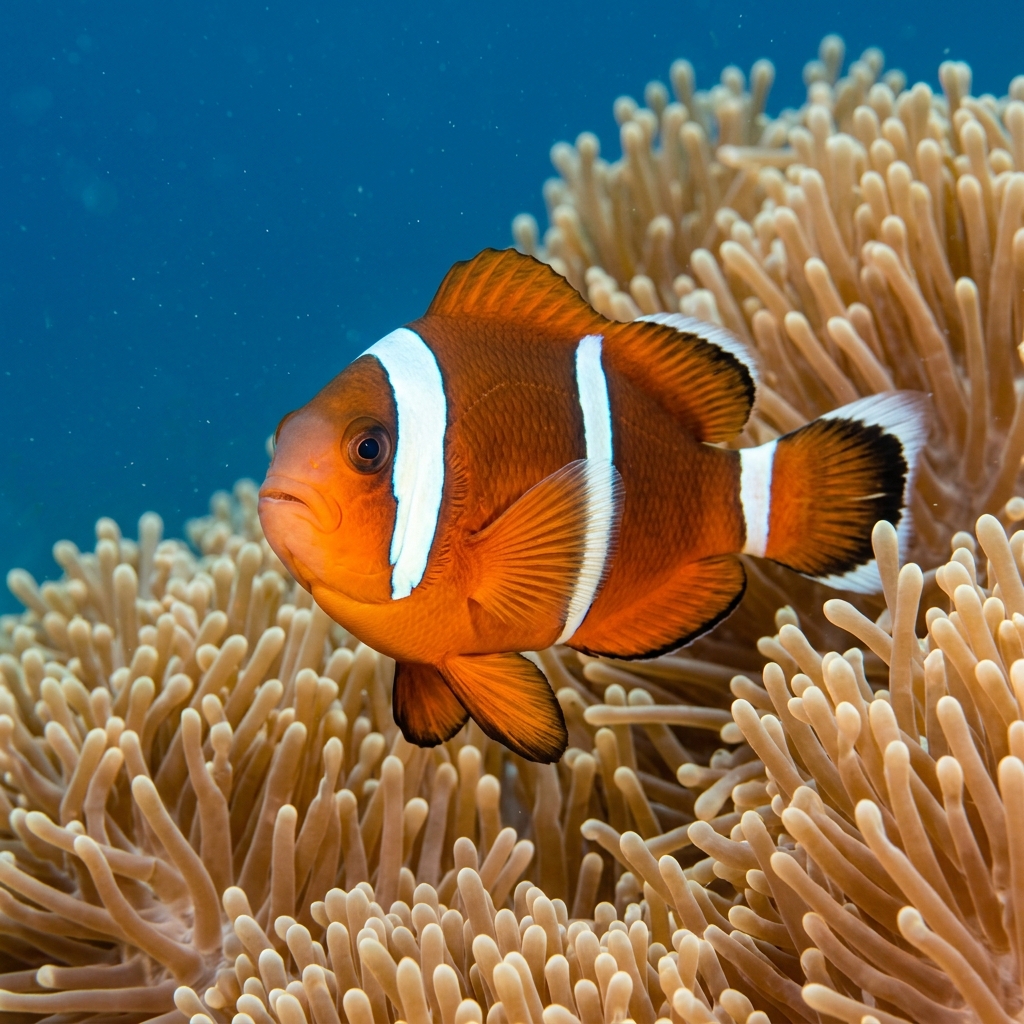
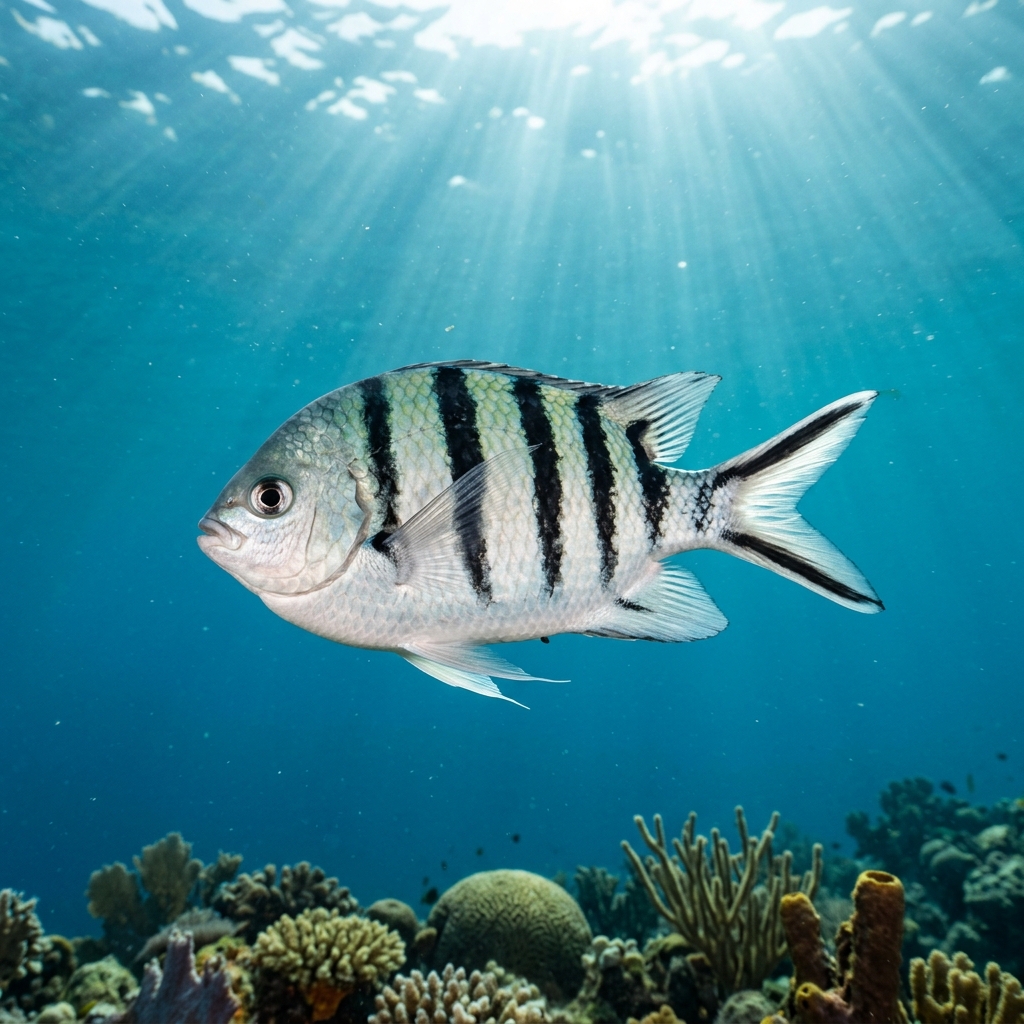
Reef neighbours a diver could mistake it for. Use the identification notes above to tell them apart.
Most reliably logged on reefs in Queensland, Australia, and across Sulawesi and Nusa Tenggara in Indonesia, with strong numbers also from Palawan in the Philippines. Smaller but consistent sightings come from Efate in Vanuatu, Tufi in Papua New Guinea, and Dili in Timor-Leste, so it's a fixture of Indo-Pacific reef diving generally rather than any single hotspot.
Mapping where Spiny Chromis is logged…
Queensland in Australia and Sulawesi in Indonesia turn up the most sightings, with Palawan in the Philippines also a strong bet. It's also logged around Efate in Vanuatu, Tufi in Papua New Guinea, and Dili in Timor-Leste.
There's no strong seasonal signal in sighting data, and its 25 to 29 C temperature niche matches tropical reefs all year, so it's a year-round sighting rather than a seasonal one.
Look for a small, dark grey-brown damselfish around 11 cm with a pale saddle patch behind the head, holding station near coral heads in small loose groups rather than schooling in open water.
They top out around 11 cm, making them one of the smaller reef damselfish you'll spot on a dive.
They skip the free-floating larval stage most reef fish go through. Eggs are laid and guarded on the reef, and hatchlings emerge already looking like miniature adults, staying near the nest under parental protection.
No, they pose no threat to divers and simply hold their position near the reef when approached.
Site and sighting data is aggregated from diver logs, iNaturalist and GBIF. For taxonomy and conservation status:
Dascyllus
3,697 sites