Halichoeres nicholsi
A reef wrasse of the eastern Pacific, most reliably logged around the Galápagos Islands and Baja California in 21-28C water.
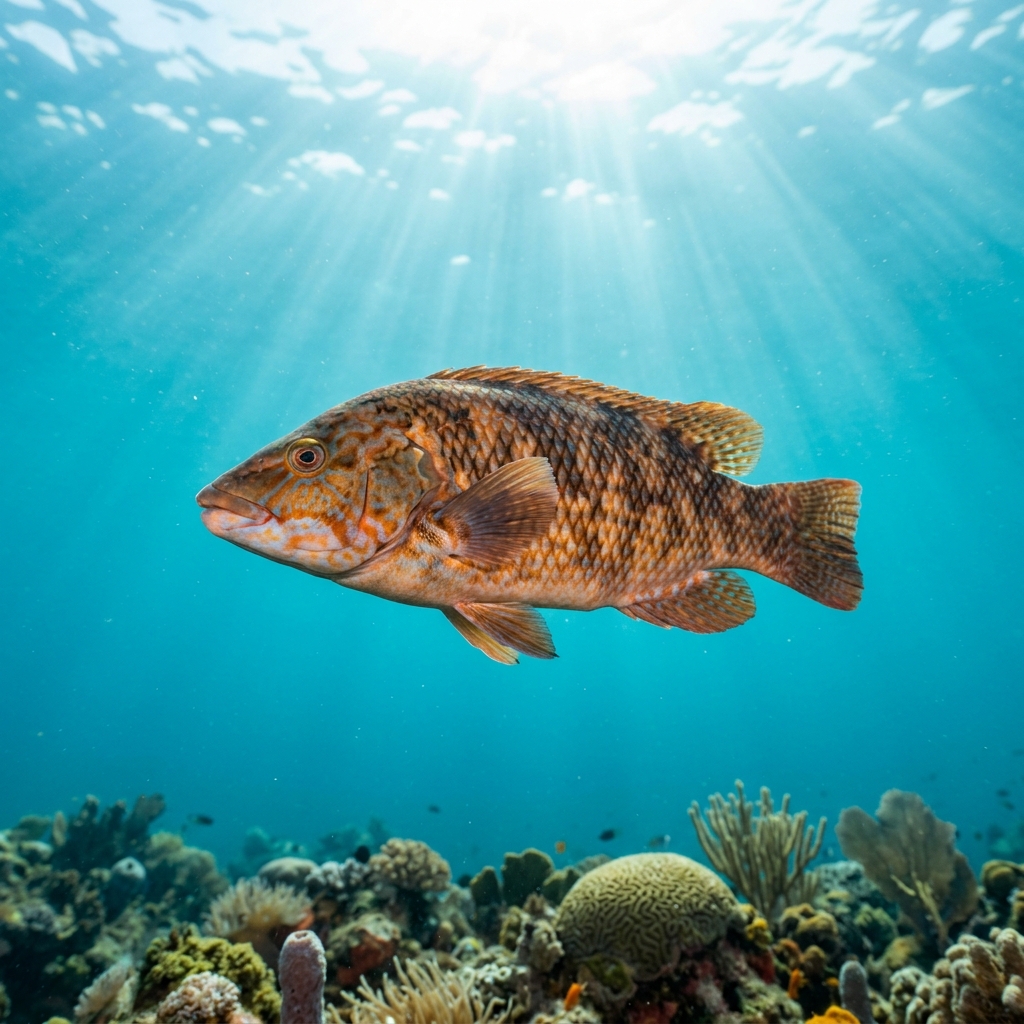
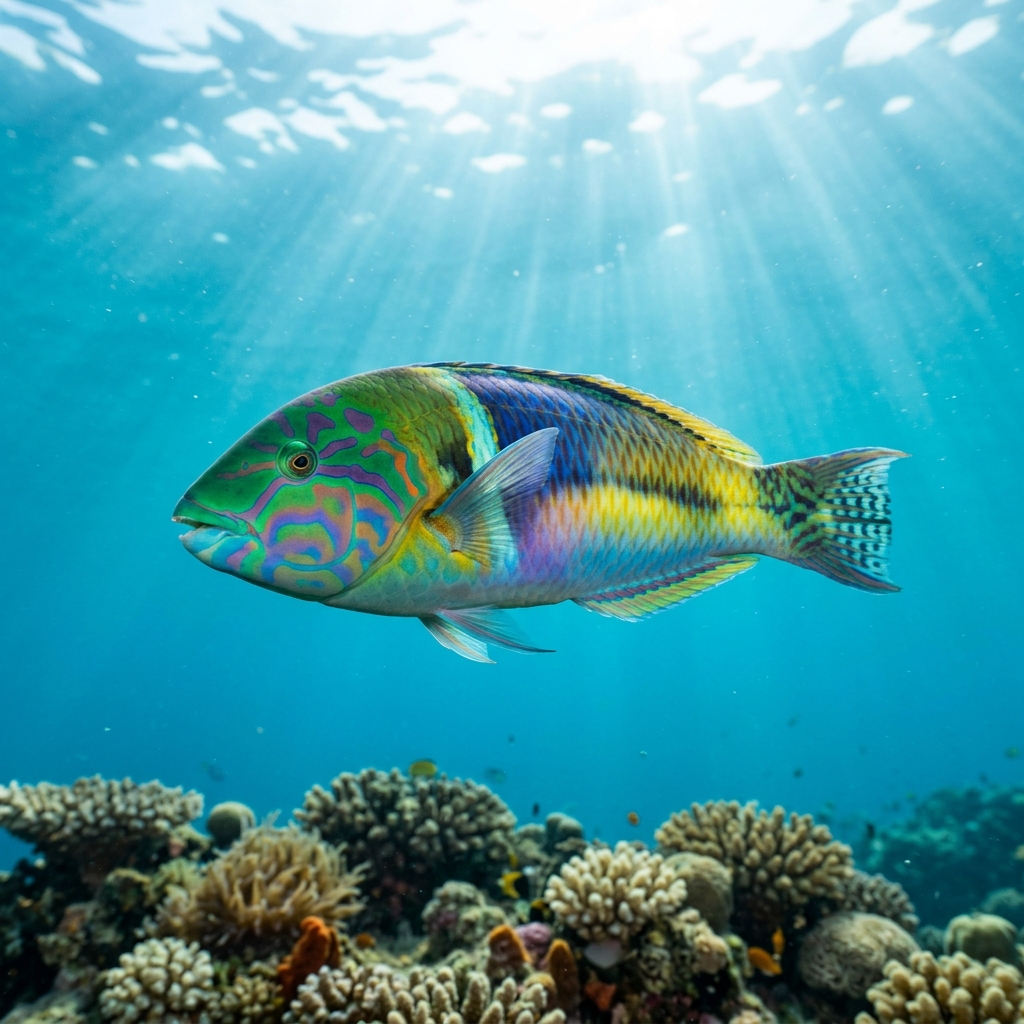
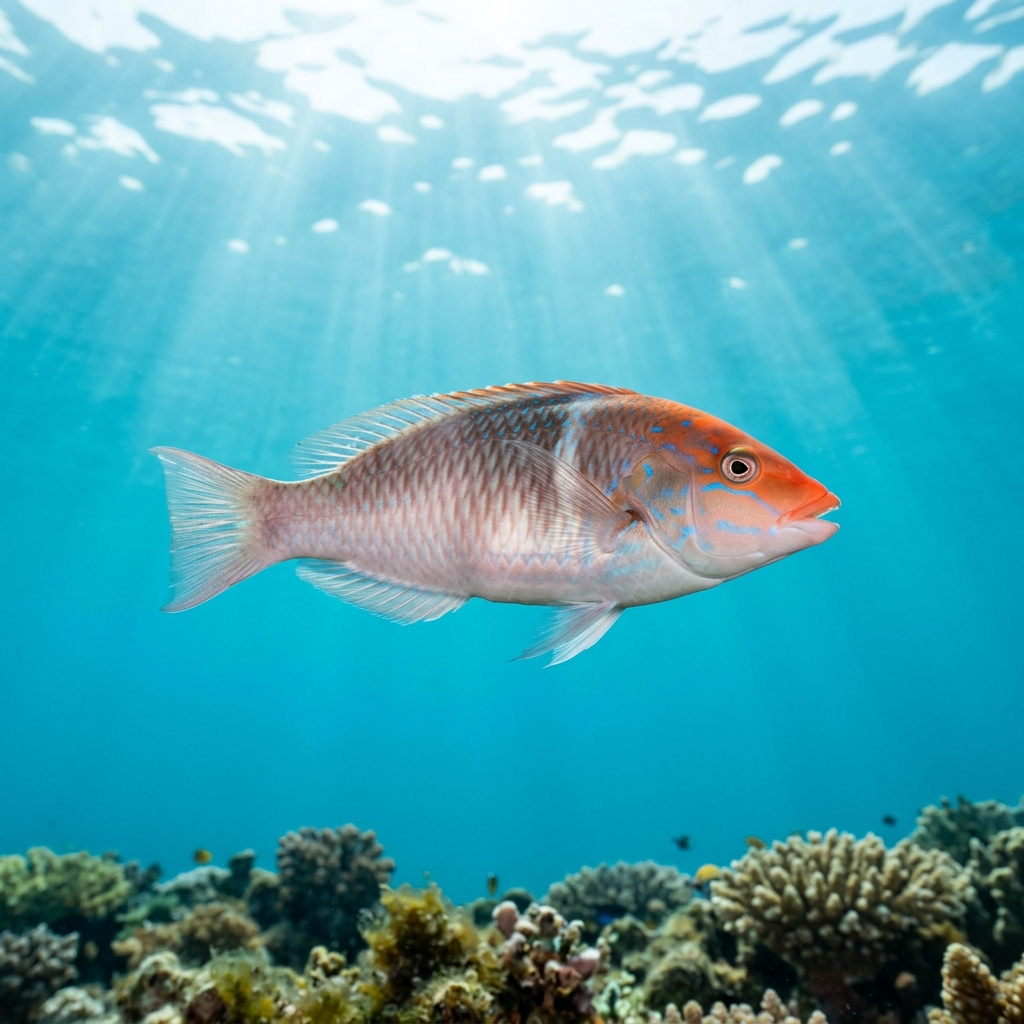
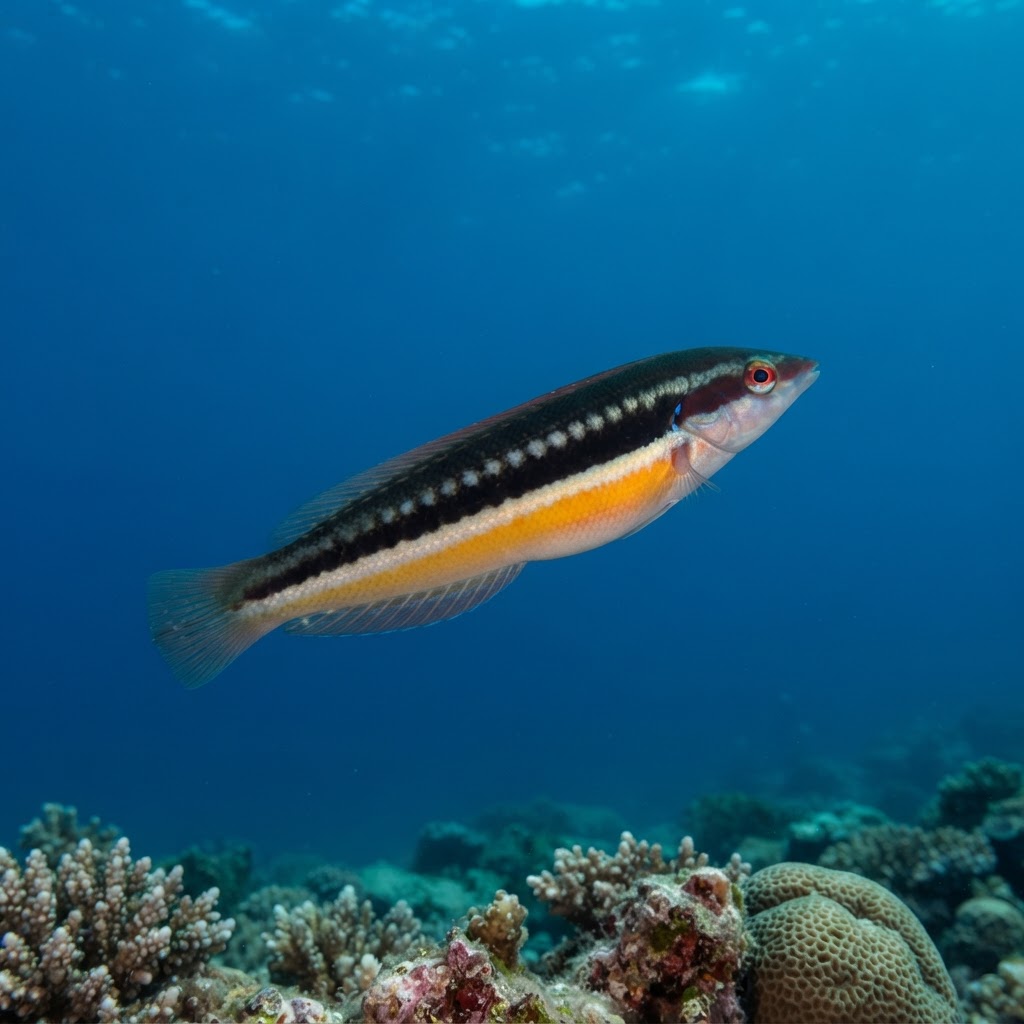
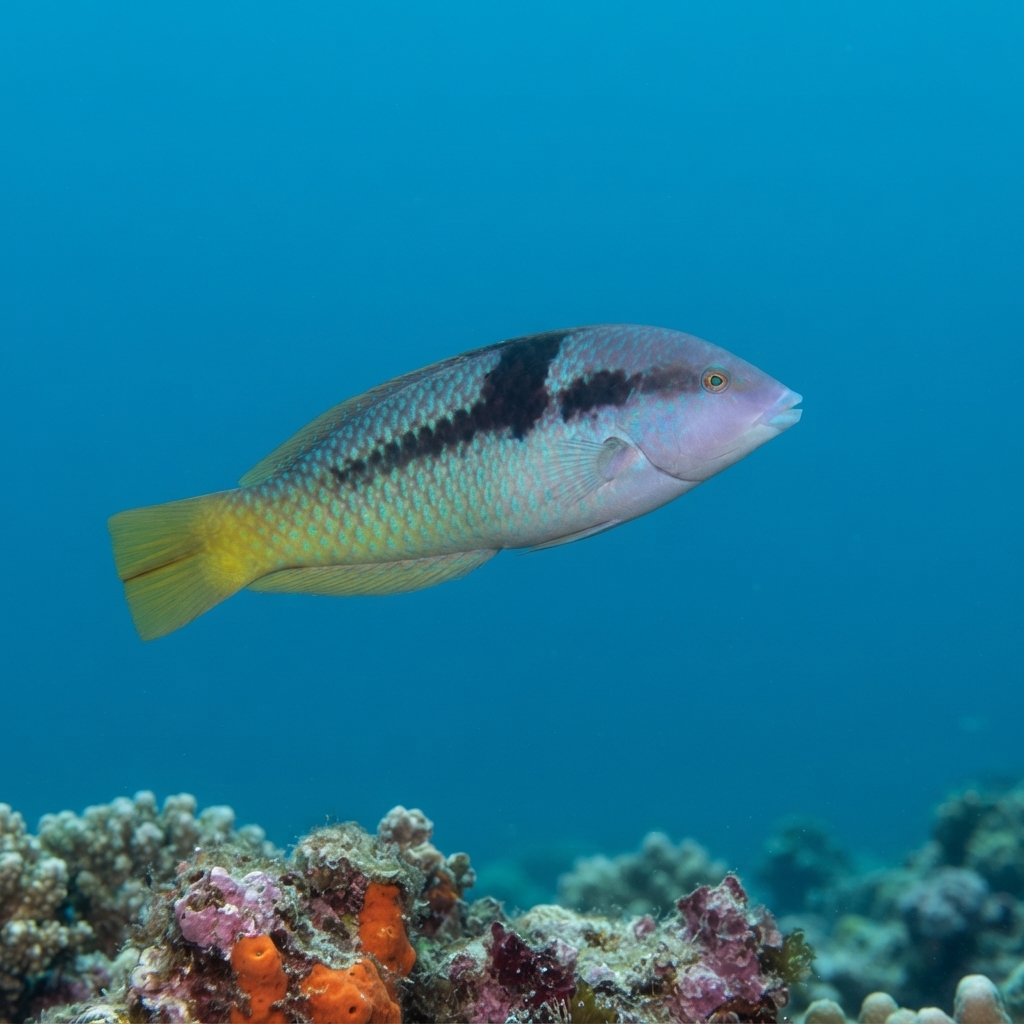
A slender wrasse reaching around 26 cm, with a greenish to olive body broken by pale vertical bars and a pointed snout typical of the genus. It swims with the quick, darting motion common to Halichoeres wrasses, staying close to rock and reef structure rather than out in open water. There is no dramatic colour split noted between sexes or juveniles in the data, so divers should focus on the barred pattern and overall slim body shape for a confident ID.
Divers typically spot it picking over rock and reef surfaces alone or loosely associating with other small wrasses, hunting the invertebrates and small prey typical of a carnivorous reef fish. It is not especially bold around divers, usually keeping some distance and ducking into reef structure rather than approaching. Most logs describe it as uncommon rather than a guaranteed sighting, so a patient look along rocky reef faces pays off more than open-water scanning.
Like many Halichoeres wrasses, it is a reef-bound hunter that relies on rock and reef crevices for cover, which is why sightings cluster on rocky Pacific reefs rather than sand or open water.
Sightings are logged year-round with no detected season, which fits its comfort range of roughly 20.6 to 28.5C across these Pacific coastlines. Plan around good conditions at your chosen site rather than a particular month.
Most reliably found around the Galápagos Islands in Ecuador, along the Pacific Coast of Mexico and Baja California, and on Costa Rica's Guanacaste coast. Panama's Pacific Coast also turns up steady sightings, making this very much an eastern Pacific reef species rather than one for the Caribbean or Indo-Pacific.
Mapping where Spinster Wrasse is logged…
The strongest sightings come from the Galápagos Islands in Ecuador, the Pacific Coast and Baja California in Mexico, and Guanacaste in Costa Rica, with additional records from Panama's Pacific coast.
There is no clear seasonal pattern in the sighting data, and it is comfortable across a 20.6 to 28.5C range, so it is seen year-round at these eastern Pacific sites.
Look for a slender, greenish-olive wrasse around 26 cm long with pale vertical bars, a pointed snout, and quick darting movement along rocky reef surfaces.
They typically reach about 26 cm in length, a modest size that fits comfortably among the smaller reef-associated wrasses.
No, they pose no danger to divers. They are small carnivorous reef fish that keep to themselves and pose no threat during a dive.
Site and sighting data is aggregated from diver logs, iNaturalist and GBIF. For taxonomy and conservation status:
Bird Wrasse
3,632 sites