Mobula kuhlii
A compact mobula that tops out around 83cm, seen in warm water between 24 and 29C. Here's how to tell it apart from its bigger cousins.
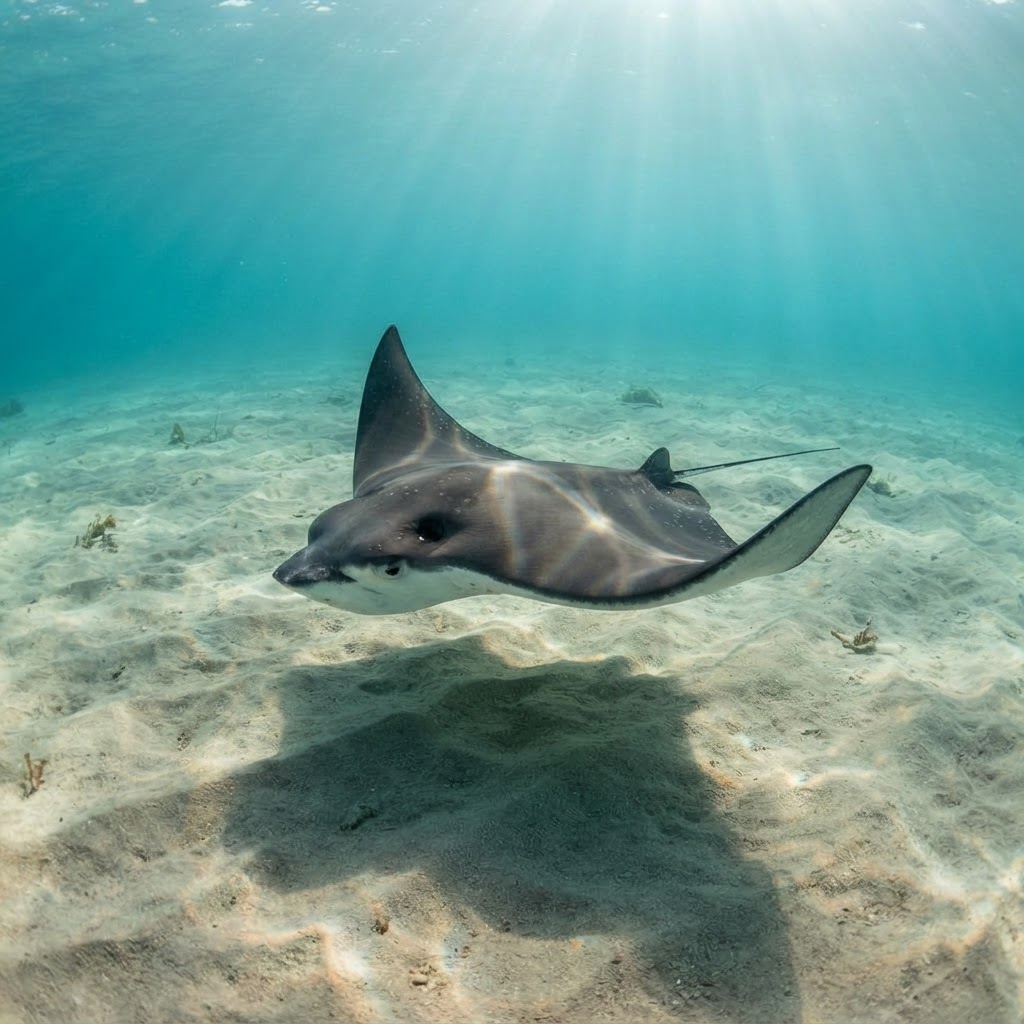
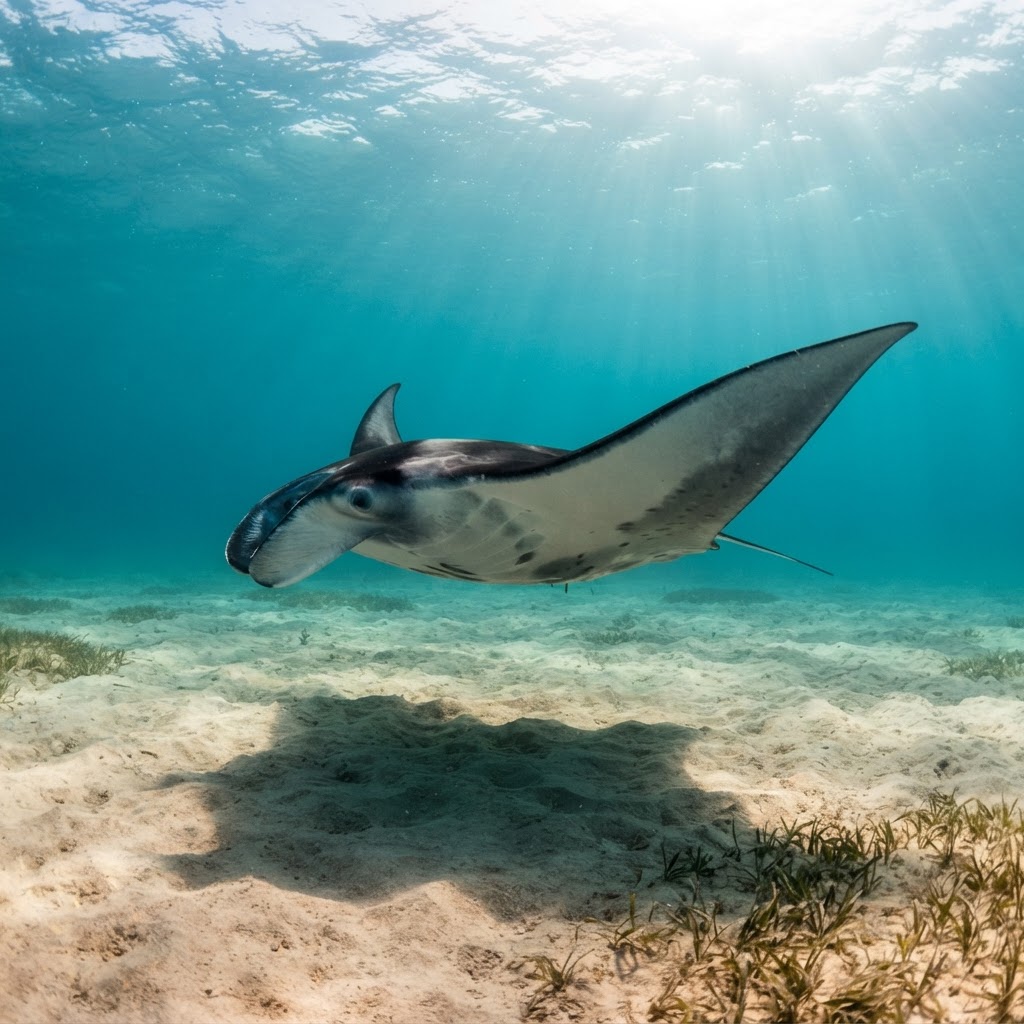
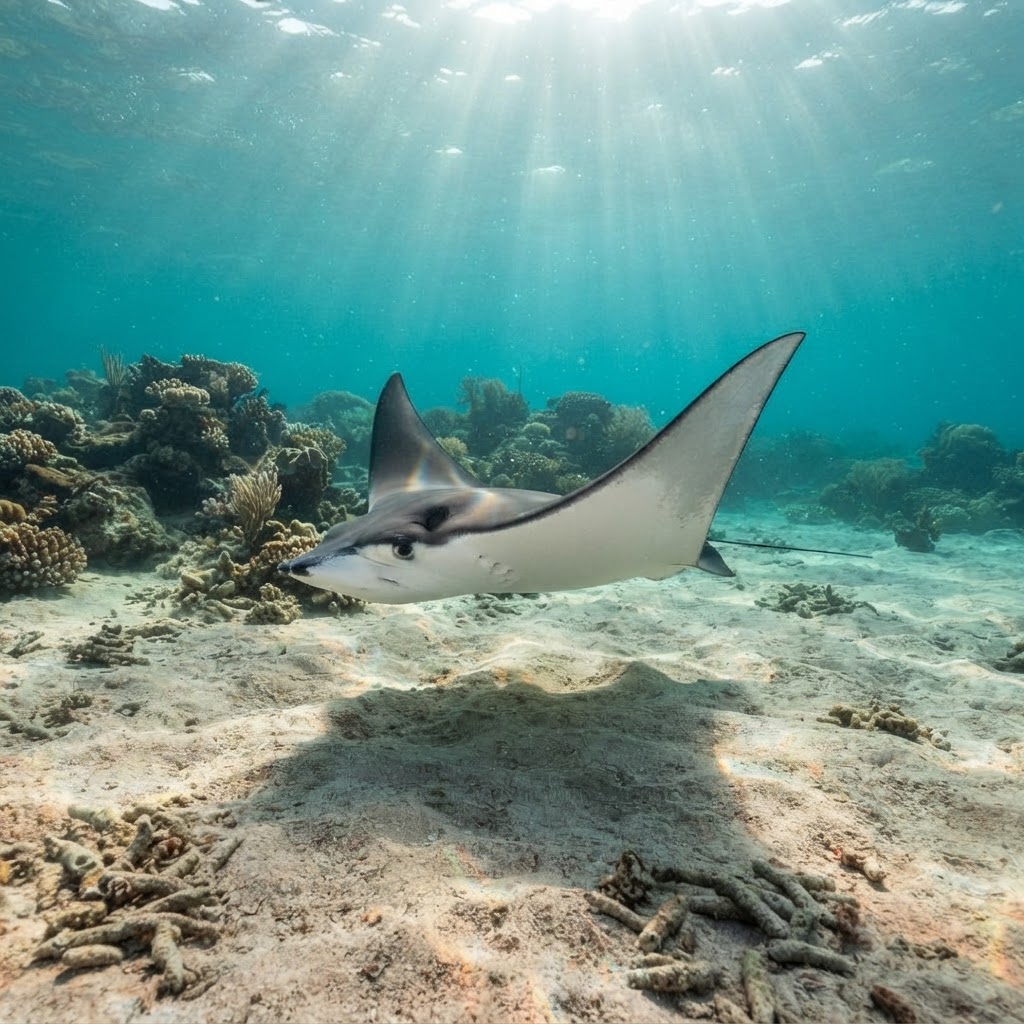
A small, diamond-shaped ray topping out at around 83cm across, dark grey to black on top with a pale white underside. It swims with slow, continuous wingbeats rather than the gliding soar of larger mantas, and lacks the long whip-like tail spine some relatives carry. Look for the short, stubby tail (hence the name) and the absence of the pale shoulder patches that mark some similar species.
Typically seen cruising in open water or over reef flats, often alone or in small loose groups rather than the large aggregations bigger mobulids form. It tends to keep a steady swimming pace past divers rather than circling or interacting, so most sightings are brief passes rather than extended encounters. Like other mobulids, it likely feeds on plankton in the water column, though this hasn't been well documented for the species specifically.
It's one of the smallest members of the devil ray family, which makes it easy to mistake for a young manta or a different mobula species until you clock the short tail and modest wingspan.
Not enough logged sightings yet to call a season. It sits comfortably in water between about 24 and 29C, which fits year-round tropical reef conditions rather than a narrow seasonal window.
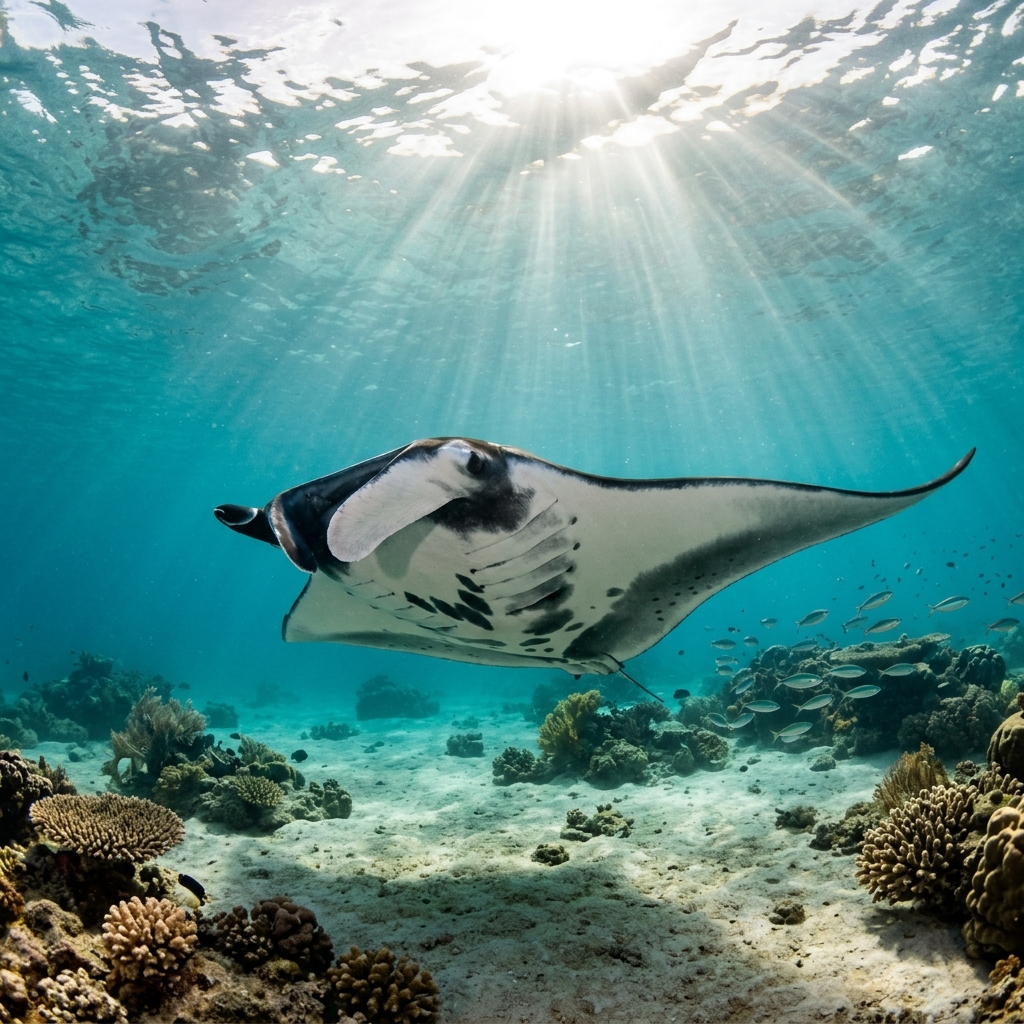
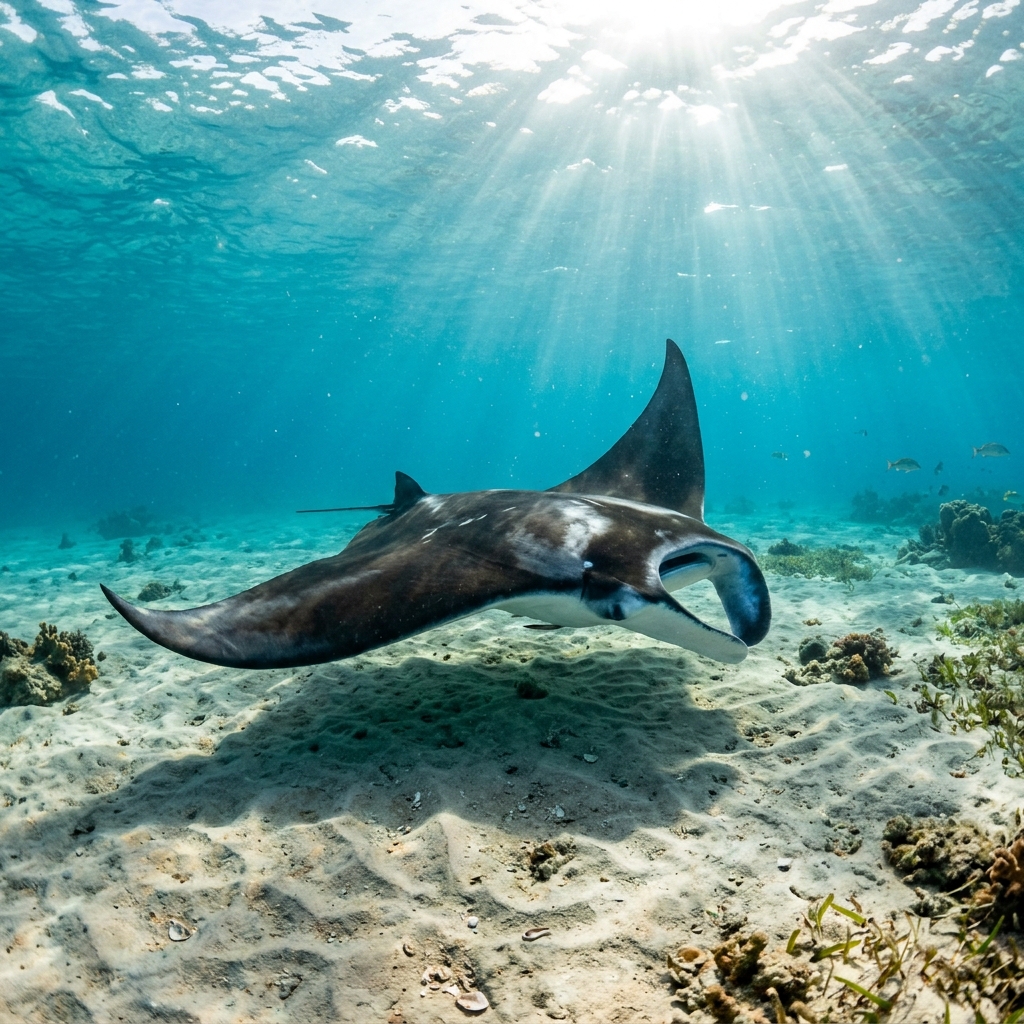
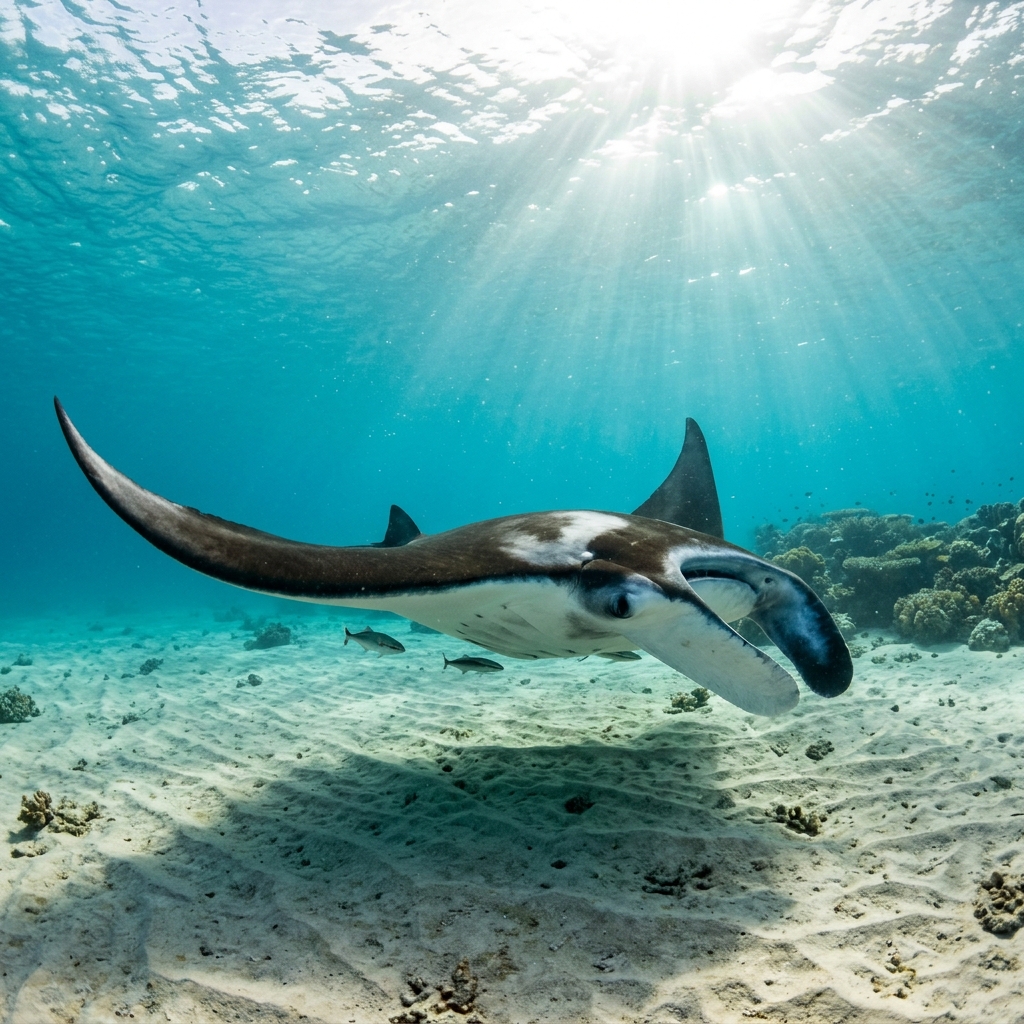
Reef neighbours a diver could mistake it for. Use the identification notes above to tell them apart.
Diver logs for this species are too sparse right now to name reliable regions with confidence. It's known from Indo-Pacific coastal waters, so any sightings so far are likely concentrated on tropical reef and channel dives in that broader range.
Mapping where Shortfin Devil Ray is logged…
They reach roughly 83cm across the disc, making them one of the smaller mobulid rays divers might encounter, well under the span of a reef or oceanic manta.
Look for a small, dark grey to black ray with a pale belly, a short stubby tail, and steady wingbeat swimming rather than a slow manta-style glide. Its modest size compared to mantas is often the first clue.
There isn't enough logged data yet to pin down a season. They favour warm water between about 24 and 29C, conditions that hold year-round on most tropical reefs within their range.
No. They're not considered a danger to divers and typically just cruise past without any interest in interaction.
Site and sighting data is aggregated from diver logs, iNaturalist and GBIF. For taxonomy and conservation status:
Sicklefin Devil Ray
351 sites