Mobula munkiana
Pygmy devil rays school in warm water between 22 and 28.5 C. Here's how to tell this small mobula apart underwater.
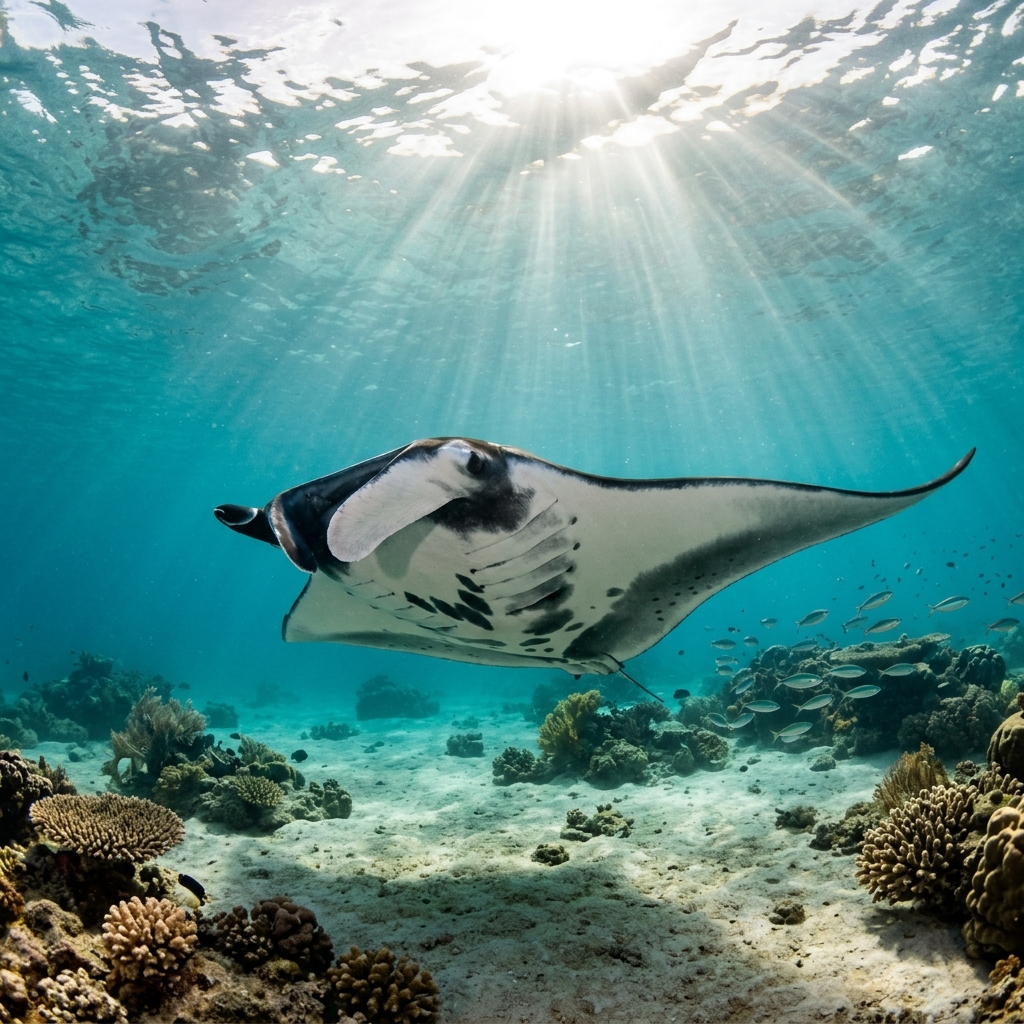
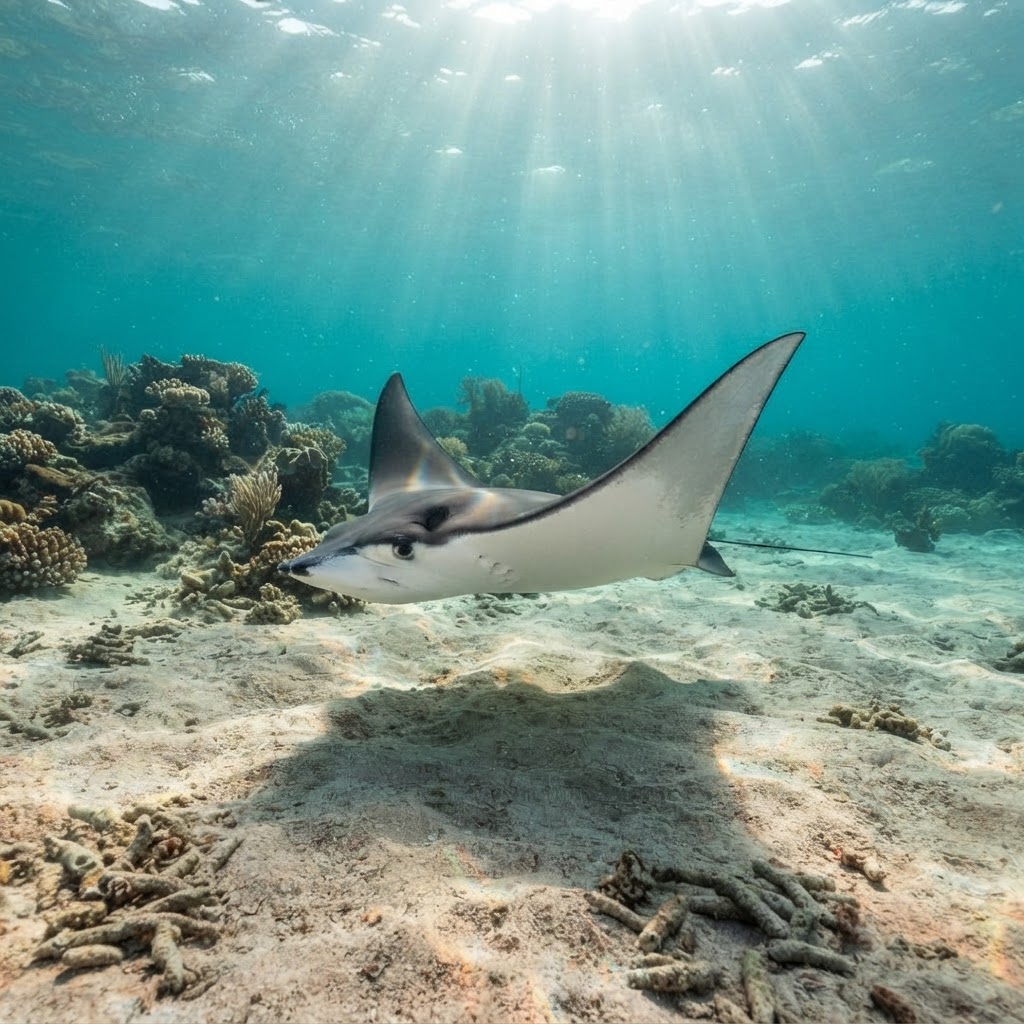
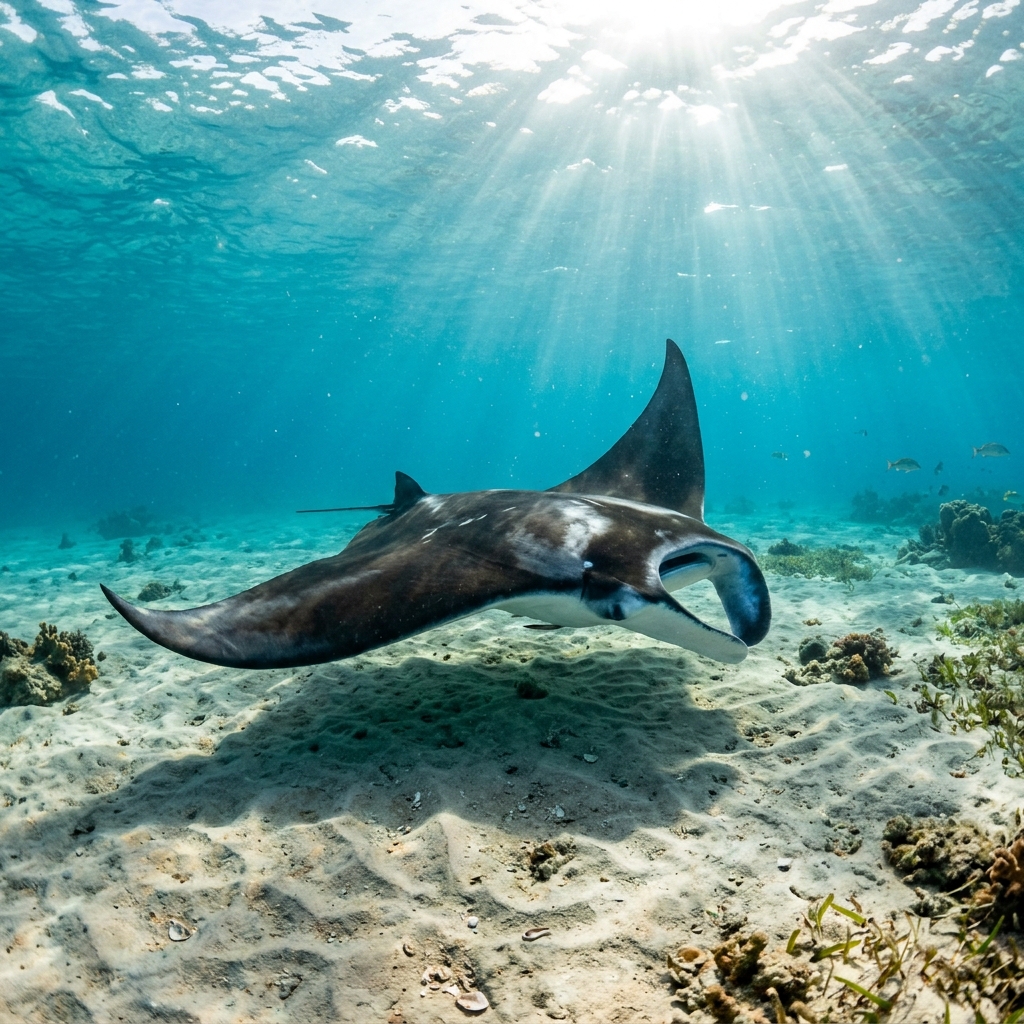
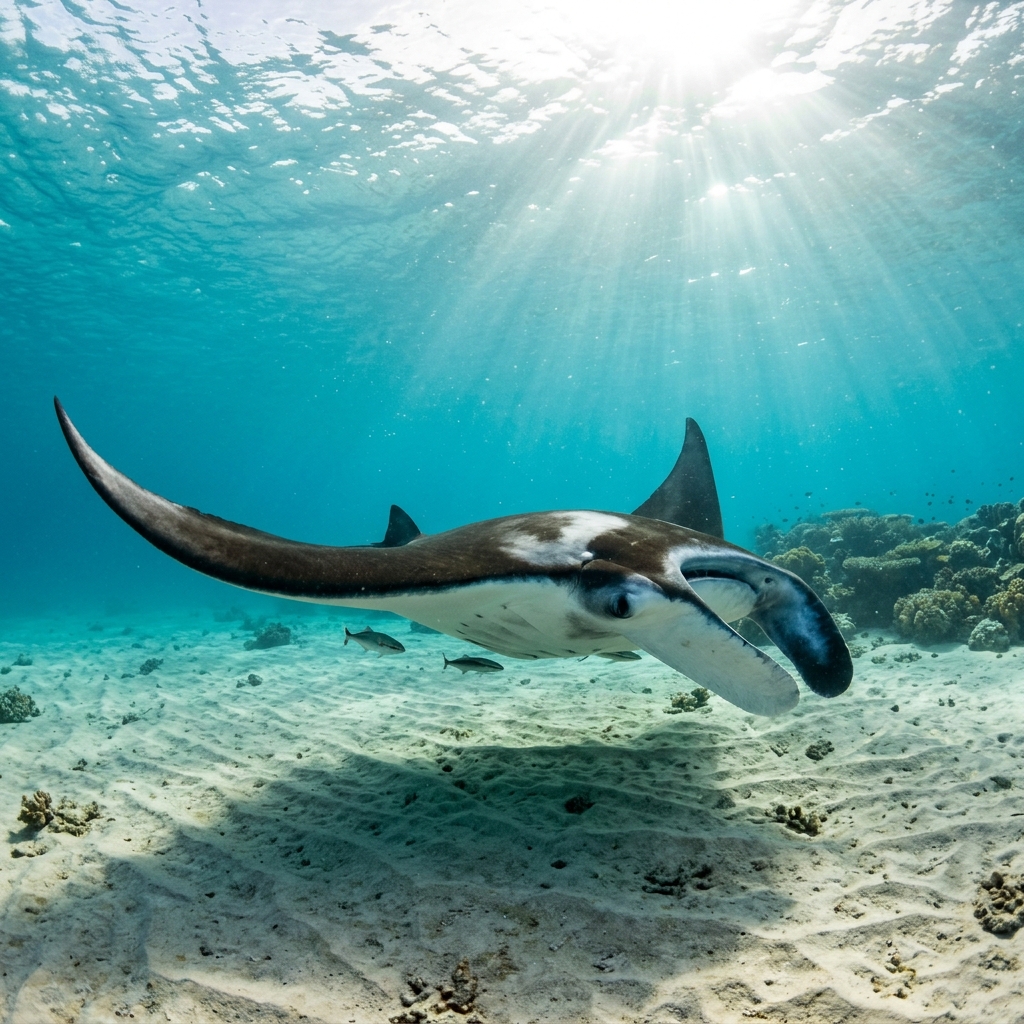
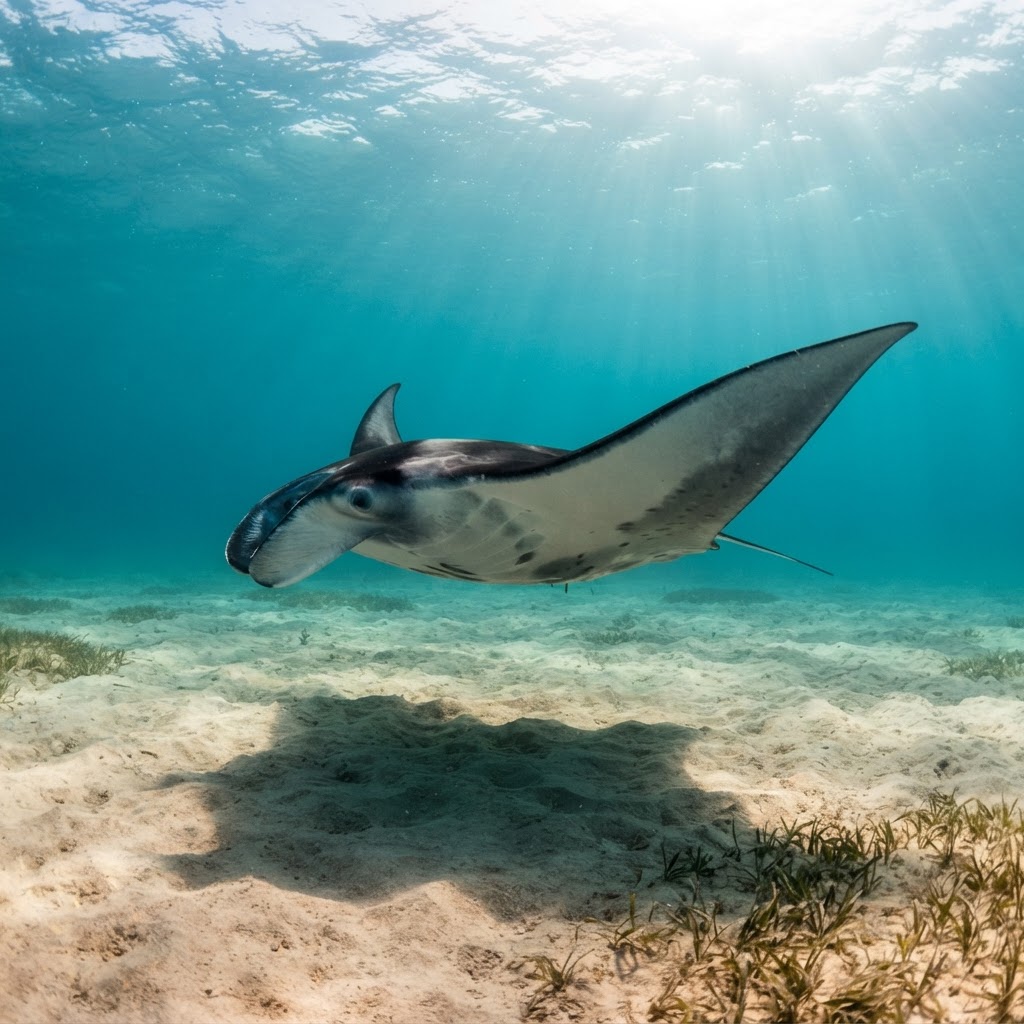
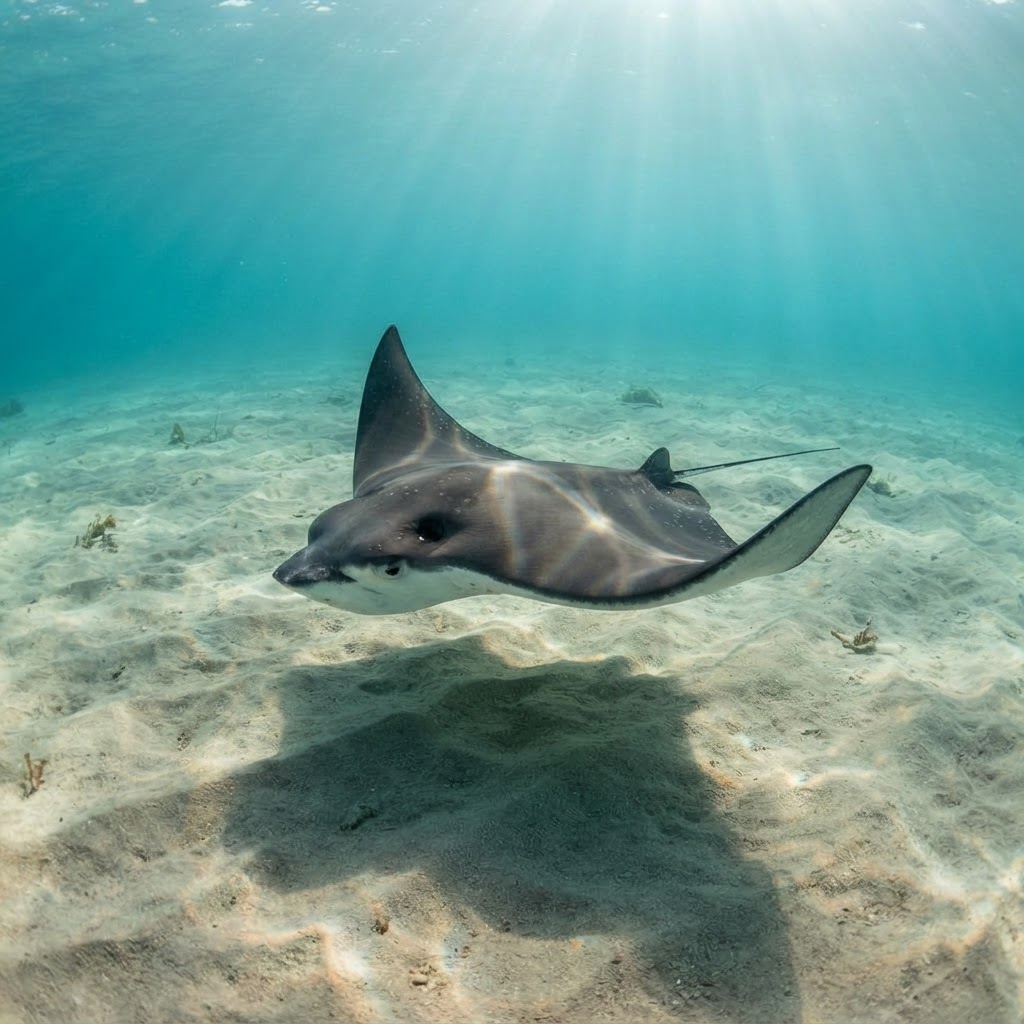
Small for a mobulid, topping out around 154 cm across, with a dark grey-blue back, white belly, and pointed pectoral wing tips that give it a compact, almost triangular silhouette. It lacks the wide, flat head lobes of larger mantas, and its tail is thin and whip-like, trailing well past the body. Look for the tight schooling habit, often the clearest tell against other mobulas.
Divers typically encounter this species in tight, swirling schools rather than alone, often moving through open water off current-swept points rather than hugging the reef. They're generally unbothered by divers at a respectful distance but will scatter if boats or swimmers crowd the group. Feeding passes through plankton-rich water are often when the schools bunch up tightest.
This is one of the smallest mobulid rays and one of the most social, forming schools that can run into the hundreds, a scale of aggregation rare among devil rays.
Sighting records aren't yet dense enough to pin down a season, and with a comfortable range of 22.2 to 28.5 C, it's plausible year-round wherever that water temperature holds.
Reef neighbours a diver could mistake it for. Use the identification notes above to tell them apart.
Specific site data isn't logged yet for this species, though it's best known from the warm coastal waters of the Sea of Cortez and the wider eastern Pacific, where it's famous for forming dense schools.
Mapping where Pygmy Devil Ray is logged…
They're best known from the Sea of Cortez and eastern Pacific coastal waters, where large schools gather seasonally. Site-level sighting data is still thin, so check local operators for current schooling activity.
They reach around 154 cm across the wings, making them one of the smallest members of the mobulid family, well short of manta ray size.
Look for a small, dark grey-blue ray with a white belly, pointed wingtips, and a long thin tail, usually moving in a tight school rather than alone.
No, they pose no danger to divers. They're filter feeders with no interest in humans and will simply move off if crowded.
They form some of the largest schools of any mobulid ray, sometimes numbering in the hundreds, a striking contrast to the more solitary habits of larger devil rays and mantas.
Site and sighting data is aggregated from diver logs, iNaturalist and GBIF. For taxonomy and conservation status:
Sicklefin Devil Ray
351 sites