Mobula tarapacana
Diamond-shaped ray with a long whip tail, logged from the Azores to the Carolinas year-round in waters as cool as 9.5C.
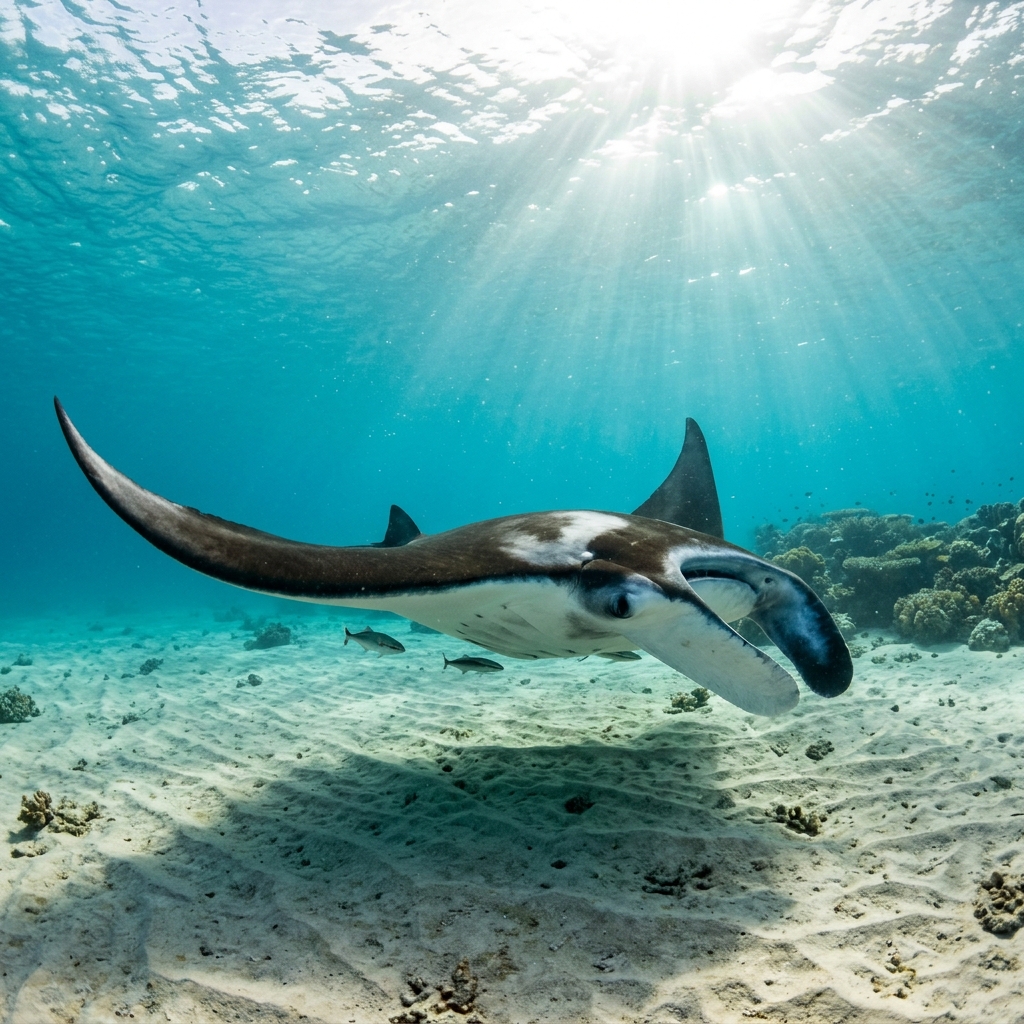
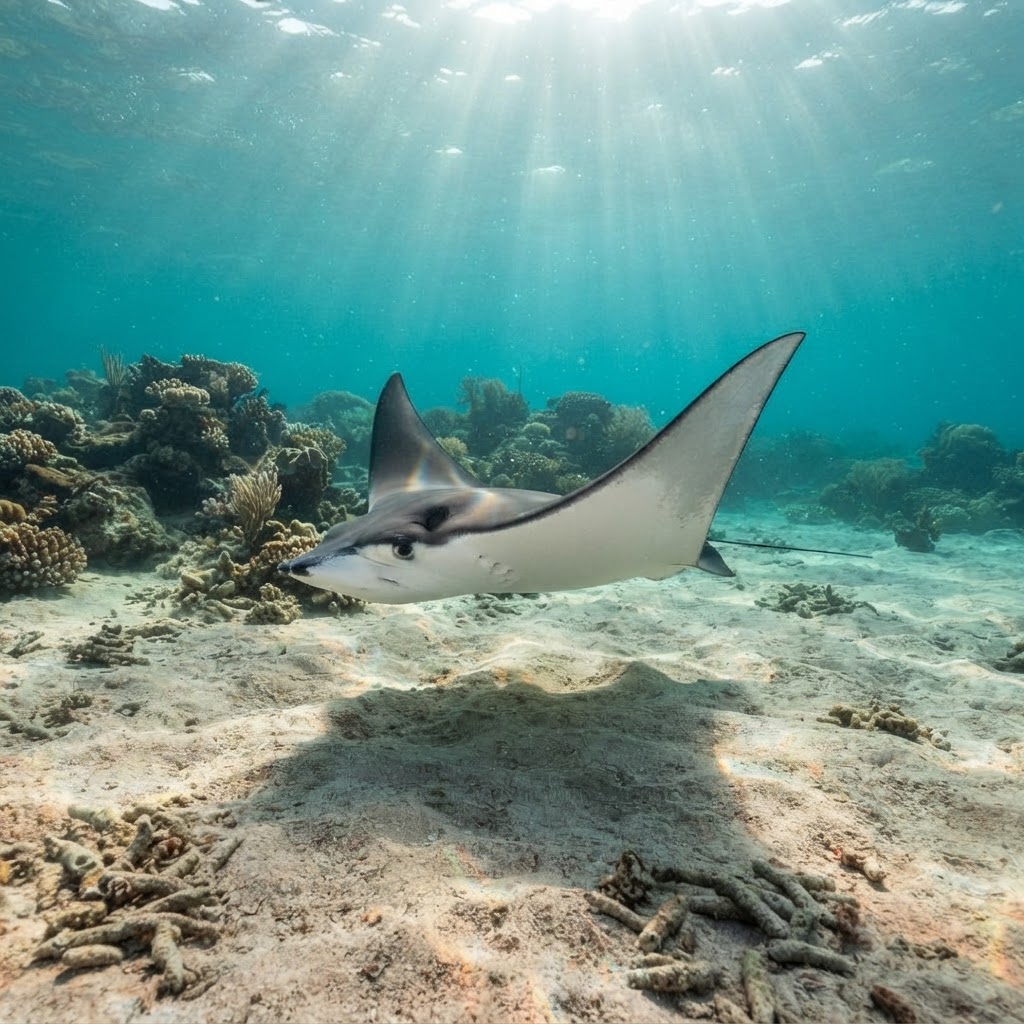
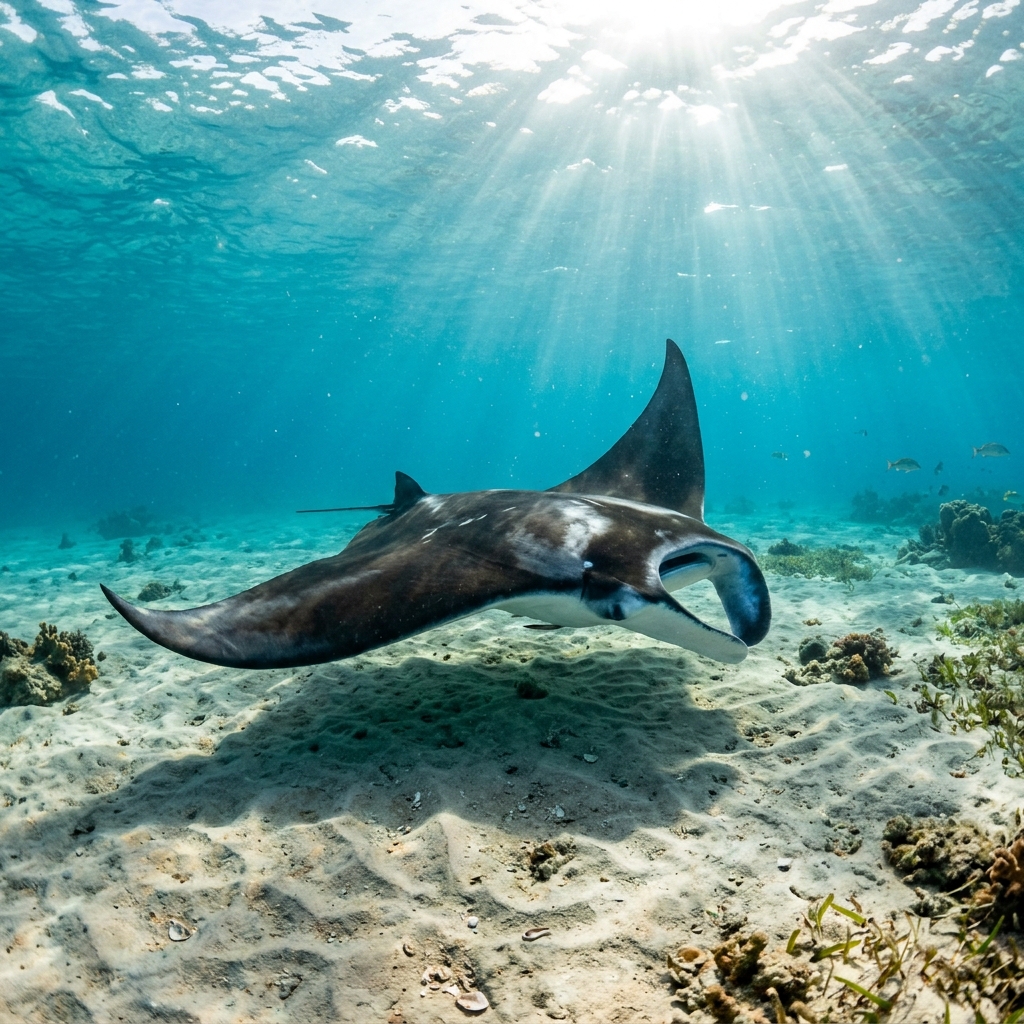
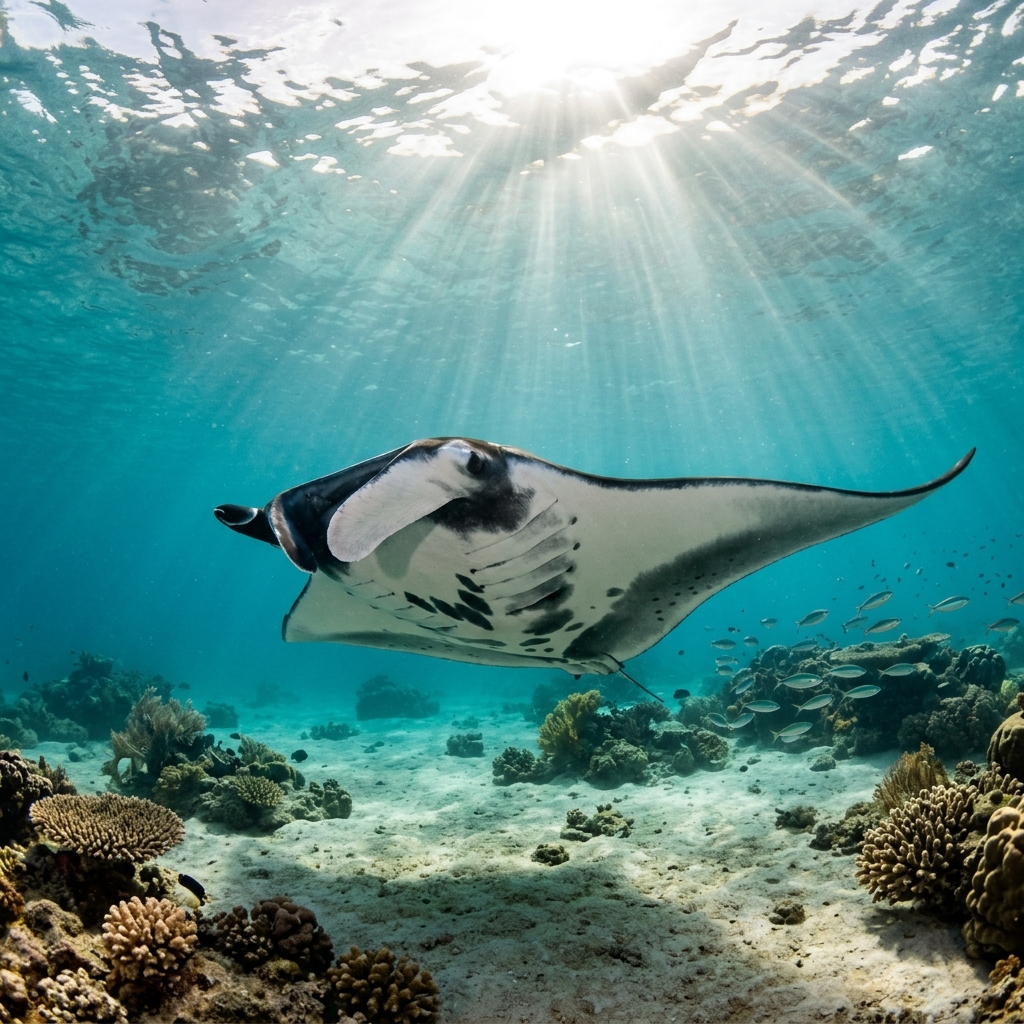
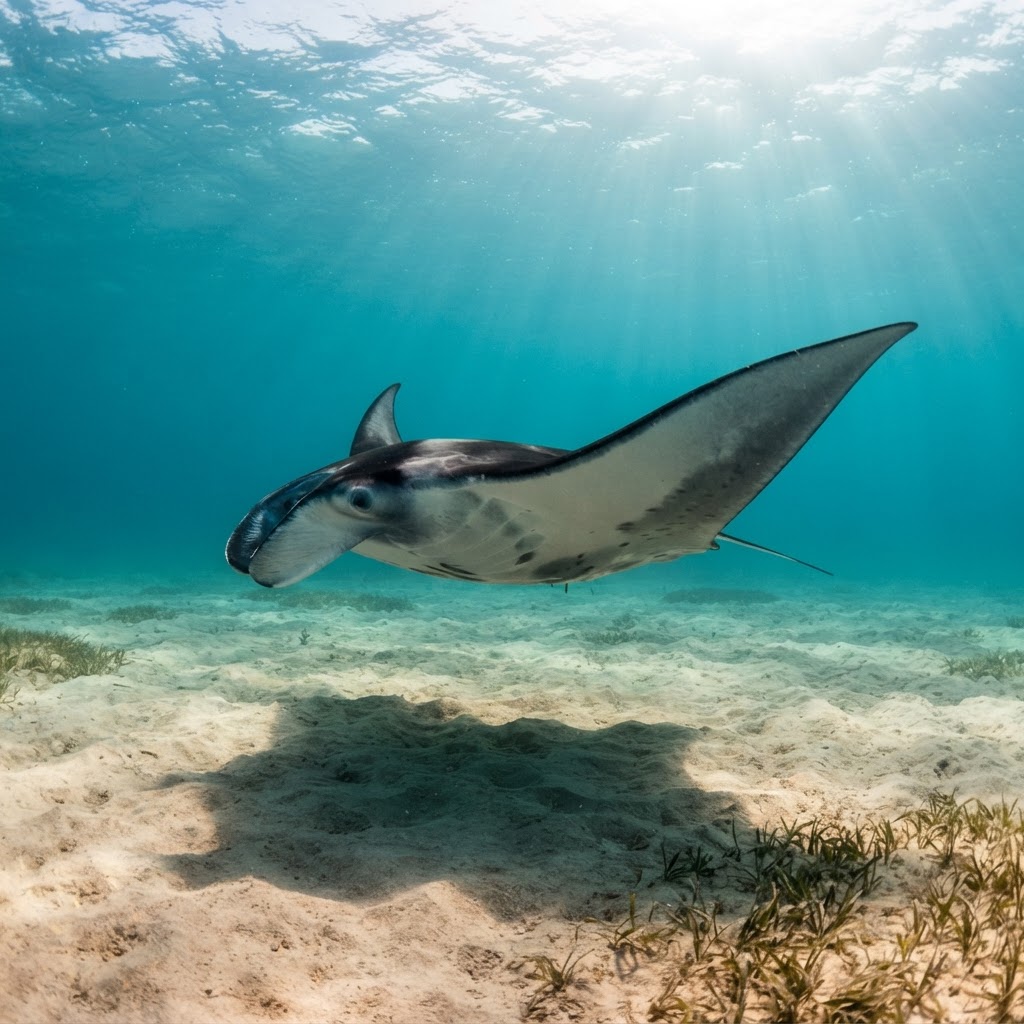
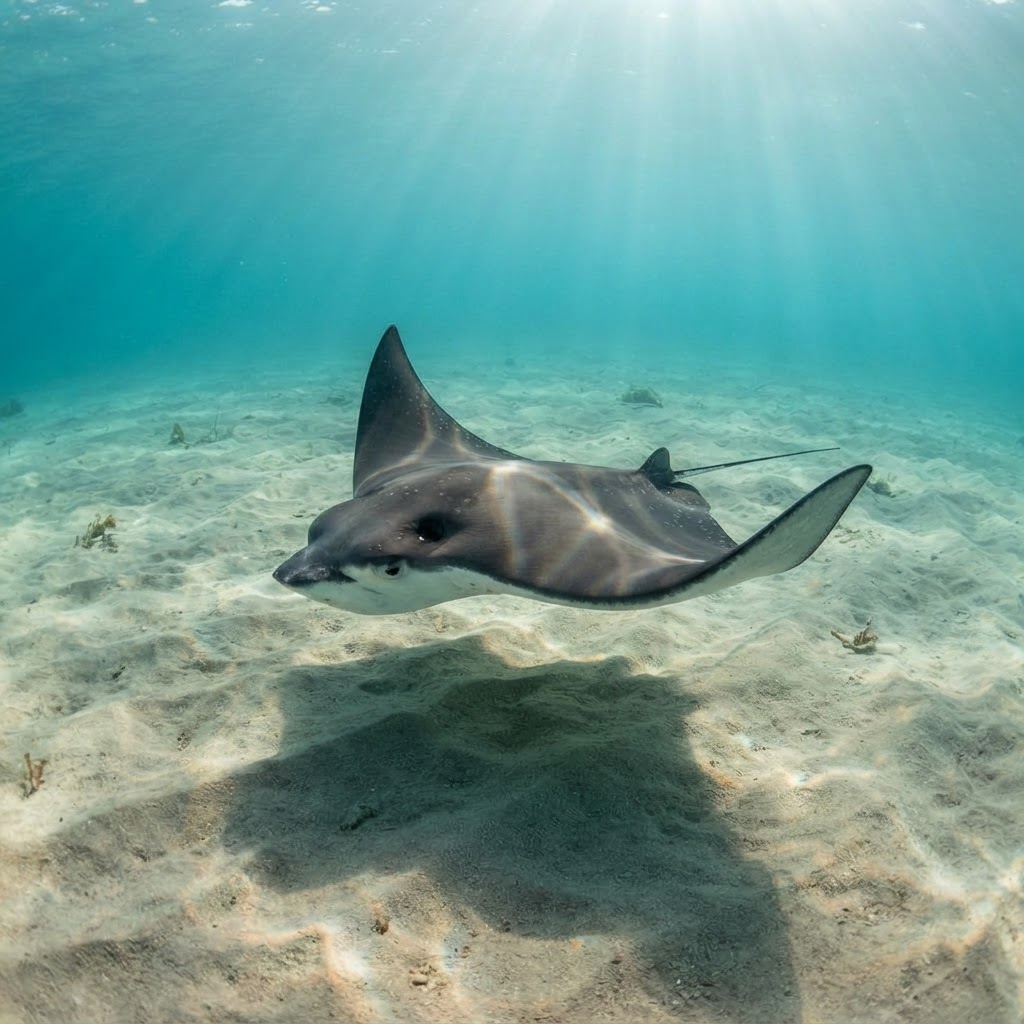
Diamond-shaped body up to about 2.3 metres across, with long pointed pectoral wings that sweep back in a sickle curve rather than a straight edge. Colour runs olive-brown to grey-brown on top with a pale belly, and the long thin tail (longer than the body) is a quick tell against other mobulids. Look for the small cephalic lobes rolled at the front of the head rather than the flat paddles of a true manta.
Usually seen cruising in open water off reef or seamount edges rather than parked on the bottom, often solitary or in loose small groups. It tends to keep its distance from divers and moves on rather than circling, so most sightings are brief passes in mid-water. Depth records run from the surface down to nearly 1900 metres, which fits its reputation as one of the deepest-diving rays, though divers typically encounter it far shallower near structure.
Tagging studies have tracked this species diving to depths beyond 1800 metres, some of the deepest verified dives of any ray, likely while foraging on deep scattering layer prey.
No clear season shows up in the sighting data, and its comfort range from 9.5 to 27.9C means it turns up across cool temperate and warm tropical water alike, so treat it as a year-round possibility wherever it is logged.
Reef neighbours a diver could mistake it for. Use the identification notes above to tell them apart.
Most logged in the United States, especially the Carolinas, the Northeast and Florida, with strong showings off Brazil's Pernambuco coast and the Azores around Sao Miguel and Santa Maria. Divers also record it in France's Bay of Biscay, Spain's Cantabrian Coast, Indonesia's Nusa Tenggara and the Philippines.
Mapping where Sicklefin Devil Ray is logged…
Best logged off the United States, particularly the Carolinas, the Northeast and Florida, plus Brazil's Pernambuco coast and the Azores. Smaller numbers of sightings come from France, Spain, Indonesia and the Philippines.
There is no strong seasonal pattern in the sighting data, so it is considered a year-round encounter. Its wide temperature tolerance, from cold 9.5C water up to 27.9C, means it is not restricted to a single season.
Look for a broad diamond-shaped body with long sickle-curved wingtips, a whip-like tail longer than the body, and rolled cephalic lobes at the head rather than flat manta-style paddles. Colour is typically olive to grey-brown above with a pale belly.
They typically reach around 2.3 metres across the wings, making them one of the larger devil rays though still smaller than true manta rays.
No, they are not considered dangerous. They feed on plankton and small fish, keep their distance from divers, and have no history of aggression.
Site and sighting data is aggregated from diver logs, iNaturalist and GBIF. For taxonomy and conservation status:
Atlantic Manta Ray
4 sites