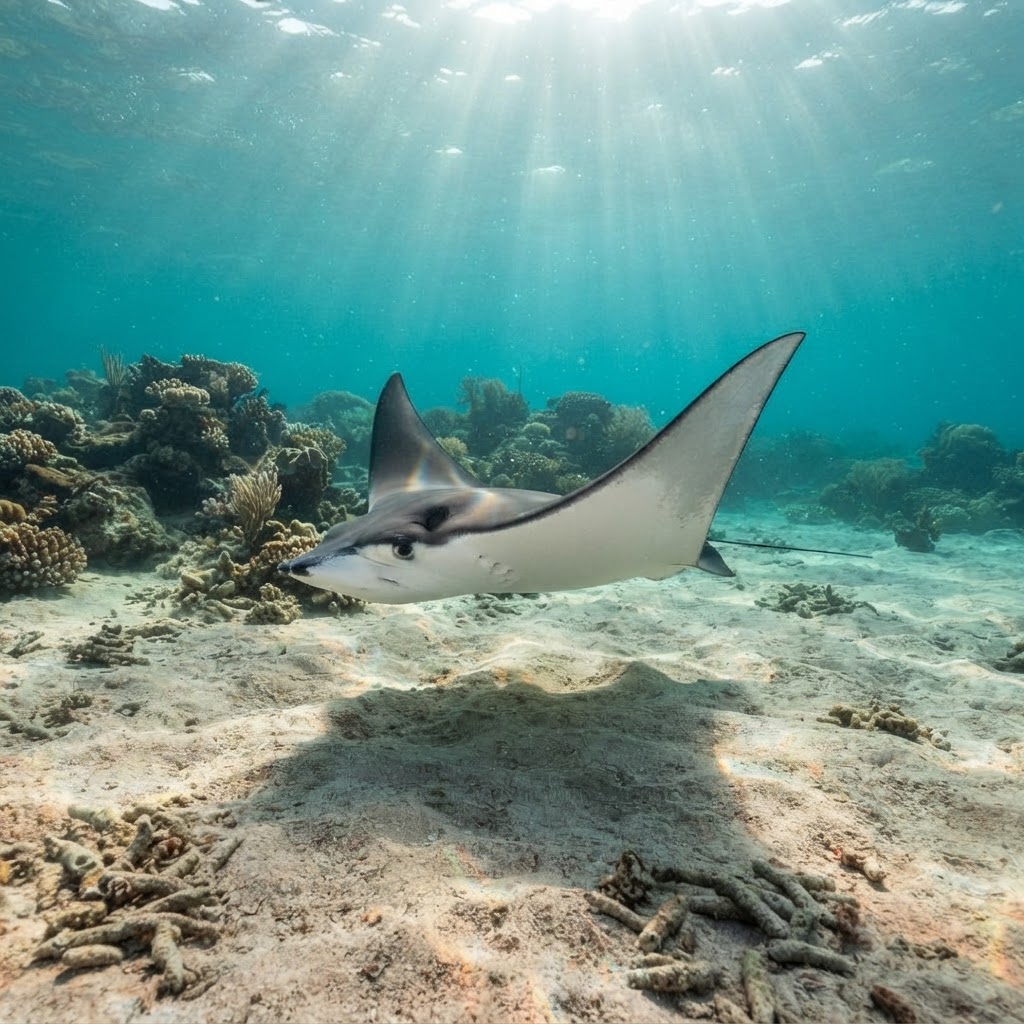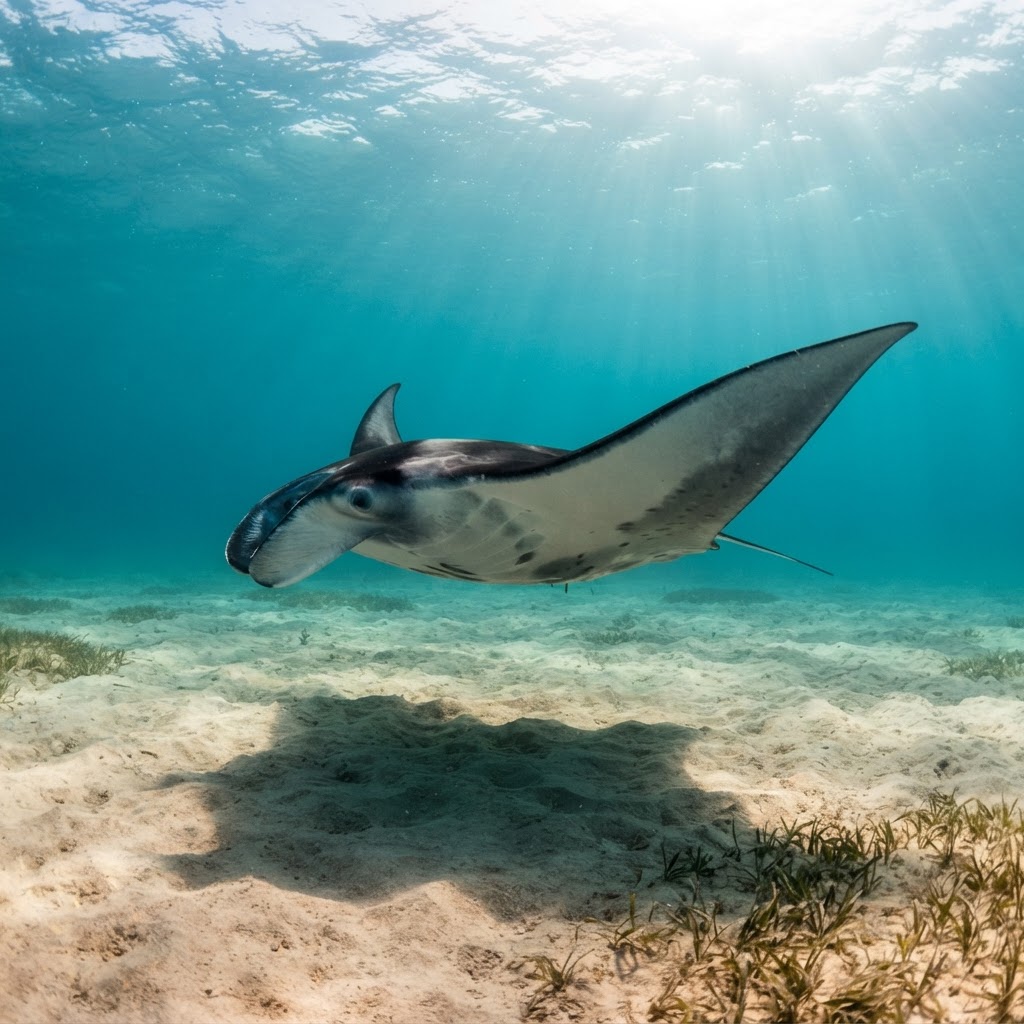
Mobula yarae
A little-known manta cruising warm water between 24.6 and 30.6C, with sightings still too scarce to pin a season.
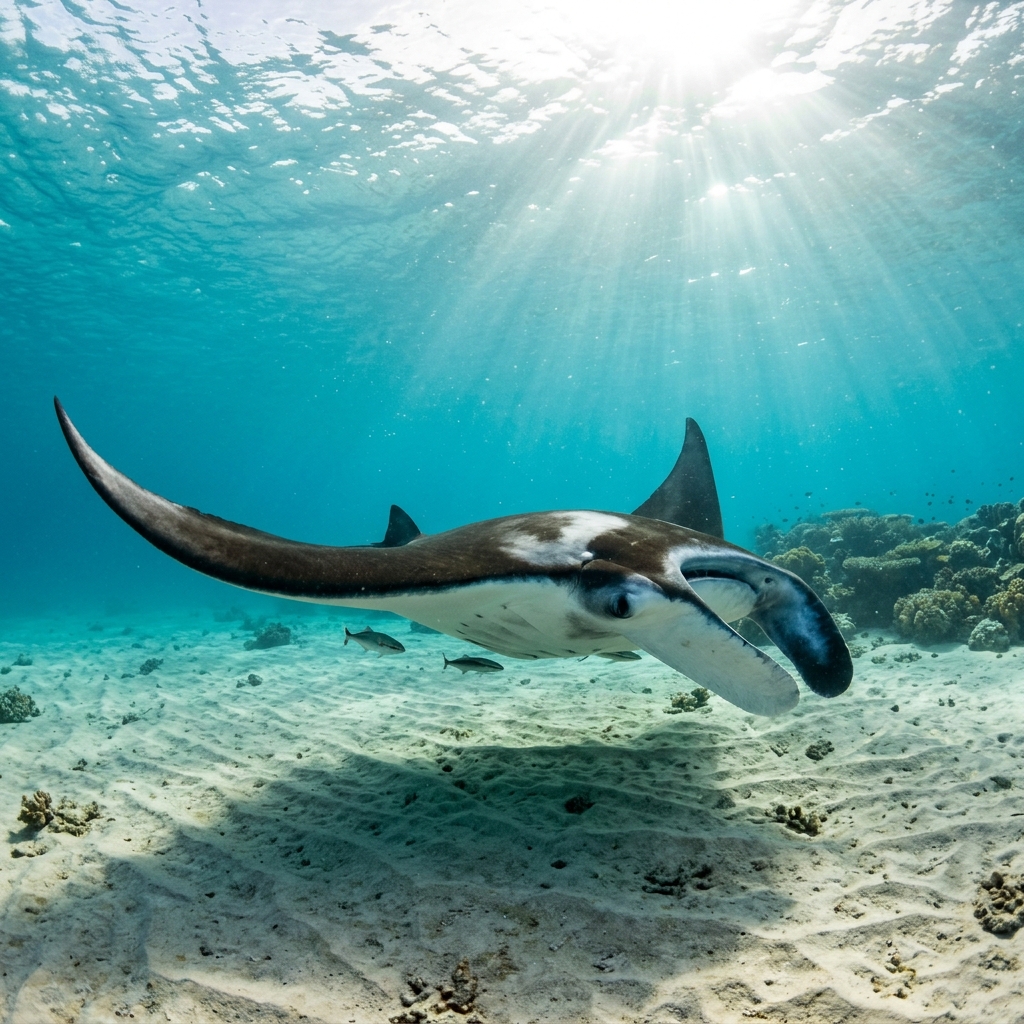
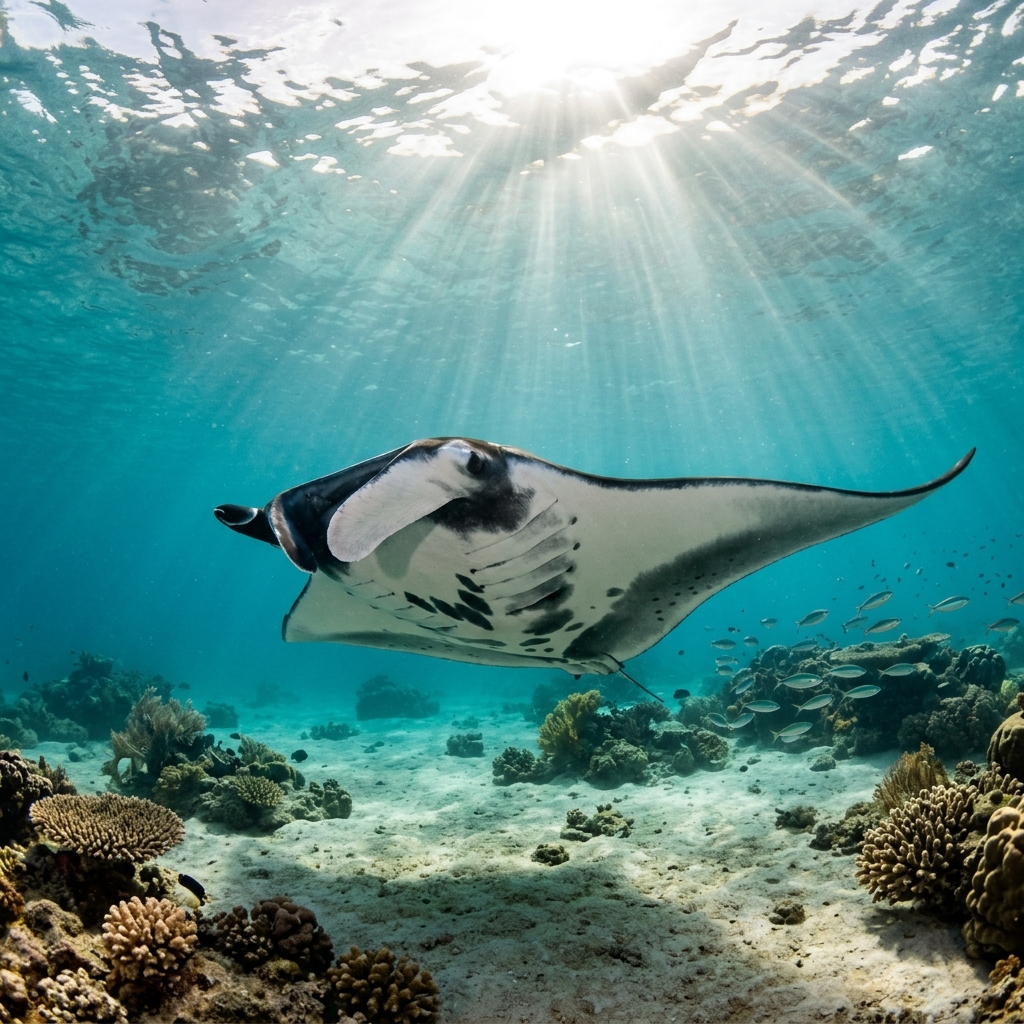
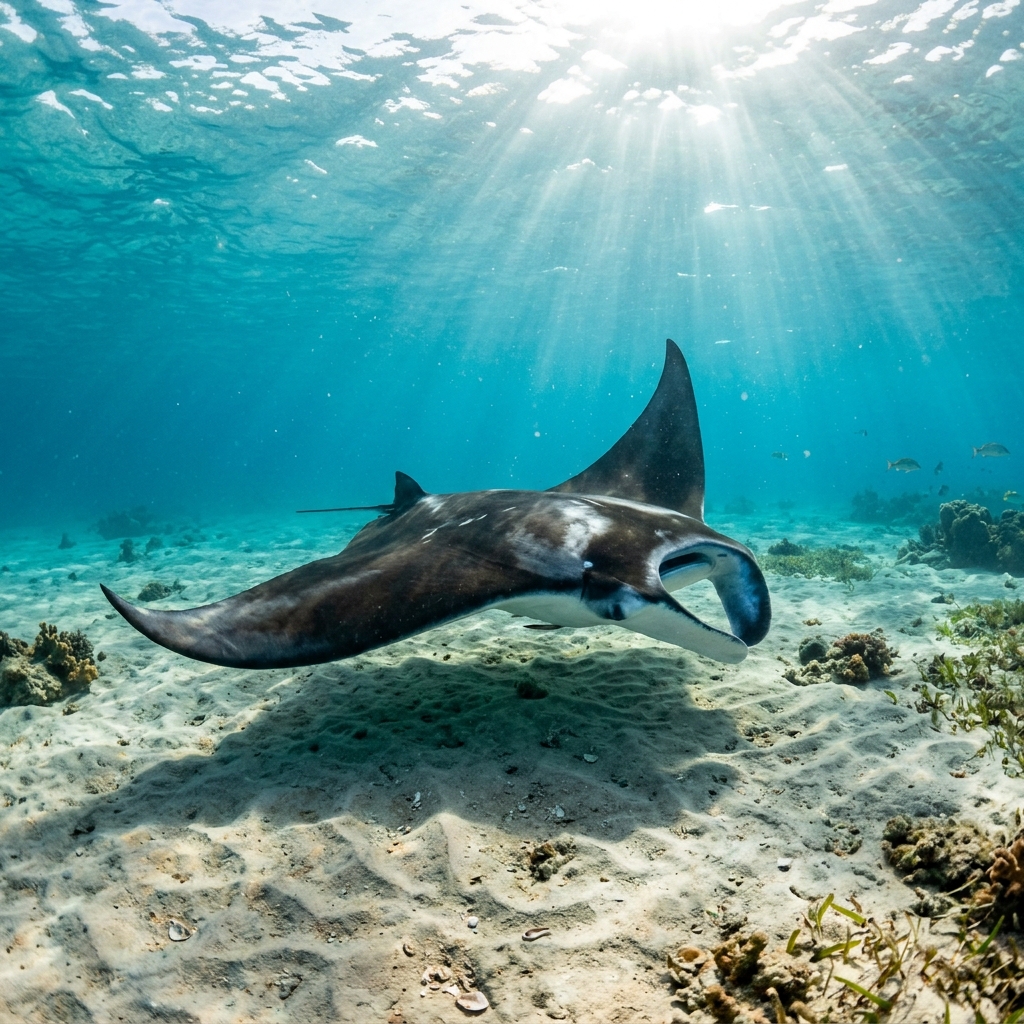
Broad, flattened diamond-shaped body with wing-like pectoral fins spanning wide across the water column, a pale to white underside, and a dark dorsal surface that can range from black to mottled grey-brown. Cephalic lobes (the paddle-shaped structures either side of the mouth) roll forward when feeding and tuck flat when cruising. As with other manta species, spot patterning on the belly is often unique enough for individual identification photo-ID work.
Like other manta rays, expect slow, deliberate cruising through open water or along drop-offs, often with little concern for divers nearby. Watch for cephalic lobes unfurling into a scoop shape when it's feeding on plankton concentrations, and keep your movements calm and unhurried since sudden approaches can send it off into deeper water.
Mantas give birth to a single pup after a long gestation, and that low reproductive rate is a big part of why manta populations recover slowly from any disturbance.
There isn't enough monthly sighting data yet to call a season, so treat encounters as possible year-round. Its recorded temperature niche of 24.6 to 30.6C sits comfortably within tropical and warm subtropical conditions for most of the year.
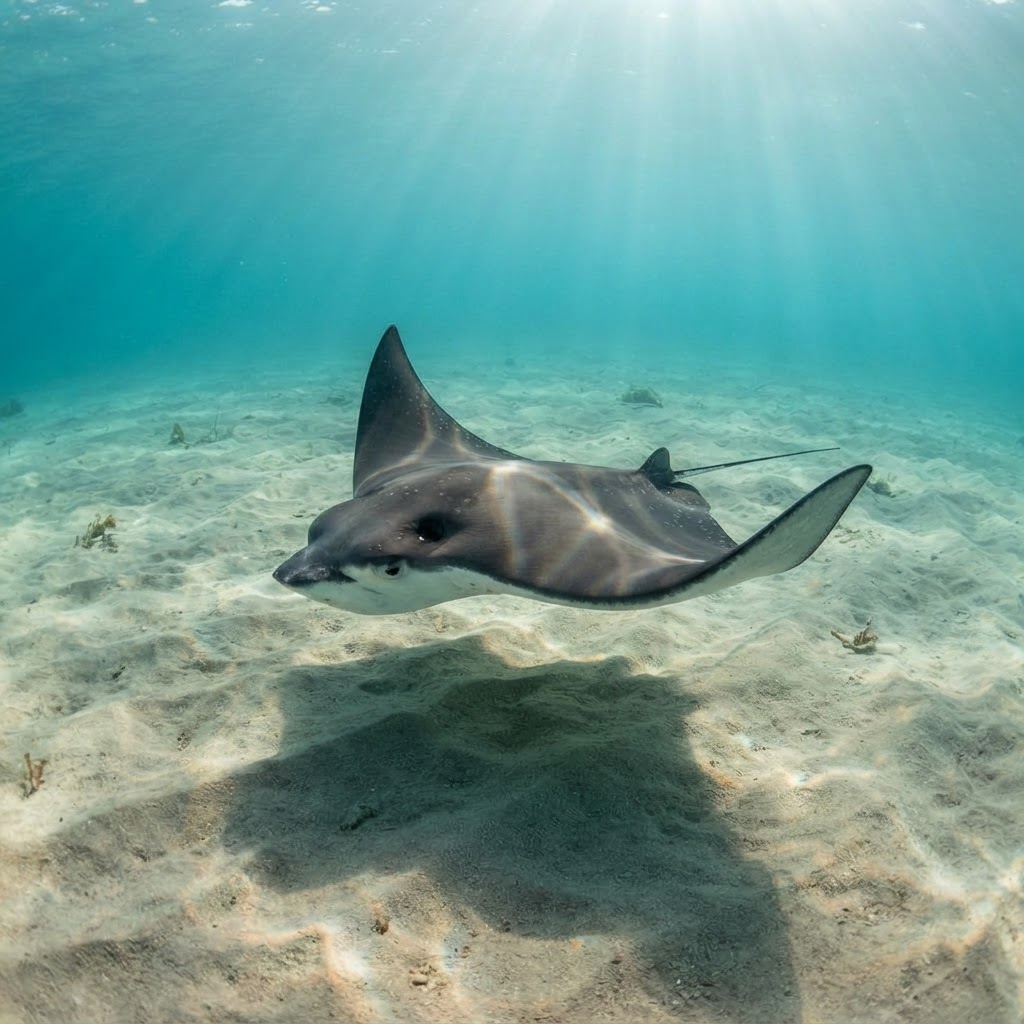
Reef neighbours a diver could mistake it for. Use the identification notes above to tell them apart.
Logged sightings for this species are currently too sparse to name a reliable region, so treat any encounter as a bonus rather than a planned target. Divers hoping to cross paths with it should keep an eye on warm, open-water sites within its documented temperature range rather than a specific country.
Mapping where Atlantic Manta Ray is logged…
Confirmed dive-site records for this species are still very limited, so there isn't yet a well-established region to recommend. Any sighting logged in warm tropical water within its known temperature range should be treated as a notable find.
There isn't enough data yet to identify a clear season, so sightings are best treated as possible year-round. Its recorded temperature range of 24.6 to 30.6C spans most tropical diving conditions.
Look for a broad diamond-shaped body, wide triangular pectoral fins, a pale underside, and cephalic lobes either side of the mouth that unroll when feeding. The dorsal surface ranges from solid dark to mottled patterns that can help with individual ID.
No, this ray poses no threat to divers. It has no stinger or bite risk and will typically glide past or move away calmly if approached respectfully.
Like other mantas, it produces only a single pup after a long pregnancy, which makes populations slow to bounce back from disturbance. This low reproductive output is one reason manta species worldwide are watched closely by researchers.
Site and sighting data is aggregated from diver logs, iNaturalist and GBIF. For taxonomy and conservation status:
Sicklefin Devil Ray
351 sites