Oplopomus oplopomus
A 7cm sand goby logged from the Philippines to Fiji, most reliably found perched over rubble patches on Red Sea and Visayas reefs.
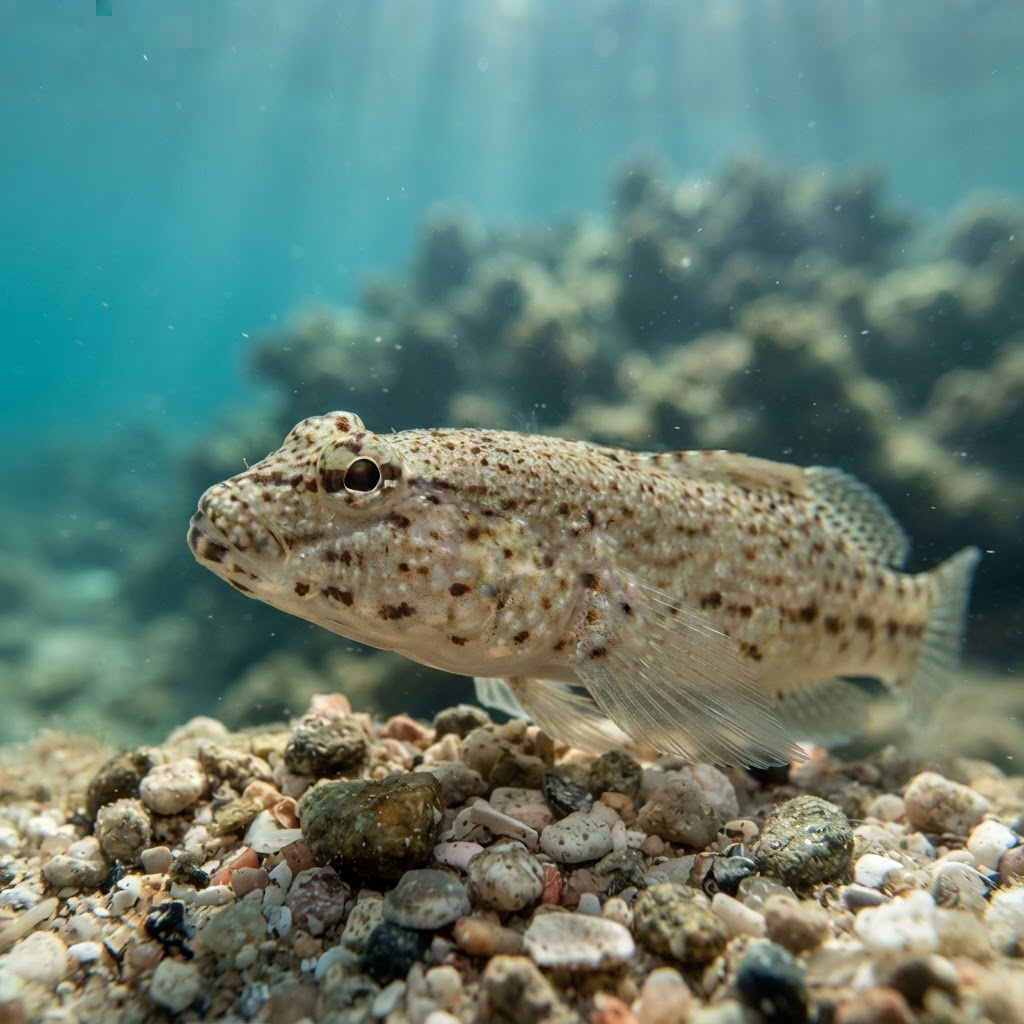
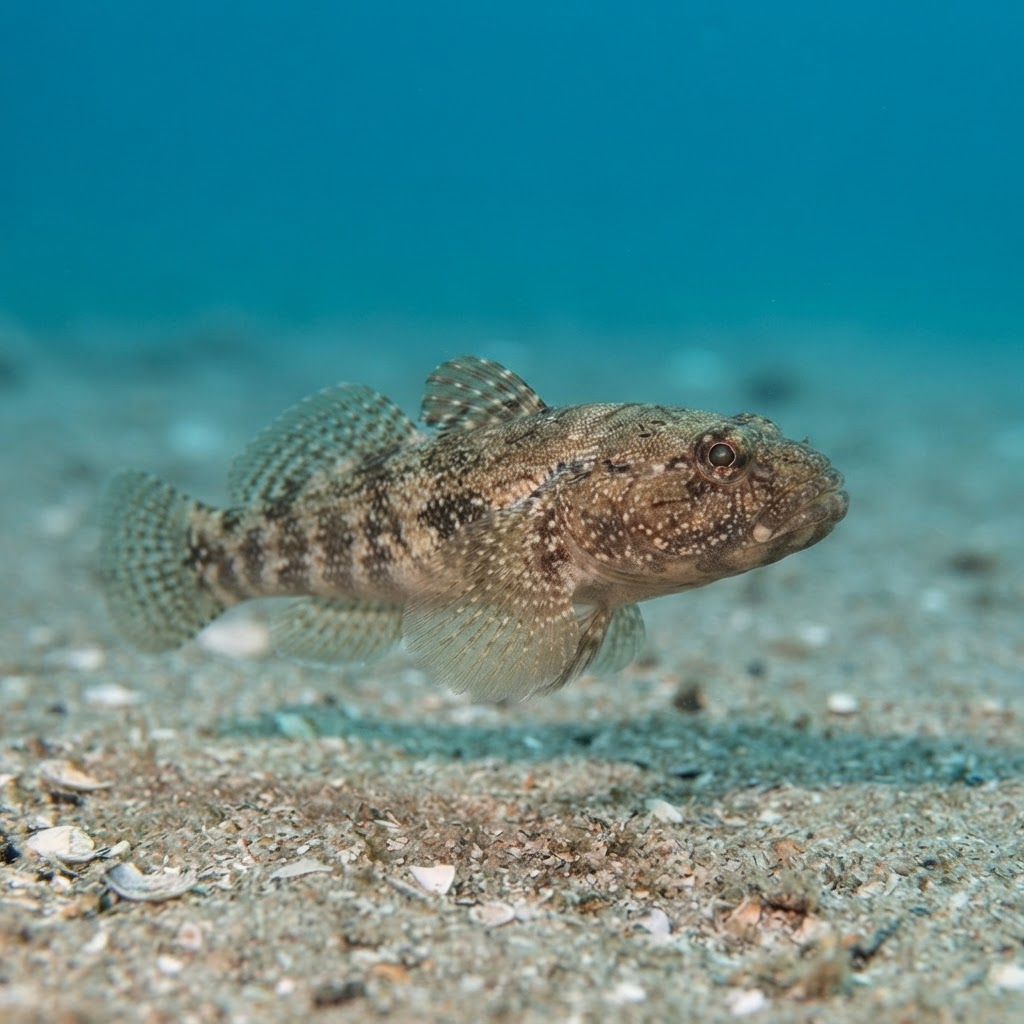
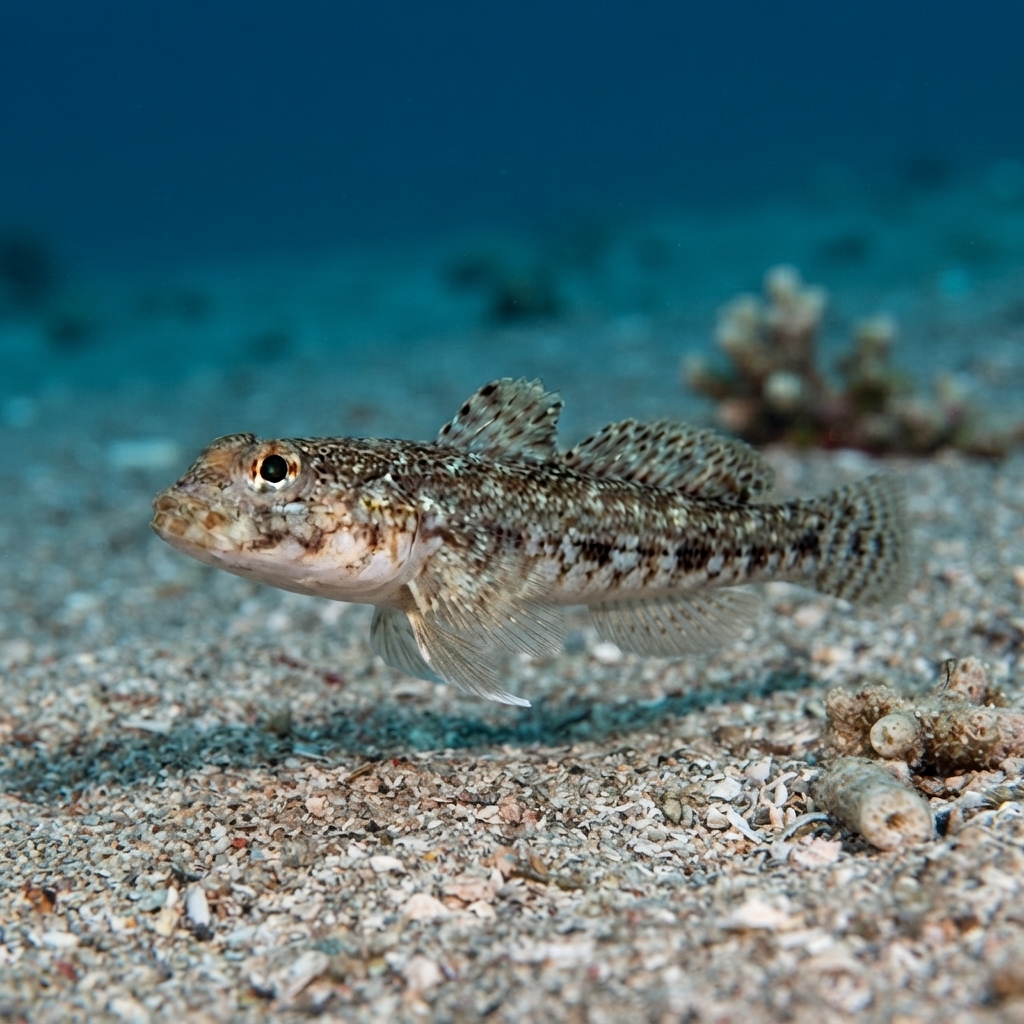
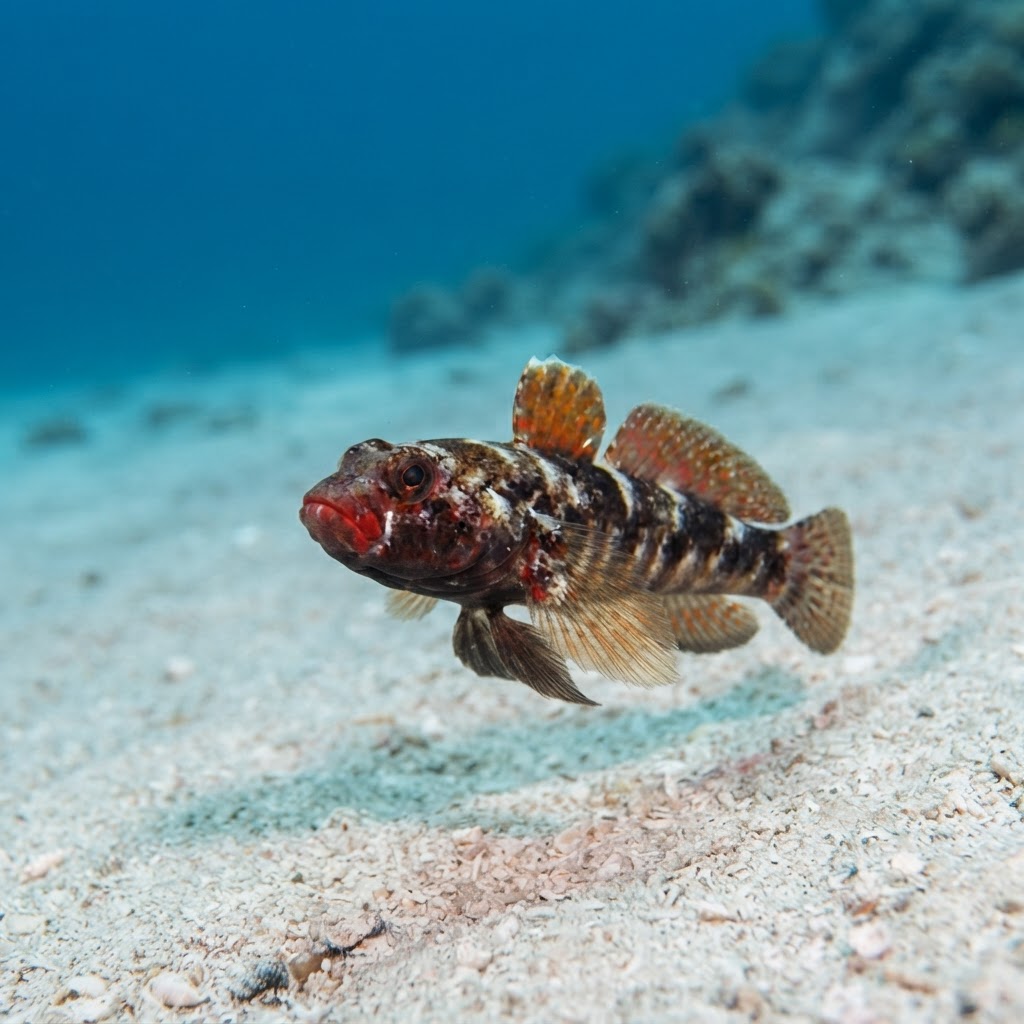
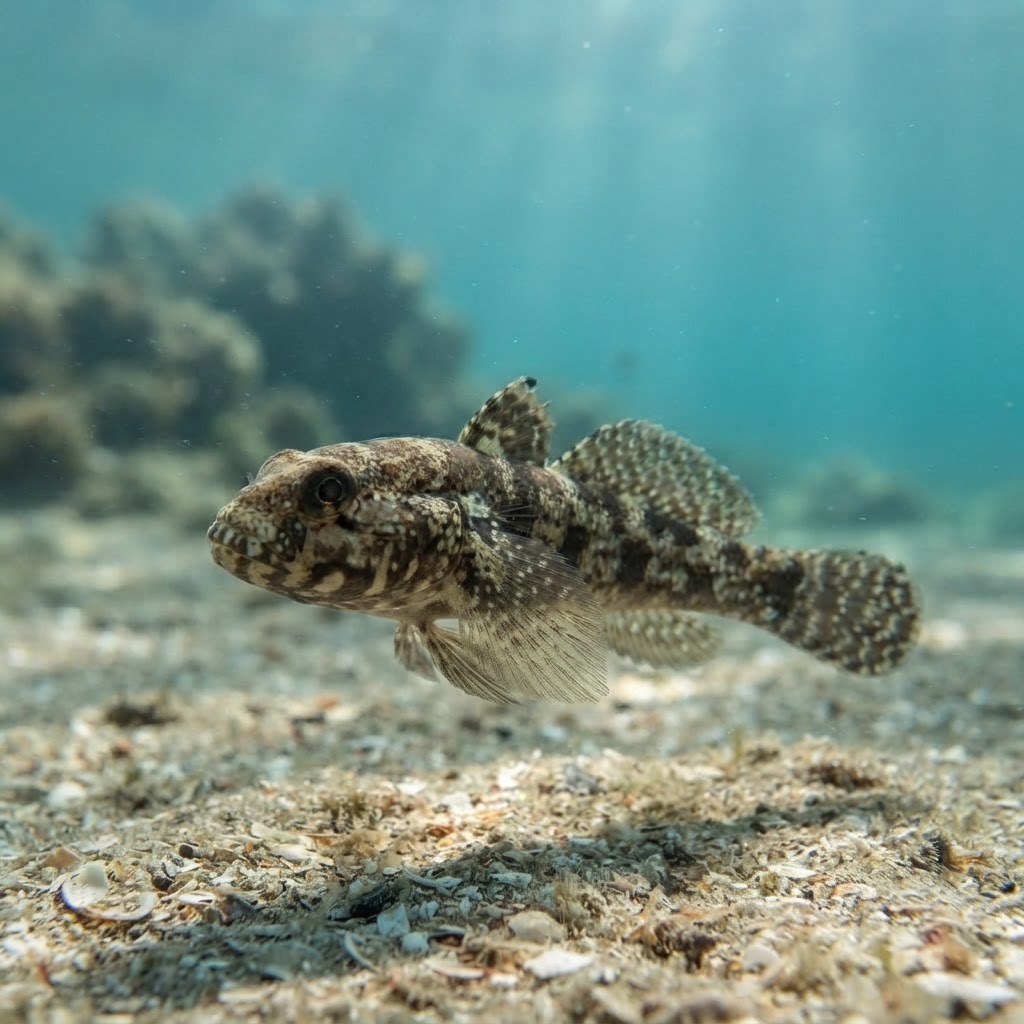
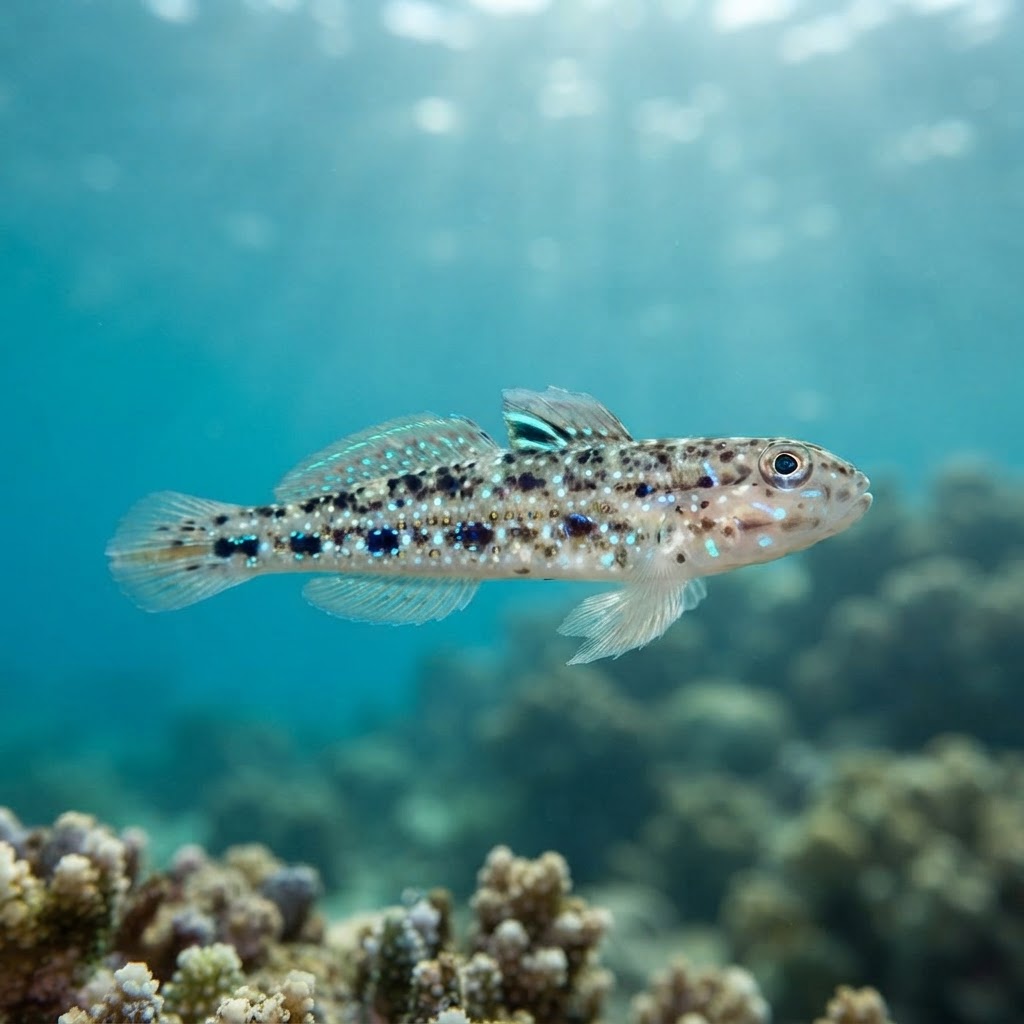
A slender goby barely 7 centimetres long, usually seen propped on its pectoral fins over sand or rubble rather than swimming freely. Body colour runs pale grey to sandy brown with a scatter of dark speckles and faint barring, blending closely with the rubble it sits on. The name comes from a small spine on the cheek, near the gill cover, though at typical viewing distance most divers key on its perched posture and mottled camouflage rather than the spine itself.
Look for it resting on sand or rubble patches propped up on its fins, often near small crevices or debris it can dart into if disturbed. It tends to hold still and rely on camouflage rather than fleeing immediately, which makes it easy to miss but rewarding once you get your eye tuned to the mottled pattern. Most sightings come from divers working slowly over rubble zones and sand flats rather than open reef.
Its patchy, sand-toned camouflage against rubble is its main defence, so it often goes unnoticed by divers scanning at normal speed rather than pausing to check bare patches between coral.
Sightings show no detectable seasonal pattern, and the water-temperature range it's found in, roughly 24.7 to 29C, spans the comfortable band on tropical reefs year-round. Treat it as a species to look for on any dive rather than one tied to a particular month.
Most reliably logged in the Philippines, particularly around the Visayas, with further strong records from Fiji's Viti Levu and Guam's Apra Harbor. It also turns up across Egypt's Red Sea Riviera and Marsa Alam area, and in Indonesian sites including Sulawesi and Bali, making it a widespread but low-density find across Indo-Pacific and Red Sea rubble and sand habitats.
Mapping where Spinecheek Goby is logged…
It's most consistently logged in the Philippines, especially the Visayas, along with Fiji's Viti Levu, Guam's Apra Harbor, Egypt's Red Sea Riviera, and Indonesia's Sulawesi. Look for it over sand and rubble patches rather than on hard coral.
There's no clear seasonal pattern in the sightings, and it's found across a warm year-round temperature range of roughly 24.7 to 29C. It's realistically a species to watch for on any dive rather than a seasonal target.
Look for a small, pale, speckled goby around 7 centimetres long propped on rubble or sand rather than swimming in open water. Its mottled grey-brown camouflage and stillness are the main giveaways, more than any single bold marking.
They stay small, topping out at around 7 centimetres, which is typical for gobies living tucked into rubble and sand habitats.
No, they pose no threat to divers. They're tiny, non-aggressive, and will simply retreat into rubble if approached too closely.
Rather than actively swimming around the reef, it spends most of its time perched motionless on sand or rubble, relying on camouflage to avoid predators and curious divers alike.
Site and sighting data is aggregated from diver logs, iNaturalist and GBIF. For taxonomy and conservation status:
Slender Goby
806 sites