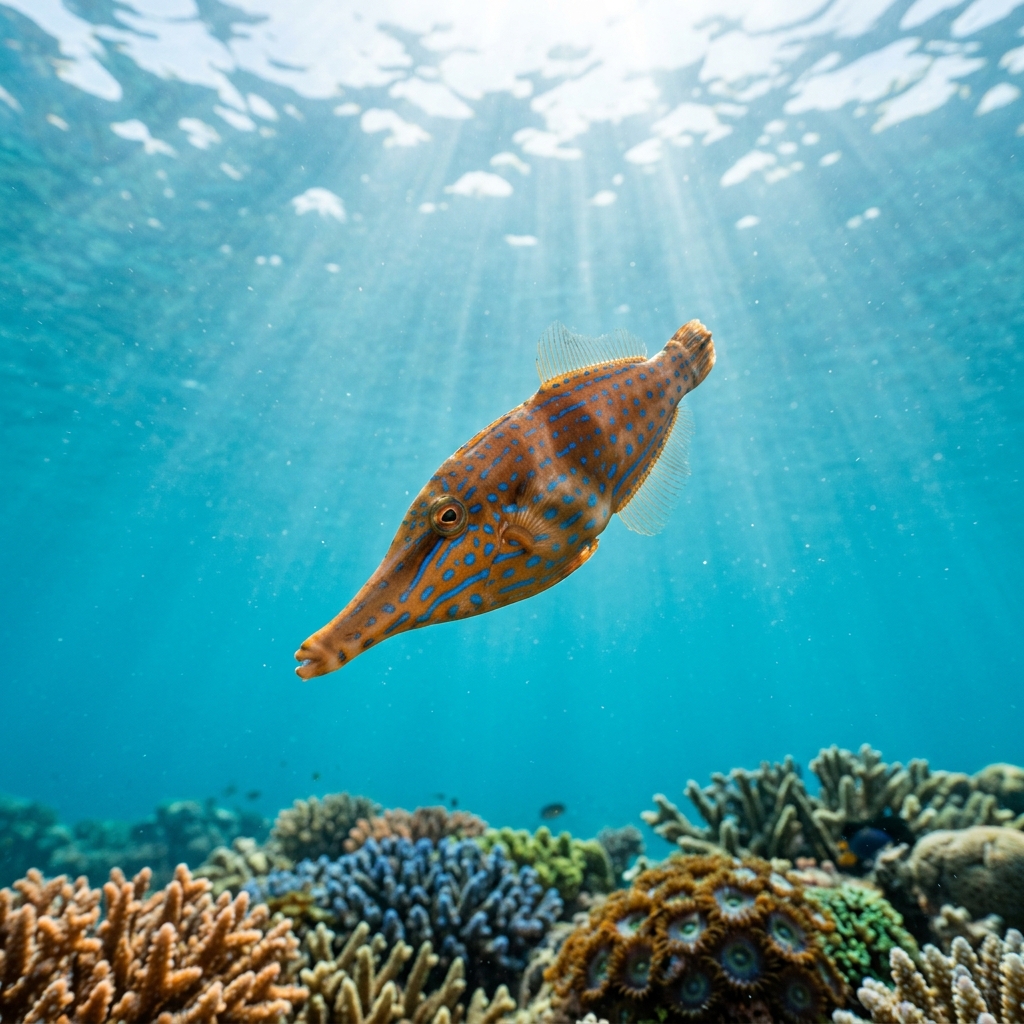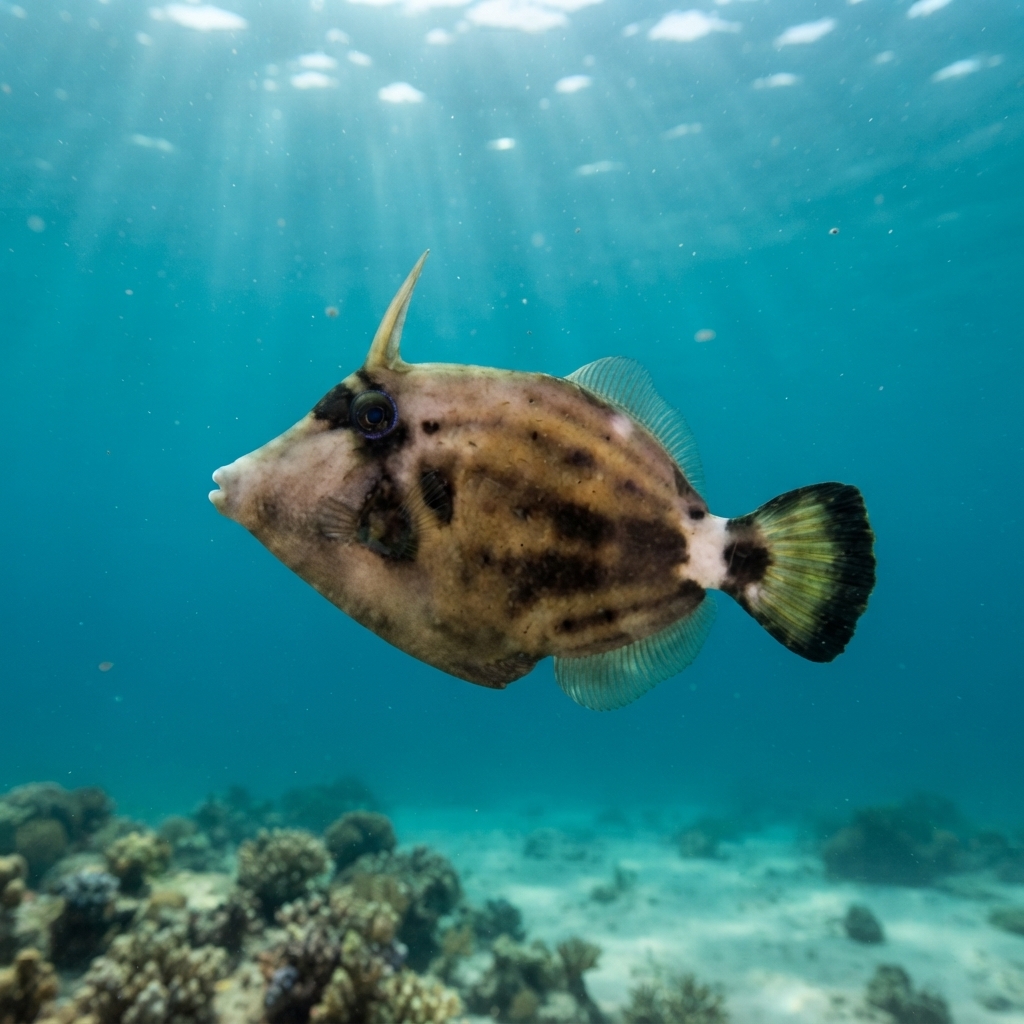
Cantherhines fronticinctus
An uncommon oval-bodied filefish logged mostly on Bali's reefs, comfortable year-round in 24.5-28.8C water.
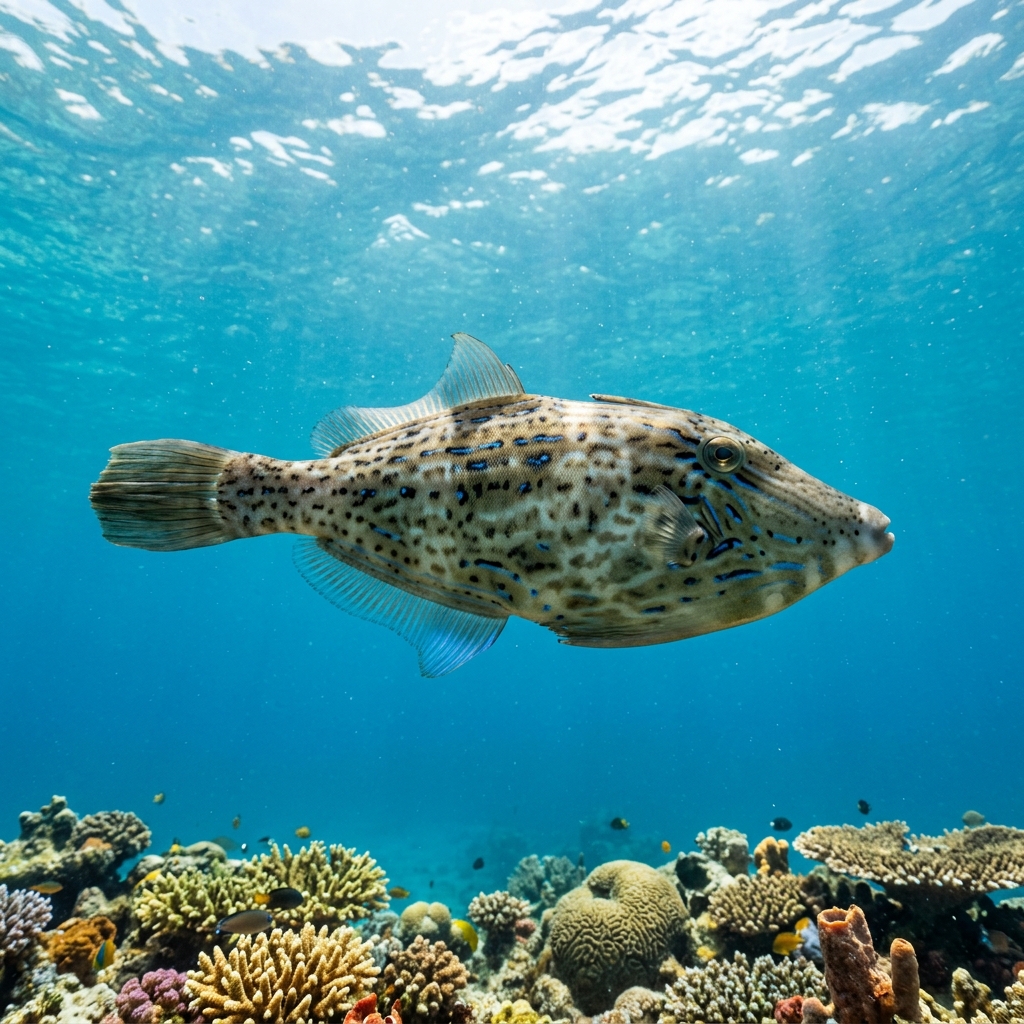
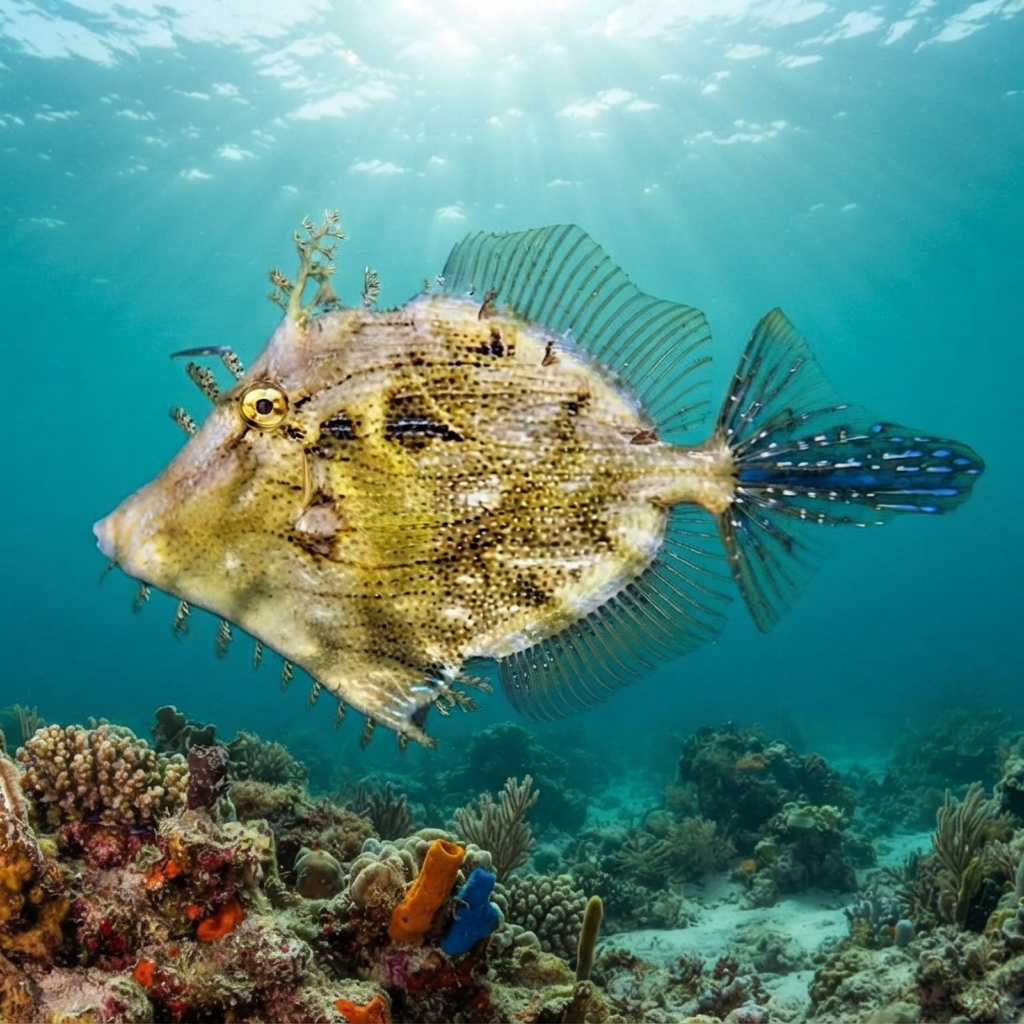
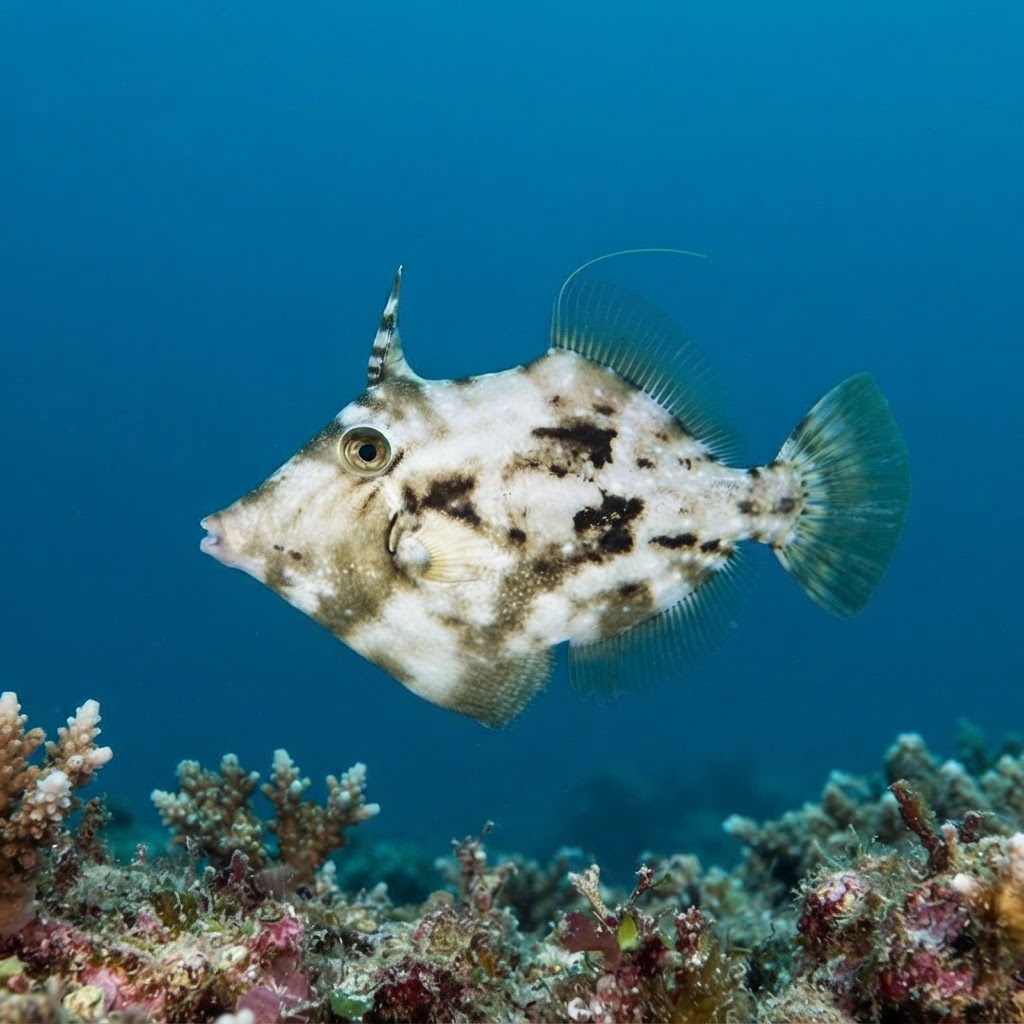
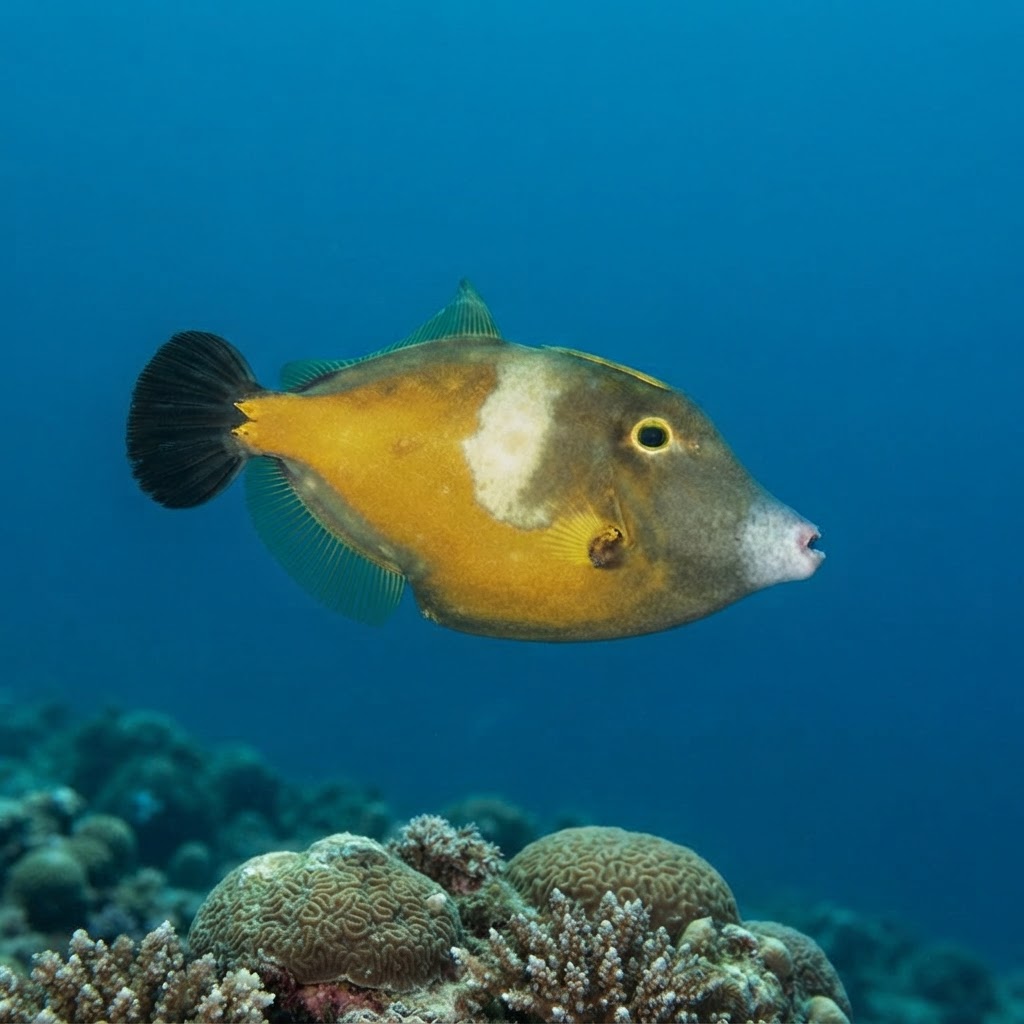
Small oval, laterally flattened body around 18 cm long with a mottled brown to grey pattern that can shift in intensity. The key mark is a pale, spectacle-like blotch ringing the eye, which is where the common name comes from. Like other filefish it swims with slow, deliberate fin beats and can flatten itself sideways against the reef when it wants to disappear. A small first dorsal spine sits just behind the eyes, though it is rarely raised unless the fish feels threatened.
Usually seen alone or loosely associating with the reef structure, picking around coral heads and rubble patches rather than out in open water. It tends to be unhurried around divers, more likely to sidle behind a coral head than bolt, which makes for a slow but rewarding photo subject if you are patient. Sightings are logged as uncommon even at sites where it turns up, so spotting one usually comes down to slowing down and scanning the substrate rather than expecting it on every dive.
Like other filefish, it can lock itself into crevices using that small erectile dorsal spine, wedging its body so predators cannot pull it free, a defence unique to this leathery-skinned family.
No clear seasonal pattern shows up in the sighting data, and its comfortable temperature range of roughly 24.5 to 28.8C spans what these reefs offer most of the year, so it is a year-round possibility rather than a seasonal target.
Reef neighbours a diver could mistake it for. Use the identification notes above to tell them apart.
Most reliably logged on Bali, Indonesia, which accounts for the bulk of recorded sightings, with further records from Nusa Tenggara and Sulawesi. A smaller number of divers have also found it in Okinawa and the Ryukyu Islands in Japan, so it is worth checking both Indonesian and Japanese reef systems if you are specifically hunting this species.
Mapping where Spectacled Filefish is logged…
Bali, Indonesia, is by far the most reliable place, with additional records from Nusa Tenggara and Sulawesi. Okinawa in Japan has also produced sightings, so it turns up across a range of Indo-Pacific reef systems.
There is no detected seasonal pattern, and it sits comfortably in water from about 24.5 to 28.8C, so it can be seen on tropical reefs at any time of year.
Look for a small, oval, flattened body around 18 cm long with a mottled brown pattern and a pale spectacle-like mark encircling the eye. It moves slowly with subtle fin beats and often flattens against the reef when approached.
They reach around 18 cm in length, making them a small, easy-to-overlook reef fish rather than a showy centrepiece.
No, they pose no danger to divers and are simply worth watching for calmly, since they will often retreat into the reef rather than approach.
Like other filefish, it can lock a small dorsal spine upright to wedge itself into a crevice, making it very hard for a predator to pull out once it has tucked in.
Site and sighting data is aggregated from diver logs, iNaturalist and GBIF. For taxonomy and conservation status:
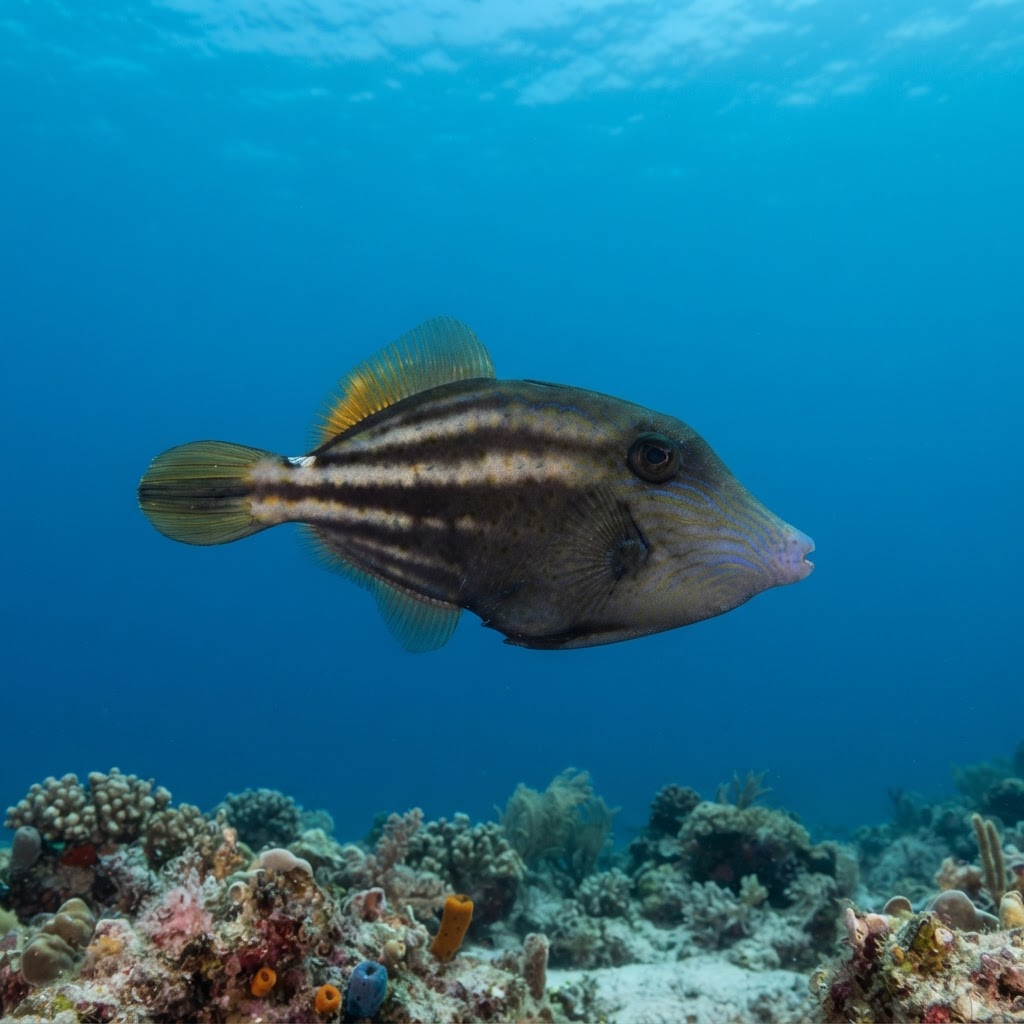
Orangespotted Filefish
836 sites