Arenaeus cribrarius
Sandy-bottom crab with pale specks, most reliably spotted around Florida and São Paulo, Brazil, in warm 22-28C water year-round.
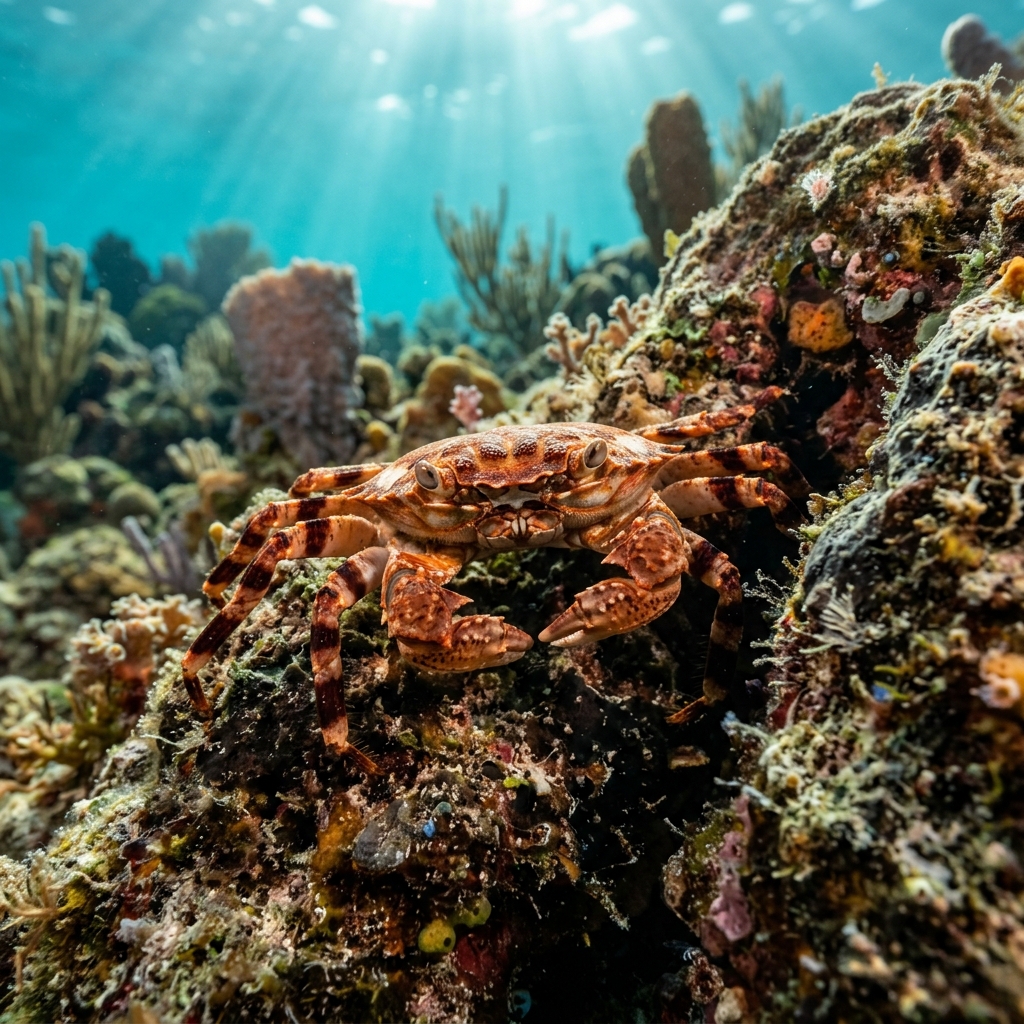
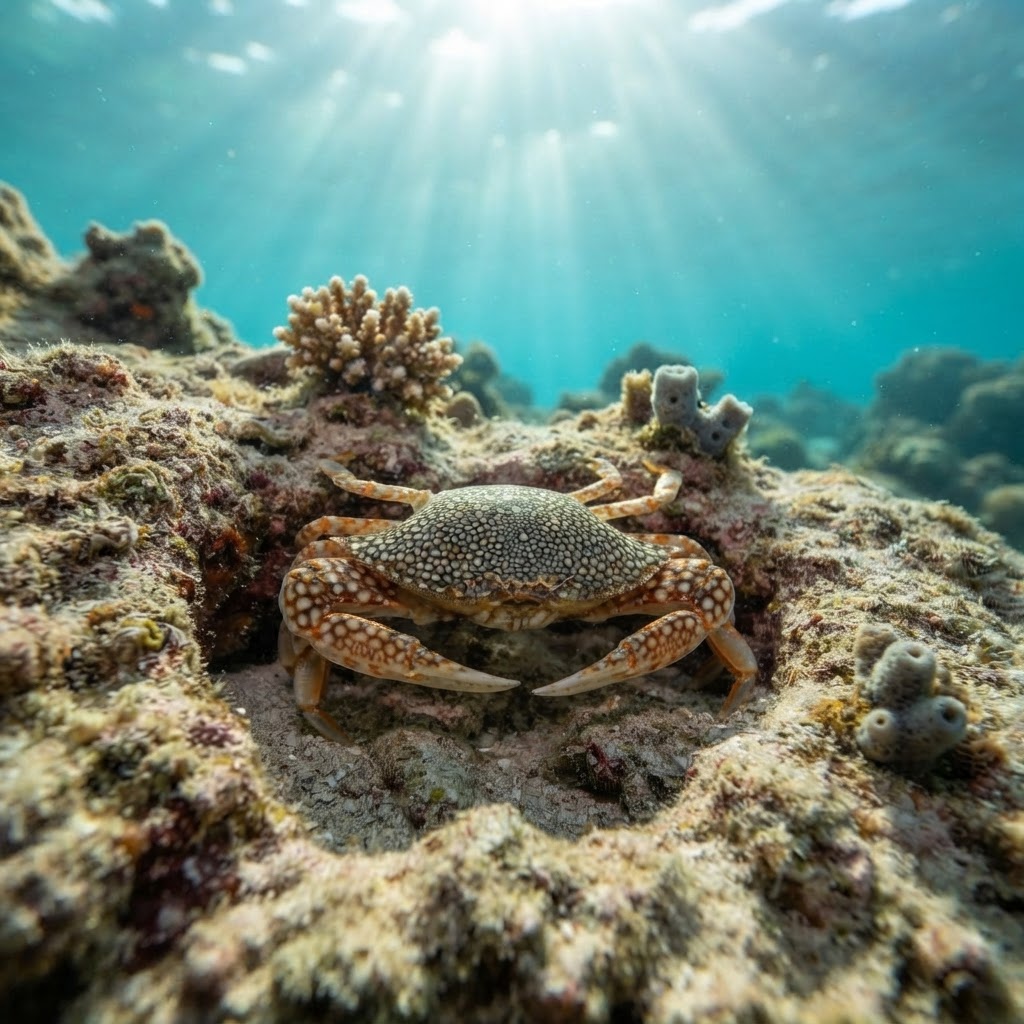
Grows to around 10 cm across a fan-shaped, greyish-green shell scattered with small pale speckles, which is where the common name comes from. The last pair of legs are flattened into paddles for swimming, a giveaway of the swimming crab family. Look for it half-buried in sand with just the eyes and antennae showing, or scuttling low over open sandy patches rather than clinging to reef structure.
Divers usually find it partly buried in sand or drifting across open bottom near seagrass edges, using those paddle-shaped back legs to swim short bursts when disturbed. It tends to hold still or bury deeper rather than flee outright, and most encounters are logged as uncommon or rare rather than a guaranteed sighting. Look for it on sandy patches between reef structure or along the sand-seagrass line, day or night.
Those flattened rear legs aren't just for show underwater, they let this crab swim in short controlled bursts, an unusual trick most crabs can't manage since they're built to walk rather than paddle.
Sightings show no clear seasonal pattern, so treat it as a year-round find. Observed water temperatures range from 22.1 to 28.1C, comfortably warm conditions that hold across most of the year in Florida and São Paulo.
Most consistently logged in Florida, United States, which accounts for the bulk of sightings, with a smaller but reliable population off São Paulo, Brazil. Texas and other Gulf and Atlantic coast sites in the United States turn it up occasionally, usually on sandy or seagrass bottoms rather than reef.
Mapping where Speckled Swimming Crab is logged…
Florida, United States, is the most reliable spot, with sandy and seagrass sites turning up the bulk of sightings. São Paulo, Brazil, and scattered sites in Texas also produce regular finds.
There's no strong seasonal pattern in the sightings, so it's a year-round encounter. It favours water between roughly 22 and 28C, which covers most of the diving season in its main range.
Look for a fan-shaped shell around 10 cm across in grey-green with small pale speckles, plus flattened paddle-like back legs. It's usually half-buried in sand rather than perched on the reef.
They reach about 10 cm across the shell, a modest size that makes them easy to miss when they're tucked into sand.
No, they pose no danger to divers. They're small, tend to bury or hold still when approached, and have no venom or aggressive defence worth worrying about.
Their last pair of legs is flattened into paddles, letting them swim in short bursts rather than only walk, a trait shared across the swimming crab family but still fun to spot in action.
Site and sighting data is aggregated from diver logs, iNaturalist and GBIF. For taxonomy and conservation status:
European Green Crab
2,469 sites