Sargocentron punctatissimum
Reddish, big-eyed reef fish hiding in Hawaii's crevices and Okinawa's reef ledges, comfortable year-round in 25 to 29 C water.
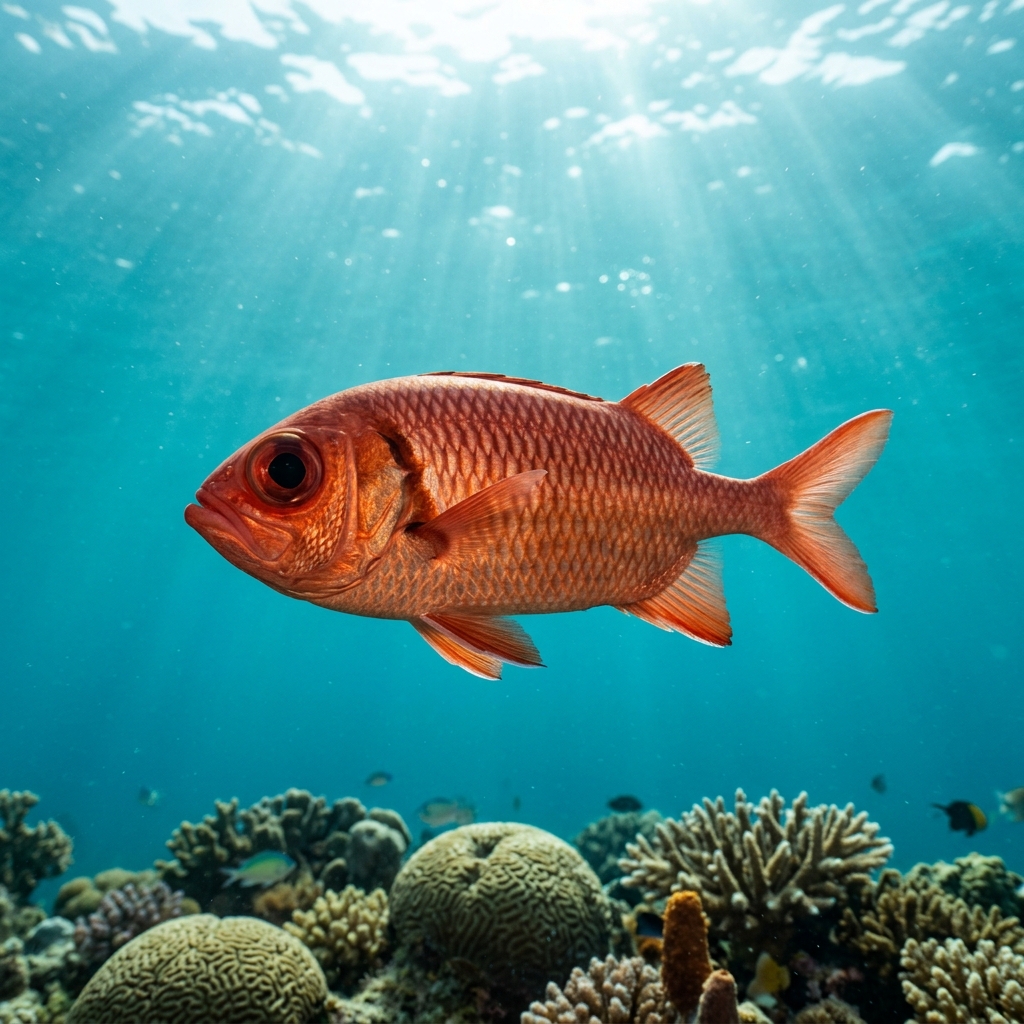
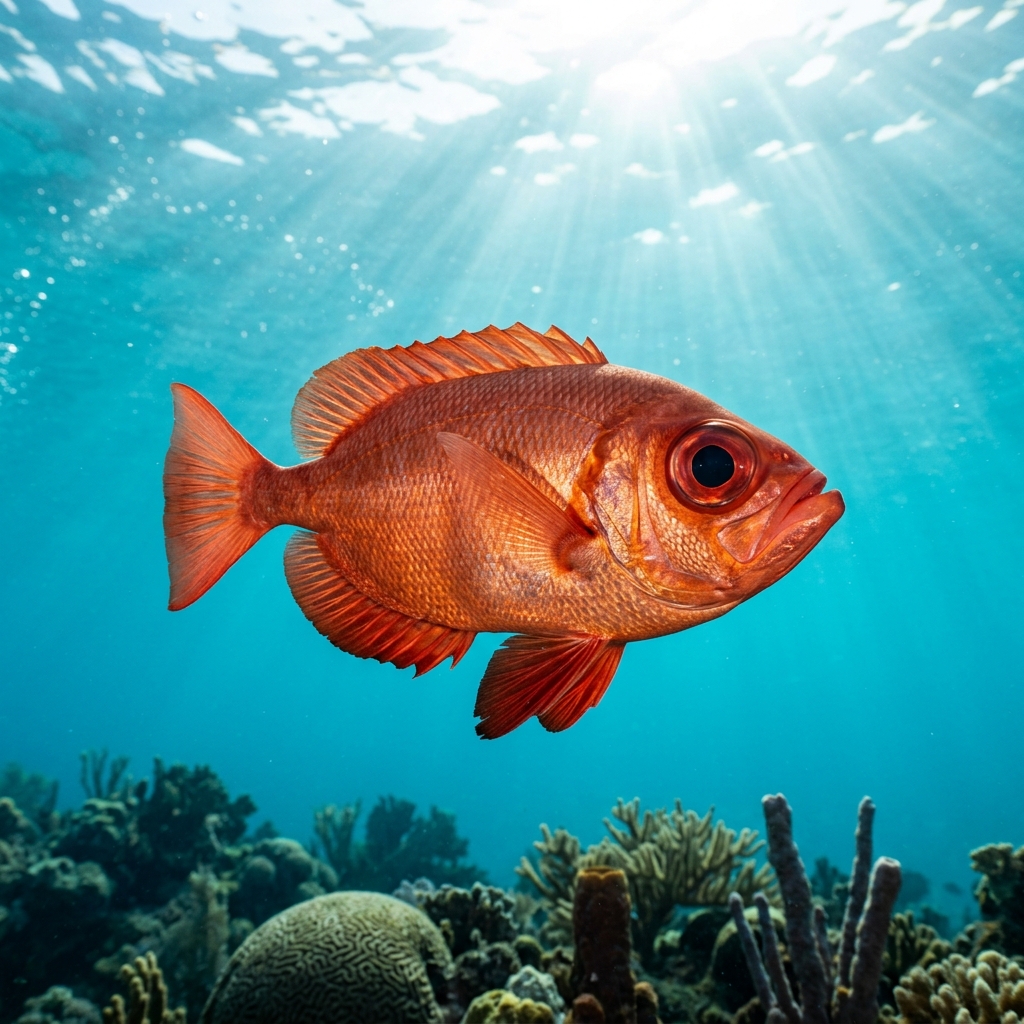
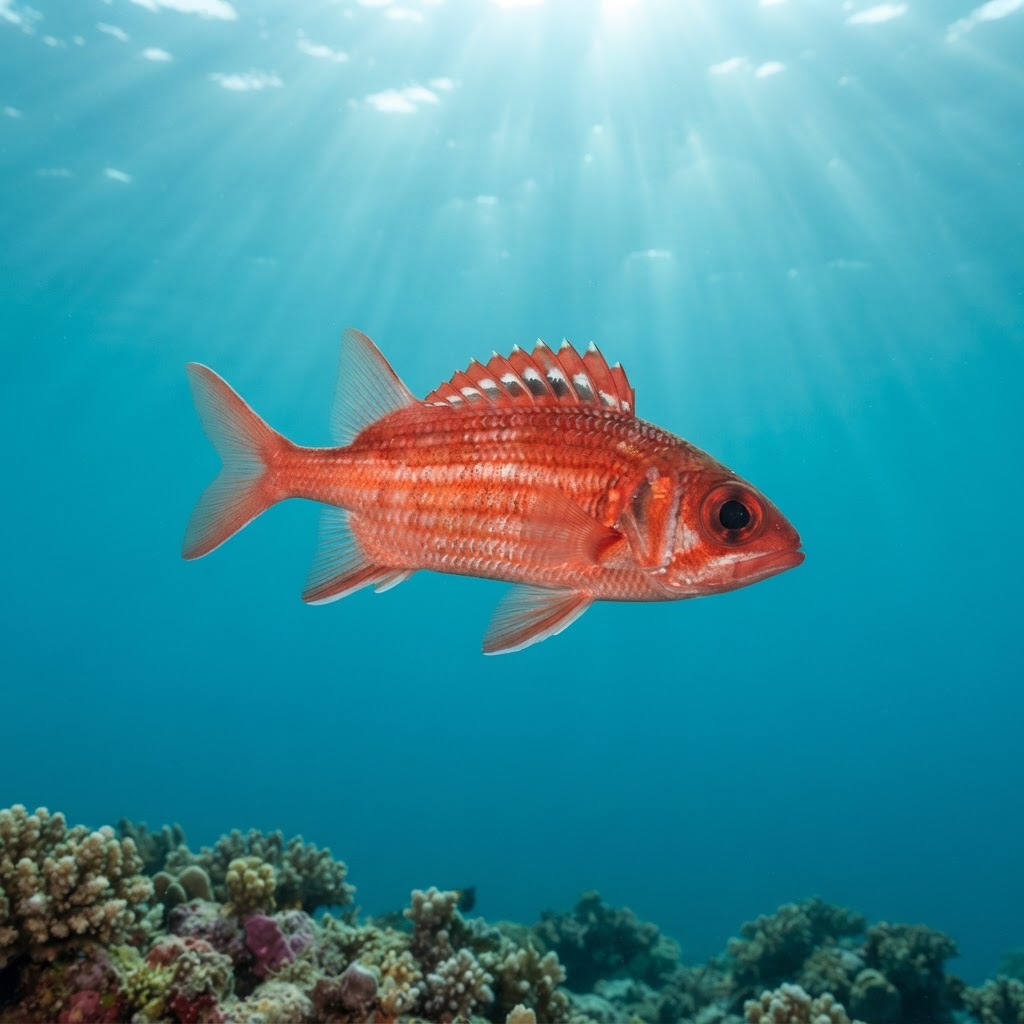
A small reddish fish, around 16 cm, with fine pale speckling scattered over the body that gives it a dusted look rather than clean stripes. Look for the classic squirrelfish shape: a spiny dorsal fin, a slightly upturned snout, and large dark eyes built for low light. It usually shows only part of itself, snout and eyes poking out from a crevice or overhang rather than swimming in the open.
Expect to find it wedged into a crevice, under a ledge, or tucked into reef structure during the day, only its eyes and snout visible from outside. It is a nocturnal feeder, so night dives give better odds of seeing it out and active rather than hiding. Divers who hover and peer into holes rather than swim past tend to spot it more often, since it holds still and relies on staying hidden.
Those oversized eyes are a giveaway that this is a night-shift hunter, built to pick off small invertebrates and zooplankton once the reef goes dark, spending daylight hours holed up out of sight.
No clear seasonal pattern shows up in the sighting data, and its comfort range of roughly 25 to 29 C matches tropical reef conditions year-round, so any month works in Hawaii or Okinawa.
Most reliably logged in Hawaii, particularly around its reef ledges and lava crevices, with a second reliable population found across Okinawa and the wider Ryukyu Islands in Japan. Outside these two hotspots, sightings elsewhere in the data are sparse, so these are the two places to plan a search.
Mapping where Speckled Squirrelfish is logged…
Hawaii is the strongest spot for sightings, with a second reliable population around Okinawa and the Ryukyu Islands in Japan. It's logged as uncommon at most sites, so it takes a bit of searching in reef crevices.
There's no strong seasonal pattern in the data, and it sits comfortably in 25 to 29 C water year-round, so it's a fair target on any dive trip to Hawaii or Okinawa.
Look for a small reddish fish with fine white speckling, a spiny dorsal fin, and large dark eyes peering out from a reef crevice or ledge. It rarely swims in the open, so the ID is usually made on partial views.
They top out at around 16 cm, small enough to disappear completely into a narrow crevice or hole in the reef.
They're nocturnal feeders that spend daylight hours tucked into crevices and under ledges, only showing eyes and snout. Night dives give a much better chance of seeing one out and actively hunting.
Site and sighting data is aggregated from diver logs, iNaturalist and GBIF. For taxonomy and conservation status:
Soldierfish
3,612 sites