Ephippidae
Spadefish roam tropical reefs from the Maldives to Florida. Learn their bold banded pattern, where to find schools, and what water temps they favour.
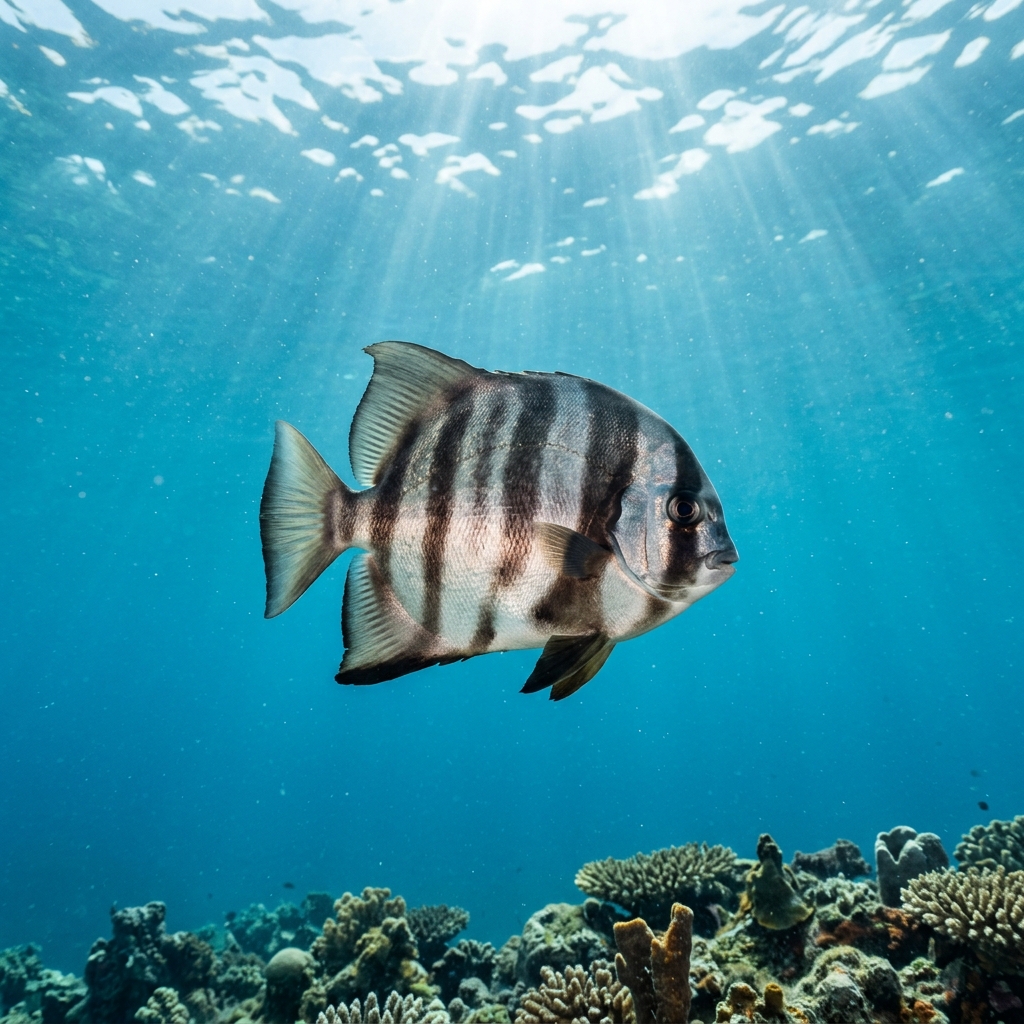
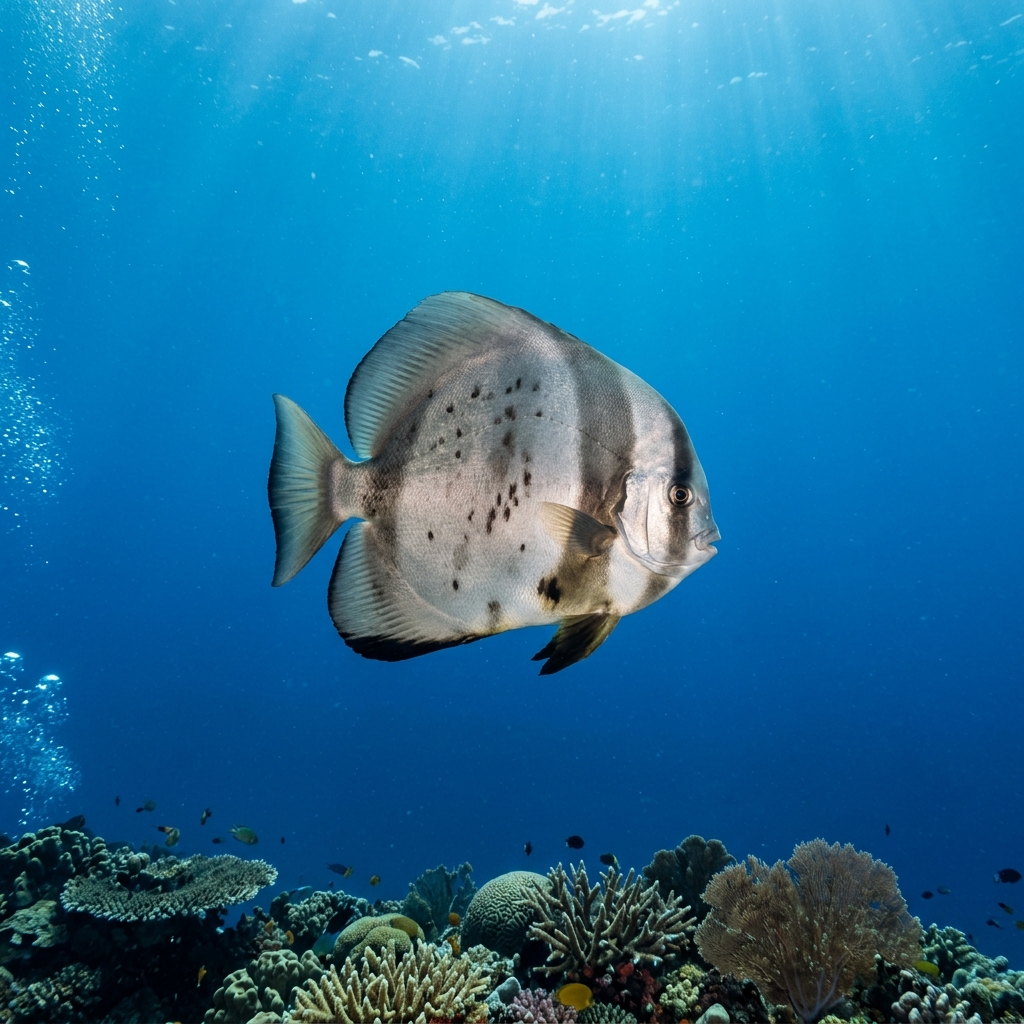
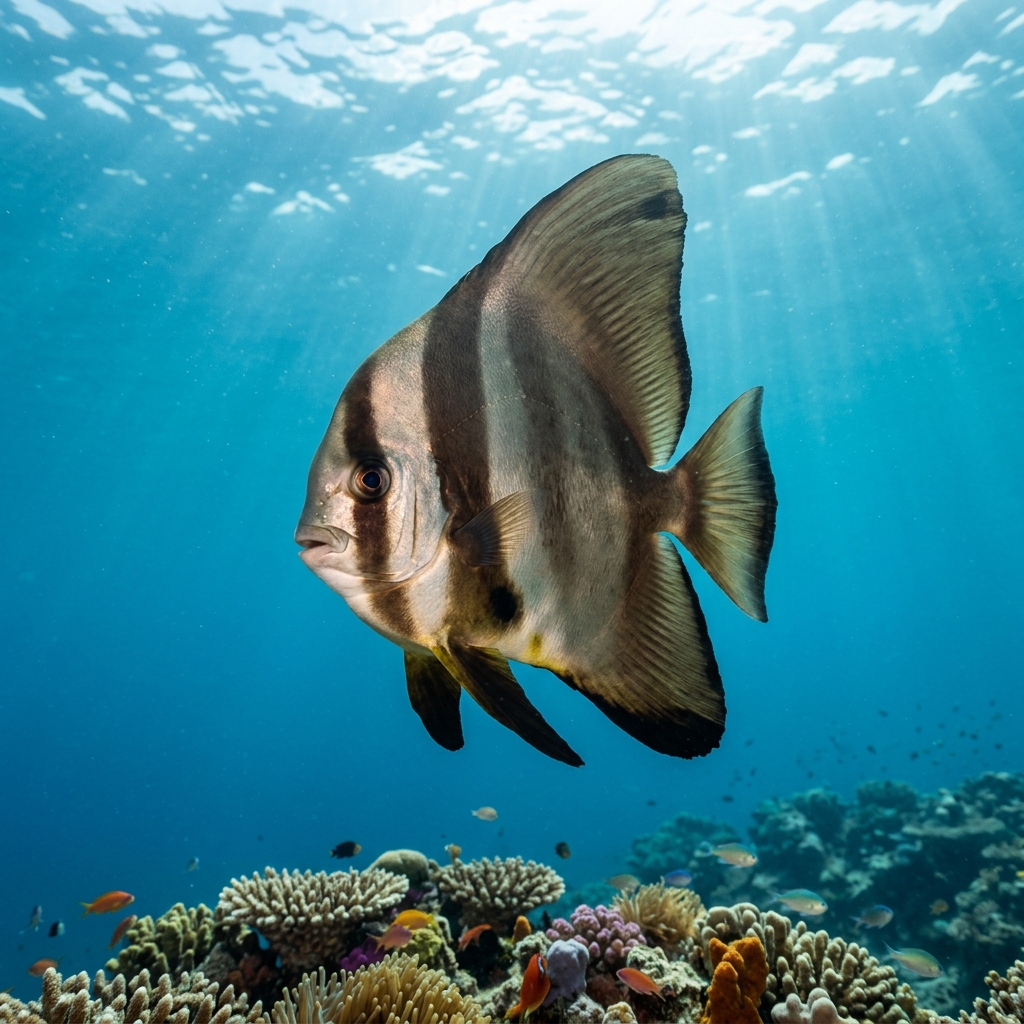
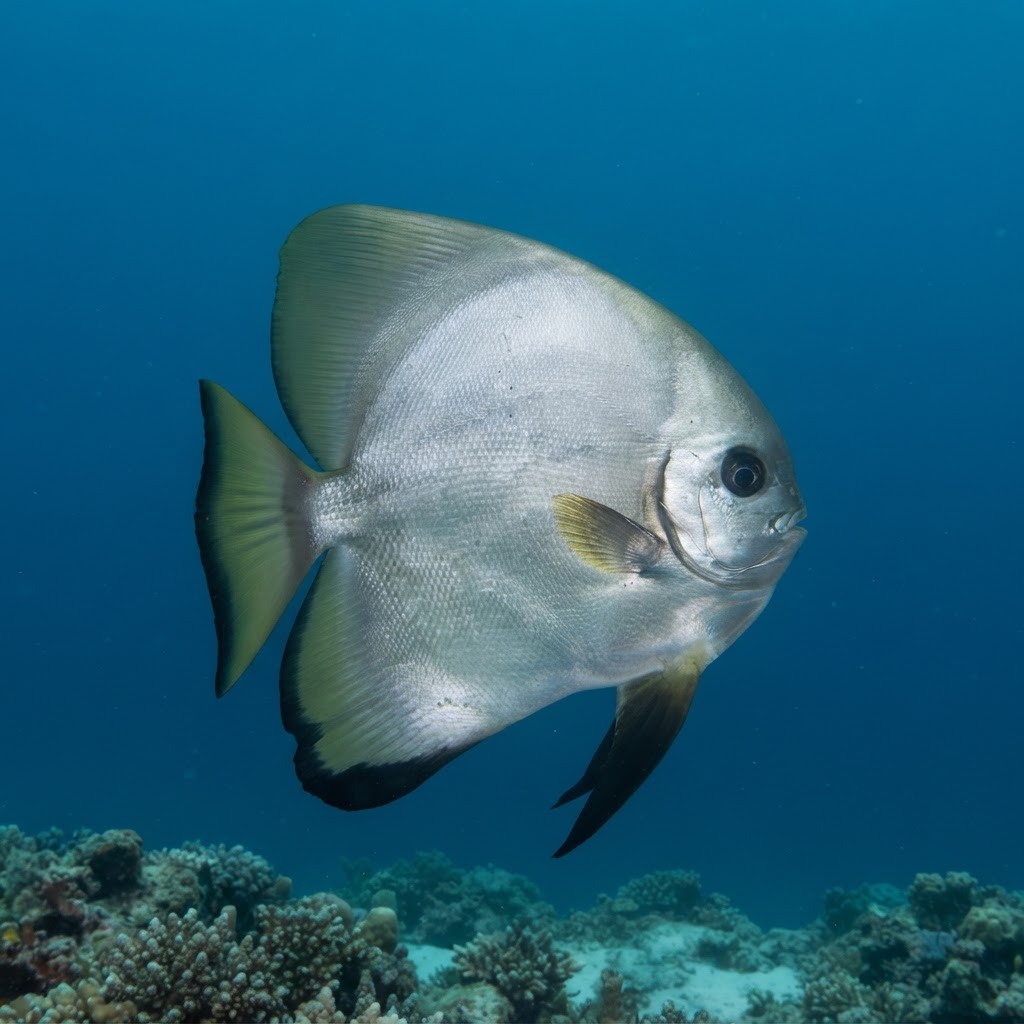
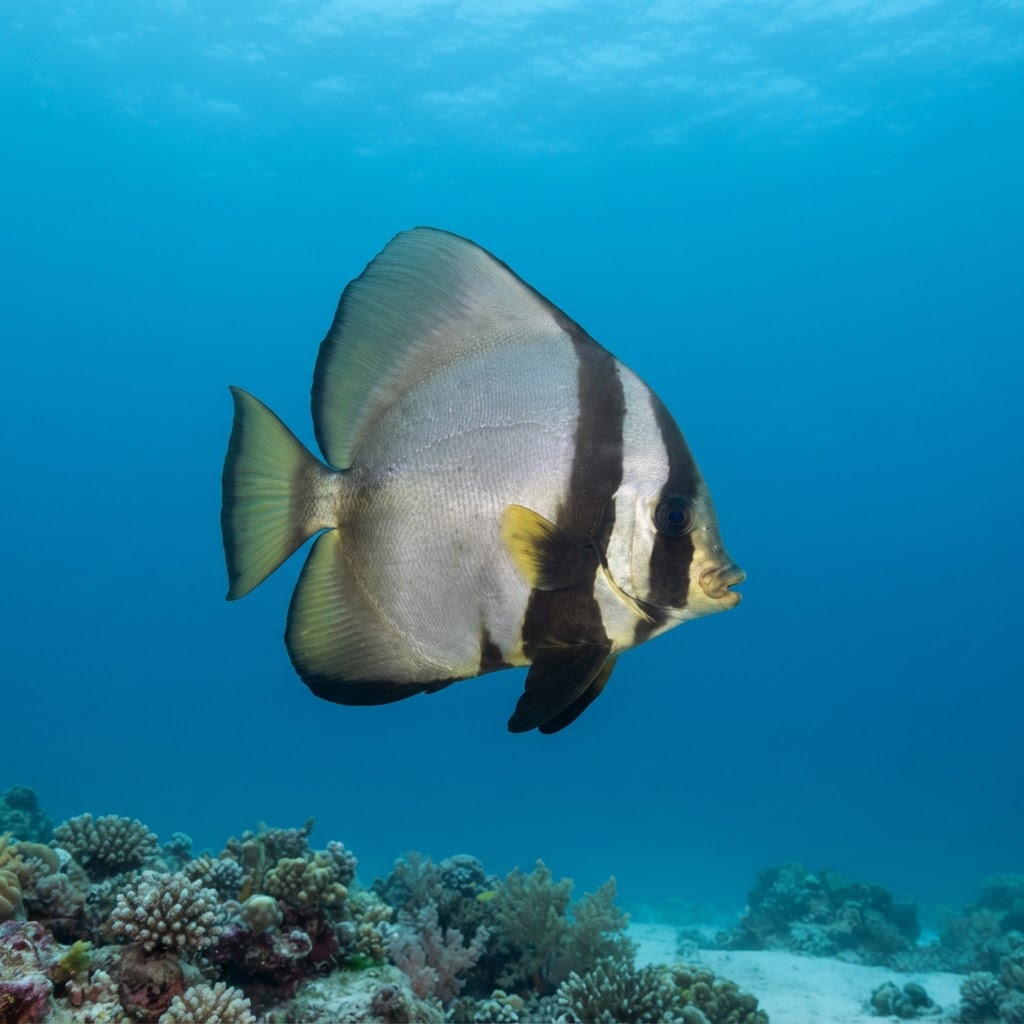
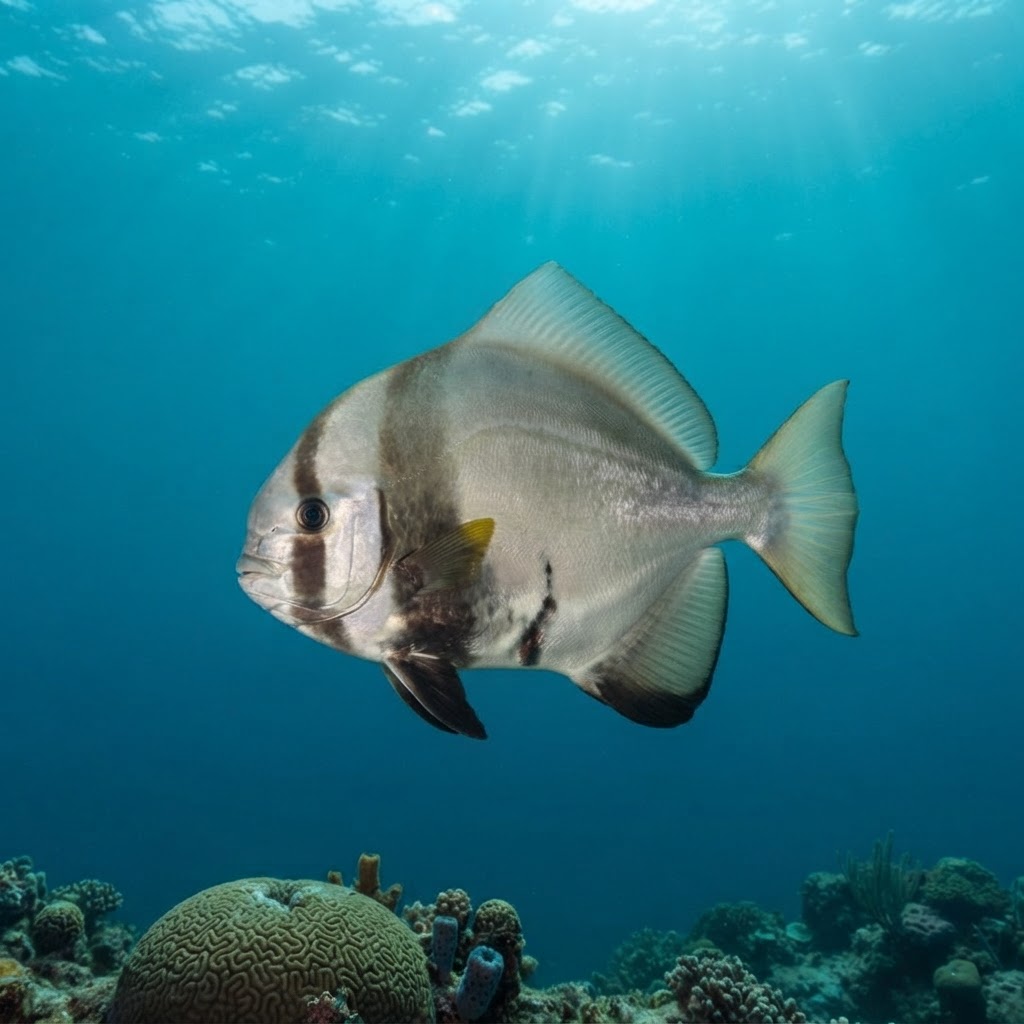
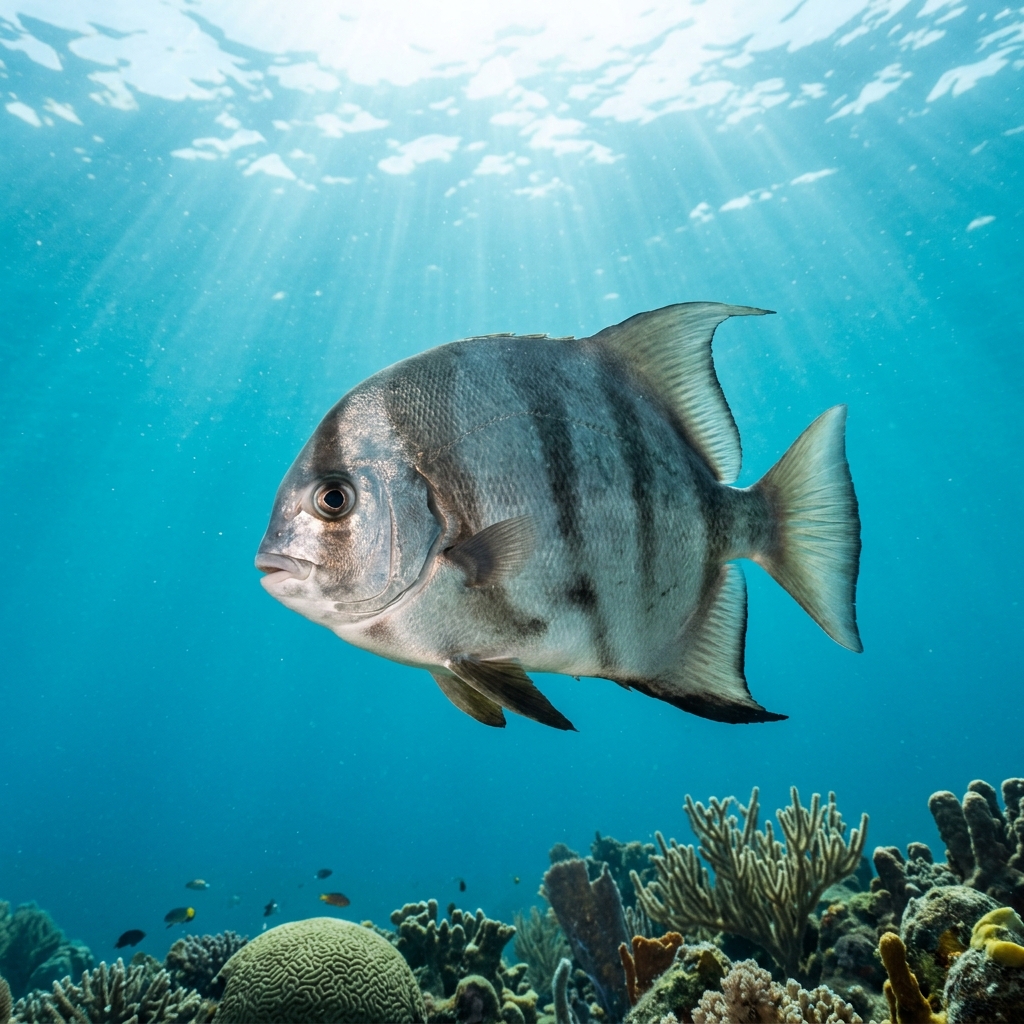
Bold, alternating silver and dark vertical bands on a deep, disc-shaped body are the giveaway underwater. Adults are noticeably deep-bodied and laterally compressed, almost round in profile, which helps separate them from most other mid-water schoolers. Juveniles look nothing like adults: look for small, dark brown-to-black fish with irregular pale markings drifting near the reef surface.
Spadefish are typically seen schooling in open water just above or alongside the reef, often in impressive mid-water aggregations that hold their ground as divers approach. They tend to be inquisitive rather than skittish, and slow, calm movements will often allow you to move right alongside a school. Watch for them hovering near reef walls, wrecks, and current-exposed points where plankton and small invertebrates concentrate.
The deep, disc-like body shape that gives spadefish their distinctive silhouette is thought to mimic floating debris or dead leaves when juveniles are small and dark, offering camouflage in open water before they are large enough to school safely.
No concentrated season emerges from the dive data, so spadefish can be treated as a year-round target on suitable reefs. They tolerate water temperatures from around 21 to 29 °C, meaning they are comfortable across both tropical and warm-temperate reef systems throughout the year.
Reef neighbours a diver could mistake it for. Use the identification notes above to tell them apart.
Spadefish are most widely logged across the Indo-Pacific and Atlantic tropics, with the strongest coverage in the Maldives, Indonesia, the Philippines, and Thailand. In the Atlantic, Florida and the wider Southeast US coast are a consistent region, while Brazil rounds out the western Atlantic presence. Reef sites across Queensland and Western Australia also produce regular records.
Mapping where Spadefish is logged…
Spadefish are found across a wide range of tropical and subtropical reef systems. The Maldives, Indonesia, the Philippines, and Thailand are among the most prominent Indo-Pacific destinations, while Florida and the Southeast US coast are reliable Atlantic spots. Brazil and Queensland, Australia also feature regularly in dive records.
Dive data shows no strong seasonal peak, so spadefish are essentially a year-round target wherever they occur. Their observed temperature range of roughly 21 to 29 °C means they are at home on tropical reefs throughout the year and can even appear on warmer temperate reefs in summer months.
Look for a very deep, round, disc-shaped body with bold alternating silver and dark vertical bands. That combination of body shape and banding pattern is distinctive. Schools of adults hovering mid-water over reefs or wrecks are a classic sighting. Juveniles are dark and blotchy and can be easily overlooked.
No. Spadefish pose no threat to divers. They are peaceful schooling fish and generally allow relaxed, close observation. No special precautions are needed around them.
Juveniles are dark brown to black with irregular pale markings, which is thought to mimic floating debris or dead leaves in open water, providing camouflage when the fish are small and vulnerable. As they grow and begin schooling, the adult silver and banded colouration develops, which may offer different protection within the group.
Site and sighting data is aggregated from diver logs, iNaturalist and GBIF. For taxonomy and conservation status:
Atlantic Spadefish
417 sites