Platax teira
Spot Longfin Baitfish across the Maldives, Red Sea and Great Barrier Reef. Sightings peak Jul, Apr in the north. Here's where to look and how to recognise them.
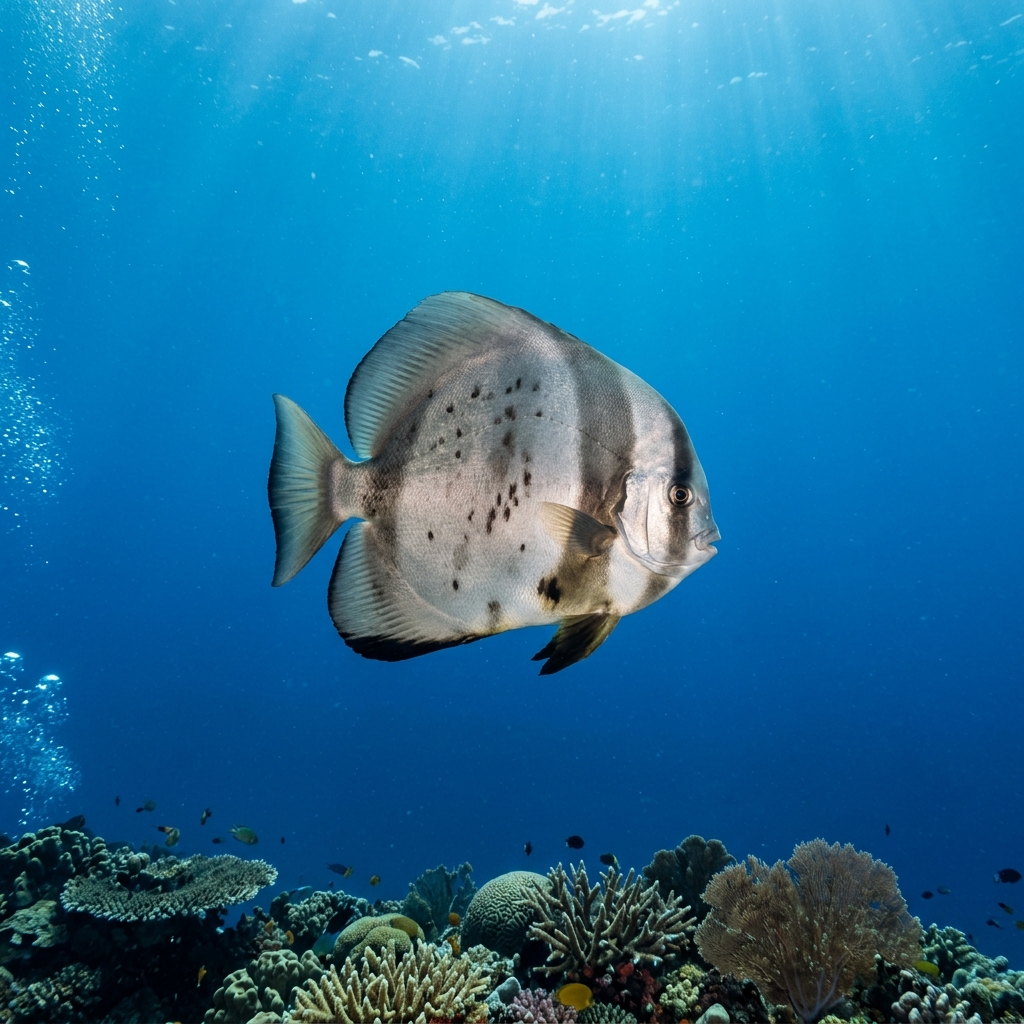
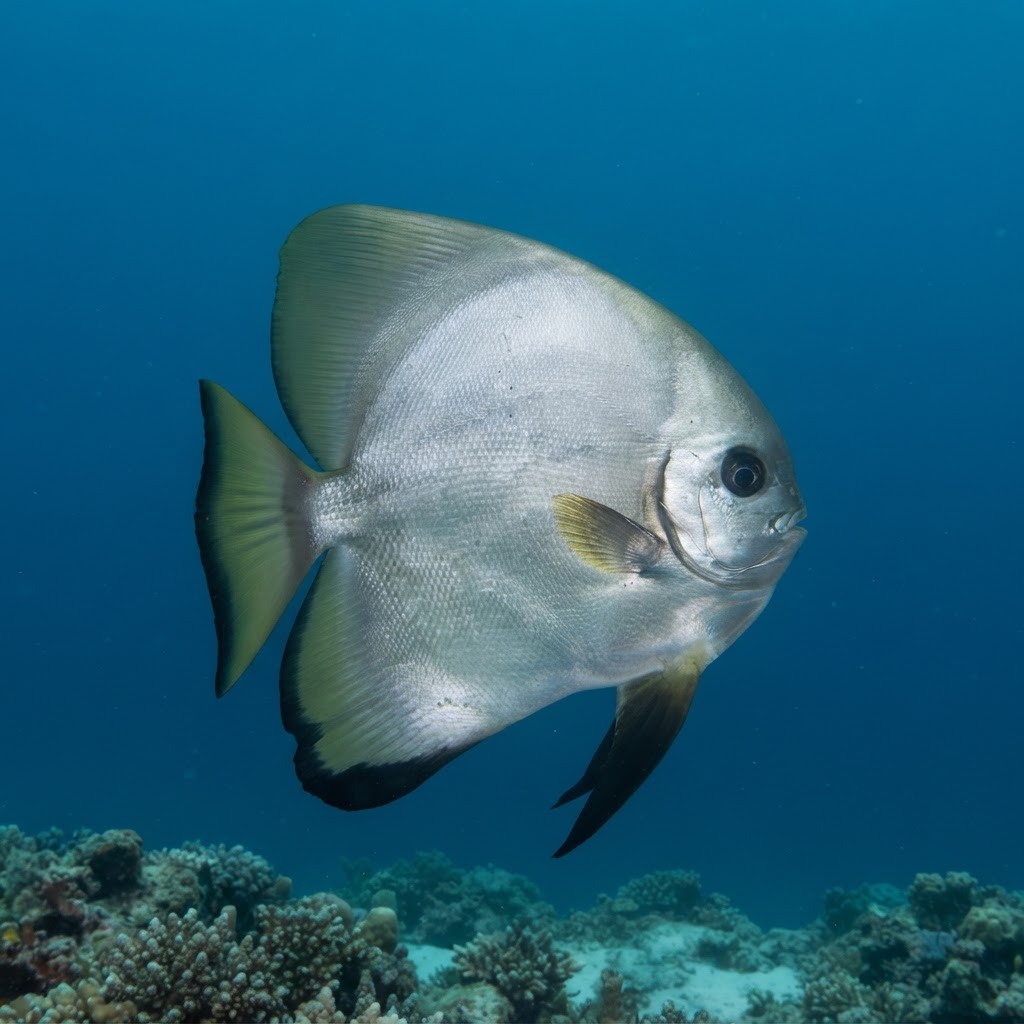
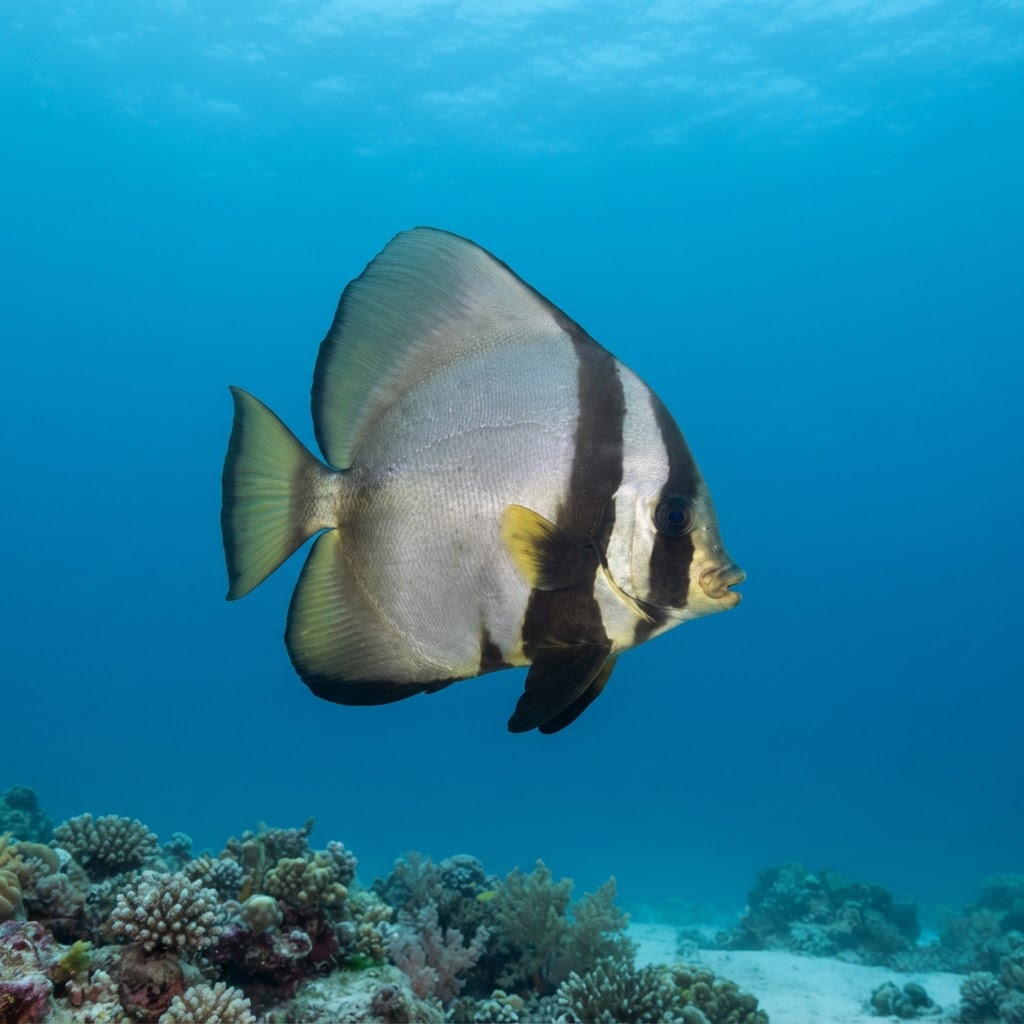
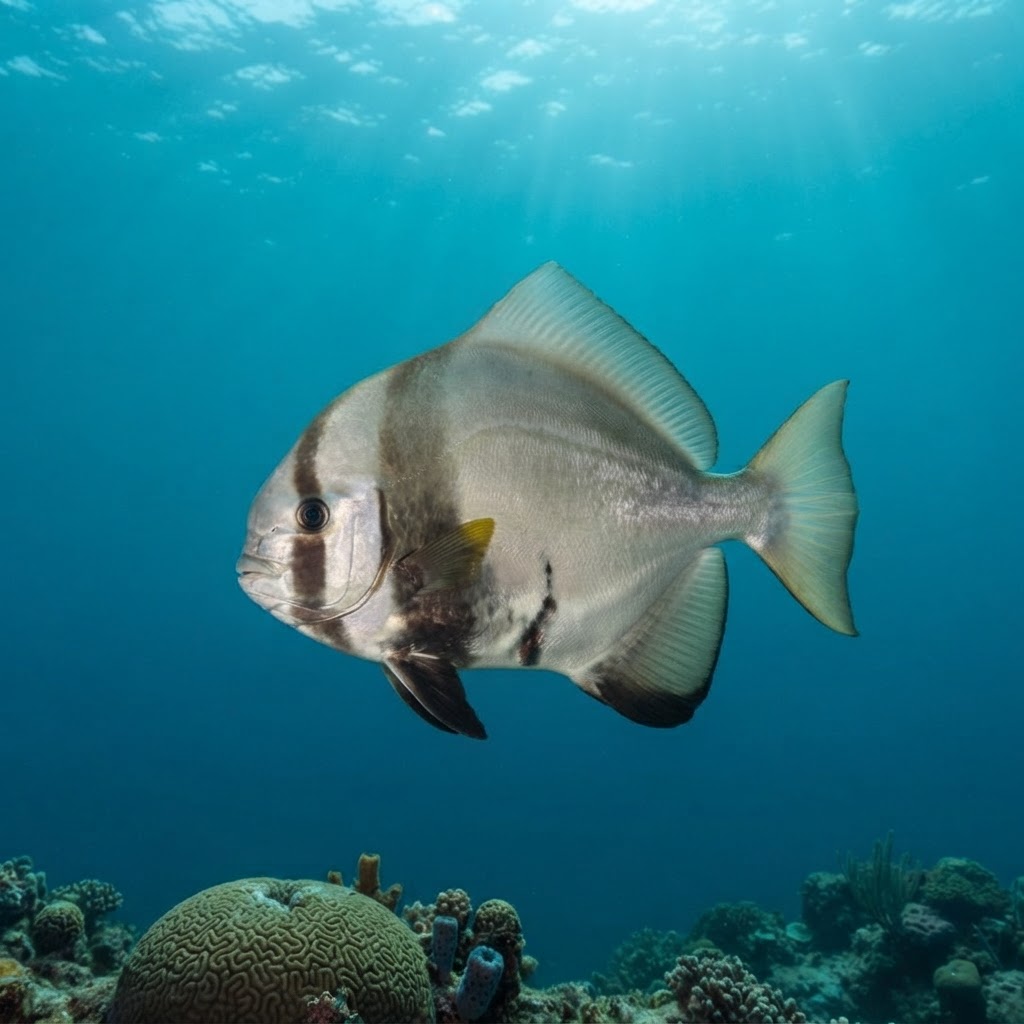
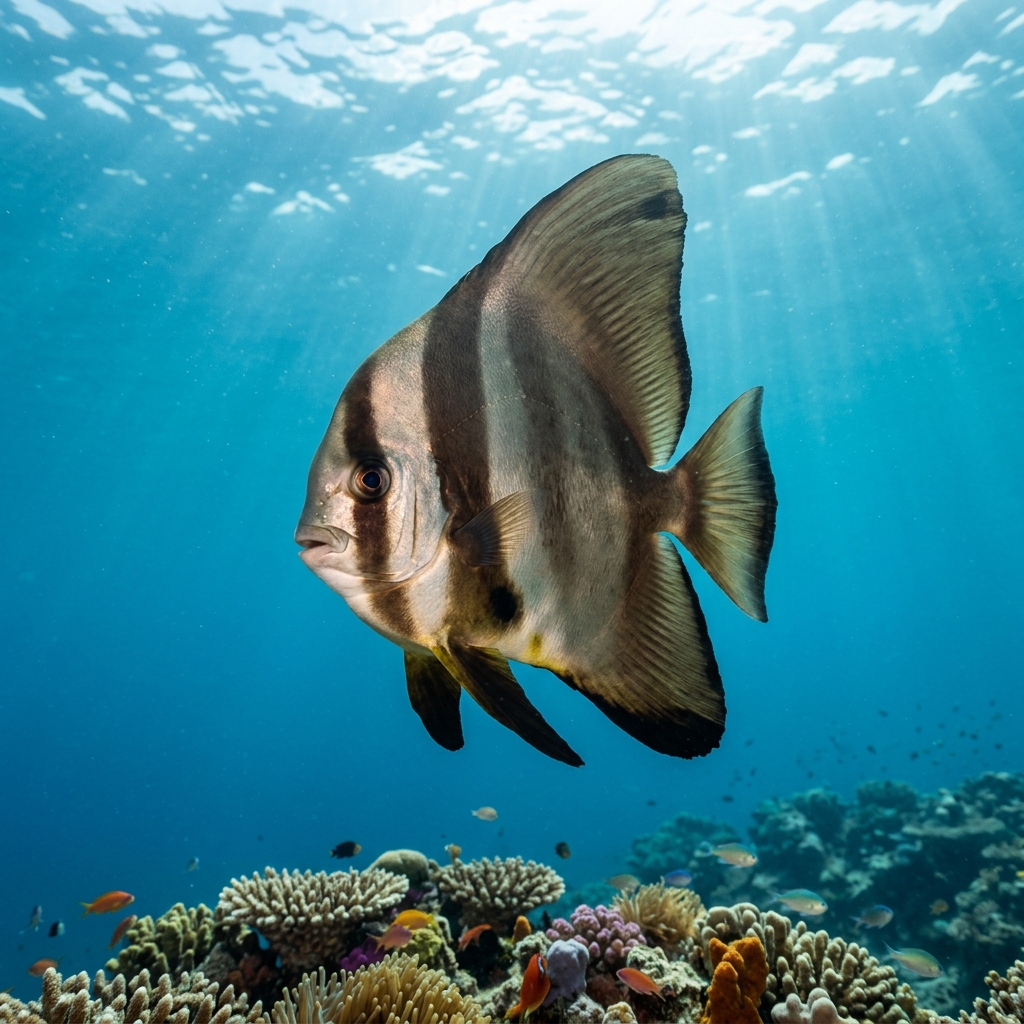
A tall, disc-shaped body with dramatically elongated dorsal and anal fins gives this batfish a distinctive kite-like silhouette that sets it apart underwater. The body is silver to pale grey, often with two dark vertical bars on the flanks, though these can fade in adults. The most reliable feature is the exaggerated height of the soft dorsal and anal fins, which sweep well above and below the body line. Juveniles are darker and more vividly marked, with brownish colouring that mimics a dead leaf drifting in the water column.
Longfin Baitfish are typically seen in small groups or as solitary individuals hovering mid-water or close to reef structure, often near drop-offs or around cleaning stations. They are notably curious and frequently approach divers, sometimes circling slowly at close range rather than retreating. Juveniles are most often spotted alone near the surface or in sheltered shallows, drifting convincingly like a floating leaf.
The leaf-mimicry of juveniles is one of the more effective deceptions on the reef: the brownish, slightly crinkled colouring and drifting motion closely resemble a dead leaf, which likely deters predators in the shallow, sheltered areas where juveniles shelter.
In the Northern Hemisphere, sightings concentrate from July through April, so avoid the May, June window if you are targeting this species. In the Southern Hemisphere, including Queensland, it is present throughout the year with no clear peak season.
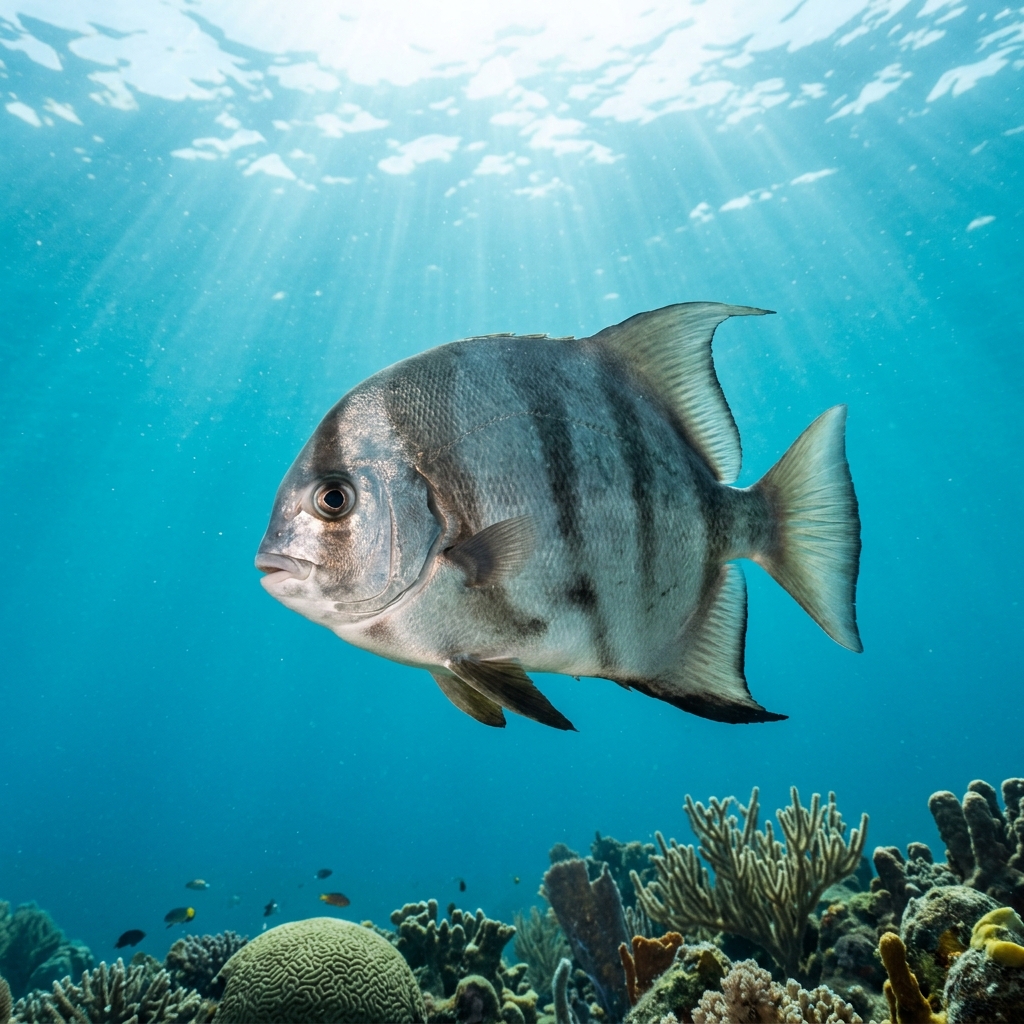
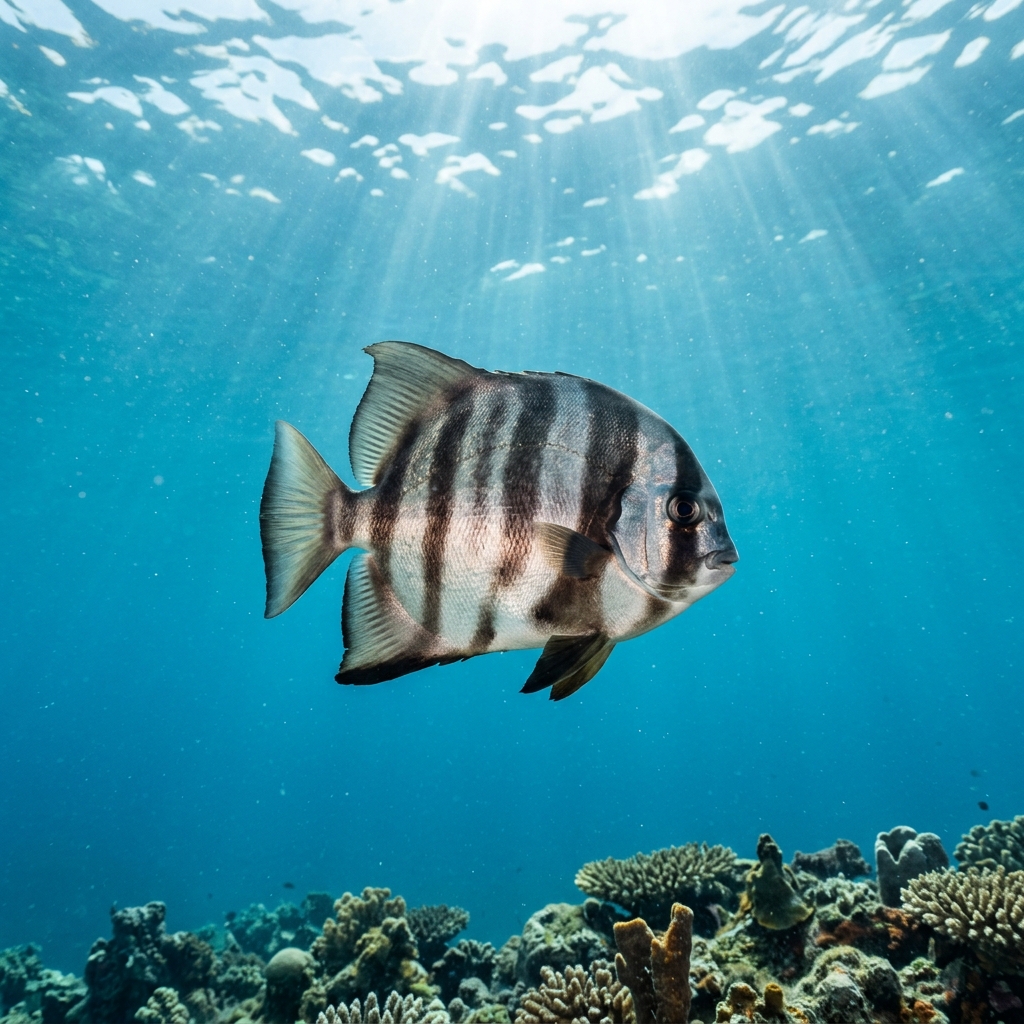
Reef neighbours a diver could mistake it for. Use the identification notes above to tell them apart.
Most commonly logged in the Maldives, Malaysia, Thailand, and Indonesia across Indo-Pacific reefs, with strong populations also recorded throughout Queensland, Australia and the Egyptian Red Sea around Sharm el Sheikh. The Seychelles, particularly Praslin and La Digue, and Malaysia's Perhentian and Redang islands are also reliable spots.
Mapping where Longfin Batfish is logged…
The Maldives leads all destinations for logged sightings, followed closely by Malaysia, Thailand, and Indonesia. Australia's Great Barrier Reef and the Egyptian Red Sea around Sharm el Sheikh are also strong bets. The Seychelles and Malaysia's Tioman Island round out the top spots.
In the Northern Hemisphere, July through April is the window when sightings are most concentrated, so planning around that period gives you the best odds. In Australia and other Southern Hemisphere locations, they are present year-round with no single peak month.
Look for the tall, disc-shaped body and the dramatically elongated dorsal and anal fins that extend well beyond the body, this kite-like silhouette is the key field mark. The body is silver-grey, often with two dark vertical bars that can fade in larger adults.
Not at all. They are harmless and, if anything, more likely to approach you out of curiosity than to retreat. No special precautions are needed around them.
Adults can reach around 60 cm in total length, though the tall fins make them look considerably larger in the water. Their striking body height often surprises divers expecting a more conventionally shaped fish.
Site and sighting data is aggregated from diver logs, iNaturalist and GBIF. For taxonomy and conservation status:
Atlantic Spadefish
417 sites