Platax boersii
Uncommon but reliable in Sabah and Raja Ampat, this deep-bodied reef fish suits water 21 to 29C and turns up year-round.
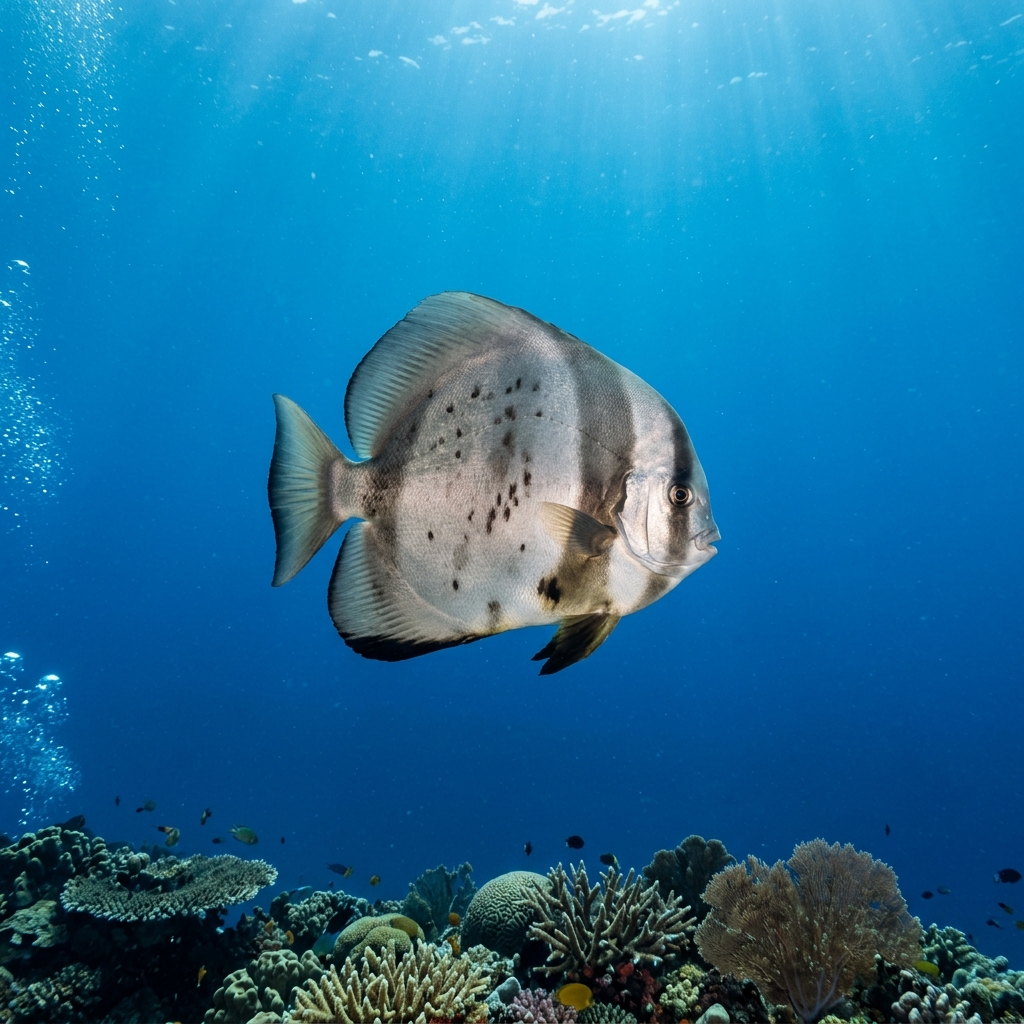
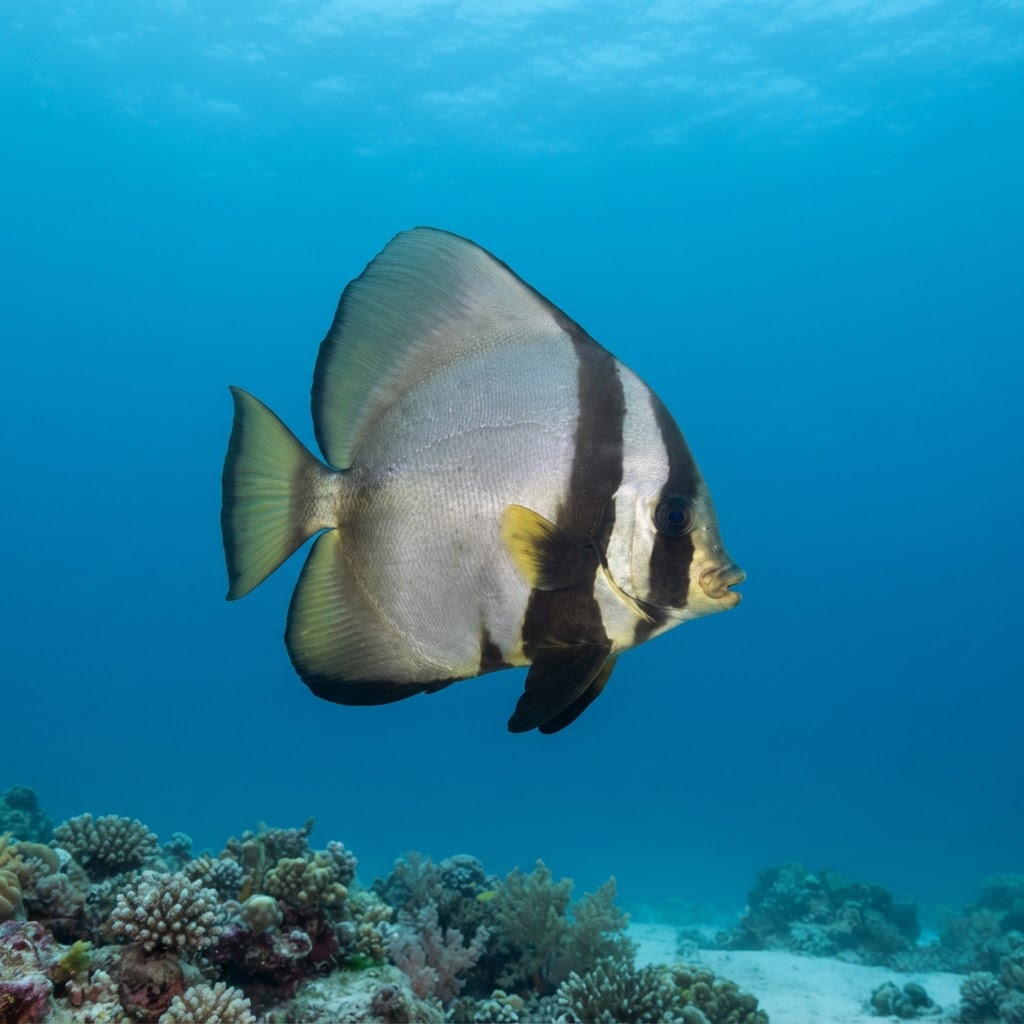
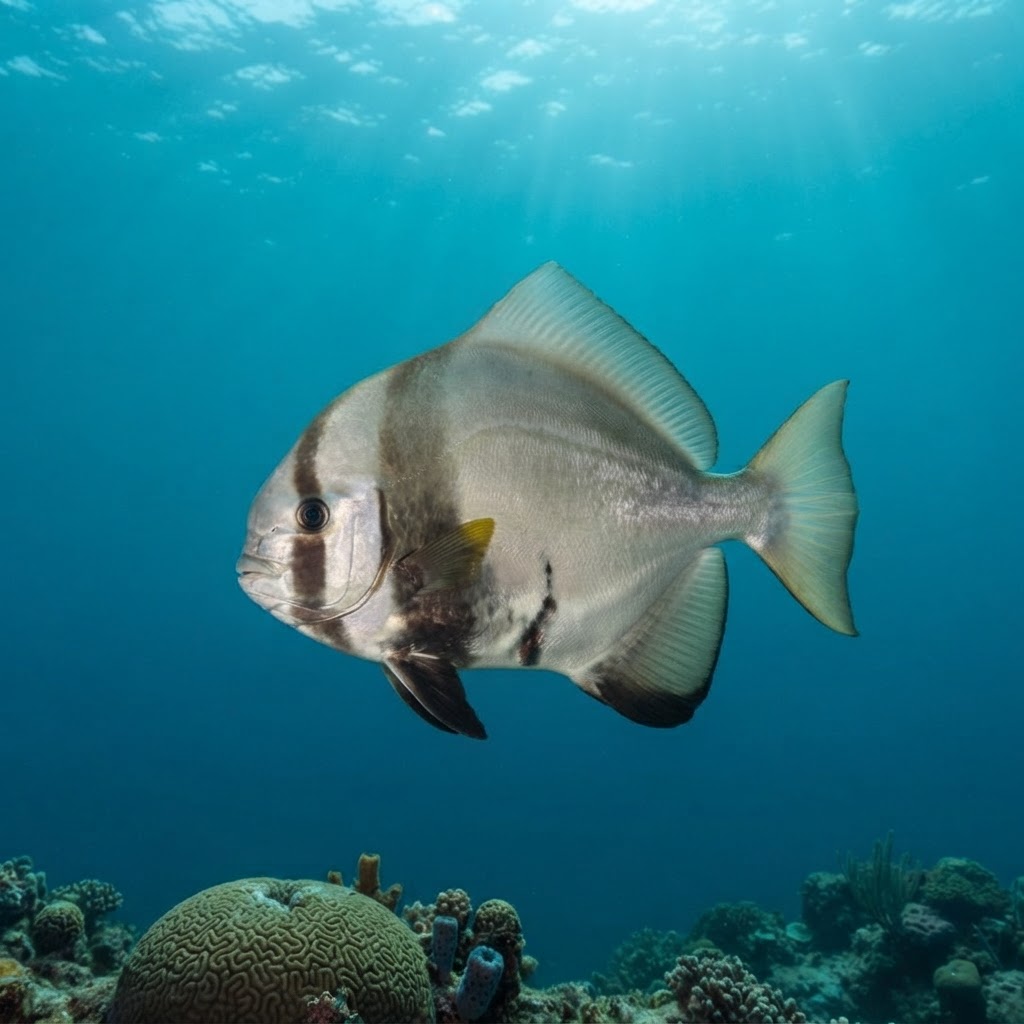
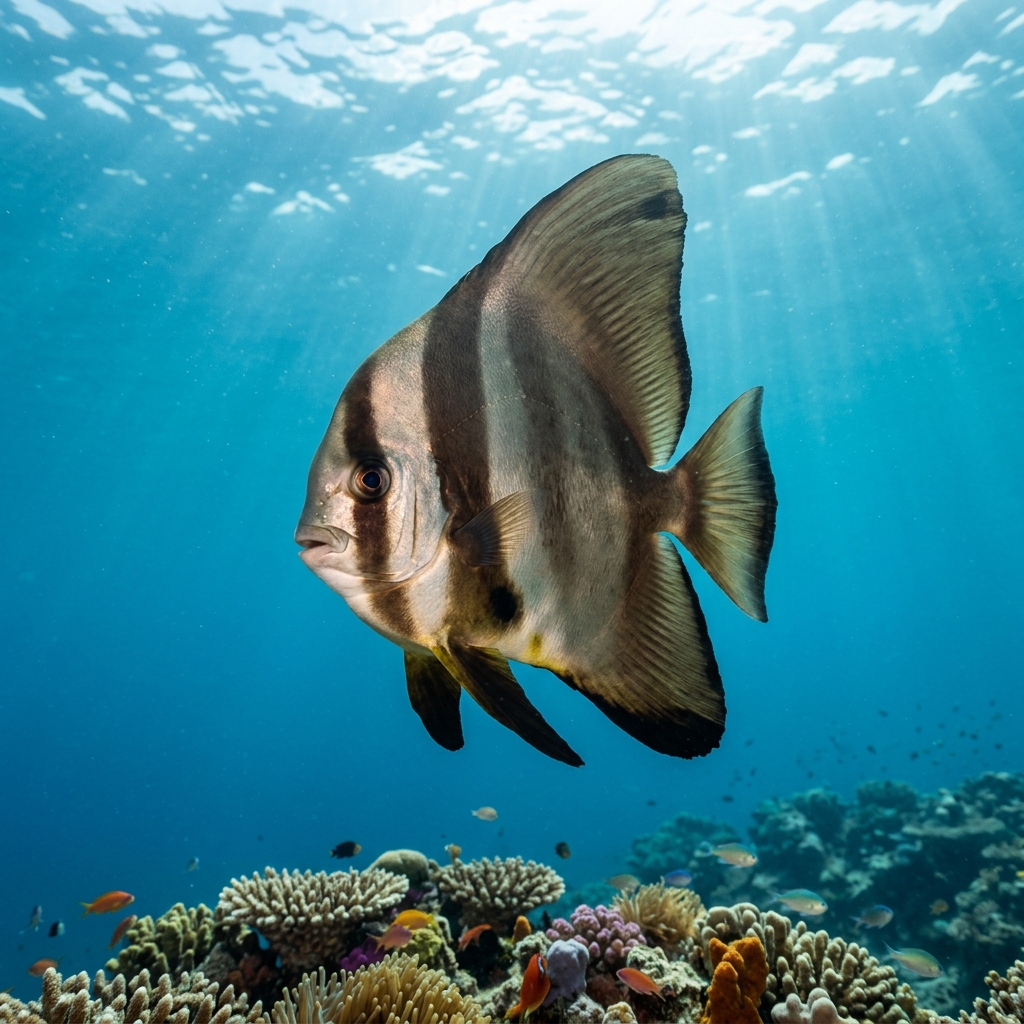
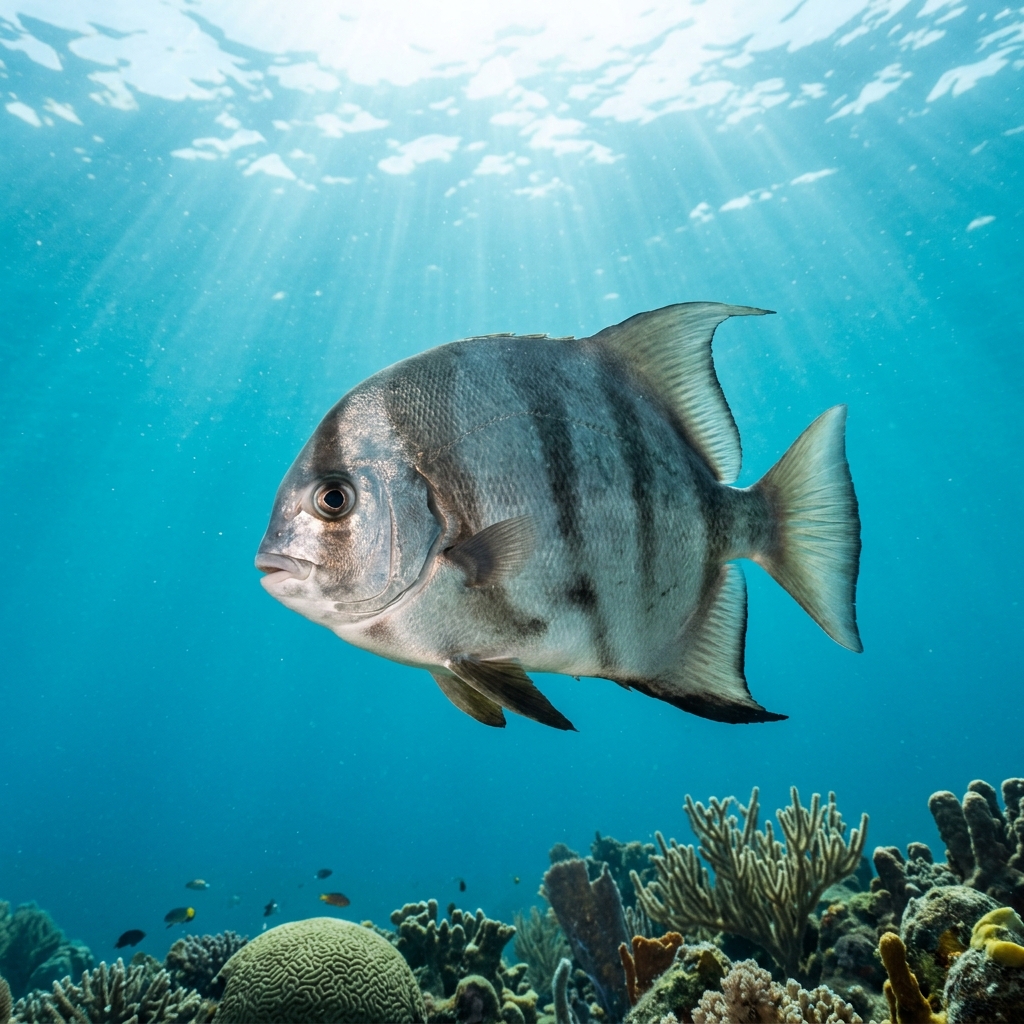
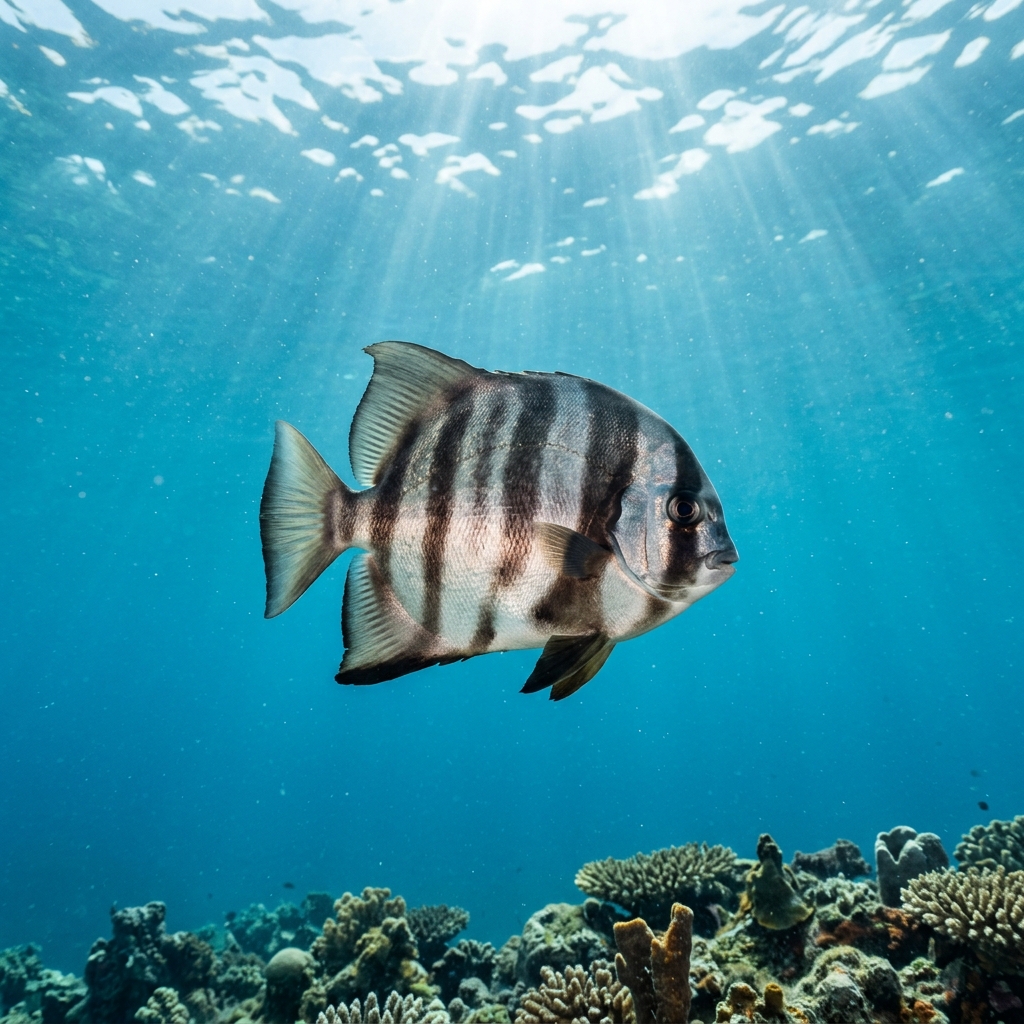
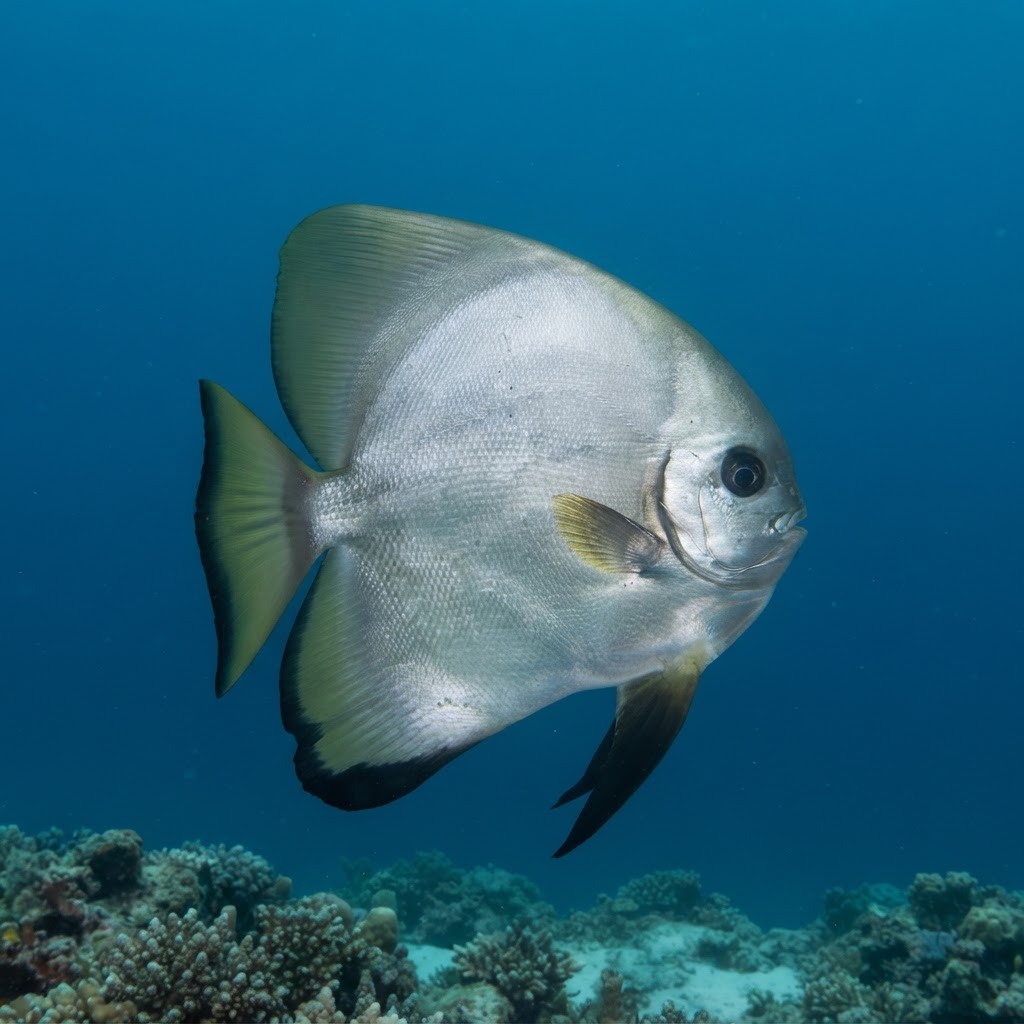
Look for a deep, disc-shaped body that reads almost circular from the side, typically around 28 cm, with tall rounded dorsal and anal fins that give it a fanned, oversized-fin silhouette. Colouring runs silvery-grey to olive with faint darker vertical banding, and the fins often carry a slightly darker edge than the body. It swims with a slow, deliberate wing-like beat of those long fins rather than a dart or dash, which is often the first thing that catches your eye against the reef.
Divers most often find it hanging in loose groups near reef walls or under jetties, drifting with an unhurried, almost hovering motion rather than schooling tightly like a spadefish. It tends to hold its position as divers approach, only easing off rather than bolting, which makes for easy, calm encounters. Sightings span shallow reef flats down to well past recreational depth, so it turns up on both easy reef dives and deeper drop-offs.
Juveniles of this genus are famous for mimicking drifting leaves and debris, tilting on their sides and rocking with the current to pass unnoticed by predators before growing into the upright, disc-bodied adult shape divers recognise.
No clear seasonal pattern shows up in the data, and with a comfortable range of 21.3 to 29 C it holds station on tropical reefs all year, so any month works for a dive in these regions.
Reef neighbours a diver could mistake it for. Use the identification notes above to tell them apart.
Most consistently logged in Sabah, Malaysia and Raja Ampat, Indonesia, with strong showings in Bali and Sulawesi too. Malaysia's Peninsular East Coast and Madagascar's Nosy Be also produce steady sightings, with a smaller but real presence in the Philippines' Luzon region.
Mapping where Golden Spadefish is logged…
Sabah in Malaysia and Raja Ampat in Indonesia are the most reliable regions, with Bali, Sulawesi, Peninsular Malaysia's East Coast, and Madagascar's Nosy Be also producing steady sightings.
There is no strong seasonal pattern in the sightings, and its comfortable temperature range of 21.3 to 29 C means it is present on reefs year-round in these regions.
Look for a deep, near-circular silvery-grey body with tall, rounded dorsal and anal fins and a slow, deliberate swimming style. It often hovers near reef walls or structure rather than darting about.
This species typically reaches around 28 cm, giving it a compact but noticeably deep-bodied, disc-like shape underwater.
Yes, juveniles are darker and more angular, often mimicking a drifting dead leaf by tilting sideways and rocking with the current, a disguise they lose as they grow into the upright adult form.
No, they are not dangerous. They are calm, slow-moving fish that tend to hold their ground or ease away gently rather than react defensively to divers.
Site and sighting data is aggregated from diver logs, iNaturalist and GBIF. For taxonomy and conservation status:
Atlantic Spadefish
417 sites