Platax pinnatus
Deep orange with a black-edged fin outline, most reliably logged around Sabah's reefs at 25-29 C, year-round.
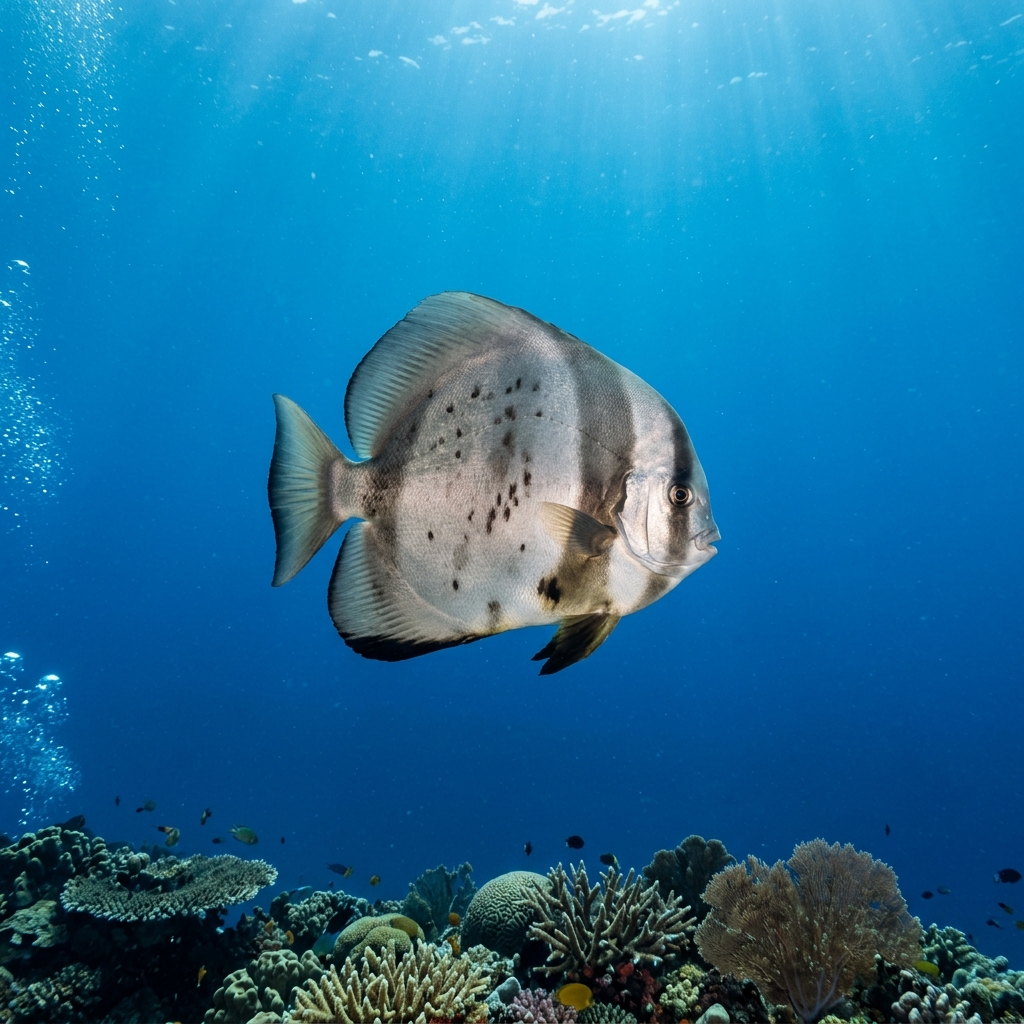
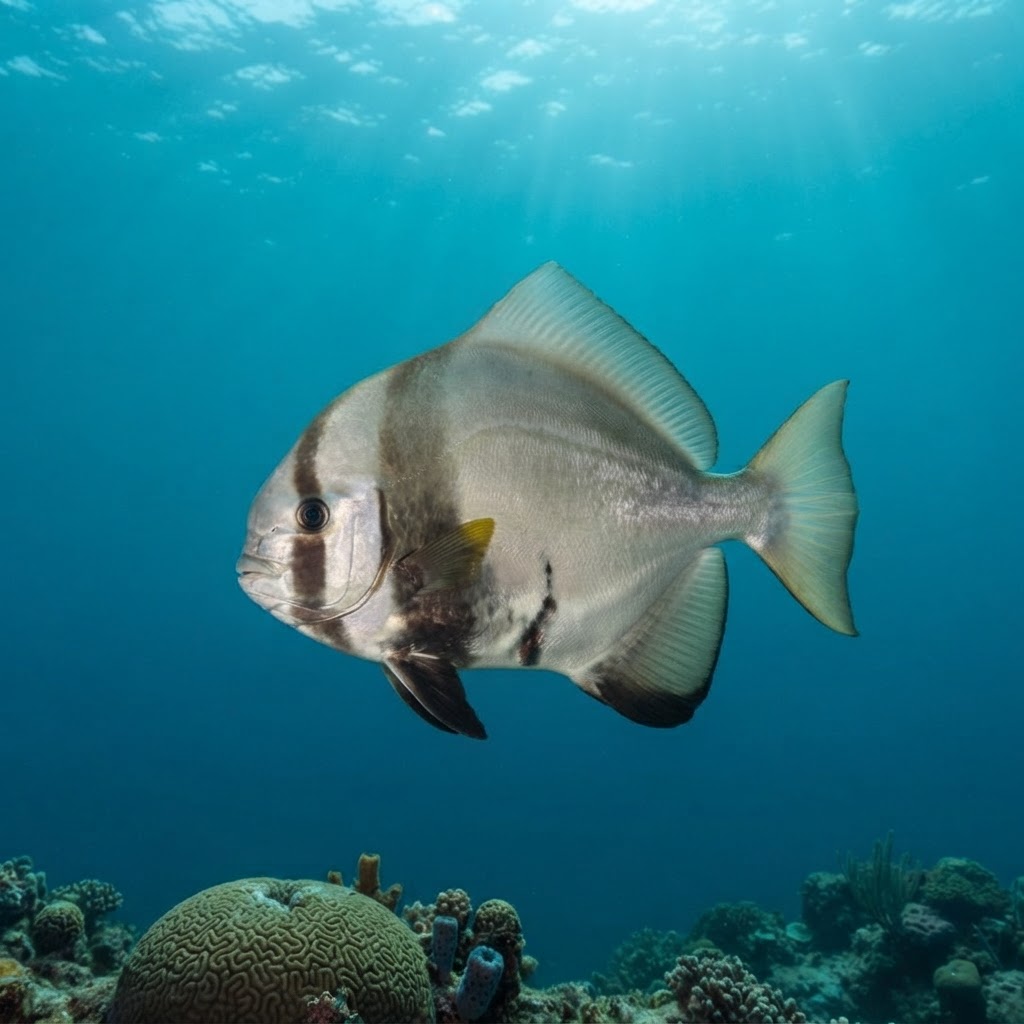
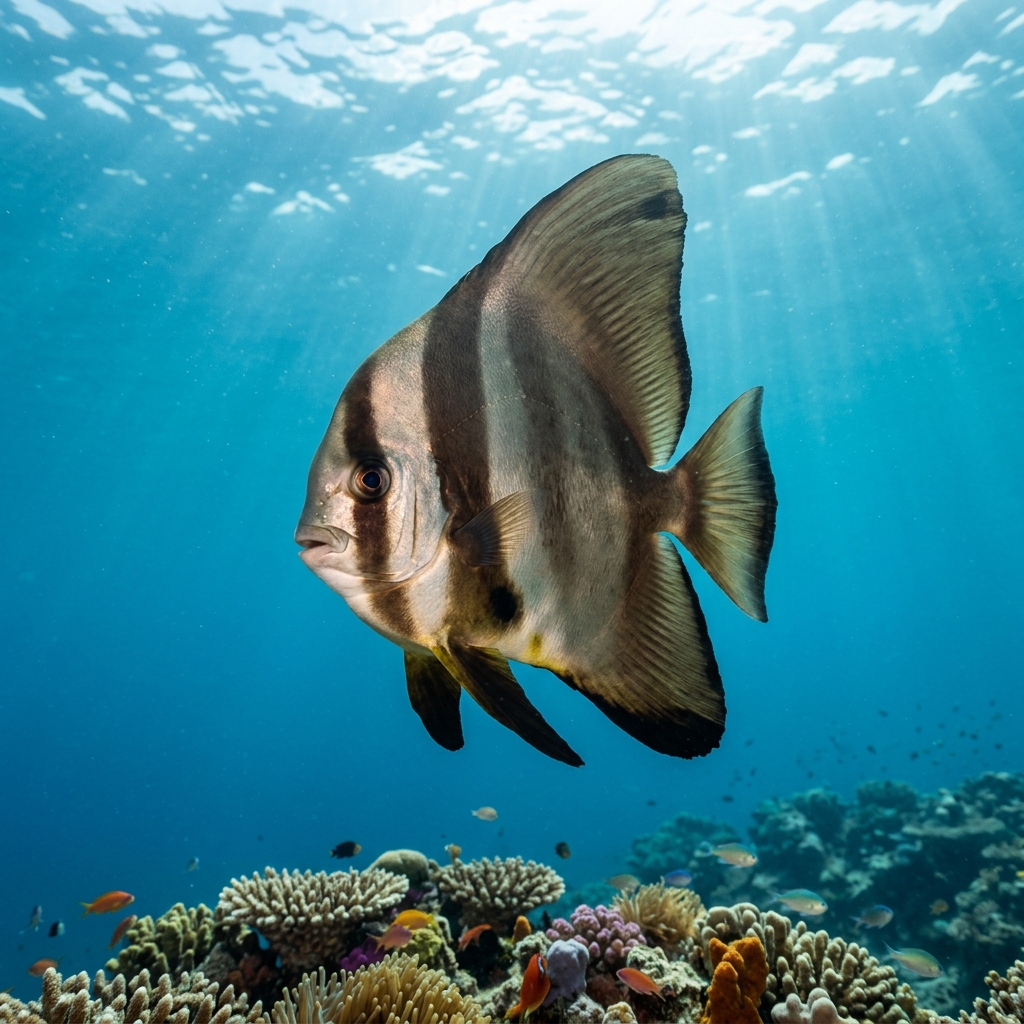
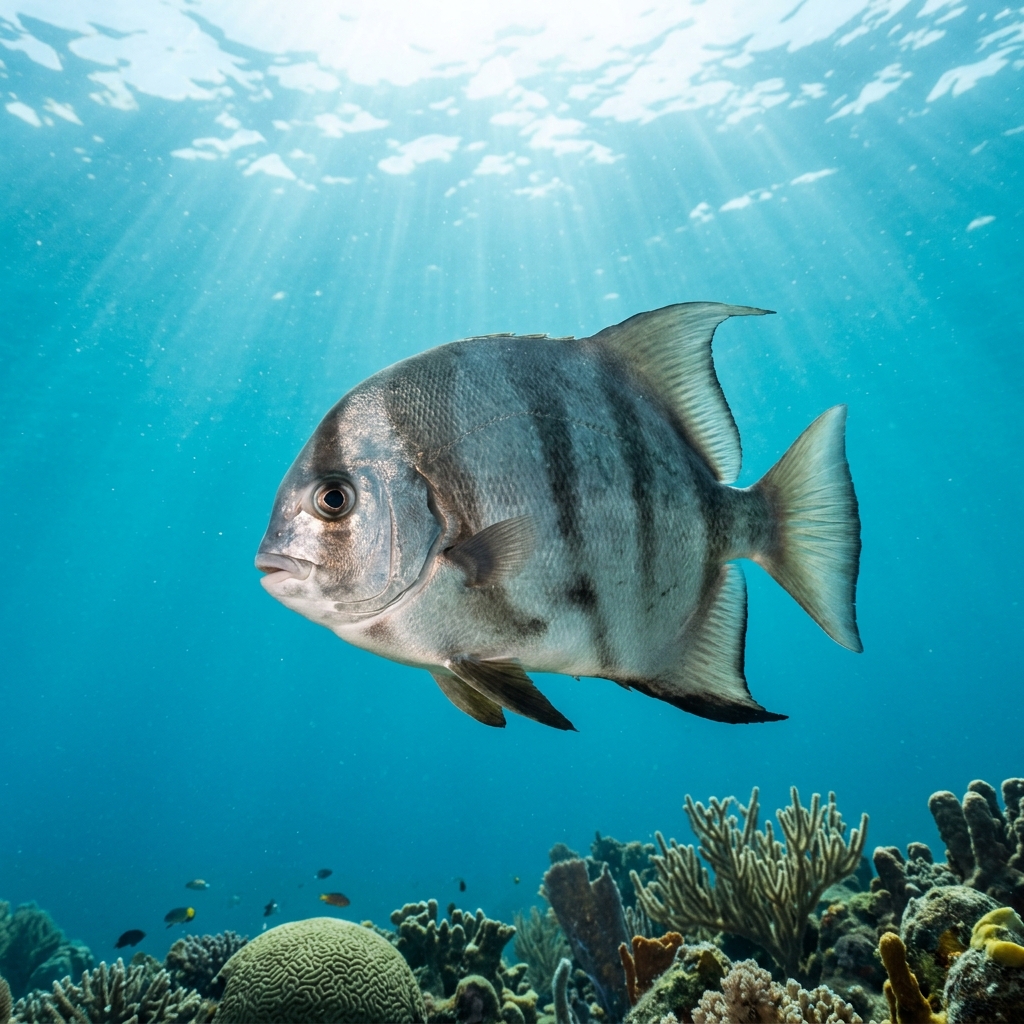
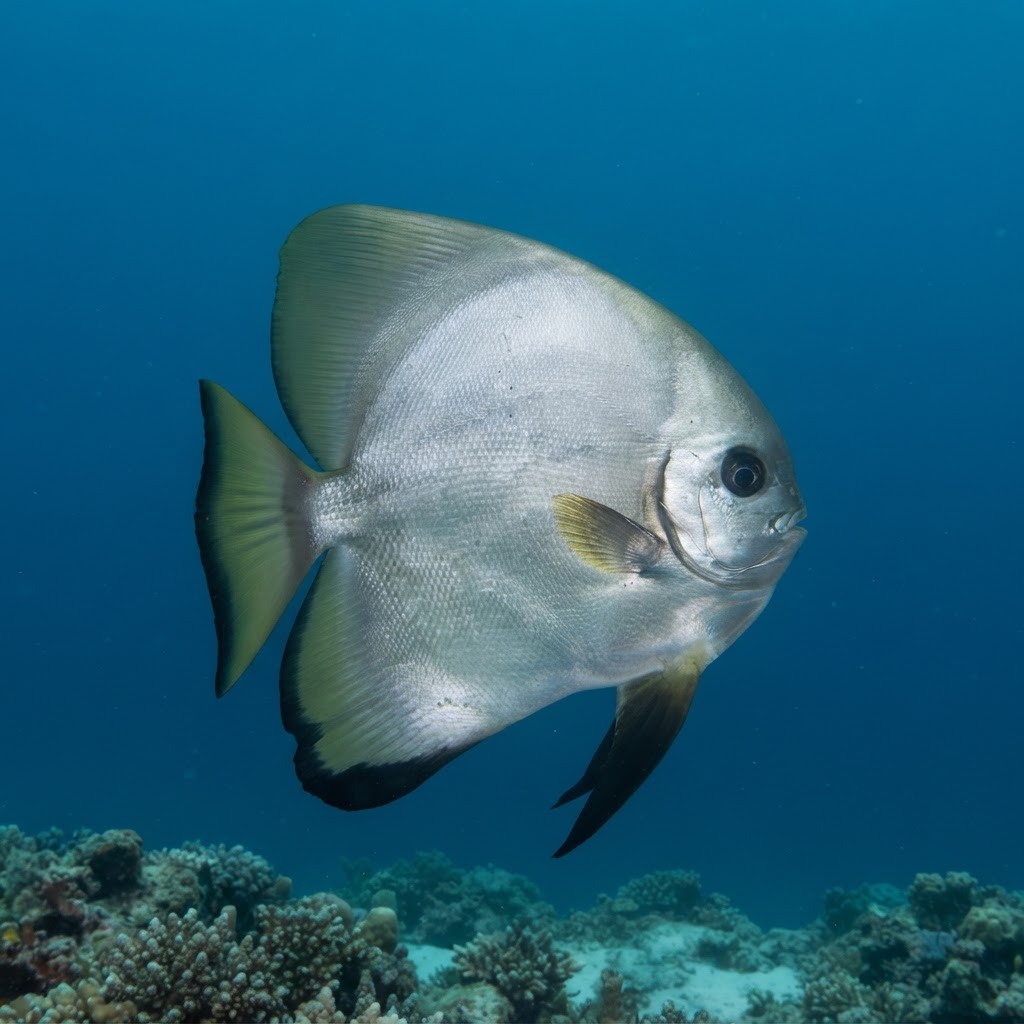
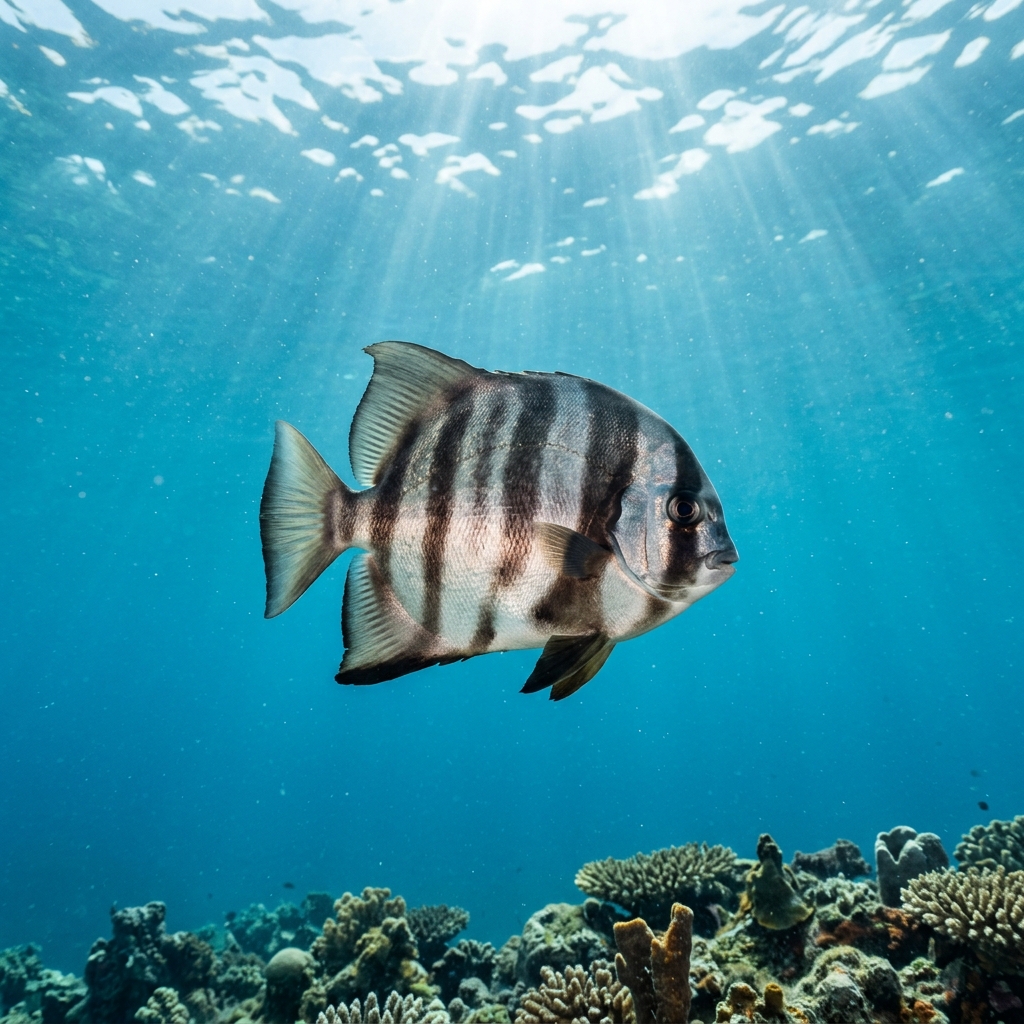
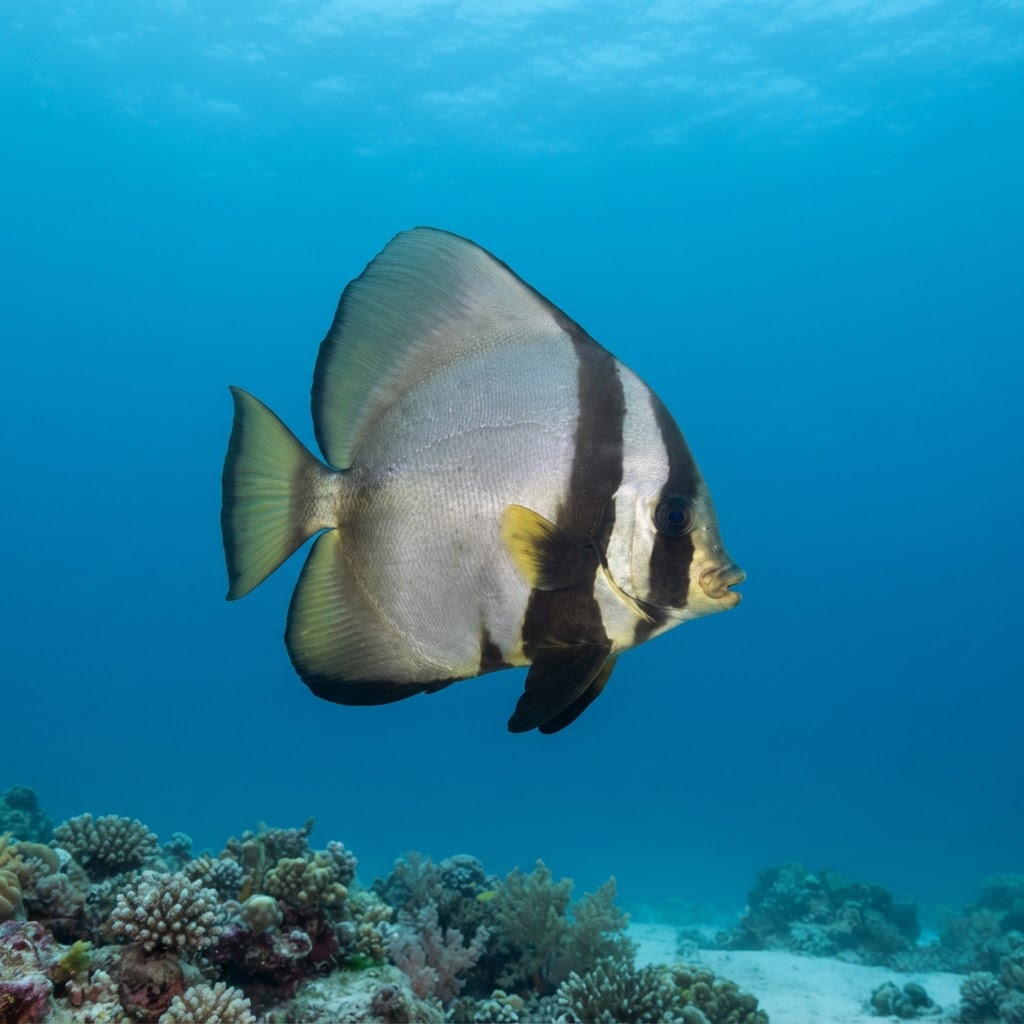
Adults show a deep orange to rust-brown body with a distinctive black outline tracing the edge of the dorsal, anal and tail fins, like the whole fish has been drawn on with a marker. The body is tall and flattened side-to-side, almost disc-shaped, and grows to around 31 cm. Juveniles look completely different: nearly black with a bright orange margin along the fins, a colouration thought to mimic a toxic flatworm as a defence against predators.
Divers typically find it hovering alone or in small loose groups against reef walls, drop-offs or under jetties, holding a fairly still, tilted posture rather than actively cruising. It tends to sit at depth between 15 and 30 metres and does not spook easily, often letting divers approach for a slow, close look before drifting off. Logged as uncommon at most sites, so a sighting feels like a real find rather than a given.
Juveniles are thought to mimic a poisonous flatworm in both colour and their odd, wobbling swimming style, a disguise that fades as they mature into the plain orange adult form.
No clear seasonal pattern shows up in the sightings, and with a comfortable range of 25 to 29 C on tropical reefs, it is a year-round encounter wherever it is found.
Reef neighbours a diver could mistake it for. Use the identification notes above to tell them apart.
Most reliably logged around Sabah and the east coast of Peninsular Malaysia, which together account for the bulk of dive-site sightings. Beyond Malaysia, it turns up with fair regularity in Palawan in the Philippines, on reefs in Queensland, Australia, and across Indonesia in Raja Ampat, West Papua, Nusa Tenggara and Kalimantan, with occasional records from Japan.
Mapping where Dusky Batfish is logged…
Sabah in Malaysia and the east coast of Peninsular Malaysia are the strongest spots, with further reliable sightings in Palawan (Philippines), Queensland (Australia), and Raja Ampat and West Papua in Indonesia.
There is no strong seasonal pattern in sightings. They live on reefs holding 25 to 29 C year-round, so any time of year is workable at the right sites.
Look for a tall, flattened, disc-shaped fish around 31 cm with a deep orange-brown body and a thin black outline running along the edges of its dorsal, anal and tail fins. Adults usually hover fairly still near reef walls rather than schooling in open water.
They reach around 31 cm in length, with a tall, laterally flattened body shape typical of batfish.
Juveniles are thought to mimic the colour and jerky swimming motion of a toxic flatworm, a disguise that helps them avoid predators before they grow into the plainer orange adult form.
No, they pose no threat to divers and are generally calm, letting a slow approach get you a close look.
Site and sighting data is aggregated from diver logs, iNaturalist and GBIF. For taxonomy and conservation status:
Golden Spadefish
550 sites