Chaetodipterus faber
Spot Atlantic Spadefish from Florida to Roatán. Know the bold black bands, schooling habit, and when sightings peak across the Caribbean.
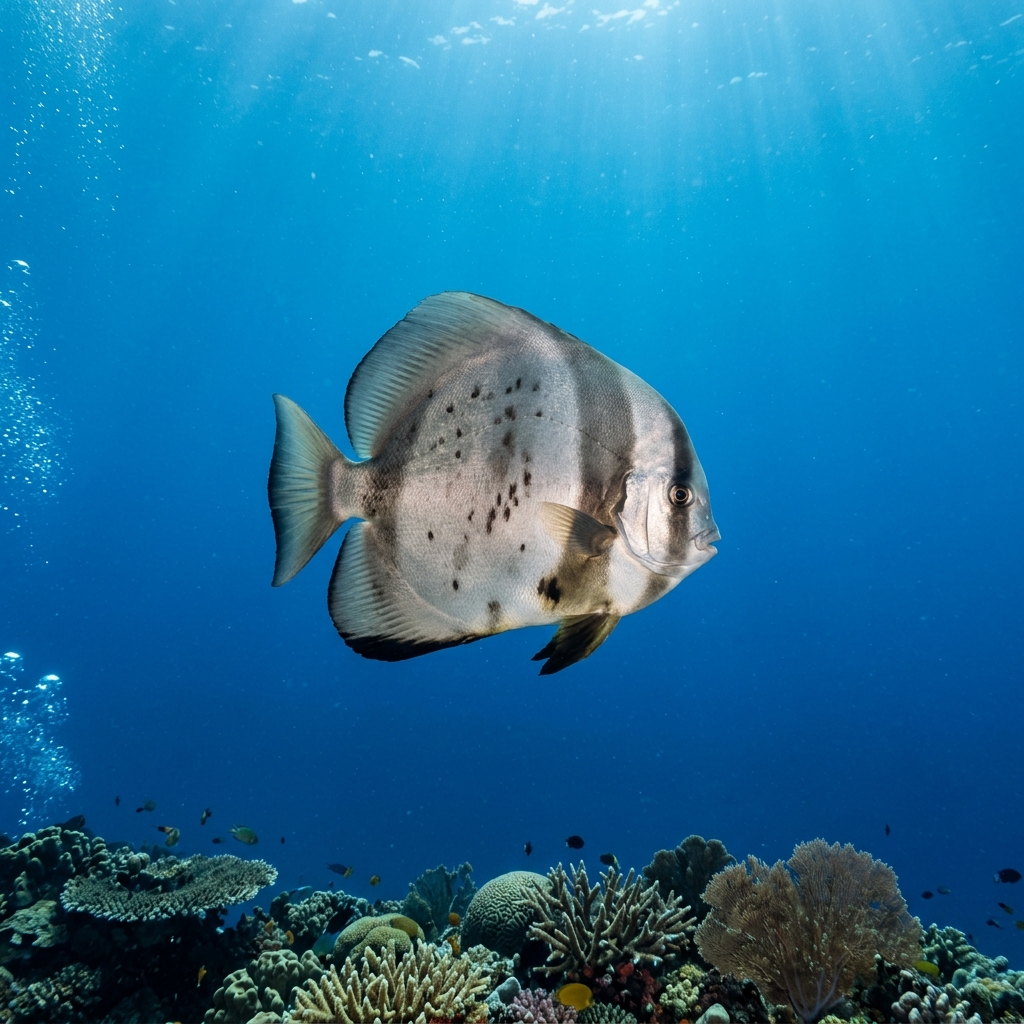
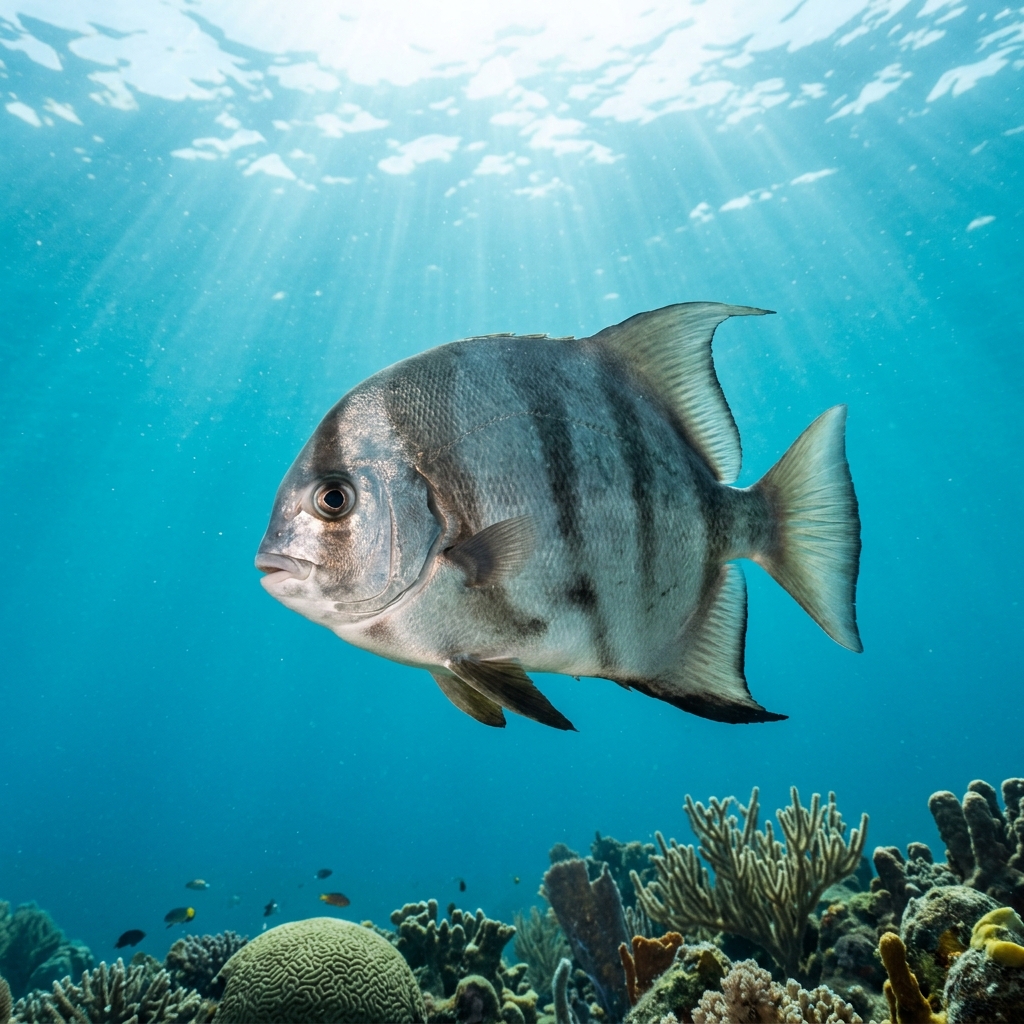
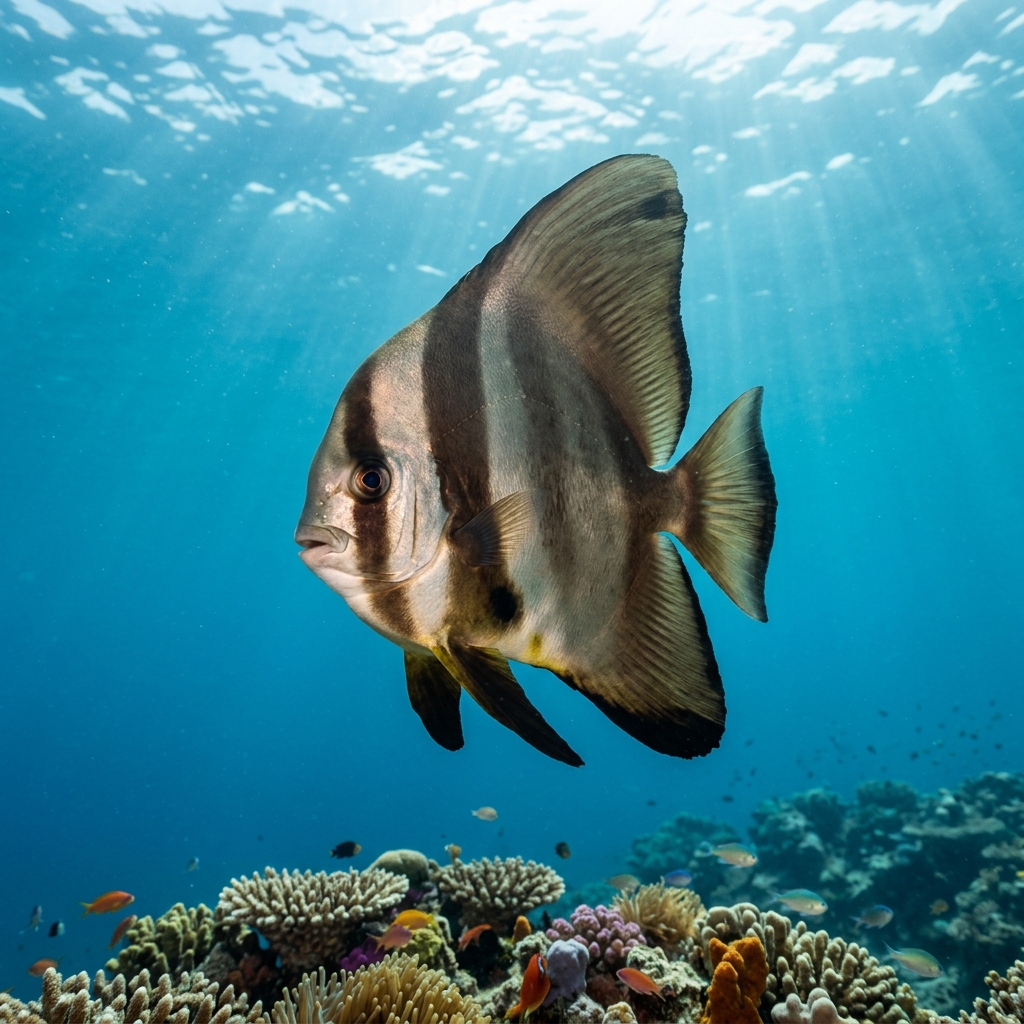
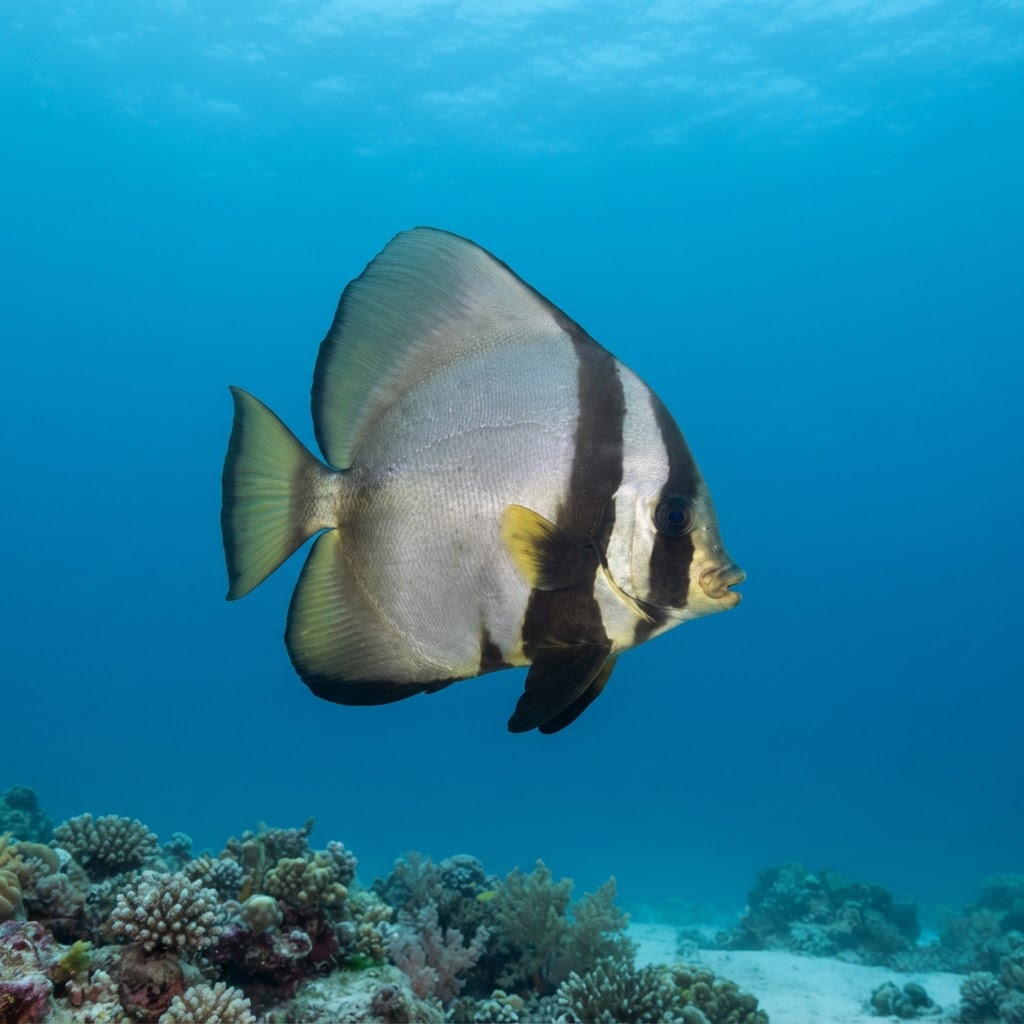
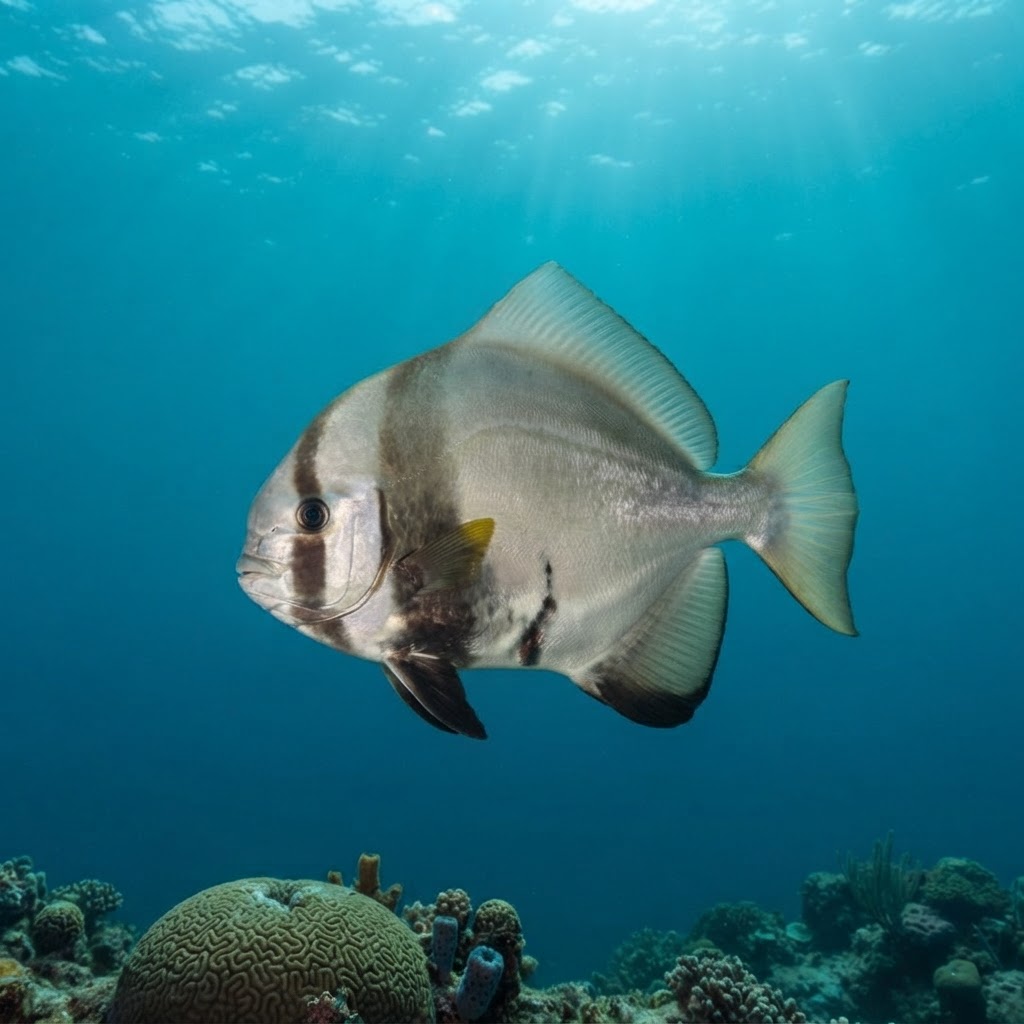
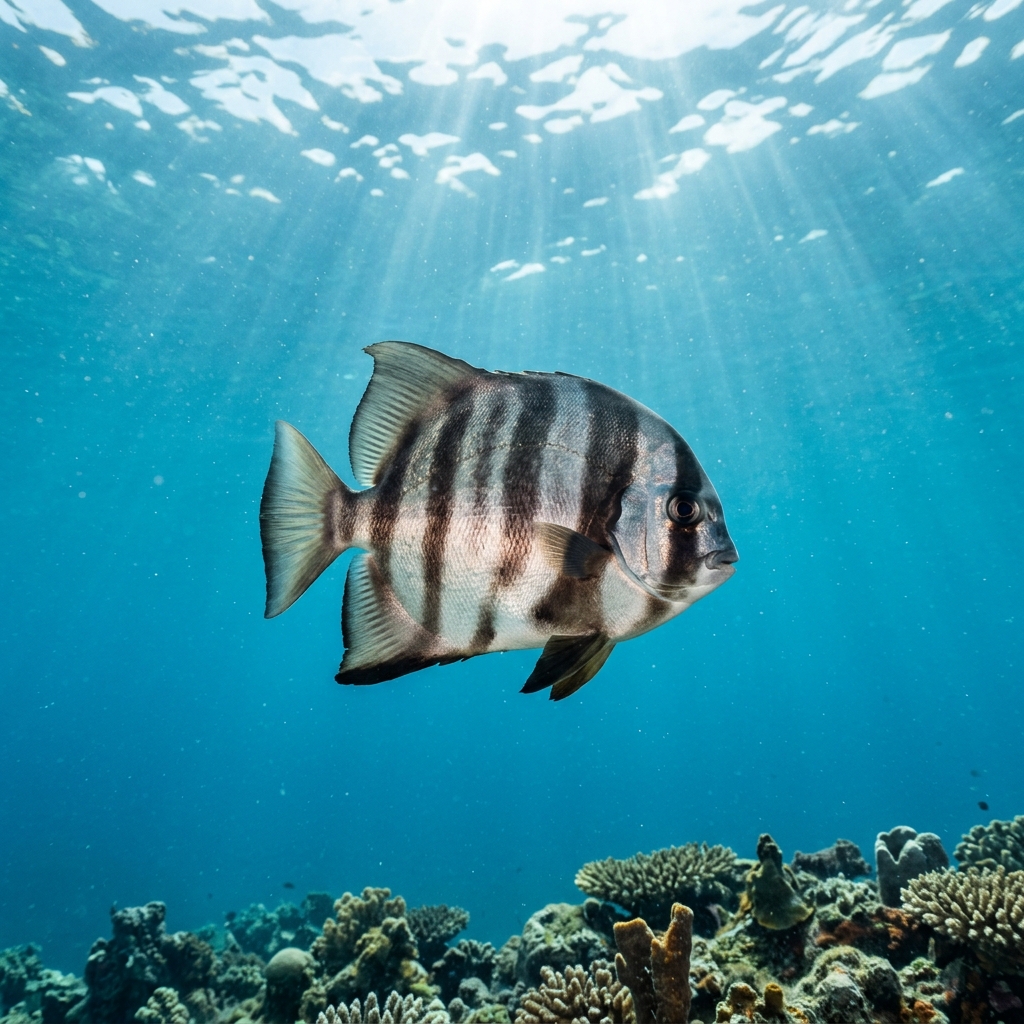
A deep, disc-shaped body gives it an almost circular profile in the water, quite unlike most reef fish you'll encounter. The key marks are four to six bold, dark vertical bars on a silver-grey background that can intensify or fade depending on the fish's mood. Adults typically appear around 30 to 50 cm across, large enough to notice from a distance. Juveniles are nearly black overall, a dramatic contrast to the barred adult pattern.
Atlantic spadefish are most often seen in loose aggregations (groups of individuals staying close together), sometimes forming tight schools of dozens when conditions are right. They tend to hover in mid-water above reef structures, wrecks, or rocky outcrops rather than hugging the bottom, which makes them easy to spot as you descend. They are generally unhurried around divers, holding their position long enough for a good look if you approach slowly.
Their vertical bars are dynamic, not fixed: the fish can rapidly brighten or almost completely suppress the dark banding, which researchers believe helps with social signalling within a school.
Northern Hemisphere sightings concentrate from January through August, so plan Caribbean and US Atlantic dives in that window for the best chance. The observed water temperature range of roughly 24 to 29 °C aligns with warm-season reef conditions throughout the region.
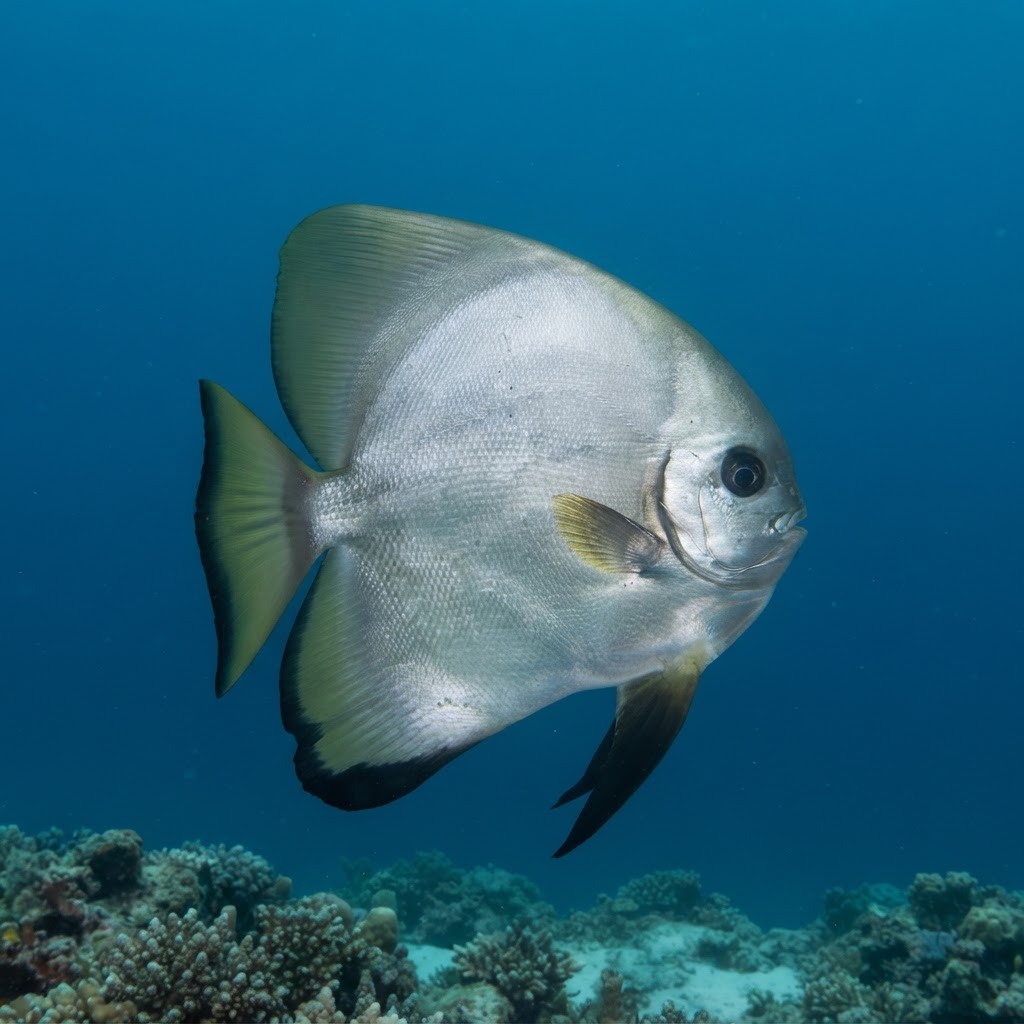
Reef neighbours a diver could mistake it for. Use the identification notes above to tell them apart.
Most commonly logged across Florida and the US Southeast, making the region the single strongest area for sightings. Strong populations also show up around Roatán in Honduras, the Caribbean Coast of Colombia, and Ambergris Caye in Belize. Martinique, Barbados, Mexico's Yucatán Peninsula, and southern Brazil round out the reliable spots across the wider Atlantic and Caribbean.
Mapping where Atlantic Spadefish is logged…
Florida and the wider US Southeast hold the most logged sightings, with Roatán in Honduras and Colombia's Caribbean Coast also being reliable areas. Ambergris Caye in Belize, Martinique, Barbados, Mexico's Yucatán, and southern Brazil are all worth checking if you're in the neighbourhood.
Diver sightings in the Northern Hemisphere peak between January and August. Outside that window encounters are possible but less frequent, so timing a Caribbean or Florida trip within those months improves your odds noticeably.
Look for a large, almost circular silver fish with four to six bold dark vertical bars. The disc-shaped body and distinctive banding set it apart from most reef fish immediately. Bars can fade quickly, but the rounded profile remains the giveaway.
Adults commonly reach around 45 to 50 cm in length, though larger individuals exceeding 60 cm have been recorded. In the water the deep, disc-shaped body makes them look even bigger than their length suggests.
Yes, and it is one of their most appealing traits for divers. They frequently gather in loose to tight schools around wrecks, reef edges, and rocky structures. Large aggregations can contain dozens of individuals hovering together in mid-water, making for a memorable encounter.
Site and sighting data is aggregated from diver logs, iNaturalist and GBIF. For taxonomy and conservation status:
Golden Spadefish
550 sites