Platax batavianus
Steep-browed batfish logged mostly on Queensland reefs, sometimes off Nusa Tenggara, in 25 to 29 C water year-round.
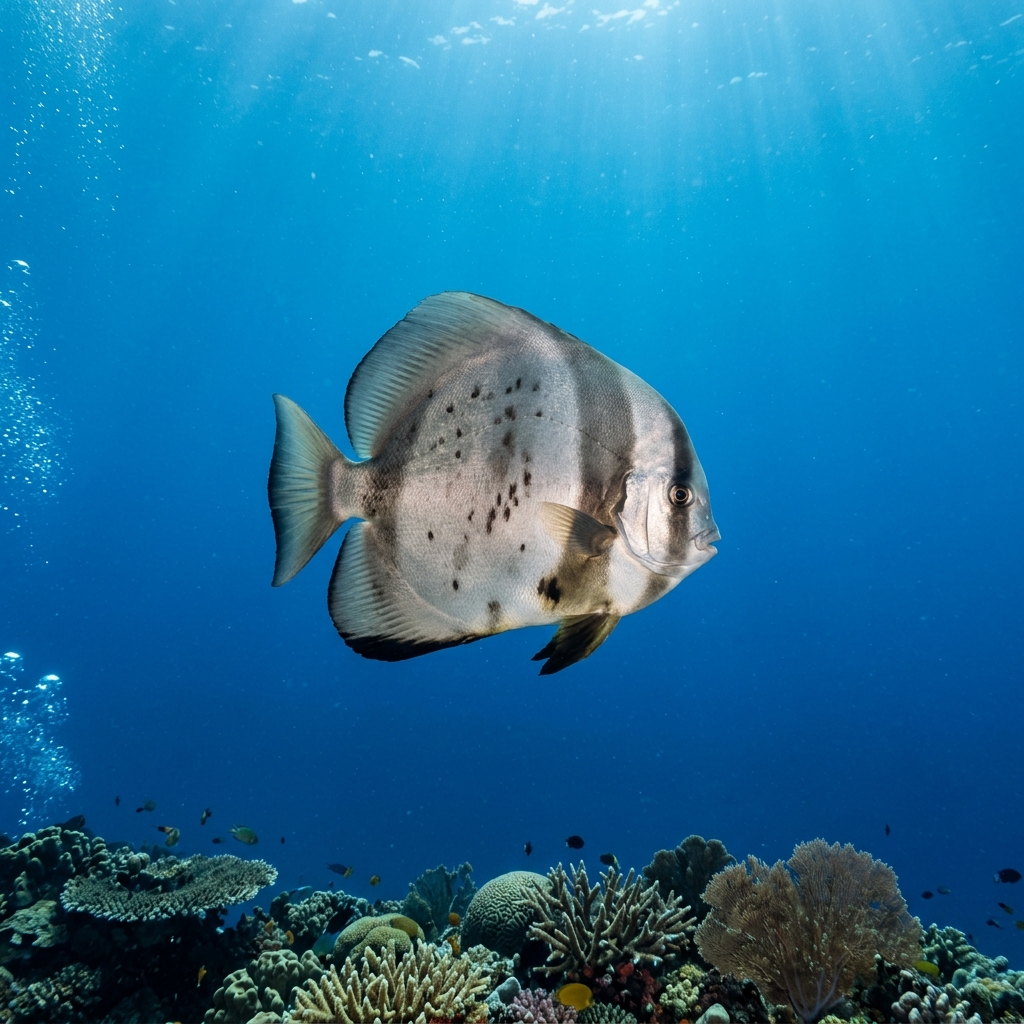
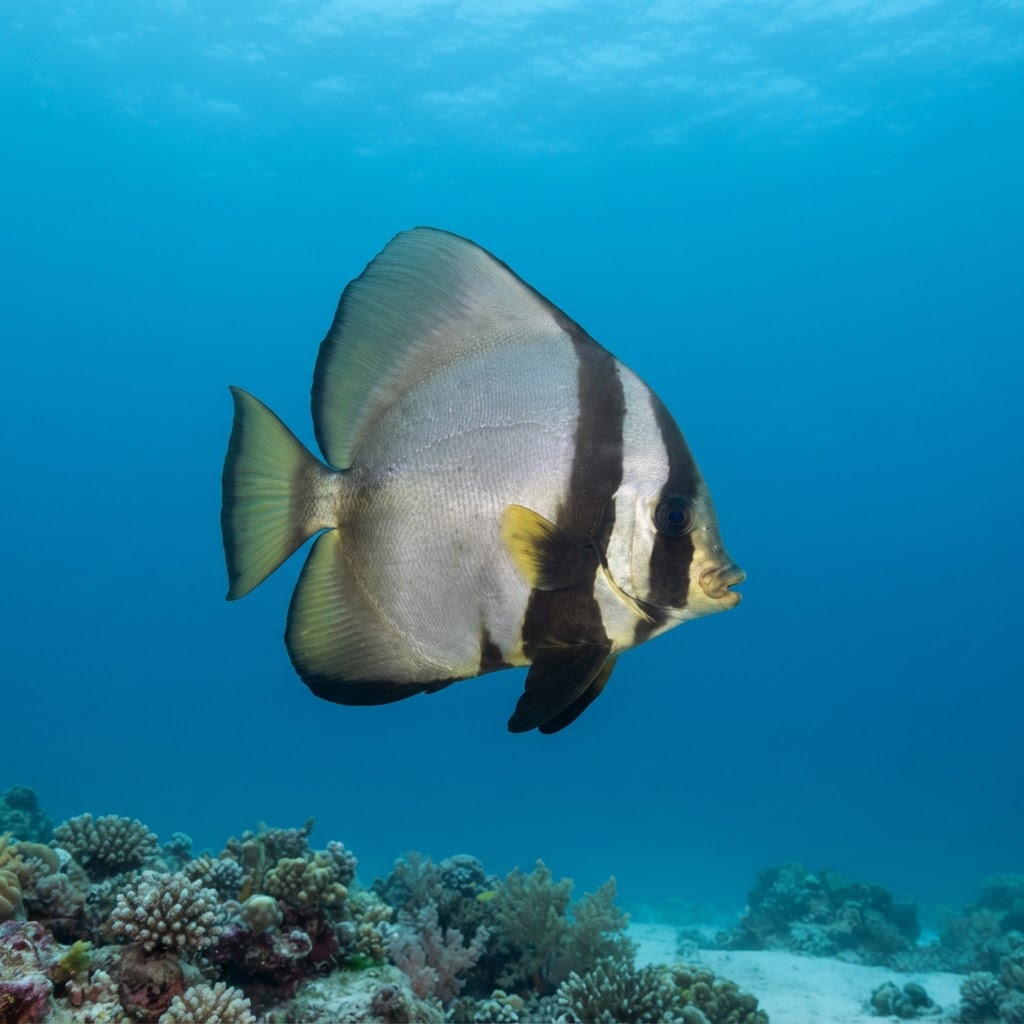
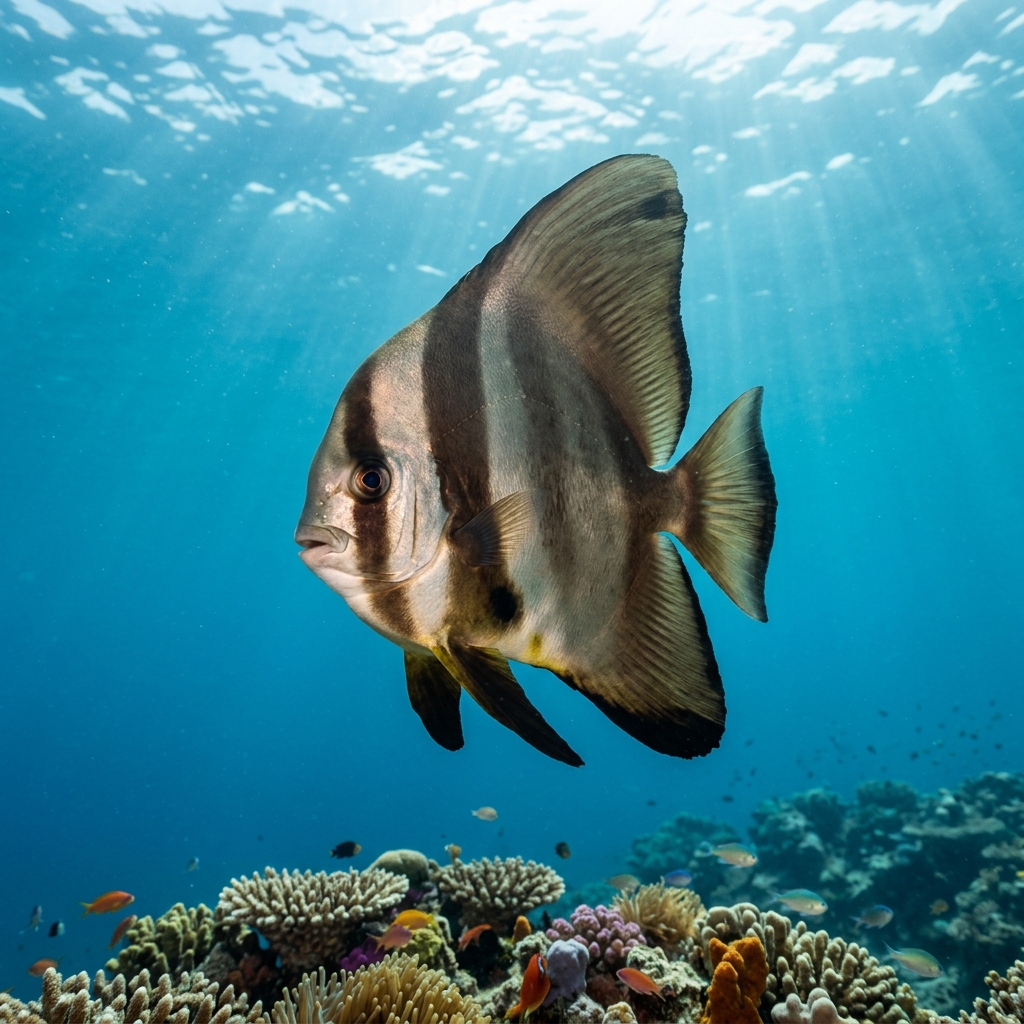
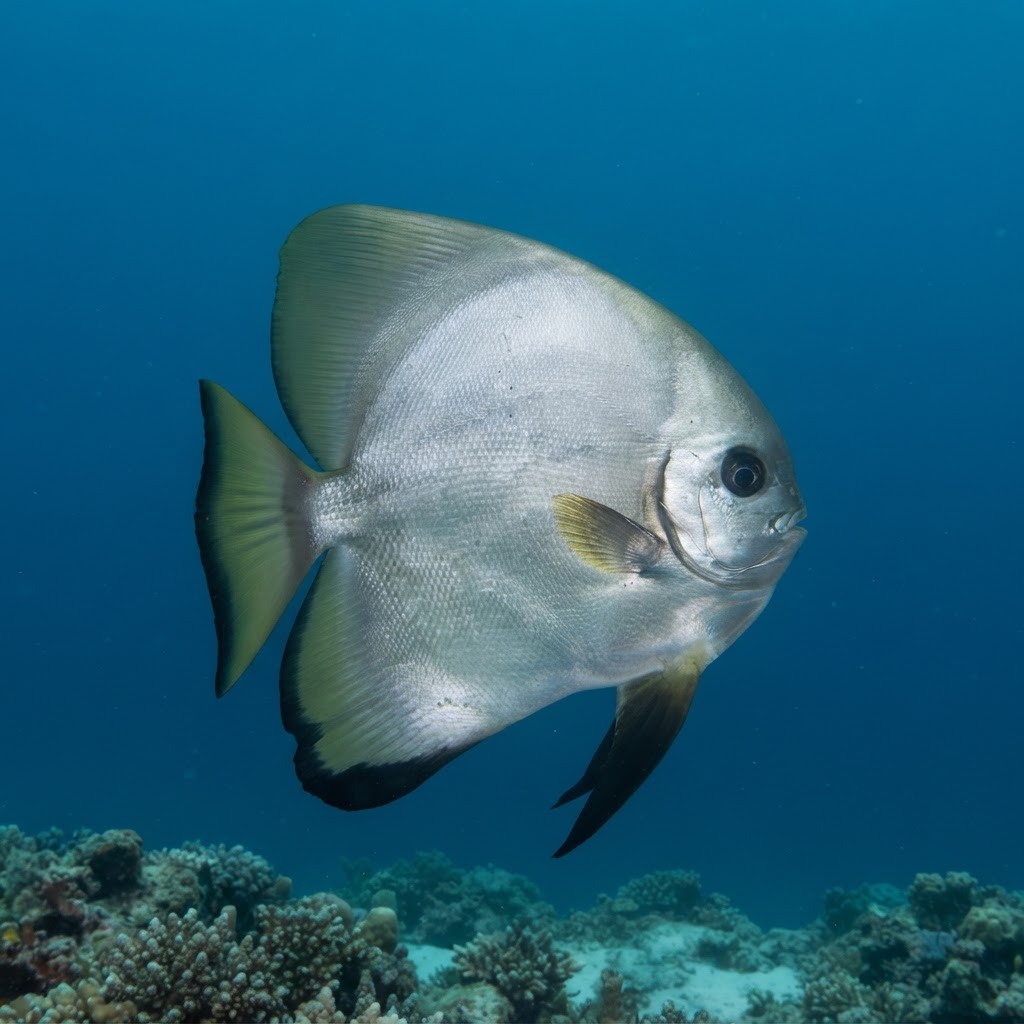
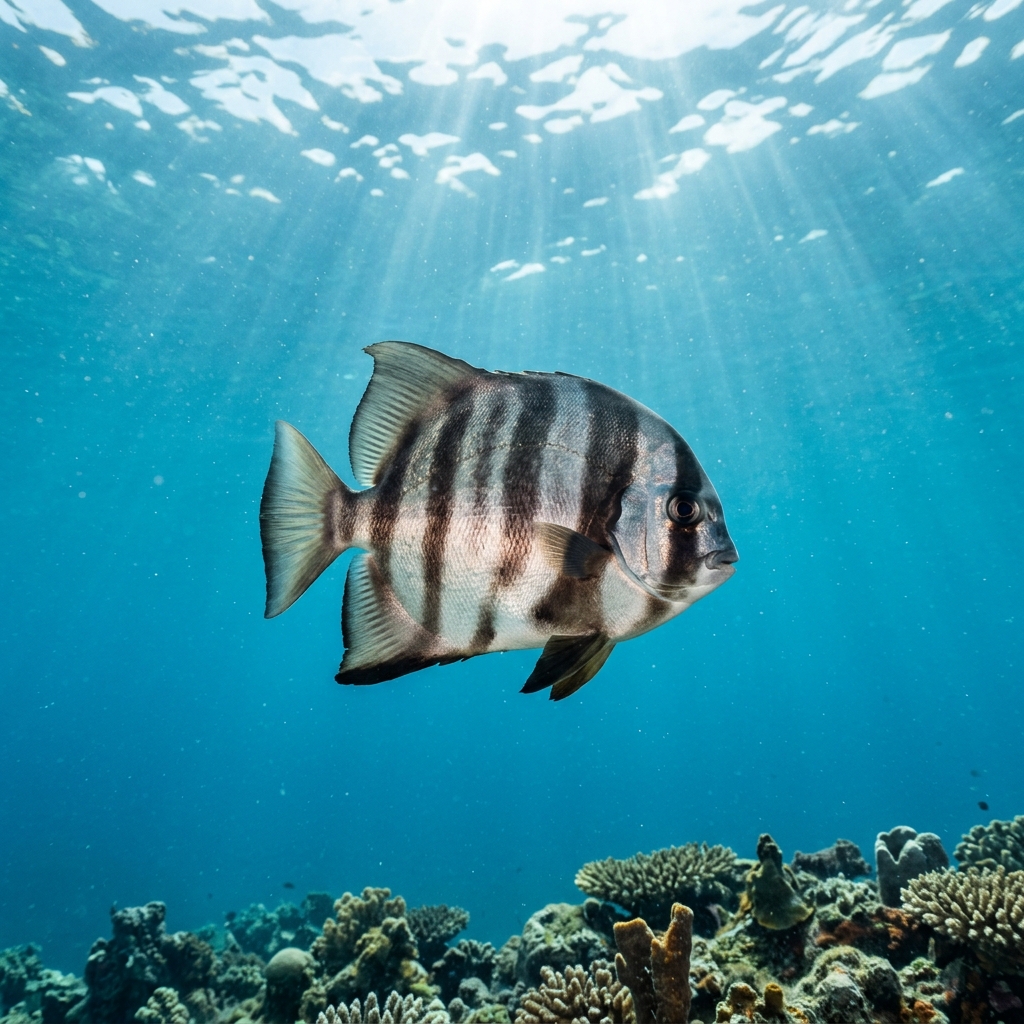
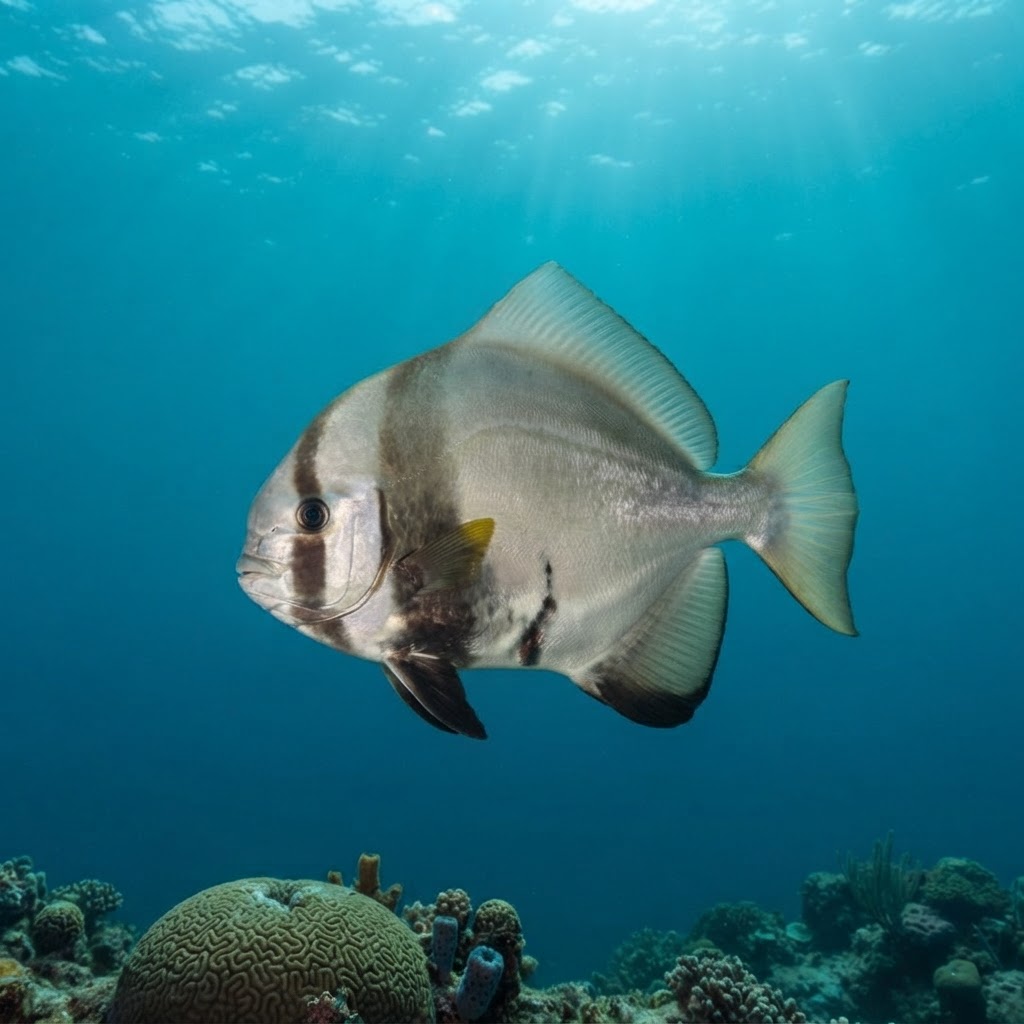
Look for a tall, laterally flattened disc-shaped body with a distinctive steep, almost vertical forehead that gives the head a humped profile. Adults run silvery grey to brownish with faint darker banding across the body and a dark smudge through the eye, reaching around 46 cm. The exaggerated forehead slope is the single best cue that separates this species from other batfish at a glance.
Usually seen singly or in small loose groups hanging near reef structure or drop-offs rather than out in open water, holding a fairly steady position and tolerating a slow approach from divers. It's logged as uncommon to rare at most sites, so sightings tend to be a highlight of a dive rather than a given, and it doesn't school tightly the way some other batfish do.
That steep, humped forehead is thought to develop more pronounced with age, so older adults look noticeably more angular-headed than younger fish of similar size.
No clear seasonal pattern shows up in the sighting data, and the water temperature range it's found in (25.1 to 29 C) covers tropical reef conditions year-round, so plan around site access rather than a particular month.
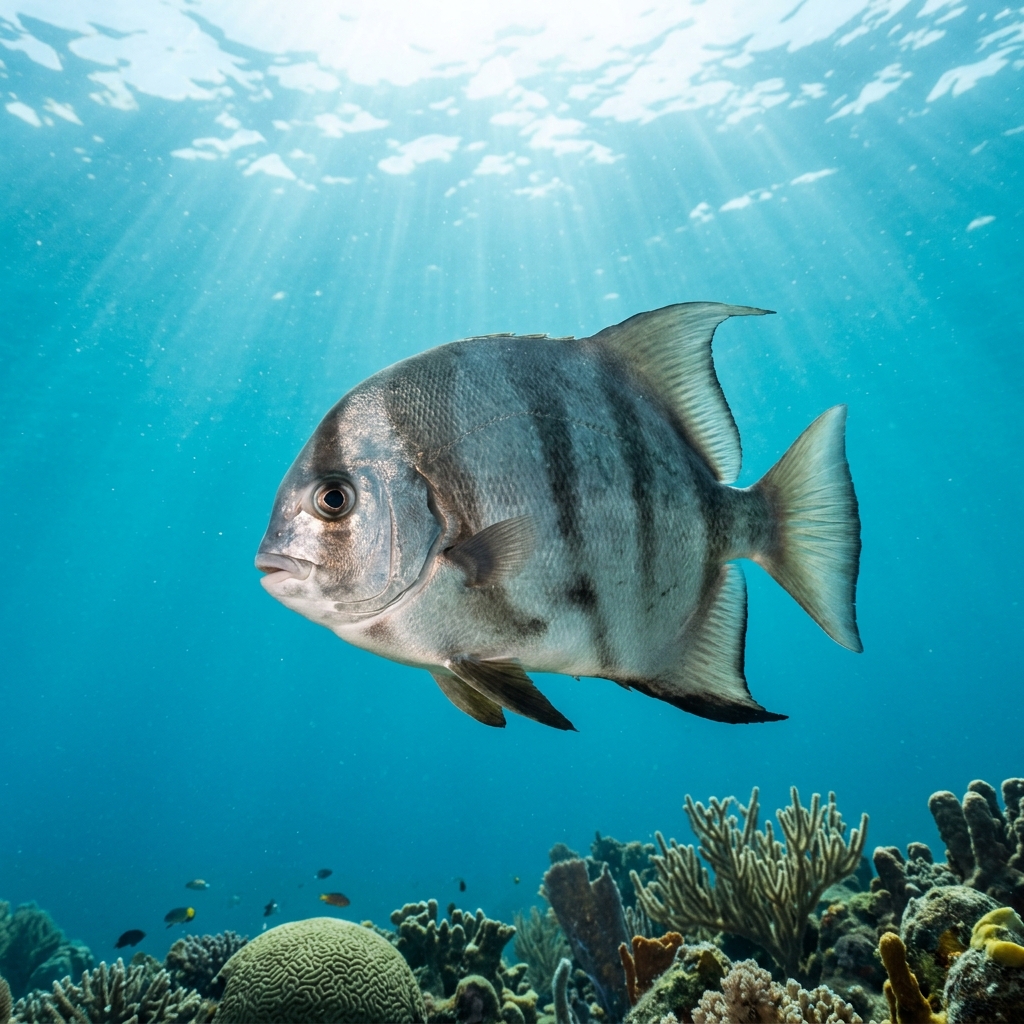
Reef neighbours a diver could mistake it for. Use the identification notes above to tell them apart.
Most reliably logged on reefs off Queensland, Australia, which accounts for the bulk of recorded sightings, with a smaller but real presence in Western Australia. Outside Australia, look for it around Nusa Tenggara in Indonesia, where it turns up in smaller numbers but is a known local sighting.
Mapping where Humpback Batfish is logged…
Queensland, Australia is the strongest area for sightings, with additional records from Western Australia and Nusa Tenggara in Indonesia. It's an uncommon find at most of these sites, so treat any sighting as a bonus rather than a certainty.
There's no detected seasonal pattern, and it's found across a warm 25.1 to 29 C temperature range, so it can turn up on tropical reefs at any time of year.
Check for a tall, flattened grey-brown body with a steep, almost vertical forehead that gives it a humped head shape. It grows to around 46 cm and often shows a dark band through the eye.
They reach around 46 cm, making them a solid mid-sized reef fish that's easy to spot once you know its distinctive head shape.
No, they're not considered dangerous to divers and are generally tolerant of a slow, careful approach.
Site and sighting data is aggregated from diver logs, iNaturalist and GBIF. For taxonomy and conservation status:
Golden Spadefish
550 sites