Conger verreauxi
A rare find in New Zealand's North Island, this thick-bodied conger favours 15-25C water and rewards patient reef divers.
Safety warning
A strong bite risk if provoked, cornered, or hand-fed: congers have powerful jaws and will defend a den if a diver reaches into a crevice. Admire it from a short distance, keep hands out of holes and ledges, and never attempt to touch or feed one.
If you're bitten
BiteGeneral first-aid guidance, not a substitute for professional medical care. In an emergency, call your local emergency number.
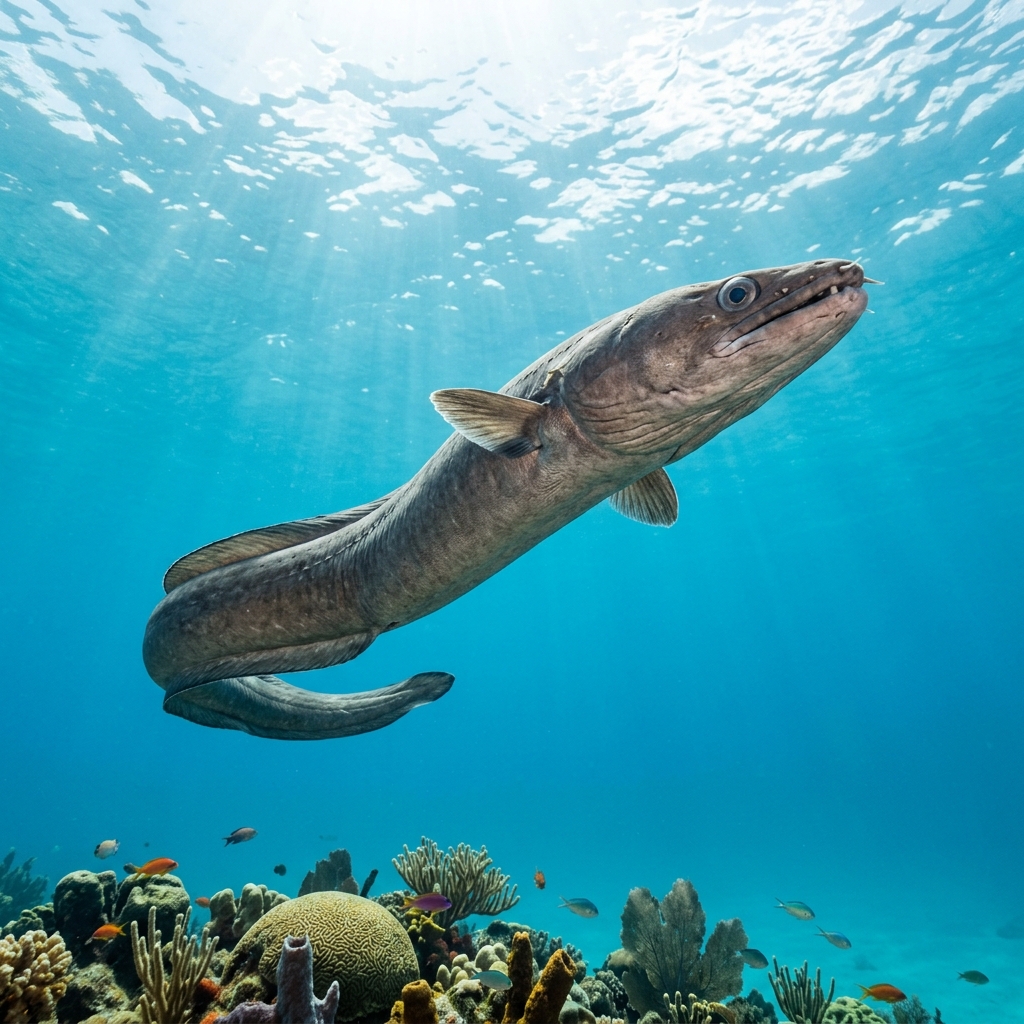
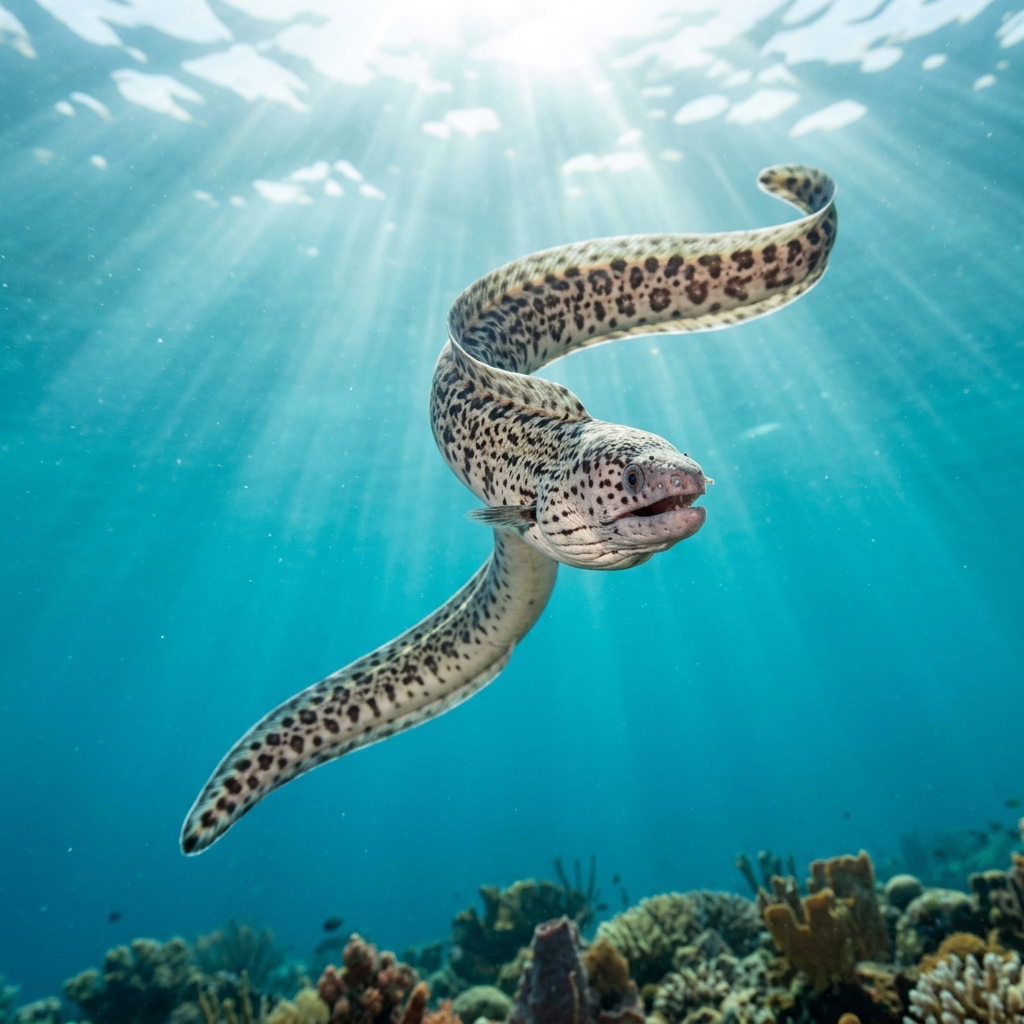
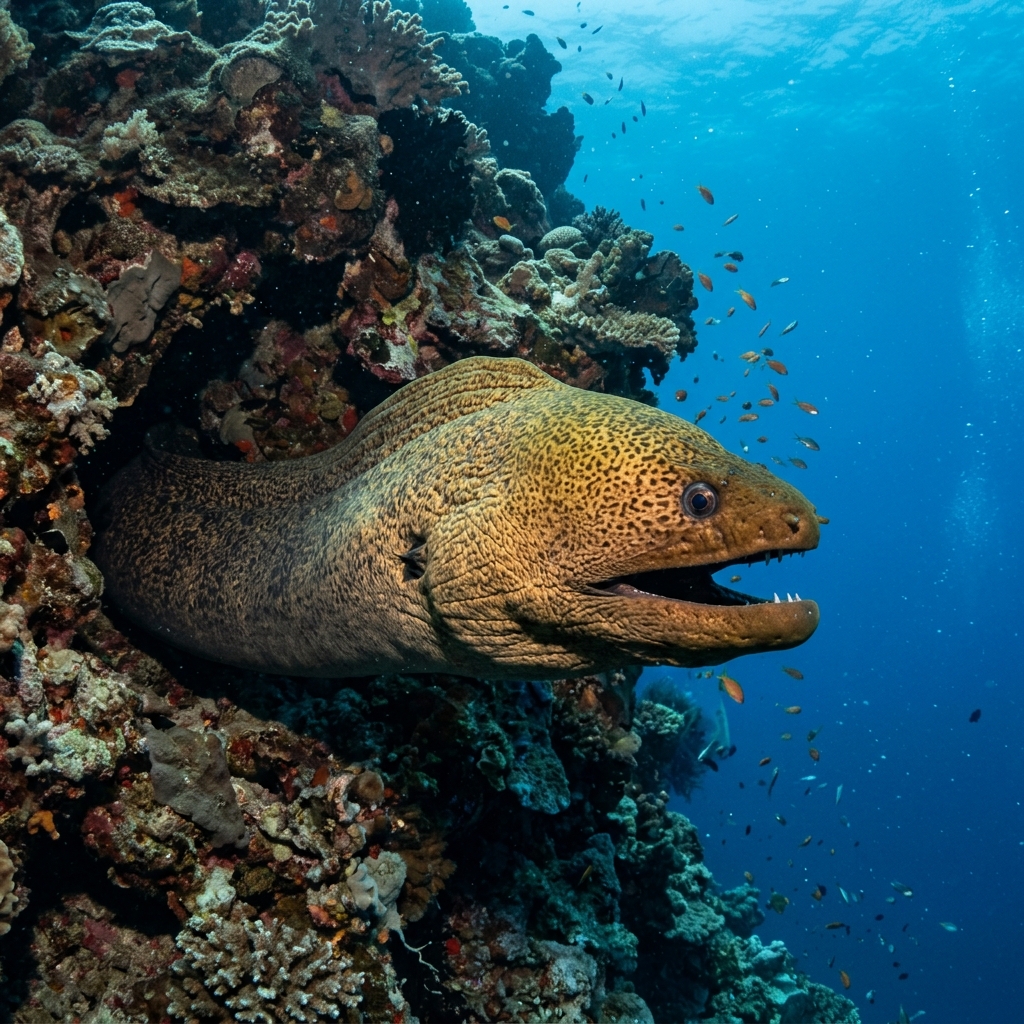
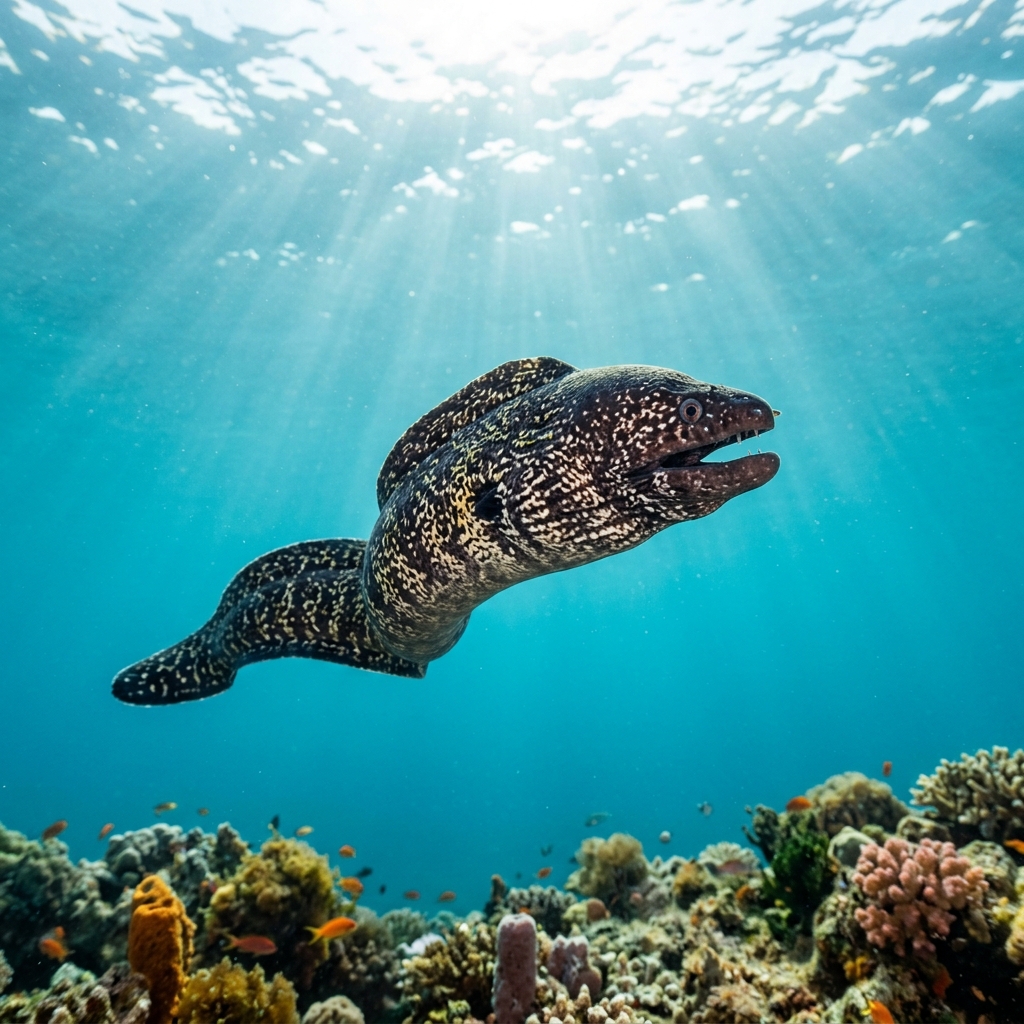
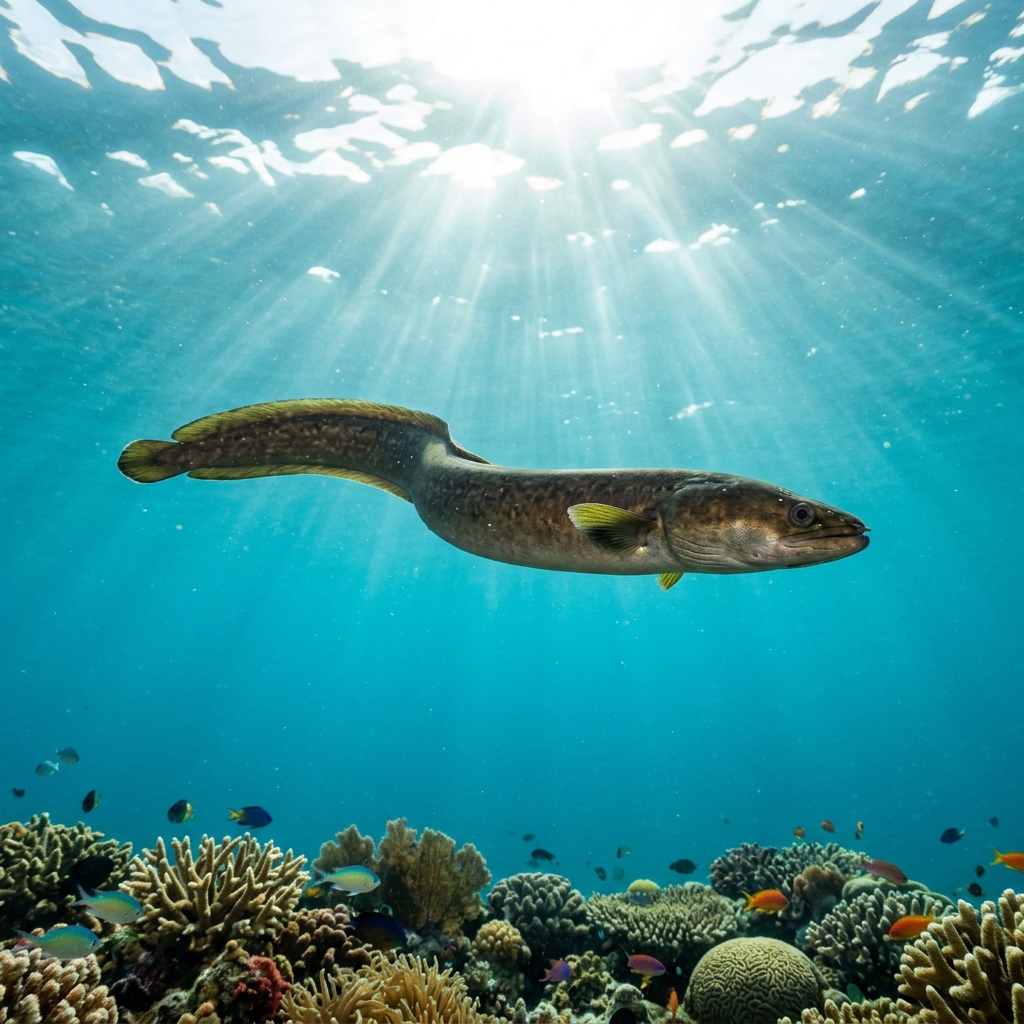
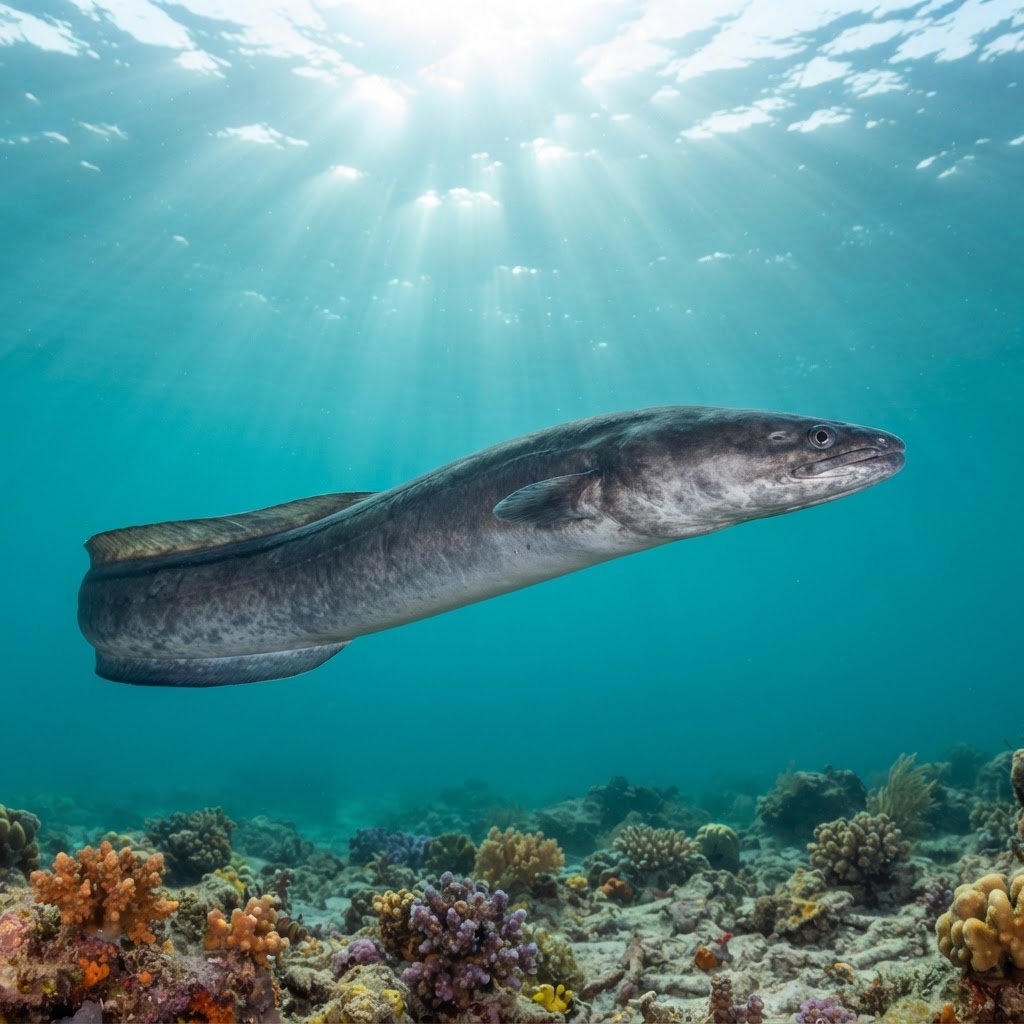
Grows to around 140 cm with a heavy, muscular, snake-like body that tapers to a long tail, usually seen as a grey-brown or olive shape wedged into a crevice or overhang. Look for the smooth, scaleless skin, a long continuous dorsal fin running most of its length, and a blunt head with small eyes set close to the jaw. Most sightings are just the head and forebody poking from a hole, with the rest of the animal tucked out of sight.
Typically found holed up in rocky crevices, under ledges, or inside small caves by day, with just the head and part of the body visible to a passing diver. It tends to hold its ground when approached calmly rather than bolting, though it can retreat deeper into its hole if divers crowd it. Night dives on temperate reefs give a better chance of seeing one out and actively hunting.
Like other congers, it hunts mostly by scent and touch in low light, using its sensitive snout to probe crevices for fish, crustaceans and other reef prey rather than relying on eyesight.
No clear seasonal pattern shows up in the sighting data, so it's best treated as a year-round possibility. It's recorded in water from 15 to 25C, which covers the typical temperate range around New Zealand and Tasmania across most of the year.
Most reliably logged around New Zealand, especially the North Island, with further sightings on the South Island; also found across the Tasman in Tasmania, Australia. It turns up at a spread of rocky reef sites rather than being concentrated at one famous spot, and even where it occurs it's logged as rare to uncommon, so treat any sighting as a bonus rather than a given.
Mapping where Southern Conger Eel is logged…
New Zealand is the main hotspot, particularly the North Island, with additional sightings on the South Island and across the Tasman in Tasmania, Australia. It's a rocky-reef species, so look for crevice and ledge habitat rather than open sand or coral.
There's no strong seasonal signal in the sighting data, so it's considered a year-round possibility. It's recorded in water between 15 and 25C, which suits temperate diving conditions in New Zealand and Tasmania most of the year.
They can bite hard if cornered or if a diver puts a hand into their den, so treat them with respect. Watch from a comfortable distance and don't reach into crevices or ledges where one might be sheltering.
Look for a thick, scaleless, grey-brown body up to around 140 cm, a long dorsal fin running down its back, and a blunt head usually poking out from a rocky crevice or overhang. Most of the body stays hidden, so the visible head shape and skin texture are the main clues.
They can reach roughly 140 cm in length, making them one of the larger eels found on temperate reefs in New Zealand and Tasmania.
It hunts mainly by smell and touch rather than sight, using a sensitive snout to root prey out of rocky crevices in low light or at night, which is when divers often see it most active.
Site and sighting data is aggregated from diver logs, iNaturalist and GBIF. For taxonomy and conservation status:
Garden Eel
2,448 sites