Cheilinus oxycephalus
A small, uncommon wrasse logged in Sulawesi, Fiji and Luzon, at home on warm reefs between 24.8 and 29 C year-round.
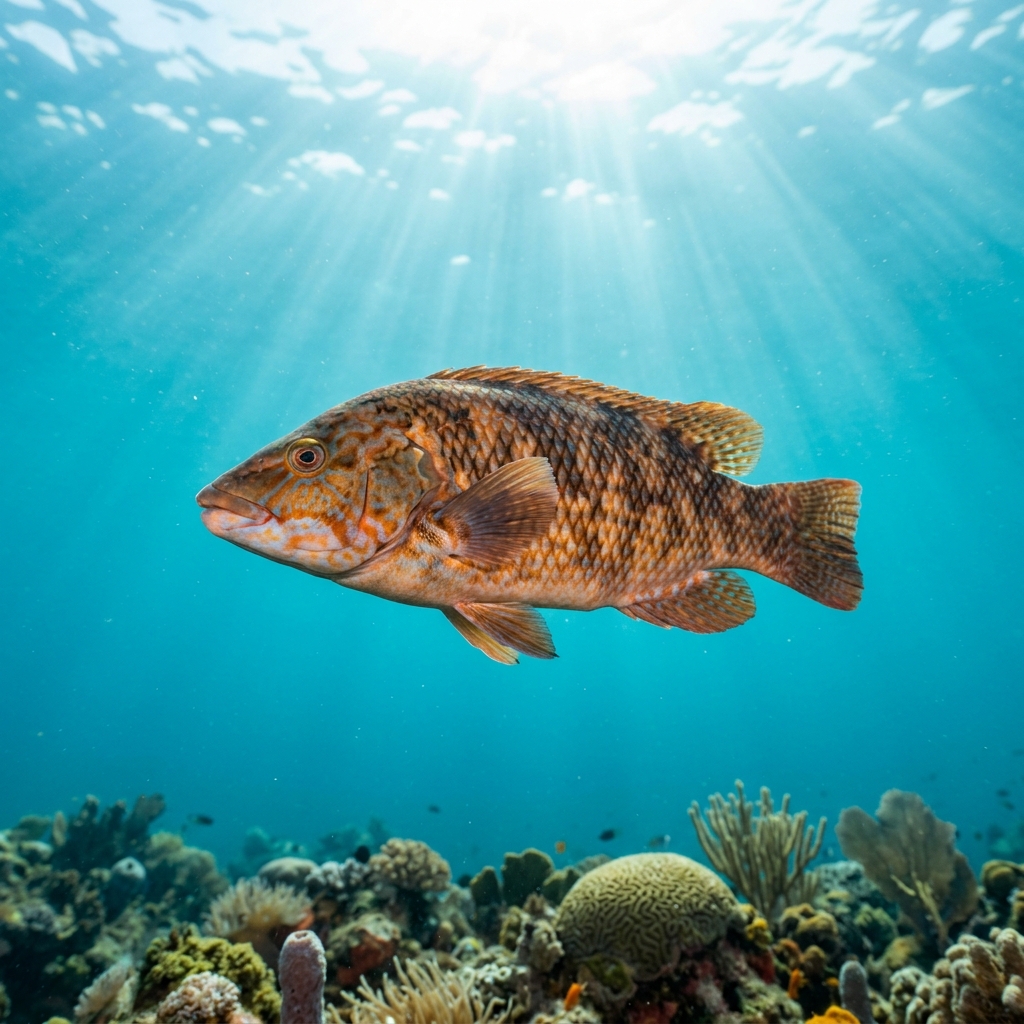
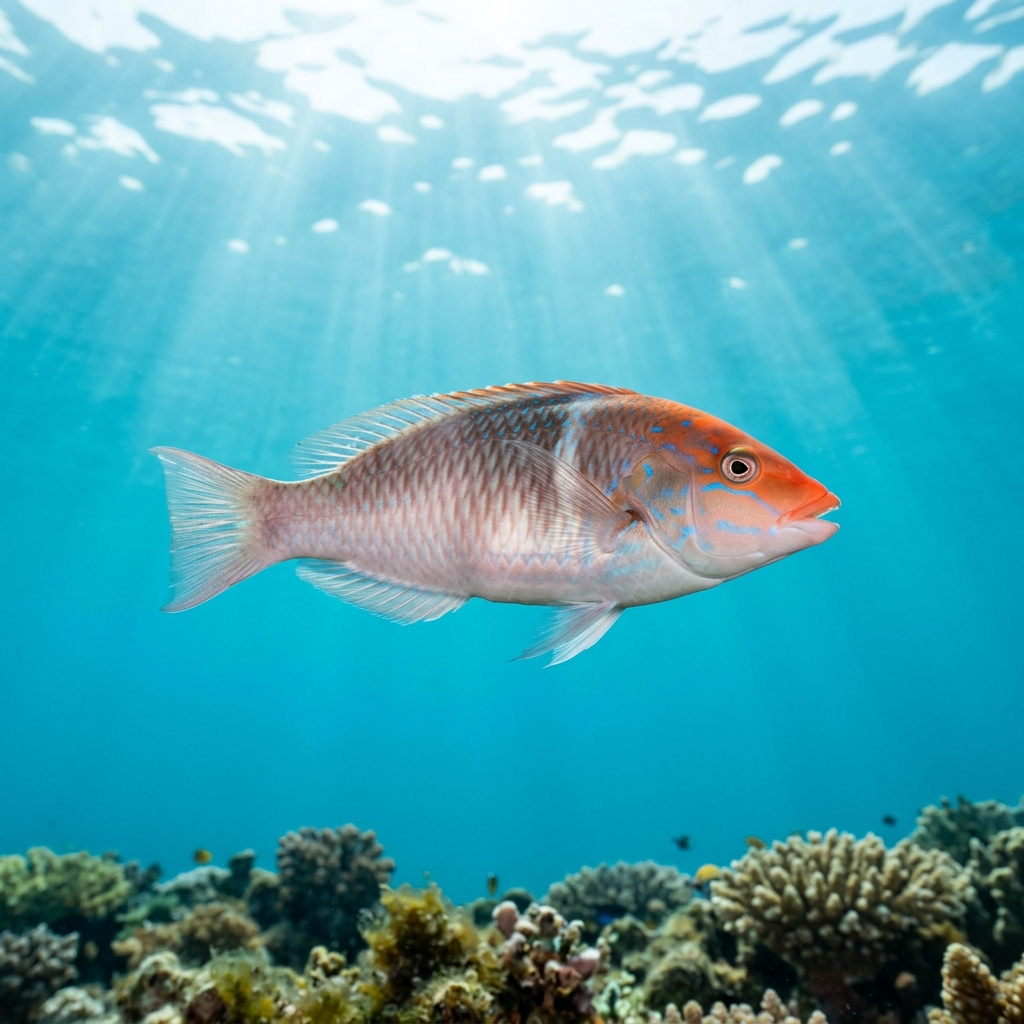
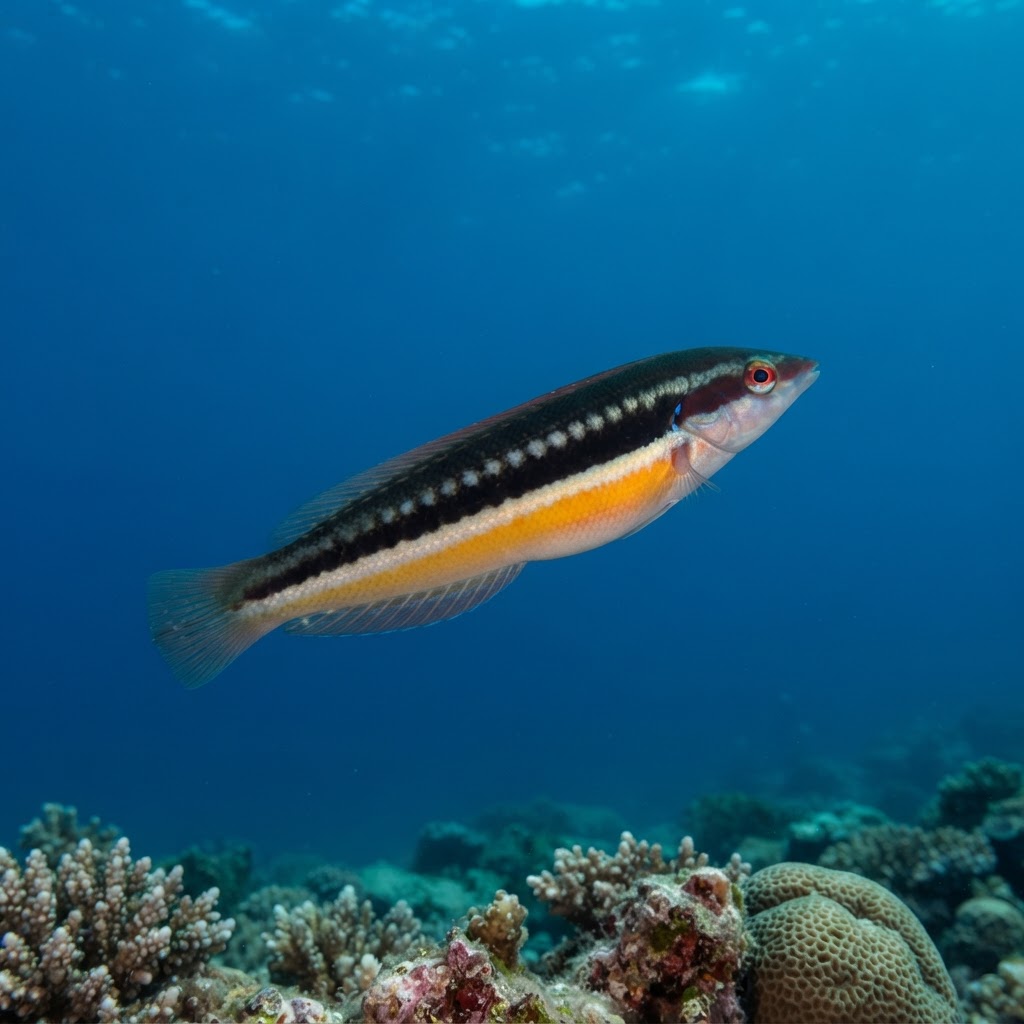
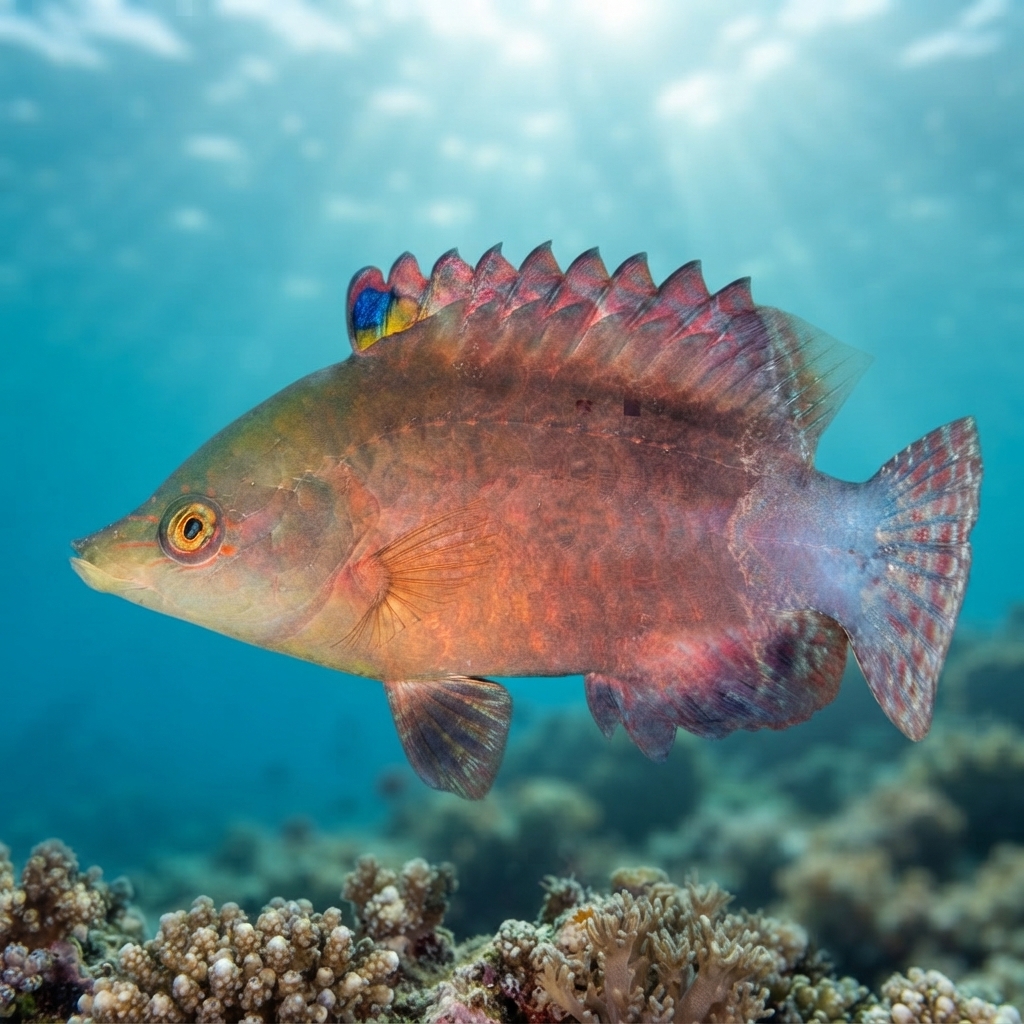
A small, stocky wrasse that tops out around 12 cm, easy to overlook against rubble and coral debris. Look for a mottled brown to reddish body pattern that breaks up its outline, plus the elongated, slightly upturned snout that gives the genus its pointed profile. It behaves more like a small bottom-dweller than a showy open-water wrasse, so divers usually spot it by movement first, colour second.
Divers tend to find it low on the reef, poking around rubble, coral rock and crevices rather than swimming in the open. It is generally unbothered by divers at a respectful distance but will duck into cover if approached too fast, which fits its uncommon, easily-missed reputation at the sites where it has been logged. Most sightings come from slow, close-in reef scanning rather than mid-water cruising.
Belonging to the same genus as the far larger Napoleon Wrasse, it shows how varied body size can be within one wrasse lineage, from a 12 cm reef-hugger to a metre-plus reef giant.
No clear seasonal pattern shows up in the sighting data, and its comfort range of 24.8 to 29 C matches warm tropical reefs all year, so there is no specific month to target. Plan around good visibility and reef conditions at these sites rather than a wrasse-specific season.
Logged as an uncommon find at single sites in Sulawesi (Indonesia), Lomaiviti (Fiji) and Luzon (Philippines), making it a scattered Indo-Pacific sighting rather than a guaranteed one. There is no single hotspot yet in the data, so treat any encounter across these regions as a bonus rather than the goal of the dive.
Mapping where Snooty Wrasse is logged…
Confirmed sightings come from Sulawesi in Indonesia, Lomaiviti in Fiji, and Luzon in the Philippines. It is logged as uncommon at each, so it is a possible find on Indo-Pacific reef dives rather than a species you can plan a trip specifically around.
There is no detected seasonal pattern, and it favours warm water between 24.8 and 29 C, which is available year-round on the tropical reefs where it has been recorded. Any month with good reef conditions at those sites works.
Look for a small, mottled brown wrasse around 12 cm long with a noticeably pointed, upturned snout, usually seen close to rubble or coral structure rather than in open water. Its size and cryptic colouring make it easy to swim past.
They stay small, reaching around 12 cm, which puts them among the more modest members of the wrasse family compared with reef giants in the same genus.
No, they pose no danger to divers. They are a small, non-aggressive reef fish that will retreat into cover rather than approach.
It shares its genus with the Napoleon Wrasse, one of the largest wrasses on the reef, yet stays under 12 cm itself, a striking size gap within one closely related group of fish.
Site and sighting data is aggregated from diver logs, iNaturalist and GBIF. For taxonomy and conservation status:
Bird Wrasse
3,632 sites