Pteragogus turdus
A small, easily-missed wrasse turning up on rubble and reef edges in Milne Bay and Apra Harbor, year-round in warm water.
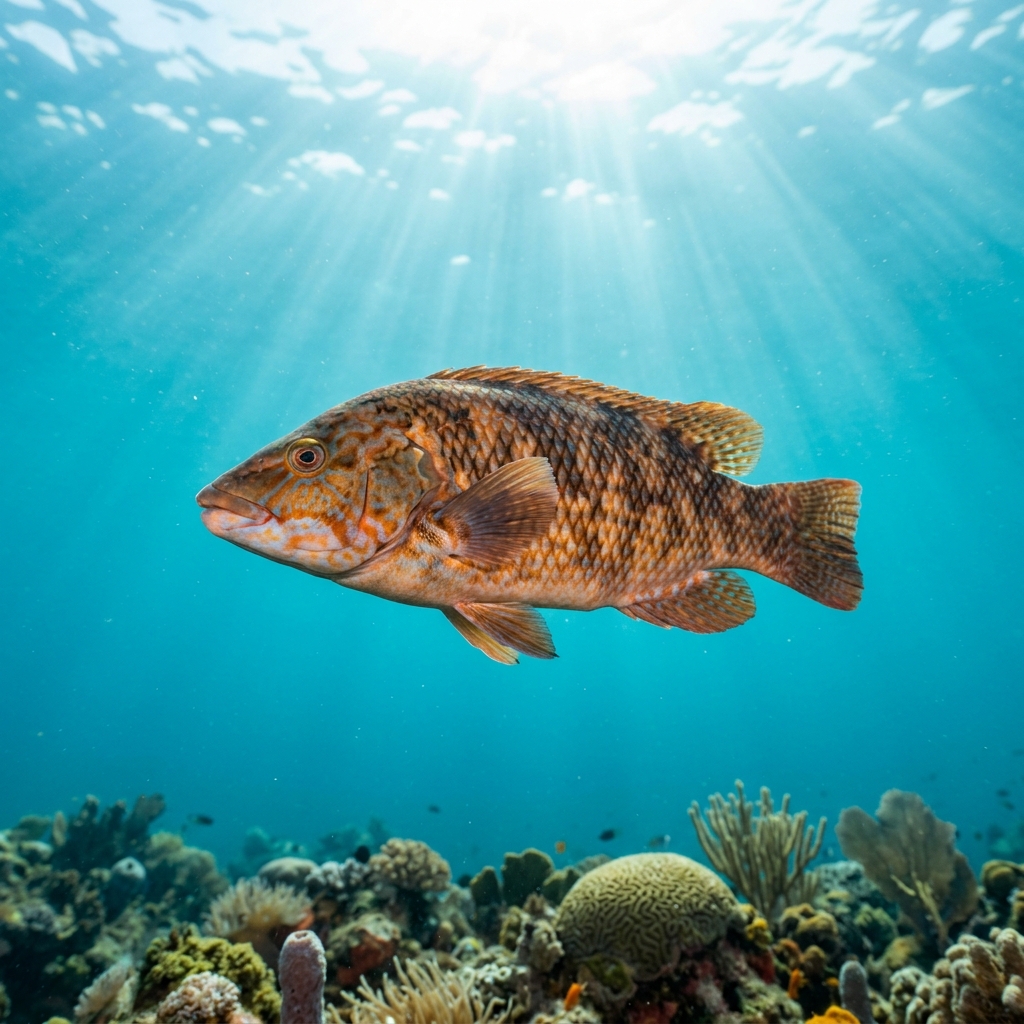
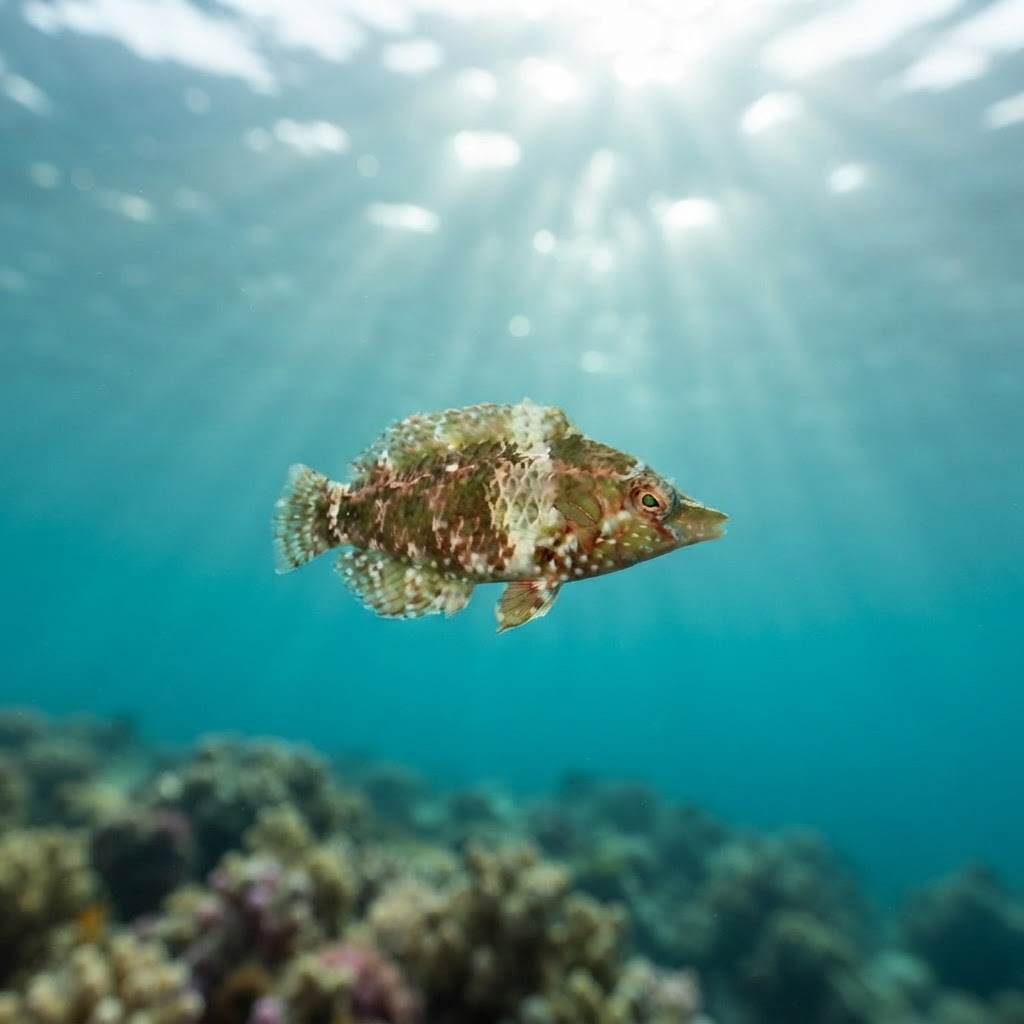
Small and slender, topping out around 7 cm, with a mottled reddish-brown to olive body that blends easily into rubble and weedy reef. Look for a slightly pointed snout and faint darker blotches running along the flank rather than any bold stripe or spot. It sits low and close to the substrate rather than swimming out in open water, which combined with its size and dull colouring is why it gets overlooked as often as it gets spotted.
Divers log it as an uncommon find, usually spotted picking around rubble patches, weedy reef edges and low structure rather than out in the water column. It tends to stay close to cover and doesn't react much to divers, more likely to be missed than to flee, which is part of why sightings stay in the uncommon bracket even where it's present.
Its dull, mottled colouring and rubble-hugging habit are a form of camouflage typical of small wrasses in the genus Pteragogus, letting it feed on tiny invertebrates while staying inconspicuous to both predators and passing divers.
No clear seasonal pattern shows up in the sighting data, and with a comfortable range of 25.6 to 31.6 C it's present on these tropical reefs year-round. Plan around convenient dive conditions at each site rather than a particular month.
Most reliably logged around Apra Harbor in Guam and across Milne Bay and Tufi in Papua New Guinea, with a further sighting in Fiji's Yasawa Islands. Papua New Guinea and Guam between them account for almost all recorded sightings, making them the strongest bets for a diver specifically looking for this species.
Mapping where Sneaky Wrasse is logged…
The best-documented spots are Apra Harbor in Guam and Milne Bay and Tufi in Papua New Guinea, with an additional record from the Yasawa Islands in Fiji. Papua New Guinea and Guam together offer the strongest chance of a sighting.
There's no detected seasonal pattern, and it's found in water from 25.6 to 31.6 C, so it's around on tropical reefs throughout the year. Time your trip around good diving conditions rather than a particular season.
Look for a small, slender wrasse around 7 cm long with mottled reddish-brown to olive colouring and faint blotches along the flank. It stays low over rubble and reef edges rather than swimming in open water, so scan the substrate closely rather than the water column.
They're small, typically around 7 cm long, which along with their drab colouring makes them easy to swim past without noticing.
No, they pose no danger to divers. They're small, retreat into cover rather than confront anything, and have no venom or aggressive behaviour to worry about.
Their mottled brown and olive colouring blends into rubble and weedy reef, and they tend to stay close to the substrate rather than swim out where they're easily seen. That camouflage plus their small size is exactly why sightings are logged as uncommon even at sites where they're present.
Site and sighting data is aggregated from diver logs, iNaturalist and GBIF. For taxonomy and conservation status:
Bird Wrasse
3,632 sites