Eupetrichthys angustipes
Common on temperate reefs in New South Wales, this small wrasse turns up year-round in 16.8-22.8C water. Here's how to spot one.
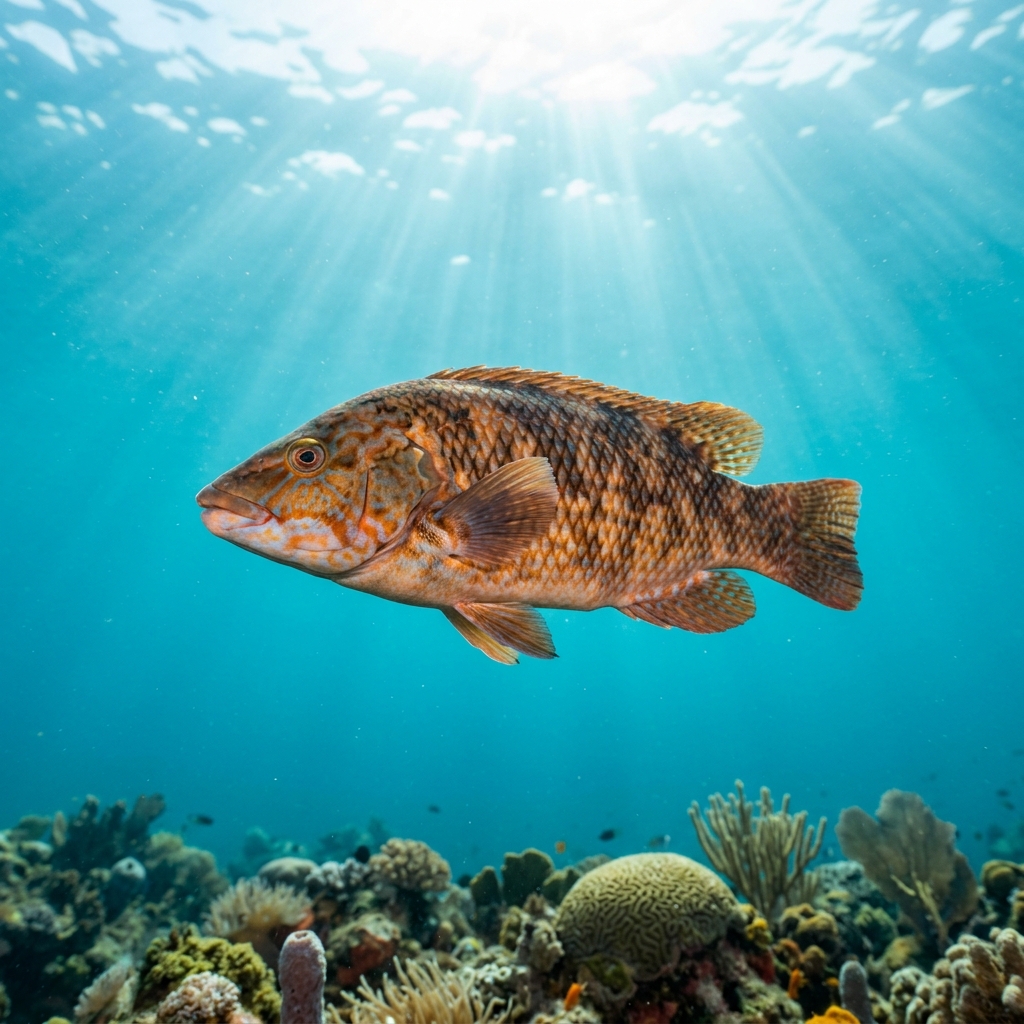
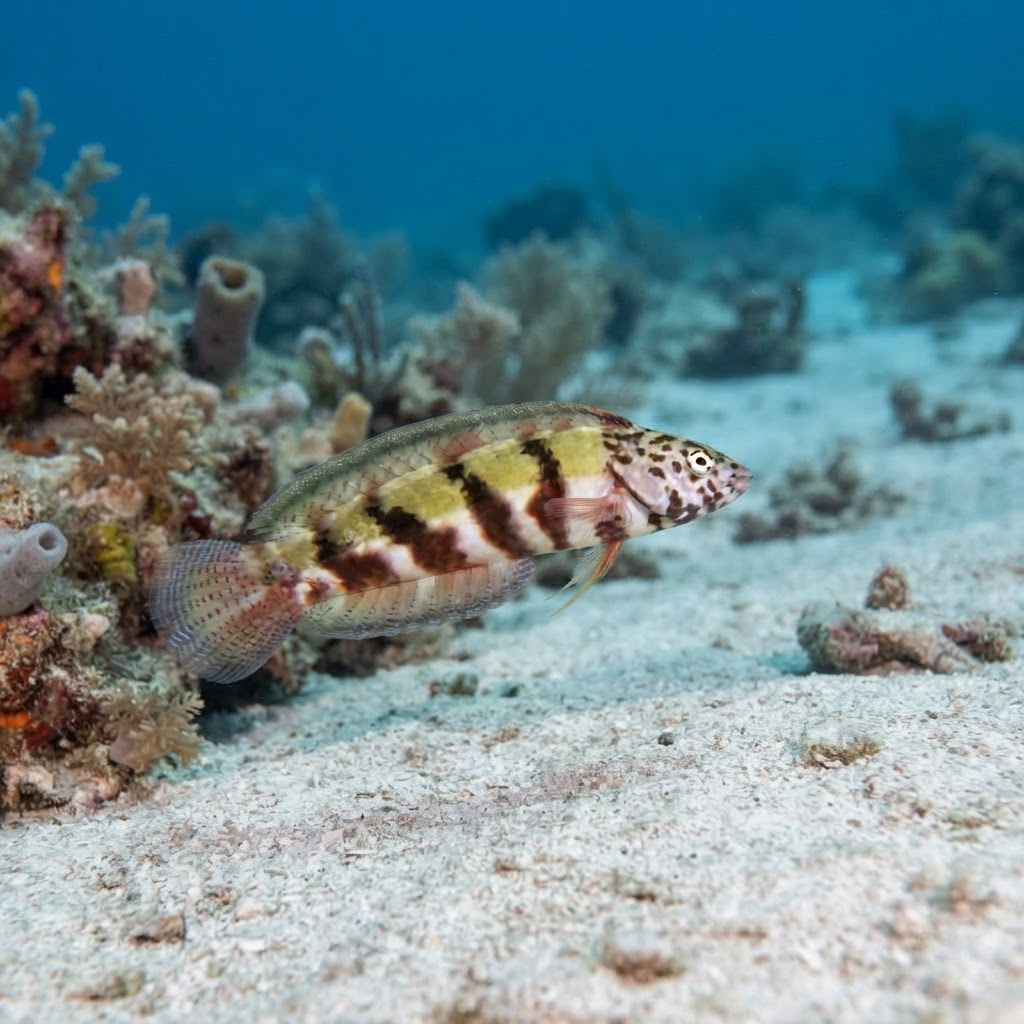
A small, slender wrasse at around 8 cm, easy to overlook against rubble and rocky reef. Look for a mottled, snake-like patterning of brown and olive blotches running along the flanks, which gives it its common name. It has the typical elongated wrasse body shape with a pointed snout, and tends to sit low, close to the substrate rather than swimming in open water.
Divers typically find it hovering or picking around low over rock and rubble rather than out in open water, behaviour typical of small demersal (bottom-dwelling) wrasses. It doesn't school and isn't especially bold, so slow, careful looking along reef nooks and ledges pays off more than scanning the water column. It seems unfazed by divers moving past at a normal pace, rather than fleeing or hiding outright.
It's one of the smaller, less flashy members of the wrasse family, more often noticed by divers doing a slow, close-focus look at the reef than by anyone cruising past looking for big fish.
No clear seasonal pattern shows up in the sighting data, and its recorded temperature range of 16.8 to 22.8C spans most of the year on southern Australian reefs, so it's a reasonable year-round find rather than a seasonal target.
This is very much a New South Wales fish, with the strongest run of sightings logged across sites there, and it's most reliably reported as common rather than rare. Smaller but still real populations show up in Tasmania, Victoria and Western Australia, so it's worth watching for on any southern Australian temperate reef dive.
Mapping where Snakeskin Wrasse is logged…
New South Wales is by far the best bet, where it's logged as common at many sites. Smaller numbers turn up in Tasmania, Victoria and Western Australia too.
There's no strong seasonal pattern in the data, and its comfortable temperature range of 16.8 to 22.8C covers most of the year on southern Australian reefs, so it's a year-round sighting rather than a seasonal one.
Look for a small, slender wrasse around 8 cm long with mottled brown and olive blotches along its sides, sitting low near rock and rubble rather than swimming in open water.
They're a small wrasse, typically around 8 cm long, which makes them easy to miss unless you're looking closely at the reef structure.
No, they pose no risk to divers. They're small, non-aggressive reef fish that simply go about picking over rock and rubble.
Site and sighting data is aggregated from diver logs, iNaturalist and GBIF. For taxonomy and conservation status:
Bird Wrasse
3,632 sites